Mikel Amigot, IBL News | Las Vegas
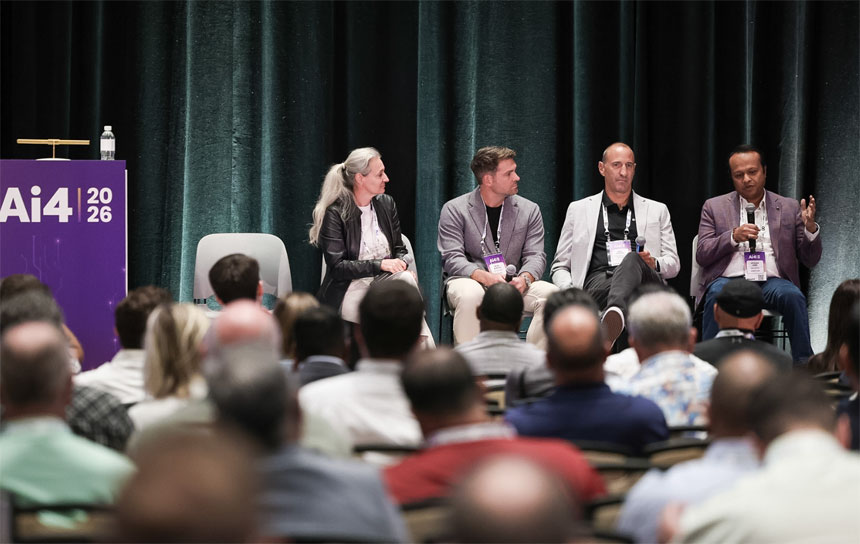
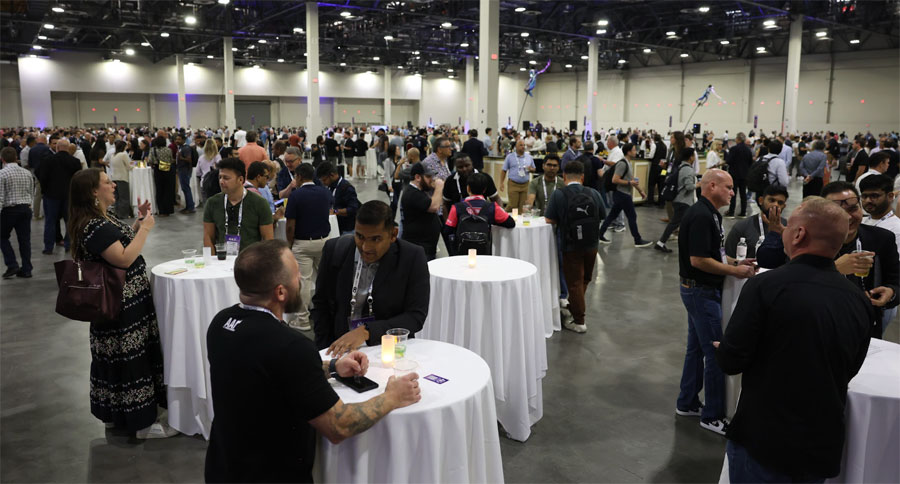
Over 12,000 attendees from 85+ countries poured into The Venetian Las Vegas this week for the AI4 2026 event (August 4–6), the ninth edition of North America’s largest AI conference. Nearly 1,000 square feet of programming, 1,000+ speakers across 20 industry tracks, and nearly 400 exhibitors.
Over three days, business leaders, researchers, technologists, policymakers, investors, and innovators will explore emerging AI applications, hear from leading pioneers and executives, and build the partnerships needed to implement and scale artificial intelligence. They called for faster innovation, but applying stronger guardrails.
This major AI conference started by examining how rapidly AI is moving from experimental systems into medicine, corporate operations, and critical infrastructure. Speakers described a moment defined by both excitement and uncertainty:
AI is already changing how organizations conduct research, make decisions, and organize work, but its longer-term economic and social consequences remain difficult to predict. The prevailing message was cautiously optimistic, with participants arguing that the technology’s benefits will depend on whether institutions can deploy it responsibly rather than simply attempting to slow its adoption.
On day one, thousands of attendees packed the keynote theater for a session titled “AI’s Race to Reinvent Medicine,” featuring Alex Zhavoronkov (Insilico Medicine CEO) and Eric Nguyen (Radical Numerics CEO), moderated by TIME’s Alice Park. Zhavoronkov’s company recently received FDA Fast Track designation for ISM6331, an AI-discovered drug targeting mesothelioma — the most concrete proof point yet for AI-driven pharmaceutical development.
One of the central discussions focused on healthcare and biotechnology, where researchers said AI could transform the discovery and development of medicines. Panelists described systems capable of analyzing biological complexity, designing molecules, and generating DNA sequences, which could shorten development timelines and reduce the enormous cost of bringing drugs into clinical trials.
They also explored using AI to address age-related diseases and develop more personalized treatments. At the same time, speakers warned that generative biology is inherently dual-use: the same tools that can design therapies may lower the barriers to creating dangerous biological materials, making laboratory validation, regulatory oversight, and investment in biosecurity increasingly important.
The conference also examined the rapid spread of generative AI inside large companies. Speakers argued that employees’ unauthorized use of tools such as ChatGPT and Gemini should not be viewed solely as a compliance failure but as evidence that workers are seeking faster, more flexible ways to perform their jobs. Organizations were urged to treat AI agents as a new form of digital workforce, assigning them identifiable owners, budgets, permissions, performance standards, and audit controls.
Under this model, business units would remain responsible for the outcomes produced by their agents, while information-technology departments would shift from acting primarily as gatekeepers to providing the identity, security, and governance infrastructure needed for safe experimentation.
A final theme concerned the physical and technological foundations of the AI economy. Industry leaders said that progress will increasingly depend on semiconductors, memory, data centers, networking, and access to vast amounts of electricity, with energy capacity emerging as a strategic constraint.
The discussion also highlighted open-source AI, particularly its ability to give companies and governments greater control over their models, data, and deployment environments. Together, the sessions presented AI not as a single product or application, but as a broad industrial transformation—one that promises major advances in productivity and science while creating equally significant challenges involving safety, concentration of power, infrastructure, and public accountability.
The session that owned Day 1 was “The AI Reckoning: Chips, Constraints and the Next Generation of Compute.” New Yorker staff writer Gideon Lewis-Kraus moderated a conversation between Pat Gelsinger — former Intel CEO, now General Partner at Playground Global — and Sachin Katti, Head of Compute at OpenAI.
Gelsinger set the frame immediately: “There are no tokens in AI without chips underneath. Chips are the underlying fuel, the oil of a token-driven economy.”
He laid out what he called the IEEE framework — Infrastructure, Efficiency, Energy, Economics — as the four fronts that will determine whether AI’s spending binge pays off. His most bracing line: “The economics of AI today are bad. Cost per token doesn’t need to get 10x better. It needs to get 10,000x better.”
On energy, Gelsinger drew an audible reaction from the room: “China has 39 nuclear reactors under development. The United States has zero.” His thesis: “In a digital AI economy, economic capacity equals energy capacity.”
Katti, from OpenAI’s operator seat, said, “The progression of AI itself is being driven by compute.” His stated ambition was to compress datacenter construction timelines from three years to three quarters.
Mistral AI used the AI4 stage to launch Shieldstral — a 3B-parameter open-weights model for content safety that runs on a single 16GB NVIDIA GPU. The announcement, made from the conference floor, racked up 1,700+ likes and 156K+ impressions on X within hours. Shieldstra is Apache 2.0 licensed, enterprise-customizable, and signals Mistral’s bet that on-device content moderation will be a critical piece of the agentic AI stack.
On the floor, @Phil_Kelly_NYC captured the vibe: “I’m on day 1 of #AI4, and the number of startups is wild. Hearing trust and risk as major barriers to more meaningful adoption.”
Italian journalist @FedericaUrzo noted a tension in the defense panels: “A general says ‘humans remain central in the loop.’ But what they describe sounds like the machine already chooses who to watch, the target…”
Amazon’s Michael Giannangeli, Head of Agentic AI at Amazon Nova, presented on how to measure success for agentic deployments.
The expo floor featured a Tesla Optimus robot — a general-purpose, bipedal humanoid robot under active development designed to perform repetitive, boring, or dangerous human tasks — and the brand’s autonomous taxi vehicle.
Tucked in a back corner, there was a CIA recruiting booth (@JoeTalksAI: “The CIA is even here, hidden in the back corner of the expo hall”). Platinum sponsor D-Wave Quantum (booth 730) was showcasing quantum-AI integration.
Day 2, centerpiece is the session the entire conference was built around: “The Architects of Intelligence: A Historic Convergence” — putting Geoffrey Hinton (Nobel Prize recipient, “Godfather of AI”), Fei-Fei Li (World Labs CEO, “Godmother of AI”), and Andrew Ng (DeepLearning.AI founder) on the same stage. Moderated by Yun-Hee Kim, Deputy Editor of The Washington Post.