Author: IBL News

  • Gartner Predicts that Over 80% of Enterprises Will Use Gen AI by 2026

    Gartner Predicts that Over 80% of Enterprises Will Use Gen AI by 2026

    IBL News | New York

    By 2026, over 80% of enterprises will be using Gen AI applications in production environments and/or have APIs and models, predicted Gartner, Inc.

    Demand is especially increasing in healthcare, life sciences, legal, financial services, and the public sector.

    Three innovations projected to have a huge impact on organizations within ten years include GenAI-enabled applications, foundation models, and AI trust, risk, and security management.

    • “The most common pattern for GenAI-embedded capabilities today is text-to-X, which democratizes access for workers, to what used to be specialized tasks, via prompt engineering using natural language,” said Arun Chandrasekaran, VP Analyst at Gartner.

    • “However, these applications still present obstacles such as hallucinations and inaccuracy that may limit widespread impact and adoption.”

    • “Foundation models are an important step forward for AI due to their massive pretraining and wide use-case applicability.”

    • “Foundation models will advance digital transformation within the enterprise by improving workforce productivity, automating and enhancing customer experience and enabling cost-effective creation of new products and services.”

    “Organizations that do not consistently manage AI risks are exponentially inclined to experience adverse outcomes, such as project failures and breaches. Inaccurate, unethical, or unintended AI outcomes, process errors, and interference from malicious actors can result in security failures, financial and reputational loss or liability, and social harm.”
    .

  • Microsoft Introduced Copilot Pro for $20 Per Month Per User

    Microsoft Introduced Copilot Pro for $20 Per Month Per User

    IBL News | New York

    Microsoft introduced this week Copilot Pro, a new premium subscription — at $20 per month per user.

    Beyond the normal free version of Copilot, it provides access to Microsoft 365 with its suite of Word, Excel, PowerPoint, Outlook, and OneNote.

    It also gives users the ability to build their own Copilot GPT – a customized Copilot tailored for a specific topic in Microsoft’s Copilot GPT Builder (coming soon) with a set of prompts.

    Copilot Pro features enhanced AI image creation with Image Creator from Designer (formerly Bing Image Creator), ensuring it’s faster with 100 boosts per day while bringing more detailed image quality as well as landscape image format.

    Copilot Pro provides users priority access to the latest OpenAI models – starting with GPT-4 Turbo.
    .


  • Google Released ‘Lumiere’, Which Utilizes Unique Architecture to Generate AI Video

    Google Released ‘Lumiere’, Which Utilizes Unique Architecture to Generate AI Video

    IBL News | New York

    Google introduced this week Lumiere, a text-to-video generation AI model designed for to portray realistic clips. It’s one of the most advanced text-to-video generators yet demonstrated, although it is still in a primitive state.

    Existing AI video models synthesize keyframes followed by temporal super-resolution. But Google uses a Space-Time U-Net architecture that generates the entire temporal duration of the video at once, through a single pass in the model.

    “We demonstrate state-of-the-art text-to-video generation results, and show that our design easily facilitates a wide range of content creation tasks and video editing applications, including image-to-video, video inpainting, and stylized generation,” said the company.

    Lumiere does a good job of creating videos of cute animals in ridiculous scenarios, such as using roller skates, driving a car, or playing a piano. It’s worth noting that AI companies often demonstrate video generators with cute animals because generating coherent, non-deformed humans is currently difficult.

    As for training data, Google doesn’t say where it got the videos it fed into Lumiere, writing, “We train our T2V [text to video] model on a dataset containing 30M videos along with their text caption. [sic] The videos are 80 frames long at 16 fps (5 seconds). The base model is trained at 128×128.”

    Other video generators are Meta’s Make-A-Video, Runway’s Gen2, and Stable Video Diffusion, which can generate short clips from still images.
    .


  • Pennsylvania Will Allow State Agencies to Use Generative AI

    Pennsylvania Will Allow State Agencies to Use Generative AI

    IBL News | New York

    Pennsylvania will be the first state to deploy ChatGPT for a small number of governments to create and edit copy, update policy language, draft job descriptions, and generate code.

    After an initial trial period, Pennsylvania’s Governor Shapiro’s office said that ChatGPT will be used more broadly by other parts of the state government.

    However, no citizens will interact with ChatGPT directly as part of this pilot program.

    The pilot is seen as a test run for other state governments.

    One major consideration in this trial is ChatGPT’s tendency to hallucinate when handling sensitive government policies.

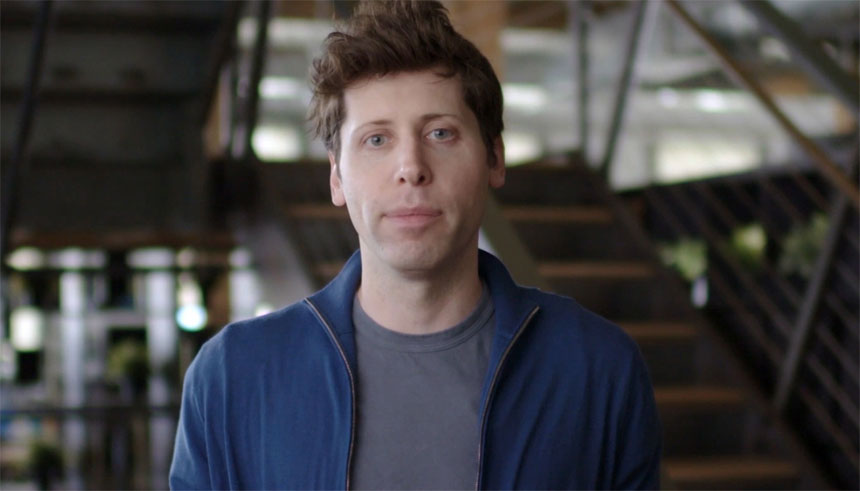
    “Generative AI is here and impacting our daily lives already – and my Administration is taking a proactive approach to harness the power of its benefits while mitigating its potential risks,” said Governor Shapiro [in the picture] in a press release.

    “Our collaboration with Governor Shapiro and the Pennsylvania team will provide valuable insights into how AI tools can responsibly enhance state services,” said Open AI CEO Sam Altman in the same press release.

    Governor Shapiro signed an executive order in September to allow state agencies to use generative AI in their work. The state is home to Carnegie Mellon, whose researchers have paved the way for AI research.
    .

  • Google Announced AI-Powered Features for Classroom Management

    Google Announced AI-Powered Features for Classroom Management

    IBL News | New York

    Google announced AI-powered features for classroom management, questions, and lesson plan creation, as well as other functionalities.

    Teachers will be able to add AI-suggested questions to YouTube videos as part of their Classroom assignment.

    The Practice sets feature, which uses AI to create answers and general hints, is now available in over 50 languages. Plus, educators can turn a Google Form into a practice set.

    Additionally, Google is introducing a new Resources tab to manage practice sets and interactive questions asked during a video.

    Google’s generative AI tool for Google Workspace, Duet AI, can assist teachers in coming up with a lesson plan.


    Teachers will be able to use the speaker spotlight feature in Slides to create a lesson with narration along with the slide deck.

    The company is updating Classroom analytics so educators can look at stats like assignment completion and trends for grades.

    Google is adding the ability to get text from PDFs for screen readers on ChromeOS.

  • Google’s Chrome Browser Adds AI-Powered Features

    Google’s Chrome Browser Adds AI-Powered Features

    IBL News | New York

    Google introduced yesterday on Chrome — on browser release M121 — experimental generative AI features.

    These features will be available in Chrome on Macs and Windows PCs over the next few days, starting in the U.S.

    “Because these features are early public experiments, they’ll be disabled for enterprise and educational accounts for now,” said Parisa Tabriz, Vice President of Chrome.

    When turned on, these experimental AI features organize tabs into groups, create custom themes, and provide help with writing on the web in forum posts and online reviews, as shown in the images below.

    Chrome will also suggest names and emojis for the tab groups it creates to make them easier to find. This feature is intended to assist when users are online shopping, researching, trip planning, or doing other tasks that tend to leave a lot of open tabs.

    In addition to AI-generated themes, users can also customize Chrome with photos uploaded or themes from Chrome Web Store’s collections.

    The features join other AI-powered and machine learning (ML) tools already available in Chrome, like its ability to caption audio and video, protect users from malicious sites via Android’s Safe Browsing feature in Chromesilence permission prompts, and summarize web pages via the “SGE while browsing” feature.

    In 2025, Chrome will be updated with more AI and ML features, including through integrations with its new AI model, Gemini, according to Google.
    .

    A contact form for an apartment rental. The initial draft says “im interested in this place - do you allow dogs?” Chrome’s “Help me write” feature provides suggested text.


  • Mayo Clinic Partners with Cerebras to Develop Its Own Gen AI Model

    Mayo Clinic Partners with Cerebras to Develop Its Own Gen AI Model

    IBL News | New York

    The Mayo Clinic announced it’s partnering with Cerebras Systems to develop its own AI models for the healthcare industry after tapping into decades of anonymized medical records and data.

    These models will summarize lengthy medical records, scour images for patterns that experts may not detect, or analyze genome data.

    The well-known medical center, based in Rochester, Minnesota, ensured that these systems would not make medical decisions, not reokace doctors.

    The institution plans to make the outcome of its work available on its Mayo Clinic Platform, a data network that is also used by the Mercy health care system in the U.S., the University Health Network in Canada, along with systems in Brazil and Israel.

    Matthew Callstrom, Mayo’s medical director for strategy and chair of its radiology department, said that the clinic has not yet decided how much it will charge for the AI technology.

    The clinic planned to disclose the new effort during an address at JPMorgan Chase’s healthcare conference in San Francisco.

    Cerebras Chief Executive Officer Andrew Feldman said the deal is a “multi-million-dollar” agreement over several years but declined to give more specifics.

    Cerebras will provide both hardware and software development services to Mayo under the deal.
    .

  • Google Cloud Launches Generative AI Tools for Retailers

    Google Cloud Launches Generative AI Tools for Retailers

    IBL News | New York

    Google Cloud launched this month new chatbots and virtual agents for retailers, which they can quickly deploy on websites and apps to personalize shopper experience, schedule appointments, and offer product recommendations based on consumers’ preferences.

    For example, a virtual agent can converse with a shopper looking for a formal dress for a wedding, and provide personalized product options based on preferred colors, venue type, weather, matching accessories, and budget.

    This Generative AI solution can run on Google Cloud’s Vertex AI platform, or be embedded into a retailer’s existing catalog management applications.

    In the same Vertex platform, Google Cloud also introduced a new AI Search capability to provide more relevant product results to consumers and improve engagement.

    Retailers custom-tune an LLM to their unique product catalog and shopper search patterns.

    This offering integrates with a retailer’s existing customer relationship management (CRM) system.

    In addition, retailers can use the solution to boost employee productivity with AI-powered summarizations of customer conversations and respond to clients in real-time based on knowledge across a retailer’s internal resources.

    Retailers can use this technology—when combined with Google Cloud’s data warehouse, BigQuery—to synthesize shopper sentiment across sources like online reviews, social media posts, customer feedback, and chats with customer service representatives.

    Google Cloud’s announcement of these AI tools comes days before the start of the National Retail Federation’s annual convention in New York City.

    Amazon debuted an AI tool for sellers last fall, and many retailers incorporated conversational AI systems into their platforms in 2023.
    .


  • SAG-AFTRA Signed a Deal to Set Terms for the Use of AI-generated Voice in Video Games

    SAG-AFTRA Signed a Deal to Set Terms for the Use of AI-generated Voice in Video Games

    IBL News | New York

    The Hollywood union SAG-AFTRA signed a deal this month with AI voiceover start-up Replica Studios that set terms for the use of generative AI in video games.

    Duncan Crabtree-Ireland, the union’s executive director, said that terms include informed consent for the use of AI to create digital voice replicas, along with their safe storage.

    He explained at a press conference in Las Vegas’ CES.

    “This is an evolutionary step forward. AI technology is not something we can block. It’s not something we can stop. That’s not a tactic or a strategy that’s ever worked for labor in the past.”

    In the 2023 strike, SAG-AFTRA reached a deal with the major studios and TV producers, establishing consent and compensation requirements for the use of AI to replicate actors’ likenesses.

    The deal did not block studios from training AI systems to create “synthetic” actors that bear no resemblance to real performers.

    SAG-AFTRA is now engaged in a similar negotiation with a coalition of major video game studios. The union has obtained a strike authorization vote, though talks continue.

    Replica Studios sells AI voices to video game developers from its library of “ethically licensed” voices.
    .

  • Zuckerberg Says Meta Wants to Develop an Open-Source AGI [Video]

    Zuckerberg Says Meta Wants to Develop an Open-Source AGI [Video]

    IBL News | New York

    In an Instagram video today, Meta CEO Mark Zuckerberg said that the company is developing open-source artificial general intelligence (AGI).

    “Our long-term vision is to build general intelligence, open source it responsibly, and make it widely available so everyone can benefit,” wrote Zuckerberg in a caption.

    “It’s become clear that the next generation of services required is building full general intelligence, building the best AI assistants, AIs for creators, AIs for businesses, and more that needs advances in every area of AI from reasoning to planning to coding to memory and other cognitive abilities.”

    Zuckerberg said that he is bringing two of its META’s AI research teams – FAIR and GenAI – closer together with the goal of building full general intelligence and open-sourcing it as much as possible.

    He also pointed out that the company is currently training Llama 3 and announced that its company is building a “massive compute infrastructure,” which includes 350,000 Nvidia H100s by the end of this year.

    He also touted the metaverse and Meta’s Ray-Ban smart glasses. “People are also going to need new devices for AI and this brings together AI and Metaverse is over time,” he said. Zuckerberg’s announcement comes after OpenAI CEO Sam Altman softened his tone about the existential risks of AGI at the World Economic Forum in Davos, Switzerland.

    It also comes after Meta chief scientist Yann LeCun has often expressed skepticism that AGI will arrive anytime soon — and not in the next five years.

    Meanwhile, Anthropic released a paper that said open models could have destructive ‘sleeper agents’ lurking at their core.
    .


    View this post on Instagram


    A post shared by Mark Zuckerberg (@zuck)