Author: IBL News

  • The edX Platform Announces An AI Summarization Tool. More Layoffs at 2U

    The edX Platform Announces An AI Summarization Tool. More Layoffs at 2U

    IBL News | New York

    The edX platform — owned by 2U Inc. — announced last month Xpert Unit Summaries, an AI feature powered by OpenAI that partners can enable in their courses. It provides concise summaries of core concepts found in text and videos, allowing learners to reinforce the information contained in the unit.

    Learners just need to click the Summarize button at the bottom of the unit. They can leave feedback using the thumbs-up and down icons at the bottom right of the summary card. This feedback is only shared with edX for the purpose of improving the tool.

    Another upcoming feature is Social or Viral Sharing, a tool to market courses via learners’ social networks.

    It allows to drive more attention and enrollment in courses by allowing students to share their best course videos on X, Facebook, LinkedIn, and other messaging apps.

    By enabling this feature, course teams are opening their content for public view.

    Social media users who click on the shared link will be brought to a marketing page that includes the shared video and a call to action to learn more about the course.

    Both of these upgraded features need to be enabled in Studio, the platform authorizing tool, by navigating to the Content and Pages & Resources menu in the top navigation menu.

    The edX / 2U team has scheduled a virtual meeting named the Educator Conference on November 14, 2023. This year’s theme is Innovations in Online Education: Adapting and Thriving in Times of Change.

    On the other hand, the 2U organization announced on September 28, more layoffs. No exact number was reported. This has been the third round of layoffs.

    This decision, although tough, is necessary to align our operations with the evolving needs of our business and propel us forward,” explained Christopher “Chip” Paucek, CEO of the company in a blog post.

    Outgoing employees will receive competitive severance pay, health coverage, tuition forgiveness, and job transition support,” he added.

    The company has set up a Talent Hub for recruiters.

    ClassCentral.com reported that 2U’s stock price has dropped by 60% this year, with a market capitalization of just $200 million, well below the $800 million it paid for edX.


    On the other hand, Anant Agarwal, Chief Platform Officer at edX’s parent company, 2U, said in an interview with Fortune, “AI is going to be very beneficial in education, but we have to do it right.”

    “My strong view is that much like the calculator democratized numeracy, I believe ChatGPT is democratizing writing literacy.”

    Very soon, instead of writing everything from scratch, Agarwal predicts we may use templates or drafts created by generative AI and then cater the content to what we need.

    Teachers are also using generative AI to help form lesson plans, create practice problems, and assist in teaching.

    “Everybody will be using AI in their jobs,” Agarwal said. “So you need to learn and get upskilled to learn and upskill in how AI will help you do your current job better.”

    “We’re not going to lose jobs because of AI. But while I might not lose my job to AI, I might certainly lose it to somebody else who is able to use AI better than I can,” Agarwal explained.

    The World Economic Forum predicts that half of the global workforce may need to upskill or reskill by 2025. 1.1 billion jobs may be “radically transformed” by technology over the next decade, the organization added.

    edX hosts a number of online AI trainings on topics like ChatGPT and prompt engineering. It also is partnered with UT-Austin and offers an online master’s degree program in AI.


  • ChatGPT Starts to Include Voice Conversation and Image Understanding

    ChatGPT Starts to Include Voice Conversation and Image Understanding

    IBL News | New York

    OpenAI announced yesterday it started to add new voice conversation and image capabilities in ChatGPT.

    Paid ChatGPT Plus and Enterprises will see these features in the next two weeks.

    ChatGPT includes a new interface ready for snapping images and having live conversations.

    The company provided this example: When you’re home, snap pictures of your fridge and pantry to figure out what’s for dinner (and ask follow-up questions for a step-by-step recipe). After dinner, help your child with a math problem by taking a photo, circling the problem set, and having it share hints with both of you.

    Voice is also coming on iOS and Android (opt-in in your settings) and images will be available on all platforms.

    To get started with voice, the user has to head to Settings → New Features on the mobile app and opt into voice conversations.

    The new voice capability is powered by a new text-to-speech model, capable of generating human-like voices from just text and a few seconds of sample speech.

    OpenAI collaborated with professional voice actors to create each of the voices.

    The company also uses Whisper, its open-source speech recognition system, to transcribe your spoken words into text.

    Additionally, ChatGPT is powered by image understanding, enabled by multimodal GPT-3.5 and GPT-4. These models apply their language reasoning skills to a wide range of images, such as photographs, screenshots, and documents containing both text and images.

    A provided example points out this: “Troubleshoot why your grill won’t start, explore the contents of your fridge to plan a meal or analyze a complex graph for work-related data. To focus on a specific part of the image, you can use the drawing tool in our mobile app.”


    OpenAI announced that it is already collaborating with Spotify to pilot its Voice Translation feature, which helps podcasters translate podcasts into additional languages in the podcasters’ own voices.

    Regarding these advancements, OpenAI said that its “goal is to build AGI that is safe and beneficial. We believe in making our tools available gradually, which allows us to make improvements and refine risk mitigations over time while also preparing everyone for more powerful systems in the future. This strategy becomes even more important with advanced models involving voice and vision.”

  • Amazon Will Invest $4 Billion in Anthropic and Its AI Assistant ‘Claude 2’

    Amazon Will Invest $4 Billion in Anthropic and Its AI Assistant ‘Claude 2’

    IBL News | New York

    Today, Anthropic, the creator of the Claude 2 chatbot announced that Amazon / AWS will invest up to $4 billion in the company and become the primary cloud provider.

    The e-commerce group said it will initially invest $1.25 billion for a minority stake in Anthropic, which also counts Google Spark Capital, Salesforce, Sound Ventures, Menlo Ventures, and Zoom among its investors. Anthropic has raised a total of $2.7 billion to date.

    As part of the deal, Amazon said it has the option to increase its investment in Anthropic to a total of $4 billion.

    Simultaneously, Amazon Web Services (AWS) will make Anthropic AI accessible to its customers while collaborating on the development of future Trainium and Inferentia technology.

    On its side, Anthropic will expand its support for Amazon Bedrock, providing secure model customization and fine-tuning the service to optimize Claude’s performance.

    “Organizations will be able to use Claude 2 for a wide range of tasks, from sophisticated dialogue and creative content generation to complex reasoning and detailed instruction. Our industry-leading 100,000 token context window will help them securely process extensive amounts of information—including technical, domain-specific documents for use cases across finance, legal, coding, and more,” said Anthropic.

    Companies already building with Anthropic models on Amazon Bedrock are LexisNexis Legal & Professional (for conversational search, insightful summarization, and intelligent legal drafting capabilities), asset management firm Bridgewater Associates (for developing an investment analyst assistant to generate charts, compute financial indicators, and create summaries of the results), and Lonely Planet (for synthesizing its decades of travel content to deliver cohesive, highly accurate travel recommendations.)

    Experts say this partnership signals growing enterprise demand for safer, more controllable AI.

  • OpenAI’s Upgrades Its ‘DALL-E’ Integrating ChatGPT and Generating Higher Quality Images

    OpenAI’s Upgrades Its ‘DALL-E’ Integrating ChatGPT and Generating Higher Quality Images

    IBL News | New York

    OpenAI, this week, unveiled an upgraded version of its text-to-image tool, DALL-E 3, that uses ChatGPT to help fill in prompts or descriptions of images in this case.

    It will be issued for premium ChatGPT users in October. The company didn’t say when it plans to release a free web tool, as it did with DALL-E 2 and the original DALL-E model.

    Subscribers of paid ChatGPT Plus and ChatGPT Enterprise will be able to type a few words for an image and hone it through conversations with the chatbot, making it more descriptive, and providing way a more guidance to the DALL-E 3 model.

    The upgraded DALL-E 3 also generates higher-quality images that more accurately reflect prompts, OpenAI says, especially when dealing with longer prompts.

    In terms of security, the company said that artists can now opt out of having certain — or all of — their artwork used to train future generations of OpenAI text-to-image models.

    The launch of DALL-E 3 comes as OpenAI faces competition from Midjourney and Stability AI.
    .

    A AI-generated image of a banana-shaped couch in a living room created using Dall-E 3.
    An AI-generated image of a banana-shaped couch in a living room was created using Dall-E 3. Image: OpenAI

    Separately, OpenAI, this week, announced it was working with a group of expert contractors to “red team” its products in search of bias and other issues.


  • The App Character.ai Reached 4.2 Million Active Users

    The App Character.ai Reached 4.2 Million Active Users

    IBL News | New York

    Character.ai, the app that lets users design their own characters, reached 4.2 million monthly active users in the U.S., compared with nearly 6 million monthly active users of ChatGPT’s mobile apps, according to Similarweb. That’s notable growth since its launch in May 2023.

    Character.ai is attracting a younger demographic audience, drawing in nearly 60% of its audience from the 18- to 24-year-old age bracket.

    Other AI providers, such as Perplexity.ai, Midjourney, Anthropic, and Bard’s, also attract young population demographics

    Backed by an investment of over $150 million led by Marc Andreessen’s venture capital firm Andreessen Horowitz (a16z), Character.ai was valued at $1 billion in March 2023.

    The startup was created by Noam Shazeer and Daniel De Freitas, AI experts who previously led a team of researchers at Google that built LaMDA (Language Model for Dialogue Applications), a language model that helps power conversational AI experiences.

  • Microsoft Announced a Unified Copilot Tool on Windows Desktop, Microsoft 365, Edge, and Bing

    Microsoft Announced a Unified Copilot Tool on Windows Desktop, Microsoft 365, Edge, and Bing

    IBL News | New York

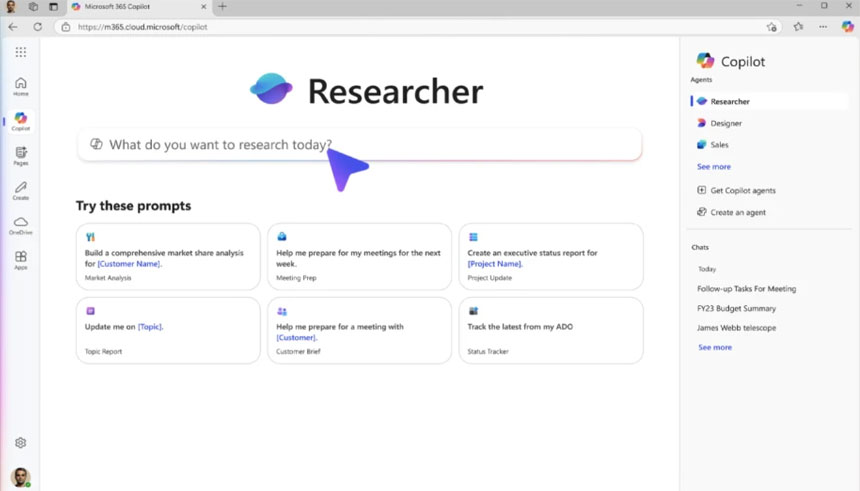
    Microsoft, yesterday at an event in New York, announced a new unified Copilot experience in Windows 11, starting on September 26th as a free update (version 22H2), labeled by the company as “your everyday AI companion.”

    Designed to navigate any task, assist, and deliver contextual information, the Microsoft Copilot tool will be available across Windows 11 desktop, Microsoft 365, Outlook, the Edge browser, and Bing.

    Applications like Paint, Cocreator, Photos, Bing Image Creator, and Clipchamp will be featured with AI capabilities, too.

    • Bing will include the latest DALL.E 3 model from OpenAI, with a better understanding of prompts and more accurate images.
    • Bing Chat will contain personalized answers as the assistant will include responses from the user’s chat history. It will have Microsoft Designer integrated.
    • Bing Chat Enterprise will benefit from a new update. It will be available in the Microsoft Edge mobile app.
    • Bing and Edge will be connected to Microsoft Shopping.
    • Microsoft 365 Copilot will be generally available for enterprise customers on Nov. 1, 2023, along with Microsoft 365 Chat, a new AI assistant.
    • New Surface devices that bring all these AI experiences, too.


    YouTube Vide


  • Google’s Bard AI Assistant Can Now Interact With Information from Gmail, Docs, and Drive

    Google’s Bard AI Assistant Can Now Interact With Information from Gmail, Docs, and Drive

    IBL News | New York

    Google, yesterday, released an upgraded version of its chatbot Bard, which can access information from Google apps and services.

    • The new Bard can now retrieve and help users work with real-time info from Maps, YouTube, Hotels, and Flights, extensions that don’t leverage personal data. These extensions are enabled by default, and you can disable them at any time.
    • In addition, users can enable Bard to interact with information in English from Gmail, Docs, and Drive to summarize and answer questions across personal content. At this point, Google ensured that this Google Workspace data won’t be used to train Bard’s public model and can be disabled at any time.
    • Another feature is based on double-checking Bard’s AI-generated responses with Google Search (with the “Google It” button) to see if there’s content on the web to substantiate the answer. When a statement can be evaluated, users will see it highlighted in Bard’s response and will be able to click to learn more. But if the AI is unsure, the sentence may be highlighted in orange to indicate that it knows this part of the answer might be wrong. This should help users better understand when the AI is “hallucinating” providing a response based on false information. The feature will also help the AI improve as it learns what it gets wrong from user feedback and then uses that to create a better model.
    • Building off of conversations shared, when someone shares a Bard conversation through Bard’s public lin- sharing feature, that author can continue that conversation in his account and build off of what they started.
    • Users can upload images with Google Lens, get Google Search images in responses, and modify Bard’s responses to be simpler, longer, shorter, more professional or more casual in all supported languages.

    A New York Times analyst examined all these features, and the results were mixed, not as promising as Google advertised.”Google’s Bard Just Got More Powerful. It’s Still Erratic,” Kevin Roose wrote.

    Our own IBL News testing found that Bard still hallucinates in large part when retrieving information.


  • Claude.AI Offers a Paid Option, Priced at $20 Per Month

    Claude.AI Offers a Paid Option, Priced at $20 Per Month

    IBL News | New York

    Anthropic, the AI company backed by Google, launched a paid plan for its Claude.ai chatbot in the US and UK this month.

    Priced at $20 (or £18) per month, the new Claude Pro option offers priority access during high-traffic periods, early access to new features, and the ability to send 5x more messages than the free tier.

    “This means you can level up your productivity across a range of tasks, including summarizing research papers, querying contracts, and iterating further on coding projects—like this recent demo of building an interactive map [see it below],” said the company.

    Anthropic said that the typical user will get at least 100 messages every eight hours.

    In July, Anthropic launched Claude 2. This new paid plan puts the company on track to compete with ChatGPT Plus and Quora-owned hub for AI chatbots, also offered at a $20 per month plan.

  • OpenAI Brings the ‘Canva’ Plugin to ChatGPT Store

    OpenAI Brings the ‘Canva’ Plugin to ChatGPT Store

    IBL News | New York

    OpenAI this month introduced the Canva plugin on the ChatGPT store, letting paid users create visuals like logos and banners.

    This integration is currently exclusive to ChatGPT Plus subscribers, who are charged a monthly fee of $20.

    These users can use Canva with ChatGPT, but the process requires a lengthy process with many clicks.

    In the chatbot’s prompt box, ChatGPT’s customers describe the visuals they want to generate. For example: “I am a smartphone enthusiast active on Facebook. Create a banner.”

    Users will then be taken to Canva, where they can edit and download the AI-generated visual by tapping on the ‘Share’ button and choosing the ‘Download’ option.
    .

  • Salesforce Announces ‘Einstein Copilot Studio’ to Build Custom Generative AI Applications

    Salesforce Announces ‘Einstein Copilot Studio’ to Build Custom Generative AI Applications

    IBL News | New York

    At its Dreamforce customer conference in San Francisco this week, Salesforce.com announced Einstein Copilot Studio, a tool that consists of three elements to build custom generative AI applications with low-code knowledge: prompt builder, skills builder, and model builder. It will be available as a pilot this fall, according to the company.

    • The prompt builder allows customizing and creating templates for clients’ product or brand offerings that aren’t available out of the box with Einstein GPT or Einstein Copilot.
    • The skills builder enables companies to add actions to prompts. Some examples include running a competitor analysis or objection handling.
    • The model builder lets enterprise companies bring their model or use one of the supported third-party offerings like Anthropic, Cohere, Databricks, Google Cloud’s Vertex AI, and OpenAI.

    Einstein Copilot Studio says that it makes accessible all the components from across the Salesforce platforms.

    To deal with hallucinations — when a model makes up an answer or provides inappropriate responses — and help companies manage security, governance, and data privacy, Salesforce is building a system called “the Einstein Trust Layer.”
    .

    Salesforce News