Author: IBL News

  • ChatGPT Will Feature Prompt Examples and Suggest Replies to Users

    ChatGPT Will Feature Prompt Examples and Suggest Replies to Users

    IBL News | New York

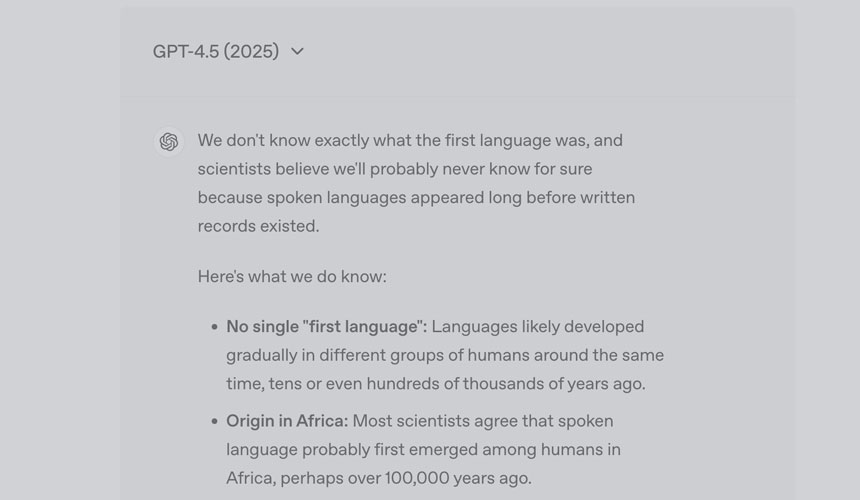
    OpenAI plans to roll out a bunch of updates on ChatGPT this week.

    The chatbot will feature prompt examples at the beginning of a new conversation and will suggest replies to continue the engagement.

    For paid users in the Plus category, ChatGPT will remember the GPT-4 selected model without defaulting back to GPT-3.5.

    Also. for users in the same Plus category, the new Code Interpreter feature will be available, resulting in ChatGPT analyzing data and generating insights across multiple files.

    Finally, OpenAI has implemented keyboard shortcuts: ⌘ (Ctrl) + Shift + C to copy code block and ⌘ (Ctrl) + / to see the complete list.

    On the other hand, OpenAI has launched a web crawler called GPTBot to improve its AI models.

    Users have the possibility to prevent GPTBot from accessing their website’s content and/or allowing certain pages and disallowing others, as explained, as explained on an OpenAI blog post.
    .

    Update August 10, 2023: OpenAI announced that it’s expanding Custom instructions to all users, including those on the free tier of the service.

    These custom instructions allow users to add various preferences and requirements that they want the AI chatbot to consider when responding, so they don’t have to rewrite the same instruction prompts every time they interact with the chatbot.

    For example, a teacher using ChatGPT to create a lesson plan would no longer have to constantly repeat that they teach 3rd grade to receive an appropriately customized response.

  • Zoom Will Use Users’ Data to Train Its AI Models

    Zoom Will Use Users’ Data to Train Its AI Models

    IBL News | New York

    According to recently updated terms of service, Zoom can now train its AI models using users data on product usage.

    The latest update to the video platform’s terms of service, effective as of July 27, on its print, seems to establish Zoom’s right to utilize some aspects of customer data for training and tuning its AI, or machine-learning models. It does not provide an opt-out option.

    These new terms reveal Zoom’s own AI strategy, according to experts.

    Zoom’s terms literally state: “You consent to Zoom’s access, use, collection, creation, modification, distribution, processing, sharing, maintenance, and storage of Service Generated Data for any purpose, to the extent and in the manner permitted under applicable Law, including for the purpose of … machine learning or artificial intelligence (including for the purposes of training and tuning of algorithms and models).”

    “Your content is used solely to improve the performance and accuracy of these AI services,” Zoom wrote in a blog post.

    The update comes amid growing public debate on the extent to which AI services should be trained on individuals’ data. Chatbots such as ChatGPT, Google’s Bard, and Microsoft’s Bing, along with image-generation tools like Midjourney and Stable Diffusion, are trained on swaths of internet text or images.

    Across the generative AI sector, lawsuits have popped up in recent months from authors or artists who say they see their own work reflected in AI tools’ outputs.

    In June, Zoom introduced two new generative AI features, such as a meeting summary tool and a tool for composing chat messages, on a free trial basis for customers. When a user does enable these features and therefore gives his content, Zoom has them sign a consent form allowing Zoom to train its AI models.
    .


  • Coursera Issues a Prompt Engineering Class While It Prepares Its AI Toolset

    Coursera Issues a Prompt Engineering Class While It Prepares Its AI Toolset

    IBL News | New York

    Coursera launched several new short-form content, content, courses, and credentials in the last weeks, covering generative AI. This offer includes two timely courses:

    Coursera also shared that it continues developing new generative AI-powered tools and features which are targeted to launch later this year. Among them:

    • Coursera Virtual Coach. It will answer questions, share personalized feedback, and provide quick video lecture summaries and resources, such as a recommended Clip. It will also communicate in different languages and for any education level.

    • Machine Learning Powered Translations. Course readings, lecture video subtitles, quizzes, assessments, peer review instructions, and discussion prompts across 2,000+ courses will be translated from English into Spanish, Arabic, Brazilian Portuguese, French, German, Indonesian, and Thai.
    • AI-Assisted Course Builder. This tool will auto-generate course content, such as course structure, readings, assignments, and glossaries. Authors will be able to integrate their privately-authored content.


  • Jupyter Releases Generative AI Features Allowing to Generate Notebooks from a Prompt

    Jupyter Releases Generative AI Features Allowing to Generate Notebooks from a Prompt

    IBL News | New York

    The Jupyter organization announced yesterday an open-source project to bring advanced generative AI features to Jupyter Notebook and JupyterLab.

    AWS Jupyter AI offers:

    • A native chat UI conversational assistant in JupyterLab.
    • An %%ai magic that turns the Jupyter Notebook into a reproducible generative AI playground. This works anywhere the IPython kernel runs (JupyterLab, Jupyter Notebook, Google Colab, VSCode, etc.).
    • Support for a wide range of generative model providers and models (AI21, Anthropic, Cohere, Hugging Face, OpenAI, SageMaker, etc.).


  • Meta Open-Sourced AudioCraft, a Generative AI Software for Sound and Music

    Meta Open-Sourced AudioCraft, a Generative AI Software for Sound and Music

    IBL News | New York

    Meta this week shared details on AudioCraft, a single open-source code base for music, sound, compression & generation of high-quality, realistic audio from text.

    AudioCraft consists of three models: MusicGen, AudioGen, and EnCodec.

    • MusicGen, trained with Meta-owned and specifically licensed music, generates music from text-based user inputs. [See Demo]

    • AudioGen, which was trained on public sound effects, generates audio from text-based user inputs.

    • EnCodec decoder allows for higher quality music generation with fewer artifacts.

    Meta’s pre-trained AudioGen model lets users generate environmental sounds and sound effects like a dog barking, cars honking, or footsteps on a wooden floor.

    The models are available for research purposes and to further people’s understanding of the technology.

    “We’re excited to give researchers and practitioners access so they can train their own models with their own datasets for the first time and help advance the state of the art,” said Meta in a blog post.

    Samples of generated audio.

  • “Chatbots are a terrible interface for LLMs,” Expert Designers Say

    “Chatbots are a terrible interface for LLMs,” Expert Designers Say

    IBL News | New York

    Chatbot interfaces look the same as a Google search box, a login form, and a credit card field. “They are not the future; pretty soon, we’re going to get sick of typing all the time, static text is dead,” wrote design expert Amelia Wattenberger.

    Dealing with text prompts, she suggested adding controls to better tailor the responses, as shown below.


    .

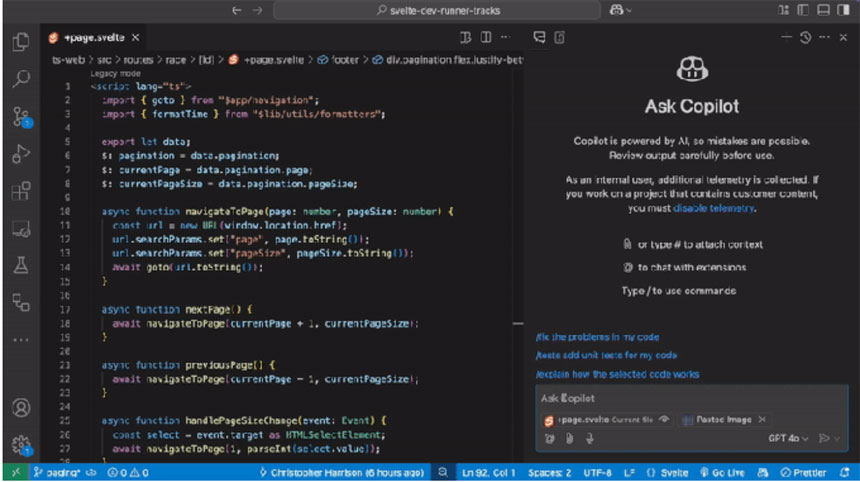
    • “Even if we’re determined to stick with a chat interface, we can make things easier for users. Recently, my team shipped a prototype named Copilot for Docs, exploring ways to make technical documentation easier for developers to use.” [See it below]

    • “I believe the real game changers are going to have very little to do with plain content generation. Let’s build tools that offer suggestions to help us gain clarity in our thinking.”
    .
    • “Chatbots are a terrible interface for LLMs. Or, at the very least, we can add controls, information, and affordances to our chatbot interfaces to make them more usable. I can’t wait to see the field become more mature and for us to start building AI tools that embrace our human abilities.”


    • GitHub: Awesome ChatGPT Prompts 


  • Ukrainian Startup Preply Raised $70M for Its Language Learning App

    Ukrainian Startup Preply Raised $70M for Its Language Learning App

    IBL News | New York

    The live language learning app Preply, known for its large number of human tutors (currently, 35,000 in 50 languages), raised $70 million in equity and debt to extend its series C to $120 million.

    The round was led by Horizon Capital, Hoxton Ventures, owl Ventures, and other investors.

    Preply, which made its name out of its network of tutors, and differentiated itself from the likes of Doulingo’s automatic approach, said in an announcement that it plans now to use the funding to double down on AI to scale its service.

    Founded in Ukraine, the company has already incorporated an AI teaching assistant that allows users to create exercises, grammar explanations, conversation starters, instructional planning, and after-lesson support. It’s also been building AI analytics to help understand how students are doing.

    Preply has Datadog, GroupM, and Bain among its customers.
    .

  • Canvas LMS Will Integrate AI Student Tutor and Teacher Assistant From Khanmigo

    Canvas LMS Will Integrate AI Student Tutor and Teacher Assistant From Khanmigo

    IBL News | New York

    Canvas LMS will include Khan Academy’s AI-powered student tutor and teaching assistant Khanmigo starting with a pilot during the 2024 – 2025 school year with a selected cohort of K-12 and Higher Ed early adopters.

    The announcement of a partnership between Khan Academy and Instructure, the parent company of Canvas LMS, was made during Instructure’s annual conference last week in Denver.

    “This solution is a large step forward in delivering personalization for each student while allowing busy educators to scale their excellence and impact in ways unimaginable a few short months ago,” said Steve Daly, CEO at Instructure.

    Khanmigo supports human-driven, technology-enhanced essay feedback and grading, lesson planning, and rubric creation. “Its tutoring capabilities are aimed to help students use generative AI ethically, equitably, and with integrity, demonstrating an authentic work product becomes easy and clear,” said the company.

    “Every educator we talk to is seeking ways to address students using ChatGPT to write school essays and do homework,” said Sal Khan, founder and CEO of Khan Academy.

    “How can classrooms use AI tools, while ensuring students develop critical thinking skills? We’re teaming up with Instructure to solve this. We’re using AI to show teachers not just the final essay, but how the student got there. So students will be supported in developing critical writing and thinking skills, while getting the benefit of AI designed for education. Khanmigo can also help with rubric creation and grading, saving teachers time. Students won’t get answers, but they will get appropriate levels of support,” he added.


  • Google Tests ‘Genesis’, an AI Assistant for Journalists

    Google Tests ‘Genesis’, an AI Assistant for Journalists

    IBL News | New York

    Google pitched to executives at The New York Times, The Washington Post, and The Wall Street Journal, a personal assistant tool for journalists that uses AI to take in details of current events and generate news copy.

    The tool, known as Genesis, can automate some tasks for journalists and free up time for others, The New York Times reported this month.

    “If this tool is misused by journalists and news organizations on topics that require nuance and cultural understanding, it could damage the credibility of the news organizations that use it,” said Jeff Jarvis, a journalism professor and media commentator.

    Currently, news organizations around the world are grappling with whether to use artificial intelligence tools in their newsrooms.

    However, Google’s Genesis tool can spur anxiety among journalists who have been writing their own articles for centuries.

    Publishers and other content creators have already criticized Google and other major companies for using decades of their articles and posts to help train their AI systems without compensating the publishers.

    Some news organizations, including NBC News and The Times, have taken a position against AI’s sucking up their data without permission.

    In addition, experts say that Google’s chatbot Bard presents factual assertions that are sometimes incorrect and do not send traffic to more authoritative sources, such as news publishers.
    .

  • Stack Overflow Launches Its Own Into Generative AI Solution

    Stack Overflow Launches Its Own Into Generative AI Solution

    IBL News | New York

    Yesterday, the community-based question-and-answer website Stack Overflow announced an extensive list of generative AI capabilities on both the public site and its enterprise offering.

    “We are giving the ability for users to ask conversational questions through OverflowAI, and the generative answers are going to come straight from the 58 million questions and answers from public Stack Overflow, with citations to the very specific sources,” said Stack Overflow CEO Prashanth Chandrasekar.

    OverflowAI brings a set of features to the platform not to replace the community, but rather to complement it in a number of ways.

    The OverflowAI model enables natural language processing (NLP)-based queries, intended to yield highly accurate generated results. The model was trained on the corpus of the Stack Overflow public knowledge base.

    The company ensured that community-directed responses will remain core to the platform.

    Github Copilot’s AI technology has captured the attention of the code development community in recent months, and critics say that OverflowAI will have a hard time competing with this new service.