Elon Musk’s AI startup xAI will open-source its chatbot Grok this week, the entrepreneur said.
The owner of Tesla and SpaceX made this announcement days after suing OpenAI and complaining that the Microsoft-backed startup had deviated from its open-source roots.
Available to customers paying a $16 monthly subscription, Grok includes access to “real-time” information and views undeterred by “politically correct” norms.
The promise to imminently open-source Grok will help xAI join the list of a number of growing firms, including Meta and Mistral, that have published the codes of their chatbots to the public.
Musk has long been a proponent of open source. Tesla has open-sourced many of its patents. “Tesla will not initiate patent lawsuits against anyone who, in good faith, wants to use our technology,” Musk said in 2014.
X, formerly known as Twitter, also open-sourced some of its algorithms last year.
Musk reaffirmed his criticism of the Altman-led firm Monday, saying, “OpenAI is a lie.”
On the other hand, OpenAI lambasted Elon Musk’s allegations against it, saying in a court filing that the billionaire entrepreneur’s claims “rest on convoluted — often incoherent — factual premises.”
The strongly worded filing is the company’s first legal response to Musk’s February lawsuit against the company, Chief Executive Officer Sam Altman, and President Greg Brockman.
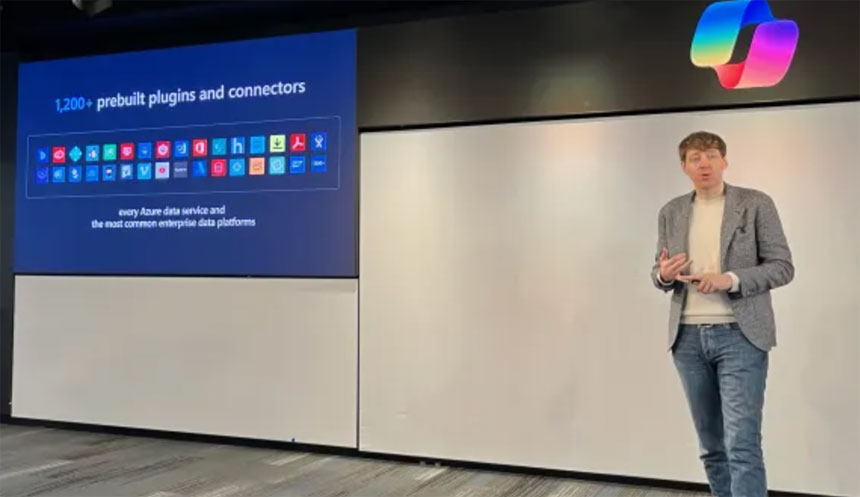
Microsoft announced this week that it will release a Copilot chatbot that can perform and automatize key tasks for people working in finance.
Comparing and reconciling data taken from different systems is a recurring task in finance planning and analysis.
This Copilot for finance will initially run a variance analysis, reconcile data in Excel, and speed up the collections process in Outlook, Charles Lamanna, a Microsoft Vice President, said in an interview with CNBC.
This tool will draw on information stored in SAP and Microsoft Dynamics 365.
Microsoft already has a Copilot for general-purpose industrial use in Office applications.
Inflection announced an upgraded model that makes its chatbot called Pi competitive with GTP-4 and Google’s Gemini, according to this AI start-up.
“Inflection-2.5 approaches GPT-4’s performance, but used only 40% of the amount of computing for training,” said the company. “We’ve made particular strides in areas of IQ like coding and mathematics.”
Hosted in Azure, Inflection-2.5 is available at pi.ai, iOS,Android, and a new desktop app.
Pi also incorporates real-time web search capabilities, providing users with breaking news, current events, and up-to-date information.
According to the AI start-up, Pi has one million daily users and six million monthly active users.
An average conversation with Pi lasts 33 minutes, and one in ten lasts over an hour each day.
About 60% of people who talk to Pi on any given week return the following week, and we see higher monthly stickiness than leading competitors.
.
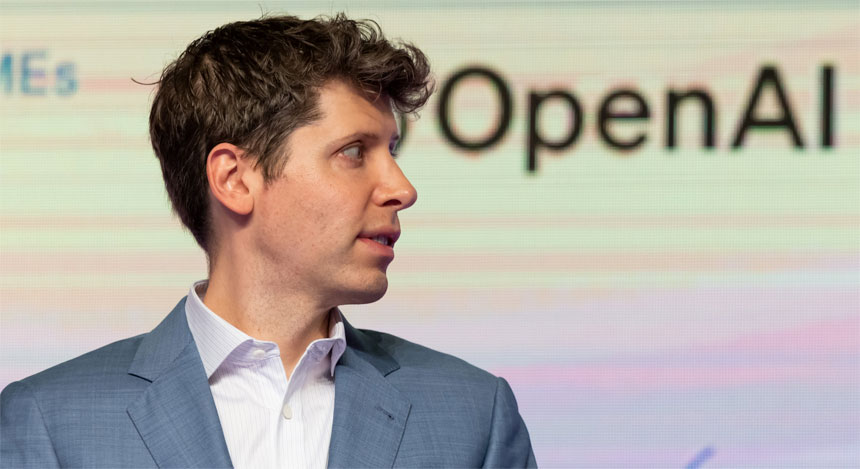
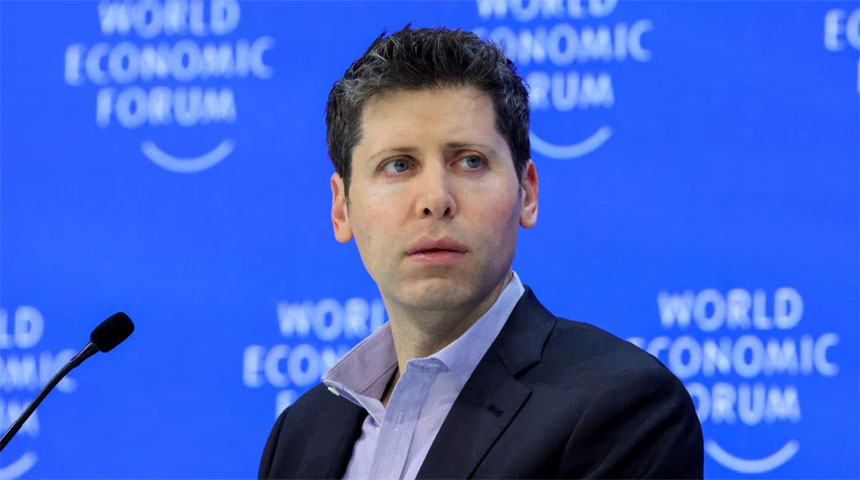
Sam Altman, as CEO, will rejoin the OpenAI Board of Directors four months later after losing his seat and being fired, the company announced in a blog post yesterday.
Joining alongside him, three new members will be added to the Board: former CEO of the Bill and Melinda Gates Foundation, Dr. Sue Desmond-Hellmann, ex-Sony Entertainment president Nicole Seligman, and Instacart CEO Fidji Simo. These additions will bring OpenAI’s board to seven people.
The members of the transitory board designated after Altman’s firing in November won’t be stepping down. Salesforce co-CEO Bret Taylor (OpenAI’s current board chair), Quora CEO, Adam D’Angelo, and Larry Summers, the economist and former Harvard president, will remain in their roles on the board, as will Dee Templeton, a Microsoft-appointed board observer.
The almost all-male board has received criticism given its lack of diversity.
• Desmond-Hellmann, in addition to heading the Bill and Melinda Gates Foundation for six years, was previously chancellor of the University of California, San Francisco, and before that, president of product development at Genentech, where she helped develop gene-targeted cancer drugs. Desmond-Hellmann is an oncologist by training is and board-certified in both internal medicine and medical oncology.
• Nicole Seligman, an attorney and corporate director, received national attention for her representation of Lieutenant Colonel Oliver North during the Iran–Contra hearings and President Bill Clinton during his impeachment trial. Seligman was Sony’s VC and general counsel before rising through the ranks to CEO of Sony Corporation and president of Sony Corporation of America.
• Fidji Simo, before becoming CEO of Instacart, was head of the Facebook app at Meta and the VP overseeing Meta’s various video, games, and monetization efforts. Simo also co-founded — and is currently president of — The Metrodora Foundation, a health clinic and research institute.
Altman’s reinstatement and the board’s expansion also followed an investigation by the law firm WilmerHale, retained by OpenAI, that unanimously concluded that “Sam and OpenAI president Greg Brockman are the right leaders for OpenAI.”
But not all at OpenAI agree.
This week, The New York Timesdescribed Altman as a manipulative leader who undermines the credibility of those who challenged him. Both OpenAI CTO Mira Murati and Ilya Sutskever expressed concerns about Altman’s behavior prior to his ouster last year.
.
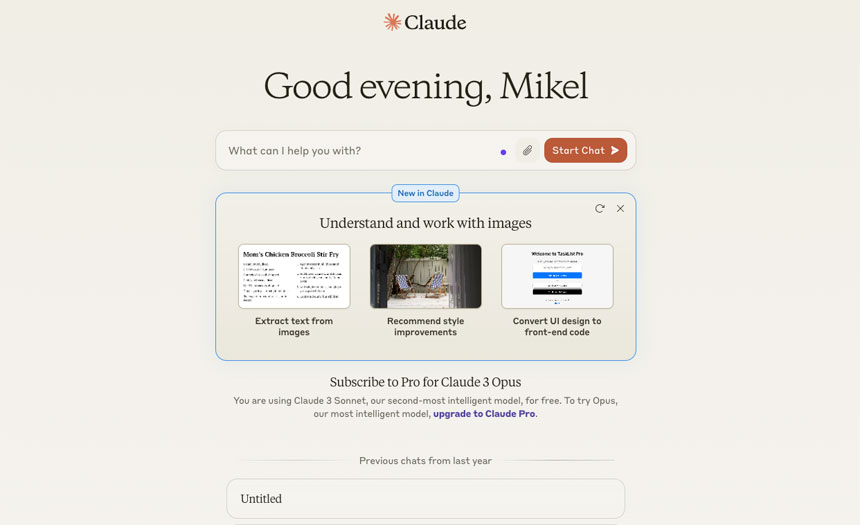
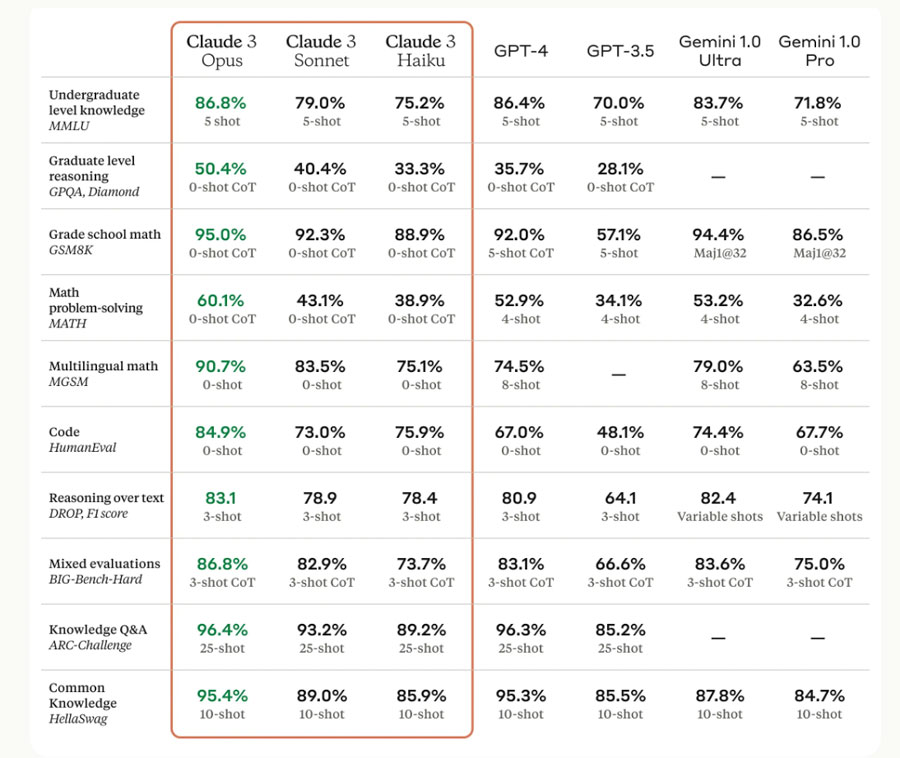
San Francisco-based Anthropic announced this week three new AI models, each offering different levels of capability, speed, and cost: Claude 3 Haiku, Claude 3 Sonnet, and Claude 3 Opus.
The Claude 3 family of models offers a 200K context window, with the ability to handle as high as 1 million.
They are available to use in the chatbot claude.ai and through the Claude API.
The company said that its most advanced model Opus outperformed their rivals — namely GPT-4 and Gemini Ultra — on most of the common evaluation benchmarks for AI systems, “including undergraduate-level expert knowledge (MMLU), graduate-level expert reasoning (GPQA), basic mathematics (GSM8K), and more.”
“It exhibits near-human levels of comprehension and fluency on complex tasks, leading the frontier of general intelligence,” said Anthropic. [See graphic below.]
“The Claude 3 models can power live customer chats, auto-completions, and data extraction tasks where responses must be immediate and in real-time.”
“Haiku is the fastest and most cost-effective model on the market for its intelligence category. It can read an information and data-dense research paper on arXiv (~10k tokens) with charts and graphs in less than three seconds.”
Anthropic has become one of OpenAI’s most formidable competitors. It was formed in 2021 by former employees of OpenAI, including Daniela Amodei and her brother Dario, who serves as its chief executive officer. Most of its customers are businesses, ranging from search engine DuckDuckGo to travel guide publisher Lonely Planet.
OpenAI fired back at Elon Musk’s lawsuit using the owner of Tesla’s own emails.
In a blog post authored by OpenAI’s management team – Greg Brockman, Ilya Sutskever, John Schulman, Sam Altman, Wojciech Zaremba – the Microsoft-backed startup tried to prove that Musk backed the company’s plans to become a for-profit business, and he even insisted on raising “billions of dollars” to compete against Google.
Open AI revealed that since its inception in 2015, it had raised less than $45 million from Musk, despite his initial commitment to provide as much as $1 billion in funding. The startup also secured more than $90 million from other donors to support its research efforts, it said.
The San Francisco – research lab’s response followed Elon Musk suing Altman, Brockman, OpenAI, and other affiliates of the firm last week, alleging the ChatGPT-maker had breached its original contractual agreements.
These are some of the things that OpenAI said in its blog post:
– “Elon said we should announce an initial $1B funding commitment to OpenAI. In total, the non-profit has raised less than $45M from Elon and more than $90M from other donors.”
– “I will cover whatever anyone else doesn’t provide,” he said.
– “As we discussed a for-profit structure in order to further the mission, Elon wanted us to merge with Tesla, or he wanted full control. Elon left OpenAI, saying there needed to be a relevant competitor to Google/DeepMind and that he was going to do it himself. He said he’d be supportive of us finding our own path.”
– “In late 2017, we and Elon decided the next step for the mission was to create a for-profit entity. Elon wanted majority equity, initial board control, and to be CEO. In the middle of these discussions, he withheld funding. Reid Hoffman bridged the gap to cover salaries and operations.”
– “In early February 2018, Elon forwarded us an email suggesting that OpenAI should “attach to Tesla as its cash cow”, commenting that it was “exactly right… Tesla is the only path that could even hope to hold a candle to Google. Even then, the probability of being a counterweight to Google is small. It just isn’t zero.”
– “We’re making our technology broadly usable in ways that empower people and improve their daily lives, including via open-source contributions.”
– “We provide broad access to today’s most powerful AI, including a free version that hundreds of millions of people use every day. For example, Albania is using OpenAI’s tools to accelerate its EU accession by as much as 5.5 years; Digital Green is helping boost farmer income in Kenya and India by dropping the cost of agricultural extension services 100x by building on OpenAI; Lifespan, the largest healthcare provider in Rhode Island, uses GPT-4 to simplify its surgical consent forms from a college reading level to a 6th grade one; Iceland is using GPT-4 to preserve the Icelandic language.”
– “Elon understood the mission did not imply open-sourcing AGI. As Ilya told Elon: “As we get closer to building AI, it will make sense to start being less open. The Open in openAI means that everyone should benefit from the fruits of AI after it’s built, but it’s totally OK to not share the science…”, to which Elon replied: “Yup”.
– “We’re sad that it’s come to this with someone whom we’ve deeply admired—someone who inspired us to aim higher, then told us we would fail, started a competitor, and then sued us when we started making meaningful progress towards OpenAI’s mission without him.”
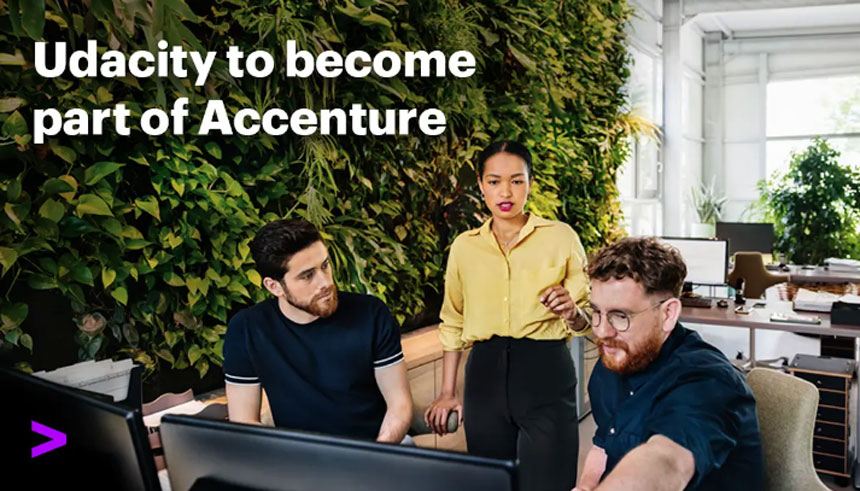
Accenture announced it will acquire Udacy as part of an effort to build its own technology learning platform focused on AI, in which it will invest $1 billion.
This platform, called LeanVantage, will provide Accenture’s clients with learning and training services to upskill their workforce in technology, data, and AI. Udacity’s team of more than 230 professionals will join Accenture LearnVantage,
Accenture didn’t disclose how much it paid for Udaciy. The completion of the acquisition is subject to regulatory review and antitrust clearance.
“The addition of Udacity to Accenture LearnVantage will enable us to bring Accenture’s deep capabilities as a world-class learning organization to clients at scale, helping them build the skills of their people to achieve greater business value,” said Kishore Durg, global lead of Accenture LearnVantage.
This year, Udacity seemed it was to be acquired by Indian edtech company Upgrad, with an asking price of $80 million. Apparently, that deal fell through, and Accenture ended up buying them instead.
.
Legal experts are weighing in on Elon Musk’s lawsuit against OpenAI, CEO Sam Altman, and President Greg Brockman.
All are circling the idea that OpenAI put profits and commercial interests in developing AGI (Artificial General Intelligence) ahead of this stated duty to protect the public good, as Venture Beat reported.
James Denaro, attorney and chief technologist at the Washington DC-based CipherLaw, pointed to Musk’s efforts in the suit to “effectively force OpenAI to open-source all of its research and technologies.”
But, he continued, it would be difficult to enforce these generalized understandings as if they were well-defined contracts.
“Did they all agree that OpenAI could never have a proprietary, for-profit product, or could OpenAI have both some open source technology and other closed source technology?” he said.
“It may be difficult for a court to find that the agreements they had with each other, being ambiguous in scope and in time, can be strictly enforced when they weren’t originally negotiated as if they were contracts.”
Denaro says the breach of contract claim is uncertain at best.
“This lawsuit is probably a stretch, as the agreements do not clearly exclude OpenAI from having closed-source technologies or ever profiting from that.
Anat Alon-Beck, associate professor at Case Western University School of Law, said that while Elon Musk has the right to file it, the fact that Musk, as the founder of X.ai, is now also a competitor, shows has clear “incentives to sabotage” OpenAI.
She added that the lawsuit should be governed under Delaware law, under Delaware’s business-friendly jurisdiction, not California.
OpenAI Responds
On the other hand, OpenAI’s top executives rejected several claims Elon Musk made in the lawsuit, Axios reported.
OpenAI’s top executives rejected several claims Elon Musk has made in a lawsuit — insisting in a Friday memo to staff, seen by Axios, that the company remains independent, committed to benefiting humanity and has yet to achieve artificial general intelligence in its products.
“Musk’s allegations — including claims that GPT-4 is an AGI, that open-sourcing our technology is the key to the mission and that we are a de facto subsidiary of Microsoft — do not reflect the reality of our work or mission,” chief strategy officer Jason Kwon said in a memo to employees seen by Axios.
“An AGI will be a highly autonomous system capable enough to devise novel solutions to longstanding challenges — GPT-4 can’t do that,” he added.
Regarding the idea of acting as a subsidiary of Microsoft, “We decide what to research and build, how to run the company, who our products serve, and how to live out our mission,” he said. “We also directly compete with Microsoft to deliver the best value and products to businesses, developers, and everyday people. As we know, OpenAI is the creator of ChatGPT and ChatGPT for Enterprise, while Microsoft offers Copilot and Copilot for Microsoft 365.”
CEO Sam Altman sent a follow-up message agreeing with these statements and saying,“The attacks will keep coming.”
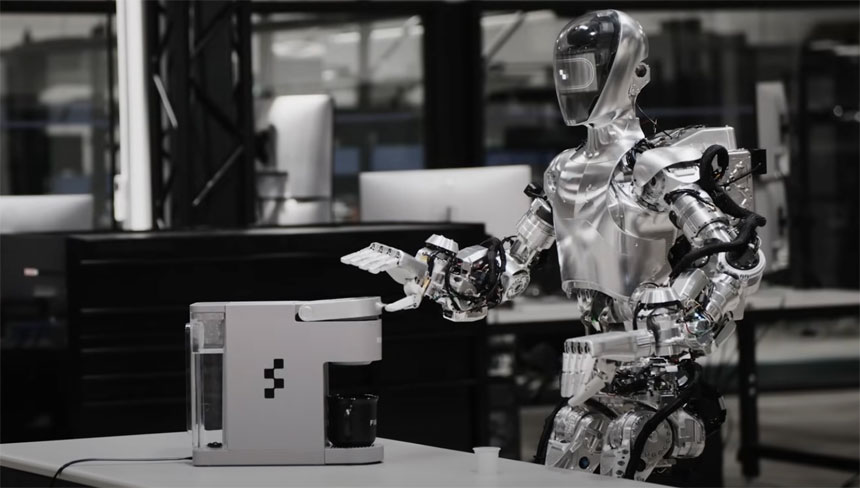
Figure AI, a startup working to build humanoid robots that can perform dangerous and undesirable jobs, got support from OpenAI and other large names in AI, such as NVIDIA, Microsoft, and Jeff Bezos’ venture fund.
The Sunnyvale, California-based company announced on Thursday that it raised $675 million in Series B funding at a $2.6 billion valuation with investments from Microsoft, OpenAI Startup Fund, NVIDIA, Jeff Bezos (through Bezos Expeditions), Parkway Venture Capital, Intel Capital, Align Ventures, and ARK Invest.
Focused on deploying humanoid robots to assist people with real-world applications addressing labor shortages, Figure recently announced its first commercial agreement with BMW Manufacturing to bring humanoids into automotive production.
The Figure team, made up of top AI robotics experts from Boston Dynamics, Tesla, Google DeepMind, and Archer Aviation, has made remarkable progress in the past few months in the key areas of AI, robot development, robot testing, and commercialization. Founded 21 months ago, Figure currently has a team of 80 employees and is led by serial entrepreneur Brett Adcock.
The new capital will be used to accelerate the timeline for humanoid commercial deployment as AI training, robot manufacturing, and expanding engineering headcount will be scaled up.
The collaboration with OpenAI will help to accelerate “Figure’s commercial timeline by enhancing the capabilities of humanoid robots to process and reason from language,” stated the company.
Peter Welinder, VP of Product and Partnerships at OpenAI, said: “We’ve always planned to come back to robotics and we see a path with Figure to explore what humanoid robots can achieve when powered by highly capable multimodal models. We’re blown away by Figure’s progress to date and we look forward to working together to open up new possibilities for how robots can help in everyday life.”
Figure will use Microsoft Azure for AI infrastructure, training, and storage.
To date, Figure AI has developed a general-purpose robot, called Figure 01, that looks and moves like a human. The company sees its robots being put to use in manufacturing, shipping and logistics, warehousing, and retail, where labor shortages are the most severe.
Earlier this week, the company released a video showing Figure 01 in action (see below). The robot, attached to a tether, walks on two legs, and uses its five-fingered hands to pick up a plastic crate, then walks several more steps before placing the box on a conveyor belt.
Figure’s ultimate aim is for Figure 01 to be able to perform “everyday tasks autonomously.” The company says getting there will require it to develop more robust AI systems.
There is a crowded field of companies vying to make humanoid robots a reality, although the market is nascent. Amazon-backed Agility Robotics plans to open a factory that can produce up to 10,000 of its bipedal Digit robots per year.
Tesla also trying to build a humanoid robot, called Optimus, while robotics company Boston Dynamics has developed several models. Norwegian humanoid robot startup 1X Technologies recently raised $100 million with backing from OpenAI.
.
Billionaire entrepreneur and owner of Tesla, SpaceX, and X Elon Musk sued this week OpenAI and its CEO, Sam Altman, saying they abandoned the startup’s original, not-for- profit mission, which was based on developing AI for the benefit of humanity.
The lawsuit, filed on Thursday in California Superior Court in San Francisco, is a culmination of Musk’s opposition to the startup he co-founded. OpenAI has since become the leading company in generative AI, with the help of $13 billion of dollars in funding from Microsoft.
Musk’s lawsuit alleges a breach of contract, saying Altman and co-founder Greg Brockman originally approached him to make an open-source, non-profit company, but the startup established in 2015 is now focused on making money.
OpenAI “set the founding agreement aflame” in 2023 when it released its most powerful language model GPT-4, as essentially a Microsoft product, the lawsuit alleged.
Musk said OpenAI’s three founders originally agreed to work on artificial general intelligence (AGI), a concept that machines could handle tasks like humans, but in a way that would “benefit humanity,” according to the lawsuit. OpenAI would also work in opposition to Google, which Musk said he believed was developing AGI for profit and would pose grave risks.
“OpenAI, Inc. has been transformed into a closed-source de facto subsidiary of the largest technology company in the world: Microsoft. Under its new board, it is not just developing but is actually refining an AGI to maximize profits for Microsoft, rather than for the benefit of humanity,” Musk says in the suit.
“OpenAI, Inc.’s once carefully crafted non-profit structure was replaced by a purely profit-driven CEO and a board with inferior technical expertise in AGI and AI public policy. The board now has an observer seat reserved solely for Microsoft,” Musk claims.
Musk is represented in the suit by Los Angeles law firm Irell & Manella. According to Reuters, Musk decided to try to seize control of OpenAI from Altman and the other founders in late 2017, aiming to convert it into a commercial entity in partnership with Tesla, utilizing the automaker’s supercomputers.
Last July, Musk founded his own artificial intelligence startup, xAI.
.
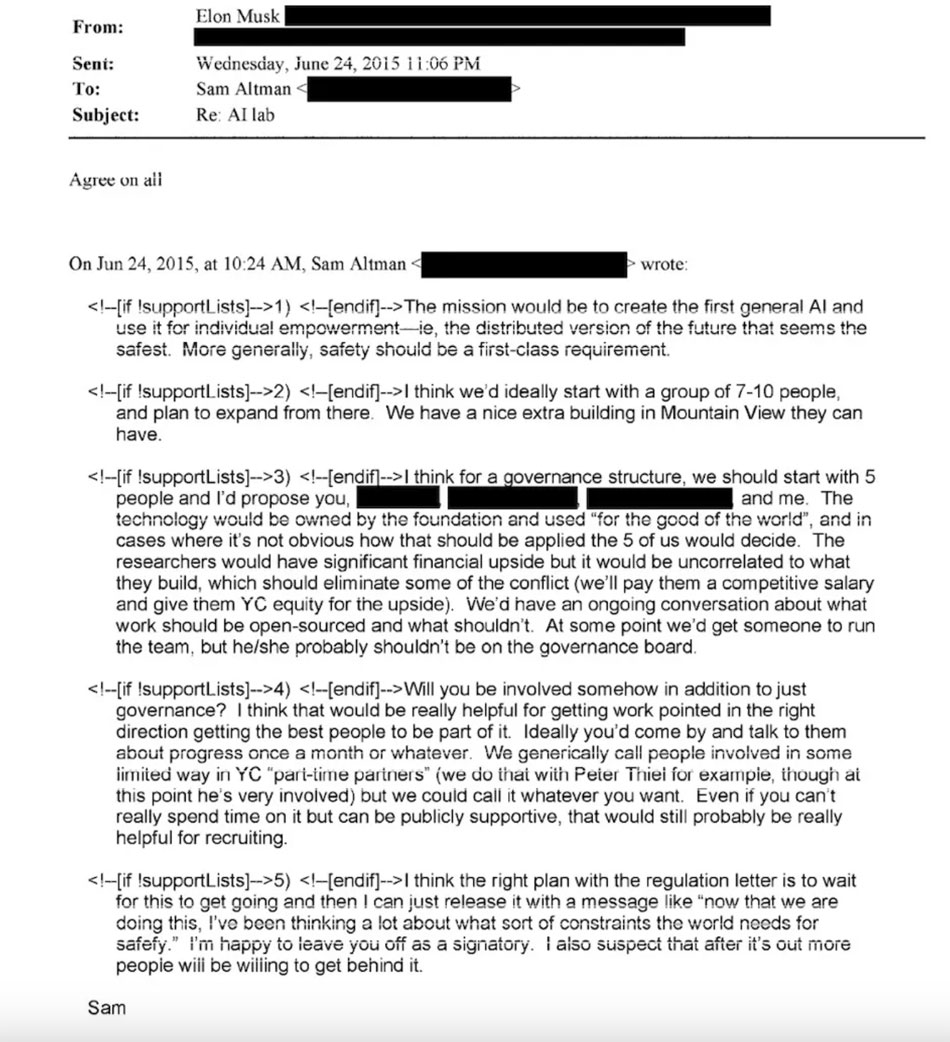
An email exchange between Musk and Altman, presented as evidence in the lawsuit.