Dr. Barbara Ritter, dean of the Neff College of Business, discusses the transformative power of artificial intelligence ahead of an event featuring the AI solutions architect for the Cleveland Cavaliers.
Source: Youtube
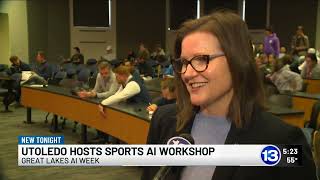
Dr. Barbara Ritter, dean of the Neff College of Business, discusses the transformative power of artificial intelligence ahead of an event featuring the AI solutions architect for the Cleveland Cavaliers.
Source: Youtube
We keep hearing over and over that generative AI is causing massive problems in education, both in K-12 schools and at the college level.
Source: Youtube

IBL News | New York
Coca-Cola’s holiday ads have been enhanced with an upgraded dose of AI following last year’s debut of this technology, which drew criticism from creative professionals.
San Francisco-based Silverside developed one of the two commercials for “Holidays Are Coming,” which will run throughout the season.
The Wall Street Journal commented on the quality of the video ads:
“The wheels of the red delivery trucks in Coke’s new commercials look as if they’re all turning, rather than gliding like some did last year. The shiny-faced, spaced-out humans of 2024 have ceded their place to an expanded host of critters, letting Coke dodge the “uncanny valley” where nearly real simulations of people wind up unsettling viewers.”
Other advertisers have also utilized generative AI to achieve speed and cost efficiencies, despite some people’s distaste for the technology and its potential to render jobs in the creative industries.
However, Generative AI ads require considerable work: a team of artists works frame by frame, often pixel by pixel, to refine and tweak images.
According to the trade group Interactive Advertising Bureau, 30% of TV commercials, social videos, and online videos this year are being built or enhanced using generative AI tools, up from 22% in 2023.
Last month, tech giant Google unveiled its first completely AI-generated ad spot.
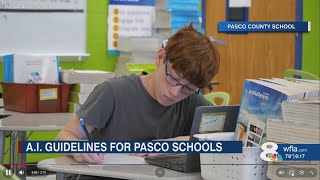
Pasco County School District is changing its tune on the use of artificial intelligence in the classroom.
Source: Youtube
The workplace is changing, and so are learning technologies. As new generations enter with fresh expectations around instant access, intuitive design, and meaningful support, many organisations are feeling the pressure to modernise learning and knowledge-sharing experiences. But with limited time, resources, and attention spans, how do we keep up?
Source: Youtube

New York Times reporter AJ Jacobs went 48 hours without using any artificial intelligence.
Source: Youtube

Several people have found they get a confusing reaction from ChatGPT when mentioning the seahorse emoji.
Source: Youtube
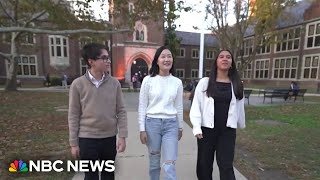
Some college students are expressing frustration over their peers’ use of artificial intelligence to complete assignments, which they say leads to an unfair advantage for those who use the technology.
Source: Youtube

Gary Marcus: AI bubble could destroy the economy.
Source: Youtube

IBL News | New York
OpenAI announced yesterday that it has 1 million business customers worldwide using ChatGPT for Work, either directly or through its developer platform.
Organizations related to areas such as financial services, healthcare, and retail are among the most active. Consumer adoption is also at high rates, with 800 million users weekly.
The San Francisco-based lab is set to generate $13 billion in revenue this year as it continues to expand sales.
To support the enterprise acceleration, OpenAI launched a new wave of tools and integrations, such as:
OpenAI quoted a recent Wharton study to highlight that 75% of enterprises report a positive ROI, and fewer than 5% report a negative return. “When AI is deployed with the right use case and infrastructure, teams see real results,” said the firm.
This week, too, OpenAI agreed to pay Amazon.com $38 billion for computing power in a multiyear deal. That marks the first partnership between the startup and the cloud company.