Author: IBL News

  • How AI Can Support Learners

    How AI Can Support Learners

    IBL News & IBL Education | New York

    AI can support learners in a number of ways. For example, AI can be used to create personalized learning plans that cater to the specific needs and abilities of individual learners.

    This can help ensure that each learner is able to learn at their own pace and receive targeted support in areas where they may be struggling.

    AI can also be used to create interactive and engaging learning materials, such as virtual tutors or educational games, which can make the learning process more enjoyable for learners.

    Additionally, AI can be used to analyze data about learners’ progress and performance, providing teachers with valuable insights into how to best support their students.

    Here is an example of how AI can be used to support learners:

    1. A learner logs into a learning platform that uses AI to create personalized learning plans.

    2. The AI system collects data about the learner’s background, abilities, and learning goals, and uses this information to create a customized learning plan for the learner.

    3. The learning platform presents the learner with a series of lessons and activities tailored to their specific needs and abilities. These may include interactive games, videos, quizzes, and other engaging materials.

    4. As the learner progresses through the lessons, the AI system tracks their progress and performance and provides them with real-time feedback and support. For example, if the learner is struggling with a particular concept, the AI system may provide additional explanations or examples to help them understand it better.

    5. The AI system also provides teachers with insights into the learners’ progress and performance, allowing them to identify areas where the learners may need additional support and adjust their teaching accordingly.

    Overall, AI can support learners by providing them with personalized and engaging learning experiences, and by providing teachers with valuable data and insights to help them better support their students.

    A SERIES OF ARTICLES ABOUT ‘AI, CLOUD, AND ADVANCED TECHNOLOGIES IN EDUCATION’ WRITTEN BY THE IBL AI ENGINE IN DECEMBER 2022*


    *The IBL AI/ML Engine extends and hosts leading language models (LLMs) via a combination of fine-tuning, customized datasets and REST APIs to provide an all-in-one AI platform for education featuring content recommendations, assessment creation and grading, chatbots and mentors, and predictive analytics.

     

  • Potential Applications of AI in Education

    Potential Applications of AI in Education

    IBL News & IBL Education | New York

    There are many potential applications of artificial intelligence (AI) in education, including the following:

    Personalized learning: AI can be used to create personalized learning experiences for students, providing them with tailored content and feedback based on their individual needs and abilities. This can help students learn at their own pace and provide them with support and guidance when needed.

    Adaptive testing: AI can be used to create adaptive tests that adjust to the individual student’s level of knowledge and ability. This can help ensure that students are challenged and engaged, and can help teachers identify areas where students may need additional support.

    Automated grading: AI can be used to automatically grade student work, freeing up teachers’ time and allowing them to focus on providing personalized feedback and support to students. This can help reduce the workload of teachers and allow them to focus on more important tasks.

    Language learning: AI can be used to provide personalized language learning experiences, including speech recognition and natural language processing technology to help students learn and practice new languages.

    Virtual tutors: AI can be used to create virtual tutors that can provide personalized support and guidance to students. These virtual tutors can help students learn new concepts, practice skills, and get feedback on their work.

    Overall, the best applications of AI in education are those that help improve the learning experience for students and provide personalized support and guidance. By leveraging the power of AI, educators can create more engaging and effective learning environments that can help students succeed.

    A SERIES OF ARTICLES ABOUT ‘AI, CLOUD, AND ADVANCED TECHNOLOGIES IN EDUCATION’ WRITTEN BY THE IBL AI ENGINE IN DECEMBER 2022*


    *The IBL AI/ML Engine extends and hosts leading language models (LLMs) via a combination of fine-tuning, customized datasets and REST APIs to provide an all-in-one AI platform for education featuring content recommendations, assessment creation and grading, chatbots and mentors, and predictive analytics.



  • NYU Will Invest $1 Billion Into Its Engineering School in Brooklyn, NY

    NYU Will Invest $1 Billion Into Its Engineering School in Brooklyn, NY

    IBL News | New York

    New York University (NYU) will invest $1 billion in the Tandon School of Engineering, its flagship engineering school in Downtown Brooklyn. The goal is to improve its ranking among competitors while raising New York City’s profile in the technology sector, according to a story in The New York Times yesterday.

    NYU will add $400 million in new funds to the $600 it had already pledged to the school. The funding, which will come from the school’s reserve, will be used over a decade to revamp labs and student spaces at Tandon and expand its focus on cybersecurity and AI technology. In addition, 40 tenure-track faculty members will be hired.

    Tandon School Dean, Jelena Kovacevic, said to the Times, “no university can achieve national or international status without a viable technology school.”

    In 2015, NYU’s Engineering Faculty and Programs and the Polytechnic University renamed its merged school for trustees Ranjan and Chandrika Tandon, who donated $100 million to the institution. Last September, the university purchased a 10-story building in Brooklyn (3 MetroTech Center) to serve as the college’s central hub.

    “Engineering education is a force for social mobility, an economic engine for the borough, and a vital contributor to the city’s effort to be a world center of tech,” NYU president Andrew Hamilton said in a statement.

    The school has had two Nobel winners throughout its history. Rudolph A. Marcus, a former professor at Polytechnic, won the Nobel Prize in Chemistry for his contributions to the theory of electron transfer reactions in chemical systems. Martin L. Perl, a Polytechnic alumnus, won the Nobel Prize in Physics for his pioneering experimental contributions to lepton physics.

    Polytechnic students designed the cables used to hold up the Brooklyn Bridge. Those cables then paved the way for skyscrapers to be built in Manhattan, introducing the concept of elevators.

  • Open edX & Learning Platforms Newsletter | October – December 2022: Open edX, 2U, Coursera, Doulingo, LEGO, MasterClass.com…

    Open edX & Learning Platforms Newsletter | October – December 2022: Open edX, 2U, Coursera, Doulingo, LEGO, MasterClass.com…

    Newsletter format  |  Click here to subscribe ]

    OCTOBER – DECEMBER 2022 – NEWSLETTER #47  |  Breaking news at IBL News  |  Noticias en Español


    Open edX

    • The 2023 Open edX Conference Will Take Place March 28 – 31 at MIT


    2U / edX Platform

    • 2U Kept Flat Revenue in the Third Quarter of 2022

    • 2U Launches New Boot Camps Under the edX Brand, Retiring the Trilogy Name

    • The London School of Economics Launches a Stackable Pathway to Degrees in Mathematics and Statistics on edX

    • Cognizant Offers Five Train-To-Hire Courses on Java through edX.org

    • An edX Course Created as Peace Project Between Israel’s Jewish and Arab Cultures Makes a Global Impact


    Coursera

    • Coursera and SAP Release a Technology Consultant Professional Certificate

    • Coursera Improves Its Note-Taking Technology to Help Learners to Increase Retention

    • Georgetown and Coursera Offer the First Fully Online Liberal Arts Degree

    • Coursera Announces Layoffs Due to Slower Growth Rate

    • Coursera Expands Its Micro-Learning Approach by Adding Thousands of 5-10 Min Videos


    Learning Platforms: Transactions

    • LEGO Purchases Education-Technology Firm BrainPOP for $875 Million

    • Genius Group Acquires an American Documentary Film Company to Provide High-Quality Educational Videos

    • Duolingo Purchases the Animation Studio that Works on Its Brand

    • Zovio Sells Fullstack Academy and Liquidates the Company

    • The Owner of Inside Higher Ed Acquires a Leading Student Recruitment Events Firm

    • Anthology Sells the Blackboard K-12 Division

    • Investment Company Thoma Bravo Sells Frontline Education for $3.7 Billion

    • IXL Learning Purchased Emmersion, a Developer of AI-Powered Language Assessments

    • Scholastic Acquired the A2i System for Literacy Instructional Assessment

    • Testing and Assessment Prometric Acquires Finetune Learning


    Learning Platforms: Functionalities

    • Zoom Will Soon Be Installed in Tesla Cars

    • The Indian Giant BYJU’S Hires Leo Messi As Its Global Ambassador

    • D2L Issues an Interactive Content Creation Tool With Templates and Themes

    • MasterClass.com Issues a Course with Madeleine Albright and Condoleezza Rice


    Funding

    • EdTech Will Expand from K–12 and Higher Ed to Lifelong Learning Economy

    • A British Platform that Teaches Cybersecurity with Gamification Attracts Big Funding


    YouTube

    • YouTube Will Launch a @username Format to Boost User Engagement

    • YouTube Will Allow Course Creators to Charge for their Content


    Adobe, Figma

    • Figma’s CEO Dylan Field Pocketed One Billion More than Initially Announced by Adobe

    • Adobe’s Stock Continues to Fall as the Market Signals Its Concern About the Figma Deal

    • Figma’s $20 Billion Acquisition by Adobe Causes Concern in the Creative Community


    2022 Events | All of the Key Conferences Listed!

    • Education Calendar 2022  – NOVEMBER | DECEMBERConferences in Latin America & Spain


    This newsletter was created in collaboration with IBL Education, a New York City-based company specializing in AI-driven, skills learning platforms. We also film and produce courses for universities and business organizations. Read the latest IBL Newsletter   |  Archive of Open edX Newsletters

  • Ohio State University President Steps Down After an Investigation

    Ohio State University President Steps Down After an Investigation

    IBL News | New York

    Ohio State University President Kristina M. Johnson, 65 years old, stepped down following an investigation conducted by an outside firm. The content of that research was not disclosed. The university’s Board of Trustees asked for her resignation on Monday.

    “I’m saddened by the circumstances. My record of accomplishment at Ohio State speaks for itself, and I made the difficult decision to step down,” Johnson said.

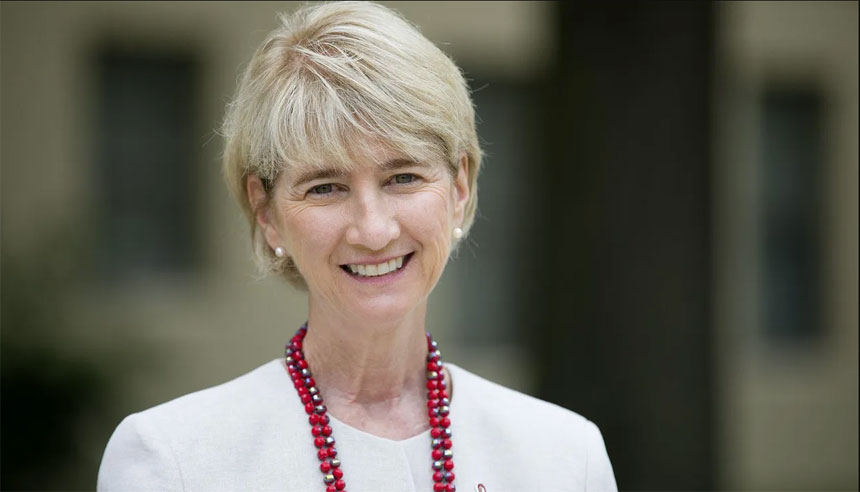
    In a statement, Kristina M. Johnson [in the picture] expressed her gratitude and wished everyone the very best in the future. No clue of her departure was issued.

    Johnson has served only 2½ years out of her five-year contract. At the time of her departure, Johnson will have the second-shortest tenure as a president at Ohio State behind only former Ohio State President Walter Q. Scott, who served from 1881 to 1883. That does not include acting or interim presidents.

    Ohio State’s Board of Trustees will begin searching for the university’s 17th president. The university said it will share more information about the search and how the community can participate in early 2023.

  • Online Learning Newsletter | October – December 2022: Trends, AI, ML, Analytics, Universities, Higher Ed, Enterprise…

    Online Learning Newsletter | October – December 2022: Trends, AI, ML, Analytics, Universities, Higher Ed, Enterprise…

    Newsletter format  |  Click here to subscribe ]


    OCTOBER – DECEMBER 2022 – NEWSLETTER #53  |  Breaking news at IBL News  |  Noticias en Español


    Trends

    • Pandemic-Disrupted Teaching and Learning Effects Will Continue for Decades, Stanford Says

    • Higher Ed Experts Craft Their Vision to Evolve into a Hybrid Learning Scenario

    • “Career Readiness and Skill Competency Are Key Factors to Measure Student Success”

    • Learners Prefer the “Anytime-Anyplace” Approach Along with Blended Technology

    • Online Learning Is Now Seen in Positive View Among Learners, Wiley Says

    • Around 771 Million People Lack Basic Literacy Skills Today

    • Confidence In the Teaching Profession Continues to Decline in the U.S.

    • Students Say that College Is Worth What They Pay Despite the Financial Struggle


    AI, ML, Analytics

    • National Louis University Shared Data Model Used For Student Onboarding, Academics, and Support

    • Key Research on Data Analytics Shows How AI/ML Will Shape the University of the Future

    • Most Higher Ed CIOs Are Ready to Invest More in Analytics, Says Gartner

    • “We Need More From Technology,” Says Educause While Presenting the 2022 Top 10 Issues

    • AI Language Model GPT-3 Arrives into Higher Education

    • 74% of Users Prefer AI Chatbots for Answers to Simple Questions

    • 85% of Data is Unstructured and Not Ready for AI Use, Industry Experts Say

    • Data Mismanagement Jeopardizes the AI Achievement, Says an MIT Report


    Universities

    • CUNY Unveils a $1.6B Plan to Build a Science Park and Research Campus in Manhattan

    • A Duke Administrator and Cell Biologist Researcher Named MIT’s 18th President

    • Arizona State University Opens a Lab that Will Create a Metaverse with Zoom

    • UCLA Acquires Marymount California University’s Campuses for $80 Million

    • Stanford Law School Launches Controversial Income-Share Agreements as a Pilot Program

    • Harvard Business School Will Offer Its Two-Year MBA Program for Free to 200 Students


    Higher Ed

    • Students Name the Best Colleges in the U.S. in Princeton Review’s Annual Survey

    • U.S. Colleges and Universities Saw an Increase of 80% in International Student Enrollment

    • Stanford, Michigan, Duke, Northwestern Law Schools Join the Exodus from U.S. News Rankings

    • Harvard, Yale, and Berkeley Criticize U.S. News Rankings Methodology and Decide Not to Participate


    Enterprise

    • Amazon Will Invest $5,250 Per Year For Each Delivery Partner By Providing Educational Programs

    • IBM Teams with 20 Black Universities to Address the Cybersecurity Talent Shortage

    • Oracle Launches a Cloud Infrastructure that Allows ISVs to Run their Own Services


    Biden Administration

    • The FTC Sues Chegg for Exposing Millions of Users’ Social Security Numbers and Other Key Data

    • The Biden Administration Launches the Official Application for the Student Debt Relief

    • Six Republican-Led States Sue Biden Administration Over Student Loan Forgiveness Plan

    • President Biden’s Student Loan Cancellation Plan Will Cost $400 Billion

    • Fintech Donation Start-Up Give Campus Raises Massive Funding


    Conferences

    • The OLC Conference Awarded Twelve Educators for Innovation in Online Learning

    • The OLC Accelerate 2022 Conference Posts Its Program

    • Educause Recognized Five Top Educators for Their Accomplishments in Higher Ed IT


    2022 Events | All of the Key Conferences Listed!

    • Education Calendar 2022  – NOVEMBER | DECEMBERConferences in Latin America & Spain


    This newsletter was created in collaboration with IBL Education, a New York City-based company specializing in AI-driven, skills open source learning platforms, and predictive analytics. We also film and produce courses for universities and business organizations. Read the latest IBL Newsletter   |  Archive of Open edX Newsletters
  • Coursera and SAP Release a Technology Consultant Professional Certificate

    Coursera and SAP Release a Technology Consultant Professional Certificate

    IBL News | New York

    SAP (NYSE: SAP), the largest provider of enterprise application software, announced its goal to upskill 2 million developers worldwide by 2025 at the SAP TechEd conference in Las Vegas this month.

    The German software giant said it would triple its learning offering on its SAP Learning site while it partners with Coursera.com.

    Through the Coursera platform, SAP will issue a professional certificate for entry-level job roles designed for learners with no college degree or industry experience.

    The SAP Technology Consultant Professional Certificate comprises seven courses, two of which are available today with the rest rolling out over the coming months. Altogether, the certificate can be completed in about  5-6 months.

    The authors of the certificate said that demand for technology consultants is set to increase in the coming years. In the U.S. alone, there were more than 50,000 technology consultant job postings in the last year, with a $76,200* median salary for an entry-level role.

    SAP’s learning site features well elaborated corporate content about the tools and technologies of the brand.

    In total, the platform learning.sap.com includes 25 courses and programs, or “learning journeys,” as the company calls them. Interestingly, those lessons are open, without the need for registration.

  • Stanford, Michigan, Duke, Northwestern Law Schools Join the Exodus from U.S. News Rankings

    Stanford, Michigan, Duke, Northwestern Law Schools Join the Exodus from U.S. News Rankings

    IBL News | New York

    Stanford, Michigan, Columbia, Georgetown, Duke, and Northwestern’s law schools, among others, joined the wave of swearing off U.S. News & World Report’s ranking.

    The exodus started a week ago when Harvard’s, Yale’s, and the University of California, Berkeley’s law schools decided not to participate in the mentioned ranking expressing doubts about its methodology.

    Harvard Law School’s Dean, John Manning, summarized the concerns of the schools: “By heavily weighting students’ test scores and college grades, the U.S. News rankings have over the years created incentives for law schools to direct more financial aid toward applicants based on their LSAT scores and college GPAs without regard to their financial need.”

    Overall, at least nine of the U.S. News’ top 15 schools have told U.S. News & World Report that they won’t send data for the upcoming lists.

    The magazine said that it will continue with its ranking of the 200 accredited law schools in the country, regardless of whether institutions agree to submit their data.

    However, U.S. News has a responsibility to prospective students to provide comparative information that allows them to assess these institutions. U.S. News will therefore continue to rank the nearly 200 accredited law schools in the United States.

    Robert Morse, Chief Data Strategist, wrote, “the U.S. News Best Law Schools rankings are designed for students seeking to make the best decision for their legal education; we will continue to pursue our journalistic mission of ensuring that students can rely on the best and most accurate information.” 

    The Washington Post columnist Megan McArdle wrote that “Yale has recently suffered some reputational damage over its hostility to conservatives, leading some to wonder whether the school was pulling out to avoid the embarrassment of losing its No. 1 slot.”

    “One way to keep from being held accountable for discriminating against Asian students, or in favor of underrepresented minorities, is to down-weight or eliminate objective metrics such as test scores in favor of harder-to-compare criteria such as essays, interviews, and recommendations. Since doing so would cause the schools to suffer in the U.S. News rankings, perhaps they’re preemptively taking their ball and going home.”

    “U.S. News has provided value to those people, and it’s not going to stop just because Yale and Harvard and Berkeley law refused to cooperate. All that will happen is that the rankings will become less accurate — and less helpful to the very people from outside the current elites that these schools say they most want to recruit.” 

  • National Louis University Shared Data Model Used For Student Onboarding, Academics, and Support

    National Louis University Shared Data Model Used For Student Onboarding, Academics, and Support

    IBL News | New York

    Supporting online students through data-informed action has become the mainstay in higher education.

    “It is important to understand the affordances of the data amassed during an online student’s journey to support their success from enrollment through graduation,” Dr. Bettyjo Bouchey, Associate Professor, and Vice Provost, Digital Strategy & Operations at National Louis University, said at the 2022 OLC Conference in Orlando, Florida, last week.

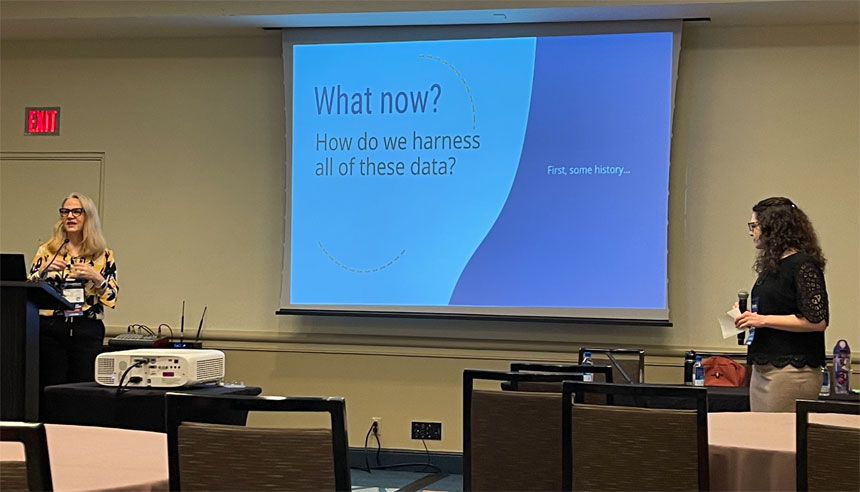
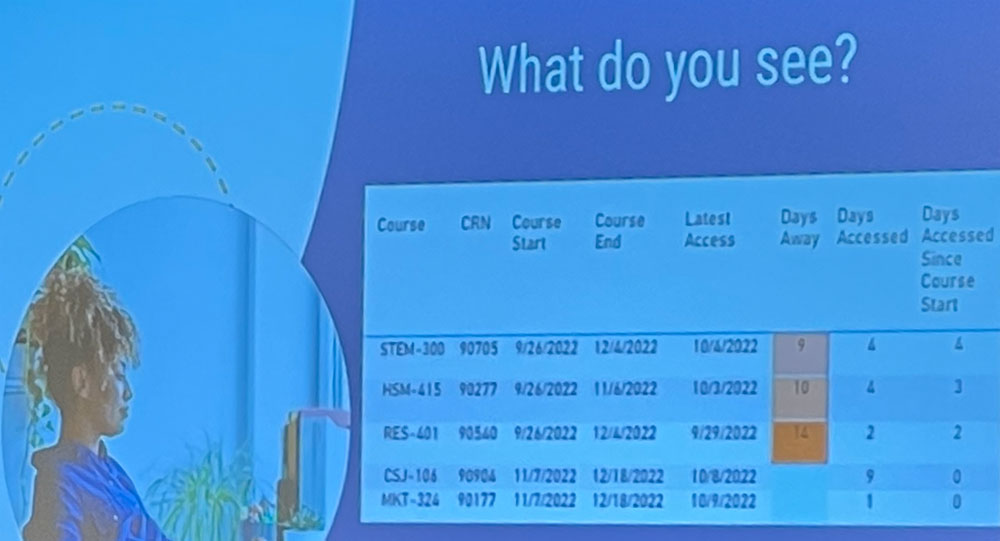
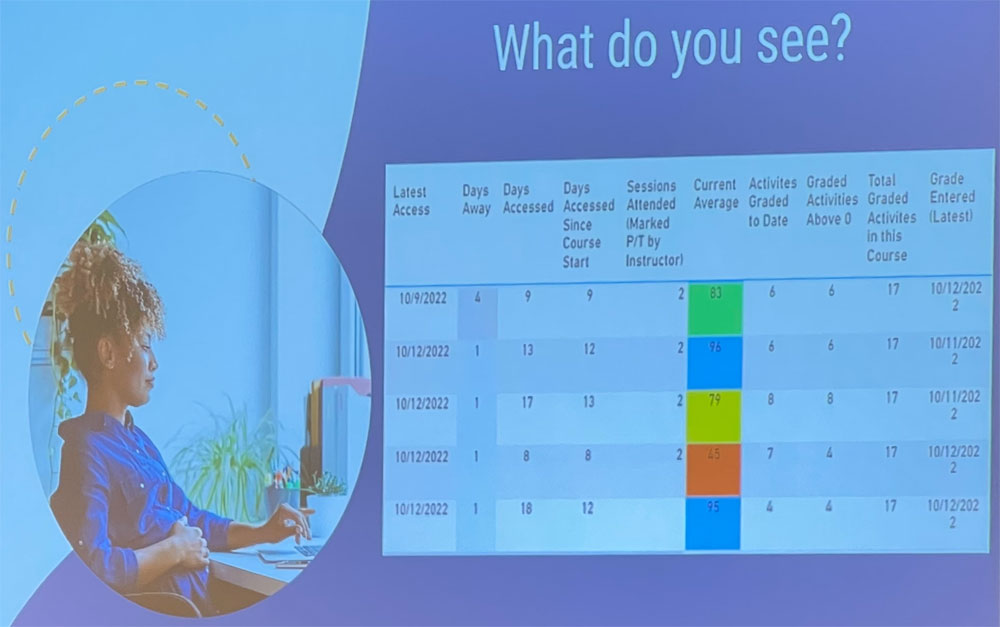
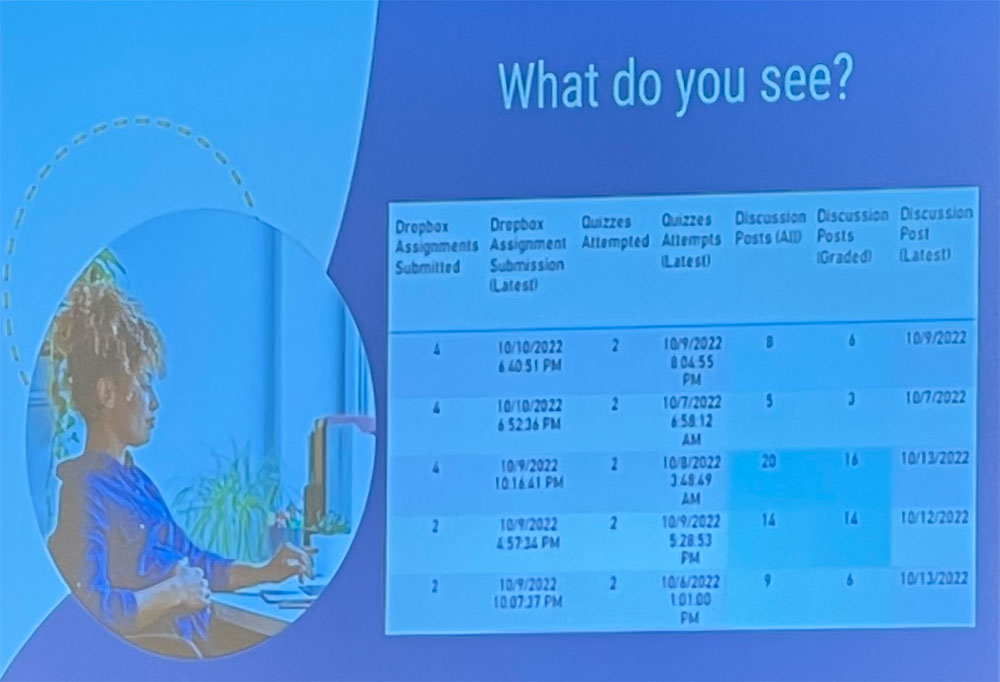
    During a talk session and along with, Veronica Wilson Director of Service Excellence and Retention Strategies at National Louis University, Dr. Bouchey shared a series of student dashboards with scenarios of data-informed actions, as shown below.

    Attendees learned how the National Louis University harnesses the many data points collected and maintained to personalize support, increase retention, sense of belonging, and satisfaction, and ultimately keep students engaged from matriculation through to their graduation.

    Bettyjo Bouchey and Veronica Wilson [in the picture above] highlighted that too much data can also become a hindrance to effective action. They also stressed the technical obstacles of putting together data for the many platforms functioning at any school, such as LMS, SIS, CRM, and Portfolio.

    The institution moved from using Tableau, due to the difficulty of maintaining it, to Power BI. The implementation of AI is pending. “We will get on AI and Machine Learning over time,” the two professors said.

  • Key Research on Data Analytics Shows How AI/ML Will Shape the University of the Future 

    Key Research on Data Analytics Shows How AI/ML Will Shape the University of the Future 

    IBL News | New York

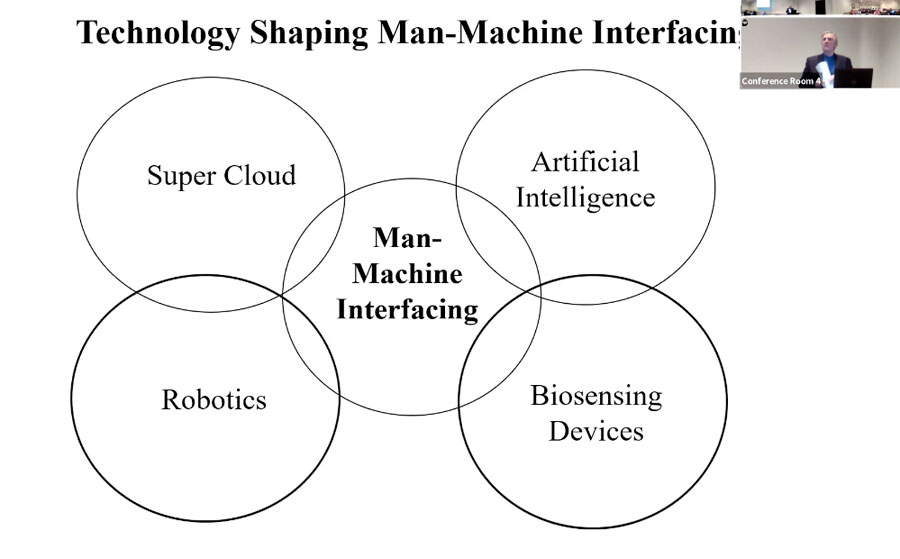
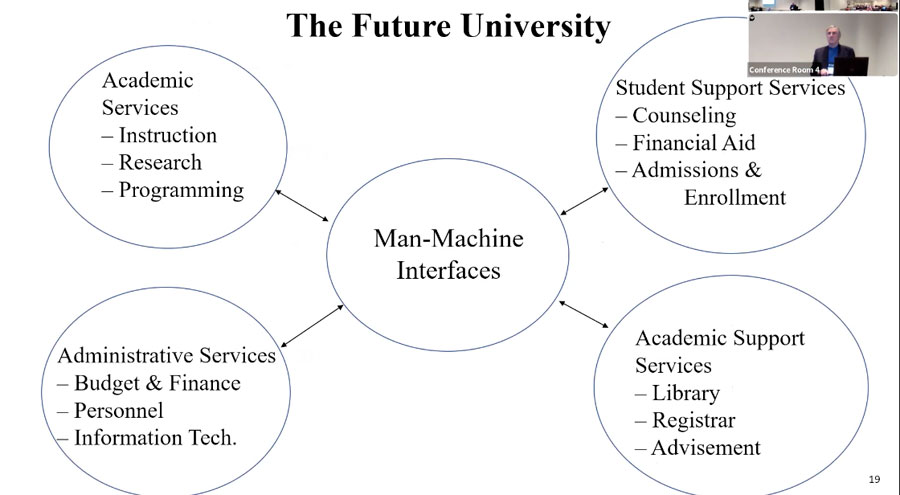
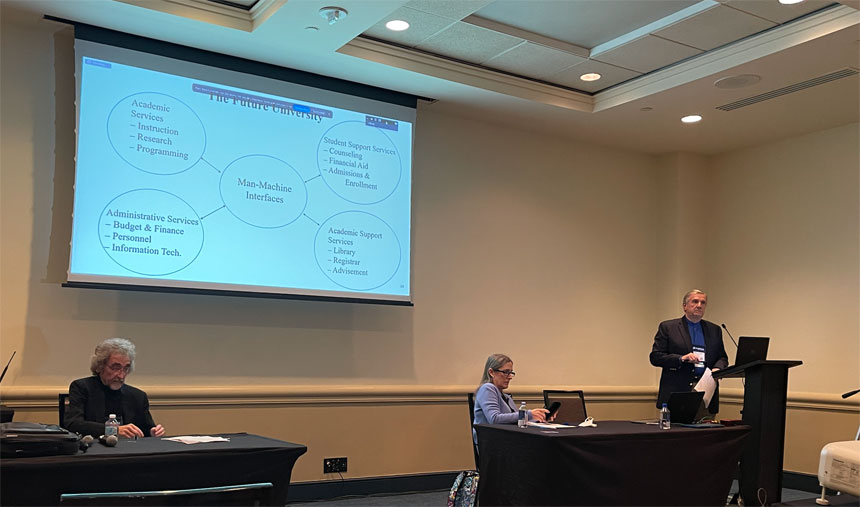
    AI and Machine Learning Technologies will make a huge impact on the university business. Specifically, “man-machine interfaces will shape the university of the future, in areas such as academic, administrative, student, and support services.”

    This was the main conclusion of a revealing talk by Patsy Moskal (University of Central Florida), Charles Dziuban (University of Central Florida), and Anthony G. Picciano (Hunter College and Graduate Center, City University of New York), which took place in Orlando, Florida, during the 2023 OLC Accelerate conference, last week.

    The three presenters [in the picture above] conducted extensive research on data analytics as used in adaptive learning environments and were empowered by emerging data analysis techniques. The substance of this session will be published in Data Analytics and Adaptive Learning: Research Perspectives (Routledge/Taylor & Francis) in early 2023.

    Patsy Moskal, Charles Dziuban, and Anthony G. Picciano have published together thirty books and more than 250 articles on these topics.

    “AI is impacting everything we are doing at university; the Future University will be deeply impacted by this technology,” said Dr. Anthony Picciano, professor of Education Leadership at Hunter College and Co-Founder of CUNY Online.


    “As data analytics and adaptive learning infused by artificial intelligence develops and matures, the future of education will be shaped,” added Picciano.

    Watch the video of the talk