Author: IBL News

  • A Report Shows that Businesses Must Dramatically Improve their Open Source Software Security

    A Report Shows that Businesses Must Dramatically Improve their Open Source Software Security

    IBL News | Austin, Texas

    Many organizations are currently ill-prepared to effectively manage security risks resulting from the use of open source applications, according to new research from The Linux Foundations and Snyk, a leading company in developer security. Organizations also lack strategies to address application vulnerabilities arising from code reuse.

    The report, titled The State of Open Source Security, was released today during the “Open Source Summit North America”, which will attract thousands of executives of the industry to a packed conference in Austin, Texas, this week [The report in PDF].

    The study suggests industry naivete about the state of open source security today.

    Specifically, the report — based on a survey of over 550 respondents and data scanned 1.3B open source projects — notes:

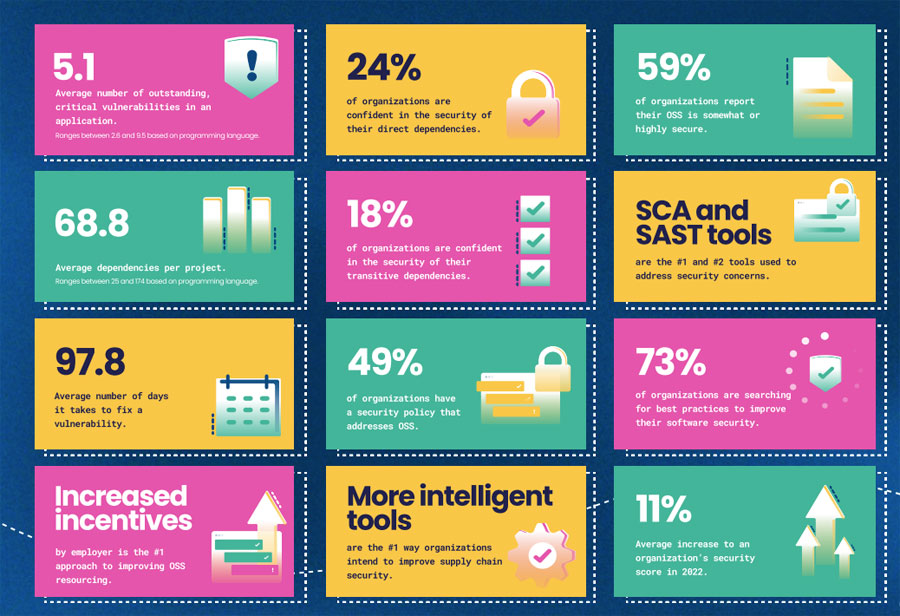
    • Over four out of every ten (41%) organizations don’t have high confidence in their open source software security.
    • Less than half (49%) of organizations have a security policy for OSS development or usage (and this number is a mere 27% for medium-to-large companies).
    • Three in ten (30%) organizations without an open source security policy openly recognize that no one on their team is directly addressing open source security.
    • The average application development project has 49 vulnerabilities and 80 direct dependencies (open source code called by a project).
    • The time it takes to fix vulnerabilities in open source projects has steadily increased, more than doubling from 49 days in 2018 to 110 days in 2021.
    • Forty percent of all vulnerabilities were found in transitive dependencies. Only 18% of respondents said they are confident of the controls they have in place for their transitive dependencies.

    “While open source software undoubtedly makes developers more efficient and accelerates innovation, the way modern applications are assembled also makes them more challenging to secure,” said Brian Behlendorf, General Manager at Open Source Security Foundation (OpenSSF).

    “Software developers today have their own supply chains – instead of assembling car parts, they are assembling code by patching together existing open source components with their unique code. While this leads to increased productivity and innovation, it has also created significant security concerns,”
    said Matt Jarvis, Director of Developer Relations at Snyk.

    The goal of the report is to raise awareness and leverage these findings to further educate and equip developers, empowering them to continue to build fast, while staying secure.
  • Moodle Commercial Provider Open LMS Integrates Zoom-Built In Tool Class.com

    Moodle Commercial Provider Open LMS Integrates Zoom-Built In Tool Class.com

    IBL News | New York

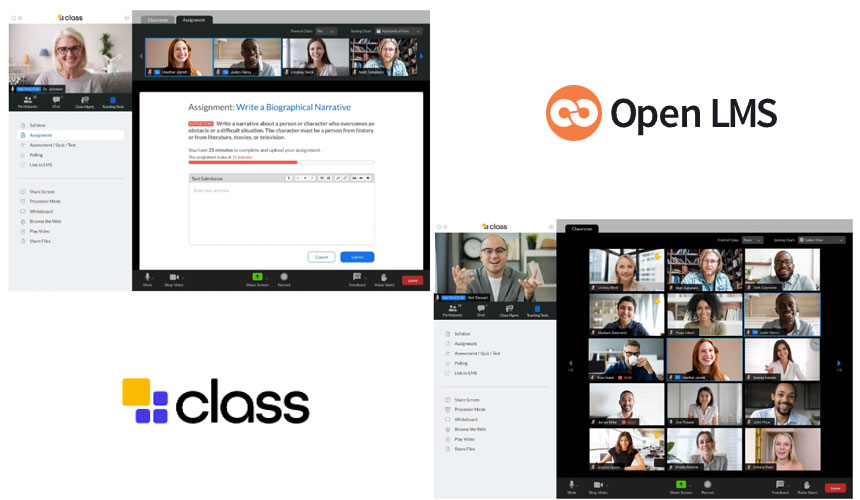
    Moodle-based Open LMS announced this month a partnership with Class.com to offer an integrated tool to K-12, Higher Ed and the workplace.

    This solution will allow Open LMS users to launch synchronous sessions without leaving its environment with the Zoom-built in platform Class.com.

    With this partnership, we also aim to simplify the technology purchasing journey,” said Open LMS.

    “The fact that Moodle is open source meant that the Class team could experiment with it in various ways and that they could work with Open LMS to leverage the power of the Moodle platform,” explained Phill Miller, Managing Director at Open LMS, in a blog post.

    Class recently purchased Anthology’s Blackboard Collaborate virtual conferencing tool, which is one of the products that Open LMS provides as integrated technology.


  • UC San Diego Reaches $3 Billion in Its Fundraising Campaign

    UC San Diego Reaches $3 Billion in Its Fundraising Campaign

    IBL News | New York

    UC San Diego announced this month it raised $3 billion, surpassing its original goal o $2 billion, through a multibillion-dollar, 10-years old campaign concluding on June 30, 2022.

    “In just over six decades, the University of California San Diego has become an international powerhouse in research, innovation, health care, the arts, and education,” said the institution.

    Over 163,000 people — friends, alumni, foundations, and corporations — have supported the university with gifts and grants of all sizes, providing funding to 453 different areas on campus.

    Around 100 national leaders and alumni collectively donated $1 billion to the campaign, and 46,500 alumni donated $253 million in gifts.

    Among other gifts and donations, they are the following:

    • Joan and Irwin Jacobs provided $100 million in support for the landmark Jacobs Medical Center at UC San Diego Health, which opened in late 2016.
    • Ernest and Evelyn Rady committed $100 million in 2015 to help recruit and retain faculty and fund strategic priorities at the Rady School of Management at UC San Diego, which they helped establish in 2004 with a $30 million lead gift.
    • Denny Sanford donated $100 million to the creation of the Sanford Stem Cell Clinical Center at UC San Diego Health in 2013. With another $100 million commitment, he went on to establish the T. Denny Sanford Institute for Empathy and Compassion, which focused on research into the neurological basis of compassion.
    • With a $75 million donation, alumnus Taner Halıcıoğlu ’96 donated $75 million in the largest alumni gift the campus has ever received to establish the Halıcıoğlu Institute for Data Science at UC San Diego.
    • The late Franklin Antonio ’74 became the first alumnus to have a building named in his honor – Franklin Antonio Hall – after making a $30 million gift to support the Jacobs School of Engineering.


  • Business Skills Rise, But Technology Proficiency Drops Significantly In the US

    Business Skills Rise, But Technology Proficiency Drops Significantly In the US

    IBL News | New York

    Coursera’s latest Global Skills Report revealed that data science skills are declining in the U.S., lagging behind countries in Europe, Asia-Pacific, and the Middle East. American learners are showing higher proficiency in essential business skills, including marketing, leadership, management, strategy, and operations.

    Overall, the acceleration of digital transformation, inflation, and global instability are creating a new economy that is in high-demand for digital and human skills.

    Jeff Maggioncalda, CEO at Coursera, wrote, “the Great Resignation and automation are mandating stronger investments in human capital, as institutions must prioritize developing the high-demand digital and human skills required to build a competitive and equitable workforce.”

    “Our data shows these skills are not equally distributed, and students and low-wage workers need access to flexible, affordable, and fast-tracked pathways to entry-level digital jobs that offer a foundation for a stronger and more inclusive economy,” he added.

    The report, which for the first time highlights changes in ranking for each country, features one of the largest data sets measuring skill trends [See IBL News’ story].

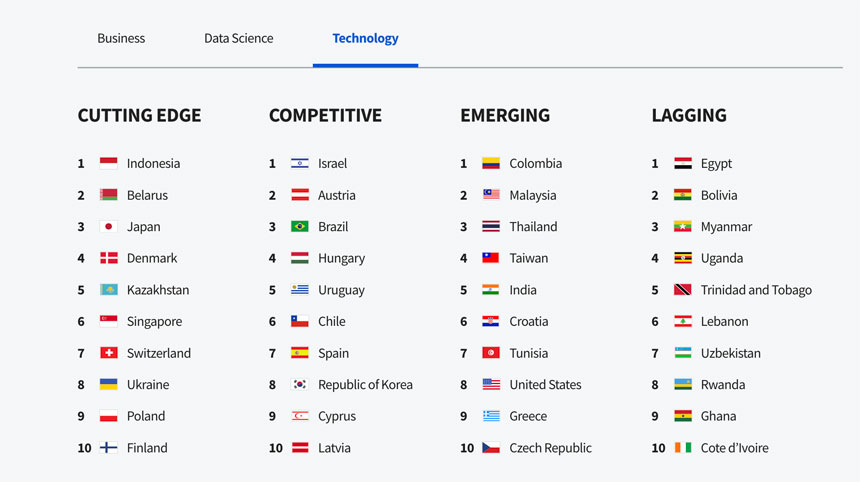
    Specifically in the U.S., business skills proficiency rose, with key areas like leadership and management increasing from 40% in 2021 to 67% in 2022. Meanwhile, technology skills proficiency overall dropped significantly from 69% in 2021 to 43% this year. Proficiency in data science also fell sharply from 73% last year to 54% in 2022.

    • U.S. learners in the Northeast, Upper Midwest, and along the Pacific Coast had the highest skills proficiency in business, while those in the South lagged behind. Three Midwestern states, including Illinois, Wisconsin, and Indiana, ranked highest in business proficiency throughout the U.S.
    • Idaho showed the highest levels of technology skills in the country, outpacing tech hubs like California and Massachusetts. Learners in the state also earned a perfect 100% proficiency in mobile development skills. This reflects a growing trend driven by the number of high-tech companies in the state increasing 61% in the last decade.
    • Learners in the U.S. increased focus on human skills amid rapid workforce changes. Workforce disruption caused by the pandemic and the pace of automation is forcing businesses to quickly adapt. Human skills like resilience, project management, decision making, planning, storytelling, and experiments were increasingly popular among U.S. business learners as organizations worked to navigate change.
    • The U.S. achieves greater gender parity in overall course enrollments, but women still lag behind men in STEM. The online course enrollment rate for women reached its highest point (51%) in the last year, continuing a trend that started in 2020. Despite a rise in STEM enrollments from 35% in 2019 to 42% in 2022, women still trail men in the U.S.
    • The U.S. remains behind the curve in math skills. Proficiency in mathematics among U.S. learners dropped sharply from 56% in 2021 to 40% in 2022. This lags countries throughout Europe, including Germany at 81% and the U.K. at 78% proficiency. Maine, Washington, and New Hampshire had the highest levels of math proficiency in the U.S., while Mississippi, Louisiana, and Tennessee finished in the bottom three.

    The Skills Report in PDF


  • “Digital Skills Are the Language of the Modern Economy,” Says Coursera in Its 2022 Global Report

    “Digital Skills Are the Language of the Modern Economy,” Says Coursera in Its 2022 Global Report

    IBL News | New York

    Jeff Maggioncalda, CEO at Coursera, announced yesterday its Global Skills Report 2022, a global survey on skills proficiency and trends in business, technology, and data science, that uses data from over 100 million learners across 100 countries.

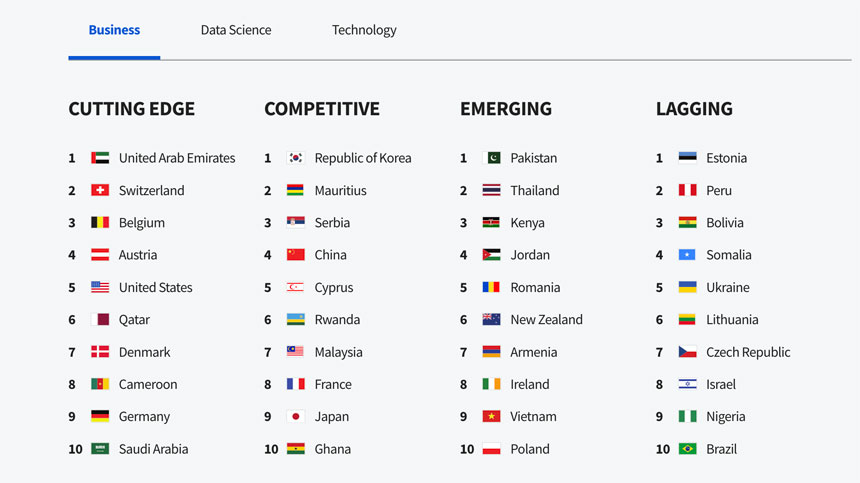
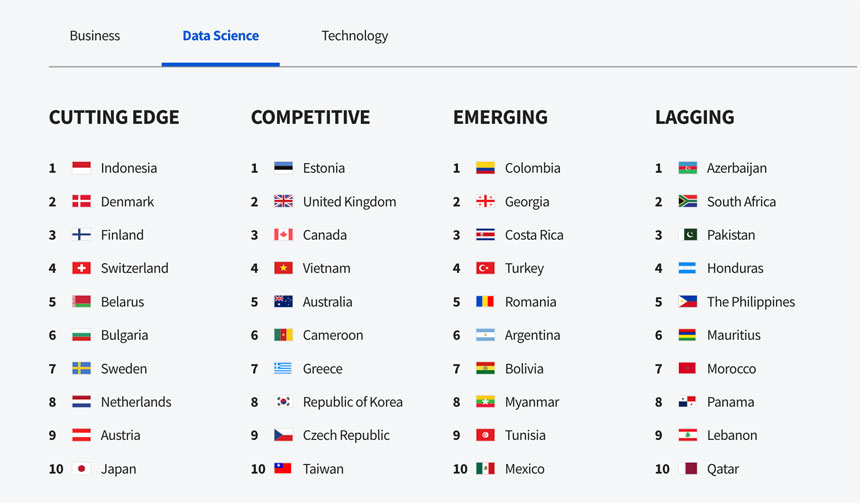
    The report features digital and human skills that are critical for growth and innovation and maps out career training pathways for employees to stay competitive. It provides skills proficiency per country, as shown in the graphics below.

    “With global instability and inflation on the rise, workers are increasingly looking to employers to provide job security and long-term career growth,” said Jeff Maggioncalda.

    “The ‘Great Resignation’ is also the ‘Great Reskilling’ with many learners now seeking career-building skills needed to start new careers in high-demand roles like IT, digital marketing, and data analysis,” he added.

    In the last year, the most popular skills in business, technology, and data science were leadership and management, probability and statistics, and theoretical computer science. However, according to the outcome of a recent survey, “not every worker needs to learn how to code, but adding digital skills to supplement foundational human and technical skills enables workers to maintain relevance as skills demands evolve.”

    In the same report, three-quarters of workers said they felt unprepared for jobs in the digital-first economy — where “digital skills are the shared language of the modern economy and are essential for economic success.”

    Other interesting outcomes are:

    • Lower levels of Internet access mean lower levels of skills proficiency. Countries with the lowest 25% of learner performance had lower access rates, around 54%.
    • Courses in human skills had more learners from developed countries. “People invest in human skills to effectively and ethically make use of digital skills, while digital skills provide a gateway to employment,” said Coursera.
    • Europe leads the world in skills proficiency. The Old Continent can be the model for global education, employment, and workforce leadership.
    • In the US, learners focused on human skills like project management, decision making, and planning.
    • Skills development drives opportunity and equity.

  • Cornerstone Pays $200 Million in Cash to Skillsoft for the SumTotal Learning Platform

    Cornerstone Pays $200 Million in Cash to Skillsoft for the SumTotal Learning Platform

    IBL News | New York

    Clearlake Capital–backed Cornerstone OnDemand Inc announced yesterday it entered into a definitive agreement with Skillsoft (NYSE: SKIL) to acquire the SumTotal SaaS learning platform for approximately $200 million in a cash transaction.

    In the 2022 fiscal year, SumTotal generated approximately $123 million in bookings and $120 million in revenue. Adjusted EBITDA was roughly $37 million excluding corporate allocations and around $25 million including corporate allocations.

    Skillsoft will use a portion of the net proceeds from the transaction to partially repay its senior secured term loan B facility.

    Richard Walker, Chief Corporate Strategy and Development Officer and President at SumTotal will continue his role as Skillsoft Chief Corporate Strategy and Development Officer.

    The transaction follows Cornerstone’s recent acquisition of EdCast, also for an undisclosed amount.

    “The combined company will be positioned to deliver a differentiated, expanded portfolio of learning, and talent,” said Himanshu Palsule, CEO of Cornerstone.

    “Together, we will continue our mission in helping organizations and their people to develop future-proof skills, flexibly grow their careers, and achieve shared success,” he added.

    “Through the divestiture of SumTotal, we are aligning and simplifying Skillsoft’s portfolio to serve our customers and focus our business on the best opportunities for profitable growth,” said Jeffrey Tarr, Chief Executive Officer of Skillsoft.

    The transaction is expected to close in the second half of 2022, subject to regulatory approvals and other closing conditions.
    .

  • Georgia State University Study Showed that Chatbots Helped Students

    Georgia State University Study Showed that Chatbots Helped Students

    IBL News | New York

    Are AI-powered chatbots really effective in higher ed?

    If configured correctly, they are. That’s what a recent study from Georgia State University on one of its community colleges — Perimeter College — suggests.

    The research, conducted in partnership with the company Mainstay during the 2020-21 academic year, found that 11,000 students attending the mentioned community college receiving targeted, personalized text messages from a virtual assistant were more likely to complete tasks.

    Students received text messages, with emojis, on their phones about deadlines in schedules, outstanding balances, applications for financial aid, and other topics. The chatbot responded to questions from students on these issues, drawing on built-in answers to FAQs.

    In addition to course requirements, deadlines, and campus resources, the chatbot customized feedback on their progress and provided practice quizzes, coaching, and encouragement. Students in the program received two to three messages per week from the chatbot.

    The study also found that virtual assistant reminders, including nudges, successfully encouraged students to seek help to resolve problems that could hinder their enrollment.

    “Our recent RCT (randomized controlled trial) demonstrates a significant increase in the completion of important tasks related to college persistence when students received timely support from empathetic chatbots,” said Mainstay. “These outcomes confirm the objective impact of timely, relevant, and non-judgmental support in the lives of students.”

    “If used sparingly and strategically, the chatbot can cut through the communication clutter,” said Timothy Renick, a manager at Georgia State, in a report at Inside Higher Ed.


    Another company, edsights.io, said that its AI texting, SMS, and two-way communication chatbot applied at four SUNY institutions — Genesee Community College, Finger Lakes Community College, and Clinton Community College — boosted engagement and success among struggling students.

    “It enabled early interventions for at-risk students, gauged student satisfaction, and provided insights into student wellness and financial insecurity,” said the company in a case study.


  • MIT, Cambridge, and Stanford Are the World’s Best Universities, According to the QS Ranking

    MIT, Cambridge, and Stanford Are the World’s Best Universities, According to the QS Ranking

    IBL News | New York

    Massachusetts Institute of Technology (MIT) is the world’s best university, followed by the University of Cambridge, Stanford University, Oxford, and Harvard.

    This classification is according to the QS World University Ranking 2023, which features 1418 institutions worldwide, and was released this week.

    London-based analyst QS Quacquarelli Symonds highlights in its 2023 ranking that the University of Oxford has dropped two places while Cambridge gained one. In addition, 49 of 90 UK institutions declined.

    • MIT celebrates eleven years as the world’s best university.
    • In the US, 103 out of 201 ranked universities fell and 29 rose, being 29 new entrants.
    • China, the third most-represented higher education system, with 71 universities, is home to two world’s top 15 universities for the first time ever: Peking University (12th) and Tsinghua University (14th).
    • Asia‘s top university is the National University of Singapore (11th).
    • ETH Zurich has remained continental Europe’s best university for fifteen consecutive years.
    • France‘s merged universities ascend in the table, with Université PSL (26th) breaking into the top-30.
    • Universidad de Buenos Aires (67th) is confirmed Latin America’s best. Hampered by low research impact scores, more of the continent’s universities are falling than rising.
    • Arab Region’s top university – King Abdulaziz University, 106th – reaches a record high.
    • Africa‘s leader is the University of Cape Town (237th). Only five of the continent’s universities are among the top-500.
      .

    QS World University Rankings 2023: Top 20 

    2023

    2022

    1

    1

    MIT 

    US

    2

    3= 

    University of Cambridge 

    UK

    3

    3= 

    Stanford University 

    US

    4

    2

    University of Oxford 

    UK

    5

    5

    Harvard University 

    US

    6= 

    6

    Caltech

    US

    6= 

    7

    Imperial College London 

    UK

    8

    8= 

    UCL 

    UK

    9

    8= 

    ETH Zurich 

    Switzerland 

    10

    10

    University of Chicago 

    US

    11

    11

    National University of Singapore

    Singapore 

    12

    18

    Peking University 

    China

    13

    13

    University of Pennsylvania 

    US

    14

    17

    Tsinghua University 

    China

    15

    16

    The University of Edinburgh 

    UK

    16= 

    14= 

    EPFL 

    Switzerland 

    16= 

    20

    Princeton University 

    US

    18

    14= 

    Yale University 

    US

    19

    12

    Nanyang Technological University

    Singapore 

    20

    21

    Cornell University 

    US


  • McGraw Hill Says that Its Annual Digital Billings Exceed $1 Billion

    McGraw Hill Says that Its Annual Digital Billings Exceed $1 Billion

    IBL News | New York

    Global education company McGraw Hill reported this week $1.8 billion in billings, up 13% for the fiscal year ended March 31, 2022, noting that its business transformation is working.

    “This billings growth drove significant profit improvement and margin expansion for the fiscal year,” said the 130 years-old Columbus, Ohio-based firm.

    Digital billings, which accounted for 58% of total billings in the fiscal year of 2022, have grown by a compound annual growth rate of 8%, according to the company. This increase came after an investment of $200 million per year in digital content and products and the acquisition of Achieve3000 in November.

    The two most notorious, McGraw Hill Connect and ALEKS, each experienced activations and unique users of six million.

    Simon Allen, McGraw Hill CEO, stated the following: “The demand for curated digital content and intuitive platforms has significantly transformed the way we think about our business and strengthened our ability to serve students now and in the future. As we seek to close the learning gap caused by the pandemic, we remain focused on supporting personalized learning experiences at scale and creating affordable and accessible products that improve learning outcomes.”
  • Harvard University’s President Will Step Down in June 2023

    Harvard University’s President Will Step Down in June 2023

    IBL News | New York

    Lawrence S. Bacow announced yesterday that he will step down as Harvard University’s president in June 2023.

    During his tenure, Bacow, a lifelong academic, fought a COVID infection himself, steered the institution through the pandemic, and dealt with an attack on its admission policies, one that will face a Supreme Court test later this year.

    This spring, Harvard University committed $100 million to make amends for its historical ties to slavery. “Enslaved people worked on our campus supporting our students, faculty, and staff, including several Harvard presidents,” he wrote.

    “There is never a good time to leave a job like this one, but now seems right to me,” he said in a statement. “Adele [his wife] and I are looking forward to spending more time with my children and grandchildren.”

    His five-year tenure as Harvard president is brief compared to that of his predecessor, Drew Gilpin Faust, who served 12 years.

    Bacow spent over fifty years studying, teaching at, and presiding over three major universities in the Boston area, including seven previous years as a member of the Harvard Corporation, the university’s governing organization.

    Before being appointed Harvard’s president, Bacow spent ten years as president of Tufts University in Medford, Massachusetts, and 24 years as a faculty member and administrator at MIT.

    Son of immigrants who escaped Nazi persecution, he attended college at MIT and then earned three degrees from Harvard, including a Ph.D. in public policy.

    The news on The Harvard Gazette