Author: IBL News

  • Amazon Will Pay Full College Tuition to Its U.S. Front-Line Employees as Part of $1.2 Billion Ed Plan

    Amazon Will Pay Full College Tuition to Its U.S. Front-Line Employees as Part of $1.2 Billion Ed Plan

    IBL News | New York

    Amazon (NASDAQ: AMZN) will invest $1.2 billion by 2025 in providing further education and skills training to more of its 750,000 operations employees in the U.S.

    The eCommerce giant announced this month that it will fund full college tuition, as well as high school diplomas, GEDs, and English as Second Language (ESL) proficiency certifications for its front-line employees—including those who have been at the company for three months.

    In addition, Amazon said that it will provide three new education skills training programs to help them transition into jobs as data center technology technicians, IT engineers, and user experience designers.

    “Amazon is now the largest job creator in the U.S., and we know that investing in free skills training for our teams can have a huge impact for hundreds of thousands of families across the country,” said Dave Clark, CEO of Worldwide Consumer at Amazon.

    A research study conducted by Gallup and commissioned by Amazon on upskilling found that 70% of American workers would switch to a new job if offered free skills training opportunities.

    The report states that employer-funded upskilling for young adults entering the labor market is more important than paid vacation time.


     

  • Chegg Sued by Competitor Pearson For Alleged Copyright Infringement

    Chegg Sued by Competitor Pearson For Alleged Copyright Infringement

    IBL News | New York

    Chegg Inc (NYSE: CHGG), a Santa Clara, California–based EdTech company with a market capitalization of 11 billion, was sued by publishing giant Pearson Monday for alleged copyright infringement.

    The complaint, filed Monday in the District Court of New Jersey, came only a few months after a partnership between the two companies ended, under the new leadership of Andy Bird, the CEO of Pearson.

    In addition, the move takes place when Pearson Plc is launching a subscription service for U.S. students to its 1,500 textbook titles for a monthly fee of $14.99, according to Financial Times.

    Pearson alleges that Chegg has violated its rights on a “massive scale” by reproducing hundred of thousands of questions from Pearson textbooks and selling them with answers as part of a $14.95 homework help subscription service for students (Chegg Study). 

    “Those answers are derived from and often copied directly from Pearson’s end of chapter questions themselves,” a press release from Pearson said.

    Pearson’s complaint lists 150 of its textbooks “copied or paraphrased from the original question.” For example, Chegg Study lists more than 700 answers for questions from Campbell Biology, a popular biology textbook.

    Chegg began in 2005 as a textbook rental service but now draws its main revenue from subscription services around homework answers. During the pandemic, Chegg’s revenue rose above 60% to $644 million. Now Chegg has a market valuation higher than Pearson with its 177-years of history.

    Chegg has been criticized by educators who argue that it’s a service that enables widespread cheating by offering a massive library with answers.

    The Californian company was licensed to publish materials by Pearson, but since June 1, its right to display content expired, according to the British giant.

    Chegg said it is in “full compliance with copyright law” and will “fight Pearson’s allegations vigorously.”

  • Blackboard Gone Forever? Investment Companies Continue Reshaping the EdTech Market

    Blackboard Gone Forever? Investment Companies Continue Reshaping the EdTech Market

    IBL News | New York

    Veritas Capital, the private equity firm that will own Blackboard after its acquisition from another investment company, Providence Equity Partners, avoided providing any details about the deal yesterday. The New York-based firm didn’t even mention the purchase on its website.

    The move, performed in a context when EdTech companies are largely increasing their valuation and capital raising, wasn’t a surprise.

    Providence Partners has been trying to sell Blackboard since 2015, after noticing the Blackboard was increasingly losing ground in the market in favor of Instructure’s CanvasLMS.

    Precisely, yesterday the Cal Poly Pomona’s student newspaper posted an eloquent article titled “Canvas adoption erases Blackboard from campus.”

    Consultant Phil Hill wrote that it was “the end of Blackboard as standalone EdTech.”

    The Washington, DC – headquartered company that invented the LMS and overwhelmingly dominated the market for years was absorbed by a firm half of the size, Anthology, which was engineered mostly for financial purposes.

    Roughly speaking, and without further confirmation, the dominant speculation is that Blackboard was valued at below two billion dollars, given its struggle with the accumulating debt. Providence Equity Partners paid $1.64 billion to buy Blackboard in 2011. Exiting the company has taken them ten years.

    Meanwhile, Veritas Capital-backed Anthology, valued at $925 million last year, according to data provider PitchBook, seems to be the winner. Its CEO will run the merger company, while Blackboard’s Chief won’t play any managerial role, according to several sources.

    The deal is pending official approval, and it’s soon to tell how and when the venture capitalists —who run the EdTech market show — will convince retail investors to back this new venture.


  • Two Equity Firms Buy Blackboard to Merge It with Anthology, a Company They Already Own

    Two Equity Firms Buy Blackboard to Merge It with Anthology, a Company They Already Own

    IBL News | New York

    The private equity firms that currently own Anthology, Veritas Capital, and Leeds Equity Partners, will acquire the majority of shares of Blackboard Inc. from Providence Equity Partners LLC investment company for an undisclosed amount.

    With that equity stock, Veritas Capital and Leeds Equity Partners will create a merged company, which will be lead by Jim Milton, current Chairman and Chief Executive Officer of Anthology.

    The combined company (as yet unnamed), valued at about $3 billion dollars including debt, will be majority-owned by Veritas Capital.

    Providence Equity Partners — which bought Blackboard in 2011 for $1.64 billion — will hold a minority stake in the combined company. The transaction is expected to be closed by the end of 2021, subject to customary closing conditions and regulatory approvals.

    “Once the deal closes, Blackboard will no longer exist as a standalone EdTech company,” wrote expert Phil Hill on its blog.

    The merge of Anthology and Blackboard will result in one of the industry’s largest LMS management firms, with a workforce of 4,000 employees and over 4,000 colleges and universities as clients.

    Anthology — which is the recent gathering of Campus Management, Campus Labs, and iModules — accounts for 2,000 higher ed institutions in 30 countries.

    Blackboard claims it currently serves 150 million users in 80 countries.  For years, Blackboard was the dominant provider of learning management systems (LMSs) until Canvas LMS surpassed it.

    “Upon the completion of this merger, we will have a data-driven product portfolio that seeks to touch every constituent at the institution and will aim to transform the way education uses technology to engage, connect, teach, learn and drive efficiencies across the institution,” Milton said. “We are fully aligned around a deep focus on learner success.”

    “Together, Blackboard and Anthology will lead the next wave of EdTech innovation,” said Bill Ballhaus, Chairman, Chief Executive Officer, and President of Blackboard.

    According to Bloomberg, the resulting company will be valued at several billion dollars. A Bloomberg reporter was told that Blackboard was valued at $2 billion and Anthology at $1 billion.

  • Quizlet.com, on the Path to Becoming Public After Its Unicorn Status

    Quizlet.com, on the Path to Becoming Public After Its Unicorn Status

    IBL News | New York

    San Francisco-based, flashcard tool Quizlet.com is planning to become public after hitting the status of a unicorn, according to Techcrunch.

    To date, the San Francisco-based start-up has raised $62 million in funding. Investors include General Atlantic, Owl Ventures, Union Square Ventures, Costanoa Ventures, and Altos Ventures.

    Duolingo’s successful reception in Wall Street since it went public in July 2021 is encouraging the investment community to accelerate IPO plans, experts told IBL News.

    With 60 million monthly learners, Quizlet has added AI-based tutoring tools to their flashcards.

    Its free flashcard maker — which integrates with Google Classroom — has allowed the company to build a large-scale business. The company’s revenue comes mostly from Quizlet Plus paid subscription model. It charges $47.88 a year for access to more features, including tutoring services.

  • Microsoft Acquires Learning Platform TakeLessons.com

    Microsoft Acquires Learning Platform TakeLessons.com

    IBL News | New York

    Microsoft announced yesterday the acquisition of the San Diego-based learning start-up TakeLessons.com, for an undisclosed amount.

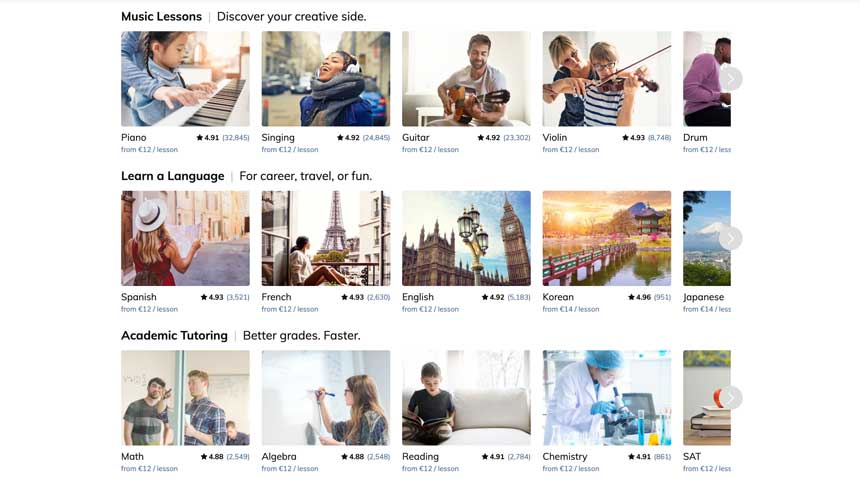
    TakeLessons offers online and offline courses on consumer-oriented subjects, including music, languages, and the arts. The platform connects students with individual tutors, both online and in person.

    With this move, Microsoft purchases a learning lineup that differs from the business and technology-related educational content available from LinkedIn Learning.

    “This acquisition is in response to the growing demand on personalized hybrid opportunities and expands our product offerings to TakeLessons consumers, a leading online learning platform,” said a Microsoft spokesperson.

    Founded in 2006, TakeLessons has raised over $20 million from a range of VCs and individuals, such as Lightbank, Uncork Capital, Crosslink Capital, and others.

    Currently, over 6% of Microsoft’s revenue comes from LinkedIn.

  • Analyst and Entrepreneur Michael Feldstein Suggests MIT and Harvard Endow a Foundation to Steward Open edX

    Analyst and Entrepreneur Michael Feldstein Suggests MIT and Harvard Endow a Foundation to Steward Open edX

    IBL News | New York

    “MIT and Harvard should not have undue influence or control,” Feldstein said in a recent article while advising to follow the Apache Foundation’s incubation process “to ensure a healthy open-source community and governance practices.”

    “Once the software has passed through incubation—which is usually a multi-year process—then a new board should be elected from the community to chart its future.”

    “The initial board could consist of former EdX members and Open EdX contributors.”

    Michael Feldstein, the author of the influential blog eLiterate [in the picture above], says that Open edX is “a passion project”, and therefore MIT and Harvard are in need of an outside auditor to steward the platform.

    With another portion of the proceeds of the sale of edX Inc to 2U, MIT and Harvard should create “an educational research grant-giving body focused on improving global education and educational equity.”

    “MIT and Harvard faculty and staff would be permanently disqualified from receiving grant dollars from the foundation. A credible board of academic experts and NGO leaders would oversee the distribution of funds.”

    Regarding the transaction itself, Feldstein points to the disagreement inside MIT and Harvard and highlights the “reputational damage done.”

    My sources inside these institutions, particularly MIT, tell me there’s quite a bit of internal upset and foment over the transaction.”

    .


    Discussion on Twitter

  • Howard University Partially Reopens After Being Hit with a Ransomware Cyberattack

    Howard University Partially Reopens After Being Hit with a Ransomware Cyberattack

    IBL News | New York

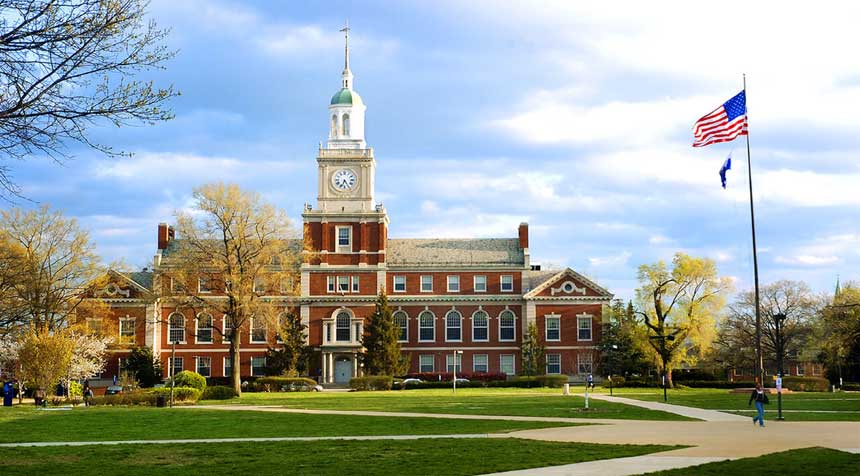
    Howard University in Washington, DC, partially reopened Wednesday after a ransomware cyberattack forced the institution to cancel classes for two days.

    “The situation is still being investigated,” said the university in a statement. “To date, there has been no evidence of personal information being accessed or exfiltrated.”

    Online and hybrid undergraduate courses remained suspended, while all in-person undergraduate, graduate, professional, and clinical experiential courses resumed yesterday.

    The university deployed alternative Wi-Fi hot spots on campus as a way to provide access to course lecture content, academic modules, and apps requiring Internet access. However, only some apps were accessible and extended courses deadlines.

    The ransomware attack was detected on Friday.

    Howard University — one of the leading historically Black colleges and universities, with over 11,000 students — is working with FBI and city officials and installing additional safety measures to protect data.

    In recent months, the U.S. has seen a surge in the number of ransomware attacks in the U.S.

    These attacks have become a growing concern for educational institutions and school districts, as they hold troves of private data.

    Researchers recently estimated that 3,880 schools and universities have experienced ransomware attacks since 2018, costing billions in downtime and ransom payments.

    Cybercriminals have hit not only educational institutions but hospitals, pipelines, private companies, and local governments.

  • UMass Global Will Pursue to Be a National Powerhouse in Online Adult Education

    UMass Global Will Pursue to Be a National Powerhouse in Online Adult Education

    IBL News | New York

    UMass Global, the new brand created by the University of Massachusetts after purchasing of California-based Brandman University, plans to become a national powerhouse on adult education by implementing an ambitious growth strategy. It will directly compete with Southern New Hampshire and Western Governors University.

    UMass Global announced that it will build on Brandman’s track record of helping employers build talent pipelines.

    Marty Meehan, President at The University of Massachusetts, stated that “UMass Global will be essential to millions of adults in Massachusetts, California and across the nation as job markets have been disrupted and employer needs and priorities have shifted.”

    The target audience of UMass Global, a nonprofit affiliate of UMass, will be adult learners seeking to complete their degrees and accelerate their economic mobility.

    It took two and a half years and discussions with more than 100 potential partners to approve this initiative.

    Finally, this week, the University of Massachusetts and Chapman University announced the transfer of control of Brandman University to UMass.

    “UMass has found an excellent partner in Brandman University as both institutions push forward with meeting the growing needs of adult learners,” said Chapman University President Daniele Struppa.

    Chapman began serving the active military in the late 50s, which eventually grew into what is now a recognized leader in adult learning in Brandman.

    About 36 million Americans have some college but no degree, according to the National Student Clearinghouse.


  • Scottish Peter Vardy Foundation Launches an Open edX-Based Platform to Educate GenZ Leaders

    Scottish Peter Vardy Foundation Launches an Open edX-Based Platform to Educate GenZ Leaders

    IBL News | New York

    The Glasgow, Scotland-based Peter Vardy Foundation launched this month its educational platform GenZ Leaders.

    Based on an Open edX ecosystem powered by New York firm IBL Education, this platform “is aimed at equipping every young person in Scotland with world-class leadership skills and decision-making capabilities,” said the organization.

    The GenZ leadership knowledge and skills program has a potential reach of 360 schools and 290,000 young people in Scotland before expanding further into the United Kingdom and internationally.

    Four secondary schools across Scotland are now taking part in a pilot.

    The GenZ Leaders is the latest and most wide-ranging initiative from the Peter Vardy Foundation, the charity organization used by the Peter Vardy automotive group to distribute 10% of its profits to good causes.

    “GenZ is the first step in creating a world-leading digital leadership program which will work to complement existing provision and be delivered by teachers to help pupils get to the best post-school destinations,” explained Peter Vardy, GenZ Leaders Chairman.

    “We want to give every young person the skills to follow their hearts and create their own future,” said Becca Dobson, the Director of Education at the GenZ Leaders team. 

    The Peter Vardy Foundation has committed to funding the educational program for its first three years. The lessons will feature acknowledged thought leaders and will be delivered by staff using a blended learning approach.

    Educational content will cover six topics: Leadership, Organisation, Communication, Resilience, Initiative, and Oracy. Upon completion, badges and certificates will be awarded.

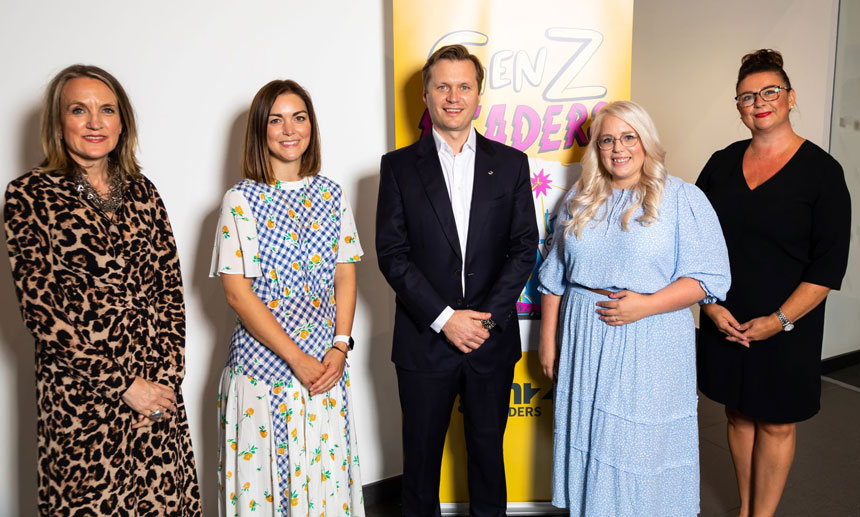
    [In the picture above from left to right: Samantha Bedford, Chief Operating Officer; Victoria Vardy, Chief Education Officer; Peter Vardy, Founder & Chair; Becca Dobson, Director of Education; and Elizabeth-Anne Collier, Programme Manager]