Outlier.org announced this month that it raised $30 million in Series B funding, led by Google Ventures (GV). The company has raised a total of $46 million to date.
“This latest round will enable us to build out the first two years of an accessible, exceptional college education at scale,” said Jeff Buening, COO at the company.
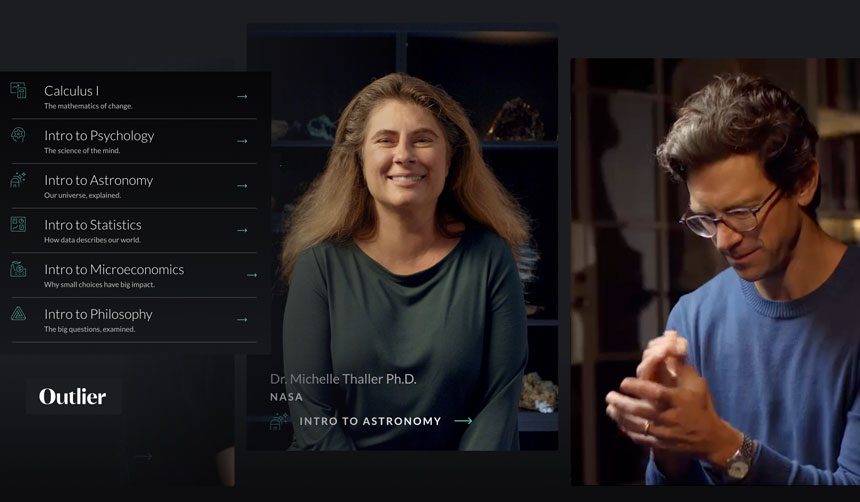
Founded in 2019 by former co-founder of MasterClass’ Aaron Rasmussen, Outlier offers cinema-quality, credit–intended, intro-level online courses.
The startup currently offers six classes, including Calculus I, Microeconomics, Astronomy, and Philosophy, with a goal of expanding to 14 by the end of 2022. Each course costs $400.
Outlier has a five-year agreement with the University of Pittsburgh, with students receiving transferable college credits from the school and faculty at the University of Pittsburgh and Pitt-Johnstown providing academic oversight. This arrangement has generated some opposition from faculty members.
In partnership with Pluralsight and Andela, Google announced 40,000 scholarships to Android and Cloud developers in Africa. The search giant will give full scholarships with certifications to the top 1,000 students at the end of the training.
The goal is to help to grow the startup ecosystem and entrepreneurship in Africa, said Nitin Gajria, Managing Director, Google Africa. The continent’s economy is expected to grow 5.25% in the next five years.
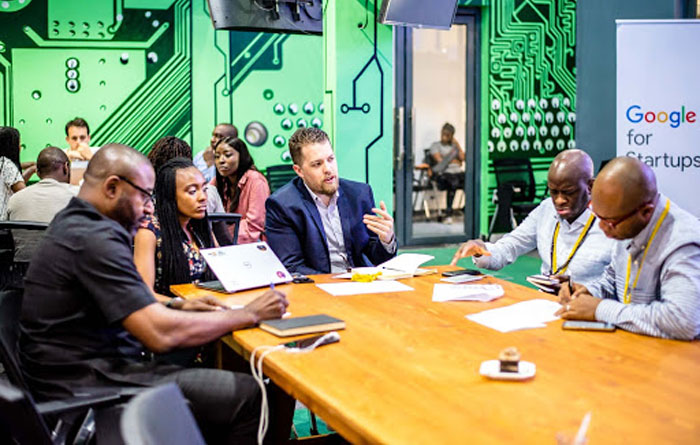
This year, Google is opening applications for the 6th class of the Google for Startups Accelerator Africa program. It’s a three-month program that includes three intensive virtual training boot camps, mentorship, and Google product support. It’s expected to start on June 21; applications are open until May 14, 2021.
In 2020, Africa’s first Google Developers Space (a hub for African developers, entrepreneurs, and startups) was launched in Lagos, Nigeria in order to support developer communities across Sub-Saharan Africa.
In partnership with @pluralsight we’re offering new 40,000 scholarships to developers spread across Mobile & Cloud development tracks. Top 1,000 students will earn a full scholarship to certify on @Android or Cloud development #Build4Africa
Livestream:https://t.co/NlAksEf6zE
Dartmouth College deployed an AI virtual assistant over Slack to improve communications among 10,000 students and faculty members during the COVID pandemic.
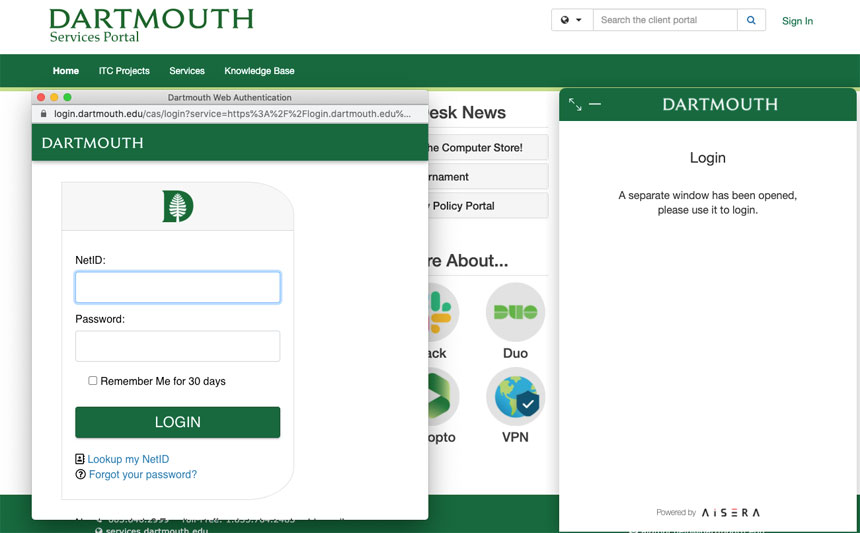
This conversational, context-aware robot, called Dart InfoBot (DIB), answers questions about technology at Dartmouth and returns information and links to the institution’s Knowledge Base. If it doesn’t find the right information, it creates a ticket.
DIB’s AI-driven service requires registering and login in with the students’ ID. It works on the institution’s services portal, which also allows voice phone conversation with service desk assistants as well as creating a ticket.
The provider behind the AI service is Palo Alto, California-based Aisera.com.
Fortune announced this week the launch of a website with articles, insights, and ongoing reporting intended to help readers develop skills and advance in their careers. 2U (Nasdaq: TWOU) is the founding advertising sponsor.
The initiative, called Fortune Education, will include rankings and ratings of graduate, post-graduate, executive education, and other improvement programs. In 2021, Fortune will publish six higher education rankings.
The first one is The Best Online MBA Programs of 2021.
1. University of North Carolina—Chapel Hill (Kenan-Flagler) 2. Indiana University—Bloomington (Kelley) 3. Carnegie Mellon University (Tepper) 4. University of Southern California (Marshall) 5. University of Florida (Hough) 6. University of Maryland—College Park (Smith) 7. University of Pittsburgh (Katz) 8. Syracuse University (Whitman) 9. University of Massachusetts—Amherst (Isenberg) 10. Rice University (Jones)
Regarding the criteria, the company said that “it uses multiple data sets to formulate education rankings, including data provided by schools, a “Brand Score” that is calculated from a FORTUNE-Ipsos survey of hiring managers and business professionals, and a weighted “FORTUNE 1000 Score,” which considers business school alumni placement in the C-Suites of the biggest companies in the U.S.”
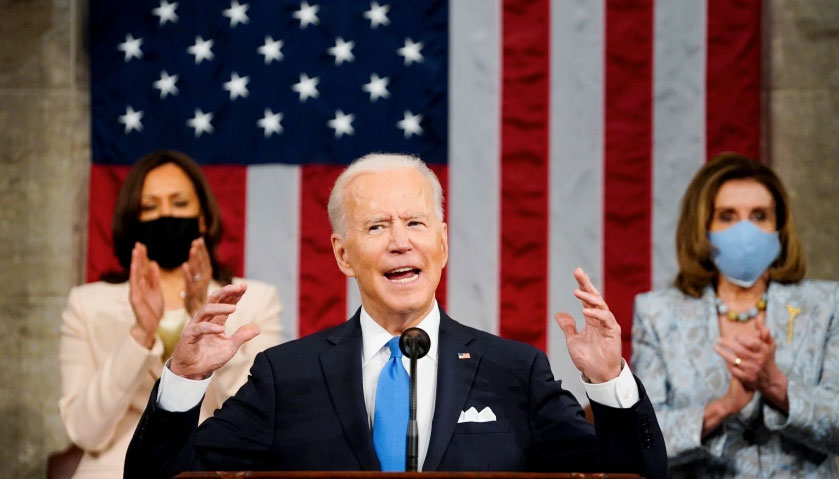
President Biden announced on Wednesday a new $1.8 trillion plan — the American Families Plan — that would provide, among other things, two years of free community college for all Americans. There are over 950 community colleges in the U.S. A total of 30 states already cover tuition at community colleges or universities.
The plan also would cover the tuition of low and middle-income students attending over 800 existing historically Black colleges and universities, tribal colleges, and other minority-serving institutions.
Additionally, it would up the maximum Pell Grant for students in financial need by $1,400, bringing the award to $8,295 a year.
These safety net programs would benefit institutions and students with the fewest financial resources.
Altogether, the Biden Administration would spend $302 billion over 10 years as part of his American Families Plan:
$109 billion for two-year colleges,
$80 billion addition for Pell Grants,
$62 billion for retention and completion efforts,
$39 billion for two free years at minority-serving institutions for most students.
The plan is less ambitious than Biden’s campaign promise of making public four-year colleges tuition-free for many Americans and doubling the Pell grant.
The American Council on Educationsaid that the community college plan could “easily revolutionize access to higher education in the United States.” Other reactions in higher education have been largely positive.
However, the plan won’t be easy to get through Congress, as it is likely to face opposition from the Republican Party.
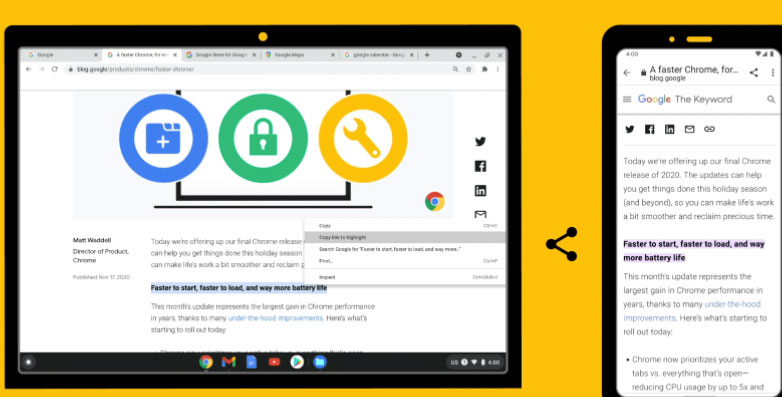
Google announced this month new features for its Chrome browser intended to boost productivity.
As of March 2021, Chrome was the most used browser (64%), followed by Safari (19%) and Edge (3.74%).
“Copy link to highlight”. It allows you to highlight a URL for the selected text you want to share, right-clicking and sending the link. This feature is rolling out now to desktop and Android and is coming soon for iOS.
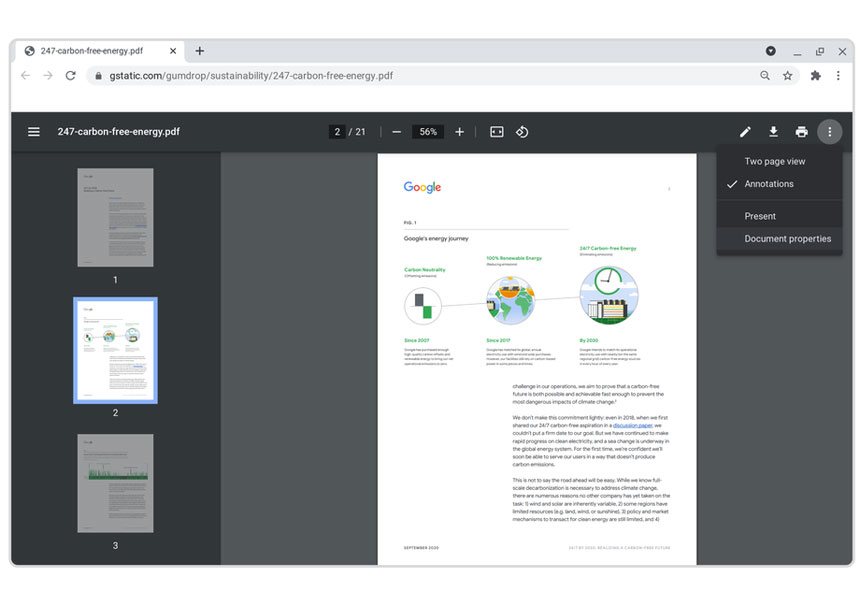
New PDF presentation mode, removal of the on-screen distractions (toolbars, address bar, tabs), and more features (document properties, two-page view). An updated top toolbar, which puts the most important PDF actions (zoom, jump to page, save, print) within a single click. These features are rolling out now.
Mute notifications when presenting.
Performance improvement with decreased Chrome CPU usage, and therefore more battery life, less fan noise, and less heat.
Tab freezing for collapsed groups. This feature is coming soon to beta.
Thinkific Labs Inc. (TSX: THNC) went public yesterday on the Toronto Stock Exchange (TSX). The Vancouver, Canada-based learning company — which provides businesses a platform to build, market, and sell online courses — raised over $129 million. It sold 12,310,000 subordinate voting shares at a price of $13 per share.
Founded in 2012 by CEO Greg Smith, COO Miranda Lievers, CTO Matt Payne, and Chief Strategy Officer Matt Smith, this software-as-a-service platform claims to host 50,000 creators who taught 21 million students earning $275 million in 2020. “As entrepreneurs ourselves, we saw the opportunity to help people build and grow sustainable businesses by educating others,” explained in a blog post, Greg Smith.
According to its preliminary prospectus, Thinkific.com recorded $21.07 million in revenue and a net loss of $1.29 million. In 2019 total revenue was $9.8 million and in 2018 reached $6 million.
BMO Capital Markets and CIBC Capital Markets acted as joint book-runners and co-lead underwriters for the IPO. The underwriters have been granted an over-allotment option to purchase up to an additional 1,846,500 subordinate voting shares at a price of $13 per share. This option, which can be exercised within the next 30 days, could generate additional gross proceeds of up to $24 million and raise Thinkific’s net proceeds to an estimated $174.5 million.
Thinkific is backed by Rhino Ventures, which, through Rhino Co-Invest 2 Limited Partners, planned to buy approximately $25 million subordinate voting shares through the offering, according to Thinkific’s final prospectus. After the IPO, Rhino Group, along with Greg and Matt Smith own a total of 57 million multiple voting shares, accounting for 79 percent of Thinkific’s outstanding shares, and 97 percent voting power.
Last fall, Thinkific raised $27 million in financing. Its main competitor is New York-based Teachable.com.
“Going public will not change our mission,”said the company’s CEO. “We truly believe that education is the most powerful force for positive change in the world, and commerce is the rocket fuel that powers education to far greater reach and impact.”
This four-course, five-month program, for beginner-level students will include hands-on projects.
Coursera’s initiative, developed in partnership with Microsoft, comes amid the increased demand for Azure cloud-related specialists — roughly 38% over the next ten years, according to Burning Glass.
Microsoft partnered with Women in Cloud to provide over 600 scholarships on Azure Training and Certification Scholarships.
“With partners like Microsoft, we’re continually working on flexible programs to help learners develop in-demand skills,” said in a blog post, Jeff Maggioncalda, CEO at Coursera.
A new study from MIT found that the risk of contracting COVID-19 indoors is the same when socially distanced 6 feet apart and 60 feet apart, challenging the rules from both the Centers for Disease Control and Prevention (CDC) and the World Health Organization (WHO) regarding social distance.
Specifically, MIT researchers Martin Z. Bazant, professor of chemical engineering and applied mathematics, and John W. M. Bush, professor of applied mathematics, say that people who maintain 6 feet of distance indoors are no more protected than if they were 60 feet apart – even when wearing a mask.
The most important factor is the amount of time spent indoors rather than how far apart people stand from one another — they say.
“Many spaces that have been shut down in fact don’t need to be.” (…) “Often space and ventilation are good enough, the amount of time people spend together is such that those spaces can be safely operated even at full capacity.”
Since the pandemic started in March 2020, ideas about COVID transmission have been changing. In the beginning, experts believed that touching surfaces were the leading cause. Now, they say that the virus is transmitted through droplets released when people talk, sneeze, and cough.
These MIT researchers created a model to calculate exposure risk based on the amount of time indoors, air filtration, immunizations, variants, and breathing.
Last month, the CDC dropped the distancing guidance to 3 feet for classroom settings.
MIT’s analysis is based on the fact that in enclosed spaces, tiny airborne pathogen-bearing droplets emitted by people as they talk, cough, sneeze, sing, or eat will tend to float in the air for long periods and to be well-mixed throughout the space by air currents.
The University of Maryland announced yesterday the launch of a quantum business incubator created through an initial $25 million investment. University of Maryland President, Darryll J. Pines, made the announcement at an event honoring UMD’s inventions, startups, mentors and student entrepreneurs.
The Quantum Startup Foundry (QSF) will invest in quantum-focused startups intended to innovate and disrupt in areas such as cybersecurity, energy, medical discoveries, and finance.
The funding is backed by the university’s newly established Discovery Fund, $10 million capital investment for quantum facilities, and the state of Maryland — which seeks to position the region as “the Capital of Quantum.”
The Quantum Startup Foundry also draws from the 24-member Mid-Atlantic Quantum Alliance (MQA)—comprised of universities, major corporations, startups, and government labs.
UMD Chief Innovation Officer at the University and manager of QSF, Julie Lenzer, said that the organization will seek quantum technology breakthroughs. He announced that the QSF also will be able to provide a landing spot for international quantum startups.
“The future is quantum, and it starts now,” he stated.