Author: IBL News

  • Amgen Foundation Will Invest $30M on Open edX-Based LabXchange Platform

    Amgen Foundation Will Invest $30M on Open edX-Based LabXchange Platform

    IBL News | New York

    The Amgen Foundation announced this month that it will double its investment in Harvard University’s online science education platform LabXchange.org donating an additional $30 million.

    As a lead sponsor and co-founder of LabXchange, the pharmaceutical company donated $13 million for the launch of the project in January 2020. The advertised goal was to build a library of learning experiences in science to complement in-person education and inspire the next generation of scientists.

    The award-winning platform was based on the vision of the late Harvard Professor and scientist Robert Lue, who sought to make science education accessible to everyone.

    This Open edX software-based platform currently contains 16,000 learning resources at no cost, including curated and personalized online lab experiments, interactive lessons, and videos. Harvard’s Office of the Vice Provost of Advances in Learning (VPAL) manages the project.

    “To date, we’ve reached 20 million users in 230 countries and territories around the world,” said Gaurav Vazirani, Managing Director at LabXchange. “To fully realize our vision, we aim to grow our global science classroom from 20 million people to 50 million by 2025.”

    “By overcoming barriers of cost and geographical location, LabXchange is helping to level the playing field, so learners of all ages everywhere have access to world-class science education,” added Judy Brown, Senior Vice President of Corporate Affairs at Amgen and Chairman for the Amgen Foundation.

    According to the Foundation, “the additional funding contribution will allow LabXchange to expand and deepen collaborations with STEM organizations worldwide, and pursue opportunities to serve more learners, particularly in communities that are underserved.”

    In addition, over the next three years, the platform will develop more data science, biotechnology, and environmental content, translate content into 30 languages, launch a new teacher ambassador network, and increase content for middle schoolers.

    • News about LabXchange at IBL News

  • Web3 Learning and Talent UK’s Neol Attracts $5.2 Million from Investors

    Web3 Learning and Talent UK’s Neol Attracts $5.2 Million from Investors

    IBL News | New York

    The Web3 phenomenon, featured as the next big wave in crypto is gaining traction.  Experts say that marketers will use public, virtual wallet information to target users. NFTs, governed by smart contracts, will reward users registered with a credential of their choice for engaging with ads — with token drops or other on-chain benefits.

    As this new marketing ecosystem begins to pop up, some start-ups are reshaping the Web3 networks with user experience as a central tenet.

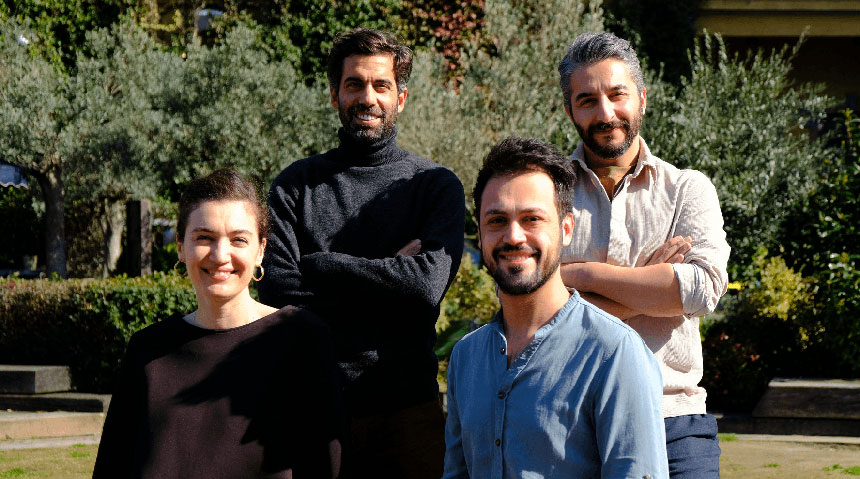
    Last week, London-based Neol announced it raised $5.2 million in a seed round to build out a Web3-enabled, decentralized, and tokenized cohort-powered learning and talent platform. [Neol’s founders, in the picture above].

    It’s similar to On Deck, although instead of targeting founders and start-up operators, it will be aiming mostly at design and creative freelance professionals. For example, if a global fashion brand wants to reimagine its packaging or supply chain to be more sustainable, it can put the call out to Neol’s community for solutions.

    A decentralized and tokenized platform community of members build their own cohorts and create a token or a kind of Neol currency, sharing this way the wealth vision that’s core to Web3 companies.

    It’s like a tokenized, Web3 university with teachers that are rewarded financially, beyond their salary, for building a richer learners community rather than just supporting the school’s brand.

    Similarly, it might happen in the e-learning environment for freelancers. This market is expected to grow roughly 24% annually until 2028.

    Neol’s financing round was led by Kyu Collective Japan’s ad agency and VC firm Global Ventures. Other participating investors were Tony Xu, CEO of DoorDash, LearnStart, FJ Labs, and Paribu Ventures.

    Neol claims to have run eight cohorts with over 600 learners and 200 customers.

  • German Learning Platform CoachHub Raises Another $200 Million

    German Learning Platform CoachHub Raises Another $200 Million

    IBL News | New York

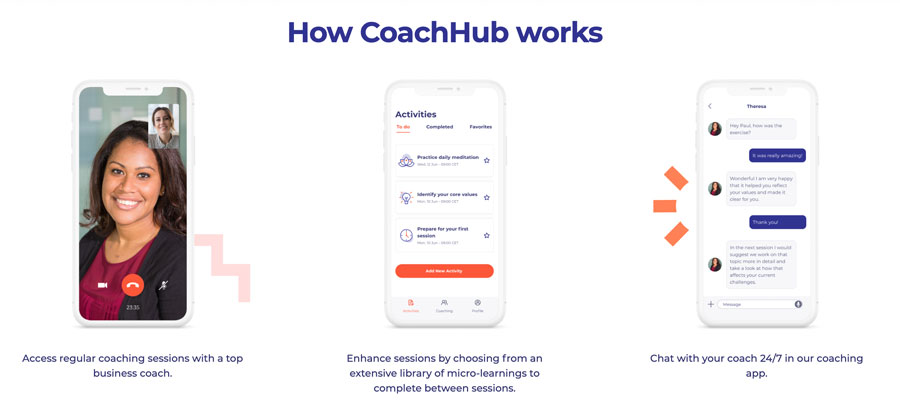
    Berlin-based 1:1 coaching platform CoachHub closed this month a $200 million Series C funding with the goal of fueling its global expansion, particularly in the United States.

    The round, led by Sofina and SoftBank Vision Fund 2, followed an $80 million funding eight months ago. To date, this three-year-old company has raised $330 million.

    Existing investors, including Molten Ventures, Speedinvest, HV Capital, Signals Venture Capital, and Silicon Valley Bank/SVB Capital, also participated in the round.

    With a workforce of 850 employees, CoachHub “aims to provide a tailored coaching experience to employees at all levels to help advance their careers,” stated Yanni Pipilis, Managing Partner at SoftBank Investment Advisers.

    Research company Gartner said that the corporate digital coaching segment is expected to grow by up to 100 times by the end of the decade.

    “We believe 1:1 coaching will continue to be one of the most effective ways of enhancing the socio-emotional and leadership skills needed to thrive in an increasingly complex and rapidly evolving workplace,” said Harold Boël, CEO at Sofina.

    CoachHub matches learners to a pool of 3,500 certified business coaches in 60 languages and 90 countries. The company employs 150 product engineers along with a team of 30 leading behavioral scientists.

    “The app couples human intelligence with AI technology to pair employees with their ideal coaches and curate a library of content that enhances their learning journey,” the company pointed out.

    The firm claims that it is currently serving 500 customers, including household names like Coca-Cola, Danone, Toyota, LVMH, L’Oréal, Credit Suisse, and Twitter.

  • Open edX & Learning Platforms Newsletter | May – June 2022: 2U, Coursera, Moodle, Degreed, Cornerstone, Canvas LMS, Class.com…

    Open edX & Learning Platforms Newsletter | May – June 2022: 2U, Coursera, Moodle, Degreed, Cornerstone, Canvas LMS, Class.com…

    [ Newsletter format  |  Click here to subscribe ]

    MAY – JUNE 2022 – NEWSLETTER #45  |  Breaking news at IBL News  |  Noticias en Español


    Open edX

    • NASA Launches a Community and Education Initiative to Accelerate Open Science

    • The 2023 Open edX Conference will take place at MIT in Cambridge, MA

    • Three Spanish Universities Will Fund the Transformation of Open edX into an On-Campus LMS

    • Ukrainian Raccoon Gang Showed Up on the 2022 Open edX Conference

    • Developers Gathered at the Annual Reunion of the Open edX Software


    edX Platform

    • 2U / edX Creates Two University Advisory Councils Following the Former Partners’ Board

    • 2U/edX Increases Revenues and Losses While It Transitions Into edX

    • “edX is to 2U What Google is to Alphabet,” Says the Founder of edX

    • Over 300 Students Will Graduate from BU Questrom’s Online MBA


    Coursera

    • Business Skills Rise, But Technology Proficiency Drops Significantly In the US

    • Coursera Announces New Features, Tools, and Learning Initiatives

    • Coursera Launches a Collection of Short Videos and Lessons Intended for Skills Development

    • Coursera Increased Its Net Loss in the First Quarter of 2022


    Learning Platforms: Functionalities

    • Moodle Commercial Provider Open LMS Integrates Zoom-Built In Tool Class.com

    • AI-Powered Platforms that Detect Plagiarized Content Online Attract Investors

    • Degreed Celebrates Its 10th Anniversary, Claiming to Be the First LXP


    Learning Platforms: Acquisitions and Results

    • Cornerstone Pays $200 Million in Cash to Skillsoft for the SumTotal Learning Platform

    • Cornerstone Completed Its Acquisition of the EdCast LXP Platform

    • McGraw Hill Says that Its Annual Digital Billings Exceed $1 Billion

    • Canvas LMS Continues Its Growth, Reporting an Increase of 21% in Its Quarter Revenue

    • Class.com Acquires Blackboard’s Collaborate Virtual Video Tool


    2022 Events | All of the Key Conferences Listed!

    • Education Calendar 2022  – JUNE | JULY |  AUGUST | SEPTEMBER | OCTOBER | NOVEMBER | DECEMBER | Conferences in Latin America & Spain


    This newsletter was created in collaboration with IBL Education, a New York City-based company specializing in AI-driven, skills learning platforms. We also film and produce courses for universities and business organizations. Read the latest IBL Newsletter   |  Archive of Open edX Newsletters

  • Online Learning Newsletter | May – June 2022: Andreessen Horowitz, Metaverse, UC San Diego, 1EdTech Consortium, Universities…

    Online Learning Newsletter | May – June 2022: Andreessen Horowitz, Metaverse, UC San Diego, 1EdTech Consortium, Universities…

    [ Newsletter format  |  Click here to subscribe ]

    MAY – JUNE 2022 – NEWSLETTER #51  |  Breaking news at IBL News  |  Noticias en Español


    Trends

    • Andreessen Horowitz Creates with Columbia and Stanford a Research Lab on Crypto and Web3

    • Americans Support Student Loan Forgiveness Up to $10,000

    • The New York Times Against Canceling Student Debt, which Reached $1.7 Trillion

    • A Report Shows that Businesses Must Dramatically Improve their Open Source Software Security

    • The Some College No Credential Population Rose to 39 Million in the U.S.

    • The Metaverse Virtual-Reality Technology Might Contribute $3 Trillion to GDP

    • Data Shows that Remote Work Is Disappearing: Less than 10% Work at Home


    Universities

    • UC San Diego Reaches $3 Billion in Its Fundraising Campaign

    • The University of Phoenix President Resigned Amid an Inquiry

    • An Op-Ed Calls to Rename George Washington University for Its “Systemic Racism”

    • Boston University and Other Colleges Raise Tuition Price, Attributing It to Inflation

    • Bentley University Becomes One of the First Colleges Accepting Crypto for Tuition Payments

    • ASU Creates a Certified Program for Churches Facing Declining Membership


    Harvard, MIT, Stanford

    • MIT, Cambridge, and Stanford Are the World’s Best Universities, According to the QS Ranking

    • Harvard University’s President Will Step Down in June 2023

    • Harvard University Endowment Saw a Decline of 43% in Its Stock Portfolio in 2022

    • Stanford Will Launch a Summer Program for High-Growth Start-Ups

    • Sanjay Sarma, Director at MIT Open Learning and Digital Learning, Steps Down


    Policy

    • “Arming Our Teachers It’s Just Ludicrous,” Says Education Secretary Cardona

    • The Biden-Harris Administration Will Forgive $5.8B in Federal Loans to Students of Corinthian Colleges

    • The FBI Alerts that U.S. Academic Access Credentials Are on Sale on the Dark Web

    • A San Antonio School District Will Allow Qualified Teachers to Carry a Firearm

    • Advanced Technology Will Boost the Global Market to One Trillion by 2030


    Initiatives

    • Georgia State University Study Showed that Chatbots Helped Students

    • IMS Global Rebrands As 1EdTech Consortium

    • MIT Sloan CIO Symposium Selects Key Leaders and Features Innovative Start-Ups

    • The Obamas and Airbnb’s CEO Launch a $100M Scholarship Fund for Public Service

    • IBM Signed a Multi-Year Collaboration Agreement with Amazon Web Services


    2022 Events | All of the Key Conferences Listed!

    • Education Calendar 2022  – JUNE | JULY |  AUGUST | SEPTEMBER | OCTOBER | NOVEMBER | DECEMBER | Conferences in Latin America & Spain


    This newsletter was created in collaboration with IBL Education, a New York City-based company specializing in AI-driven, skills open source learning platforms. We also film and produce courses for universities and business organizations. Read the latest IBL Newsletter   |  Archive of Open edX Newsletters


  • Americans Support Student Loan Forgiveness Up to $10,000

    Americans Support Student Loan Forgiveness Up to $10,000

    IBL News | New York

    An overwhelming majority of Americans believe that the government should prioritize making college more affordable over forgiving existing student loans, according to a new NPR/Ipsos poll.

    Meanwhile, a narrow majority of Americans support forgiving up to $10,000 in federal student loans. But support wanes for a larger amount.

    In detail, the main findings point out to the following:

    • A majority (55%) of Americans support forgiving up to $10,000 of a person’s student loan debt.
    • Fewer Americans support forgiving up to $50,000 (47%) in student loans and forgiving all student loan debt (41%).
    • Roughly four in ten Americans support extending the current federal loan pause without forgiving any loan debt (42%) and ending the loan pause now without forgiving any loan debt (41%).
    • A wide majority of those with student loans support each of the three proposals asked about: forgiving $10,000 of student debt (84%), $50,000 of student debt (78%), and all student debt (68%).

    Americans and those with student loans alike prefer the government to make college cheaper than forgive student loans, according to the poll.

    Nearly two-thirds of Americans (65%) say that if the government does forgive some student loan debt, it should be for graduate and undergraduate debt, as opposed to just undergraduate debt (30%).

    A majority of Americans with student loan debt say they have not made any payments since the pause began. Instead, most say they have taken this opportunity to catch a financial break.

    Nearly half (47%) of Americans with student loan debt say that the federal student loan pause has improved their mental health.

    This poll — conducted over 1,022 Americans between June 3 and 5, 2022, with an oversample of more than 400 student loan borrowers — took place as President Biden plans an announcement on federal student loan forgiveness.

  • NASA Launches a Community and Education Initiative to Accelerate Open Science

    NASA Launches a Community and Education Initiative to Accelerate Open Science

    IBL News | New York

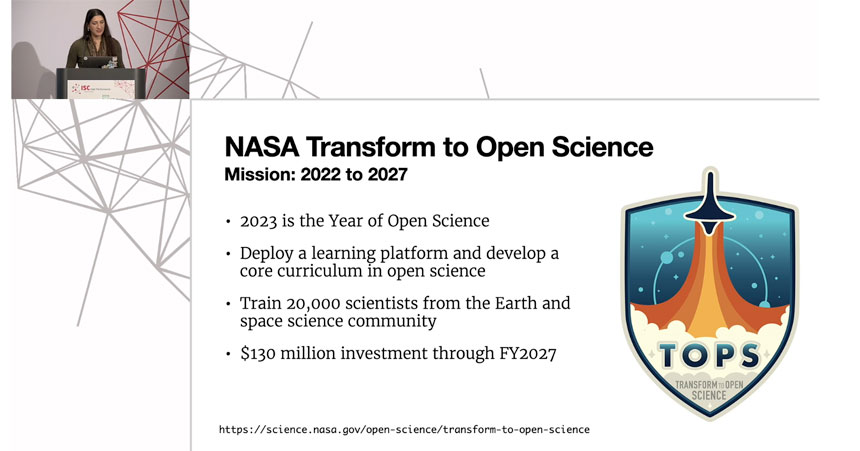
    NASA introduced its Open-Source Science initiative (OSSI) last month, which intends to build an open science community over the next decade and share software, data, and knowledge (algorithms, papers, documents, ancillary information) in the scientific process.

    One of the key components of the program is TOPS (Transform to Open Science), which provides visibility, advocacy, and community resources.

    “From 2022 to 2027, TOPS will accelerate the engagement of the scientific community in open science practices through events and activities,” explained NASA.

    Next year will be designated as the “Year of Open Science.” The goal will be to “spark change and inspire open science engagement through events and activities that will shift the current paradigm.”

    One of the projects will be an Open Science online learning platform, which will deliver courses about this subject for internal and public use. The launch of the first learning modules is scheduled for October 2022.

    [Disclosure: IBL Education, the parent company of this news service, has been selected to develop that educational platform using Open edX technology after an RFP process.] 


    Video: Keynote from Prof. Lorena Barba on Open Science 

  • A Report Shows that Businesses Must Dramatically Improve their Open Source Software Security

    A Report Shows that Businesses Must Dramatically Improve their Open Source Software Security

    IBL News | Austin, Texas

    Many organizations are currently ill-prepared to effectively manage security risks resulting from the use of open source applications, according to new research from The Linux Foundations and Snyk, a leading company in developer security. Organizations also lack strategies to address application vulnerabilities arising from code reuse.

    The report, titled The State of Open Source Security, was released today during the “Open Source Summit North America”, which will attract thousands of executives of the industry to a packed conference in Austin, Texas, this week [The report in PDF].

    The study suggests industry naivete about the state of open source security today.

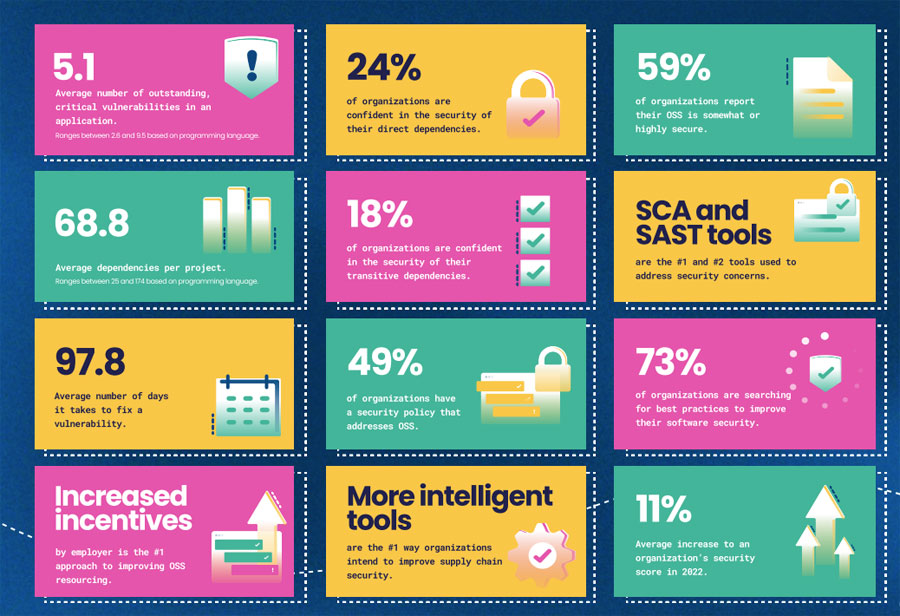
    Specifically, the report — based on a survey of over 550 respondents and data scanned 1.3B open source projects — notes:

    • Over four out of every ten (41%) organizations don’t have high confidence in their open source software security.
    • Less than half (49%) of organizations have a security policy for OSS development or usage (and this number is a mere 27% for medium-to-large companies).
    • Three in ten (30%) organizations without an open source security policy openly recognize that no one on their team is directly addressing open source security.
    • The average application development project has 49 vulnerabilities and 80 direct dependencies (open source code called by a project).
    • The time it takes to fix vulnerabilities in open source projects has steadily increased, more than doubling from 49 days in 2018 to 110 days in 2021.
    • Forty percent of all vulnerabilities were found in transitive dependencies. Only 18% of respondents said they are confident of the controls they have in place for their transitive dependencies.

    “While open source software undoubtedly makes developers more efficient and accelerates innovation, the way modern applications are assembled also makes them more challenging to secure,” said Brian Behlendorf, General Manager at Open Source Security Foundation (OpenSSF).

    “Software developers today have their own supply chains – instead of assembling car parts, they are assembling code by patching together existing open source components with their unique code. While this leads to increased productivity and innovation, it has also created significant security concerns,”
    said Matt Jarvis, Director of Developer Relations at Snyk.

    The goal of the report is to raise awareness and leverage these findings to further educate and equip developers, empowering them to continue to build fast, while staying secure.

  • Moodle Commercial Provider Open LMS Integrates Zoom-Built In Tool Class.com

    Moodle Commercial Provider Open LMS Integrates Zoom-Built In Tool Class.com

    IBL News | New York

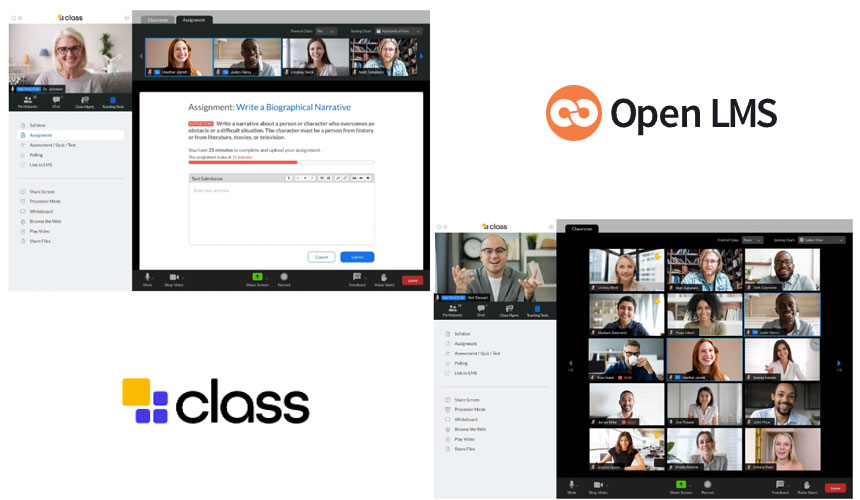
    Moodle-based Open LMS announced this month a partnership with Class.com to offer an integrated tool to K-12, Higher Ed and the workplace.

    This solution will allow Open LMS users to launch synchronous sessions without leaving its environment with the Zoom-built in platform Class.com.

    “With this partnership, we also aim to simplify the technology purchasing journey,” said Open LMS.

    “The fact that Moodle is open source meant that the Class team could experiment with it in various ways and that they could work with Open LMS to leverage the power of the Moodle platform,” explained Phill Miller, Managing Director at Open LMS, in a blog post.

    Class recently purchased Anthology’s Blackboard Collaborate virtual conferencing tool, which is one of the products that Open LMS provides as integrated technology.


  • UC San Diego Reaches $3 Billion in Its Fundraising Campaign

    UC San Diego Reaches $3 Billion in Its Fundraising Campaign

    IBL News | New York

    UC San Diego announced this month it raised $3 billion, surpassing its original goal o $2 billion, through a multibillion-dollar, 10-years old campaign concluding on June 30, 2022.

    “In just over six decades, the University of California San Diego has become an international powerhouse in research, innovation, health care, the arts, and education,” said the institution.

    Over 163,000 people — friends, alumni, foundations, and corporations — have supported the university with gifts and grants of all sizes, providing funding to 453 different areas on campus.

    Around 100 national leaders and alumni collectively donated $1 billion to the campaign, and 46,500 alumni donated $253 million in gifts.

    Among other gifts and donations, they are the following:

    • Joan and Irwin Jacobs provided $100 million in support for the landmark Jacobs Medical Center at UC San Diego Health, which opened in late 2016.
    • Ernest and Evelyn Rady committed $100 million in 2015 to help recruit and retain faculty and fund strategic priorities at the Rady School of Management at UC San Diego, which they helped establish in 2004 with a $30 million lead gift.
    • Denny Sanford donated $100 million to the creation of the Sanford Stem Cell Clinical Center at UC San Diego Health in 2013. With another $100 million commitment, he went on to establish the T. Denny Sanford Institute for Empathy and Compassion, which focused on research into the neurological basis of compassion.
    • With a $75 million donation, alumnus Taner Halıcıoğlu ’96 donated $75 million in the largest alumni gift the campus has ever received to establish the Halıcıoğlu Institute for Data Science at UC San Diego.
    • The late Franklin Antonio ’74 became the first alumnus to have a building named in his honor – Franklin Antonio Hall – after making a $30 million gift to support the Jacobs School of Engineering.