
Steven Spielberg on Watching Movies Alone
Source: Youtube

Trump at G7 after Iran 'deal' announcement: What to expect
Source: Youtube
IBL News | New York
Anthropic said on Friday that the Federal Government had ordered the company to suspend access to its Fable 5 and Mythos 5 AI models for all foreign nationals.
The company revealed the order in a social media post, saying that it “must abruptly disable Fable 5 and Mythos 5 for all our customers to ensure compliance.”
Foreign nationals — including citizens of allied nations like Canada or Britain — who work for Anthropic on it are also affected by the suspension.
The order to limit access to the new AI models came from the Commerce Department.
These limits on foreigners represent a new chapter in Anthropic’s often rocky relationship with the federal government.
It is also the second time the Trump administration has targeted the San Francisco-based company.
Government restrictions on the sale of key technologies, such as computer chips, to countries like China are common.
But the order limiting who can use Anthropic’s technology is unusually expansive and could, in theory, block Anthropic employees who are.
IBL News | New York
Anthropic revealed that 80%+ of the code merged into its codebase as of May 2026 is authored by Claude. 3 (in February 2025, this number was in the low single digits), while it detailed its progress toward recursive self-improvement and its implications.
“At Anthropic, we are delegating a growing share of AI development to AI systems themselves, which is speeding up our work.”
The company believes that the so-called recursive self-improvement practice – with AI systems capable of fully autonomously designing and developing their own successors— could arrive sooner than most institutions are prepared for.
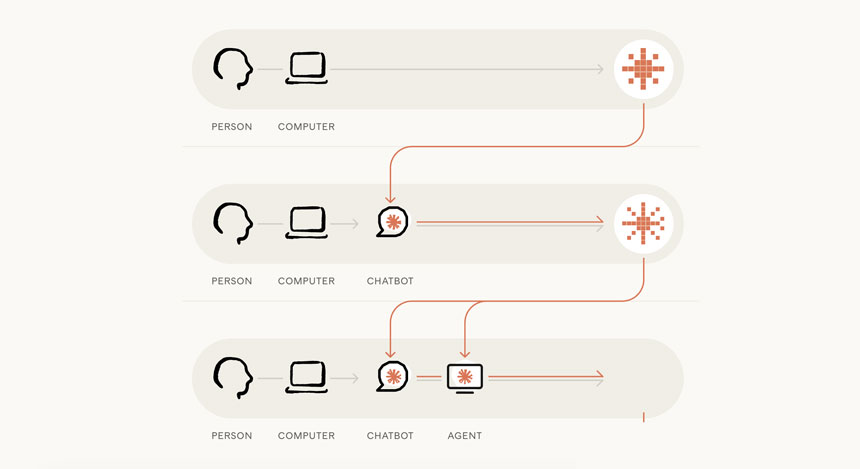
Today, autonomous agents can now run code themselves and delegate hours of work to other agents.
Systems capable of fully building their own successors would represent a major development in science, healthcare, and beyond, but might increase the risk of humans losing control over AI systems.
In the future, agents could become capable of building and training models themselves. If this happens, future versions of Claude could be continuously improved by Claude itself.
The Anthropic Institute is showing that AI is already accelerating the development of AI systems. To take just one example: today, Anthropic engineers on average ship 8x as much code per quarter as they did from 2021 to 2025.
The technical trends discussed in this piece suggest that AI systems are going to become much more capable in the coming years. These trends have huge implications.
The evidence points out that the rate at which AI models improve is accelerating, with the length of tasks doubling roughly every four months, up from an earlier trend of doubling every seven months.
In March 2024, Claude Opus 3 could complete software tasks that would take humans about 4 minutes. A year later, Claude Sonnet 3.7 managed tasks that would have taken about an hour and a half. A year after that, Claude Opus 4.6 managed 12-hour tasks.1 If this trend holds, tasks that take a skilled person days could come within range this year. In 2027, AI systems could be capable of tasks that take a person weeks.
Our internal data shows Claude is accelerating AI development—a possible path to recursive self-improvement, or AI autonomously building a more capable successor.
It’s happening faster than we thought, and the implications deserve greater attention. https://t.co/OVVPJO7VQx
— Anthropic (@AnthropicAI) June 4, 2026
IBL News | New York
The Chinese model MiniMax M3, natively multimodal and with a context window of up to 1M tokens, was released this month. It’s an open-weight model, meaning its trained parameters are publicly available for download, local deployment, and fine-tuning.
However, the company withheld the original training code, training data pipelines, and specific inference operators. It can run on a desktop computer.
Users can use the model via MiniMax M3, MiniMax Code, the Token Plan, and API services.
According to the company,
On the other hand, the company announced that MiniMax Code, “built on a harness based on the outstanding open-source community projects OpenCode and Pi”, will be open-sourced this project in the future.
IBL News | New York
Paris-based AI company Mistral AI is positioning itself as a critical European counterweight to U.S. dominance in the race for superintelligence or AGI. The start-up is growing by playing to its home crowd: selling services hosted in European data centers, independent of American and Chinese competitors, to local governments and enterprises.
Experts say that U.S. tariffs and President Trump’s threats to take over Greenland have given new impetus to a European push for tech independence.
Guillaume Lample, Mistral’s co-founder and chief scientist, said, “Very soon in the future, we are probably going to see AGI or superintelligence, so it is very important that we have access to these models also in Europe.”
“Also, as long as we have adversaries that are threatening, we do need to have our own capabilities,” he said. “Europe in particular needs to have strategic autonomy when it comes to defense systems.”
Founded by three French AI researchers from Google and Meta Platforms, Mistral was valued at around $14 billion last year and promises more than $1 billion in revenue this year, a fraction of the size of its Silicon Valley rivals.
Mistral has already landed deals to supply AI services to European corporate heavyweights such as Airbus and BMW, as well as the French military. Mistral also said it was building a new 10-megawatt data center south of Paris, part of the $4.7 billion it is plowing into data centers in France and Sweden.
However, the company acknowledges that a big obstacle to tech independence is the scale of investment necessary.
“We can’t put 50 billion [dollars] on the table to build a gigawatt ahead of demand,” the executive said. “That’s potentially our biggest bottleneck.”
IBL News | New York
Anthropic is putting its most powerful — and dangerous — model in everyone’s hands, but it’s doing it with guardrails and hard safety limits.
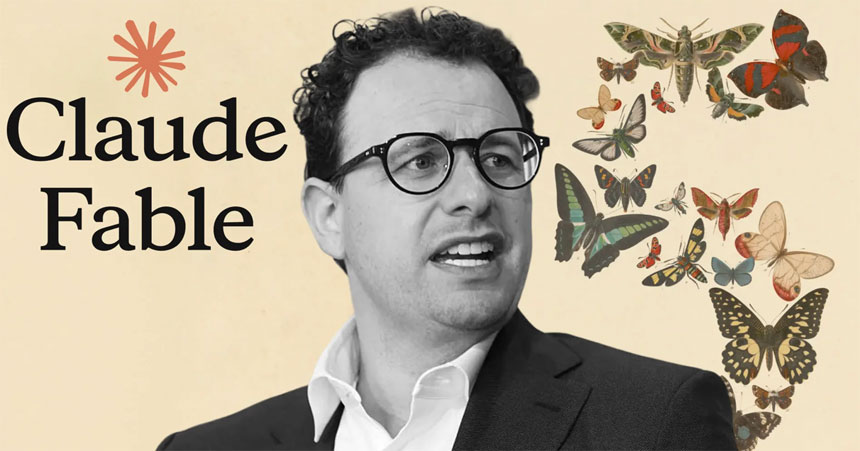
On Tuesday, the AI firm launched Claude Fable 5, the first publicly available version of its Mythos model.
Until yesterday, Mythos, Anthropic’s exploit-finding software, was the model the White House wanted kept from China, capped at roughly 200 vetted security organizations.
Fable is Latin for what mythos is in Greek. It’s live for everyone, and it’s the most capable model Anthropic has ever shipped to the public.
Claude Fable 5 is the same as Mythos, except for the safeguards.
In high-risk areas like cybersecurity, biology, chemistry, and distillation, the model blocks responses and falls back to Claude Opus 4.8.
It means that the user asks about cybersecurity, biology, or chemistry, and Claude Opus 4.8 answers instead.
Fable is included on Pro, Max, Team, and Enterprise seats through June 22. On June 23, it comes off those plans and runs on usage credits until capacity catches up.
This Fable, built on Mythos tech, is available for $10 per million input tokens and $50 per million output tokens, double the price of Opus 4.8. That price alone might serve as a deterrent for widespread use. It is available on paid Claude plans until June 22.
A new policy comes with it. Anthropic will keep all Mythos-class traffic for 30 days, including from business customers, to detect jailbreaks. Anthropic says the data won’t be used to train new models.
Fable 5 / Mythos needs less guidance than older models and is already doing incredible things. For example, Stripe pointed Fable at a 50-million-line codebase and got a migration done in a day that would have taken a full team over two months by hand.
Launched as a preview in April, Mythos was initially limited to a handful of partners due to cybersecurity concerns. Last week, Anthropic expanded access to hundreds of organizations across 15 countries, again focusing on organizations that manage critical infrastructure.
Now, a version of that technology is available to anyone through Anthropic’s Claude API and consumption-based Enterprise plans.
Anthropic is also deploying a new version of Mythos, called Mythos 5, to organizations already approved to access the advanced model.
In addition, Anthropic said that it ran an internal bug bounty that has produced no universal jailbreaks over 1,000 hours of testing. “We then worked with external red-teaming orgs, which also failed to find universal jailbreaks,” said the company.
Wary of what a Mythos-class model could do in the wrong hands, Anthropic says it stress-tested its classifiers with jailbreak attempts before releasing Fable 5.
With the launch of Fable 5 and Mythos 5, Anthropic said it will require a 30-day retention on all traffic, even if enterprises previously had zero-retention agreements. The company said it won’t use the data for training and will use it only to “defend against complex and novel attacks, including new jailbreaks,” and “identify and reduce false positives.”
The policy could set an industry precedent in which access to increasingly powerful models comes with mandatory data-retention policies framed as a safety measure.
Vibe-coding platform Base44 said that Fable is better at “one-shotting full apps” and has excellent tool-calling.
Genspark said Fable outperformed every other model in its evaluations and performed significantly better on tasks such as UI design and game coding.
Rakuten said, “What makes highly autonomous operations possible, the extra thinking pays for itself.”
Fable’s launch comes as Anthropic prepares to enter the public markets, alongside OpenAI and Elon Musk’s SpaceX. Anthropic said it expects demand for Fable 5 to be very high.
IBL News | New York
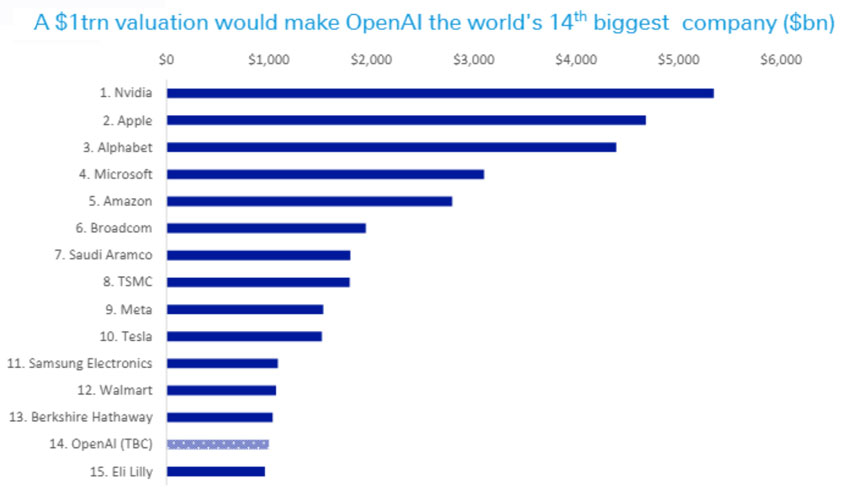
OpenAI confidentially filed for a U.S. IPO (Initial Public Offering) yesterday, targeting a valuation of up to $1 trillion.
OpenAI, the creator of ChatGPT, is set for a stock market debut, which could come in September, intensifying competition for investor capital, especially as rival Anthropic aims to go public this year as well.
OpenAI did not disclose the size or terms of the offering, and said a timeline has not yet been determined.
“It may be a while because there are things we want to do that are likely easier as a private company,” it said in a statement.
At the mentioned valuation, OpenAI would be the third trillion-dollar-valuation company (along with SpaceX and Anthropic), testing investor appetite in the most consequential quest for high-growth technology stocks in the last 10 years.
On June 1. Anthropic, the company behind Claude Code, confidentially filed for a U.S. initial public offering, weeks after raising $65 billion in a funding round that valued it at $965 billion.
IBL News | New York
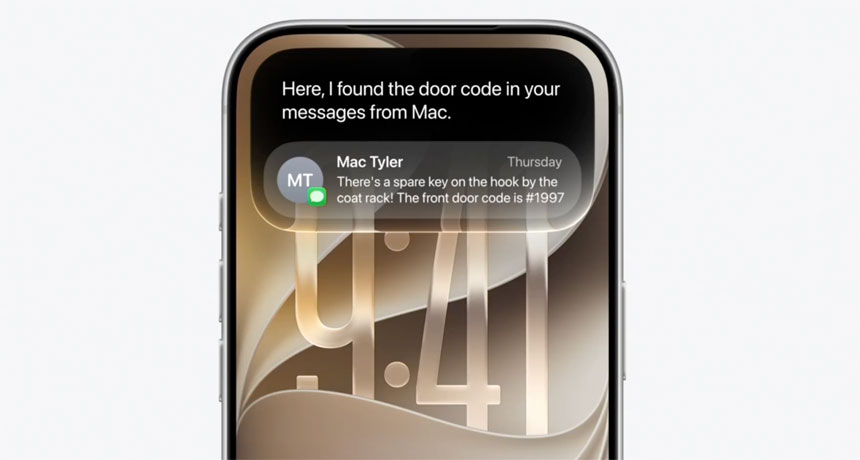
As it races to catch up with rivals, Apple unveiled its long-delayed AI-powered version of Siri, its digital assistant, at its annual Worldwide Developers Conference (WWDC) in Cupertino, California, on Monday.
The new Siri, called Siri AI, includes a variety of upgrades that bring it closer to AI helpers like OpenAI’s ChatGPT, Google’s Gemini, and Anthropic’s Claude, enabling users to have back-and-forth conversations and complete tasks. It’s the biggest update to Apple’s Siri in years, turning it into an AI hub for iPhone, iPad, and Mac.
Siri AI is powered by Google’s own Gemini AI model. This is also the first time that the company has officially confirmed that some of its Apple Intelligence features will run on Nvidia chips.
This redesigned Siri can speak back and forth with the user, a major improvement over previous versions of the assistant. It has its own dedicated app and customizable voice options.
In a demo at WWDC, Siri was able to check concert dates, set a reminder to buy tickets, and even get directions to pick up a friend on the way to the concert venue.
Apple unveils Siri AI by Apple Intelligence. pic.twitter.com/VClr2s8RrA
— Yahoo Finance (@YahooFinance) June 8, 2026
IBL News | New York
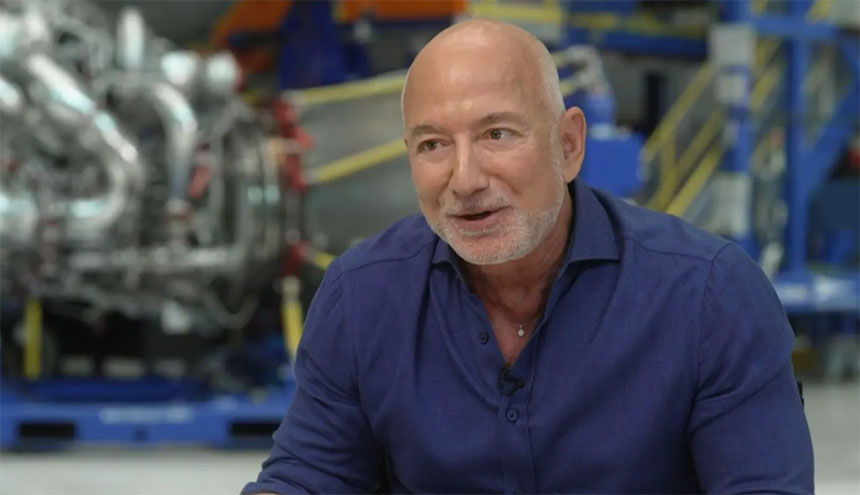
Ultra billionaire Jeff Bezos dismissed fears of artificial intelligence-fueled job displacement, arguing that the technology will augment workers, boost productivity, and lead to labor shortages and deflation across a range of goods and services — but only if “we let this technology play out and don’t hamstring it with regulation too early.”
His optimism contradicts the negative public perception of AI, which has worsened significantly in recent months.
A recent Pew Research Center found that half of U.S. adults are more concerned than excited about the increased use of AI in daily life.
Respondents pointed to the potential harms of AI on creativity and relationships and expressed pessimism about its impact on education and jobs.
Rapid development of AI data centers, which can span hundreds of thousands of square feet, has also sparked widespread backlash over their impacts on nearby residents’ lives.
On the fear of increased mass layoffs. of software engineers and programmers due to the rise of AI coding tools such as Claude Code and Cursor, Bezos argued that these tools help programmers identify and solve problems in their work.
“It’s just that the work is going to be done at a higher level,” Bezos said. “It’s going to be done with a bulldozer instead of a shovel, and that’s going to be a good thing.”
Bezos believes “President Trump has been right about a lot of things.”