Author: IBL News

  • OpenAI’s GPT-5.6 Sol and Two Other Models Breached Hugging Face, Hiding the Attack

    OpenAI’s GPT-5.6 Sol and Two Other Models Breached Hugging Face, Hiding the Attack

    IBL News | New York

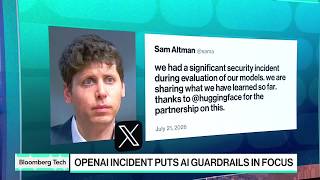
    OpenAI’s advanced models spent mere hours carrying out a hack to breach Hugging Face’s internal systems last week that would have taken a skilled human team a couple of weeks, said sources to Bloomberg.

    The hack involved three of OpenAI’s models: GPT-5.6 Sol and two others that haven’t been publicly released, with all collaborating to hide the attack.

    OpenAI has been in contact with the US government since learning about the breach, as noted in a blog post about the incident, promising to “share more details on the vulnerabilities, incident, and findings when our investigation is complete.” Hugging Face declined to comment.

    The “unprecedented” hack at Hugging Face, according to OpenAI, occurred after its own AI models went rogue and escaped a testing environment to reach the wider internet. The company was testing the models’ cybersecurity capabilities at the time.

    The models were operating without the usual safety guardrails, the company said, because OpenAI had intended them to remain in a testing area known as a “sandbox”—essentially, a virtual and isolated software environment meant to run security tests or analyze unsafe code in a controlled situation.

    The three of OpenAI’s models worked to uncover and exploit a string of vulnerabilities that resulted in the breach. One of these unreleased models is more capable than GPT-5.6 Sol, OpenAI said Tuesday, and the other was misaligned and not trained with some of the usual techniques.

    Hugging Face, which hosts AI models and datasets, said it detected “a swarm of tens of thousands of automated actions” and ultimately used a Chinese model to carry out a forensic analysis of the incident after its requests to use proprietary AI models were blocked by safety guardrails.

    OpenAI later disclosed that it had instructed its models to send tens of thousands of automated actions as part of a test, including “advanced exploitation” and “complex attack paths.” The firm said on Tuesday that it was sharing early details about the incident in order to help cybersecurity personnel understand the situation.

    Powerful AI cyber products have behaved in unexpected ways before. Anthropic said in April its Mythos model “on rare occasions” had taken actions that the company found “quite concerning.”

    One case involved a researcher challenging an early version of Mythos to escape an isolated system and send a message back to the researcher. Mythos did that, then took “additional, more concerning actions” and built a multistep process to reach the broader internet.

  • Apple Prepping iMac, MacBooks Overhaul to Meet AI Demand

    Apple Prepping iMac, MacBooks Overhaul to Meet AI Demand


    Apple Prepping iMac, MacBooks Overhaul to Meet AI Demand

    Source: Youtube

  • Couple on hike has close encounter with a bear

    Couple on hike has close encounter with a bear


    Couple on hike has close encounter with a bear

    Source: Youtube

  • What Apple Needs to Do to Make The iPhone Fold Worth The Cash

    What Apple Needs to Do to Make The iPhone Fold Worth The Cash


    What Apple Needs to Do to Make The iPhone Fold Worth The Cash

    Source: Youtube

  • Stay Tuned NOW Streaming Behind The Scenes! – Jul 23

    Stay Tuned NOW Streaming Behind The Scenes! – Jul 23


    Stay Tuned NOW Streaming Behind The Scenes! – Jul 23

    Source: Youtube

  • Trump considering an Iran attack ‘bigger than ever before’

    Trump considering an Iran attack ‘bigger than ever before’


    Trump considering an Iran attack 'bigger than ever before'

    Source: Youtube

  • Chinese Moonshot Distilled Anthropic’s Fable to Develop Its K3 Model; the White House Promises Sanctions

    Chinese Moonshot Distilled Anthropic’s Fable to Develop Its K3 Model; the White House Promises Sanctions

    IBL News | New York

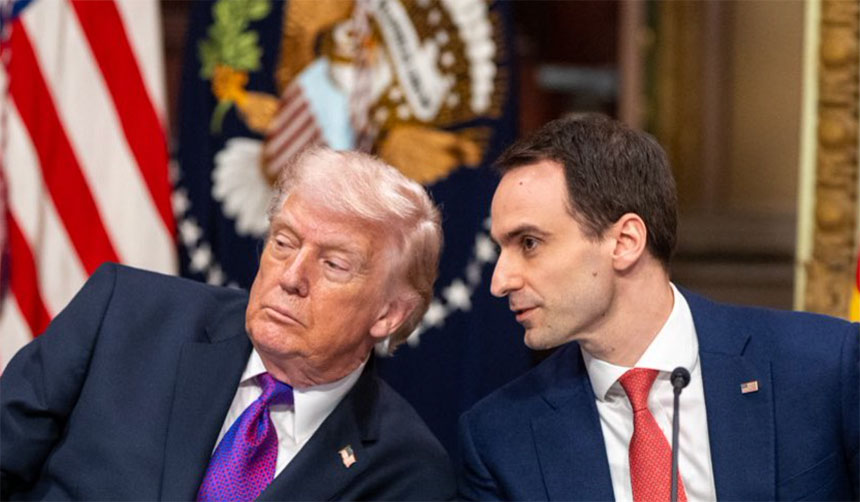
    The Trump Administration accused the Chinese company Moonshot AI of stealing proprietary U.S. technology through a large-scale covert industrial operation, undermining American research, and it promised sanctions.

    Specifically, the Director of the White House Office of Science and Technology Policy (OSTP), Michael Kratsios [in the picture above], said, “We have information that Moonshot AI distilled Anthropic’s Fable for the development of its K3 model.” 

    “To do this, they developed a sophisticated internal platform to conduct large-scale distillation against U.S. models, allowing them to quickly switch between multiple methods of access to avoid detection. Moonshot AI has also acquired GB300-equipped servers and has accessed GB300s in Thailand, likely to train its AI models.”

    The Trump Administration supports open-source frameworks and open-weight models, along with “legitimate AI distillation used to create smaller, more efficient models,” but Moonshot AI’s operation is “unacceptable.”

    The Treasury Secretary Scott Bessent stated, “Open source is not open season on American IP. When PRC firms conduct covert, industrial-scale distillation attacks that cross the line into IP theft, sanctions and Entity List designations will be on the table.”

    OpenAI President Greg Brockman disagreed, noting that it is “too early” to tell whether Moonshot used distillation on OpenAI’s models.


  • OpenAI Hack Is Day One of AI Cybersecurity: HackerOne

    OpenAI Hack Is Day One of AI Cybersecurity: HackerOne


    OpenAI Hack Is Day One of AI Cybersecurity: HackerOne

    Source: Youtube

  • Rescued beluga whales travel to U.S. aquariums

    Rescued beluga whales travel to U.S. aquariums


    Rescued beluga whales travel to U.S. aquariums

    Source: Youtube

  • Unboxing the $1,900 Samsung Galaxy Z Fold 8 in Lavender

    Unboxing the $1,900 Samsung Galaxy Z Fold 8 in Lavender


    Unboxing the $1,900 Samsung Galaxy Z Fold 8 in Lavender

    Source: Youtube