Author: IBL News

  • Google Announces 100,000 Scholarships for Three Career-Oriented Certificates

    Google Announces 100,000 Scholarships for Three Career-Oriented Certificates

    IBL News | New York

    Google announced this week three new certificate programs in data analytics, project management, and user experience (UX) design.

    The certificates are created and taught solely by Google employees and are offered through Coursera.org. These classes can be completed in three to six months. To take these programs, a college degree or work experience is not required and is priced at $49 a month.

    The tech giant will fund 100,000 need-based scholarships. In addition, it will be awarding over $10 million in grants to three nonprofits–YWCA, NPower, and JFF– to provide workforce development to women, veterans, and underrepresented Americans.

    “This is not revenue-generating for Google,” said Google’s Vice President, Lisa Gevelber, who leads Grow with Google and Google for Startups.

    The company said that these certificates will qualify applicants for jobs across fields with median average annual salaries of over $50,000.

    In 2018, Google launched a similar certificate program for those interested in IT. Over 250,000 people have taken this Google’s certificate, 57% of whom do not have a college degree, making it Coursera’s most popular certificate.


  • The Trump Administration Drops Restrictions for International Students Amid Pressure from Colleges

    The Trump Administration Drops Restrictions for International Students Amid Pressure from Colleges

    IBL News | New York

    Total reversal for the Trump administration on the ban on the international students’ issue affecting over 1 million students–who generate 40 billion business for the U.S.

    The Department of Homeland Security rescinded the July 6 policy directive that would have required foreign students on F-1 and M-1 visas to take in-person college coursework in order to remain in the country –a judge announced in Boston this Tuesday.

    The decision comes a week after Immigration and Customs Enforcement (ICE) announced that students at schools offering only online courses, such as MIT, Harvard and Princeton, would need to either leave the U.S. or transfer schools. These schools, along with 20 states and dozens of universities, filed a suit against the Trump administration to block the policy change from going into effect.

    Now, the Federal Government agrees to rescind the guidance to resolve the lawsuit filed by Harvard University and the Massachusetts Institute of Technology. The rescission of the directive means the government reverts back to a March guidance that allowed international students to remain in the U.S. while taking a fully online course load.

    Before it agreed to rescind the new guidance, the Homeland Security Department filed a motion Monday in which it justified its decision due to “significant national security concerns.”

    The government argued in a court filing, “A solely online program of study provides a nonimmigrant student with enormous flexibility to be present anywhere in the United States for up to an entire academic term, whether that location has been reported to the government … Additionally, such programs could allow a nonimmigrant student to conduct activities other than full-time studying.”

    The government maintained in that same filing that “students choosing a 100% online learning program do not need to be physically present in the United States.”

    Declarations from Harvard and MIT students submitted into the court record argued to the contrary that the students have compelling academic, personal and professional reasons to stay in the U.S. — or in some cases to re-enter the U.S. — even if their coursework would be online.


  • edX & Platforms | July 2020: JupyterCon, Suse, Juniper, Coursera, Udacity, DeVry, Canvas LMS, Degreed…

    edX & Platforms | July 2020: JupyterCon, Suse, Juniper, Coursera, Udacity, DeVry, Canvas LMS, Degreed…

    Newsletter format  |  Click here to subscribe ]

    JULY 2020 – NEWSLETTER #29  |  Breaking news at IBL News  |  Noticias en Español


    Open edX – Based Platforms

    • JupyterCon 2020 Conference Will Introduce an Innovative Learning Format with Credentials

    • The ‘Freshman Year for Free Program’ Will Pay Learners for Completing their Classes

    • Harvard University’s LabXChange Platform Wins the 2020 Open edX Prize

    • SUSE Acquires Kubernetes Management Platform Rancher Labs –which uses Open edX


    Open edX Software

    edX Posts the Release Notes of the Open edX Juniper Platform

    • Open edX Juniper Platform: Changes on LMS Instructor Dashboard and Studio Tool

    • edX Releases Juniper, Its Tenth Version of the Open edX Platform


    edX

    • edX MicroBachelors Will Include Consultants to Help Learners Complete Their Programs

    • An edX Survey Finds that a Majority Is Interested in Pursuing Additional Education

    • Research: Platforms At Scale Will Radically Transform Learning and Teaching


    Coursera

    • Coursera Users Complain About Cheating and Plagiarism on Peer Assignments

    • Courses, Strategies, and Resources to Get The Most From Learning with edX and Coursera


    Udacity

    • Udacity Develops an Introductory Course and Nanodegree on Machine Learning for Microsoft Azure


    Learning Platforms

    • Canvas LMS Picks a New CEO From Outside the Educational Industry

    • DeVry University Releases a Complimentary Video Library to Build In-Demand Tech Skills

    • Apple Will Shut Down iTunes U at the End of 2021


    Investment

    • John Katzman Raises Another $16 Million to Expand Noodle Partners OPM Firm

    • Degreed Raises Another $32 Million with Its Platform for Upskilling Employees


    2020 Events 

    • Education Calendar  –    JULY – DEC  |  Conferences in Latin America & Spain


    This newsletter is created in collaboration with IBL Education, a New York City-based company specialized in AI and credential-driven learning platforms. Read the latest IBL Newsletter   |  Archive of Open edX Newsletters

  • edX Posts the Release Notes of the Open edX Juniper Platform

    edX Posts the Release Notes of the Open edX Juniper Platform

    IBL News | New York

    edX officially announced Juniper, the latest release of the Open edX platform, and posted their release notes. “Overall, Juniper represents a huge step forward for the Open edX platform,” wrote Ned Batchelder, Architect at edX.

    Juniper, the tenth release of Open edX, is the version that took the longest time to develop: 17 months.

    It comes with new features related to the learner experience, instructor management and developer functioning.

    Learners will find new front-end pages regarding Profile, Account Settings, Order History, Checkout Page, and Course Experience.

    Improvements extend to areas like e-commerce, schedule personalization, team assignment submission, and mobile video app.

    The app now presents the ability to render YouTube videos within the application experience (previously learners would be redirected out of the application).

    Educators will find updates on Studio–the platform authoring tool– on component naming, unit creation, problem markdown editing, learning sequence navigation, and grading tools.

    For instances using programs, there is now a new registrar service to set enrollments.

    Developers will see major core upgrades to support Python 3 and Django 2, along with many areas deprecated.

  • Learning At Scale | July 2020: Trump Vs Colleges, Microsoft, Harvard, MIT, Microsoft, Intel…

    Learning At Scale | July 2020: Trump Vs Colleges, Microsoft, Harvard, MIT, Microsoft, Intel…

    Newsletter format  |  Click here to subscribe ]

    JULY 2020  –  NEWSLETTER #35  |  Breaking news at IBL News  |  Noticias en Español


    Trump vs Colleges

    • “Virtual Learning Has Proven to Be Terrible,” Says President Trump Contradicting DeVos

    • UC and Other Institutions Join Harvard and MIT Against the Trump Administration Over the International Student Ban

    • The Ban to Foreign Students to Stay for Online Classes Sparks Confusion in Higher Ed

    • Harvard and Princeton Will Deliver Their Classes Online This Fall; Backlash for Keeping Full Tuition


    Industry

    • Microsoft Will Offer Free Learning Paths for Digital Jobs In-Demand to 25 Million Facing Unemployment

    • Intel Launches an Associate Degree Program on AI with the Largest Community College

    • WeWork Sells Its Boot Camp Flatiron School to an Investment Firm


    Universities

    • The University of California Paid Over $1 Million to Cybercriminals Who Stole Sensitive Data

    • The Catholic Polytechnic University Will Start The Fall With Two Certificate Courses

    • The Wealthiest African-American in the U.S. Presents an Alternative Finance Initiative for Black Colleges

    2020 Top 50 Business Schools Ranking, According to Study.com


    International

    • Report: Nearly 260 Million Children Are Still Excluded from Education; Pandemic Exacerbates the Breach

    • The Global Pandemic Accelerates the Inequalities in Education; 1.1 Billion Children Still Out of School


    2020 Events 

    • Education Calendar  –   JULY – DEC  |  Conferences in Latin America & Spain


    This newsletter is created in collaboration with IBL Education, a New York City-based company specialized in AI and credential-driven learning platforms. Read the latest IBL Newsletter   |  Archive of Open edX Newsletters

  • “Virtual Learning Has Proven to Be Terrible,” Says President Trump Contradicting DeVos

    “Virtual Learning Has Proven to Be Terrible,” Says President Trump Contradicting DeVos

    IBL News | New York

    As the Trump administration pushes campuses to reopen schools in the fall semester, the President himself issued his view on the online education delivered by institutions yesterday. He tweeted yesterday:

    “Virtual Learning has proven to be TERRIBLE compared to In School, or On Campus, Learning. Not even close! Schools must be open in the Fall. If not open, why would the Federal Government give Funding? It won’t!!!”


    This view directly contradicts Secretary Betsy DeVos’ positioning. In April, DeVos said: “It’s very clear that we have an opportunity to embrace distance learning and remote education in a way that two months ago would not have been thought possible.”  “And it’s happening very well in many places and — out of necessity — many others are getting up to speed.”

    Moreover, the Trump administration backed recently for-profit, largely online universities as the University of Phoenix, accused of deceptive practices.

    As reported, Harvard University and MIT filed a suit against the administration over the proposed visa restrictions. Additionally, nearly 100 members of Congress have written to the administration demanding the removal of the restrictions.

    Also yesterday, President Trump blamed higher education institutions of indoctrinating students. These were his two tweets on the subject:


  • UC and Other Institutions Join Harvard and MIT Against the Trump Administration Over the International Student Ban

    UC and Other Institutions Join Harvard and MIT Against the Trump Administration Over the International Student Ban

    IBL News | New York

    The University of California (UC) will sue the Trump administration over the international student ban, joining Harvard University and MIT.

    The announcement came yesterday, a day after Harvard and MIT filed a lawsuit against Immigration and Customs Enforcement and the Department of Homeland Security in federal court in Boston. The suit seeks a temporary restraining order preventing the government from enforcing the policy because it violates the Administrative Procedure Act.

    On Monday, Immigration and Customs Enforcement (ICE) issued guidelines banning foreign students from staying in the U.S. if they attend a university that offers only online courses during the Covid-19 outbreak.

    Federal immigration authorities said that students who are enrolled in online programs “must depart the country or take other measures, such as transferring to a school with in-person instruction.”

    Like Harvard, UC had previously determined that all students, enrolled on 23 campuses, will take fall classes online.

    Several other education groups, such as The American Council on Education, said that they plan to join the legal battle.  Some 25 higher education associations, including Northeastern University, the American Association of Community Colleges, the Association of American Universities and the Association of Land Grant Universities, were expected to join. In addition, the Massachusetts attorney general vowed to support Harvard and M.I.T.’s efforts to block the rules.

    The universities argued that the policy was politically motivated and would throw higher education into chaos.

    Harvard’s president, Lawrence S. Bacow, called the administration’s action reckless and said in a statement that it appeared to have been designed to pressure universities to hold in-person classes “without regard to concerns for the health and safety of students, instructors and others.”

    The two universities said that the new directive would prevent many of their 9,000 combined international students — and hundreds of thousands of students at other universities across the country — from staying in the United States.

    White House spokeswoman Kayleigh McEnany condemned a lawsuit filed by Harvard University and Massachusetts Institute of Technology.


  • SUSE Acquires Kubernetes Management Platform Rancher Labs

    SUSE Acquires Kubernetes Management Platform Rancher Labs

    IBL News | New York

    London-based SUSE, a Linux distribution company controlled by private equity firm EQT, today announced that it has acquired Rancher Labs, a market leader in Kubernetes container management.

    The price of the acquisition was not disclosed. The deal is expected to close before the end of October 2020, subject to customary closing conditions and regulatory approvals.

    Cupertino, California-based Rancher is a well-funded company with a total of $95 million in investments. It reports having over 30,000 active users and 100 million downloads.

    “This is an incredible moment for our industry, as two open source leaders are joining forces. The merger of a leader in Enterprise Linux, Edge Computing and AI with a leader in Enterprise Kubernetes Management will disrupt the market to help customers accelerate their digital transformation journeys,” said SUSE CEO Melissa Di Donato in today’s announcement.

    “Only the combination of SUSE and Rancher will have the depth of a globally supported and 100% true open source portfolio, including cloud-native technologies, to help our customers seamlessly innovate across their business from the edge to the core to the cloud.”

    SUSE, specialized in Enterprise Linux, Edge Computing and AI, described the acquisition as the first step in its “inorganic growth strategy”. “It also follows SUSE’s strong fiscal momentum, with ACV (annual contract value) bookings increase 30% year over year and global cloud revenue skyrocket 70% year over year.

    “Rancher and SUSE will help organizations control their cloud-native futures,” said Sheng Liang, Rancher CEO. “Our leading Kubernetes platform with SUSE’s broad open-source software solutions creates a powerful combination, enabling IT and Operations leaders worldwide to best meet the needs of their customers wherever they are on their digital transformation journey from the data center to cloud to edge.”

    Gartner predicts that the growing adoption of cloud-native applications and infrastructure will increase the use of container management to over 75% of large enterprises in mature economies by 2024 (up from less than 35% in 2020).

    Kubernetes is a container management software that Google released under an open-source license in 2014. People have downloaded it over 100 million times. Rancher also offers its own small distribution of the Linux operating system.

    Last May, Rancher Labs launched an online certification program through the newly created Rancher Academy. The first available course was a free, self-paced, 5-week class, “Certified Rancher Operator: Level 1”.  The class was designed to teach developers with a basic understanding of Docker and Kubernetes how to deploy and use Rancher, RKE, along with how to work with downstream clusters. This learning ecosystem was powered by IBL Education.

  • The Ban to Foreign Students to Stay for Online Classes Sparks Confusion in Higher Ed

    The Ban to Foreign Students to Stay for Online Classes Sparks Confusion in Higher Ed

    IBL News | New York

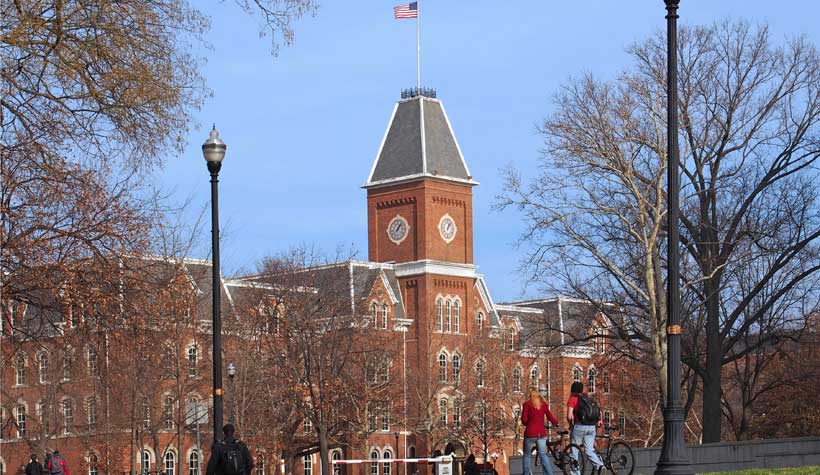
    The ultimatum given by ICE (Immigration and Customs Enforcement) to foreign students, of departing the U.S. or transferring to a school with in-person classes-has sparked confusion and anger in the higher-ed industry.

    The guidance comes on heels of college debating on how safely reopen for the fall semester amid of the pandemic.

    The new temporary rule, issued Monday afternoon by the U.S. Department of Homeland Security, prohibits students on international F-1 visas from returning to or remaining in the country this fall semester if the colleges they attend adopt online-only instruction models.

    A growing number of colleges, including Harvard and Princeton University, have announced that they will only conduct classes online. In this case, foreign students would be banned from studying in the United States under the rule.

    This is a shift away from the exceptions put in place during the spring and summer terms, which allowed international students residents in the U.S. to take fully online courses as colleges were transitioning.

    The Trump Administration is pressing colleges to reopen for the semester. Yesterday, President Trump tweeted: “SCHOOLS MUST OPEN IN THE FALL!!!.”

    Universities might try to work around the rule by adding hybrid programs.


  • Harvard and Princeton Will Deliver Their Classes Online This Fall; Backlash for Keeping Full Tuition

    Harvard and Princeton Will Deliver Their Classes Online This Fall; Backlash for Keeping Full Tuition

    IBL News | New York

    All Harvard University undergraduate and graduate students for the 2020-21 academic year will take their classes online due to the COVID pandemic–the university announced on Monday. Tuition won’t be affected.

    “Students will learn remotely, whether or not they live on campus,” the institution said.

    Only 40% of its undergraduates, including all first-year students, will live on campus –in single bedrooms with a shared bathroom.

    “This will enable first-year students to benefit from a supported transition to college-level academic work and to begin to build their Harvard relationships with faculty and peers,” the officials wrote.

    “Both online and dorm-based programs will be in place to meet these needs. Over the last few weeks, there has been frequent communication with our first-year students about their transition to Harvard and this will continue as we approach the start of the academic year.”

    “We also will invite back to campus those students who may not be able to learn successfully in their current home learning environment.”

    Harvard University faced backlash on Twitter for keeping its annual tuition prices of $49,653 per year despite the Ivy League institution’s decision to continue with online coursework. Fox Business collected tweets protesting for Harvard’s full-tuition.


    Also, Princeton University announced that most academic instruction will remain online.

    “Based on the information now available to us, we believe Princeton will be able to offer all of our undergraduate students at least one semester of on-campus education this academic year, but we will need to do much of our teaching online and remotely,” Princeton President Christopher L. Eisgruber said in his message to the university community.

    First-year students and juniors will be allowed to return to campus for the fall semester, while sophomores and seniors will be welcomed back in the spring semester.

    Princeton is offering 10% discounted tuition for the school year.

    Last week, Yale University announced a similar plan to limit the number of people on campus. Yale will reopen in the fall without sophomores living on campus and then will be open in the spring without freshmen living on campus.

    The University of Southern California announced it is dropping plans to have undergraduate students back in the classroom and instead will offer most classes online.