Author: IBL News

  • Intel Launches an Associate Degree Program on AI with the Largest Community College

    Intel Launches an Associate Degree Program on AI with the Largest Community College

    IBL News | New York

    Intel announced this month the launch of its first company-designed Artificial Intelligence Associate Degree in the U.S. The program will enable tens of thousands of students to land careers in high-tech, healthcare, automotive, industrial, and aerospace fields, according to the company.

    For the initiative, the semiconductor giant partnered with Tempe, Arizona-based Maricopa County Community College District (MCCCD), the largest community college district in the country, with over 100,000 students and 10,000 faculty and staff members.

    “Community colleges offer the opportunity to expand and diversify AI since they attract a diverse array of students with a variety of backgrounds and expertise,” said Gregory Bryant, Executive Vice President and General Manager of the Client Computing Group at Intel.

    The AI degree will consist of courses that have been developed by MCCCD’s faculty and Intel leaders based on Intel software and tools such as OpenVINO toolkit and Intel Python.

    The Silicon Valley company will also contribute technical advice, faculty training, summer internships, and Intel mentors for both students and faculty members.

    Students will learn fundamental skills such as data collection, AI model training, coding, and exploration of AI technology’s societal impact.

    The program will include a social impact AI project that is developed with guidance from teachers and Intel mentors. Upon completion, MCCCD will offer an Associate Degree in artificial intelligence that can be transferred to a four-year college.

    The program will be piloted online at Estrella Mountain Community College and Chandler-Gilbert Community College in fall 2020. As physical distancing requirements are lifted and the concerns of the COVID-19 pandemic decrease, classes will begin in-person at both campuses.

    Intel’s AI associate degree expands on its AI for Youth program, which provides AI curriculum and resources to over 100,000 high school and vocational students in nine countries to date.

    Intel recently collaborated with Udacity to create the Intel Edge AI for IoT Developers Nanodegree Program.

  • The 2020 Top 50 Business Schools Ranking, According to Study.com

    The 2020 Top 50 Business Schools Ranking, According to Study.com

    IBL News | New York

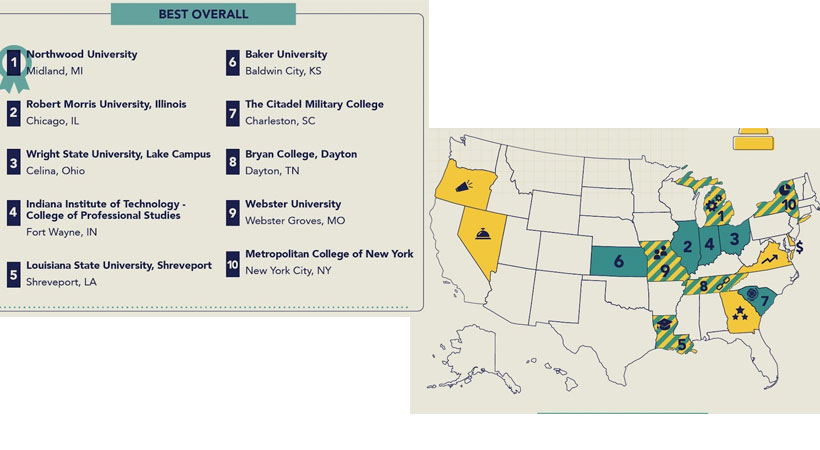
    Study.com–a Mountain View-based educational platform–released its 2020 Top Business Schools ranking, showcasing institutions that “provide a high-value education, while still being accessible and affordable,” according to the company.

    Variables like tuition cost, admittance and graduation rates, career resources, and job placement have been major determining factors on the selection.

    Northwood University took the overall spot for two categories. Schools such as University of Oregon, University of South CarolinaFlorida International University and Louisiana State University, Shreveport all ranked in the top-10 in at least two of the categories.

    Top schools for each 2020 ranking included:

    • Top Business School: Northwood University
    • Top Economics School: Virginia Military Institute
    • Top Human Resources School: Webster University
    • Top Business Management School: Northwood University
    • Top Marketing School: Georgia College and State University
    • Top Public Relations School: University of Oregon
    • Top Hospitality Management School: University of Nevada, Las Vegas
    • Top MBA School: Louisiana State University, Shreveport
    • Top Supply Chain Management School: University of Tennessee, Knoxville
    • Top Finance School: Goldey-Beacom College
    • Top Accounting School: CUNY Bernard, Baruch College
    • Top International Business School: Florida International University


  • The University of California Paid Over $1 Million to Cybercriminals Who Stole Sensitive Data

    The University of California Paid Over $1 Million to Cybercriminals Who Stole Sensitive Data

    IBL News | New York

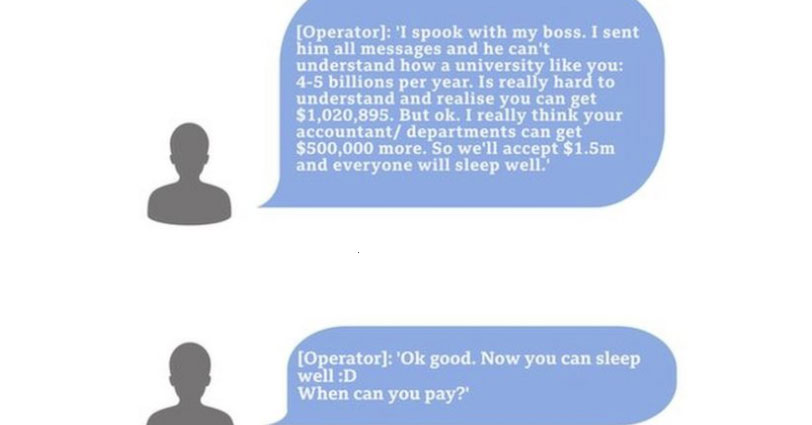
    The University of California San Francisco (UCSF) admitted that it paid a ransom of $1.14 million to cybercriminals who threatened to release sensitive data stolen from UCSF School of Medicine.

    “We made the difficult decision to pay some portion of the ransom, approximately $1.14 million, to the individuals behind the malware attack in exchange for a tool to unlock the encrypted data and the return of the data they obtained,” the institution said on a recent news release. “The data that was encrypted is important to some of the academic work we pursue as a university serving the public good.”

    This attack reflects the growing use of malware–specifically, a software called Netwalker– by international hackers seeking monetary gain from U.S. universities.

    Michigan State University and Columbia College Chicago were also affected. Michigan State announced last month that it decided not to pay the ransom.

    The hackers initially demanded $3 million to UCSF. The ransom amount was settled on 116.4 Bitcoin ($1.14 million). A BBC Newes reporter, Joe Tidy, acceded the live chat room where UCSF negotiated with the cybercriminals and posted the terms of extortion.

    Europol advised victims not to pay the ransom, as this finances criminals and encourages them to continue their illegal activities. “Instead, they should report it to the police so law enforcement can disrupt the criminal enterprise.”


  • WeWork Sells Its Boot Camp Flatiron School to an Investment Firm

    WeWork Sells Its Boot Camp Flatiron School to an Investment Firm

    IBL News | New York

    WeWork, the co-working real-estate giant announced this week the sale of its code of boot camp firm, Flatiron School, for an undisclosed amount. The buyer is the investment firm Carrick Capital Partners.

    Flatiron is one of several assets WeWork has sold recently as the company tries to stabilize its finances after last year’s aborted attempt to go public. Recently, it also sold WeGrow, too.

    WeWork, valued once over $45 billion, paid $28 million for Flatiron School in 2017.

    Flatiron School’s co-founder, Adam Enbar, will remain CEO of the company.

    Founded in 2012, the educational firm raised $14 million in venture capital before it was acquired by WeWork.

    As part of the transaction, Flatiron School will continue to operate face-to-face programs in software engineering, data science, UX/UI design, and cybersecurity at WeWork locations, once COVD-19 restrictions have been lifted.

  • The Catholic Polytechnic University Will Start by Launching a Cybersecurity Course this Fall

    The Catholic Polytechnic University Will Start by Launching a Cybersecurity Course this Fall

    IBL News | New York

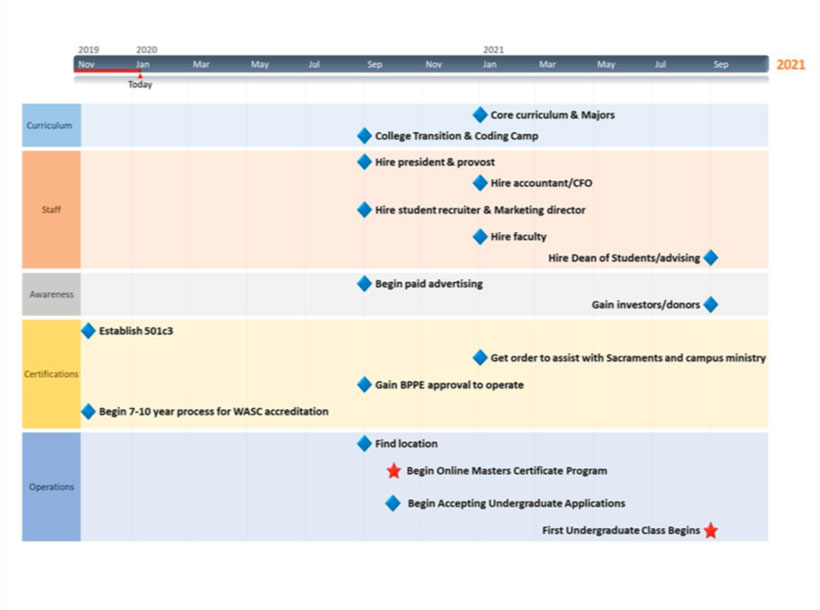
    The newly created Catholic Polytechnic University (CPU) will launch a Cybersecurity course as its initial offering this Fall 2020.

    The Los Angeles County-based, science and tech-focused four-year Catholic university has lately been forming an Academic team and Board of Directors, as well as receiving academic input from engineers and scientists, including NASA’s.

    The CPU team now includes as advisors a vice-provost from the Catholic University of America, and a CFO from Ave Maria University, along with two prominent NASA engineers and technologists.

    “This university is shaping up to be a ‘Catholic MIT’“, Dr. Jennifer Nolan, Founder, and President of the institution mentioned to IBL News. Our goal is excellence in science and tech research and teaching, paired with immersion in the Catholic faith. We want to demonstrate how faith and science go hand-in-hand. Fides et Scientia.

    “Roughly 50% of our local Catholic high school students pursue STEM degrees upon graduation.Yet, for Catholics, there is no institution solely focused on both Catholic faith and STEM careers in the U.S. Uniquely so, Catholic Polytechnic University will offer students a primary focus on both Catholic teaching and top-notch STEM and business degrees,” she added.

    According to a report by College Futures Foundation, there is a shortage of seats in California colleges. Yet, Southern California is home to many hightech companies, some of which are struggling to fill STEM jobs.

    CatholicPolytechnic stated that it will work closely with many of these organizations to facilitate internship opportunities and develop a well-paying career path for their students, ideally providing CPU graduates and their families a high socioeconomic status for a lifetime.

    [In the picture above, the CPU team is pictured with Archbishop José Gomez, who gave the approval to use “Catholic” in the name, and encouraged its’ formation. From left to right: Dr. Jacqueline Curiel, Dr. John Tran, Dr. Jennifer Nolan, Archbishop José Gomez, Mrs. Heather Stefanini, Mr. Michael Stefanini, Msgr. Albert Bahhuth, and Mr. Paul Escala.]


    Resources:

    • Jennifer Nolan interviewed at The Catholic Current and The Executive Disciple
    CPU’s New Website
    • IBL News, Dec 9, 2019: A New Catholic Polytechnic University Will Focus on the Integration of Science and Faith


  • Microsoft Will Offer Free Learning Paths for Digital Jobs In-Demand to 25 Million Facing Unemployment

    Microsoft Will Offer Free Learning Paths for Digital Jobs In-Demand to 25 Million Facing Unemployment

    IBL News | New York

    Microsoft will provide by the end of the year free online classes on digital skills, job-hunting resources, and interview prepping to 25 million people facing unemployment due to COVID-19.  According to the corporation, global unemployment in 2020 may reach a quarter of a billion people.

    The training is designed to teach digital skills Microsoft says employees need to enter 10 occupations, such as help-desk technician, digital marketer, and data analyst.

    Microsoft’s employment initiative, announced yesterday on its Official Blog, will include low-cost certification and LinkedIn-job seeking tools, along with free access to content in LinkedIn Learning, Microsoft Learn, and the GitHub Learning Lab –three organizations owned by the giant of software.

    These resources can be accessed at opportunity.linkedin.com  and news.microsoft.com/skills.

    In addition, Microsoft will back the initiative with $20 million in cash grants to selected nonprofits organizations.

    The Seattle-based company will use its outreach on public policy issues. “Microsoft will use its voice to advocate for public policy innovations that will advance skilling opportunities needed in the changed economy,” stated Brad Smith, President of the company, in the same blog post. “Unemployment rates are spiking for people of color and women, as well as younger workers, people with disabilities and individuals with less formal education. Our goal is to combine the best in technology with stronger partnerships with governments and nonprofits to help people develop the skills needed to secure a new job,” he added.

    As part of the initiative, LinkedIn will share free, real-time labor market data and skills insights to help governments, policymakers and business leaders understand what’s happening in their local labor markets: what companies are hiring, the top jobs companies are hiring for and the trending skills for those jobs.  This data can be accessed using a new interactive tool at linkedin.com/workforce. Data is available for more than 180 countries and regions (150+ cities, 30+ countries).

    Microsoft said it used the Economic Graph to identify the key jobs and horizontal skills that are most widely in demand:

    1. Become a Software Developer
    2. Become a Sales Representative
    3. Become a Project Manager
    4. Become an IT administrator (Prepare for CompTIA Network+ Certification)
    5. Become a Customer Service Specialist
    6. Become a Digital Marketing Specialist
    7. Become IT Support / Help Desk (Prepare for the CompTIA A+ Certification)
    8. Become a Data Analyst
    9. Become a Financial Analyst
    10. Become a Graphic Designer

    Regarding LinkedIn Learning paths, these are:

    In terms of Microsoft Certification, the company will make exams that typically cost over $100 available for a fee of $15. Exam takers will have until March 31, 2021, to complete the exam. These will include:

    • Microsoft Certified: Azure Fundamentals
    • Microsoft Certified: Azure Data Fundamentals
    • Microsoft Certified: Azure AI Fundamentals
    • Microsoft Certified: Power Platform Fundamentals
    • Microsoft 365 Certified: Fundamentals
    • Microsoft Certified: Azure Administrator Associate
    • Microsoft Certified: Azure Developer Associate
    • Microsoft Certified: Azure Security Engineer Associate
    • Microsoft Certified: Power Platform App Maker Associate
    • Microsoft 365 Certified: Teams Administrator Associate
    • Microsoft 365 Certified: Security Administrator Associate
    • Microsoft 365 Certified: Developer Associate
    • Microsoft Certified: Data Analyst Associate


  • JupyterCon 2020 Conference Will Introduce an Innovative Learning Format with Credentials

    JupyterCon 2020 Conference Will Introduce an Innovative Learning Format with Credentials

    IBL News | New York

    The annual reunion of Jupyter developers and practitioners–scheduled, prior to the pandemic, to happen in-person this summer in Germany–will be finally held online on October 5-17, 2020, featuring an innovative format in which online learning will converge with credentialing.

    “We developed a vision in which a “conference” is now a learning platform, unconstrained by synchronous schedules or geographical location, coalescing a multitude of mini-events and rad new content, learning experiences, and online social interactions,” explained Dr. Lorena A. Barba, General Chair at the conference and Professor of Engineering at GW.

    According to the announcement issued yesterday by the organizers, the JupyterCon 2020 event will comprise of:

    1. An online learning platform to create courses and organize content, providing user profiles to track learning and earn micro-credentials.
    2. Integrations with third-party tools for web conferencing and text-based threaded discussion.
    3. Online labs with access to JupyterHub/Binder attached to the content.
    4. Beyond just “talks,” content organized as mini-courses with permanent resources attached, and ensuing conversation.


    “This is our vision for the conference of the future,”
    stated Professor Lorena A. Barba. “We conceived a long-term strategy with the key vision of magnifying career-advancement opportunities for all members of our community, and assembling a permanent library of learning resources.”

    The conference program will mix on-demand with live content, resulting as follows:

    1. Tutorials: consist of prepared written materials and exercises in Jupyter notebooks, pre-recorded video by the instructor, live office hours with participants each day, and text-based discussion. The conference team will create a MOOC-style mini-course from the author-prepared materials. Participants completing the tutorials will receive certificates.
    2. Keynotes: streamed live to YouTube each day, with private backchannel discussions in the JupyterCon Mattermost server, public backchannel on Twitter, and also live, moderated Q&A after the talk.
    3. Regular presentations: pre-recorded, with timed-release on YouTube Premiere, backchannel discussions in the private text-based forum, and in public on YouTube and organically on Twitter.
    4. Panels of Speakers: since the regular presentations are pre-recorded, these are an opportunity for the audience to interact live with the speakers. We’ll cluster speakers by topic, for a live broadcast discussion with a moderator, after their pre-recorded presentations aired. Audience can submit questions ahead of time for moderators to choose, and can also ask live.
    5. Posters: these are digital artifacts that can be static or interactive (e.g., Voilà dashboards), plus a pre-recorded 2-min pitch on video.
    6. Live lightning talks: 5-min moderated live presentations, with a text-based backchannel discussion, but no Q&A with speakers.
    7. Birds-of-a-feather: open-forum video chats organized organically among attendees.
    8. Interviews with influencers in the community as an additional draw of activity and discussion. Other live panels not connected to pre-recorded talks (e.g., Q&A with JupyterHub developers).

    The JupyterCon 2020 conference will be part of a larger educational initiative named NumFOCUS Academy, which will include a scalable ecosystem consisting of an online learning platform, a JupyterHub server, front-end websites for JupyterCon, PyData and NumFOCUS Academy, and services like e-commerce, single-sign-on, and analytics.

    The Sloan Foundation approved a grant to back the project in May, while OVH decided to participate as a Platinum sponsor. IBL Education will deploy and support the learning ecosystem, with Open edX as the centerpiece technology.

  • The Global Pandemic Accelerates the Inequalities in Education; 1.1 Billion Children Still Out of School

    The Global Pandemic Accelerates the Inequalities in Education; 1.1 Billion Children Still Out of School

    Mikel Amigot, IBL News | New York

    The COVID-19 pandemic–with almost 10 million cases worldwide of infected individuals and over 450,000 deaths confirmed– continues to deepen the global crisis in education. Over 1.1 billion children are now out of school, and access to online learning is becoming increasingly unequal and divisive.

    “Providing a range of learning tools and accelerating access to the internet for every school and every child is critical”, said this month Robert Jenkins, Chief of Education at UNICEF.

    Disparities on digital technologies are aggravating the crisis. Three-quarters of countries are using online platforms to deliver online education, but in 71 countries less than half of the population has Internet access. Governments are also using TV networks to deliver distance education.

    However, even broadcast television doesn’t work in many countries. In Sub-Saharan Africa, only 1 in 100 homes in rural Chad has a television.

    UNICEF reports show that countries have been transforming their educational systems to cope with the demand. For example, in West and Central Africa, government officials have pushed service providers to deliver education for primary and secondary school students.

    Innovative experiences have also emerged. An interesting case study happened in Somalia, where offline pre-recorded lessons were uploaded to solar-powered tablets intended for children.

    In addition, video lessons are often shared through Facebook, WhatsApp, and other social media platforms.

    The UN reported that measures have been taken in order to host educational content on connected tablets to vulnerable students.

  • The Wealthiest African-American in the U.S. Presents an Alternative Finance Initiative for Black Colleges

    The Wealthiest African-American in the U.S. Presents an Alternative Finance Initiative for Black Colleges

    IBL News | New York

    Are Income-Sharing Agreements (ISA) a solution for student debt?

    Billionaire Robert F. Smith–the billionaire who donated $34 million last year to cover the student debt of the Morehouse College class of 2019, 400 graduates–announced this week the Student Freedom nonprofit initiative, in order to help ease the heavy burden of student loans at Black colleges and universities (HBCUs).

    Starting in Fall 2021 at up to 11 HBCUs, the organization will offer 5,000 juniors and seniors each year a flexible, lower-risk alternative to high-interest private student loans–an ISA.

    According to Time.com, the initiative is launching with a $50 million grant from Fund II Foundation, a charitable organization of which Smith–the wealthiest Black man in the United States, according to Forbes– is founding director and president, and has set a goal of raising at least $500 million by October to make the program “self-sustaining” through investments and graduates’ income-based repayments.

    The program’s partners include Michael Lomax, CEO of the United Negro College Fund; Henry Louis Gates Jr., director of the Hutchins Center for African and African-American Research at Harvard; the Jain Family Institute, and the Education Finance Institute.

    As Inside Higher Ed analyzed, Similar Income-Share agreements have been criticized in the past since high-earning graduates could end up paying more than they would with traditional student loans. Supporters say that the programs are innovative ways to fund higher education.


  • Courses, Strategies, and Resources to Get The Most From Learning with edX and Coursera

    Courses, Strategies, and Resources to Get The Most From Learning with edX and Coursera

    IBL News | New York

    edX’s How to Learn Online course reached over 85,000 enrollments. This 4 to 6-hour course, taught by edX’s learning design team, includes a curation of effective science-backed techniques.

    Related to digital learning, edX offers five more courses under a Professional Certificate program, Course Creator Plus.

    Coursera’s Learning to Teach Online attracted a similar number of users. This 17-hour course is based upon award-winning educational resources developed by Dr. Simon McIntyre and Dr. Negrin Mirriahi, from UNSW Sidney.

    Both the Coursera and edX organizations have been releasing materials lately, with tips and inspirational resources about online learning for the COVID times.

    Regarding learning strategies, edX suggests making sure educators develop new knowledge and skills in a way that can be retained, applied repeatedly, and adapted to new contexts.

    The main advice is to make learning stick by taking advantage of established learning principles of practice, application, and reflection.

    “A well-designed learning experience will provide you with opportunities to practice, apply, and reflect, but you can reinforce your learning outside of a class by connecting it to your everyday life and work,” explained Nina Huntemann, Senior Director of Academics and Research at edX, and one of the instructors of the “How to Learn Online” course. [In the picture above].

    Nina Huntemann provided three top tips to getting the most from online learning and achieving those learning goals.

    1. Set aside time for learning. Plan and dedicate time to learn as you would to exercise or see friends or spend time with loved ones.
    2. Virtually meet and interact with your learning peers. You are not alone.
    3. Make your learning stick with the practice, application, and reflection.

    Coursera said that live synchronous sessions are optimal for creating a space for collaborative problem solving, peer-to-peer interaction and personalized step-by-step guidance.

    Linlin Xia and Alexandra Urban, from the Teaching & Learning Team at Coursera, described in seven points the best practices regarding live sessions:


    1. Enhance course community

    – Start with ice-breaker questions (e.g. what’s your favorite dessert) or virtual polls to get all students participating from the very beginning.

    – Invite alumni or previous students from the course to share their learning tips.

    – Encourage real-time community by asking students to submit messages, raise a hand, or use other tools within the virtual classroom.


    2. Dive into key concepts

    – Share your screen or use a virtual whiteboard functionality when the problem involves calculations, concept mapping, or images.

    – Show step-by-step problem solving to guide students in your thought process.

    – Make sure to pause and ask students questions throughout the session to ensure understanding.


    3. Preview or debrief an assessment

    – Collect questions from students about the specific project before the session.

    – Walkthrough the purpose and benefits of completing this assignment.

    – If it’s an open-ended project, allow students to share ideas with instructors or their peers and collect feedback.

    – Address common pitfalls, as well as how mistakes can be avoided.


    4. Conduct a live demonstration

    – Make sure the code, software, or interface is large and clear enough for students to read.

    – Zoom in on important elements to focus students’ attention.

    – Talk through the process for conducting this type of simulation or problem solving, so students can recreate needed steps later on their own.


    5. Initiate a team project

    – Encourage peer-to-peer learning through specific prompts and clear deliverables desired.

    – Use virtual breakout rooms with separate video conference links for each student-group to discuss.


    6. Highlight a guest speaker

    – Send a summary of the guest’s background and expertise before the session, so students can prepare.

    – Collect questions from students ahead of time to add structure to the meeting.

    – Add interactive and reflective elements to help students apply what they’re hearing and encourage the guest to brainstorm alongside the students. when possible


    7. Create virtual office hours

    – Let each student or team sign up for 10 to 15-minute slots of time at least one week ahead.

    – Ask students to submit their questions before the event so you can use the time most efficiently and center on the most frequently asked questions.

    – Send out beforehand which topics will be covered to pique students’ interest to attend.