Author: IBL News

  • UC Davis’ Professional Ed Courses Soar to 4,000 Enrollments Per Day

    UC Davis’ Professional Ed Courses Soar to 4,000 Enrollments Per Day

    IBL News | New York

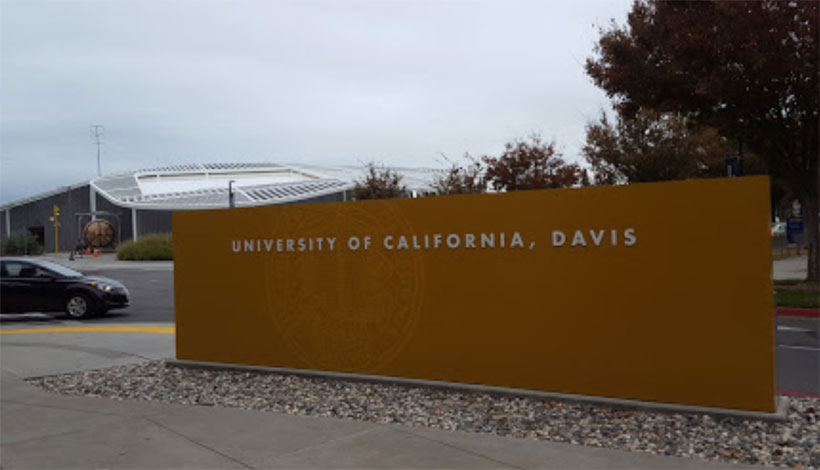
    The UC Davis’ Continuing and Professional Education (CPE) division announced that it has reached one million enrollments on its development programs on Coursera. In addition, CPE also offers training to the employees of nearly 2,000 organizations through the same platform.

    The institution is registering about 4,000 new individual enrollments per day, according to its data, while before the pandemic, the growth was 4,000 per week.

    “The [one million enrollments] milestone reflects the essential role that CPE and its faculty partners play in creating access to workforce development programs globally,” said Susan Catron, Dean of UC Davis Continuing and Professional Education.

    UC Davis offers 60 courses, nine specializations, and one “MasterTrack” on Coursera.

    The most popular specializations offered are SQL for Data ScienceIntroduction to SEOFundamentals of GIS, and Coaching Skills for Managers.

    UC Davis announced that it is adding new offerings of courses, such as Javascript, Spatial Analytics, Emotional Intelligence, Growth Mindset “and other high-demand topics aimed at closing the skills gap and supporting career advancement.”


  • Rancher.com Creates a Free Online Certification Program for Developers

    Rancher.com Creates a Free Online Certification Program for Developers

    IBL News | New York

    Rancher Labs, creators of a widely adopted Kubernetes management platform, announced today the launch of an online certification program through the newly created Rancher Academy.

    “It’s a professional, no-cost, zero obligation education platform centered on empowering commercial customers and the open-source community to be successful with Kubernetes and Rancher,” explained Peter Smails, CMO at Rancher Labs.

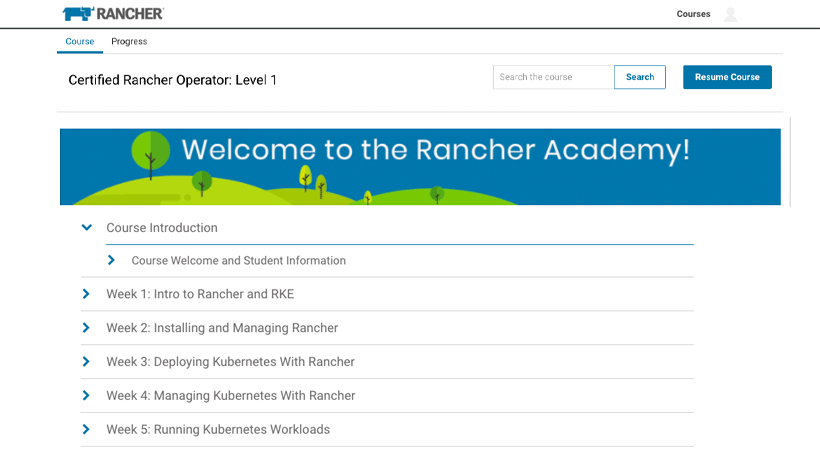
    The first available course is a free, self-paced, 5-week class, “Certified Rancher Operator: Level 1”.  The class is designed to teach developers with a basic understanding of Docker and Kubernetes how to deploy and use Rancher, RKE, along with how to work with downstream clusters.

    The course includes a mix of passive and active learning, with increasing detail and difficulty over the five weeks. Components of the learning experience include video introductions, theory work, demonstrations, hands-on labs, quizzes, and a final exam.

    Learners will be able to earn a certificate upon demonstrating their knowledge and competence with Kubernetes and Rancher.

    “The training is ideal for open source practitioners, partners supporting their customers and end-user customers looking to maximize their investment in Kubernetes, as well as any individual looking to increase their Rancher and Kubernetes competency in order to advance their careers,” stated the company.

    New classes are scheduled to be announced later this year.

    “Rancher Academy addresses the strong demand for a professional, certification-led program, while further cementing Rancher’s commitment to education,” said the Cupertino, California-based startup, in a press release.

    According to the company, Rancher Labs experienced a 250% increase in its Rodeo and Master Classes registrations over the past year.  As an extension of Rancher’s education strategy, the next step has been a training initiative to formalize skills and competencies with a professional, enterprise certification program.

    The launch of Rancher Academy has been led by Adrian Goins, Director of Community and Evangelism at Rancher Labs.

    The learning ecosystem is powered by IBL Education.

    Rancher.com reports having over 30,000 active users and 100 million downloads.

    •  Cloud Pro: Rancher Labs unveils new Kubernetes certification programme

  • Over 10,000 Museums Across the World Won’t Open Due to the Global Health Crisis

    Over 10,000 Museums Across the World Won’t Open Due to the Global Health Crisis

    Mikel Amigot, IBL News | New York

    The COVID-19 pandemic has hit museums hard, and over 10,000 may never reopen.

    On May 18, International Museum Day, new studies conducted by UNESCO and the International Council of Museums (ICOM) found that 13% of the more than 85,000 museums across the globe that have closed due to the virus will stay shut down.

    As a result of the closures, the losses have skyrocketed. In the United States alone, art institutions are losing an estimated $33 million a day, according to the American Alliance of Museums.

    In addition, the global health crisis has exposed the precarious position of cultural workers, with thousands of employees laid off or furloughed.

    “The museum field cannot survive on its own without the support of the public and private sectors,” said Suay Aksoy, President at ICOM. “It is imperative to raise emergency relief funds and to put in place policies to protect professionals and self-employed workers on precarious contracts.”

    Audrey Azoulay, General Manager at UNESCO, promised to aid museums since “they play a fundamental role in the resilience of societies.”

    That assistance may materialize on the ResiliArt movement, launched by UNESCO in April.

    The UN agency will host a series of debates, panels, and other events to generate discussion about how art and cultural institutions, organizations, and workers will need to adapt in order to survive.

    According to UNESCO, social protection of museum staff, digitization and inventorying of collections, and online content development, are among the top priorities that need to be addressed – all of which require financial resources.

    UNESCO also pointed out that since 2012, the global number of museums has increased by almost 60%, demonstrating how important they have become in national cultural policies over the last decade.

    Museums play a fundamental role in education, culture, and in supporting the local and regional creative economy, according to UNESCO.


  • Eduventures Encourages to Re-Think Online Learning While Analyzing Scenarios

    Eduventures Encourages to Re-Think Online Learning While Analyzing Scenarios

    IBL News | New York

    Colleges and universities face an uncertain future for the fall semester, amid the sharpest economic contraction in nearly a century.

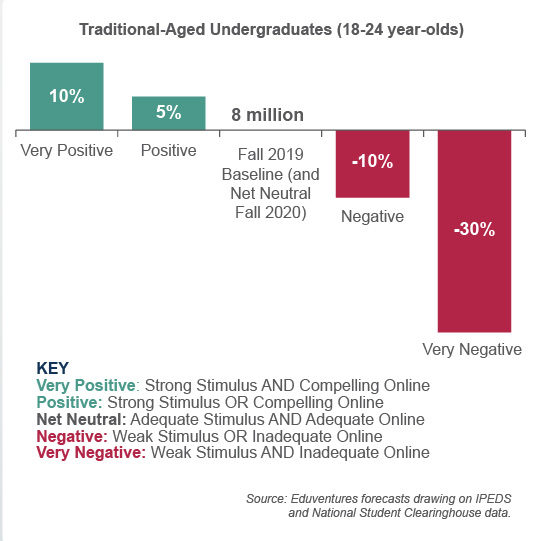
    Higher education research company, Eduventures has weighed out the variables for enrollment scenarios for Fall 2020. Essentially, a severe downturn can happen, with a 30% drop, but also, in the other extreme, with a surge of 10%.

    Eduverntures’s “Fall 2020 Enrollment Scenarios” report highlights the “broadening view that a college education is increasingly essential for at least a middle-class lifestyle,” and with this perspective states that “in the Great Recession of 2007-09 traditional-aged undergraduate enrollment grew about 3% in fall 2007 and fall 2008.”

    The graphic below reflects Eduventures’ five enrollment scenarios for fall 2020.


    On the positive scenario, Richard Garrett, Eduventures Chief Research Officer at Eduventures, explains that “if federal stimulus, subsidizing either schools or families or both, is strong enough to match the scale of the downturn, many households will regard school as welcome continuity and an investment in the future. Since many jobs open to high school graduates will be unavailable mid-pandemic, a strong stimulus will persuade more young people than normal to enroll.”

    Also, “if schools can reimagine the traditional undergraduate experience online—going beyond the standard online playbook aimed at no-frills adults to encompass cohort bonding and extra-curricular—then fall 2020 might be (almost positively) positioned as a creative hybrid of community solidarity and educational futurism.”

    “When other funding sources, notably states, the stock market, and philanthropy, are in doubt, schools need an online vision and reality that justifies standard tuition and funds financial aid.”

    “This might prove to be a heavy lift: not simply to transition from emergency remote instruction to good online learning practice but to re-think, in a few short months, a modality that up to now most young people and many faculty members have dismissed out-of-hand.”

    Richard Garrett predicts that “in almost any scenario, students will be more likely to study closer to home and at less expensive schools, favoring in-state publics and community colleges.”

    Fully online institutions may also do well. If family finances are really strained, low-priced online course providers, like Straighterline and Outlier, may rise in prominence with students and parents calculating that banking some general education credits may be the best way to ride out the crisis and get a jump on fall 2021. An austerity-driven DIY mentality may take hold, boosting the appeal of noncredit, self-paced MOOC-type courses. Some firms have made their course catalogs available free for a limited time.”

  • edX Reports 100 Million Unique Enrollments After a Growth of 20 Million

    edX Reports 100 Million Unique Enrollments After a Growth of 20 Million

    IBL News | New York

    edX.org, the non-profit venture created by MIT and Harvard University in 2012, has reached a milestone of 100 million unique enrollments, after an increase of 20 million during the pandemic time. Anant Agarwal, CEO at edX, announced this achievement in a video message yesterday.

    “Eight years ago, we started a movement when we launched our first course and since then have grown to 100 million enrollments and counting,” said Agarwal.

    At the beginning of the year, edX reported 80 million unique enrollments and 24 million unique users, along with over 3,000 courses and 1.6 million certificates issued.

    This data was included in a document titled the “2020 Impact Report.”

  • Databricks Launches a Program to Train College Students on Apache Spark and Other AI Tools

    Databricks Launches a Program to Train College Students on Apache Spark and Other AI Tools

    IBL News | New York

    Databricks, a San Francisco-based company known for creating open-source Apache Spark, announced this week a free global program to help college students improve their skills in data science and machine learning.

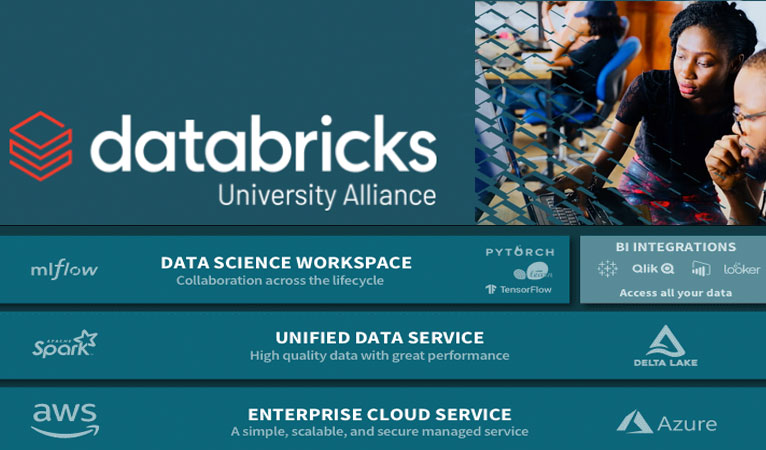
    The program, called Databricks University Alliance,  offers students access to tutorials, content, and training material on open-source tools, including Apache Spark, Delta Lake, and MLflow–the company reported in a blog post.

    “Our goal with this program is to continue to help build the capacity of qualified and prepared data scientists, engineers, and analysts who can work with industry-scale data sets on public cloud environments,” said Matei Zaharia, Chief Technologist at Databricks and Assistant Professor of Computer Science at Stanford University.

    Databricks University Alliance has partnerships with Microsoft Azure and AWS.

  • GSV Ventures Creates an Online MBA in Entrepreneurship with Belhaven University

    GSV Ventures Creates an Online MBA in Entrepreneurship with Belhaven University

    IBL News | New York

    GSV (Global Silicon Valley) investor announced this week the creation of an Online MBA Program in Entrepreneurship, in partnership with Belhaven University.

    It will be a 10-course degree, with classes offered in seven-week segments. Students will have access to entrepreneurs and business leaders and will be able to test models and strategies learned in the classroom by creating a company, launching a real business, and pitching their venture in front of investors.

    Studies show that 80% of high school students and 65% of college students want to start their own business or work for a startup.

    “The GSV MBA is designed to fuel entrepreneurs with the knowledge, attitude, resources, and connectivity to not only survive but thrive throughout their startup’s evolution,” explained the creators of the degree program. “The 10-course curriculum has been developed by highly experienced investors and entrepreneurs from GSV and its network of startups, investors, educators, advisors, and other leaders throughout the Innovation Economy.”

    The first GSV MBA class is now forming for the summer.

    “The GSV MBA compliments GSV Ventures, which invests in leading early and growth-stage digital education companies and the ASU GSV Summit,” Michael Moe, Founder, and CEO at GSV explained in a statement released this week.

    “The front-edge entrepreneurial experience of Michael Moe and GSV has blended with the academic innovation of Belhaven University to create a degree option that makes it one-of-a-kind,” said Belhaven University President, Dr. Roger Parrott.

    GSV has invested in companies such as Facebook, Twitter, Dropbox, Snap, Lyft, and Spotify. Michael Moe has started and led businesses including GSV Asset Management, ThinkEquity, the ASU GSV Summit, GSVlabs, BizEquity, and EMG. Moe is also the author of two books, “Finding the Next Starbucks” and “The Global Silicon Valley Handbook.” Belhaven University serves 5,000 students and stands among Christian colleges and universities.

  • The College Board Responds to a Flood of Complaints About Malfunctioning of the Remote AP Tests

    The College Board Responds to a Flood of Complaints About Malfunctioning of the Remote AP Tests

    IBL News | New York

    The College Board started yesterday a PR campaign through social media to counter a number of students’ frustration after they were unable to successfully submit their AP exam results.

    On Wednesday, on the third day of the Advanced Placement (AP) first-ever remote test administration, the College Board attributed the glitches and server crashes to “outdated browsers” used by only 1% of students.

    Yesterday, The College Board’s response was based on encouraging learners to try first a new exam demo.

    Answers to those tweets showed the complaints of learners, requesting the cancellation of the test.

    An online petition signed by over 6,000 students demanding the College Board “not to miss this chance to turn this difficult situation around by handling it with fairness and grace.”

    The College Board insisted on a press release on late Wednesday by stating that “more than 456,000 students took exams that day and that, again, “less than 1 percent [were] unable to submit their responses.”

    FairTest.org, the National Center for Fair & Open Testing reported receiving dozens of complaints about problems with the AP tests, which will continue for 10 more days, according to Inside Higher Ed.

    Also, edSurge.com reflected on a story yesterday this flood of criticism.

  • Over 35,000 Enrolled in an Online Course to Become a Contact Tracer for the Pandemic

    Over 35,000 Enrolled in an Online Course to Become a Contact Tracer for the Pandemic

    IBL News | New York

    The state of New York will be hiring thousands of contact tracers to fight the pandemic. Across the nation, an estimated workforce of 100,000 could be required.

    These tracers in New York who will work in identifying infected persons’ contacts in order to break the chain of transmission, will be required to take and pass a free six-hours online course.

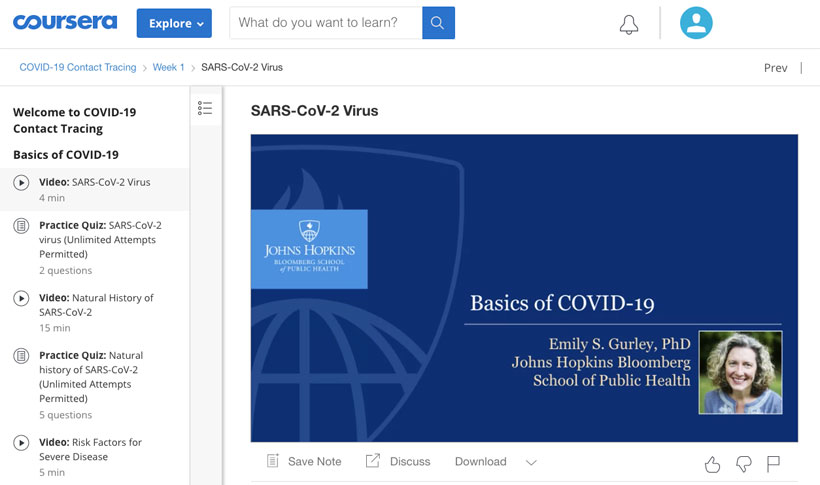
    The course COVID-19 Contact Tracing, is now available on Coursera, and has been developed by the Johns Hopkins Bloomberg School of Public Health with Bloomberg Philanthropies. Within days of its release on Monday, over 35,000 had enrolled.

    The certificate class taught by Emily Gurley, an infectious disease epidemiologist and an associate scientist of Johns Hopkins, teaches the basics of interviewing people diagnosed with the virus, identifying their close contacts who might have been exposed, and providing them guidance for self-quarantine for two weeks.

    “Even if you stop one or two new infections, you’re preventing many new cases down the line,” explained Emily Gurley.

    The course is part of an ambitious push for contact tracing backed by New York Governor Andrew Cuomo and tycoon Michael Bloomberg, who recently announced plans to develop a large-scale statewide program in New York.

    The program will include a baseline of 30 contact tracers for every 100,000 residents in the state and is expected to have 6,400 to 17,000 tracers statewide depending on the projected number of cases.

    “This new training course, which we’re making available online for free, will teach contact tracers how to do this work effectively—and help cities and states across the nation undertake these critical efforts,” Bloomberg said in a release.

    Across the nation, an estimated workforce of 100,000 could be required to help limit the spread of COVID-19 and safely reopen the economy, according to a recent report by the Johns Hopkins Center for Health Security.

    “Other communities may similarly adopt this particular course, or maybe they’ll give students a few options,” Joshua Sharfstein, Vice Dean at the Bloomberg School, said during the briefing. “Anyone in the country can now take this course and get a certificate to demonstrate that they … understand these key aspects of contact tracing.”

    The contact tracing course is divided into five sections or “modules,” covering:

    1. Basic information on the virus and COVID-19, including symptoms of infection and how the virus is transmitted
    2. Fundamentals of contact tracing, such as how to define a case, identify their contacts, and calculate how long a contact should isolate;
    3. Steps involved in investigating cases and tracing their contacts, including simulated scenes performed by professional actors who illustrate potential interactions that tracers may experience with infected individuals and their contacts
    4. Ethics of contact tracing, including balancing privacy and public health considerations, and examples of basic technology tools that can facilitate contact tracings, such as using text messaging for check-ins and reminders;
    5. Skills for effective communications in the tracing process, such as what it means to be an “active listener” and how to deal with common challenges that arise when investigating cases.

    The class includes simulations of contact tracing calls to give trainees a sense of the complex personal dynamics at play with the strategy, including in some cases a reluctance to self-quarantine for two weeks.
     

  • NVIDIA’s DLI, with +200K Learners, Expands Its Training by Adding Instructor-Led Virtual Workshops

    NVIDIA’s DLI, with +200K Learners, Expands Its Training by Adding Instructor-Led Virtual Workshops

    IBL News | New York

    NVIDIA’s Deep Learning Institute (DLI) announced this week that it has started to offer instructor-led workshops remotely via a virtual classroom.

    The learning branch of NVIDIA has already trained over 200,000 developers and data scientists globally on areas such as AI, accelerated computing, and accelerated data. Over 550 certified instructors have delivered the training.

    “Over the past several weeks, DLI has delivered hands-on training to nearly 800 attendees during NVIDIA’s GPU Technology Conference,” explained Craig Clawson, Director at NVIDIA’s DLI.

    In addition to these virtual workshops, learners have access to self-paced online courses via the DLI websiteUpon completion, participants can earn a certificate of competency to support their long-term professional growth.

    Robert Daigle, AI Business and Innovation Leader at Lenovo Data Center Group, said that “DLI courses are key to unlocking the power for GPUs and enabling AI workloads.”

    According to the company, more than 3,000 educators at universities worldwide have leveraged specialized training resources and teaching kits, including free online DLI courses with certification assessments.

    DLI’s catalog included updated versions of the following courses this month:

    • Fundamentals of Deep Learning for Multi-GPUs
    • Deep Learning for Autonomous Vehicles — Perception
    • Medical Image Classification Using the MedNIST Dataset
    • Optimization and Deployment of TensorFlow Models with TensorRT
    • Deep Learning at Scale with Horovod
    • Modeling Time Series Data with Recurrent Neural Networks in Keras

    Finally, more training delivery partners–such as Hewlett Packard Enterprise, Numerical Algorithms Group and QA–have been added to the existing network of educational services.

    NVIDIA’s DLI platform is powered by New York-based IBL Education.