Author: IBL News

  • A Student Guide to Remote Learning from GW’s Professor Lorena Barba

    A Student Guide to Remote Learning from GW’s Professor Lorena Barba

    IBL News | New York

    Engineering professor Dr. Lorena Barba, from The George Washington University (GW), published this month a Student’s Guide to Remote Learning, with tools and practical ideas to navigate this pandemic time.

    “Students are now back home—some in different time zones—and expected to continue learning, with their teachers quickly adopting new technologies and methods to keep courses going; it is a tremendous challenge for all of us,” said Professor Barba.

    – Take care of yourself and others
    – Manage your time
    – Master the tools
    – Deal with pitfalls
    – Stay connected

    In addition to recommending to work at least two additional hours for every hour of scheduled instruction, and time-block for all your courses, one of the suggested ideas is to use the Pomodoro technique.

    It works like this: set a timer for just 25 min to work without allowing yourself to be distracted, then take a 5-min break (for social media, exchanging texts with a friend, having a snack), and then repeat. After 4 cycles, take a longer break (~30min).

    Prof. Barbara Oakley, who teaches the successful MOOC “Learning How to Learn”, explained in the following video:

    https://youtu.be/bDz7bUor51c

    The guide includes tips to deal with web conferencing tools and learning platforms.
  • Pay Cuts Set at The University of Arizona as a Result of an Expected Loss of $250 Million

    Pay Cuts Set at The University of Arizona as a Result of an Expected Loss of $250 Million

    IBL News | New York

    The University of Arizona announced on Sunday pay cuts and furloughs for nearly all of its employees in order to finance an expected $250 million loss, according to Tucson.com. The institution has already registered $66 million in losses.

    This is the first research university to adopt significant cost-saving measures due to the COVID-19 pandemic.

    The plan will go into effect on May 11 and will last until June 2021. The cuts will require any employee making $150,000 to take at least a 17% decrease in pay, while those who are making less will have to take unpaid work-days resulting in at least a 5% salary reduction.

    The salary decreases are expected to save the university up to $95 million. In addition, the university has imposed a hiring freeze, delayed merit increases, and withheld $22 million in investment.

    However, no one will be fired.

    Losses are expected to come from decreases in tuition, which makes up 30% of their annual revenue. Domestic and international students make up about 60% of that, which could pose issues for international students who might have trouble getting to Tucson, Arizona, as a result of the world-wide travel restrictions.

    • Bloomberg: Coronavirus Pushes Higher Education to the Brink

  • Coursera and edX Release New Services to Support Universities

    Coursera and edX Release New Services to Support Universities

    IBL News | New York

    Coursera and edX decided to strengthen their support to universities around the world.

    With 2,600 colleges enrolled on its new Coronavirus Response Initiative, Coursera launched a machine learning solution called CourseMatch this week.

    This tool ingests a school’s on-campus catalog and matches each class to the most relevant course in Coursera’s library of 3,800 courses.

    “This enables universities in the US and internationally to quickly deliver relevant courses to their students,” Emily Glassberg Sands, and Marianne Sorba, Data Scientists at Coursera explained in a blog post.

    The solution has already matched more than 2.6 million on-campus courses across 1,800 schools to courses on Coursera, according to the company data.

    Regarding edX, its founding partners, Harvard and MIT, and other partner institutions such as UC Berkeley, Universitat Politècnica de València and IBM have expanded the Remote Access Program to all universities around the world by offering free access to a catalog of content.

    edX has created a webpage for any university around the world looking to participate.

    “As the spread of COVID-19 has suspended in-person interactions, I’m hopeful that we can harness the power of online learning to face these challenges head-on, and to find solutions to navigate this time, together,” said Anant Agarwal, CEO at edX.

  • Fifty Public Universities Can Lose $4.1 Billion In Revenue if Football Season Is Canceled or Altered

    Fifty Public Universities Can Lose $4.1 Billion In Revenue if Football Season Is Canceled or Altered

    IBL News | New York

    Amid the ongoing coronavirus pandemic, the college sports industry could lose billions in revenue if no football season is played, according to a USA Today analysis.

    Universities’ athletic departments’ income from tickets, postseason games and other game-day sales, television airings, radio, and digital rights, and even sponsorship deals would vanish or be hit hard if the upcoming 2020-21 football season were to be completely canceled due to the coronavirus pandemic threat, the newspaper reported.

    At stake is at least $4.1 billion in fiscal-year revenue for the 50-plus public schools in the Power Five conference – an average of over $78 million per school.

    These funds account for more than 60% of the total operating revenue of those colleges or universities, based on amounts reported for the 2019 fiscal year.

    Athletics operations also would save about $520 million total from Power Five institutions, for the unspent player and coach expenses, including all other fall sports. But USA Today’s analysis calculated a net loss of more than $3.3 billion if no football season occurs.

    The financial impact of a canceled or reduced football season would be felt beyond campuses.

    Many Power Five schools play seven of their 12 games at home, and most of the largest stadiums in U.S. sports are homes to college teams. According to information the NCAA compiled last year from school athletics web sites, there are 18 stadiums with seating capacities of more than 80,000.

    In fiscal 2019, 19 schools reported football ticket revenue of at least $20 million, including 11 at more than $30 million. Ohio State led the way at nearly $51 million.

    Altogether, Power Five public schools reported about $1 billion in football ticket revenue. It is possible, of course, that some customers will not seek immediate refunds, or they may be willing to treat money already paid for 2020 tickets as a donation.

    In terms of media rights and sponsorships, at stake is $1.2 billion in media revenue and just over $300 million in advertising/sponsorship/royalty revenue.

  • An App with Augmented Reality Teaches How to Keep Social Distancing

    An App with Augmented Reality Teaches How to Keep Social Distancing

    IBL News | New York

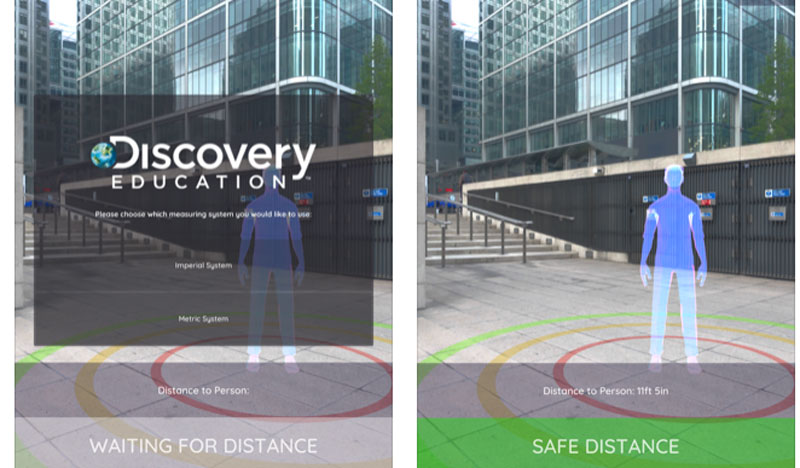
    An app using augmented reality technology teaches the importance of social distancing during these times of a global pandemic.

    Students experience what safe social distancing – 6ft or 2 meters away from other people– looks and feel like with a holographic person.

    The “Social Distancing Trainer” is a free app that was produced by Discovery Education and Afterschool Alliance.

    The app provides users “with an effective and cool way to see what social distancing looks like, all from the safety of their homes,”  Afterschool Alliance Executive Director, Jodi Grant, said in a press statement.

    Once the app is installed, the user makes sure surroundings are clear, in order to move closer to or further away from the person.

    The app is currently available in the Apple iOS Store. A Google Play version is expected shortly.

  • A List of Virtual Educational and Corporate Conferences Due to the Pandemic

    A List of Virtual Educational and Corporate Conferences Due to the Pandemic

    IBL News | New York

    [PLEASE CHECK OUR IBL CALENDAR FOR AN UPDATED LIST]

    The COVID-19 virus changed the attitudes and behaviors of society overnight.

    Due to the global pandemic, a small number of in-person conferences – less than 25 – decided to proceed as virtual events, covering the same topics, although in this case with fewer speakers.

    Usually, previously registered attendees are automatically signed up for digital conferences. New attendees either purchase a ticket or access for free.

    Online-only events started at the end of March.

    This is a list of events IBL News has collected, adding them to their conference calendar:


    MARCH 23-25, 2020, San Francisco, CA  – Virtual Event
    EmTech Digital 2020, by MIT Technology Review

    MARCH 23-25, 2020 – Virtual Event
    Business of Software Europe

    MARCH 29 – APRIL 2, 2020, Las Vegas, NV – Virtual Event
    Adobe Summit North America


    APRIL 6-8, 2020, Bonita Springs, Florida  – Virtual Event
    Chief Learning Officer Symposium

    Wednesdays in April, 9-11 AM PT – Next event: April 8th  – Virtual Event
    GSV Virtual Summit Series

    APRIL 21-22, 2020, Chicago, IL – Virtual Event
    Coursera Conference 2020

    APRIL 21, 2020 – Virtual Event
    STEAM Week

    APRIL 21 – MAY 1 – Virtual Event
    OLC Ideate

    APRIL 28-29, San Francisco, CA – Virtual Conference
    Red Hat Summit


    MAY 4-7, 2020 – Virtual Event
    Summit 2020 Virtual Experience – Forrester Sirius Decisions

    MAY 4-7, 2020, San Francisco, CA – Virtual Event
    IBM Think 2020

    MAY 11-16, 2020 – Virtual Event
    SANS Security West 2020

    MAY 12, 2020 – Virtual Event
    All Things Open 2020

    MAY 13-14, 2020 – 9-1 pm PT – Virtual Event
    Pulse Everywhere

    MAY 27-29, 2020, Santa Clara, California – Virtual Event
    Augmented World Expo

    MAY 28, 2020 – Virtual Event
    DockerCon LIVE  Virtual Event


    JUNE
    2-3, 2020 – Virtual Event
    Cisco Live

    JUN 8-9, Cambridge, MA – Virtual Event
    EmTech Next at MIT Media Lab

    JUN 13-20 – Virtual Event
    SANSFIRE 2020

    JUN 15-26, 2020 – Virtual Event
    OLC Innovate

    JUN 16-18, 2020, Napa Valley, CA – Virtual Event
    PBL World – Project-Based K-12 Symposium


    JUL 10, 2020, Saratoga Springs, NY – Virtual Event
    SUNY Empire State College – Learning with Innovative Technology

    JUL 26 – August 2, 2020, Anaheim, CA – Virtual Event
    D2L Fusion


  • Indiana University Authorized to Borrow Up to $1 Billion to Cover Revenue Shortfalls

    Indiana University Authorized to Borrow Up to $1 Billion to Cover Revenue Shortfalls

    IBL News | New York

    Trustees at Indiana University (IU) allowed school leaders to borrow up to $1 billion to counter potential costs due to the COVID-19 pandemic.

    The institution request was approved at a meeting on Friday.

    “It will allow us to borrow money as needed to maintain things on our campuses in the case of a shortfall that might come up,” said Chuck Carney, Indiana University’s Director of Media Relations.“This is purely a contingency plan; as of right now, we certainly don’t plan on using that, but we want to have access to that if we need,” he added.

    The institution’s largest source of revenue is tuition. The school remains in operation during the pandemic but has stopped in-person classes for the spring and summer.

    Indiana University has also closed on-campus housing, offering students who have already paid a pro-rated refund. Only students with extraordinary circumstances can stay.

    The line of credit could be used to cover revenue shortfalls if the university doesn’t receive tuition payments in the normal time frame.

    [In the picture above, IU President, Michael McRobbie]


  • Google and Apple Will Release in Mid-May a Controversial Tool to Track Down Infected People

    Google and Apple Will Release in Mid-May a Controversial Tool to Track Down Infected People

    Mikel Amigot | IBL News, New York

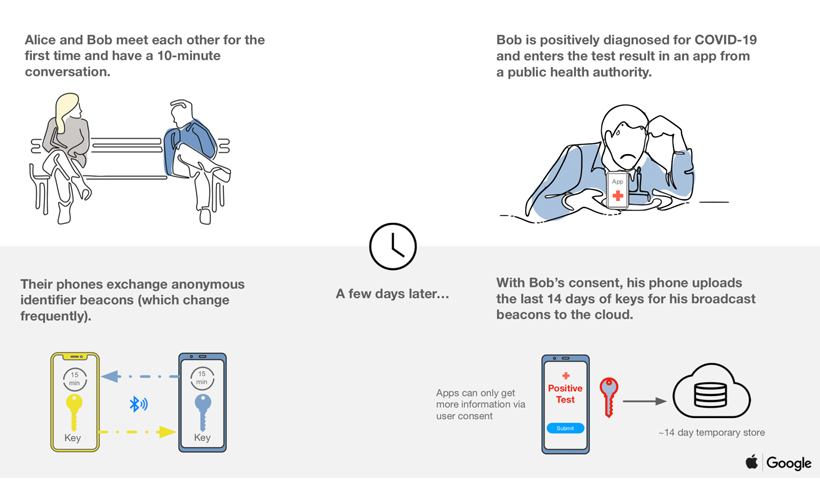
    Google and Apple teamed up to develop a system for tracking the spread of the COVID-19, which will encourage users to share data through Bluetooth and approved apps from public health organizations.

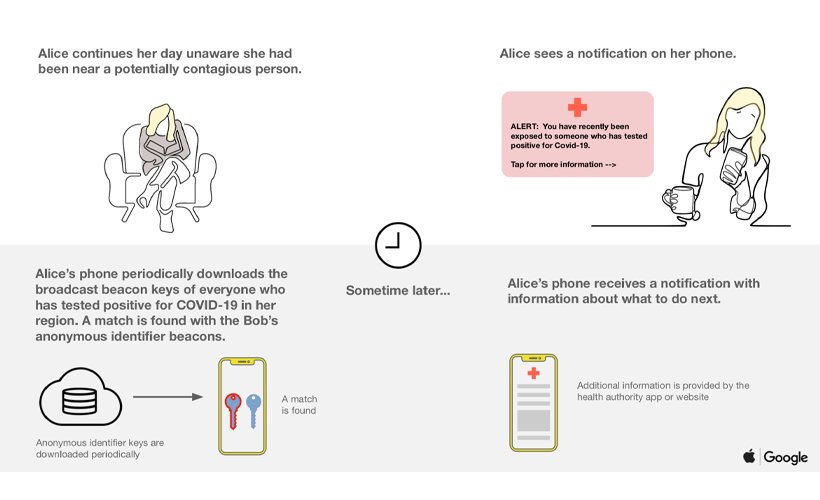
    These apps would exchange anonymous identified data with other participating phones.

    If the user voluntarily reports having tested positive for the virus, the app then alerts those phones’ owners that they may have been exposed.

    Experts explain that tracking is key to testing and self-quarantining yourself to avoid infecting others. But in the U.S. and the Western world, there isn’t a widely-used tracking tool, mostly due to privacy concerns. South Korea and Singapore have used similar COVID-19 tracking apps, although way more privacy-invading. These apps have been key to their success in containing the disease within these two countries.

    Apple’s and Google’s system was announced on Friday and was laid out in a series of documents and white papers.

    To be successful, the system will need to be widely adopted. The user would need to give explicit consent. In addition, tests will need to be available for all potentially infected people –although today there is still a shortage.

    Privacy and civil liberties activists have warned that the apps need to be designed so governments cannot abuse them to track their citizens.

    President Donald Trump called the technology “very interesting,” but expressed concern that “a lot of people worry about it in terms of a person’s freedom. We’re going to take a look at that.”

    Apple and Google said that user privacy and security are baked into the design of their plan.

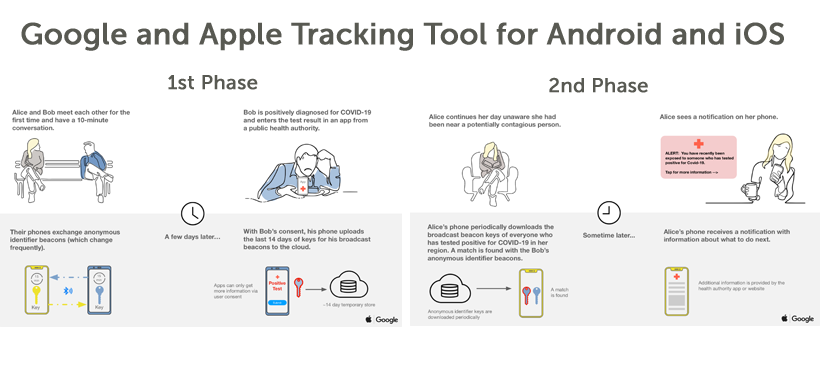
    This is how the system works, according to Google:

    The VergeApple and Google are building a coronavirus tracking system into iOS and Android

    AP: Apple, Google to harness phones for virus infection tracking

  • An Increasing Number of Students Refuse to Pay Full In-Person Tuition for Online Classes

    An Increasing Number of Students Refuse to Pay Full In-Person Tuition for Online Classes

    IBL News | New York

    Harvard and other major universities are still charging full tuition, despite all classes transitioning to online learning as a consequence of the coronavirus pandemic.

    But an increasing number of students don’t want to pay in-person tuition for digital classes, arguing that that is a diminished experience.

    • At the University of Chicago, a group of students is requesting for the institution to cut tuition by half and eliminate fees for as long as the pandemic and financial uncertainties may continue. The group has collected more than 1,400 signatures on a petition.
    • At The New School in New York City, students have called for a boycott of online classes this week if the school didn’t refund part of their spring tuition.
    • Students at Stanford, the University of California at Berkeley and New York University’s Tisch School of the Arts have all started online petitions at Change.org appealing for partial refunds.

    Undergraduate tuition for the spring term, which began this week, is usually over $15,000 and is due at the end of April.

  • Purdue Launches a Fully Online Master’s in Mechanical Engineering on edX.org

    Purdue Launches a Fully Online Master’s in Mechanical Engineering on edX.org

    IBL News | New York

    edX.org and the School of Mechanical Engineering of Purdue University announced this week the launch of a fully online Master’s in Mechanical Engineering.

    This online degree is the 12th fully online Master’s degree available on the edX platform, and the second from Purdue. Purdue’s online Master’s in Electrical and Computer Engineering was announced in September 2019.

    The program is ranked the #1 online mechanical engineering program, according to U.S. News & World Report.

    edX and Purdue highlighted that “the learning experience is of equal quality and rigor to the on-campus experience, and is designed for working professionals.”

    “These new College of Engineering online degrees on edX are in line with increasingly loud demands for life-long learning opportunities that allow professionals to update and enhance their career skills,” said Gerry McCartney, Executive Vice President for Purdue Online.

    Priced at $22,500, the Master’s in Mechanical Engineering, includes 30 credit hours and can be completed in 12 months or up to 4 years.

    The degree enables the students to choose classes from a wide variety of topics in Mechanical Engineering, including:

    • Acoustics
    • Bioengineering
    • Combustion
    • Computational Engineering
    • Design
    • Fluid Mechanics
    • Heat Transfer
    • HVAC & Refrigeration
    • Manufacturing & Materials
    • Mechanics & Vibration
    • Nanotechnology
    • Robotics
    • Solid Mechanics
    • Systems, Measurement & Controls


    “Purdue has a strategic goal of educating all types of students online, while quickly recognizing and responding to new types of learners with educational opportunities that meet Purdue’s high standards and can be delivered at scale,”

    Master’s degrees on edX are unique because they are stacked degree programs with a MicroMasters® program component. A MicroMasters program is a series of graduate-level courses that provides learners with valuable standalone skills that translate into career-focused advancement, as well as the option to use the completed coursework as a stepping stone toward credit in a full Master’s degree program. We will be announcing the MicroMasters program that stacks into the Master’s in Mechanical Engineering in the near future.

    Learn more about the application requirements and deadlines for the Master’s in Mechanical Engineering.