Author: IBL News

  • Has 2U Turned the Corner? Quarterly Reports Show Improved Revenue and the Stock Surges 11%

    Has 2U Turned the Corner? Quarterly Reports Show Improved Revenue and the Stock Surges 11%

    IBL News | New York

    The 2U (NASDAQ: TWOU) stock saw this Friday a surge of 11.39% to $25.33 per share, as the investors were surprised with the educational company quarterly reports, which registered a loss of $0.18 per share versus the Zacks Consensus Estimate of a loss of $0.22.

    2U posted revenues of $163.18 million for the quarter ended December 2019, surpassing the year-ago revenues of $115.10 million. The company expects to generate sales between $170 million and $180 million in the current quarter and between $725 million and $750 million for the full year 2020; consensus expectations are for $172.45 million and $729 million, respectively.

    So far, 2U has underperformed the market, with the shares losing 8.8% since the beginning of the year versus the S&P 500’s gain of 3.2%.

    In the last year, shares have lost more than half their value. They were hit by an August announcement that the company was lowering its near-term growth expectations prompted investors to question whether 2U was a long-term growth stock.

    Ahead of this earnings release, the estimate revisions trend for the 2U stock price is mixed. In its forecast for 2020, the education company said it expects full-year adjusted EBITDA to range from a loss of $5 million to a gain of $10 million.

    During the Q4 Earnings Call [Transcript here], Christopher “Chip” Paucek, Co-Founder and CEO at 2U, was bullish.

    “2U is starting 2020 with tremendous momentum. We had a strong finish in 2019 and we are excited to see what’s happening. Universities are launching more with us. Our degree business is turning the corner. Our short course business is sliding new courses and enrolling students in record numbers and our boot camp business is starting to deliver on the strategic value of our acquisition. As we move through 2020, we will improve our operational efficiency with continued realignment and short corporate hygiene.”

    “Looking to the future, university demand for our full investment revenue share model is strong and we are managing our launch cadence to optimize growth, cash flow and profitability. Add all this up and we are expecting double-digit revenue growth and increasing segment profitability in 2020,” added the CEO.

    2U launched 15 new degree programs in the quarter, claiming that it achieved an 82% student retention rate in the segment.

    “In conclusion, 2019 was challenging. But last year we took actions to deliver long-term value for all of our stakeholders. Our grad business is turning for the better. We added a product line that opens a significant new segment of the market. We more than doubled our client base and currently have a portfolio of over 400 product offering. We delivered strong second half results and we believe we turned the corner going into 2020. 2U expects to maintain industry-leading growth, while delivering margin improvement over the course of 2020 and driving toward positive free cash flow, all with a relentless focus on quality and outcomes,” said Christopher “Chip” Paucek.

    Regarding the sale rumors spread by activist investors, 2U’s management declined to comment.



  • Dissident Investors Are Likely to Derail the Instructure Transaction Unless They Get an Improved Offer

    Dissident Investors Are Likely to Derail the Instructure Transaction Unless They Get an Improved Offer

    IBL News | New York 

    The planned acquisition of Instructure by Thoma Bravo might not take effect as expected. In this uncertain scenario, the Salt Lake City-based educational software company would continue in the stock market, evaluating new strategic options in March – sources told IBL News.

    The group of four opposing investors, led by Praesidium Investment, might get a majority vote on the special meeting at Salt Lake City headquarters on February 13.

    The dissident shareholders, with over 20% of equity at Instructure, are decided to derail the deal unless they see an improved proposal from Thoma Bravo. They all defend that the $2 billion deal – which is about six times Instructure’s expected 2020 revenue – undervalues Instructure.

    Currently, equity firm Thoma Bravo offers $47.60 per share in cash in a transaction valued at 2 billion.

    The dominant speculation is that unless Thoma Bravo increases the pricing per share and reaches an agreement with opponents the sale won’t go through.

    If a new offer is made before the vote, the February 13th meeting could be postponed for a period of time to give shareholders time to review the new offer.


  • Michael Crow Gets a $30 Million Gift from State Farm to Fund a Workforce Development Program at ASU

    Michael Crow Gets a $30 Million Gift from State Farm to Fund a Workforce Development Program at ASU

    IBL News | New York

    State Farm is teaming up with Arizona State University (ASU) to launch an online educational and career development program called Pathways for the Future. To fund the program and scholarships, the insurance giant is providing ASU with a $30 million contribution.

    Officials from both organizations announced the public-private partnership initiative on Tuesday on the ASU campus, in Tempe, Arizona.

    The program, reflected on a new website, has four components: an online academic program, financial support, tools for success, and career coaching.

    Students start by earning online credits in one of three academic tracks: STEM, business leadership, or humanities and social sciences. These tracks will lead to an associate degree, undergraduate degree or undergraduate certificate. Typically, a three-credit online course would cost approximately $1,500.

    For the university, one goal of the program is to increase degree completion by preparing students to enroll in the Ira A. Fulton Schools of Engineering, the W. P. Carey School of Business, The College of Liberal Arts and Sciences, along with other units across ASU.

    The program targets four groups:

    • High School Students
    • Maricopa County Community College Students
    • Arizona State University Students
    • Employees, already in the workforce, wanting to learn new skills, including State Farm employees

    “Here we have a company that’s thinking differently; this investment is looking at each aspect of what we do: Let’s eliminate the financial barrier; let’s build some tools that help us to greatly accelerate who goes to college,” said ASU President Michael M. Crow [In the picture on the right]. “It’s not only about money but it’s about ways to overcome barriers.”

    “Today represents a new milestone in our relationship with ASU and builds on our corporate commitment to prepare not only for what’s coming but for what is already happening,” said State Farm Chairman and CEO, Michael Tipsord. “We look forward to growing this commitment with ASU and working together to build the workforce of the future through universal learning.”


    ASU NowState Farm, ASU announce partnership on Pathways for the Future initiative

  • Canadian EdTech Top Hat Raises $55M Trying to Disrupt the Textbook Industry

    Canadian EdTech Top Hat Raises $55M Trying to Disrupt the Textbook Industry

    IBL News | New York

    Toronto-based, education software company Top Hat announced yesterday that it raised $55 million in Series D equity and debt funding, defying giants in the textbook industry like Pearson and McGraw-Hill.

    The finance round was co-led by Georgian Partners and Inovia Capital, and attracted all of its the previous investors, including Union Square Ventures, Emergence Capital and Leaders Fund.

    According to the company, 750 out of the top 1,000 colleges and universities in North America are enrolled in courses using their platform, with a total of 2.7 million students.

    “The funding will enable Top Hat to continue to accelerate the disruption of traditional textbooks and course materials in order to deliver greater educational ROI to students,” said Mike Silagadze, founder and CEO.

    Top Hat also announced that it already signed exclusive deals with Fountainhead Press and Bluedoor Publishing to transform their print-only content into digital courseware.

    The company, which has now raised a total of just under $105 million, according to Crunchbase, plans to invest more in professors who will author, adopt, curate, and adapt course materials to create personalized and responsive learning experiences.

    Top Hat, with a staff of 400 employees, already has introduced six all-in-one digital course solutions, Top Hat Intro Courses. They combine interactive textbooks, lecture slides, quizzes, and assignments all on one platform.

    “As university students rebel against ridiculous textbook prices much as music consumers did in the early 2000s, Top Hat has emerged a visionary leader by bringing students and educators together in a collaborative digital teaching and learning experience that improves outcomes while reducing costs,” said Inovia Capital partner Shawn Abbott.

    Top Hat’s textbooks sell for less than $50, compared to a big publisher’s offerings that can cost hundreds of dollars.


  • Moravian College Explains How They Are Building Their Online Programs With a Non-OPM Partner [Video]

    Moravian College Explains How They Are Building Their Online Programs With a Non-OPM Partner [Video]

    IBL News | Washington DC

    Fee-for-service, an alternative to OPM company Extension Engine, explained last week its approach through the case of Moravian College.

    In a joined session with Moravian College’s Provost Cynthia Kosso, and Extension Engine’s Principal Learning Strategist, Scott Moore, elaborated on how this university created a differentiated online program. The conversation took place last Friday at the AAC&U annual conference in Washington DC.

    Based in Lehigh Valley, Pennsylvania, the 277-year-old Moravian College, has just launched its first program, and is currently working on its second, related to Nursing.

    Cynthia Kosso and Scott Moore discussed the process of creating online learning, building internal capacity, challenges and lessons learned. Among lessons learned, they agreed on the need to effectively communicate around all aspects of the project in order to gain faculty’s trust and acceptance.

    IBL News exclusively videotaped the session. Watch it below.


  • UMass Boston Student Contracted the Coronavirus; 100 at Princeton University Self-Quarantined

    UMass Boston Student Contracted the Coronavirus; 100 at Princeton University Self-Quarantined

    IBL News | New York

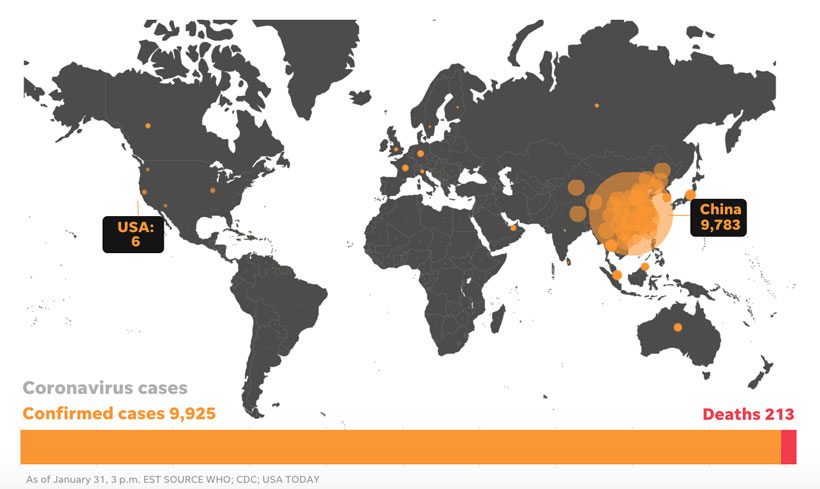
    As the overall death toll of the novel coronavirus passed 300 –including a 44-year-old man in the Philippines– and there are more than 14,000 infections confirmed, a student at the University of Massachusetts (UMass) Boston was confirmed to be the 8th person in the U.S. to have the disease.

    This individual is a man in his 20s and resides in Boston. He contracted the virus in Wuhan, where the outbreak originated. After he returned from China, he resulted positive on a test done on Friday night in Boston, according to a statement from UMass addressed to its community on Saturday night.

    The infected man will stay in isolation until he is cleared by public health officials.

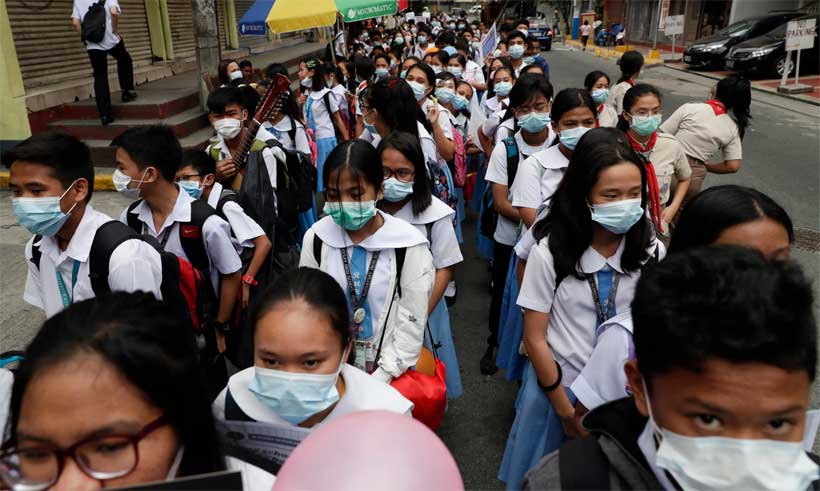
    Also, this weekend it emerged the story that more than 100 Princeton University students – including undergraduate and graduate students – had self-quarantined as of Sunday after China’s trips as a precaution.

    The students were confining themselves for 14 days following their last time in mainland China.

    These cases show that American universities are in the front line, having no other choice than taking aggressive steps to keep the Wuhan virus aways from classrooms and students.

    There are 10,000 American students enrolled in academic programs in China.

    However, health officials consider more concerning the fact that there are over 350,000 Chinese students pursuing higher education in the United States, many of whom have traveled to their home country in recent weeks.

    This makes schools a potential incubator for a widespread outbreak, given the close proximity of dormitory life. The challenge also is not overstating the risk of fanning xenophobia.

    On Friday the U.S. implemented travel restrictions Sunday evening in an effort to contain the outbreak. The plan included temporarily denying entry to foreign nationals who visited China in the 14 days prior to the arrival to the US. US citizens returning from the rest of mainland China in the 14 days prior will undergo health screenings at selected ports of entry and face up to 14 days of self-monitored quarantine. Flights from China will be directed through seven airports – John F. Kennedy in New York, Atlanta, Chicago O’Hare, San Francisco, Seattle-Tacoma, Los Angeles, and Honolulu.

    In addition, the U.S. Department of State upgraded its warning against travel to China to the highest level, advising Americans not to travel there. This alert is following the World Health Organization statement, declaring the coronavirus outbreak a global public health emergency.

    On the other hand, in the United Kingdom, one of the two people to test positive for the new coronavirus is a student at the University of York.


    University of Rochester: 2019 Novel Coronavirus: What You Need to Know

  • International Education Will Be Disrupted by the Coronavirus Travel Ban

    International Education Will Be Disrupted by the Coronavirus Travel Ban

    IBL News | New York

    The Coronavirus travel ban will impact greatly on international education, said NAFSA Association of International Educators.

    “What is clear is that this public health crisis and any future response will have wide-reaching and dramatic effects on international education immediately and in the long-term,”  said Dr. Esther D. Brimmer, CEO at NAFSA in a statement.

    This organization, with 10,000 members, has created a specific website titled “Coronavirus Critical Resources” to follow the 2019 novel coronavirus rise.

    On Friday, at the White House press briefing on the coronavirus, Secretary of Health and Human Services Alex Azar declared a public health emergency in the United States.

    He announced that U.S. citizens returning from Hubei province will be subject to up to a 14-day quarantine. All foreign nationals, except those that are immediate family members of U.S. citizens and permanent residents, who have traveled in China within the last 14 days, will be denied entry into the country. The temporary measures take effect this Sunday, February 2, at 5 p.m. EST.

    Also on January 31, 2020, President Trump signed a separate Presidential Proclamation regarding the travel ban.

    On Thursday, the U.S. Department of State upgraded its warning against travel to China to the highest level, advising Americans not to travel there due to a novel coronavirus first identified in Wuhan, China.

    Also on Thursday the World Health Organization declared the coronavirus outbreak a global public health emergency.

    Many colleges announced cancellations of their China programs earlier in the week after the Centers for Disease Control (CDC) advised against all nonessential travel to China.

    Following the CDC warning, several American universities – ASU, Duke, Northwestern and Texas A&M Universities and the University of Michigan, among others – are suspending travel to China.

    On Monday, Bloomberg reported that China’s National Educational Examinations Authority canceled February test dates for the IELTS, TOEFL, GRE and GMAT, potentially disrupting some prospective students’ plans to study in the United States.


    IBL News: Anxiety in classes and dorms: Over 25,000 ASU Students Demand to Cancel Classes Due to a Coronavirus Case on Campus


  • Over 25,000 ASU Students Demand to Cancel Classes Due to a Coronavirus Case on Campus

    Over 25,000 ASU Students Demand to Cancel Classes Due to a Coronavirus Case on Campus

    Mikel Amigot | IBL News, New York

    ASU registered this week the first coronavirus case among universities in the nation. The institution is now trying to dispel all concerns, an Arizona State University’s (ASU) top official told yesterday IBL News.

    The case is creating a huge controversy in the ASU community, which has been on edge since the Arizona Department of Health Services announced on Sunday that someone at the school had been diagnosed with the 2019 novel coronavirus.

    It’s not clear if the patient involved— who recently traveled to Wuhan, the epicenter of the outbreak —  is a student, faculty or staff member, but school’s officials noted the patient “does not live in university housing, is not severely ill and is currently in isolation to keep the illness from spreading.”

    In the days since, there’s been a Change.org petition with over 24,000 signatures to cancel classes. “Until proper precautions have been taken to ensure the wellbeing of the students, such as disinfecting areas the student with Novel Coronavirus was present, ASU students want their classes canceled. (…) We do not want to risk our lives by attending class,” reads the petition.

    In addition, Asian students at ASU are saying that they are being treated differently facing xenophobic looks whenever they cough or sneeze. Surgical face masks have sold out at stores near campus.

    ASU Provost Mark Searle on Monday said the school would not cancel classes.“We have received many inquiries about university operations in light of this case. The university remains open and classes are not canceled,” Searle wrote in an email to the ASU community, according to AZ Central. 

    The news came after the University of Southern California (USC) was forced to respond following an erroneous social media-fueled claim that a student was diagnosed with the novel coronavirus.

    George Mason University student cleared of coronavirus

    On the other hand, test results for a George Mason University student who was being tested for the novel coronavirus have come back negative, the Virginia Department of Health said on Friday.

    That person was identified by the university as an off-campus George Mason student who had been self-isolating while awaiting results.

    University of Wisconsin, Miami University, NYU, Duke, UB

    In addition, two undergraduate students from Wuhan, China, at the University of Wisconsin-Platteville were moved into a special dorm room and told to frequently take their temperatures.

    Basketball games at Miami University in Ohio were postponed after two students reportedly showed possible symptoms.

    NYU announced that it is delaying the start of the spring semester at its Shanghai campus until February.

    Duke University has also postponed the start of the semester at its campus in Kunshan, China, until Feb. 17 and has restricted access to the campus.

    University at Buffalo (UB), with about 1,500 students from China, sent an alert on Thursday with general advice on how to monitor their health. This warning happened after an official estimated that about half of those students traveled to China for winter break and returned before classes started Monday.


    Anxiety on Campuses

    It is expected that given the fact that college campuses can be grounds for infectious diseases, university officials will be prompted to take urgent measures.

    Regarding this anxiety in classes and dorms, TheNew York Times elaborated today a report about how the fear of the Coronavirus is coming to U.S. colleges.


    IBL News: International Education Will Be Disrupted by the Coronavirus Travel Ban, NAFSA Says

  • edX & Platforms | January 2020: WGU, Boston University, Open edX, Esri, Harvard’s LabXchange.org…

    edX & Platforms | January 2020: WGU, Boston University, Open edX, Esri, Harvard’s LabXchange.org…

    Newsletter format  |  Click here to subscribe ]

    JANUARY 2020 – NEWSLETTER #24  |  Breaking news at IBL News  |  Noticias en Español


    edX

    • UT Austin Launches a Top Master’s Degree on Nutritional Sciences on edX.org

    • Stanford University Joins the edX Consortium Seven Years Later

    • edX Launches Its First Two MicroBachelors Degrees with WGU and NYU

    • WGU Provides Details on Its MicroBachelor: Successful Completion Does Not Mean Automatic Accreditation

    First Online MBA on edX: “If We Don’t Do it, Someone Else Will,” Says Boston University


    Open edX

    • Harvard and Amgen Announce LabXchange.org, an Open Platform with Scientific Content

    • NY Governor Andrew Cuomo Includes the “Freshman Year for Free” Program in His Agenda

    • XuetangX Raises Another $15 Million to Add AI Technology and Expand Its Catalog


    Coursera

    • Coursera Introduces Its First Fully Online Bachelor’s from an American University

    • Google Expands Its IT Support Offering on Coursera.org by Adding Python and Automation


    Courses, Programs

    • Dr. Chuck’s ‘Python for Everybody’ Full Class on YouTube and Other Formats

    • Esri’s Free MOOC Program, with 150,000 Students, Sets a Reference in Corporate Education at Scale


    Platforms

    • A Cloud Guru Acquires The Linux Academy and Claims 1.5 M Learners

    • ProctorU Merges With Canadian Yardstick; the New Company Raises $30 Million

    Outlier.org Raises $16 Million in Funding to Expand Its Cinema-Quality Video Courses

    • Chatbots and Other Artificial Intelligent Cases Are on the Rise, Despite High Expectations


    2020 Upcoming Events

    • Education Calendar  –  JAN  |  FEB  |  MARCH  |  APRIL  |  MAY  |  JUNE  |  JULY – DEC  |  Conferences in Latin America & Spain


    This newsletter is created in collaboration with IBL Education, a New York City-based company specialized in open-source learning platforms. Read the latest IBL Newsletter   |  Archive of Open edX Newsletters

  • UT Austin Launches a Top Master’s Degree on Nutritional Sciences on edX.org

    UT Austin Launches a Top Master’s Degree on Nutritional Sciences on edX.org

    IBL News | New York

    The University of Texas at Austin (UT Austin) announced this week the launch of a 100% online Master of Science in Nutritional Sciences (MSNS) on edX.org.

    The program, priced at $22,500, is ranked at number fifth best online master’s in nutrition by The Best Schools. The first cohort will start on August 30, 2020.

    Its curriculum is focused on advanced human nutrition with concentration areas available in Biochemical & Functional Nutrition and Health Promotion & Disease Prevention.

    UT Austin, an edX partner since its founding in 2012, is the latest institution adding a MOOC-based degree on the edX catalog.