Author: IBL News

  • A Dynamic 2019 for Open edX, edX, Coursera, and Udacity: IBL’s Top-20 Headlines

    A Dynamic 2019 for Open edX, edX, Coursera, and Udacity: IBL’s Top-20 Headlines

    IBL News | New York

    Platforms dedicated to providing online education at scale saw a high-powered 2019.

    Without attracting attention from the mainstream or financial media, teams at Open edX, edX, Coursera, Udacity, and others quietly moved forward in their development this year. While Coursera and Udacity were still considering their IPOs, edX continued strengthening its financial sustainability.

    Several initiatives on the Open edX open-source ecosystem also made headlines.

    Here is the IBL News’ selection of the top-20 stories:


    Open edX

    • The Open edX Ironwood version is out. Open edX Issues Ironwood.2, a New Release of Its Platform

    • A successful Open edX conference in San Diego. 2020’s will be in Portugal. Open edX Posts Videos of All Talks from Their Recent Conference

    • Harvard’s Blockstore Technology Will Enable Personalized Learning on Open edX. The Next Evolutionary Step in MOOCs Will Be ‘Blockstore’, Says Robert Lue, from Harvard

    • XuetangX, China’s Open edX Platform, Reaches 16M Learners

    • NVIDIA’s DLI reaches 120,000 learners and launches new courses on Data Science


    edX

    • edX Offers Its First Online MBA, from BU Questrom School of Business

    • The edX Organization Adopts a More Commercial Structure Appointing a New Co-CEO

    • edX Cancels Its Annual Partners Conference Scheduled in Hong Kong Due to Safety Concerns

    • edX Announces Its Eleventh Degree: A Master’s in Electrical and Computer Engineering

    • Two Professors from Dartmouth and IMT of France Awarded After their ‘C Programming with Linux’ Course


    Coursera

    • Coursera’s Blockbuster Classes of 2019: Preeminence of AI, with 2M Enrollments

    • Coursera Offers Its 3,600-Course Catalog to Non-Affiliated Universities

    • Coursera’s Google IT Support Certificate Program Gets a Good Response

    • Coursera for Business Claims 100% Year-Over-Year Customer Growth

    • Illinois Shuts Down its Traditional MBA and Focuses into Online’s iMBA


    Udacity

    • Udacity Will Fund 100,000 Scholarships As Part of the Pledge to America’s Workers

    • Udacity’s Achievement with its Nanodegree Program: Over 100,000 Graduates


    Industry

    • The New Standard LTI 1.3, which Allows Interoperability of Grades and Assignments, Excites the Industry

    • Google Classroom, One of the World’s Top LMS: 40M Users In Five Years

    • Black Friday and Cyber Monday: edX, Pluralsight, Udemy, and Skillshare Join the Marketing Season



  • 2019 Year Review: MIT’s Epstein Scandal, Sale of Canvas LMS, 2U’s Collapse, and Pearson’s CEO’s Resignation

    2019 Year Review: MIT’s Epstein Scandal, Sale of Canvas LMS, 2U’s Collapse, and Pearson’s CEO’s Resignation

    IBL News | New York

    As 2019 comes to an end, it’s time to review the year’s breaking news in online education.

    Here’s the IBL editor’s top-10 list, dominated by the Epstein’s scandal at MIT, the sale of Instructure/Canvas, 2U’s collapse, and the push-out of Pearson’s CEO.

    1  The MIT Media Lab‘s Scandal: Its Director Resigns After Lying Over His Ties to Epstein

    As a result of it, MIT started to examine its engagement practices with gifts and grants. [President Reif, in the picture above]

    2  2U Shares Continue to Drop After the Company Announcement of Big Losses

    Previous to the collapse, 2U acquired Trilogy Education for $750 million and duplicated its portfolio of universities.

    3  An Equity Investment Firm Buys Instructure for $2 Billion, Taking It Private

    Earlier in the year, Instructure / Canvas LMS bought the Portfolium digital portfolios company for $43 million.

    4  Pearson Pushes Out His CEO After a Dramatic Tenure Full of Sales and Job Cuts


    Six additional stories caught our attention:

    5  The Open Education Conference Falls Apart, Leaving a Community of Passionate OER Supporters

     ISTE Conference Organizer Absorbs EdSurge Media – Investors Won’t Be Rewarded

     Over 1,000 Students Will Graduate from Georgia Tech’s Online Master in Computer Science

    8  Harvard Changes Its Caption System to Settle Deaf Association’s Lawsuit

     University of Oxford Will Invest $190 Million on Humanities and Create an Institute for Ethics in AI

    10  IBM Launches a Blockchain Credentials Network – A Community College At The Forefront


  • Chatbots and Other Artificial Intelligent Cases Are on the Rise, Despite High Expectations

    Chatbots and Other Artificial Intelligent Cases Are on the Rise, Despite High Expectations

    Mikel Amigot | IBL News

    “In education, AI is still a sleeping giant,” researcher Dr. Tony Bates wrote in a must-read article.

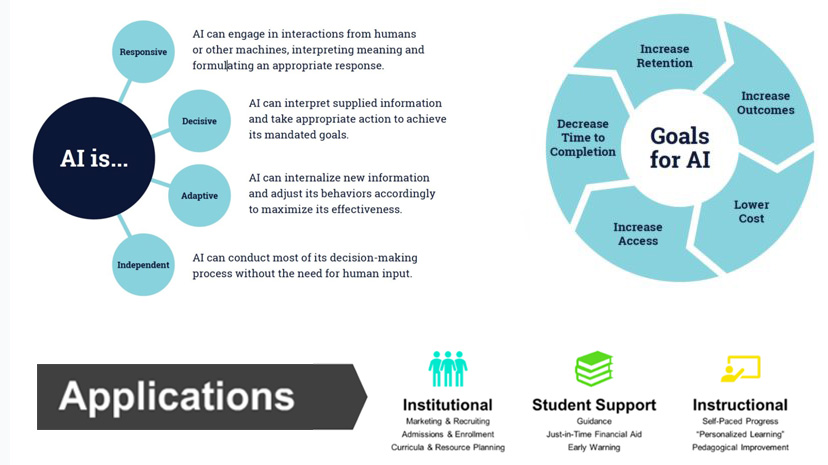
    Today, one of the most extended cases of AI in teaching and learning lies in chatbots. These intelligent tutoring systems, that guide conversations or “chat” through text or voice interactions, are on the rise.

    In a recent interview with IBL News, David Joyner, Associate Director of Senior Experience at the Online Master of Science Computer Science and instructor of the program, commented on the new role of Georgia Tech’s AI-agent –formerly known as Jill, and now named ATA– on how it is connecting students to other learners in the same class.  “It’s a social TA (Teacher Assistant),” he explained.

    Chatbots have become a common tool for banks and large finance and marketing companies as a way to reduce costs and response times. Now, a growing number of colleges and universities use this technology.

    Two examples:

    • Australia’s University of Adelaide announced that students received responses 13 times faster, and learners’ approval of the quality of service increased by 60 percent, after deploying a chatbot to deal with admissions questions in 2018.
    • Western Governors University, or WGU, in 2018 received a $750,000 award from the National Science Foundation to use machine learning in order to improve interactions with students and help them with the decision-making process, i.e., to find programs.

    Among many others, companies like Oracle, AdmitHub, and Ivy.ai, also provide this type of solution.

    As AI-based adaptive technology advances, systems will deal with several tasks, as Tony Bates reminds.

    At least, they will:

    • Provide teaching content to students and simultaneously provide support by giving adaptive feedback and hints to solve questions related to the content, as well as to detect students’ difficulties/errors with content or exercises.
    • Curate learning materials based on students’ needs, such as providing specific recommendations regarding types of reading materials and exercises, along with personalized courses of action to aid in the students’ learning experience.
    • Facilitate collaboration between learners by providing automated feedback, generating automatic questions for discussion, and an analysis of the process.

    It is undeniable that there are inflated expectations for AI –a term that is often incorrectly used to describe any computational activity.

    Beyond the extreme hype, there are clear areas of application. AI enables adaptive learning by recommending personalized content, predictive analytics, automated feedback and support in many conversations.

    Artificial Intelligence is not a panacea for education. However, by having access to massive amounts of information and analyzing these data sets through algorithms and computational power, innovative software organizations can develop worthwhile applications.

  • Microsoft Retires Its Professional Program and Opens a Role-Based Certification Site

    Microsoft Retires Its Professional Program and Opens a Role-Based Certification Site

    IBL News | New York

    Microsoft will end its Professional Program (MPP) on December 31, 2019, due to its lack of technical certification.

    Created in 2016 and hosted at academy.microsoft.com, the program didn’t recognize the importance of certifying learners as a way to enjoy more opportunities for career advancement and succeed in emerging jobs.

    “Certified employees earn 15% more and are 20% more productive than those without certification,” stated the software giant.

    Enrollments to MPP ended in mid-September, and students will need to save and print certificates by December 31. Some individual courses, such as Artificial Intelligence and Data Science, will remain on edX.org through June 30, 2020.

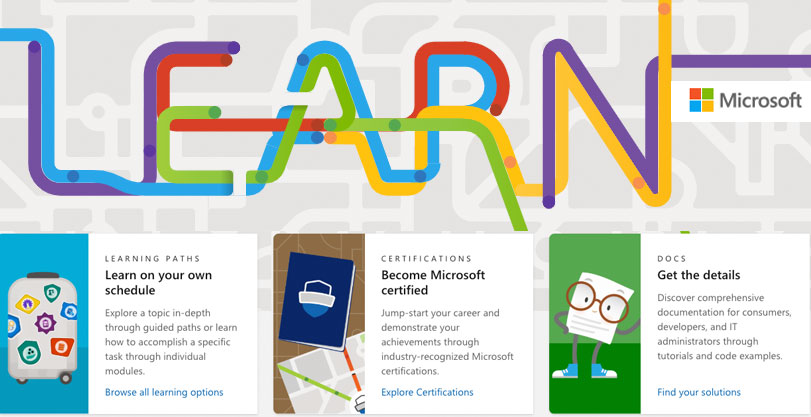
    Once the Professional Program is retired, learners will be redirected to the new destination Microsoft Learn, located at docs.microsoft.com.

    Microsoft Learn will combine short step-by-step tutorials, browser-based interactive coding/scripting environments, and task-based achievements. The new technical training will be based on role-based certifications.

    Three examples of courses are Azure AI Engineer Associate, Azure Data Scientist Associate, and Azure Data Engineer Associate.

  • A Cloud Guru Acquires The Linux Academy and Claims 1.5 M Learners

    A Cloud Guru Acquires The Linux Academy and Claims 1.5 M Learners

    IBL News | New York

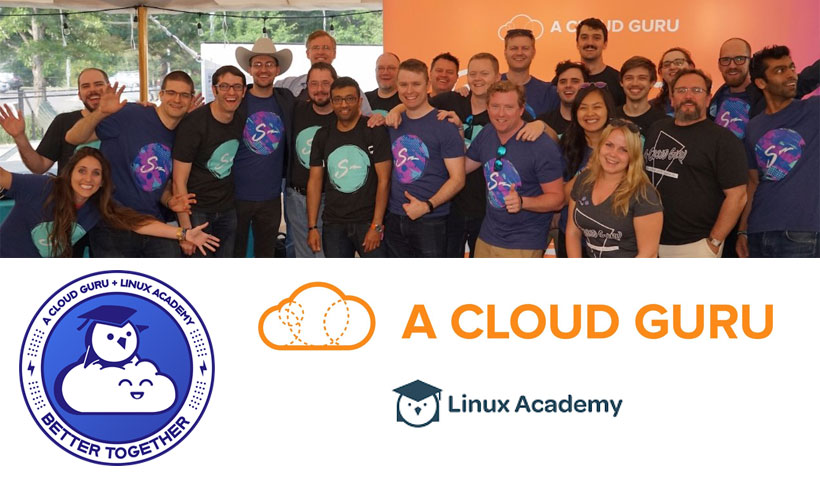
    Training company A Cloud Guru announced this month its acquisition of The Linux Academy for an undisclosed amount.

    Venture capital firms Bain Capital Tech Opportunities, Elephant, Summit Partners, and AirTree Ventures provided the funding.

    “The combined content library will represent the world’s largest catalog of hands-on training for cloud computing (AWS, Azure & Google Cloud), DevOps, containers, security, big data, machine learning, and artificial intelligence,” Katie Bullard, from A Cloud Guru, said in a press release.

    Sam Kroonenburg, CEO at A Cloud Guru CEO, will lead the combined organization, which has claimed a client base of 1.5 million users and ran annual growth in revenues of 100%.

    Founded in 2015 by brothers Sam and Ryan KroonenburgA Cloud Guru (or ACG) begun as a single cloud certification course. Later it expanded into a rich content library and hands-on labs covering Amazon Web Services, Google Cloud Platform, and Microsoft Azure cloud platforms. Now, ACG helps businesses and individuals rapidly develop cloud skills, prepare for certification exams, and progress through learning paths “to become gurus in specialized disciplines.”

    A Cloud Guru, with less than 50 employees, has raised over $40 million in funding over three rounds from four investors.

    Linux Academy has been around since 2012, providing over 200 self-paced courses, 1,000 Hands-On Labs, and Learning Paths to guide training.

  • Learning At Scale | December 2019: MIT, Harvard, Moody’s, Pearson, Instructure, Hugging Face, EdCast…

    Learning At Scale | December 2019: MIT, Harvard, Moody’s, Pearson, Instructure, Hugging Face, EdCast…

    Newsletter format  |  Click here to subscribe ]

    DECEMBER 2019  –  NEWSLETTER #29  |  Breaking news at IBL News  |  Noticias en Español


    Higher Ed

    • Only 9% of Faculty Prefers to Teach an Online Class; 73 % Chooses a Face-to-Face Environment

    • A New Catholic Polytechnic University Will Focus on the Integration of Science and Faith

    • Moody’s Forecasts Moderate Growth Revenue at Public and Private Universities

    IMS Releases Its New QTI Interoperability Standard For Online Assessments

    • Analysis: Over 30M Adults With College Education But No Degree: Certificate Programs to the Rescue


    MIT, Harvard

    • MIT Executive Vice President and Treasurer Steps Down, Reif Announces by Surprise

    • Harvard Changes Its Caption System to Settle Deaf Association’s Suit


    Pearson

    • Pearson Pushes Out His CEO After a Dramatic Tenure Full of Sales and Job Cuts

    • Pearson’s AI-Enabled Calculus App Provides Real-Time Feedback and Suggests Pathways


    Funding

    • Hugging Face Raises $15 Million to Expand its Open Source Software on Conversational AI

    • EdCast Raises $35 Million in Funding to Expand Its Platform

    • With 30 Million Users and $1.5 Billion Valuation, Doulingo Plans to Go Public in 2021


    Instructure’s Sale

    • Instructure Says to the SEC that Thoma Bravo Is Offering the Highest Price

    • A Third Shareholder of Instructure Says the Board Didn’t Act in the Company’s Best Interest

    • A Second Shareholder Announces It Will Vote Against Instructure’s Proposed Deal

    • A Large Investor Opposes Instructure’s Plan to Sell for $2 Billion

    • An Equity Investment Firm Buys Instructure for $2 Billion, Taking It Private


    2019 Upcoming Events

    • Education Calendar  –  DECEMBER  | JAN – JUNE 2020


    This newsletter is created in collaboration with IBL Education, a New York City-based company that has built the IBL Platform. Read the latest IBL Newsletter   |  Archive of Open edX Newsletters


  • edX & Platforms | December 2019: edX, Open edX, Coursera, Duke U, Andreessen Horowitz, IBM, WordPress, Stanford…

    edX & Platforms | December 2019: edX, Open edX, Coursera, Duke U, Andreessen Horowitz, IBM, WordPress, Stanford…

    Newsletter format  |  Click here to subscribe ]


    DECEMBER 2019 – NEWSLETTER #23  |  Breaking news at IBL News  |  Noticias en Español


    edX | Open edX

    • edX’s View for 2020: MicroBachelors Programs and Stackable Modular Credentials for Full Degrees

    • Two Professors from Dartmouth and IMT of France Awarded After their ‘C Programming with Linux’ Course

    • Black Friday and Cyber Monday: edX, Pluralsight, Udemy and Skillshare Join the Marketing Season
     

    Coursera

    • Coursera’s Blockbuster Classes of 2019: Preeminence of AI, with 2M Enrollments

    • Coursera for Business Claims 100% Year-Over-Year Customer Growth

    • Coursera for Governments: Colombia Will Fund Scholarships for 25,000 Learners

    • Novartis Will Grant Employees Free Tuition to Earn Two Master’s Degrees on Coursera


    Open Source, OER

    • Duke University Introduces an Open Source Tool as an Alternative to a Monolithic LMS

    • OER, Rental and Subscriptions Push College Textbooks’ Business to a Further Decline

    • WordPress: Jetpack Vulnerability and Recurring Payments Button with Stripe


    New Platforms

    • IBM Launches a Blockchain Credentials Network – A Community College At The Forefront

    • Andreessen Horowitz’s Crypto Startup School Will Start with a Seven-Week Program

    • Khan Academy Launches a Personalized Teaching Tool for Math in K-12


    MOOCs, Courses

    Stanford GSB Launches the Most Sophisticated Online Certificate Program Ever… At a Price!

    • Today, MOOCS Are Focused on Online Degrees and Corporate Training, Says Dhawal Shah

    • FBI Opens Its Cyber Safety Educational Program for Young Students After Attracting 1M+ Last Year


    2019 Upcoming Events

    • Education Calendar  –  DECEMBER  |  JAN – JUNE 2020


    This newsletter is created in collaboration with IBL Education, a New York City-based company that has built the IBL Platform. Read the latest IBL Newsletter   |  Archive of Open edX Newsletters

  • Instructure Says to the SEC that Thoma Bravo Is Offering the Highest Price

    Instructure Says to the SEC that Thoma Bravo Is Offering the Highest Price

    IBL News | New York

    Responding to criticism from three top shareholders – Praesidium Investment Management (7.5%), Rivulet Capital (5%) and Obendorf Enterprises (6%) –, Instructure Inc (NYSE: INST) said on Monday that equity firm Thoma Bravo offered the highest price, $2 billion on a $47.60 per share deal.

    In a new regulatory filing, Instructure ensured that it met with dozens of potential buyers and engaged with multiple financial and strategic alternatives over months before agreeing on a sale with Thoma Bravo, dismissing they rushed on a transaction.

    Additionally, Instructure reveals it hasn’t received any rival bids during its “go-shop” period, which is due to expire on January 8.

    In its statement to SEC (Securities and Exchange Commission), Instructure provided details about meetings, discussions and deal attempts regarding the merger (or sale) to Thoma Bravo.

    Since the “go-shop” period started, J.P. Morgan contacted nine of the parties regarding a potential strategic transaction, and five of those parties declined to continue discussions. In addition, representatives of J.P. Morgan communicated with fifteen additional parties to gauge their interest, and it executed a confidentiality agreement with one. To date, no party has made an alternative acquisition proposal.

    The lengthy background of the merger section shows that Instructure’s Board of Directors “evaluated carefully, with the assistance of financial advisors, the risks and potential benefits associated with other strategic or financial alternatives and the potential for stockholder value creation associated with those alternatives.”

    “The Board undertook a methodical, thoughtful and deliberate process in reaching an agreement with Thoma Bravo,” Instructure said to IBL News.

    •  More news about Instructure and the sale of Canvas LMS

  • Hugging Face Raises $15 million to Expand its Open Source Software on Conversational AI

    Hugging Face Raises $15 million to Expand its Open Source Software on Conversational AI

    IBL News | New York

    New York-based Hugging Face, a startup known by an app launched in 2017 that allows you to chat with an artificial digital friend, recently open-sourced its library for natural language processing (NLP) framework, called Transformers. It had massive success as there are over a million downloads and 1,000 companies using it, including Microsoft’s Bing.

    Transformers can be leveraged for text classification, information extraction, summarization, text generation, and conversational artificial intelligence.

    On Tuesday, Hugging Face, with just 15 employees, announced the close of a $15 million series, a funding round that adds to a previous amount of $5 million.

    The round, intended to triple Hugging Face’s headcount in New York and Paris and the release of new software libraries, was led by Lux Capital, with participation from Salesforce chief scientist, Richard Socher, and OpenAI CTO Greg Brockman, as well as Betaworks and A.Capital.

    “Tech giants are not taking a truly open-source approach on NLP, and their research and engineering teams are totally disconnected,” Hugging Face CEO, Clément Delangue, said on VentureBeat.

    “On one hand, they provide black-box NLP APIs — like Amazon Comprehend or Google APIs — that are neither state-of-the-art nor flexible enough. On the other hand, they release science open source repositories that are extremely hard to use and not maintained (BERT’s last release is from May and only counts 27 contributors).” 

  • Coursera for Governments: Colombia Will Fund Scholarships for 25,000 Learners

    Coursera for Governments: Colombia Will Fund Scholarships for 25,000 Learners

    IBL News | New York

    The Coursera for Governments division is getting a good record on convincing countries to provide funded-scholarships to train their officers and country populations on Coursera.org.

    A clear example is the Colombian Government, which will soon offer free access to the Coursera platform for 25,000 employees, encouraging them to acquire in-demand technical skills.

    Learners will begin, in early 2020, with five mandatory courses related to AI or digital transformation, including the popular AI for Everyone course from Andrew Ng, which is also available in Spanish.

    Students who complete these courses will gain unlimited access to Coursera’s course catalog, featuring 3,800 courses from 200 of the world’s top university and industry partners.

    “The Colombian Ministry of Information and Communications Technologies (MinTIC) is modeling the institutional investment needed for workforce reskilling and upskilling, and Coursera is the best partner,” said Mario Chamorro, Head of Latin America, Enterprise at Coursera.

    Coursera currently offers more than 400 courses in Spanish. Earlier this year, Coursera announced its first fully-Spanish degree in software engineering in partnership with Universidad de los Andes.

    Coursera already has more than 1.1 million learners in Colombia.

    Launched in 2017, Coursera for Governments and Organizations trains government employees and citizens across the United States, Singapore, the Philippines, India, Australia, France, Colombia, Costa Rica, Egypt, Pakistan, the United Arab Emirates, Kazakhstan, and others.