Author: IBL News

  • Coursera Signs Up New Deals to Train Employees in Latin America Through its Self-Serve Platform

    Coursera Signs Up New Deals to Train Employees in Latin America Through its Self-Serve Platform

    IBL News | New York

    Coursera announced yesterday three new partnership deals in Latin America. It also reported that over 40 businesses have hired its self-serve platform, Coursera for Business, in Colombia and Mexico.

    • Coursera Business will train 2,200 university professors and engineering students in AI skills, after its agreement with the Colombia Ministry of Information and Technology Communication.
    • Insurance company BNP Paribas Cardiff, in Colombia, will offer to its customers Coursera courses on data science, business or IT skills, in addition to career resources like job-boards and resume counsel.
    • Qualfon, a Mexican business outsourcing company, is providing Coursera’s online classes in leadership, computer science, and business to its 14,000 employees. “6,000 employees have benefited from the program so far, with 94 percent having applied their newly acquired skills to their personal and professional life,” Qualfon claimed.

    Recently, Universidad de Los Andes announced plans to develop a master’s degree in software engineering on Coursera.

    “Colombia and Mexico have incredible potential to become innovation drivers for the region but have economic challenges to overcome,” Leah Belsky SVP of Enterprise at Coursera, stated. “The steep unemployment rate in Colombia makes it challenging for individuals to find stable jobs and for companies to acquire sufficient talent; Mexico similarly faces rising unemployment, while also challenged by automation, with more than half of jobs are at risk.”


  • ASU Abandons the Global Freshman Academy Project and Moves Into an Open edX Initiative

    ASU Abandons the Global Freshman Academy Project and Moves Into an Open edX Initiative

    IBL News | New York

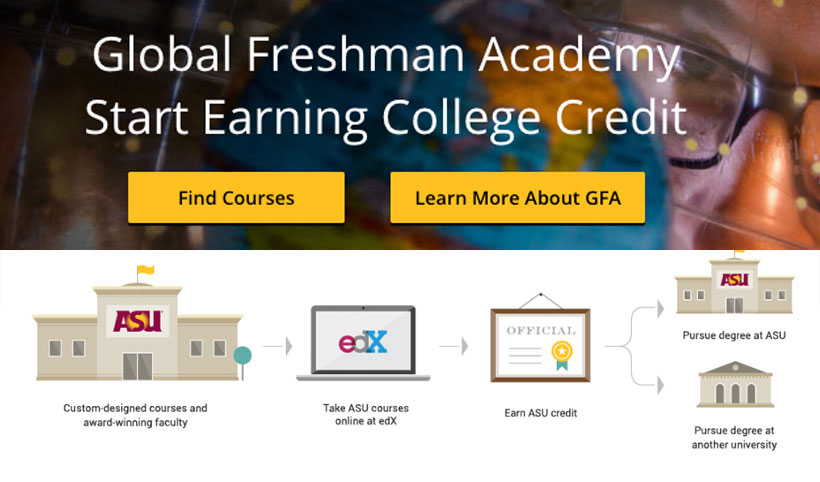
    Arizona State University (ASU) is abandoning its for-credit MOOC experiment on edX.org, known as Global Freshman Academy, due to low enrollment and completion results.

    When this project developed in partnership with nonprofit edX, and was launched in 2015, the expectation was to disrupt undergraduate education at the freshman level by attracting thousands of students. To achieve it, the Global Freshman Academy (GFA) allowed students to obtain college credit and pay for it only if they successfully pass the courses. “This a unique way to start your undergraduate education,” said then Anant Agarwal, edX CEO.

    “Hundreds of thousands of students enrolled in the academy’s free online courses, but four years later, only a fraction have completed a course, and just a minuscule number paid to receive college credit for their efforts,” reported Inside Higher Ed yesterday. More specifically, out of 373,000 people who enrolled, only 8,090 completed a course with a grade of C or better, just over 2 percent of all students enrolled. Around 1,750 students (0.47 percent) paid to receive college credit for completing a course, and fewer than 150 students (0.028 percent) went on to pursue a full degree at ASU.

    “The university has quietly moved in a new direction,” wrote Lindsay McKenzie, at Inside Higher Ed.

    Philip Regier, Dean for Educational Initiatives at ASU, explained, “the university has been focusing its attention on a new online initiative called Earned Admission.”

    This new project will be hosted on a custom Open edX platform and include high-demand courses [catalog].

    The Earned Admission pathway allows any person over 22 years old to gain admission to ASU if they complete four courses and earn a 2.75 GPA. Courses can be taken for credit at a cost of $400 per course.


  • MIT Scientist Richard Stallman, Who Defended an Associate of Epstein, Resigns From CSAIL and FSF

    MIT Scientist Richard Stallman, Who Defended an Associate of Epstein, Resigns From CSAIL and FSF

    IBL News | New York

    Richard Stallman, the MIT computer scientist who said the alleged sex-abuse victims of an associate of Epstein were “entirely willing” resigned on Monday.

    “I am resigning effective immediately from my position in CSAIL at MIT,” he wrote on his personal site in a post addressed to the MIT community.  “I am doing this due to pressure on MIT and me over a series of misunderstandings and mischaracterizations.”

    In parallel, he also stepped down from his position as president of the Free Software Foundation (FSF).

    “The board will be conducting a search for a new president, beginning immediately,” Stallman backed foundation said in a blog post.


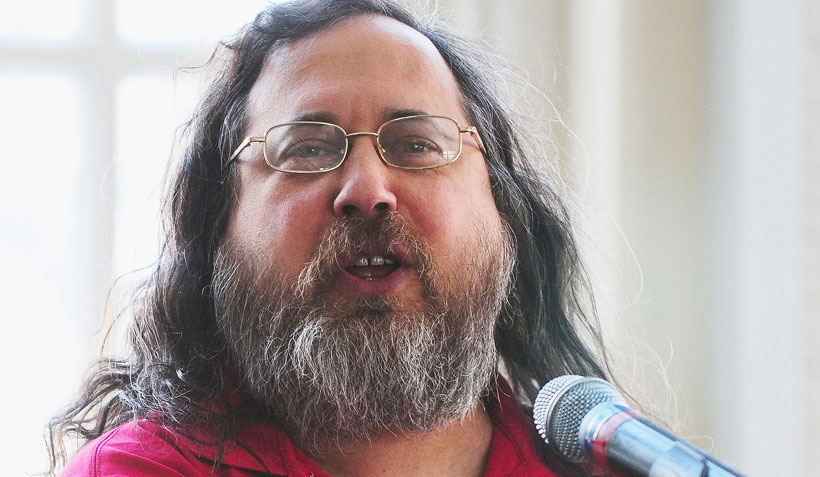
    Stallman, a legend in open-source movement [in the picture], had argued in a leaked email thread from last week that Marvin Minsky – an AI pioneer who died in 2016 and was accused of assaulting one of Epstein’s victims, Virginia Giuffre – had not actually assaulted anyone.

    He also argued over the definition of “sexual assault” and “rape” and whether the term applied to Minsky and Giuffre.

    “The word ‘assaulting’ presumes that he applied force or violence, in some unspecified way, but the article itself says no such thing. Only that they had sex,” he wrote, referring to an article about Giuffre’s testimony against Minsky. “The most plausible scenario is that she presented herself to him an entirely willing.”

    The thread was leaked to VICE by MIT alum Selam Jie Gano. He said Stallman was responding to a female student’s email about an MIT protest related to Epstein’s donations to the elite university.

    The student pointed out that Giuffre allegedly was forced to have sex with Minsky in Epstein’s home in the Virgin Islands. Stallman replied, “it is morally absurd to define ‘rape’ in a way that depends on minor details such as which country it was in or whether the victim was 18 years old or 17.”

    Creator of the FSF

    Richard Stallman, aka RMS, started the non-profit Free Software Foundation (FSF) in 1983 with a belief that users can and should be able to use, modify and share programs freely.

    Stallman along with other technologists built one of the biggest free operation systems known as GNU/Linux. FSF also developed the General Public License (GPL).

  • Stanford and Santa Fe Institute Took Money From Epstein; Harvard Had More Ties

    Stanford and Santa Fe Institute Took Money From Epstein; Harvard Had More Ties

    IBL News | New York

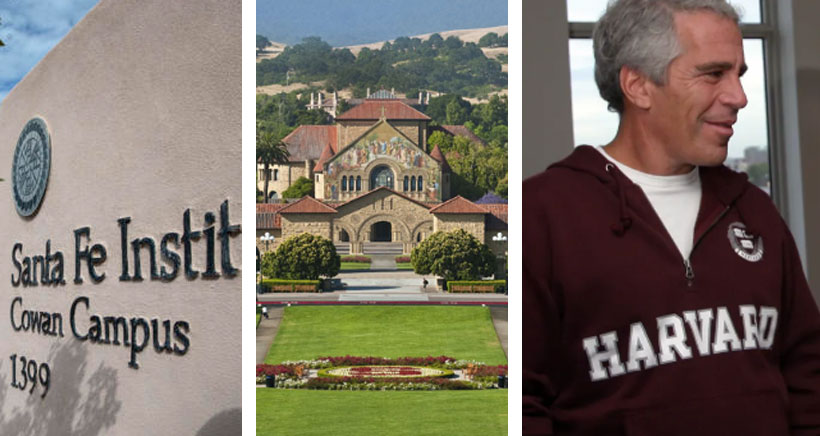
    Stanford University and The Santa Fe Institute added their names to the list of universities that accepted donations from sex trafficker Jeffrey Epstein, who last month committed suicide in a New York jail cell.

    In addition, more ties were reported about Epstein’s association with Harvard-related institutions, after he was forbidden from donation to the university.

    • Stanford acknowledged that it received $50,000 from Epstein’s COUQ Foundation Inc. in 2004. This happened two years before the disgraced financier was convicted. The donation went to the institutions’ physics department.
    • The Santa Fe Institute, a renowned science research and education center New Mexico, was the beneficiary of $275,000, including a $25,000 donation in 2010, Albuquerque Journal reported.
    • Harvard University’s association with Jeffrey Epstein did not end in 2008, as the institution’s current president, Lawrence Bacow, mentioned last week.


      “Epstein continued to come and go freely on campus,” Axios.com wrote yesterday. “In 2012, for instance, he attended a meeting in Martin Nowak’s office with financier Leon Black and other men including Henry Rosovsky, the dean of Harvard’s faculty of arts and sciences. He even put photos of the meeting on his website.”As previously reported by WBUR, Epstein gave $50,000 in 2016 to the Hasty Pudding Institute of 1770, a non-profit that supports 3 Harvard clubs. He also gave $110,000 to Verse Video Education, a nonprofit run by Elisa New, who is married to former Harvard president Lawrence Summers.

    Regarding the MIT Media Lab’s scandal, The Boston Globe informed this weekend that the institution asked some staffer to send thank you notes and dine with Epstein after he made donations to the institute’s Media Lab, according to architect and designer Neri Oxman.

    Oxman detailed how she was asked to first present her research to Epstein in 2015, several years after he had already been convicted and served jail time in Florida for prostitution-related offenses. Former Media Lab director Joi Ito asked Oxman and others that the donations would be kept confidential because of Epstein’s criminal record, but yet they were asked to dine with Epstein and send him thank you notes. Oxman says she declined to dine with Epstein but did comply to Ito’s request to have her lab make him a thank-you gift: a grapefruit-sized, 3-D printed marble with a base that lit up.

    Given this situation, The Boston Globe released a story wondering “Can the MIT Media Lab Save Itself?”

    “The most important thing for the lab to survive immediately is to help current sponsors feel that funding the lab is still a good decision,” writes Eric Scheirer, who earned two degrees at the Massachusetts Institute of Technology in the 1990s, and later was a corporate sponsor of the lab while employed at Framingham-based Bose Corp. “I must imagine that many of the companies are asking ‘What kind of place are we putting our money into?’ And that, in turn, feels precarious to me — I can imagine well a scenario in which lab funding basically collapses in a way that is not recoverable.”


  • Southwest Launches a Career Program with Four Universities to Train Pilots and Partners

    Southwest Launches a Career Program with Four Universities to Train Pilots and Partners

    IBL News | New York

    Southwest Airlines (NYSE: LUV) is launching an innovative career program to develop trainees in aviation into professional pilots this August.

    The program, called Destination 225°, provides pathways to become highly skilled and qualified for future opportunities at Southwest.

    For this training, Southwest is joining four universities including Arizona State University, Southeastern Oklahoma State University, University of Nebraska Omaha and the University of Oklahoma, along with six industry partners: CAE, Bell Murray Aviation, U.S. Aviation, Jet Linx, XOJET Aviation and iAero Group’s Swift Air.

    “This comprehensive training program is designed to make becoming a Southwest First Officer an attainable goal for passionate, highly-skilled individuals,” said Alan Kasher, Vice President of Flight Operations at Southwest.

    The program comes as the aviation industry is facing a shortage of skilled employees. The International Civil Aviation Organization predicts the need for 480,000 new aircraft technicians and 350,000 new pilots worldwide by 2026.

    Its competitor, Delta Air Lines, teamed up with eight institutions including Auburn University, the University of North Dakota and Western Michigan University to recruit and train future pilots last year.

    More universities are tapping into new revenue streams by partnering with companies to offer employee training.

  • The Top 100 Free Online Courses According to Class Central

    The Top 100 Free Online Courses According to Class Central

    IBL News | New York

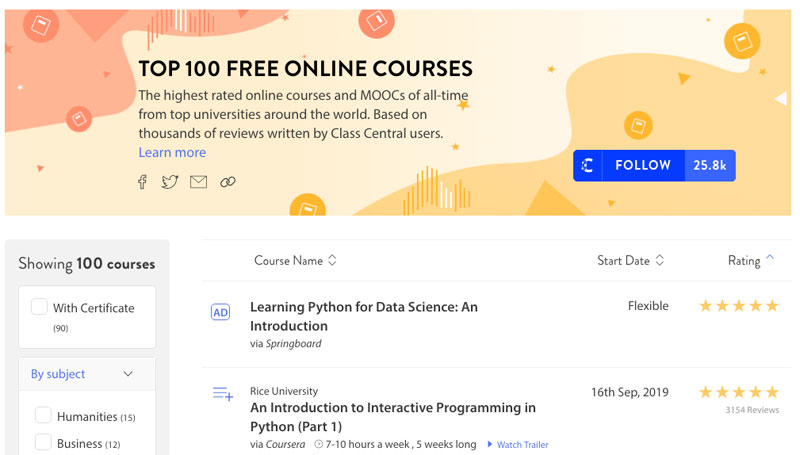
    Class Central online MOOC directory came up with the 2019 top 100 free online courses of all-time.

    These MOOCs have been developed by 53 universities from 18 countries.

    • Three universities – MIT, University of Sheffield (UK) and University of Cape Town (South Africa) – have three courses in the top 100.
    • Three other American universities – Stanford, Michigan, and Pennsylvania – have four courses each.
    • Coursera is the top course platform with 45 courses, followed by edX (24) and FutureLearn (17).

    “We first published the ranking in 2016, and have updated it every year since. In 2019, we increased the number of courses in the list from 50 to 100, drawing on more than 60,000 learner reviews,” explained Dhawal Shah, Founder and CEO of Class Central.

    Globally, there are over 13,000 MOOCs from almost 1,000 universities.

    These are the first 50 courses:

    Rice University
    An Introduction to Interactive Programming in Python (Part 1)

    University of Alberta
    Mountains 101

    University of California, San Diego
    Learning How to Learn: Powerful mental tools to help you master tough subjects

    University of Tasmania
    Understanding Dementia

    University of Cape Town
    Extinctions: Past and Present

    University of Michigan
    Programming for Everybody (Getting Started with Python)

    University of Tasmania
    Understanding Multiple Sclerosis (MS)

    Universidad Nacional Autónoma de México
    Aprender

    Technische Universität München (Technical University of Munich)
    Six Sigma: Define and Measure

    Santa Fe Institute
    Introduction to Complexity

    Georgetown University
    Quantum Mechanics for Everyone

    University of Tasmania
    Preventing Dementia

    Tomsk State University
    Presentation skills: Designing Presentation Slides

    Princeton University
    HOPE: Human Odyssey to Political Existentialism

    Monash University
    Maintaining a Mindful Life

    McMaster University
    Mindshift: Break Through Obstacles to Learning and Discover Your Hidden Potential

    Indian School of Business
    A Life of Happiness and Fulfillment

    California Institute of the Arts
    Introduction to Real-Time Audio Programming in ChucK

    Vanderbilt University
    Introduction to Programming with MATLAB

    Harvard University
    Justice

    Arizona State University
    Learning How To Learn for Youth

    University of Groningen
    Introduction to Dutch

    Tsinghua University
    Tsinghua Chinese: Start Talking with 1.3 Billion People

    University of Cape Town
    Understanding Clinical Research: Behind the Statistics

    Santa Fe Institute
    Introduction to Dynamical Systems and Chaos

    Goldsmiths, University of London
    Machine Learning for Musicians and Artists

    University of Cape Town
    What Is a Mind?

    University of Urbino
    Umano Digitale

    University of Helsinki Reaktor
    Elements of AI

    Monash University
    Mindfulness for Wellbeing and Peak Performance

    California Institute of the Arts
    Sound Production in Ableton Live for Musicians and Artists

    Y Combinator
    Startup School

    The Hong Kong University of Science and Technology
    Fibonacci Numbers and the Golden Ratio

    The Hong Kong University of Science and Technology
    Matrix Algebra for Engineers

    California Institute of Technology
    The Science of the Solar System

    British Council
    English for the Workplace

    Emory University
    The Bible’s Prehistory, Purpose, and Political Future

    Duke University
    Medical Neuroscience

    Doon University, Dehradun UGC
    Mathematical Economics

    The University of Sheffield
    Forensic Facial Reconstruction: Finding Mr. X

    British Council
    English in Early Childhood: Language Learning and Development

    The University of Sheffield
    Discover Dentistry

    Stanford University
    Machine Learning

    Universitat Politècnica de València
    Basic Spanish 2: One Step Further

    Leiden University
    EU policy and implementation: making Europe work!

    Georgia Institute of Technology
    Mechanics of Materials I: Fundamentals of Stress & Strain and Axial Loading

    Newcastle University The University of Sheffield University of Liverpool
    The Musculoskeletal System: The Science of Staying Active into Old Age

    University of Toronto
    Learn to Program: The Fundamentals

    Esri
    Cartography

    University of Alberta
    Dino 101: Dinosaur Paleobiology

    The full list of the top 100 rankings is on the Class Central website.
  • Novartis’ 108K Employees Will Have Unlimited Access to Coursera’s Catalog

    Novartis’ 108K Employees Will Have Unlimited Access to Coursera’s Catalog

    IBL News | New York

    Coursera announced Thursday that the global pharma company Novartis will provide unlimited access to the platform catalog of 3,600 courses to its 108,000 employees.

    This global force will also have access to a stackable curriculum on data science, digital technologies, and soft skills.

    This offering follows a pilot earlier this year with 2,000 employees enrolled in certified classes on Coursera.

    “This collaboration is an important part of our efforts to unleash the power of our people and reimagine medicine in new and powerful ways,” said Simon Brown, Chief Learning Officer at Novartis. “We have set an ambition to support our associates in spending 5% of their time (about 100 hours a year) on learning”.

    Novartis claims that it committed to $100 million of new investment in learning over the next five years.

    According to Coursera, pharmaceutical companies overall have lower skills proficiency in data science and computer science compared to other industries, ranking in the 30th and 10th percentile, respectively.

    Coursera for Business claims over 2,000 corporate clients.

    According to Deloitte’s Human Capital Trends in 2019. 54% of all employees will require significant reskilling and upskilling in just 3 years.


    Blog on Coursera: Exploring curiosity with Simon Brown, Chief Learning Officer at Novartis

  • MIT Students Call for Reif to Step Down and Denounce Cover-Up From the Top

    MIT Students Call for Reif to Step Down and Denounce Cover-Up From the Top

    IBL News | New York

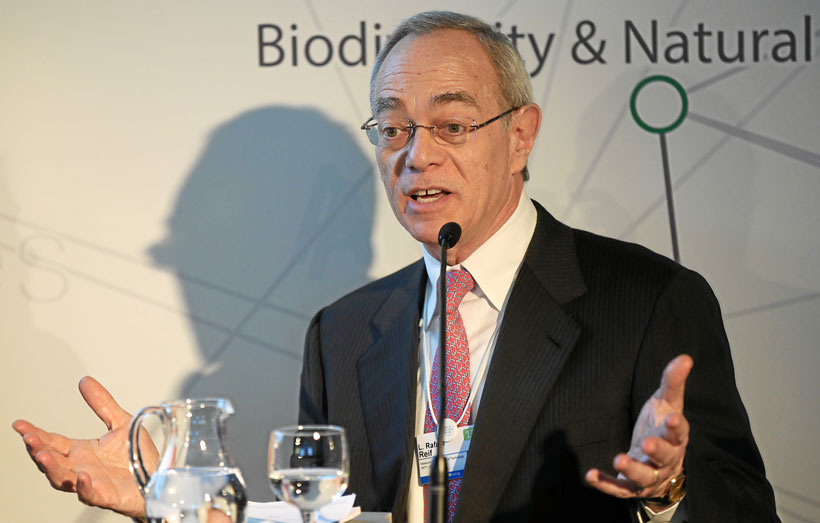
    Calls for the L. Rafael Reif’s resignation bubble up one day after MIT president admitted he not only knew about the donations by Jeffrey Epstein to the university’s Media Lab but also signed a thank you letter to the convicted sex offender.

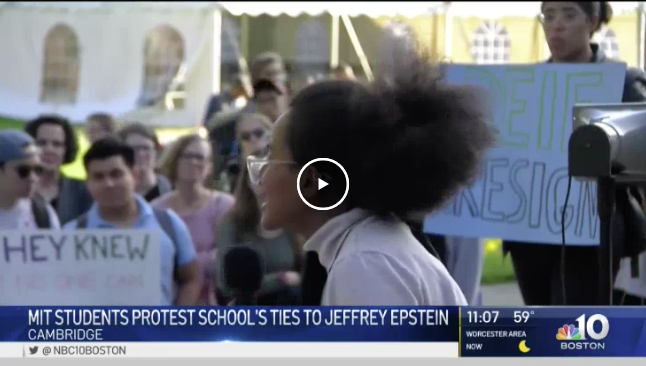
    Yesterday, dozens of MIT students and alumni demanded L. Rafael Reif to step down.

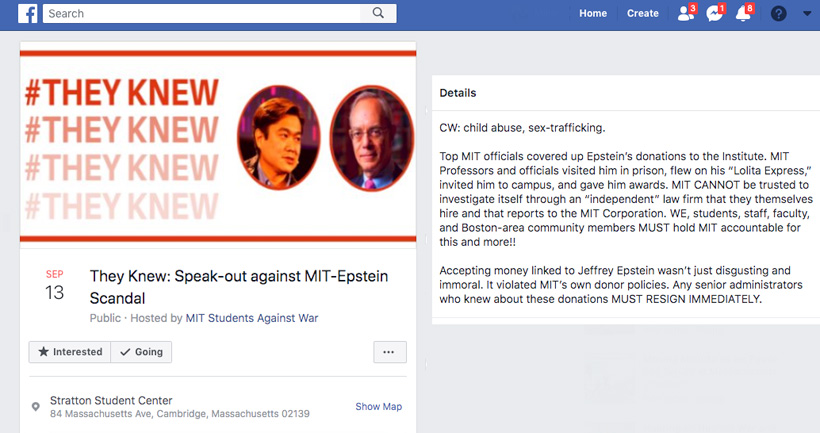
    On Friday afternoon, current students and alumni held a protest event called “They Knew: Speak-out against MIT-Epstein Scandal” at MIT’s Stratton Student Center.

    “There was a cover-up from the top,” student Husayn Karimi said. “So we want accountability from the top, and we don’t trust that the administration can investigate themselves and hold themselves accountable, cause that’s what got us into this mess in the first place.”

    In an MIT women’s alumni Facebook group, former students expressed outrage at the news.

    “Accepting money linked to Jeffrey Epstein wasn’t just disgusting and immoral,” the group’s organizers wrote. “It violated MIT’s own donor policies. Any senior administrators who knew about these donations MUST RESIGN IMMEDIATELY.”

    “Jeffrey Epstein cultivated relationships with several MIT figures, including Media Lab founder Nicholas Negroponte, former Media Lab director Joi Ito, deceased AI “pioneer” Marvin Minsky (who is accused of assaulting one of Epstein’s victims), and Professor Seth Lloyd, who visited Epstein during his prison term and accepted grants afterwards. Joi Ito visited his properties, flew on his private jet, obtained 1.2 million from Epstein for his personal investments, and raised millions for the media lab with Epstein’s help. However, MIT had internally “disqualified” Epstein as a donor. That meant MIT officially would not take Epstein’s money. But Joi Ito wanted Epstein’s money anyway, and so Media Lab officials and other top MIT officials, such as MIT’s VP of Resource Development Julie Lucas as well as Richard MacMillan (a senior director under Lucas), worked together to cover up Epstein’s donations by anonymizing them,” says the MIT Students Against War group.

  • Harvard University Acknowledges It Received Nearly $9 Million From Epstein

    Harvard University Acknowledges It Received Nearly $9 Million From Epstein

    IBL News | New York

    Harvard University acknowledged on Thursday that it received about $9 million from disgraced financier Jeffrey Epstein over a decade.

    The largest of these was a $6.5 million gift in 2003 to support the Program for Evolutionary Dynamics.

    “Each of these gifts from Epstein and his affiliated foundations to Harvard University predates his guilty plea in June 2008,” Lawrence S. Bacow, the president of the university, said.

    Harvard explained it specifically rejected a gift from Epstein following his conviction in 2008.

    Harvard University said nearly all of Epstein’s gifts were spent years ago in support of research and education.

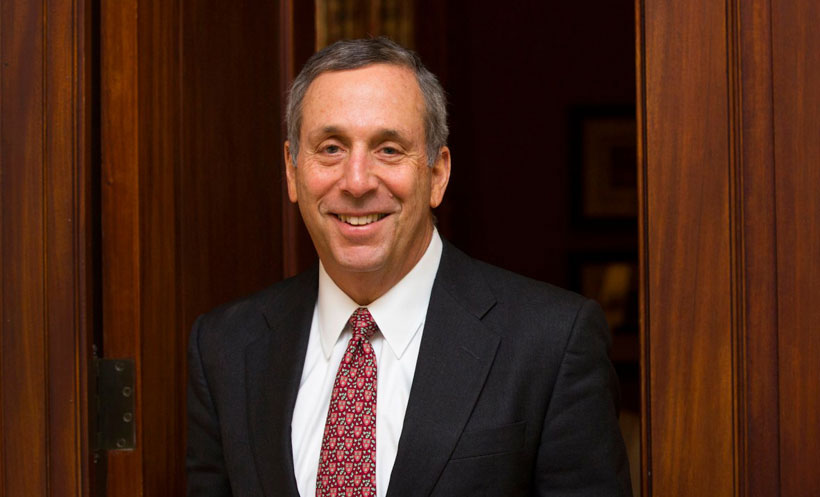
    Bacow [in the picture] said the university would redirect approximately $186,000 that has not been spent to organizations that support victims of human trafficking and sexual assault.


  • Explosive Admission on Epstein’s Donations: We Were Aware of the Gifts, Says MIT President

    Explosive Admission on Epstein’s Donations: We Were Aware of the Gifts, Says MIT President

    IBL News | New York

    The president of MIT acknowledged yesterday that the school hid donations from Jeffrey Epstein, and he even signed a thank-you letter submitted to the sex trafficker.

    “It is now clear that senior members of the administration were aware of gifts the Media Lab received between 2013 and 2017 from Jeffrey Epstein’s foundations,” MIT President L. Rafael Reif said in a statement Thursday afternoon.

    “The Goodwin Procter team has found a copy of a standard acknowledgment letter thanking Jeffrey Epstein for a gift to Seth Lloyd – as far as we know now, the first gift received at MIT after Epstein’s conviction. I apparently signed this letter on August 16, 2012, about six weeks into my presidency. Although I do not recall it, it does bear my signature,” he added.

    “Information shared with us last night also indicates that Epstein gifts were discussed at at least one of MIT’s regular senior team meetings, and I was present.”

    “Members of my senior team knew in general terms about Epstein’s history.”

    Separately on Thursday, the LinkedIn founder Reid Hoffman confirmed that he had helped raise funds from Epstein on behalf of the MIT Media Lab and its director, Joi Ito, a longtime friend.

    What follows is the letter regarding some preliminary fact-finding about MIT and Jeffrey Epstein written by L. Rafael Reif to the MIT community:

    To the members of the MIT community,

    Last night, the Executive Committee of the MIT Corporation and I received a preliminary update from Goodwin Procter, the outside law firm retained to ascertain the facts surrounding MIT and Jeffrey Epstein.

    The fact-finding will continue to its conclusion, with regular updates to the Executive Committee and me. However, two basic facts have emerged that we thought were important to share with you now.

    First, the Goodwin Procter team has found a copy of a standard acknowledgment letter thanking Jeffrey Epstein for a gift to Seth Lloyd – as far as we know now, the first gift received at MIT after Epstein’s conviction. I apparently signed this letter on August 16, 2012, about six weeks into my presidency. Although I do not recall it, it does bear my signature.

    Second, it is now clear that senior members of the administration were aware of gifts the Media Lab received between 2013 and 2017 from Jeffrey Epstein’s foundations. Goodwin Procter has found that in 2013, when members of my senior team learned that the Media Lab had received the first of the Epstein gifts, they reached out to speak with Joi Ito. He asked for permission to retain this initial gift, and members of my senior team allowed it. They knew in general terms about Epstein’s history – that he had been convicted and had served a sentence and that Joi believed that he had stopped his criminal behavior. They accepted Joi’s assessment of the situation. Of course they did not know what we all know about Epstein now.

    Joi sought the gifts for general research purposes, such as supporting lab scientists and buying equipment. Because the members of my team involved believed it was important that Epstein not use gifts to MIT for publicity or to enhance his own reputation, they asked Joi to agree to make clear to Epstein that he could not put his name on them publicly. These guidelines were provided to and apparently followed by the Media Lab.

    Information shared with us last night also indicates that Epstein gifts were discussed at at least one of MIT’s regular senior team meetings, and I was present.

    I am aware that we could and should have asked more questions about Jeffrey Epstein and about his interactions with Joi. We did not see through the limited facts we had, and we did not take time to understand the gravity of Epstein’s offenses or the harm to his young victims. I take responsibility for those errors.

    While the fact finding will continue, we have already identified flaws in our processes that need to be addressed.

    I am confident that, once Goodwin Procter submits its final fact-finding to the Executive Committee and me, and the Provost’s internal review is complete, MIT will have the tools to improve our review and approval processes and turn back to the central work of the Institute.

    Sincerely,

    L. Rafael Reif


    Resources:
    The New York Times
    : M.I.T. President Says He Thanked Jeffrey Epstein for Gift in Letter
    MIT Technology Review: MIT’s “disqualified” donors aren’t necessarily banned from donating, says Media Lab whistleblower