Author: IBL News

  • Learning At Scale | August 2019: Google Classroom, IBM Training, AWS, 2U, Pearson…

    Learning At Scale | August 2019: Google Classroom, IBM Training, AWS, 2U, Pearson…

    Newsletter format  |  Click here to subscribe ]

    AUGUST 2019  –  NEWSLETTER #25 ON ONLINE EDUCATION AT SCALE


    INITIATIVES

    • Google Introduces a Plagiarism Checker for Classroom and Assignments

    • Mark Cuban Launches an AI Bootcamp in Partnership with Microsoft and Walmart

    • UT Austin Joins Colleges that Offer Tuition-Free Programs


    TRAINING

    • IBM Offers Employees Four Programs in AI and Data Science in Partnership with a Web Training Firm

    • Amazon Will Invest $700 Million to Retrain 100,000 Employees Over Six Years

    • SV Academy Trains and Get High-Paying Jobs to People with Non-Tech Background


    2U’s DROP

    • 2U’s New $24K Online Undergrad Degree: Trend of Publicity Stunt?

    • More Securities Class-Action Lawsuits Against 2U for “False or Misleading Statements” During the Second Quarter

    • New York Litigation Firm Announces an Investigation of 2U on Behalf of Purchasers

    • Analysts Raise Suspicion: A $23k Degree on edX Prompts Doubts on the 2U Model

    • 2U Logs a Small Gain But Uncertainty Over Its Business Model Persists

    • 2U Shares Continue to Drop After the Company Announcement of Big Losses


    ANALYSIS

    • Pearson’s Bold Move Into Digital Will Allow Them to Re-Establish Control of the Market

    • Amazon’s Gigantic Training Effort Shows How Automation Is Transforming the Job Market

    • Asimov Predicted the State of Education in 2019. Was He Right?


    INSTRUCTIONAL DESIGN

    • Creating Compelling Slides: Bullet Point the Content or Read Scripts?

    • It’s All About Increasing Learners’ Engagement in Courses and Programs


    2019 UPCOMING EVENTS

    Education Calendar  –  AUGUST |  SEPTEMBER |  OCT–DEC 2019


    This newsletter about learning innovation is a monthly report compiled by IBL News and IBL Education. If you enjoy what you read please consider forwarding it to spread the word. Click here to subscribe.

    Read the latest IBL Newsletter on Online Education at Scale  |  Archive of Open edX Newsletters
     

  • Google Introduces a Plagiarism Checker for Classroom and Assignments

    Google Introduces a Plagiarism Checker for Classroom and Assignments

    IBL News | New York

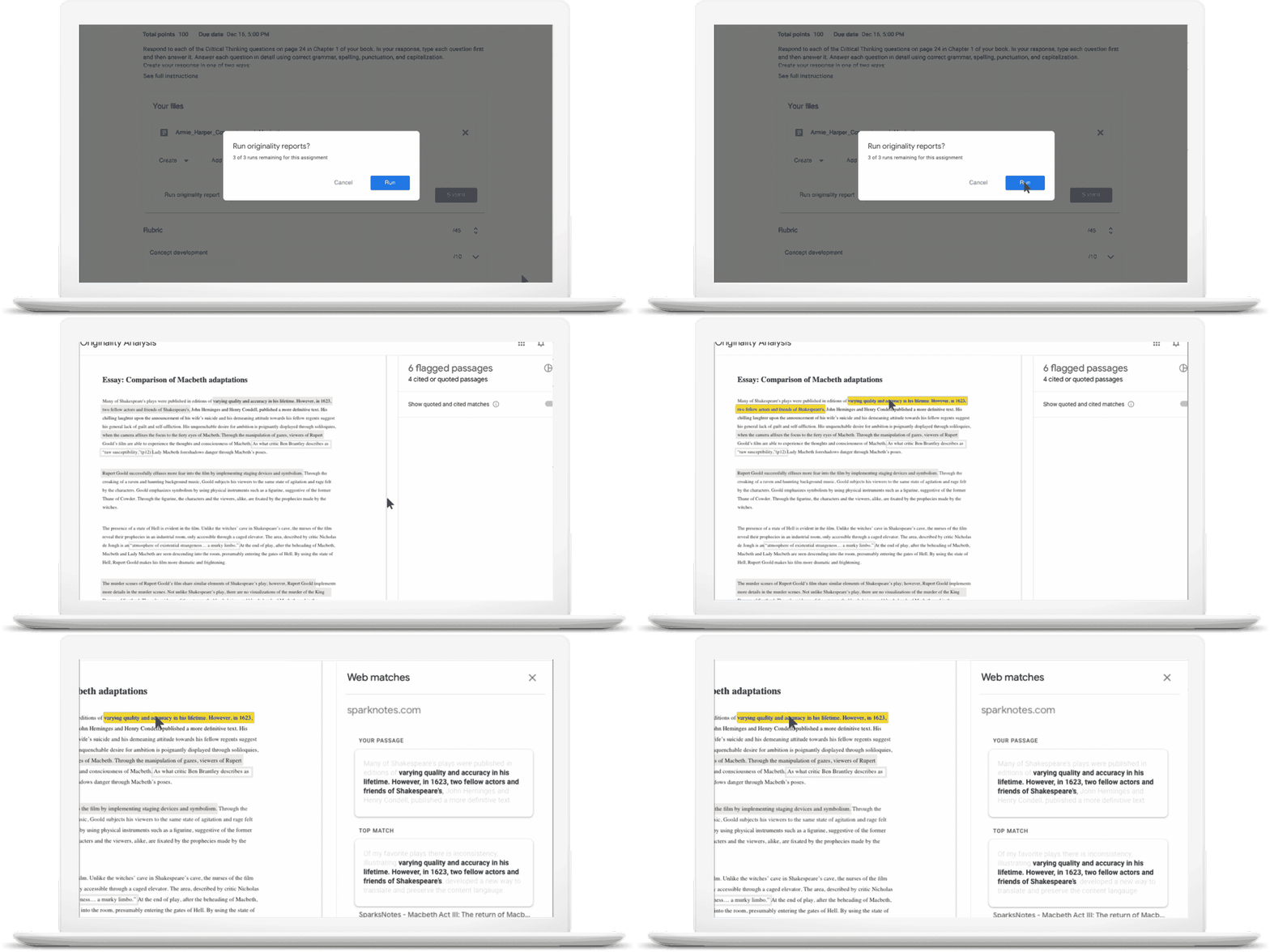
    Google unveiled a new functionality on its educational platform, Google Classroom and Assignments, enabling educators to detect plagiarism in students’ work.

    The tool, called “Originality reports,” will be publicly available later in 2019, but until then it remains in beta mode.

    “Originality reports compare student work against hundreds of billions of web pages and tens of millions of books,” explained Google. “The reports highlight missing citations, ineffective paraphrasing, or unintended plagiarism due to high similarity and link to the external source.”

    Students will be able to run Originality reports up to three times before submitting, allowing them to identify and address citation errors.

    Google promised that scanned work won’t be retained by its organization. It announced that it plans to add an option for schools to have a private repository of student submissions, so instructors can see peer-to-peer matches.

    Google’s Turnitin-style plagiarism detection tool has been in high demand by G Suite for clients in the educational field.

    Originality reports will be free for up to three assignments in each course using Google’s tools. Beyond that, an upgrade is needed for a G Suite Enterprise for Education account, which currently starts at $4 per month per instructor.

  • 2U’s New $24K Online Undergrad Degree: Trend of Publicity Stunt?

    2U’s New $24K Online Undergrad Degree: Trend of Publicity Stunt?

    Mikel Amigot | IBL News

    While investors wonder if 2U (NASDAQ: TWOU), the digital higher ed firm, is still a valuable opportunity, especially after it faces an array of class action lawsuits, Academia dissects the new 2U powered $24K online undergraduate 3-year degree program in data science and business analytics, developed by the University of London.

    The program will be executed in partnership and under a 10-year contractual revenue share model with the University of London and one of its member institutions, the London School of Economics and Political Science (LSE).

    The low price is feasible because almost two-thirds of curriculum is based on asynchronous content and boards.

    It follows a facilitator model of instruction where expensive faculty and subject matter expert professors create the course content for multiple runs of the course, and they later oversee less expensive instructors who focus on mentoring users and providing student support.

    For example, the live online synchronous classes on Zoom – for 90 minutes biweekly – are conducted by non-faculty, adjunct educators, who lead roughly 40 students each session.

    With this approach, scaling the program to host a growing number of enrolled students would require hiring more facilitators, not professors.

    Besides, 2U might use its GetSmarter subsidiary – located in South Africa – for more affordable labor on tutoring, instructional design, project and media management.

    “This online undergraduate degree will work best for only a specific type of learner. How many 18-year-olds are highly organized and self-motivated enough to navigate an education at a distance? The $24K price tag of this degree demonstrates one model of undergraduate instruction, but I’m not sure that it is a model for undergraduate education,” writes Joshua Kim, director of digital learning initiatives at the Dartmouth Center for the Advancement of Learning.

    In general, scholars consider this innovative, alternative program as an experiment, not a trend.

    It also could be just a publicity stunt from 2U.

    For now, it seems that the world’s top universities prefer to keep their status, exclusivity and tradition on undergraduate programs, rather than lowering the price and expanding access.


    IBL News, August 6: 2U Announces Its First Online Undergraduate Program

  • Open edX | August 2019: MITx, Linkedin Learning, Code with Google, Moodle, Blackboard, Cerego, Udacity…

    Open edX | August 2019: MITx, Linkedin Learning, Code with Google, Moodle, Blackboard, Cerego, Udacity…

    Newsletter format  |  Click here to subscribe ]


    AUGUST 2019 – NEWSLETTER #19  |  More breaking news at IBL News 


    Open edX

    • Philanthropy that Helps Learners Earn College Credit for Free Gets 150k Users

    • MITx Grading, a Library for the Open edX Platform that Assigns Credit on Problems

    • Open edX Forums Will Transition From Google Groups Into Discourse

    • MIT xPRO Launches Its New Fall Catalog for Post-Graduate Working Professionals


    edX

    • edX Offers Its First Online MBA, from BU Questrom School of Business

    • edX Starts Looking For a New Community Lead After John Mark Walker Departs

    • Ten Top Ways Learners Hack Learning According to edX


    Learning Platforms

    • U.S. Librarians Against LinkedIn Learning’s New Policy that Forces Users to Disclose their Identity

    • MoodleNet, a New Social Media Platform, Will Debut This Month

    • Code with Google, a New Computer Science Resource for Educators

    • Blackboard Introduces Its First Data and Analytics Platform

    • Cerego Debuts New AI Tools That Use Natural Language Processing


    Udacity

    • AWS and Udacity Launch a Scholarship to Participate in the World’s First Autonomous Racing League

    • Udacity Creates a 4-Month Program to Train Developers on Java Programming


    Canvas LMS

    • Canvas LMS’ CEO on the Learning Data Controversy: “Information Will Be Owned by Institutions”

    • Dan Goldsmith (Instructure): “My Job Is Resisting Short Cuts In Our Educational Business”

    • Analysis: The Software is Now Open Source or It Is Not


    2019 Upcoming Events

    Education Calendar  –  AUGUSTSEPTEMBER |  OCT–DEC 2019


    This newsletter about Open edX is a monthly report compiled by the IBL News staff, in collaboration with IBL Education, a New York City-based company that builds AI analytics-driven, revenue-oriented learning ecosystems, and courses with Open edX and other educational software. 

    Read the latest IBL Newsletter on Online Education at Scale  |  Archive of Open edX Newsletters

  • Philanthropy that Helps Learners Earn College Credit for Free Gets 150k Users

    Philanthropy that Helps Learners Earn College Credit for Free Gets 150k Users

    IBL News | New York

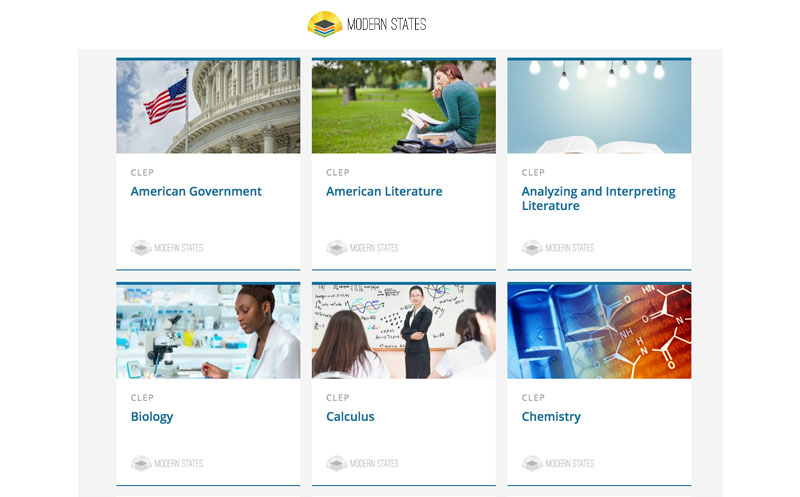
    The Freshman Year for Free philanthropic project, which prepares learners to pass the College Board’s CLEP exam, has attracted over 150,000 active users during its first two years of existence.

    This initiative, hosted on moderstates.org, is mostly used by learners seeking to earn credits for a few courses.

    Modern States Education Alliance, the philanthropy behind the program, created by New York financier Steve Klinsky, pays the cost for the CLEP exam. This year, Steve Klinsky pledged an additional $1 million in gifts to students.

    A total of $300,000 comes from other foundations, such as the Achelis and Bodman Foundation, the Laura B. Vogler Foundation and The Starr Foundation.

    The Heckscher Foundation for Children has also partnered with Modern States, providing funds to New York City public schools in Harlem and the Bronx to facilitate adoption of Modern States.

    “No one should be locked from education by lack of funds,” said Klinsky. “The new grants and gifts for Modern States help ensure that many thousands of students can learn at a college level, save on tuition, and move one step closer to earning their diploma.”

    “Tens of thousands of poor and underserved youth fail to obtain a degree due to the high cost associated with attending college,” said Peter Sloane, chairman and CEO of  The Heckscher Foundation.

    I’ve seen firsthand hundreds of students benefit from this extraordinary opportunity to earn free college credit,” said Darrin Theriaultdirector of academic testing at Kennesaw State University in Georgia.

    Modern States includes courses in all 32 subjects for which there is a credit bearing CLEP exam, plus Advanced Placement courses. Courses tied to CLEP exams include: Psychology, Biology, American History, English Literature, College Math, Information Systems, and Introductory Business Law, among others.

    In the program, professors participate from universities such as John Hopkins, Columbia, Rutgers, Purdue and others.

    The learning platform used is Open edX, and the developer of the tech infrastructure and courseware is New York-based IBL Education.

    “Modern States is now America’s leading free college program,” stated David Vise, Modern States’ executive director. “Our program is entirely free for students; no barrier to entry. We are dedicated to make college degree more affordable and accessible to everyone”.

    “Modern States provides a great opportunity for students to prepare for CLEP exams and earn college credit, free of charge,” said Emily Paulsen, executive director of CLEP for The College Board. “The Modern States courses are a great resource for working students, service members, and students of all ages and backgrounds to ultimately save on tuition and get a head start on their college degrees.”

    The pass rate of students who use ModernStates.org to prepare for a CLEP exam is 75 percent, well above the national average. Each Modern States free course and exam passed can save students and their families $1,000 to $2,000 in college costs, with no taxpayer dollars spent,” said David Vise.

    In addition to paying the $89 CLEP exam fee, Modern States reimburses students for test center fees, typically $25. Thousands of colleges and universities accept CLEP for credit, including major universities such as Penn State, Ohio State, SUNY, Texas State, and Morehouse. 

  • SV Academy Trains and Get High-Paying Jobs to People with Non-Tech Background

    SV Academy Trains and Get High-Paying Jobs to People with Non-Tech Background

    IBL News | New York

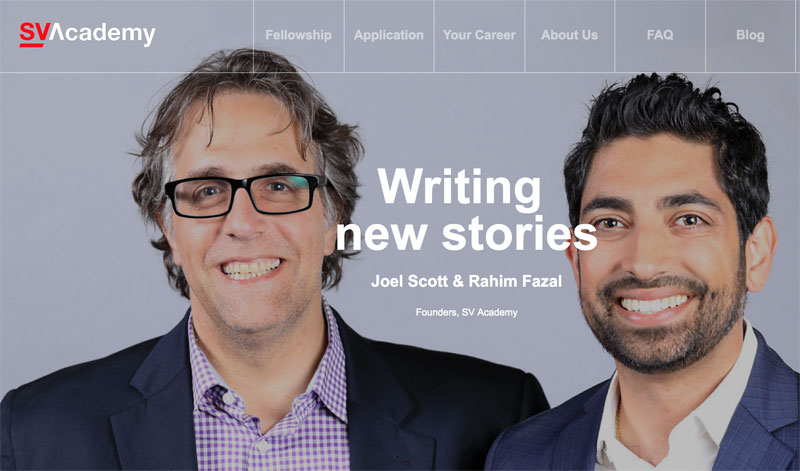
    SV Academy, a two-year-old Bay Area start-up who helps monthly 100 people with non-tech background to lands a high-paying job, has raised a new round of $9.5 million to offer tuition-free training.

    The model is simple. Employers pay SV Academy between $12,000 to $15,00 per hire.

    Students take a 12-week, training program that teaches the skills necessary for tech-based sales roles, plus ongoing training and mentorship for a year after they graduate.

    CEO Rahim Fazal said to TechCrunch it has more interest than it can handle. His company is now receiving 1,000 applications a week.

    Fazal says that individuals who complete the program are receiving median job offers of $79,000 plus benefits and, in many cases, equity. In addition, 70% of them are also receiving promotions within their first year.

    Companies such as SurveyMonkey, Palo Alto Networks, and PayPal are among the employers.

    SV Academy was initially backed by $2 million, that it raised in 2017 from Bloomberg Beta, Rethink Education, Precursor Ventures, Uprising Ventures, 500 Startups, and WTI.

    The new influx of capital of $9.5 million in Series A was led by Owl Ventures with participation from Kapor Capital, Strada Education Network, and several earlier backers.

  • Analysis: The Software is Now Open Source or It Is Not

    Analysis: The Software is Now Open Source or It Is Not

    Mikel Amigot | New York

    Proprietary software providers like IBM, Microsoft, Oracle, SAP, and Blackboard have dominated the technology scene for years. Not anymore.

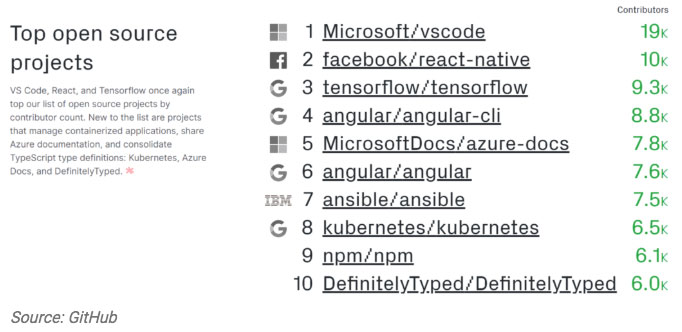
    Publicly accessible open-source has transformed how software is developed and delivered in the last two decades. It is getting increasingly popular, with 30 million developers exchanging code and ideas and collaborating at GitHub.

    In this new environment, the open-source services industry is set to exceed $17B in 2019, and expected to reach $33B by 2011, according to CB Insights.

    An indication of the growth can be found on recent acquisitions (Red Hat by IBM for $34B, and GitHub by Microsoft for $7.5B), alongside large public market valuations like those of MongoDB ($7.9B) and Elastic ($7.3B).

    An Alternative Which Started in the 1960s

    Open-source began to offer alternatives to proprietary solutions in the 1960s when modifying and redistributing the source code became an established practice. Many manufacturers of proprietary software with proprietary hardware encouraged users to troubleshot and modify source code themselves, in order to limit the need for frequent, onsite visits. Universities began sharing bug fixes and even software enhancements with other universities and soon thereafter with the public.

    Some of the most notable projects since the dot-com bubble include Mozilla’s Firefox in 2002 as well as Git (a source code version-control system created by Linus Torvalds) in 2005.

    More recently, we’ve witnessed the growth of open-source databases like Redis, open-source infrastructure-as-a-service like OpenStack, and even open-source machine learning libraries like TensorFlow, Docker, Kubernetes, and Swift.

    The Business Behind

    In terms of monetization, the model of “commercial support” is one of the most established methods. Enterprises are willing to pay for software that is otherwise free because they want assurances. They want security flaws fixed, dedicated assistance, and software longevity. They don’t want to implement open-source software that has persistent vulnerabilities, complicates development, or may become obsolete.

    An increasingly popular revenue model is referred to as “open-core,” which offers a blend of open-source and proprietary software. The core platform remains free and open-source by being feature limited. Companies can then choose to pay for add-on services or to unlock a proprietary, feature-rich platform.

    Examples of open-core companies include Docker, Elastics, GitLab, MongoDB, and Redis.

    The Case of Google and Tech Giants

    The second type of monetization strategy is that of the corporate-sponsored project. For example, Google is the primary developer of Kubernetes, and while Google doesn’t monetize Kubernetes directly, the wide adoption of the service has brought awareness to the company’s cloud service, Google Cloud Platform (GCP).

    Another one of Google’s most successful open-source projects in recent years is machine learning (ML) library TensorFlow. Its widespread use has created a large, engaged community, resulting in contributions from many independent developers.

    With thousands of developers contributing, Google and other tech giants such as Microsoft, IBM, Intel and Facebook — none of which are open-source companies — benefit from the free developer input and direct user feedback. This allows organizations to build better software faster.

    In addition, these projects also act as an ongoing lead generation for the sponsoring organization.

    • Research ReportOpen-Source Software Has Changed The Way Software Is Developed. Here’s Where The $33B Industry Is Headed


  • More Securities Class-Action Lawsuits Against 2U for “False or Misleading Statements” During the Second Quarter

    More Securities Class-Action Lawsuits Against 2U for “False or Misleading Statements” During the Second Quarter

    A first class-action lawsuit against 2U (NASDAQ: TWOU) is being filed, as more investigations are being conducted. [See update below]

    The Los Angeles-based Glancy, Prongay & Murray LLP announced on August 7 that filed a class-action lawsuit in the U.S. District Court for the Southern District of New York.

    The case captioned Harper v. 2U. Inc., et al., goes “on behalf of persons and entities that purchased or otherwise acquired 2U securities between February 25, 2019, and July 30, 2019. Plaintiff pursues claims under Sections 10(b) and 20(a) of the Securities Exchange Act of 1934 (the “Exchange Act”).

    Glancy, Prongay & Murray described the case stating:

    “On May 7, 2019, the Company lowered its revenue guidance for fiscal 2019 to a range of $534 to $537 million, from prior guidance range of $546.6 to $550.8 million, due to declining average enrollments in some of its largest graduate programs.

    On this news, the Company’s share price fell $15.16, or nearly 26%, to close at $44.77 per share on May 8, 2019, on unusually heavy trading volume.

    Then on July 30, 2019, after the market closed, the Company reported a larger-than-expected loss for the second quarter of 2019. The Company also revised its guidance for fiscal 2019, expecting a net loss between $157.5 and $151.5 million, compared to prior net loss guidance between $79.0 and $77.2 million, because it would “moderate [its] grad program launch cadence.”

    On this news, the Company’s share price fell $23.70, or nearly 65%, to close at $12.80 per share on July 31, 2019, on unusually heavy trading volume.”

    The firm alleges that 2U “made materially false and/or misleading statements, as well as failed to disclose material adverse facts about the Company’s business, operations, and prospects. Specifically, it failed to disclose to investors: (1) that the Company faced increasing competition in online education and particularly regarding graduate programs; (2) that the Company faced certain program-specific issues that negatively impacted its performance; (3) that, as a result, the Company’s business model was not sustainable; (4) that the Company would slow its program launches; and (5) that, as a result of the foregoing, Defendants’ positive statements about the Company’s business, operations, and prospects were materially misleading and/or lacked a reasonable basis.”


    UPDATE, AUGUST 9: MANY MORE CLASS-ACTION LAWSUITS FILED

    2U Inc. is facing an increasing number of class-action lawsuits filed from at least thirteen more law firms of behalf of shareholders. Aaron Harper, Kahn Swick & Foti, Robbins Geller Rudman & Dowd, Levi & Korsinsky, Vincent Wong, Bragar Eagel & Squire, Hagens Berman, Gainey McKenna & Egleston, Faruqi & Faruqui, Federman & Sherwood, Howard G. Smith, Kuznicki Law, Bronstein, Gewirtz & Grossman.

    INVESTIGATIONS FOR POSSIBLE VIOLATIONS OF FEDERAL SECURITIES LAWS

    In addition to those suits, more law firms are initiating investigations into 2U with respect to possible violations of federal securities laws.

    • The last one is Schall Law, a national shareholder rights litigation firm. “The investigation focuses on whether the Company issued false and/or misleading statements and/or failed to disclose information pertinent to investors.”
    • Oklahoma City-based Federman & Sherwood focuses its investigation “on allegations that on July 30, 2019, after the close of trading, 2U disclosed its financial results for the quarter ended June 30, 2019.”
    • San Francisco-based Hagens Berman Sobol Shapiro’s investigation is related to possible violations of the federal securities laws. “The investigation centers on the accuracy of 2U’s and senior management’s statements about the sustainability of the Company’s business model.” “We’re focused on investors’ losses and the extent to which the Company and current or former senior executives may have misled investors about the accuracy and reasonableness of their previously-issued guidance,” said Hagens Berman partner Reed Kathrein.This firm is also calling whistleblowers, persons with non-public information regarding 2U.
    • On August 5, Bronstein, Gewirtz & Grossman was the first law firm announcing an investigation of 2U.


  • MIT xPRO Launches Its New Fall Catalog for Post-Graduate Working Professionals

    MIT xPRO Launches Its New Fall Catalog for Post-Graduate Working Professionals

    IBL News | New York

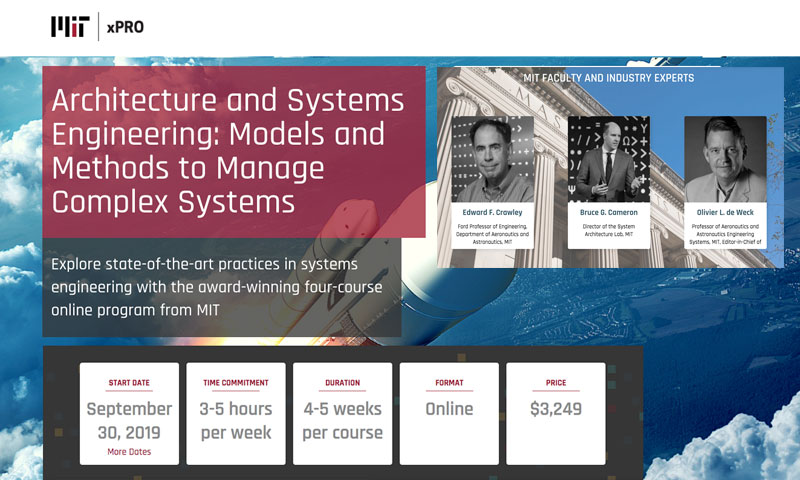
    MIT Professional Development Division has announced a new edition of its Architecture and Systems Engineering series starting at September 30.

    This four-course online program, with a duration of 4-5 weeks per course and no application process, will cost $3,249, and upon completion, students will earn a professional certificate from MIT xPRO plus Continuing Education Units (CEUs) –but not credit that can be applied to a degree.

    It will explore the newest practices in systems engineering, including how models can enhance functions and how tasks can be augmented with quantitative analysis.

    This multi-course is featured in a new fall catalog format.

    MIT xPRO, which designs courses for post-graduate working professionals with industry experience, has moved its Open edX-based home page into a new discovery portal located at xpro.mit.edu.

    Another program for this fall refers to Leadership Principles for Engineers, Scientists, and Researchers.


  • Ten Top Ways Learners Hack Learning According to edX

    Ten Top Ways Learners Hack Learning According to edX

    IBL News | New York

    As instructional designers, do we really engineer massive courses with the users’ interests in mind?

    An edX instructional team took to social media to ask learners how we can make the most of their learning and studying experience.

    Responses suggested ten learning hacks:

    1. Break large concepts down into smaller, more digestible pieces. Bite-size learning improves comprehension and retention.

    2. Feature podcasts
    , audiobooks, and ebooks relevant to the area of study. This will enhance the learning experience and provide a well-rounded perspective.

    3.
    Enhance interactions and discussion forum participation among students. This is a great way to solidify concepts and gain different perspectives on the topics.


    4. Simplify course topics
    so students will be able to teach them to others.

    5. Regularity and repetition is key to keeping learning consistent and more effective. Students advance when they add time to study in their schedule on a regular basis.

    6. Learners operate on a different clock, which means that it’s important to find the right time of the day to study. Some students work better in the morning. Others will do some of their best work in the later hours of the day.

    7. Ask for help. Find peers or fellow learners who are knowledgeable on the topic or ask your instructors. This is a great way to clarify concepts that may be difficult to grasp.

    8. Real-world practice. Putting learning into practice through projects, case studies or real-world scenarios is a proven way to advance their comprehension, rather than just theorizing and memorizing.

    9. Making mistakes and learning from them along the way is a natural part of the process. Don’t shy away from mistakes.

    10. Taking notes and revising them are two essential components of learning. Color-code, bullet lists, or draw maps and graphs to make learning stick.