Author: IBL News

  • New York Litigation Firm Announces an Investigation of 2U on Behalf of Purchasers

    New York Litigation Firm Announces an Investigation of 2U on Behalf of Purchasers

    IBL News | New York

    Bronstein, Gewirtz & Grossman, known for their aggressive class case actions, announced on August 5 an investigation of 2U, concerning whether staffers have violated federal securities laws.

    This New York-based corporate litigation boutique is investigating potential claims on behalf of purchasers of 2U.

    Bronstein, Gewirtz & Grossman described the case stating:

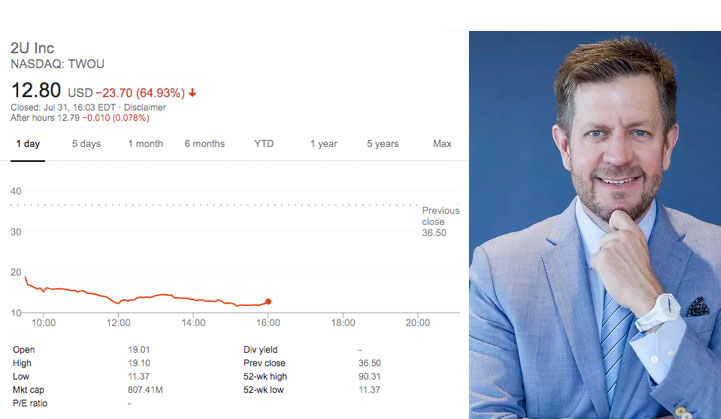
    On July 30, 2019, after-market hours, 2U announced a large loss for the second quarter of 2019. The Company’s Chief Executive Officer, Christopher “Chip” Paucek said that the Company was working toward a “defined path to profitability by tempering short-term growth projections and leveraging our scale to drive greater operational efficiencies across the business.” After this announcement, analysts demoted 2U and some mentioned that its model was “breaking.” Following this news, 2U stock dropped $23.70 per share or almost 65% to close at $12.80.

    The firm encouraged investors of 2U shares or investors aware of facts related to the investigation to contact them.

    The Motley Fool also said that the CEO’s elaboration was “concerning”. However, the stock drop “might well be a terrible overreaction assuming 2U’s longer-term story remains intact. But it’s hard to blame some investors for fleeing, given the uncertainty created by this massive strategic shift.”

    2U ANNOUNCES ITS FIRST ONLINE UNDERGRADUATE PROGRAM

    Attempting to convince investors of its good health despite losing two-thirds of its value last week, 2U (Nasdaq: TWOU) announced yesterday that it will deliver its first online undergraduate program, a 36-month program for Bachelor of Science in Data Science and Business Analytics.

    It will be developed in partnership and under a 10-year contract, revenue share model with the University of London and one of its member institutions, the London School of Economics and Political Science (LSE).

    LSE faculty will design the degree program and deliver mostly through asynchronous and via live classes, according to 2U. The University of London will grant the degree. It will be priced around $21,000 for United Kingdom-based students and $25,000 for international students.


  • MoodleNet, a New Social Media Platform, Will Debut This Month

    MoodleNet, a New Social Media Platform, Will Debut This Month

    IBL News | New York

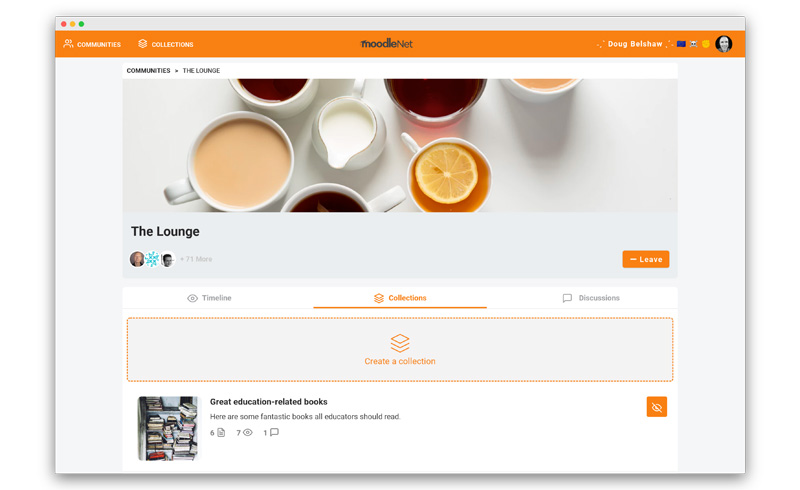
    A new social media platform for educators initially focused on collaboratively curating collections of open content, will debut on August 2019. MoodleNet will replace the existing moodle.net, which will be closed, with its existing content (i.e. competency frameworks) archived to its latest site.

    “MoodleNet is going to become the place to share and learn from each other to improve the quality of education,” said Helen Foster, community manager at Moodle on the company’s forum.

    MoodleNet, in testing mode since January 2019, will be an integral part of the Moodle ecosystem.

    A MoodleNet plugin will be included as a standard in Moodle 3.8, to be launched on November 11, 2019. This will enable users to import resources from the new MoodleNet to Moodle courses.

    The guide Sunsetting moodle.net provides more information about the site closing.

  • Analysts Raise Suspicion: A $23k Degree on edX Prompts Doubts on the 2U Model

    Analysts Raise Suspicion: A $23k Degree on edX Prompts Doubts on the 2U Model


    2U, An Earnings Call to Remember: When Wall Street and Higher Ed Are on the Same Page


    Mikel Amigot | IBL News

    For Wall Street, it’s Nasdaq symbol TWOU, and for Higher Ed, it’s a dubious OPM (Online Program Manager). Equities research analysts care about the stock rating and target price. After the earnings call on Tuesday, when CEO Chip Paucek and CFO Cathy Graham reset the company’s growth expectations for the third time, investment shops rated the stock with either a “Sell” or “Hold” rating. (Yesterday, the stock closed with a loss of 1.72%, ending at a low of $13.65).

    TWOU now has a market cap of $813.92 million after shares closed at $13.92 on Tuesday. Two-thirds of its value evaporated in two trading sessions. For the current fiscal year, analysts predict that the Lanham, Maryland, based company will post -1.21 earnings.

    The Street isn’t that far from our educational community. Hedge funds, institutional investors, scholars, and edtech commentators agree that a huge part of the problem is price. 2U has a questionable business model based on one premise: students pay standard tuition, but instead of going to class once a week, they meet in a live video chat room with the professor and the other students –Wikipedia dixit.

    To make matters more contentious, 2U signs long-term contracts, averaging between 10–15 years in length, with each of its partner universities. These contracts include a revenue-sharing agreement between 2U and the school. 60% to 70% of proceeds can be pocketed by 2U since it developed the curriculum, enrollment marketing and behave as a bank. Essentially, schools –almost always cash strapped and addicted to revenue– are signing away their digital future.

    2U’s approach includes a focus on student outcomes with small class sizes, career services, and field placement. In other words, the entire cost structure is based on procuring high prices from students.

    2U takes advantage of the magnet of the powerful brand of universities, who despite their history and reputation are incapable to handle technology, online marketing, and instructional design management. This is how 2U lures Wall Street, who only sees P/E ratios, div yields and charts. The Maryland start-up misses the scalability angle –and this is another surprising coincidence between the financial and educational world.

    Designing at scale allows serving the masses which cannot afford credit-bearing programs. Affordability and access are key concepts. It is not about continuing to bankrupt students with the argument of online convenience and college credit.

    One sharp analyst detected that on the Tuesday call.

    Brett Knoblauch, from Berenberg Capital, asked: “I was reading an article about how Boston University is launching a $23,000 degree with edX. Now with the change of structure in your programs, is this something you might expect that you can now offer with universities?”

    CEO Chip Paucek’s answer: “We will continue to offer competitive programs in the landscape over the next several years. We have quite a few different MBA programs at different price points, that won’t stop so we will continue…”

    Brett Knoblauch: “My question is from a tuition pricing standpoint, I feel like you’re seeing a lot more of these universities move online, and not only move online but move online to cheaper degrees. Your programs are on the higher end of that market.”

    CEO Chip Paucek: “We do continue to believe that you have to drive a long-term quality and sustainable business and one that doesn’t exist off the backs of the campus programs. So we do think, over time, it’s really important that both quality and costs will get considered. Now there’s no question that we are working on a variety of things to have — to attack the cost problem very specifically, and we will talk about those in detail at Investor Day.

    Oh, yes, the cost problem. “We need to attack it. We got good plans for it.”

    A technologically cutting-edge, Wall Street maverick company who reached a net worth of $4.7 billion a year ago and built a volatile business dismissing the main problem of the tuition cost.

  • 2U Logs a Small Gain But Uncertainty Over Its Business Model Persists

    2U Logs a Small Gain But Uncertainty Over Its Business Model Persists

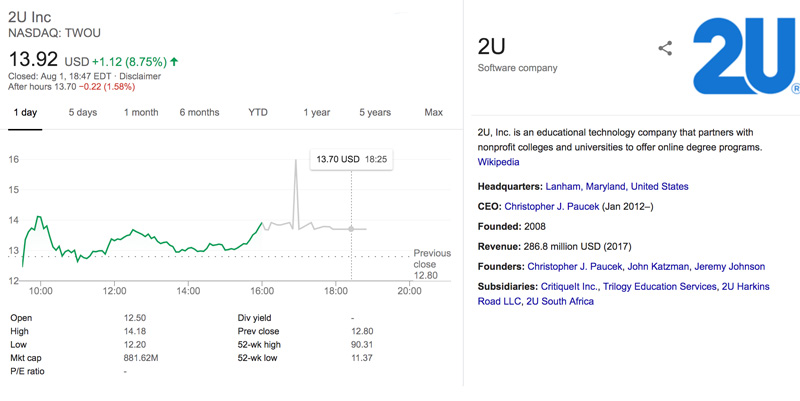
    Uncertainty Over 2U’s Business Model After Two-Thirds of Its Value Disappears – Shares Closed at $13.92


    Mikel Amigot | IBL News

    Uncertainty over 2U’s business model didn’t disappear on its third day of trading after the collapse of the stock price on Tuesday and Wednesday when the company lost two-thirds of its value. And a look at the 2U (NASDAQ: TWOU) stock shows that over the past year it has lost -83.03% of its value.

    Shares of 2U Inc. closed yesterday Thursday 1 at $13.92 after an increase of 8.75% or $1.12.

    Investors were still wary after the educational organization lowered growth expectations yet again during an earnings call on Tuesday.

    The company posted a 43-cent loss per share for its latest quarter, whereas analysts expected a loss of 35 cents per share.

    This was the third time that 2U reset its growth expectations. CEO Chip Paucek and CFO Cathy Graham’s commentaries prompted a rush of analyst downgrades alongside a massive sell-off.

    Thursday’s session consolidated the idea that 2U’s business model is broken and that the company needs to adjust to a more competitive landscape.

    Last quarter’s results showed that problems that dogged the company core business have not only persisted but worsened, according to a majority of analysts.

    What is unclear now is how a stock that seems “uninvestable”, according to Oppenheimer’s Brian Schwartz, will affect the day-to-day operations and level of service offered to colleges and universities, including enrollments.

    2U’s high cash-burn rates along with an unclear path to profitability (with 77% losses recorded over the past six months) send a grim message to the higher education industry.

    For-profit educational institutions aren’t generally well regarded. It is worse if they are Wall Street players. And it is catastrophic when there is the suspicion that debt-burdened students not only feed Wall Street profits but even risk the education they pay for.

    2U’s plunge might be the beginning of the end of the commercial OPM market, and its ripple effect might impact more vendors and players.


    Yahoo Finance: 2U Inc (TWOU) Q2 2019 Earnings Call Transcript
    2U: 2Q’19 Earnings Deck
    Joshua Kim, Inside of Higher Ed: 3 Takeaways from this Week’s 2U / OPM News

  • 2U Shares Continue to Drop After the Company Announcement of Big Losses

    2U Shares Continue to Drop After the Company Announcement of Big Losses

    IBL News | New York

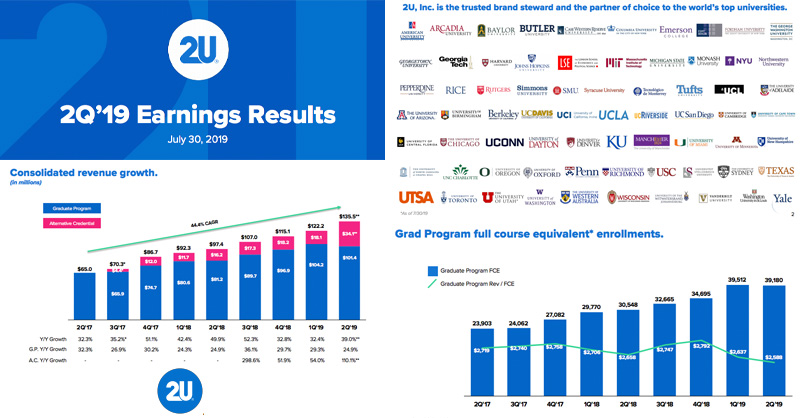
    The stock price of 2U, the leading OPM (Online Program Manager) provider which partners with universities, plunged over 65 % on Tuesday and Wednesday, projecting doubts about its controversial business model. The stock hit a five-year low of $12.

    The drop started when the company warned on a conference call with investors late Tuesday that growing competition was hurting enrollment at the online programs it runs for schools.

    Wall Street analysts sounded as if they felt blindsided by management’s outlook, and pulled its Buy recommendation, as well as axed its target prices for the stock.

    A year ago, Barron’s warned that 2U’s “hefty fees meant that its university partners charged high tuition prices for online classes—leaving students saddled with almost as much debt as if they had come to campus.”

    During the call, 2U reported a 39% increase in June-quarter revenue, but a larger-than-expected loss of $28 million, or 46 cents a share. CEO Chip Paucek said his company was “tempering short-term growth projections.” Revenue for the 2019 year will range from $566 million to $576 million, with a net loss of more than $150 million, or $1.16 a share, the company said.

    That range is almost double what 2U previously projected—between $77.2 million and $79 million—on its previous quarterly financial update in May.

    “When we started 2U, the market was in its infancy,” the CEO told listeners on Tuesday’s call. “Today, the online education market is evolving. Competition for students has increased so the schools that have teamed up with 2U are seeing lower enrollment than in years past.”

    Another threat to revenue growth is new regulation that could prevent California students from being eligible for federal funding for online courses.

    Paucek declined to discuss the company’s plan to reach a positive cash flow and lowered the number of the new graduate programs it aims to launch next year to “substantially fewer than 21, probably less than half of that.” He said he’d share more details at an investor event in November.

    Regarding 2U’s business’ challenges, Paucek noted, “matching courses with lead professors takes more time than expected even after we signed a deal with the university.” He later added: “We really underestimated that in a substantial way, and that caused us to get behind.”

    Earlier this year, 2U paid $750 million to acquire Trilogy Education Services, which offers universities coding boot camps. In 2017, it purchased GetSmarter to jumpstart its self-paced, short-course offering.

    Phil on Ed Tech: July 30, 2019: The day the OPM market changed

  • Open edX Forums Will Transition From Google Groups Into Discourse

    Open edX Forums Will Transition From Google Groups Into Discourse

    IBL News | New York

    The edX organization decided to stop using Google Groups for technical conversations and general interactions with developers.

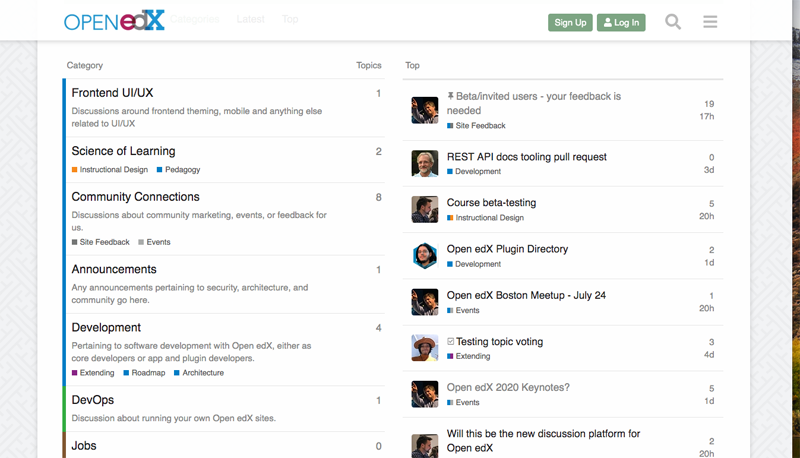
    Instead, a new, Discourse-based forum will be used, available at https://discuss.openedx.org/.

    Now, this forum is in open beta mode. “We still have some things to figure out, and it’s not quite ready for prime time,” said an edX representative. It will be officially launched in August.

    This posting board, which can be also used as a mailing list, is structured by topics. For now, there are Frontend UI/UX, Science of Learning, Community Connections, Announcements, Development, DevOps, and Jobs.

  • Mark Cuban Launches an AI Bootcamp in Partnership with Microsoft and Walmart

    Mark Cuban Launches an AI Bootcamp in Partnership with Microsoft and Walmart

    IBL News | New York

    The Mark Cuban Foundation, Microsoft and Walmart have joined forces to train Dallas’ high schoolers in AI.

    The three organizations founded the first Dallas “AI Bootcamp” program in April. It was a four-session course aimed at teaching fundamental artificial intelligence concepts to Dallas public school students.

    For the Mark Cuban Foundation, “it was the first in a series of planned initiatives that Cuban hopes will give students early exposure to critical technology concepts and skills,” said this organization in a blog post.

    During the “AI Bootcamp”, students used Microsoft’s Azure Cloud Computing Platform and its built-in Cognitive Services to build their own working AI applications. The course familiarized learners with Machine Learning, Natural Language Processing, and Computer Vision.

    Walmart showed students how to use its own data to train an intelligent system to accurately predict weekly sales at any store in the country.

    Guest speakers demonstrated real-world applications.

    Students [in the picture] received a Certificate of Completion from Microsoft, digitally signed by Microsoft’s CEO Satya Nadella, that they can add to their resumes and cite on college applications; a $100 credit for Microsoft Azure to continue learning and building applications on their own; and a photo with Mark Cuban.

    “You’re probably some of the earliest high school kids that ever got exposed to learning this stuff…That’s why I get so excited about this. You guys will get to do things that no one your age has come up with. That’s exciting,” said Mark Cuban to the program’s first graduates.

    Now the Mark Cuban Foundation and Microsoft plan to work together to distribute the AI Bootcamp curriculum to 100 Microsoft STEM Volunteers across the country. Locally in Dallas, Cuban announced he will partner with schools and other educational organizations to continue hosting AI programs.

    The Foundation plans to host the AI Bootcamp again this August. (Pre-registration is at http://register.markcubanai.org).

  • MITx Grading, a Library for the Open edX Platform that Assigns Credit on Problems

    MITx Grading, a Library for the Open edX Platform that Assigns Credit on Problems

    IBL News | New York

    MITx has released a version 2.0 of the MITx Grading Library, an open-source python grading library that gives instructors expanded options for constructing much richer problems and exercises on the Open edX platform.

    The full code, under a BSD-3 license, can be found on GitHub, while comprehensive documentation is here.

    Created by Jolyon Bloomfield and Christopher Chudzicki, at MIT Digital Learning Lab, this tool is compatible with Python 2 and 3 and is actively maintained.

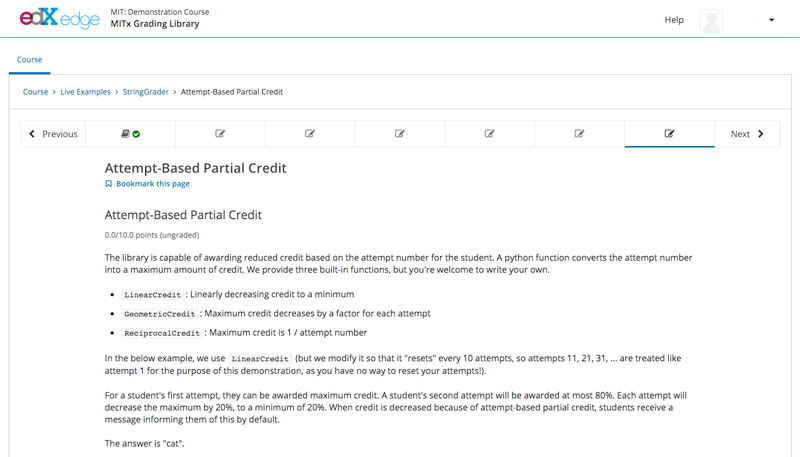
    This MITx Grading Library release presents a solution to provide automatic partial credit on formula problems. It also includes the ability to assign credit based on attempt number.

    “The library is designed to be simple to use, give useful error messages, and be incredibly flexible. If what we provide can’t handle what you want to do, then you can always write a plugin that leverages the infrastructure we’ve already created. While we were at it, we implemented a number of long-overdue features and usability improvements over the edX implementation,” explained the authors.

    To show off the features of the MITx Grading Library, the two developers have created a mini-demo course, open to enrollment.

    This is the list of the main features, according to MITx:

    • Works with any edX instance
    • Python 2/3 compatible
    • Ability to assign credit based on attempt number
    • Regex-based validation of text input
    • Automatic partial credit on formula problems
    • Native matrix problem handling with partial credit

    The library is broken up into individual “graders” to grade different types of problems. Some simple graders just grade a single input, such as StringGrader and FormulaGrader. More complicated graders combine simpler graders to grade multiple entries, such as ListGrader.

    Examples of how these all work are given in the mentioned course.


  • Cerego Debuts New AI Tools That Use Natural Language Processing

    Cerego Debuts New AI Tools That Use Natural Language Processing

    IBL News | New York

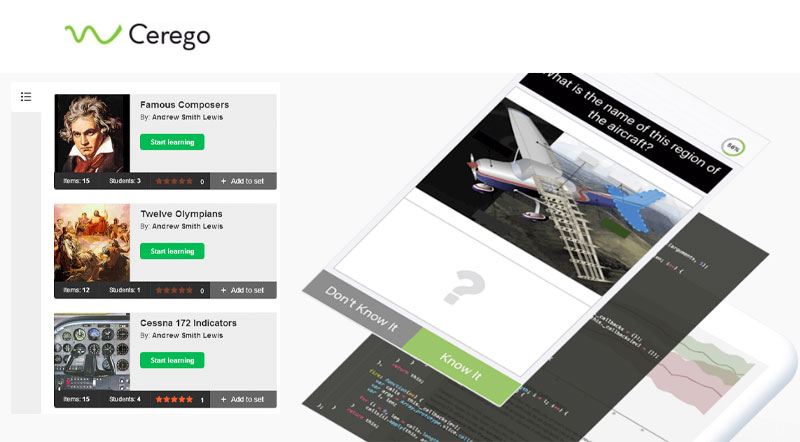
    San Francisco-based Cerego started to roll out a new suite of “Create” tools for its adaptive learning platform.  These AI-powered tools use natural language processing to “reduce content creation time by more than 25%”, according to this company.

    This technology is content-agnostic and can be applied to any subject matter or skillset. It includes:

    • Smart Answers autogenerate multiple-choice distractors.
    • Smart Questions adapt to become more challenging as learners demonstrate knowledge gains, helping to maximize long-term retention.
    • Smart Suggestions turn a single word into a learning experience with one click.
    • Smart Learner Sessions complement the new Create tools by giving learners more transparency and control over their learning schedule, including the option to review specific concepts they struggle with after each session.

    “Smarter content leads to better learning, and that’s the focus of these new tools,” said Paul Mumma, the new CEO of Cerego, appointed this week.

    Cerego claims to be used by nearly 2,000 academic institutions and corporate training programs in the U.S. The platform has generated more than three-quarters of a billion learner interactions, giving Cerego one of the largest learner data sets in the world, outside of academia. Create leverages feedback from these interactions and decades of cognitive science research to provide Cerego partners with the ability to create a customized, personal experience to meet their learning needs.

    “We’ve made incredible progress in the years since, combining cognitive science with modern technology to help more than one and a half million professionals and students increase their knowledge and improve long-term retention. The new Create tools will make it easier than ever to help learners achieve these goals with smarter content,” said Andrew Smith Lewis, co-founder of Cerego.

  • U.S. Librarians Against LinkedIn Learning’s New Policy that Forces Users to Disclose their Identity

    U.S. Librarians Against LinkedIn Learning’s New Policy that Forces Users to Disclose their Identity

    IBL News | New York

    The American Library Association (ALA) denounced this week the upcoming practices on users’ privacy rights of LinkedIn Learning, and urged its owner, Microsoft, to reconsider its position.

    “The protection of library users’ privacy and confidentiality rights are necessary for intellectual freedom and are fundamental to the ethical practice of librarianship,” affirmed ALA in a public statement.

    The planned changes are expected to happen by the end of September 2019.

    “All library users have the right to access library resources without disclosing their personally identifiable information to third parties, and to be free from unreasonable intrusion into, or surveillance of, their lawful library use.”

    Under LinkedIn Learning’s new terms of service, a library cardholder will need to create a LinkedIn profile in order to access this platform, formerly Lynda.com, which is extensively used by library users.

    In addition to providing their library card number and PIN, users will have to disclose their full name and email address to create a new LinkedIn profile or connect to their existing profile. New users will have their LinkedIn profile set to public by default, allowing their full name to be searched on Google and LinkedIn.

    Currently, to access LinkedIn Learning in a library, a person logs in using their library card and a PIN, without any other personal information.

    “The requirement for users of LinkedIn Learning to disclose personally identifiable information is completely contrary to ALA policies addressing library users’ privacy, and it may violate some states’ library confidentiality laws,” said ALA President Wanda Kay Brown.

    “It also violates the librarian’s ethical obligation to keep a person’s use of library resources confidential. We are deeply concerned about these changes to the terms of service and urge LinkedIn and its owner, Microsoft, to reconsider their position on this.”

    “By agreeing to the user agreement and privacy policy, the user surrenders to LinkedIn the power to share the information contained in a user profile with whoever LinkedIn wants,” said California’s State Librarian Greg Lucas in another statement.

    The California State Library went further and recommended libraries no longer use or provide LinkedIn Learning to their patrons until the company changes its policy.

    Mike Derezin, Vice President of learning solutions at LinkedIn, recognized in a blog post in June “that this is a change for both librarians and their patrons; our commitment to you is that protecting our members’ trust and data is our first priority and guiding principle.”

    In 2015, LinkedIn acquired Lynda.com for $1.5 billion, and in 2016 Microsoft bought LinkedIn for $26.2 billion.
    LinkedIn Learning hosts today over 14,000 courses across seven languages.

    So far library vendors have abided by the privacy and confidentiality of library users’ laws and code of ethics, according to ALA.