Harvard University’s cutting-edge and free 100 courses on edX.org –covering topics from calculus and climate change to Shakespeare and Stravinsky– are a good tool to enrich a face-to-face classroom experience and enhance professional development-oriented skills.
HarvardX has suggested four approaches:
Use online courses to deepen your content knowledge and learn new teaching strategies. For example, the course CS50x: Introduction to Computer Science includes new and effective instructional strategies.
Allow students to virtually interact with other course participants, so they can learn the views of other people and collaborate with them. In the Practical Improvement Science in Health Care course, students feel connected and realize that others around the U.S. are on a similar journey and their voices matter.
Enroll and connect with a global community of teachers. Leaders of Learning, a course which examines theories of education and leadership, allows for this kind of collaboration.
Earn certificates of participation that can be used to apply for professional development credit at the state or school district levels. This page details how to work with continuing education credits.
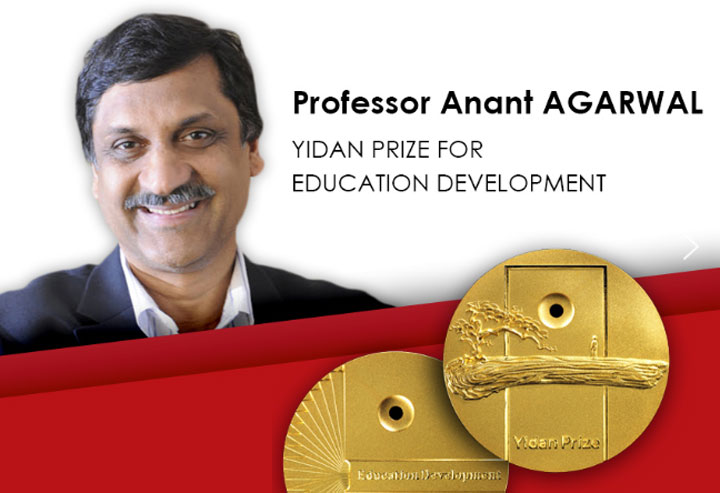
The Yidan Prize Foundation granted this month the 2018 Yidan Prize for Education Development to edX CEO, Anant Agarwal. Mr. Agarwal was recognized for making education more accessible to people around the world via the edX online platform.
The Yidan Prize judging panel, led by former Director-General of UNESCO Koichiro Matsuura, invested six months to consider over 1,000 nominations spanning 92 countries.
Simultaneously, Larry V. Hedges of Northwestern University received the Yidan Prize for Education Research for his groundbreaking statistical methods for meta-analysis.
Founded in 2016 by Charles Chen Yidan, the Yidan Prize aims to create a better world through education.
The Yidan Prize for Education Research and the Yidan Prize for Education Development will be awarded in Hong Kong on December 10, 2018, by Mrs. Carrie Lam Cheng Yuet-Ngor, chief executive of the Hong Kong Special Administrative Region.
Following the ceremony, the laureates will be joined by about 350 practitioners, researchers, policymakers, business leaders, philanthropists, and global leaders in education to launch the 2018 edition of the Worldwide Educating for the Future Index (WEFFI), the first comprehensive index to evaluate inputs into education systems rather than outputs, such as test scores.
Dorothy K. Gordon, chair of UNESCO IFAP and head of the judging panel, commended Professor Agarwal for his work behind the MOOC movement. “EdX gives people the tools to decide where to learn, how to learn, and what to learn. It brings education into the sharing economy, enabling access for people who were previously excluded from the traditional system of education because of financial, geographic, or social constraints. It is the ultimate disrupter with the ability to reach every corner of the world that is internet enabled, decentralizing and democratizing education.’’
Vice President for Open Learning Sanjay Sarma praised edX for creating a platform “where learners from all over the world can access high-quality education and also for enabling MIT faculty and other edX university partners to rethink how digital technologies can enhance on-campus education by providing a platform that empowers researchers to advance the understanding of teaching through online learning.”
In the past six years, edX built a community of over 17 million learners from around the world; partnered with more than 130 prestigious universities, institutions and corporations; and continue to make the edX platform available for free as Open edX open source software.
The Open edX platform has been adopted by 1600 sites, where over 20 million additional people learn every day.
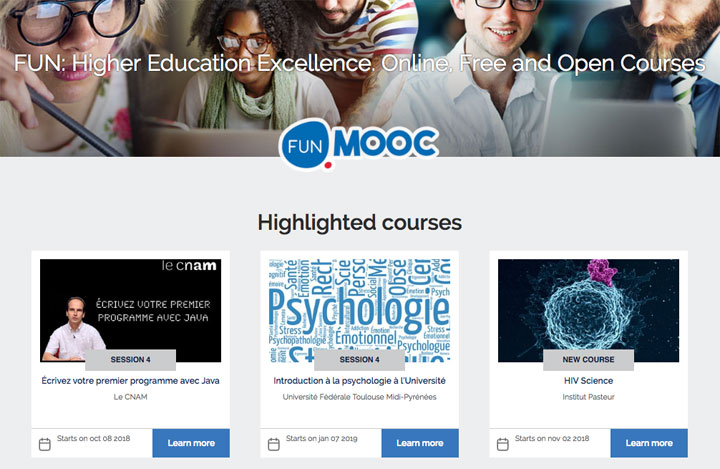
With over 1.4 million users and 426 MOOCs from 112 different institutions, France Université Numerique (FUN) Open edX-based platform is an example of how to achieve a financial sustainability.
Class-Central.com has detailed FUN’s five revenue streams:
Public Funding. As an initiative of the French Ministry of Higher Education, FUN receives from the Government half of its €2.5 million annual budget every year.
Fees from members and non-members. Similar to edX.org consortium, academic and non-profit organizations pay €4,500 for the first edition of the course, with a discount of 20 % for subsequent runs.
Licensing of content through different platforms, such as FUN Campus (15 universities and 50 courses) and FUN Corporate. Both charge fee for the use of the courses and for access to user data.
White label platforms and private courses through branded platforms for professional associations, government agencies, national governments and even universities (i.e. in Morocco and Côte d’Ivoire). Other examples are a platform for French public servants, professional training in Luxembourg, and the nuclear power industry.
User fees. Some courses charge a small fee to students who wish to earn a certificate.
Understanding the blockchain technology and how it has started to transform many industries is critical. Following this trend, the edX platform is adding another course this month.
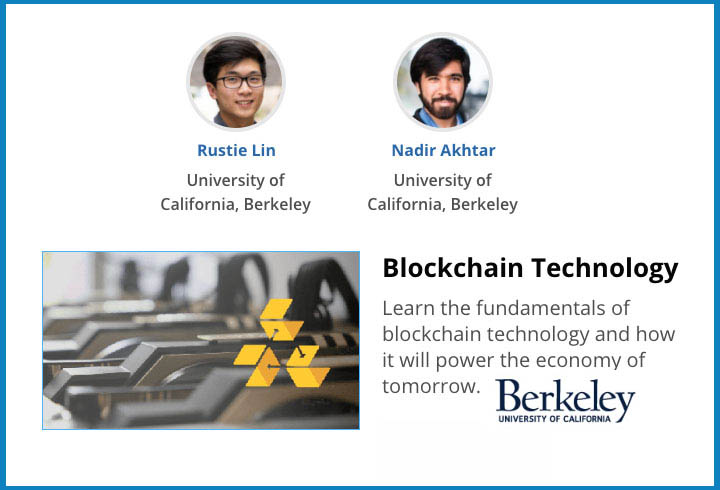
UC Berkeley is launching this September 29 a course developed by faculty from its Computer Science department. The course titled Blockchain Technology will provide for six weeks a wide overview of many topics related to this space, including the foundation of Bitcoin.
Taught by Rustie Lin and Nadir Akhtar, instructors at Berkeley, this open course will also explore enterprise blockchain implementations in JP Morgan’s Quorum, Ripple, Tendermint, and HyperLedger.
Blockchain-based networks, decentralized apps and distributed ledgers are quietly changing the world. They will allow to collectively trust what happens online, starting with banking and shopping online.
We should consider blockchain as a historical fabric underneath recording everything that happens—every digital transaction; exchange of value, goods and services; or private data—exactly as it occurs. Then the chain stitches that data into encrypted blocks that can never be modified and scatters the pieces across a worldwide network of distributed computers or “nodes.”
Think about a blockchain as a distributed database that maintains a shared list of records. These records are called blocks, and each encrypted block of code contains the history of every block that came before it with timestamped transaction data down to the second.
A blockchain is made up of two primary components: a decentralized network facilitating and verifying transactions, and the immutable ledger that network maintains. Everyone in the network can see this shared transaction ledger, but there is no single point of failure from which records or digital assets can be hacked or corrupted.
In July 2016, TU Delft reached the million learners milestone.
“The experience that TU Delft is gaining from the MOOCs serves as a springboard for other types of innovative education for a range of target groups,” the university explained. The most important programs are on the professional certificate field, especially with subjects such as electric cars, railway engineering, design in health and leadership for engineers.
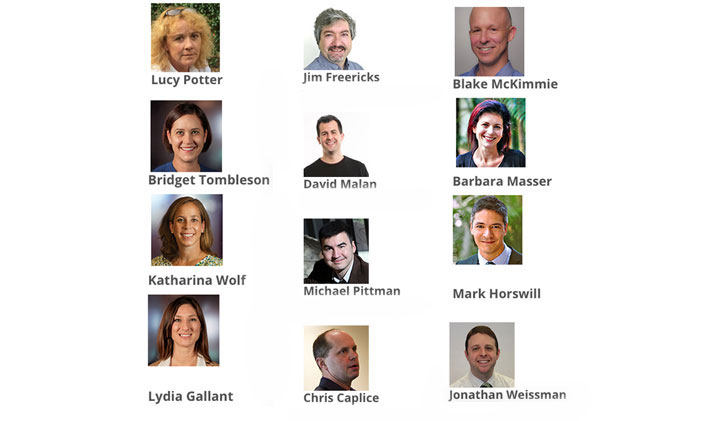
Who are the most engaging and innovative instructors in the edX.org community?
The edX University Advisory Board has selected the following ten, who represent a diverse range of disciplines – from computer science and business to literature, psychology or life sciences:
This November in Boston during the Global Forum, edX will select a winner the for 3rd annual Exceptional Contributions in Online Teaching and Learning award.
With this award, “edX celebrates the contributions and innovations of MOOC teachers in the edX community, and amplifies the powerful role that MOOCs play in the transformation of education today,”said Nina Huntemann, Director of Academics and Research at edX.
The “Introduction to Computer Science using Python” course from MITx has reached 1.2 million enrollments since its launch in 2012. It has become the most popular MOOC in MIT history.
“This course is about teaching students to use computation, in this case described by Python, to build models and explore broader questions of what can be done with computation to understand the world,” explained John Guttag, MIT’s professor who co-developed this class along with Eric Grimson.
The course, derived from a campus-based and OpenCourseWare subject at MIT and now offered on the edX platform, was initially developed as a 13-week course, but in 2014 it was separated into two courses, 6.00.1x and 6.00.2x.
In 2017, MITx partnered with Silicon Valley-based San Jose City College to offer the course as part of a program for students who have not had access to a Computer Science curriculum.
“This course is designed to help students begin to think like a computer scientist,” said Grimson. “By the end of it, the student should feel very confident that given a problem, whether it’s something from work or their personal life, they could use computation to solve that problem.”
The following video with testimonials reflects the achievements from learners.
In parallel with the need for continuous learning, we need to showcase our new knowledge to employers. This is the time of digital micro-credentials.
For a fraction of the price of a classic Master’s degree, a growing number of institutions and schools are starting to offer short-form certificate programs.
These offerings are an opportunity to learn and help update specific, career-enhancing skills.
Beyond traditional colleges, Coursera, edX, Udacity and Pluralsight are convenient educational platforms to acquire micro-credentials.
To grant non-credit certificates, Coursera offers Specializations; edX, MicroMasters; Udacity, Nanodegrees; and Pluralsight, certificates of completion.
Mikel Amigot is the Founder of IBL News and IBL Education (Open edX)
• WeWork-owned Flatiron School made another acquisition: a Chicago-based design education firm.
• MOOCs are no longer massive, and they serve different audiences than first imagined, says in a podcast expert Dhawal Shah.
• Google is polishing its education offerings with updates to Classroom, Google Docs, virtual reality offerings, and teacher training.
• Moodle announced it ended its partnership with Blackboard and would no longer allow this company using the Moodlerooms name. Blackboard reaffirmed its commitment to open source.
This newsletter is a monthly report compiled by the IBL News journalist staff, in collaboration with IBL Education, a New York City-based company that builds data-driven learning ecosystems and courses with Open edX.
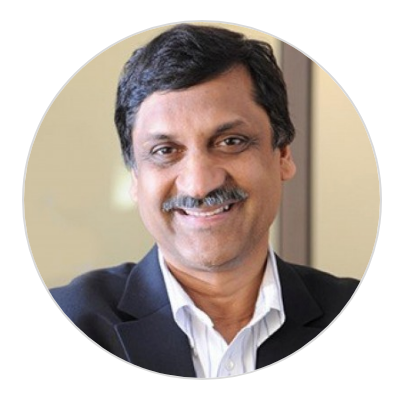
Anant Agarwal, CEO at edX, has started to write a column on Forbes about the future of work and education. His first contribution explores how the skills transformation is impacting modern work and how MOOCs and online learning can solve the issue.
This is a summary of Mr. Agarwal’s main ideas:
“The job market is changing so rapidly that the skills needed to perform these jobs transform every few years, intensifying pressure on workers to learn continually and, in some cases, transition entirely into new and emerging fields.”
“Some of today’s most lucrative industries, such as data science, were invented less than 10 years ago. Advances in technology, automation, artificial intelligence and big data are revolutionizing every field and require refreshed skills at such an accelerated rate that traditional educational programs cannot keep up. Furthermore, jobs are becoming hybridized and require a mix of different skillsets.”
“There are more opportunities for keeping pace with skills transformation in the workplace than ever before: online and blended degree programs, coding bootcamps, online micro-credentials, massive open online courses (MOOCs) and more.”
Transferrable Learner Records on edX.org
On a separate note, although related to micro-credentials, edX.org has implemented a new feature to allow users to transfer their learner records on MicroMasters, Professional and Verified Certificate programs as a way to either pursue credit opportunities or showcase their knowledge to employers. Accessing from the learner profile or learner’s record page is the only requirement.





 Anant Agarwal, CEO at edX, has started to write a column on Forbes about the future of work and education. His