Category: Top News

  • Touro College Will Move Its Campus to a Skyscraper in NYC, Betting on In-Person Learning

    Touro College Will Move Its Campus to a Skyscraper in NYC, Betting on In-Person Learning

    IBL News | New York

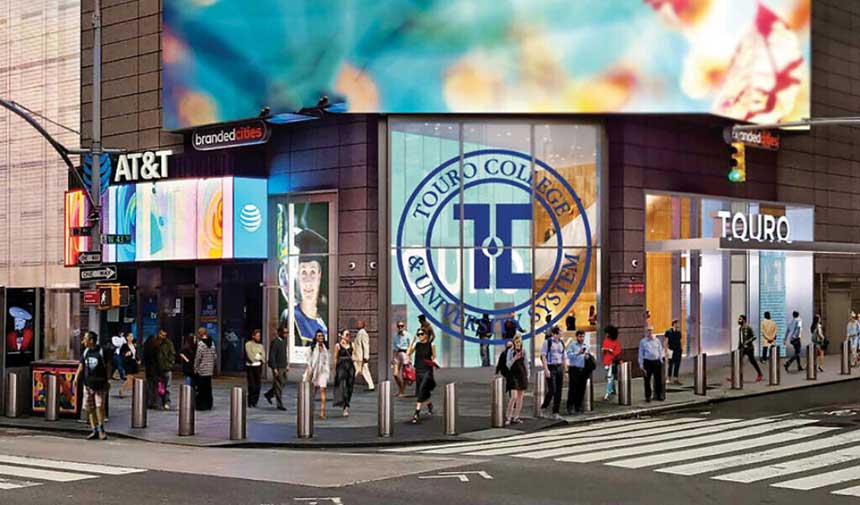
    Touro College and University System will move its main campus to 3 Times Square in the heart of Manhattan in January 2023. In this iconic skyscraper, the institution will take eight floors and have its own entrance on the corner of Seventh Avenue and 43rd Street.

    This month, Touro College, a 50-year history nonprofit institution in higher-ed and professional education, under Jewish auspices, announced plans to set a new 243,305 square-foot campus in that iconic tower — which is owned and operated by the Rudin Family. The lease is for 30 years.

    The move reaffirms Touro’s focus on in-person learning. “After conducting comprehensive surveys and thorough conversations with faculty, staff, and students, we know our community places great value on in-person learning,” said Dr. Alan Kadish, President of the Touro College & University System.

    2,000 staff and students will attend class there at 3 Times Square daily.

    Seven of Touro’s schools will be housed here: the College of Pharmacy (TCOP), New York School of Career & Applied Studies (NYSCAS), Graduate School of Business (GSB), Graduate School of Education (GSE), Graduate School of Jewish Studies (GSJS), Graduate School of Social Work (GSSW) and Graduate School of Technology (GST).

    The school will build a library, academic facilities, laboratories, student lounges, and cafes.

    Approximately 19,000 students are currently enrolled in Touro’s schools and divisions. It has 35 campuses and locations in New York, California, Nevada, Illinois, Berlin, Jerusalem, and Moscow.

    In parallel to expanding its footprint in Midtown Manhattan, Touro renewed the lease for its TouroCOM Harlem campus at 230 W. 125th St. for another decade.

    3 Times Square was originally constructed as the North American headquarters for Reuters Group PLC in the early 2000s.


  • An AI-Created Politician Draws the Attention as Deep Learning Technology Expands

    An AI-Created Politician Draws the Attention as Deep Learning Technology Expands

    IBL News | New York

    How far can AI teachers realistically go?

    Take a look at one of the latest Silicon Valley initiatives. San Mateo, California–based DeepBrain start-up showed AI capabilities by rendering a presidential candidate. In Seoul, South Korea, an AI-created model, an avatar of a politician — candidate Al Yoon Suk-yeol — draws the attention of the crowds on a big screen.

    DeepBrain AI’s human model was the result of hundreds of hours of recorded video used to learn the person’s voice, accent, and gestures. Once the AI Human was trained, the provided script was pronounced as the actual person.

    AI speech synthesis, video synthesis, and natural language processing technology result in time and cost reduction as there is no need to record a real persona every time video content is made.

    DeepTrain AI said that “even depending on how it is taught, real-time communication with people is also possible.”

    Various industries are seeing AI humans increase.

    — In broadcasting, AI anchors and announcers can conduct news.

    — In retail, last August, a 7-Eleven convenience store displayed an AI human answering questions about promotions, events, and nearing information.

    — In the financial industry, AI bankers are already active. KB Bank has introduced kiosks where AI bankers appear on screens in offline branches. They only work on basic operations for now.

    — In education, Kyowon, in October, launched a digital education platform called ‘AiCANDO’, where ‘AI Tutor’ appeared.

    In addition, the AI Human of popular YouTuber Dottie appears to help with learning.

    DeepBrain AI, specializing in deep learning-based video synthesis and voice synthesis source technology, claims its technology can be implemented as an AI announcer, AI anchor, AI banker, AI tutor, AI show host, AI kiosk, AI video consultation, AI concierge, AI doctor, and AI lawyer.
    .

  • Ellucian Buys CampusLogic Financial Student SaaS Company

    Ellucian Buys CampusLogic Financial Student SaaS Company

    IBL News | New York

    Ellucian, provider of SIS and ERP for higher ed institutions, announced the acquisition of CampusLogic, a SaaS EdTech company specialized in student financial solutions, with 800 customers. The transaction amount was not disclosed.

    Currently, 86% of higher education students receive financial aid.

    “Integrating CampusLogic’s capabilities across Ellucian’s comprehensive SaaS offerings creates new opportunities for innovation beyond student financial success to address the issue of student well-being,” said Laura Ipsen, CEO, Ellucian.

    “Our solutions improve the student financial aid experience, addressing the number one barrier to enrollment and graduation,” said Gregg Scoresby, Founder and CEO of CampusLogic.

    Gregg Scoresby will join Ellucian “in a new role to lead the vision and strategy focused on student success and well-being,” according to the acquirer.

    Reston, Virginia-based Ellucian claims it has 2,700 customers in over 50 countries.

  • Inside Higher Ed News Outlet Acquired by a Leading British Media Group

    Inside Higher Ed News Outlet Acquired by a Leading British Media Group

    IBL News | New York

    The London-based Times Higher Education (THE) acquired Inside Higher Ed for an undisclosed amount this month.

    Inside Higher Ed promised that its journalism “will remain independent and will continue to provide thoughtful, substantive analysis on the pressing issues facing higher education.” It will continue operating under its existing brand. 

    Washington DC-based Inside Higher Ed “explained that they collaborated with THE over the years and see this as a natural extension of our relationship.”

    Founded in 2004, Inside Higher Ed claims to reach an annual audience of 25 million with its news stories and analysis, industry insights, job boards, and other tools and services.

    With 50 years of history, THE has been owned by Inflexion Private Equity since February 2019. This media outlet provides, in addition to news stories, rankings, consultancy, and hiring services, to 800 clients. It is also known for its events, including THE World Summit Series, which engaged over 45,000 people globally in 2021.

  • GVS Investment Firm Releases an Update of Its Top 150 VC-Backed EdTech Start-Ups List

    GVS Investment Firm Releases an Update of Its Top 150 VC-Backed EdTech Start-Ups List

    IBL News | New York

    EdTech companies that have figured out how to scale and achieve the highest Return on Education (RoE) amid Covid uncertainty continue to experience extraordinary growth and traction, says investor at GSV Ventures, Alexandra Argo, in an article at Medium. Investment firm GSV is now preparing its 2022 ASU+GSV Summit, scheduled for April 4-6.

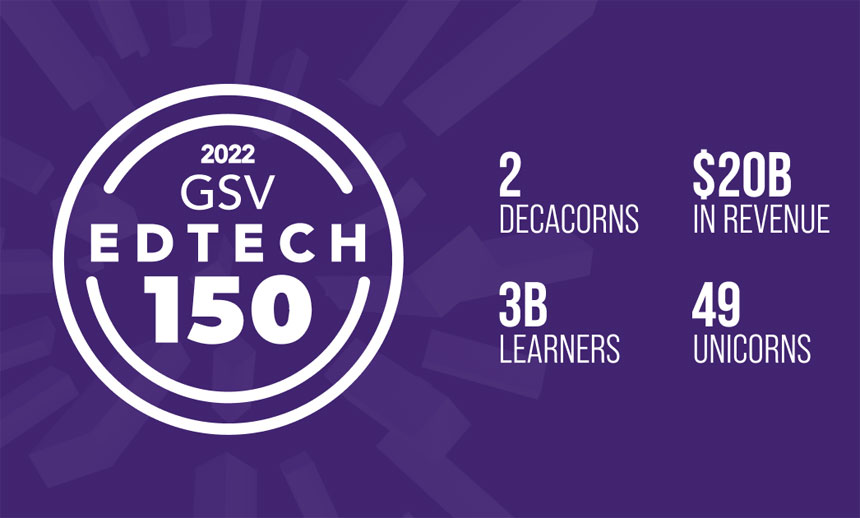
    In parallel, the company has released its 2022 GSV EdTech 150 list, with a selection of transformative companies in digital learning backed by venture capitalists. This selection comes after an evaluation of 3,000 companies across the three major sectors: higher ed, K-12, and life-long learning, including here workforce and adult consumer learning.

    GSV developed a scoring system with several KPIs: revenue scale, revenue growth, active learner reach, international reach, and margin profile.

    “We estimate that the 150 companies reach ~3 billion people, or close to half of the global population, and generate approximately $20 billion in revenue, growing in the high double digits,” wrote Alexandra Argo.

    The list included publicly listed digital learning companies Coursera, 2U, Grand Canyon Education, Kahoot, Docebo, Upwork, Afya, Arco.

    A third of the companies, like BYJU’s and Course Hero, are experiencing strong Network Effects.

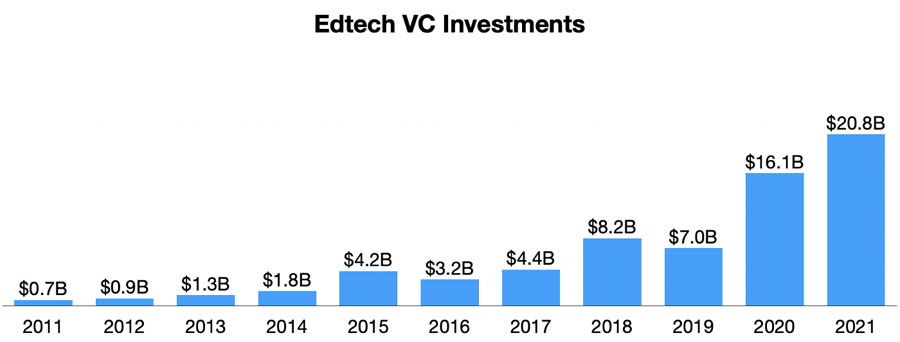
    In two years, global VC investment in EdTech jumped 72% year-over-year to $21 billion in 2021, up from $7B in funding in 2019.


    Source: GSV, HolonIQ

    In 2021, 23 unicorns were added, to a total of 49 today. This year’s list includes two decacorns — private companies valued at $10 billion — with BYJU’s at $21 billion and Grammarly at $13 billion).

    In 2021, there were significant IPOs across the industry. Coursera, Roblox, Duolingo, Udemy, and Instructure successfully completed their public offerings, and Nerdy went public via a SPAC.

    Today, there are a handful of late-stage private companies, including BYJU’S, Course Hero, Eruditus, Quizlet, Hotmart, and others positioned as potential IPO candidates.

    However, since April 2021, public Edtech companies have declined 32% amidst an unfavorable macro environment, including higher inflation and decreased enrollment in higher ed.

    Another remarkable fact is China’s EdTech companies are declining, after the ruling Communist Party issued in July 2021 a regulation on the private tutoring sector requiring private companies to register as nonprofit organizations and banning future IPOs. Overnight, publicly-traded companies such as TAL Education, Gaotu Techedu, and New Oriental Education lost half of their value. This regulation decimated the potential growth of the K-12 industry in China.

    Latin America showed last year an emerge, with companies like Hotmart, Descomplica, and UOL Edtech leading the way.

    .

  • U.S. Colleges Continue Delaying the Resume the Start of In-Person Classes

    U.S. Colleges Continue Delaying the Resume the Start of In-Person Classes

    IBL News | New York

    As the Omicron variant of COVID-19 spreads, colleges and universities now face the challenge of whether requiring booster shots and when to resume face-to-face learning. For college officials and millions of college students, these problems seem familiar. The pressing question is when to start the new semester, either the next few days or weeks.

    Some institutions have already decided to start the first weeks of the semester virtually reinstating tough precaution measures.

    The list includes Harvard University, Stanford University, Georgetown University, several of the University of California’s campuses, Michigan State University, Jackson State University in Mississippi, the University of Cincinnati, the Queen’s University of Charlotte, and the University of Hawaii’s campuses.

    Regarding vaccination, most universities encouraged their students proof of inoculation.

    Eight institutions in the University of California system that are operating remotely — Berkeley, Davis, Irvine, Los Angeles, Merced, Riverside, San Diego, and Santa Cruz — extended virtual classes to late January. Stanford University, Duke University, and Seattle University have announced delaying a return to in-person classrooms, as well.

    In a message to the campus community, the President of Seattle University, Eduardo M. Peñalver, explained that remote learning would be extended through January 30.

    He summarized the dominant thinking in higher education:

    “Current projections suggest that the Omicron-driven wave will continue to grow rapidly before cresting over the next few weeks. While early research continues to indicate that the variant is less severe and results in milder illness compared to earlier variants, especially among vaccinated people, there is still a great deal of uncertainty.”

    That uncertainty is affecting admission offices and visitor centers, too. Virtual tours seem to be the new norm for now.

  • The Film Studio Behind “The Chosen” Raised $47 Million from VCs

    The Film Studio Behind “The Chosen” Raised $47 Million from VCs

    IBL News | New York

    Angel Studios, the streaming platform behind the Christian series “The Chosen”, announced last week it had raised $47 million in funding from venture capitalists. The financing was led by VC firm Gigafund and Bain-backed Uncorrelated Venture.

    Angel Studios, the streaming platform behind the Christian series “The Chosen”, announced this week it had raised $47 million in funding from venture capitalists. The financing was led by VC firm Gigafund and Bain-backed Uncorrelated Venture. Original seed investors Alta Ventures and Kickstart Fund also participated.

    In addition to VC money, $5 million was crowdsourced directly from fans.

    Angel Studios presented the financing injection as an effort “to bring control of the entertainment industry back to consumers and creators” and “give Hollywood a remake.”

    “The round caps off a major comeback year for cofounders Neal and Jeffrey Harmon, who led Angel Studios to over $100 million in annual revenue just one year after Disney and Warner Bros tried to shut the studio down in court,” said the company.

    Gigafund, known for being one of the largest investors in SpaceX, said through its Managing Partner, Stephen Oskoui, “Angel is on track to rewrite the rules of the media business and have a significant impact on culture.”

    Today’s movie business is a $280-billion industry almost totally controlled by five major Hollywood studios. According to Angel Studios, Hollywood executives decide what content to produce, with little to no input from consumers. Almost 80% of the films fail to break.

    “We are a community-driven movie studio that empowers audiences to decide what content gets produced and distributed while creating communities around each project. Creators pitch projects on the Angel platform, and “Angel investors” fund the ones they’re most excited to see (via the Angel Funding Portal).”

    Under this model, three successful shows have been produced, including:

    • The Chosenthe #1 crowdfunded media project in history, viewed over 300 million times, to date, with a special in theaters this Christmas.
    • Dry Bar Comedy, the #1 family-friendly stand-up comedy channel, is currently on its eighth season with one billion views a year.
    • The Wingfeather Sagathe world’s #1 crowdfunded animated kids show, is currently in production.

    Angel Studios — whose stated mission is “to be the home of stories that amplify light” — said that the funding round will be used “to improve its streaming platform, market to new audiences, and develop its content pipeline for 2022 and beyond.”

  • The Pandemic Caused to Students $17 Trillion Loss in Lifetime Earnings

    The Pandemic Caused to Students $17 Trillion Loss in Lifetime Earnings

    IBL News | New York

    The World Bank and United Nations’ UNESCO and UNICEF estimate that school closures during the COVID-19 may result in a $17 trillion loss in lifetime earnings for students – an impact more severe than previously predicted.

    “The pandemic brought education systems across the world to a halt,” said Jaime Saavedra, World Bank Global Director for Education. “The loss of learning that many children are experiencing is morally unacceptable,” he added.

    The State of the Global Education Crisis: A Path to Recovery report — elaborated by the mentioned institutions — says the staggering loss represents 14% of the current GDP (Gross Domestic Product).

    This loss takes into consideration the devastating impact on future productivity, earnings, and well-being for this generation of children, families, and the world’s economies.

    In the report, countries like Brazil, Pakistan, India, South Africa, and Mexico detail substantial losses in maths and reading skills.

    UNICEF and UNESCO suggest reopening schools as the solution. In addition, they recommend governments implement Learning Recovery Programs to ensure students attain competencies.

    Reopening schools is the solution that UNICEF and UNESCO point out. In addition, they recommend governments implement Learning Recovery Programs to ensure students attain competencies.

  • Colleges See Online Classes as a Temporary Measure to Combat the Omicron Variant

    Colleges See Online Classes as a Temporary Measure to Combat the Omicron Variant

    IBL News | New York

    U.S. colleges and universities are set to start the spring semester in the next few days as the COVID’s Omicron variant outbreaks continues.

    Some institutions have already decided to offer the first weeks of the semester virtually. The list includes Harvard University, Stanford University, Georgetown University, several of the University of California’s campusesMichigan State UniversityJackson State University in Mississippi, the University of Cincinnati, the Queen’s University of Charlotte, and the University of Hawaii’s campuses.

    Those offering an in-person start are rolling back past COVID-19 measures, such as mask requirements, vaccination campaigns, and coronavirus testing and screening.

    Many institutions will require proof of vaccination for students if they want to attend classes in person. SUNY, Princeton UniversityDuke UniversityOregon State University, and the University of New Mexico are requiring students to get their booster shots.

    Some universities, such as Howard in Washington, D.C., and Tennessee State, are delaying the start of their semester but plan to hold in-person classes.

    Some, including Louisiana State University, are allowing instructors to decide whether they go in-person or in some combination.

    Others, such as Brown University, the University of California, Berkeley, and Pennsylvania State University plan to stick to their in-person opening plans.

    However, universities, however, may change their plans as the semester draws closer.

    What’s different from the past is that now going online is temporary. It means that a remote start might be followed up by a return to normal operations.

    According to the College Crisis Initiative at Davidson College, nearly 90 percent of colleges and universities are permitting students back to campus.

  • Stanford University Launches Its First Full Class in Metaverse Virtual Reality

    Stanford University Launches Its First Full Class in Metaverse Virtual Reality

    IBL News | New York

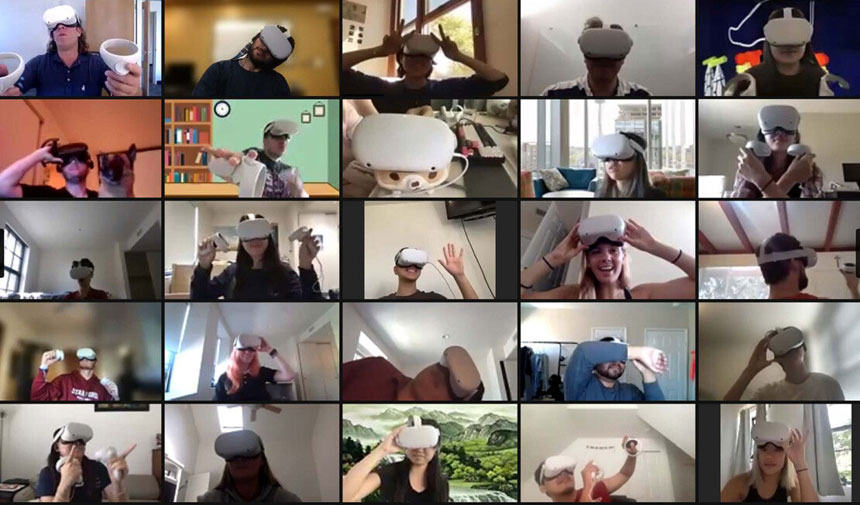
    Stanford University launched its first class in virtual reality, using Facebook’s Oculus Quest 2 headsets.

    Taught by Professor Jeremy Bailenson, Communication 166/266 Virtual People deals with the emerging VR technology and its use cases. It covers the expanding influence of VR in many different fields, including popular culture, engineering, behavioral science and communication.

    The course is part of a study carried out by Stanford’s Virtual Human Interaction Lab. The research is looking at how virtual technologies can be effectively used in educational settings.

    Professor Jeremy Bailenson came up with the idea after teaching students about VR for nearly 20 years. After that time, he decided that the best way to demonstrate its abilities was to create a full course experience with VR. He is the author of the seminal VR text Experience on Demand, which also is one of the class’ assigned readings.

    According to the course structure, students will use lecture time to take part in VR experiences by themselves or as a group, including class discussions.

    In 2021, 263 students, all with their own VR headsets, across 20 weeks and two courses, spent over 3,500 shared hours together in the Metaverse.

    Each week, the course centers on different areas where VR can be used in the real world. According to the course structure, students will use lecture time to take part in VR experiences by themselves or as a group, including class discussions.

    Among the class exercises was a guided meditation in outer space. Students were able to create performances with different avatars.

    “In Virtual People, the students don’t just get to try VR a handful of times. VR becomes the medium they rely on,” professor Bailenson said in a statement. “Nobody has networked hundreds of students with VR headsets for months at a time in the history of virtual reality, or even in the history of teaching.”

    The class has drawn students majoring in diverse disciplines, including economics, political science, communication, anthropology, biology, computer science, film and media studies, comparative literature, art practice, psychology, and sociology.

    Facebook’s parent company Meta, creator of the Quest device, says that such headsets will play a big part in a future “metaverse” it plans to build with other companies.

    In addition to the headsets, the course also uses the Engage virtual communication software to connect the students and teachers. Engage is used by major companies and educational organizations to hold virtual meetings and events.
    .