Category: Top News

  • Harvard and USC Tell First-Year International Students to Stay Home

    Harvard and USC Tell First-Year International Students to Stay Home

    IBL News | New York

    Harvard University and the University of Southern California (USC) advised newly admitted international students who require F-1 visa sponsorship not to come to the U.S. mostly due to the “unpredictability” of the Trump administration.

    Rakesh Khurana, Danoff Dean of Harvard College, wrote in a letter: “At present, any incoming student who received a Form I-20 to begin their studies this fall will be unable to enter the U.S. in F-1 status as course instruction is fully remote.”

    As we reported, last week, the Trump Administration lifted the travel ban to European and UK students who already had study F-1 and M-1 visas. However, students awaiting interviews at U.S. Embassies and Consulates and researchers and teachers with J-1 visas were not included in the U.S. exemptions.

    Harvard University disclosed that it is “working closely with members of the Massachusetts congressional delegation to extend the online exemption to newly admitted students”, although “we don’t anticipate any change to the policy in time for the fall semester.”

    The fact that classes could be delivered through a hybrid model that includes some in-person instruction as a way to obtain an F-1 visa doesn’t convince Harvard officials, “given the unpredictability of current government policies and the uncertainty of the COVID-19 crisis,” said Rakesh Khurana.

    The institution advised students to take courses remotely from home, or, alternatively, defer the start of the classes on-campus.

    USC recommended all undergraduates to take their courses online and reconsider living on or close to campus this semester. “We are building vibrant platforms, including a new student portal that will serve as a virtual quad and promote social engagement,” wrote Charles F. Zukoski, Provost and Senior Vice President for Academic Affairs at USC. “We also will be providing a host of experiences for our entering first-year and transfer students from across the world, so that they feel part of our community, and can seamlessly transition in person as soon as possible.”

    Dealing with confusion about international students’ status, the U.S. Immigration and Customs Enforcement (ICE) issued a FAQ document, noting that “due to the fluid nature of this COVID-19 situation, the answers in this document may be subject to change.”

     

  • Stanford Produces a Visual, Evidence-Based Course to Train Healthcare Workers on COVID-19

    Stanford Produces a Visual, Evidence-Based Course to Train Healthcare Workers on COVID-19

    IBL News | New York

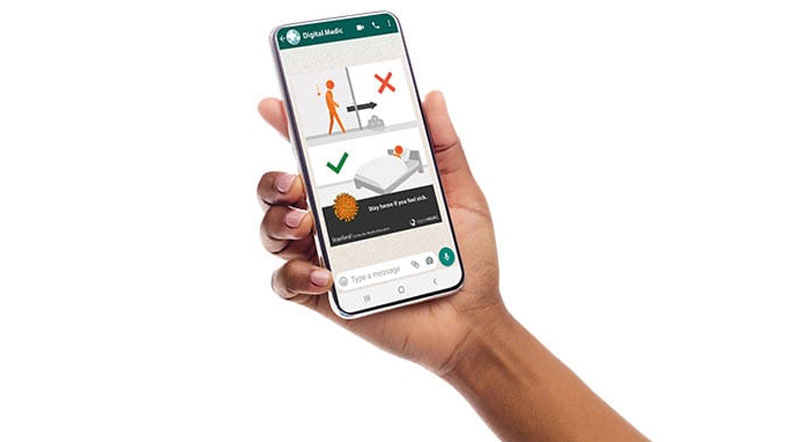
    Stanford Emergency Medicine and Digital MEdIC released this week on Coursera and edX an open, evidence-based course for training physicians, nurses, and other healthcare workers.

    “COVID-19 Training for Healthcare Workers” covers symptoms and signs in sick patients, preventing the need for intubation, and ventilation management for patients.

    This 5-hour, self-paced, visual course, comes with a certificate upon completion. It is also available via iOS and Google Play through an app designed for users with low data environments. It will allow students to follow the learning modules in offline mode.

    “Following completion of this short course physicians, nurses, and other healthcare professionals will have a unified, evidenced-based approach to saving the lives of patients with COVID-19, including those who are critically ill,” said the authors, Stanford’s Professors SV Mahadevan and Matthew Strehlow.

    Learning modules are broken into short videos. Evidence and guidelines are summarized while accompanying handouts provide written learning points and links to online resources. Simple infographics are available for providers to utilize within their care facilities.

  • European and U.K. Students Who Already Have F-1 and M-1 Visas Are Welcomed Back

    European and U.K. Students Who Already Have F-1 and M-1 Visas Are Welcomed Back

    IBL News | New York

    The Trump Administration lifted the travel ban to European and UK students who already had study F-1 and M-1 visas.

    “Students traveling from the Schengen Area, the U.K., and Ireland with valid F-1 and M-1 visas, do not need to seek a national interest exception to travel,” the U.S. State Department claimed on its website and told Congress late last week. “Students from those areas who are traveling on a J-1 may contact the nearest embassy or consulate to initiate an exception request.”

    “We appreciate the transparency and concerted efforts of our European partners and allies to combat this pandemic and welcome the EU’s reciprocal action to allow key categories of essential travel to continue,” added the U.S. Department of State.

    Students awaiting interviews at U.S. Embassies and Consulates and researchers and teachers with J-1 visas were not included in the U.S. exemptions.

  • Google Meet Unveils New Features Allowing More Control and Increasing Security

    Google Meet Unveils New Features Allowing More Control and Increasing Security

    IBL News | New York

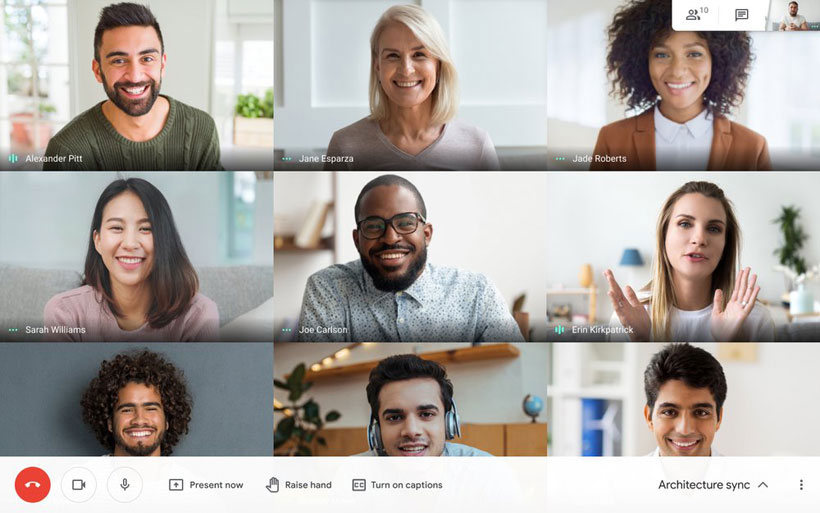
    Google Meet –part of G Suite for Education, with 140 million users–revealed yesterday, several of the features that it will be launching later this year. Some of which are similar to improvements made by Zoom.

    “New moderation features for G Suite for Education and G Suite Enterprise for Education users will give educators more control over how to run their virtual classes,” announced Arpit Guglani, Product Manager at Google Meet.

    This is a summary of the new features:

    • Joining a meeting (or “knocking”) with just one knock.
    • Functionality allowing moderators to end the meeting for all participants, ensuring no students linger after the teacher has left.
    • Block of anonymous attendees from joining any Education meetings by default.
    • Ability to blur out their surroundings or replace their background, with presets or uploaded images.
    • Ability to mute all participants at the same time, disable in-meeting chat for participants, and restrict who can present.
    • Hand raising feature to make meetings flow more smoothly.
    • Integrated collaborative whiteboard to help teachers and students share ideas.
    • A larger tiled view will allow you to display up to 49 participants at once.
    • Closed captions in additional languages to make lessons more accessible.

    Additionally, several premium features are being released, such as “attendance tracking to provide a record of which students joined the class, breakout rooms so educators can split classes into smaller groups, Q&A to provide a way for students to ask questions without disrupting the flow of the class discussion or lesson, and polling to engage students to share their voice.”


  • A Coursera Report Finds Economic Recovery to be Dependent on Broad Re-Skilling

    A Coursera Report Finds Economic Recovery to be Dependent on Broad Re-Skilling

    IBL News | New York

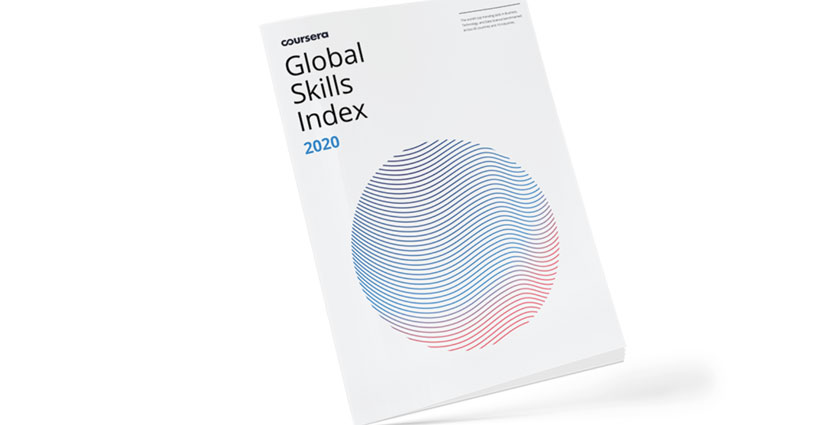
    Coursera’s CEO, Jeff Maggioncalda, announced yesterday the release of the 2020 Global Skills Index (GSI), a report that benchmarks skills proficiency for 60 countries, 10 industries, and 11 fields of study in business, data science, and technology.

    The index analyzed data from 65 million learners on the Coursera platform, including 15 million new users since March.

    Coursera’s GSI highlighted that recovery in a post-pandemic world will rely on broad reskilling. “I hope this report inspires institutions to prioritize skills development as the foundation of economic revival,” wrote Jeff Maggioncalda in a blog post.

    Other insights are the following:

    • Countries, both developed and developing, excelling in critical business, technology, and data science skills see more income equality.
    • Countries with higher skill proficiencies are also those with higher labor force participation rates.
    • Countries with more equal access to the internet are also those with higher skill proficiencies.
    • Every skill proficiency percent gained for a country is associated with a $600 increase in GDP per capita.
    • Industries with more highly skilled talent, especially in technology skills, see higher stock returns and less disruption from COVID-19.
    • Of the 200 million higher education students whose studies have been disrupted by COVID-19, 80% are located in countries with emerging or lagging skills.
    • Institutions navigating COVID-19 continue to prioritize business, technology, and data science skills.
    • The top five trending skills related to COVID-19 are public health, recognizing symptoms, understanding risk factors, social distancing, and contact tracing. Since March, there have been more than 800,000 enrollments and a 540% enrollment increase in Coursera courses teaching these skills.
    • Demand for personal development skills like confidence, stress management, and mindfulness has grown by 1,200% among individual learners.
  • Coursera Valued at $2.5 Billion After a Finance Round of Additional $130 Million

    Coursera Valued at $2.5 Billion After a Finance Round of Additional $130 Million

    IBL News | New York

    Coursera yesterday announced that it raised an additional $130 million, as part of a Series F round, which was led by NEA –an investor in the trading platform Robinhood– and joined by existing investors Kleiner Perkins, SEEK Group, Learn Capital, SuRo Capital Corp, and G Squared.

    This is the biggest funding round for a U.S. education technology company in 2020.

    Investors are valuing the company at a reported $2.5 billion. To date, Coursera has raised $464 million.

    The company’s CEO, Jeff Maggioncalda, assured that “this financing brings the company’s cash balance to more than $300 million.”

    The additional funding will be used “to double down on our product and engineering efforts, expand our job-relevant catalog, and further grow our international presence,” explained Maggioncalda.

    “In particular, it gives us the flexibility to meet the considerable demand for two of our COVID-focused initiatives — Campus Response Initiative to help universities teach impacted students and Workforce Recovery Initiative to help governments reskill unemployed workers.”

    The ongoing pandemic has accelerated the expansion of Coursera, which has added 15 million new users since March. Currently, it sums 65 million learners and it houses 4,500 courses with 160 university partners and 40 companies including Google and IBM. Its workforce accounts for 600 employees.

    Since the company announced on March 12 a free offer on Coursera for Campus on March 12, over 10,000 institutions have signed up, and enrollments have spiked 500 percent over the previous spring, with 1.3 million students taking courses.

    These numbers have been used to appeal to venture capitalists, always interested in detecting major market changes.

    Coursera continues aiming for an IPO, although it has not any date on the horizon yet.


  • A Unit of the Air Force Will Train Airmen in AI, Data and Programming with Udacity’s Programs

    A Unit of the Air Force Will Train Airmen in AI, Data and Programming with Udacity’s Programs

    IBL News | New York

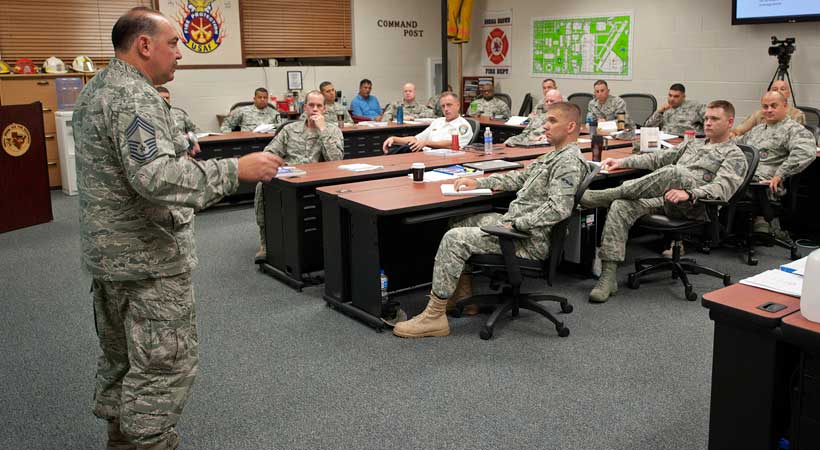
    Udacity yesterday announced a partnership with Business and Enterprise Systems Product Innovation (BESPIN), a United States Air Force (USAF) agile development lab, via its Digital University.

    The goal is to strengthen airmen’s skills in AI, machine learning, data analysis, and programming, by providing Udacity’s Nanodegree programs.

    “BESPIN started with eight airmen in 2018 and has since grown to 100+ personnel, all of whom are committed to overcoming legacy technology challenges and accelerating USAF’s digital transformation,” said Lt. Col. Paul Cooper, CEO at BESPIN.

    Programs completed by airmen include so far classes on Swift, Kotlin, Kubernetes, and data science.

    “Udacity’s online training platform is used by global corporate customers to skill and reskill their workforces: these customers include Airbus, AT&T, BMW, IBM, Nike, and Shell,” announced the company.

  • Google Announces 100,000 Scholarships for Three Career-Oriented Certificates

    Google Announces 100,000 Scholarships for Three Career-Oriented Certificates

    IBL News | New York

    Google announced this week three new certificate programs in data analytics, project management, and user experience (UX) design.

    The certificates are created and taught solely by Google employees and are offered through Coursera.org. These classes can be completed in three to six months. To take these programs, a college degree or work experience is not required and is priced at $49 a month.

    The tech giant will fund 100,000 need-based scholarships. In addition, it will be awarding over $10 million in grants to three nonprofits–YWCA, NPower, and JFF– to provide workforce development to women, veterans, and underrepresented Americans.

    “This is not revenue-generating for Google,” said Google’s Vice President, Lisa Gevelber, who leads Grow with Google and Google for Startups.

    The company said that these certificates will qualify applicants for jobs across fields with median average annual salaries of over $50,000.

    In 2018, Google launched a similar certificate program for those interested in IT. Over 250,000 people have taken this Google’s certificate, 57% of whom do not have a college degree, making it Coursera’s most popular certificate.


  • The Trump Administration Drops Restrictions for International Students Amid Pressure from Colleges

    The Trump Administration Drops Restrictions for International Students Amid Pressure from Colleges

    IBL News | New York

    Total reversal for the Trump administration on the ban on the international students’ issue affecting over 1 million students–who generate 40 billion business for the U.S.

    The Department of Homeland Security rescinded the July 6 policy directive that would have required foreign students on F-1 and M-1 visas to take in-person college coursework in order to remain in the country –a judge announced in Boston this Tuesday.

    The decision comes a week after Immigration and Customs Enforcement (ICE) announced that students at schools offering only online courses, such as MIT, Harvard and Princeton, would need to either leave the U.S. or transfer schools. These schools, along with 20 states and dozens of universities, filed a suit against the Trump administration to block the policy change from going into effect.

    Now, the Federal Government agrees to rescind the guidance to resolve the lawsuit filed by Harvard University and the Massachusetts Institute of Technology. The rescission of the directive means the government reverts back to a March guidance that allowed international students to remain in the U.S. while taking a fully online course load.

    Before it agreed to rescind the new guidance, the Homeland Security Department filed a motion Monday in which it justified its decision due to “significant national security concerns.”

    The government argued in a court filing, “A solely online program of study provides a nonimmigrant student with enormous flexibility to be present anywhere in the United States for up to an entire academic term, whether that location has been reported to the government … Additionally, such programs could allow a nonimmigrant student to conduct activities other than full-time studying.”

    The government maintained in that same filing that “students choosing a 100% online learning program do not need to be physically present in the United States.”

    Declarations from Harvard and MIT students submitted into the court record argued to the contrary that the students have compelling academic, personal and professional reasons to stay in the U.S. — or in some cases to re-enter the U.S. — even if their coursework would be online.


  • edX & Platforms | July 2020: JupyterCon, Suse, Juniper, Coursera, Udacity, DeVry, Canvas LMS, Degreed…

    edX & Platforms | July 2020: JupyterCon, Suse, Juniper, Coursera, Udacity, DeVry, Canvas LMS, Degreed…

    Newsletter format  |  Click here to subscribe ]

    JULY 2020 – NEWSLETTER #29  |  Breaking news at IBL News  |  Noticias en Español


    Open edX – Based Platforms

    • JupyterCon 2020 Conference Will Introduce an Innovative Learning Format with Credentials

    • The ‘Freshman Year for Free Program’ Will Pay Learners for Completing their Classes

    • Harvard University’s LabXChange Platform Wins the 2020 Open edX Prize

    • SUSE Acquires Kubernetes Management Platform Rancher Labs –which uses Open edX


    Open edX Software

    edX Posts the Release Notes of the Open edX Juniper Platform

    • Open edX Juniper Platform: Changes on LMS Instructor Dashboard and Studio Tool

    • edX Releases Juniper, Its Tenth Version of the Open edX Platform


    edX

    • edX MicroBachelors Will Include Consultants to Help Learners Complete Their Programs

    • An edX Survey Finds that a Majority Is Interested in Pursuing Additional Education

    • Research: Platforms At Scale Will Radically Transform Learning and Teaching


    Coursera

    • Coursera Users Complain About Cheating and Plagiarism on Peer Assignments

    • Courses, Strategies, and Resources to Get The Most From Learning with edX and Coursera


    Udacity

    • Udacity Develops an Introductory Course and Nanodegree on Machine Learning for Microsoft Azure


    Learning Platforms

    • Canvas LMS Picks a New CEO From Outside the Educational Industry

    • DeVry University Releases a Complimentary Video Library to Build In-Demand Tech Skills

    • Apple Will Shut Down iTunes U at the End of 2021


    Investment

    • John Katzman Raises Another $16 Million to Expand Noodle Partners OPM Firm

    • Degreed Raises Another $32 Million with Its Platform for Upskilling Employees


    2020 Events 

    • Education Calendar  –    JULY – DEC  |  Conferences in Latin America & Spain


    This newsletter is created in collaboration with IBL Education, a New York City-based company specialized in AI and credential-driven learning platforms. Read the latest IBL Newsletter   |  Archive of Open edX Newsletters