Category: Top News

  • Andreessen Horowitz’s “Crypto Startup School” Releases Its First Series of Video Lectures

    Andreessen Horowitz’s “Crypto Startup School” Releases Its First Series of Video Lectures

    IBL News | New York

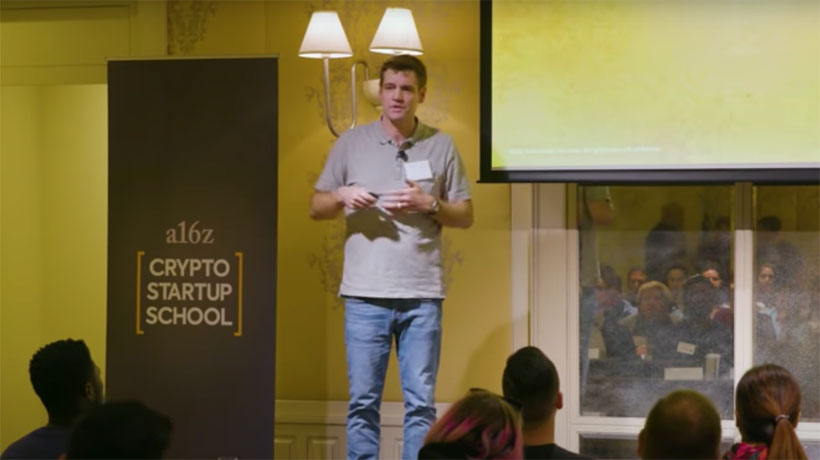
    Venture capital firm Andreessen Horowitz, also known as a16z, started to release videos of its seven-week education course of “Crypto Startup School” this May, in partnership with TechCrunch.

    This training initiative is intended to encourage entrepreneurs to build crypto projects and companies. Andreessen Horowitz has invested in major crypto projects, including Libra, Ripple, and Coinbase.

    Every week a new course module is being released. These classes correspond to the sessions attended by 45 students, first in-person in Menlo Park, California, and then online from late February to mid-April.

    Five lectures have been published so far, while the rest of the material will become available on the Crypto Startup School website.

    • The first talk, “Crypto Networks and Why They Matter”, was held by Chris Dixon, General Partner at Andreessen Horowitz. Dixon said that crypto is poised to become the next major computing platform, after the web and smartphones.
    • The second talk, “Blockchain Primitives: Cryptography and Consensus”, was delivered by Dan Boneh, a professor in Applied Cryptography and Computer Security at Stanford University.
    • Brian Armstrong, CEO at Coinbase: “Setting Up and Scaling a Crypto Company”
    • Angel investor Balaji Srinivasan: “Applications: Today & 2025”
    • Josh Williams: “Opportunities for Crypto in Gaming”


  • edX Adds Three New Credit-Backed MicroBachelors Programs to its Portfolio

    edX Adds Three New Credit-Backed MicroBachelors Programs to its Portfolio

    IBL News | New York

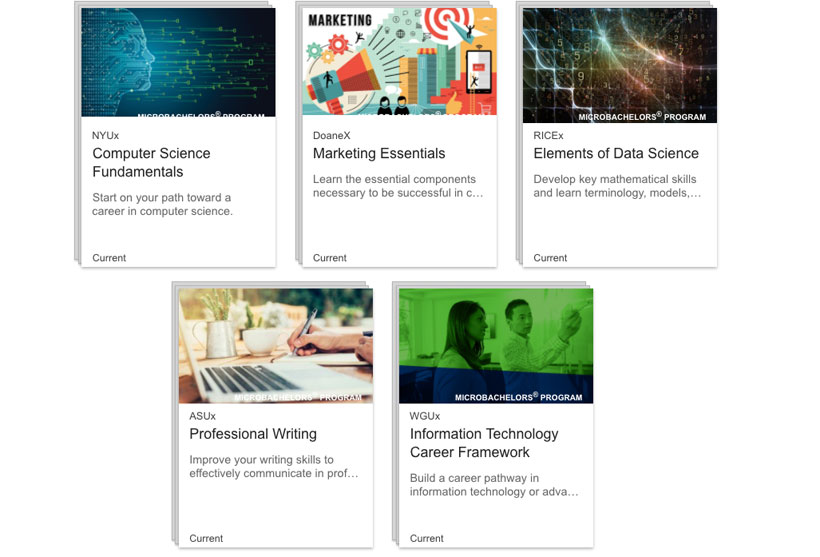
    edX.org announced yesterday three new credit-backed MicroBachelors programs, with an average cost per credit of $166.

    These programs join the currently available programs in IT Career Framework from Western Governors University (WGU) and Computer Science Fundamentals from New York University (NYU). All programs are approved, or pending approval, for credit by Thomas Edison State University (TESU).

    “As the global economy deals with the impact of the COVID-19 pandemic, MicroBachelors programs are more relevant than ever; they offer immediately transferable skills for people looking for new or more secure jobs and academic credit for people with college plans left up in the air,” wrote Anant Agarwal, CEO at edX, in a blog-post.

    The coronavirus pandemic is causing many young adults to delay or reexamine their college plans, according to edX. An Arts and Science Group survey found roughly one in six high school seniors say they definitely or most likely will change their plans to attend college in the fall because of the coronavirus.

    “For this group, MicroBachelors programs offer the opportunity to become better prepared for college, or explore in-demand fields like computer science and IT while earning college credit,” said Anant Agarwal. “For example, a student could take the Professional Writing and IT Career Framework MicroBachelors programs and earn 15 academic credits, which is a typical semester credit load.”

    Organizations such as Boeing, Lumina Foundation, Truist Foundation, Walmart, Jeremy M. and Joyce E. Wertheimer Foundation and Yidan Prize Foundation have financially contributed to the development of these programs from the beginning.

  • MOOCs Were Dead, but Now They Are Booming, According to The New York Times

    MOOCs Were Dead, but Now They Are Booming, According to The New York Times

    IBL News | New York

    Five years ago, The New York Times, in an extensively quoted report among academics keynoting on higher-ed conferences, had determined that MOOCs were dead. Low completion rates being below 5%, no business model behind them, and no impact on skyrocketing tuitions were the main reasons. In other words, disruption never occurred, and education wasn’t democratized.

    Yesterday, however, the Gray Lay of the journalism–the New York Times–certified a new reality. “Remember the MOOCs? After Near-Death, They’re Booming,” was the headline. The confinement at home and the online move due to the pandemic has mostly caused “a jolt that could signal a renaissance for big online learning networks that had struggled for years,” wrote the veteran reporter Steve Lohr.

    After millions of adults have signed up for online classes in the last two months, Coursera added 10 million new users from mid-March to mid-May–that is seven times the pace of new sign-ups in the previous year, according to the Times. Enrollments at edX and Udacity have jumped by similar multiples.

    “Crises lead to accelerations, and this is the best chance ever for online learning,” said Sebastian Thrun, Founder of Udacity.

    “Active learning works, and social learning works,” said Anant Agarwal, CEO at edX.


  • QS Releases Its U.S. University Ranking for 2020: Harvard, Stanford, and MIT Remain on Top

    QS Releases Its U.S. University Ranking for 2020: Harvard, Stanford, and MIT Remain on Top

    IBL News | New York

    Despite moving online or not during the pandemic, college rankings move forward with their evaluations. Last week, the publisher of the QS World University Rankings released its American list.

    According to this organization, the methodology evaluated how well universities are responding to the social, intellectual, and economic challenges, along with their effort to support the 17 United Nations Sustainable Development goals. “Universities are ranked according to their research performance and career outcomes as well as a range of indicators evaluating each institution’s social impact and attempts to foster excitability,” added QS Quacquarelli Symonds, the London-based publisher of the ranking, in a press release.

    Harvard University appears as America’s top university, ahead of Stanford University (2nd) and MIT (3rd).

    “On average, Harvard produces America’s most impactful research and most employable graduates,” said QS. “Five American colleges achieve perfect scores: Yale University, Duke University, Johns Hopkins University, Northwestern University, and Brown University.”

    1. Harvard University
    2. Stanford University
    3. MIT
    4. University of California, Berkeley
    5. Columbia University
    6. University of California, Los Angeles
    7. Yale University
    8. University of Pennsylvania
    9. Princeton University
    10. Cornell University
    11. NYU
    12. University of Chicago
    13. Duke University
    14. Johns Hopkins University
    15. University of Southern California
    16. Northwestern University
    17. Carnegie Mellon University
    18. University of Michigan-Ann Arbor
    19. Caltech
    20. Brown University
    21. Boston University
    22. Rice University
    23. Georgetown University
    24. University of Washington
    25. University of Texas at Austin> Complete Ranking

    “As the global graduate jobs market becomes even more competitive, our research suggests that students are placing a greater emphasis on this information. With the pandemic further disrupting the graduate employment market, we predict that concern about the relationship between education and employability will intensify,” said Ben Sowter, Research Director at QS.

  • U.S. Colleges Will Lose Over $3 Billion After International Student Enrollment Decline This Upcoming Fall

    U.S. Colleges Will Lose Over $3 Billion After International Student Enrollment Decline This Upcoming Fall

    IBL News | New York

    American colleges and universities will lose at least $3 billion due to anticipated international student enrollment declines this fall, in the light of the Covid-19 pandemic, according to a financial survey from NAFSA, the Association of International Educators.

    Results of the survey indicate that U.S. higher education overall has potentially lost nearly $1 billion due to shortened or canceled study abroad programs.

    “A decline in international student enrollments will force institutions to revise international student enrollment management strategies, but they will take time to rebuild—most likely several years,” states the report.

    “With travel restrictions, visa delays, and economic instability worldwide, COVID-19 has been incredibly harmful to the field of international education,” said Esther D. Brimmer, Executive Director and CEO of NAFSA: Association of International Educators, in a press statement.

    Now institutions are reducing staff hours, eliminating staff positions, and introducing furloughs to recoup current losses, and bracing for future shortfalls. Sixty-five percent of respondents said that staff positions in education abroad offices have already been or may be impacted.

    The foreign students contribute more than $44 billion annually and nearly 500,000 jobs, according to the Department of Commerce.

  • Moodle Says It Accounts for Over 200 Million Users and 151,000 Websites

    Moodle Says It Accounts for Over 200 Million Users and 151,000 Websites

    IBL News | New York

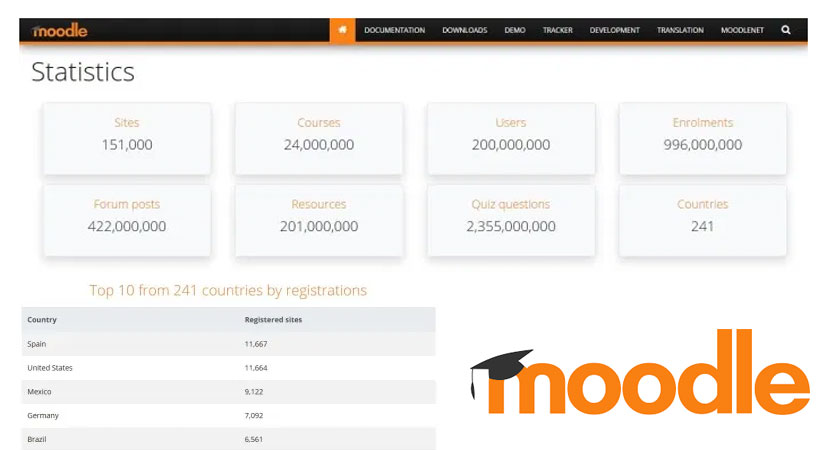
    Moodle, the legacy open-source LMS, continues its growth. Now it accounts for over 200 million users, according to the company data. The schools’ lockdown and the move to learning have given Moodle a push.

    Martin Dougiamas, CEO at Moodle HQ in Australia, said there are 150,000 created with its software.

    According to LMSPulse.com, Spain has become the number one Moodle country, overpowering the U.S. In addition, the rise of Colombia to the top 10, denotes the dominance of the Spanish language on the Moodle universe.

    Since its release, 18 years ago, the Moodle platform has been adding upgrades. Recent improvements include the H5P integration, MoodleNet, Participants filter, Accessibility, Safe Exam Browser, and the mobile portal apps.moodle.com.

    The Moodle 3.9 version is expected within three weeks, on June 8th.

  • MasterClass.com Reaches a Valuation of Over $800 Million After Raising $100 Million

    MasterClass.com Reaches a Valuation of Over $800 Million After Raising $100 Million

    IBL News | New York

    MasterClass.com, an educational platform that sells celebrity-taught online courses, reached a valuation of over $800 million, after raising $100 million in a Series E round.

    Fidelity Management & Research Company led the round, with participation from new investors including Owl Ventures, 01 Advisors, and existing investors NEA, IVP, Atomico, and Next Equity.

    MasterClass makes its revenue by selling an annual subscription of $180. Since its creation in 2015, the startup has produced 85 classes, or “masters”, on business and leadership, culinary arts, photography, writing, and lifestyle. It has included celebrities like Anna Wintour, Gordon Ramsey, and Serena Williams, speaking, respectively, about how to grow a business, and how to play tennis.

    Online courses are positioned more as entertainment-focused, rather than education-focused. They include high-quality, documentary-style content, broken down in separate videos that range from 20 to 30 minutes. Students are able to download a workbook and can flock to a virtual community to chat with their classmates.

    CEO and co-founder David Rogier said that the raised capital will be used to create new classes and up production to one class a week. The company is also experimenting with an audio-only mode, short-form, and augmented reality. “Imagine if we had Steph Curry, but you had augmented reality on your phone so you could actually see where to put your feet,” he explained.


  • UC Davis’ Professional Ed Courses Soar to 4,000 Enrollments Per Day

    UC Davis’ Professional Ed Courses Soar to 4,000 Enrollments Per Day

    IBL News | New York

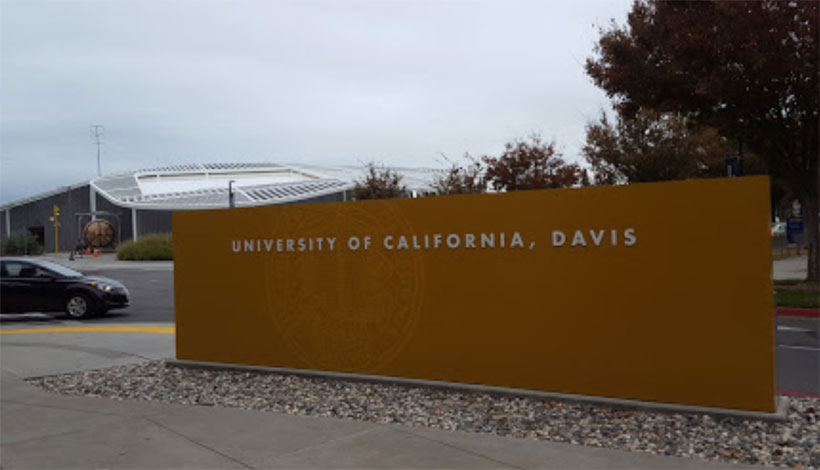
    The UC Davis’ Continuing and Professional Education (CPE) division announced that it has reached one million enrollments on its development programs on Coursera. In addition, CPE also offers training to the employees of nearly 2,000 organizations through the same platform.

    The institution is registering about 4,000 new individual enrollments per day, according to its data, while before the pandemic, the growth was 4,000 per week.

    “The [one million enrollments] milestone reflects the essential role that CPE and its faculty partners play in creating access to workforce development programs globally,” said Susan Catron, Dean of UC Davis Continuing and Professional Education.

    UC Davis offers 60 courses, nine specializations, and one “MasterTrack” on Coursera.

    The most popular specializations offered are SQL for Data ScienceIntroduction to SEOFundamentals of GIS, and Coaching Skills for Managers.

    UC Davis announced that it is adding new offerings of courses, such as Javascript, Spatial Analytics, Emotional Intelligence, Growth Mindset “and other high-demand topics aimed at closing the skills gap and supporting career advancement.”


  • Rancher.com Creates a Free Online Certification Program for Developers

    Rancher.com Creates a Free Online Certification Program for Developers

    IBL News | New York

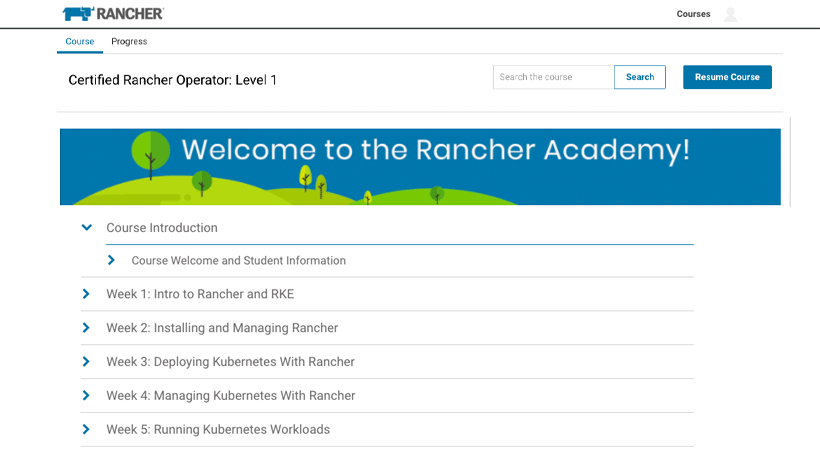
    Rancher Labs, creators of a widely adopted Kubernetes management platform, announced today the launch of an online certification program through the newly created Rancher Academy.

    “It’s a professional, no-cost, zero obligation education platform centered on empowering commercial customers and the open-source community to be successful with Kubernetes and Rancher,” explained Peter Smails, CMO at Rancher Labs.

    The first available course is a free, self-paced, 5-week class, “Certified Rancher Operator: Level 1”.  The class is designed to teach developers with a basic understanding of Docker and Kubernetes how to deploy and use Rancher, RKE, along with how to work with downstream clusters.

    The course includes a mix of passive and active learning, with increasing detail and difficulty over the five weeks. Components of the learning experience include video introductions, theory work, demonstrations, hands-on labs, quizzes, and a final exam.

    Learners will be able to earn a certificate upon demonstrating their knowledge and competence with Kubernetes and Rancher.

    “The training is ideal for open source practitioners, partners supporting their customers and end-user customers looking to maximize their investment in Kubernetes, as well as any individual looking to increase their Rancher and Kubernetes competency in order to advance their careers,” stated the company.

    New classes are scheduled to be announced later this year.

    “Rancher Academy addresses the strong demand for a professional, certification-led program, while further cementing Rancher’s commitment to education,” said the Cupertino, California-based startup, in a press release.

    According to the company, Rancher Labs experienced a 250% increase in its Rodeo and Master Classes registrations over the past year.  As an extension of Rancher’s education strategy, the next step has been a training initiative to formalize skills and competencies with a professional, enterprise certification program.

    The launch of Rancher Academy has been led by Adrian Goins, Director of Community and Evangelism at Rancher Labs.

    The learning ecosystem is powered by IBL Education.

    Rancher.com reports having over 30,000 active users and 100 million downloads.

    •  Cloud Pro: Rancher Labs unveils new Kubernetes certification programme

  • Over 10,000 Museums Across the World Won’t Open Due to the Global Health Crisis

    Over 10,000 Museums Across the World Won’t Open Due to the Global Health Crisis

    Mikel Amigot, IBL News | New York

    The COVID-19 pandemic has hit museums hard, and over 10,000 may never reopen.

    On May 18, International Museum Day, new studies conducted by UNESCO and the International Council of Museums (ICOM) found that 13% of the more than 85,000 museums across the globe that have closed due to the virus will stay shut down.

    As a result of the closures, the losses have skyrocketed. In the United States alone, art institutions are losing an estimated $33 million a day, according to the American Alliance of Museums.

    In addition, the global health crisis has exposed the precarious position of cultural workers, with thousands of employees laid off or furloughed.

    “The museum field cannot survive on its own without the support of the public and private sectors,” said Suay Aksoy, President at ICOM. “It is imperative to raise emergency relief funds and to put in place policies to protect professionals and self-employed workers on precarious contracts.”

    Audrey Azoulay, General Manager at UNESCO, promised to aid museums since “they play a fundamental role in the resilience of societies.”

    That assistance may materialize on the ResiliArt movement, launched by UNESCO in April.

    The UN agency will host a series of debates, panels, and other events to generate discussion about how art and cultural institutions, organizations, and workers will need to adapt in order to survive.

    According to UNESCO, social protection of museum staff, digitization and inventorying of collections, and online content development, are among the top priorities that need to be addressed – all of which require financial resources.

    UNESCO also pointed out that since 2012, the global number of museums has increased by almost 60%, demonstrating how important they have become in national cultural policies over the last decade.

    Museums play a fundamental role in education, culture, and in supporting the local and regional creative economy, according to UNESCO.