SXSW (South by Southwest), the annual edtech, film, and music conference in Austin, “will proceed as planned”, despite concerns about the coronavirus, Austin public health officials said during a press conference this Wednesday.
“Right now there’s no evidence that closing South by Southwest or other activities is going to make this community safer,” said Dr. Mark Escott, the interim medical director and health authority for Austin Public Health. “Today the threat of community spread in Austin remains low, however, we are prepared for it to happen here.”
On Tuesday, Mark Escott said at least one person in Travis County was being tested for COVID-19.
SXSW’s economic impact of last year’s event on the city was estimated to be $355.9 million, according to a report paid for by SXSW.
The organizers behind SXSW, which is scheduled to take place from March 13 to March 22, had come under intense public pressure in recent days to cancel the event.
Several high-profile organizations such as Facebook, Amazon Studios, Twitter and Intel had dropped out, and a petition on Change.org calling for the cancellation garnered more than 43,000 signatures.
Austin city’s response to the coronavirus outbreak involves convening a panel of health officials, including local physicians and infectious disease experts, to evaluate how the virus is affecting Austin.
Facebook, Twitter, Intel, Capital One, Amazon Studios, Mashable, Vevo, and TikTok, among other big-name companies, pulled out of its presence at the 2020 South by Southwest Festival (SXSW) in Austin, Texas, yesterday, amid concerns of the coronavirus spread.
In addition, a petition calling for the cancellation of the two-week event garnered more than 35,000 signatures.
However, the SXSW festival, scheduled for March 13, is still on. The organization refuses to cancel due to the impact on the economy of Austin, experts told IBL News.
Also in Houston, Texas, the CERAWeek Energy Conference (March 9-13) was canceled.
Another high-profile educational event, Educause’s ELI, in Bellevue, WA, was canceled. Some participants gathered together to hold an unconference that might involve some face-to-face participation.
As the fear of coronavirus continues to grow, two more companies, Google I/O and Nvidia removed their annual events.
Google sent out an email to all attendees informing them of the decision. I/O 2020 was set to be held from May 12th to the 14th at the Shoreline Amphitheatre in Mountain View, California
Nvidia decided to shift its GTC 2020 on March 22-26 in San Jose, California, to an online event. Company’s founder and CEO Jensen Huang will still deliver a keynote address, which will be available exclusively by streaming video. [Updates of the event]
More than 80,000 people worldwide have been diagnosed with coronavirus, and more than 60 of those cases are in the U.S., according to the CDC.
Harvard University epidemiologist, Marc Lipsitch, said that as much as 70 percent of the world’s population could get the coronavirus. He added that 1 percent of those who develop symptoms could die.
In this context, online initiatives have started to proliferate. This tweet reflects an upcoming trend.
A message from @GWProvost: “by the close of spring break, faculty should be prepared to move instruction online, should that become necessary” #COVID19
In this online course, learners will use JupyterLab notebooks on Jetson Nano to build projects that extract meaningful insights from video streams through deep learning video analytics.
Upon completion, students will be able to build a DeepStream application to identify and classify cars and count people in a crowded scene, while obtaining an NVIDIA certificate.
“It’s important that all developers, particularly young people and those from under-represented communities, have opportunities to learn about AI and contribute to, and benefit from, the AI ecosystem if they wish,” wrote Greg Estes, VP of Corporate Marketing and Developer Programs at NVIDIA.
[Disclosure: NVIDIA’s Deep Learning Institute is powered by IBL Education]
For the first time, the U.S. schools brace for a coronavirus disruption.
The Department of Education announced the creation of a task force to prepare for the possible impacts of the coronavirus.
Betsy DeVos, the U.S. secretary of education, said at a congressional hearing Thursday that Mitchell “Mick” Zais, the deputy secretary, will lead the task force.
A web page provides the latest guidance for schools on the disease.
Federal public health officials have urged schools to brace for more cases of the virus in the U.S.
On Friday, during the Conservative Political Action Conference, Mick Mulvaney, the acting White House chief of staff, warned of potential school shutdowns.
“Are you going to see some schools shut down? Probably. May you see impacts on public transportation? Sure. But we do this. We know how to handle this,” Mulvaney said.
The Centers for Disease Control and Prevention (CDC) has recommended that K-12 schools across the country develop contingency plans for school dismissals and closures, as well as the continuation of classes online.
President Donald Trump said during a news conference on Wednesday that “schools should be preparing and get ready, just in case.”
Universities Cancel Study Abroad Programs
On the other hand, a growing list of American universities have canceled study programs in China, South Korea, and Italy–with 374 cases and 12 deaths–, as the virus spreads.
In addition, most of them urged students or employees who are currently on university business in those countries to return to the US immediately.
Elon University has suspended its program in Florence, Italy, for the semester.
Fairfield University has immediately closed its Florence University of the Arts study abroad program and required all students enrolled in the program to depart Italy.
Florida International University canceled study abroad programs to Italy, Singapore, Japan, and South Korea.
New York University canceled classes at NYU Florence.
Syracuse University suspended its program in Florence and is working to assist its students with returning to the U.S.
University of Tennessee suspended all spring and summer education abroad programs in both China and South Korea.
The Covid-19 coronavirus is prompting major tech conferences around the world to pull out of their events.
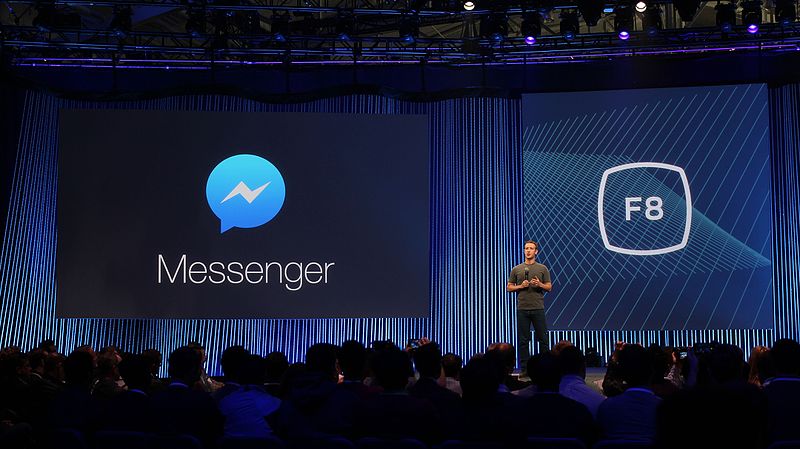
Yesterday, Facebook announced the cancelation of its biggest event of the year, the F8 conference, over coronavirus-outbreak concerns and “in order to prioritize the health and safety of our developer partners, employees and everyone who helps put the event on,” said the company in a statement.
The conference, scheduled to be held in San Jose, California, on May 5th to 6th with an attendance of 5,000 people, will be replaced by “a combo of locally hosted events, videos, and live-streamed content,” Facebook said without providing further details.
The cancellation highlights how the Covid-19 or coronavirus –which has infected so far over 81,000 people and killed more than 2,700, mostly in China– is causing widespread disruption.
In the case of Facebook, the company recently pulled out of the March 9 Global Marketing Summit on March 9th, a 5,000-person marketing conference held in San Francisco. In addition, the company said its supply chain for hardware has been disrupted and its employees have been told not to travel to China. Meanwhile, employees who have visited China are being asked to work from home, according to Bloomberg.
Facebook’s announcement followed other high-profile cancellations, including Microsoft and Unity, which pulled out of the Game Developers Conference scheduled for March 16th to 17th in San Francisco.
In addition, Workday on Wednesday announced the cancellation of its March 2 sales conference. Two weeks ago, the Mobile World Congress, the largest trade show for mobile phones, was canceled in Barcelona, as well.
San Francisco in State of Emergency
The San Francisco Bay Area has some of the highest travel rates to and from China when compared to other regions in the US. On Tuesday, the mayor of San Francisco declared the city to be in a state of emergency, although there are still zero confirmed cases of the novel coronavirus in the city.
The question now is whether other major conferences on tech and education as well will do the same. Google and Apple are also scheduled to have major conferences in the San Francisco Bay Area in May and June, respectively. For now, Google has confirmed that it is currently planning to host its I/O conference on May 12 to 14 in Mountain View.
SXSWEdu
South by Southwest (SXSWEdu), the largest upcoming edtech conference, that attracts over 30,000 people, said it plans to continue with the event on March 13 to 22, although it recognizes having “a handful of cancellations.”
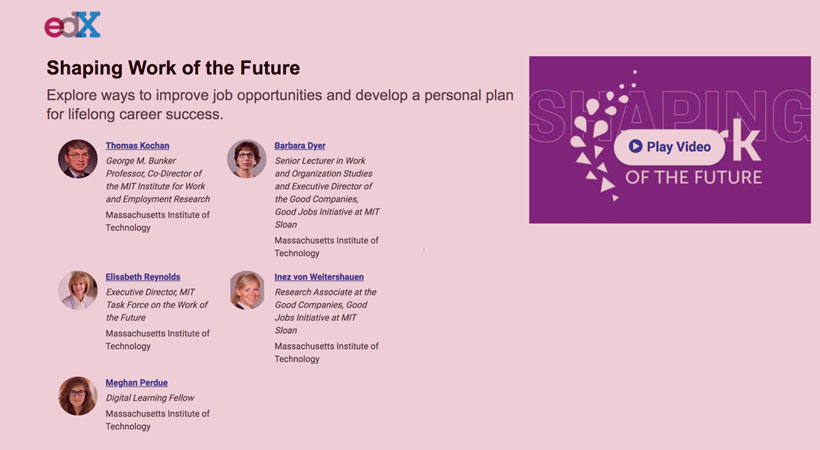
MIT released a free, practical, eight-week-long course that provides resources and tools to plan a career path in the age of increasing dominance of artificial intelligence.
The course, Shaping Work of the Future, is available through MITx on edX and may be accessed at any time of the year. So far, over 17,000 learners have enrolled in the class.
Participants are eligible to sign up and receive an MITx Certificate upon completion.
Now in its sixth year, Shaping Work of the Future, has added new content, such as case studies and lectures from MIT’s leading technology and workplace academics. This year’s partnerships include, among others, the World Economic Forum and the International Labor Organization.
“The course goes beyond the headlines and focuses instead on what steps we can actually take to impact the future of work along with future-proofing our own skillset,” said the authors.
The key to this year’s new content are findings from the initial report by the MIT Task Force on the Work of the Future with a focus on how to improve the quality of jobs, reduce income inequality and provide opportunities for long-term career success for everyone in the labor force. Additionally, featuring a case study on Optimax Systems, Inc.’s innovative management philosophy built on three key pillars, along with a a discussion on the ways participants can bring their ideas to fruition around the creation of a new social contract.
Co-designers of the course includes Thomas Kochan, George Maverick Bunker, the Professor of Management at MIT’s Sloan School of Management, and the co-director of the MIT Institute for Work and Employment Research, and Elisabeth Reynolds, executive director of the MIT Task Force on the Work of the Future and the MIT Industrial Performance Center.
Kochan has contributed two new lectures on “High Road Business Practices” and “The Role of Government” to the curriculum. Meanwhile, Dr. Reynolds’s contributed lectures on “Geography of Work” and “Policy Recommendations from the Task Force.”
David Autor, Ford Professor of Economics at MIT, added a new lecture on “Work of the Past: Work of the Future”.
“If we take the right actions, we can empower workers to build rewarding careers and shape the future of work in ways that meet the needs of individuals, families, economies, and societies,” said Prof. Kochan. “To do so, we first need to understand how work is changing, how firms can compete and prosper while still supporting good jobs, how to update the policies, institutions, and practices governing the world of work, and then outline a path for everyone to help build a new social contract. That’s what this course is all about!”
Session topics are:
Class 1: Challenges & Opportunities for Work: Today and Tomorrow
Class 2: The Past Century of Work
Class 3: How Emerging Technologies are Changing Work
Class 4: Rethinking Skills and Education
Class 5: The Role of Business in Shaping Work
Class 6: The Role of Labor in Shaping Work
Class 7: The Role of Civic Institutions and Government in Shaping Work
Class 8: Putting it all Together: Social Contract Phase 2 and Developing a Personal Impact Plan
Cornerstone OnDemand (NASDAQ: CSOD), a provider of talent management and professional development software, said it agreed to acquire Saba, which develops similar products and services, in a cash and stock deal valued at nearly $1.4 billion.
“The combined company will have more than 75 million users and serve approximately 7,000 organizations, of all sizes, around the globe,” said the company in a statement on Monday.
Founded in 1997, Saba went public in 2000. In 2015, it was acquired by private equity firm Vector Capital for $300 million. With 1,400 employees, Saba was serving over 4,600 corporate clients.
This acquisition of Saba marks the second acquisition this year for Cornerstone OnDemand, which purchased the French skill development platform Clustree in January for $18.5 million in cash.
Cornerstone’s shares didn’t lately perform well. The stock lost 32% in the past year, and performance has been even worse within this past week, with 33.2% down. After Cornerstone’s quarterly earnings conference call and the announcement of the deal, the loss has been 28.4%. The capitalization of the company is $3.55 billion.
On a conference call with analysts, Adam Miller, CEO of Cornerstone, said:
“We believe this transaction enables us to build a sustainable business for the long term. We have a shared passion for people development and will help thousands of organizations and millions of people around the world to overcome the skills divide. To provide a sense of the reach of this combination, a 2019 pro forma entity would have delivered nearly $820 million of ARR and $775 million in subscription revenue. When we first began to evaluate this transaction, we recognize that the time was right to do this deal. The talent management industry has rapidly evolved over the last several years. And as we look ahead to the next wave of industry innovation and took stock of the share size of our global market opportunity, we saw the acquisition of Saba is an excellent way to position Cornerstone for the long-term growth and innovation.”
Cornerstone separately reported fourth-quarter revenue of $149.6 million, up 8.2% from a year ago. Most of that revenue was subscription-based. Net income for the fourth quarter was $9.4 million, or 15 cents a share.
For 2019, Cornerstone reported revenue of $576.5 million, up 8.5%, with a net loss of $4.1 million, or 7 cents a share.
Udemy.com claimed a $2 billion valuation, while announcing an investment of $50 million from its long-time partner in Japan, Benesse Holdings.
“Udemy and Benesse are incredibly synergistic businesses. This investment is the next progression in our business relationship and demonstrates our confidence in what we can accomplish together,” said Tamotsu Adachi, CEO at Benesse Holdings. “The funding round follows a year of considerable growth for the Udemy globally,” explained Gregg Coccari, CEO at Udemy.
Founded in January 2009, Udemy is one of the largest marketplaces for learning and teaching online, with 50 million students, a catalog of 150,000 courses, and 57,000 instructors.
The San Francisco-headquartered company assures that it has issued over $350 million in lifetime payments to instructors, following its revenue-sharing model.
According to its own data, Udemy for Business – the subscription-based access to 4,000+ courses for corporations – reached the milestone of serving over 5,000 corporate customers globally, including Adidas, Booking.com, Pinterest, Toyota, and Wipro, in 2019.
Last year also, it introduced Learning Paths, enabling organizations to build personalized experiences and achieve specific outcomes, such as employee onboarding and career development.
Unlike MOOC platforms like Coursera, edX, Udacity, and FutureLearn–that have partnered with universities and companies for content–Udemy allows anyone to create a course.
To date, Udemy has raised more than $200 million in venture capital. In addition to Benesse Holdings, Udemy has attracted investors such as Stripes, Insight Venture Partners, and Norwest Venture Partners.