Fee-for-service, an alternative to OPM company Extension Engine, explained last week its approach through the case of Moravian College.
In a joined session with Moravian College’s Provost Cynthia Kosso, and Extension Engine’s Principal Learning Strategist, Scott Moore, elaborated on how this university created a differentiated online program. The conversation took place last Friday at the AAC&U annual conference in Washington DC.
Based in Lehigh Valley, Pennsylvania, the 277-year-old Moravian College, has just launched its first program, and is currently working on its second, related to Nursing.
Cynthia Kosso and Scott Moore discussed the process of creating online learning, building internal capacity, challenges and lessons learned. Among lessons learned, they agreed on the need to effectively communicate around all aspects of the project in order to gain faculty’s trust and acceptance.
IBL News exclusively videotaped the session. Watch it below.
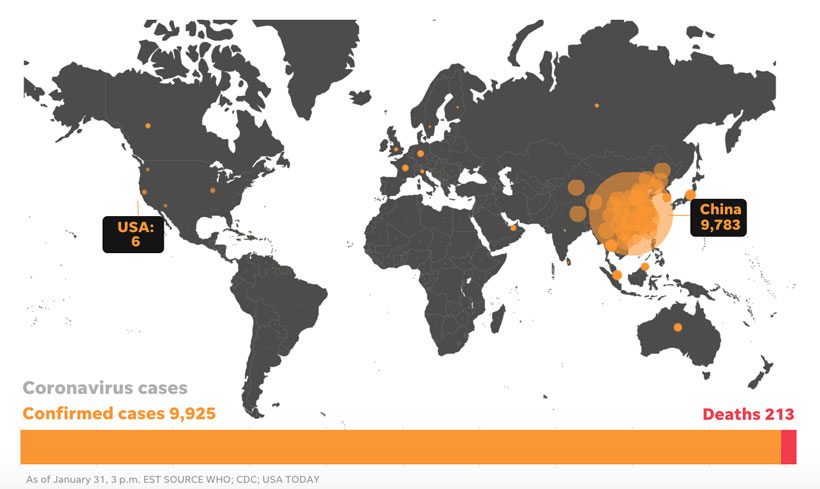
As the overall death toll of the novel coronavirus passed 300 –including a 44-year-old man in the Philippines– and there are more than 14,000 infections confirmed, a student at the University of Massachusetts (UMass) Boston was confirmed to be the 8th person in the U.S. to have the disease.
This individual is a man in his 20s and resides in Boston. He contracted the virus in Wuhan, where the outbreak originated. After he returned from China, he resulted positive on a test done on Friday night in Boston, according to a statement from UMass addressed to its community on Saturday night.
The infected man will stay in isolation until he is cleared by public health officials.
Also, this weekend it emerged the story that more than 100 Princeton University students – including undergraduate and graduate students – had self-quarantined as of Sunday after China’s trips as a precaution.
The students were confining themselves for 14 days following their last time in mainland China.
These cases show that American universities are in the front line, having no other choice than taking aggressive steps to keep the Wuhan virus aways from classrooms and students.
There are 10,000 American students enrolled in academic programs in China.
However, health officials consider more concerning the fact that there are over 350,000 Chinese students pursuing higher education in the United States, many of whom have traveled to their home country in recent weeks.
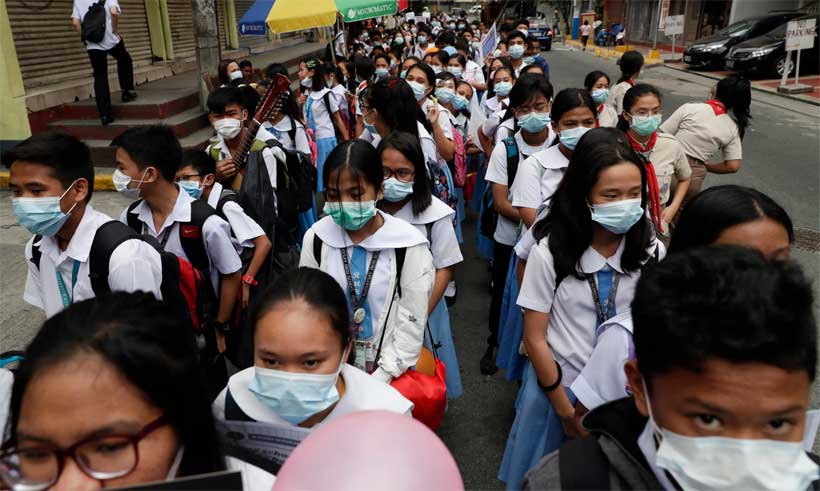
This makes schools a potential incubator for a widespread outbreak, given the close proximity of dormitory life. The challenge also is not overstating the risk of fanning xenophobia.
On Friday the U.S. implemented travel restrictions Sunday evening in an effort to contain the outbreak. The plan included temporarily denying entry to foreign nationals who visited China in the 14 days prior to the arrival to the US. US citizens returning from the rest of mainland China in the 14 days prior will undergo health screenings at selected ports of entry and face up to 14 days of self-monitored quarantine. Flights from China will be directed through seven airports – John F. Kennedy in New York, Atlanta, Chicago O’Hare, San Francisco, Seattle-Tacoma, Los Angeles, and Honolulu.
In addition, the U.S. Department of State upgraded its warning against travel to China to the highest level, advising Americans not to travel there. This alert is following the World Health Organization statement, declaring the coronavirus outbreak a global public health emergency.
On the other hand, in the United Kingdom, one of the two people to test positive for the new coronavirus is a student at the University of York.
The Coronavirus travel ban will impact greatly on international education, said NAFSA Association of International Educators.
“What is clear is that this public health crisis and any future response will have wide-reaching and dramatic effects on international education immediately and in the long-term,” said Dr. Esther D. Brimmer, CEO at NAFSA in a statement.
This organization, with 10,000 members, has created a specific website titled “Coronavirus Critical Resources” to follow the 2019 novel coronavirus rise.
On Friday, at the White House press briefing on the coronavirus, Secretary of Health and Human Services Alex Azar declared a public health emergency in the United States.
He announced that U.S. citizens returning from Hubei province will be subject to up to a 14-day quarantine. All foreign nationals, except those that are immediate family members of U.S. citizens and permanent residents, who have traveled in China within the last 14 days, will be denied entry into the country. The temporary measures take effect this Sunday, February 2, at 5 p.m. EST.
Also on January 31, 2020, President Trump signed a separate Presidential Proclamation regarding the travel ban.
On Thursday, the U.S. Department of State upgraded its warning against travel to China to the highest level, advising Americans not to travel there due to a novel coronavirus first identified in Wuhan, China.
Also on Thursday the World Health Organization declared the coronavirus outbreak a global public health emergency.
Following the CDC warning, several American universities – ASU, Duke, Northwestern and Texas A&M Universities and the University of Michigan, among others – are suspending travel to China.
On Monday, Bloomberg reported that China’s National Educational Examinations Authority canceled February test dates for the IELTS, TOEFL, GRE and GMAT, potentially disrupting some prospective students’ plans to study in the United States.
ASU registered this week the first coronavirus case among universities in the nation. The institution is now trying to dispel all concerns, an Arizona State University’s (ASU) top official told yesterday IBL News.
The case is creating a huge controversy in the ASU community, which has been on edge since the Arizona Department of Health Services announced on Sunday that someone at the school had been diagnosed with the 2019 novel coronavirus.
It’s not clear if the patient involved— who recently traveled to Wuhan, the epicenter of the outbreak — is a student, faculty or staff member, but school’s officials noted the patient “does not live in university housing, is not severely ill and is currently in isolation to keep the illness from spreading.”
In the days since, there’s been a Change.org petition with over 24,000 signatures to cancel classes. “Until proper precautions have been taken to ensure the wellbeing of the students, such as disinfecting areas the student with Novel Coronavirus was present, ASU students want their classes canceled. (…) We do not want to risk our lives by attending class,”reads the petition.
In addition, Asian students at ASU are saying that they are being treated differently facing xenophobic looks whenever they cough or sneeze. Surgical face masks have sold out at stores near campus.
ASU Provost Mark Searle on Monday said the school would not cancel classes.“We have received many inquiries about university operations in light of this case. The university remains open and classes are not canceled,” Searle wrote in an email to the ASU community, according to AZ Central.
The news came after the University of Southern California (USC) was forced to respond following an erroneous social media-fueled claim that a student was diagnosed with the novel coronavirus.
George Mason University student cleared of coronavirus
On the other hand, test results for a George Mason University student who was being tested for the novel coronavirus have come back negative, the Virginia Department of Health said on Friday.
That person was identified by the university as an off-campus George Mason student who had been self-isolating while awaiting results.
University of Wisconsin, Miami University, NYU, Duke, UB
In addition, two undergraduate students from Wuhan, China, at the University of Wisconsin-Platteville were moved into a special dorm room and told to frequently take their temperatures.
Basketball games at Miami University in Ohio were postponed after two students reportedly showed possible symptoms.
Duke University has also postponed the start of the semester at its campus in Kunshan, China, until Feb. 17 and has restricted access to the campus.
University at Buffalo (UB), with about 1,500 students from China, sent an alert on Thursday with general advice on how to monitor their health. This warning happened after an official estimated that about half of those students traveled to China for winter break and returned before classes started Monday.
UB officials are now holding a press conference on precautions the university is taking reacting to the #coronavirus outbreak. There are no known cases at UB or in Erie County. @WGRZpic.twitter.com/Mio1a9j3M1
It is expected that given the fact that college campuses can be grounds for infectious diseases, university officials will be prompted to take urgent measures.
Regarding this anxiety in classes and dorms, TheNew York Timeselaborated today a report about how the fear of the Coronavirus is coming to U.S. colleges.
The program, priced at $22,500, is ranked at number fifth best online master’s in nutrition by The Best Schools. The first cohort will start on August 30, 2020.
Its curriculum is focused on advanced human nutrition with concentration areas available in Biochemical & Functional Nutrition and Health Promotion & Disease Prevention.
UT Austin, an edX partner since its founding in 2012, is the latest institution adding a MOOC-based degree on the edX catalog.
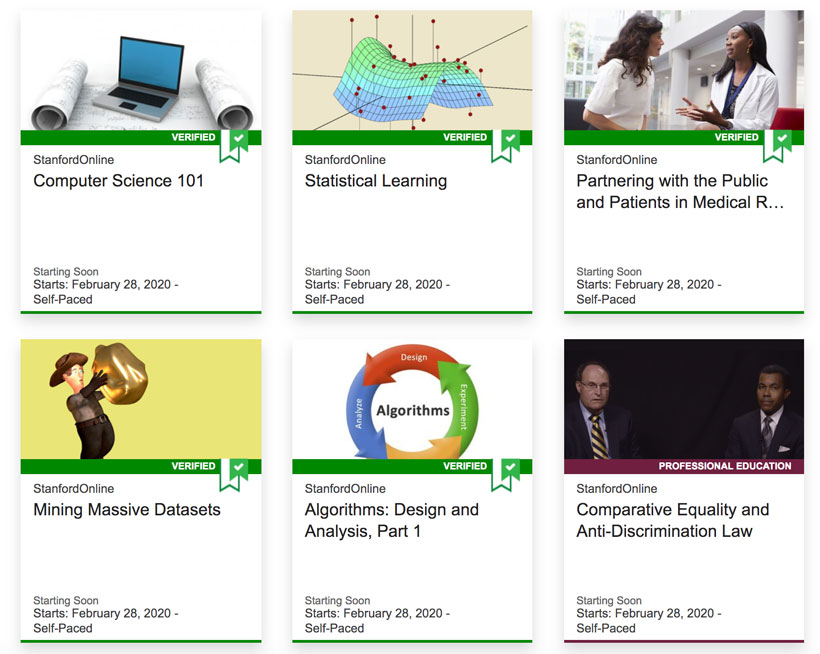
Stanford University joined the edX consortium as an institutional member, contributing with a portfolio of 11 courses ranging from computer science and algorithms to humanities classes in areas such as history and government.
Stanford University’s supporting role at the creation of edX and its open-source code—Open edX—in 2013, was crucial.
However, the institution refrained to join the edX consortium, even criticizing the governance of Open edX through an elaborated report. (Later, the edX Consortium responded, and even it celebrated the Open edX annual developers conference at Stanford’s campus in 2016.)
The courses that Stanford is posting now on edX.org, are a fraction of the ones hosted at its own Open edX instance, called Lagunita.
“Stanford is a long time Open edX contributor, and this milestone deepens our collaborative relationship, which is founded on a vision to increase access to high-quality education for learners around the world,” wrote Johannes Heinlein, Chief Commerical Officer at edX, on a blog post welcoming the Californian university.
In addition to Stanford, the edX Consortium has announced since November 2019 the incorporation of other universities, such as the United Arab Emirates, Western Governors, National University of Singapore, and Queen’s University Smith School of Business.
Super excited to welcome my alma mater @Stanford to the @edXOnline community, after many years as a leading Open edX contributor. Their first courses will be in subjects including humanities and computer science, with more to come. https://t.co/ueufn27gmfpic.twitter.com/vmkLqnkvpd
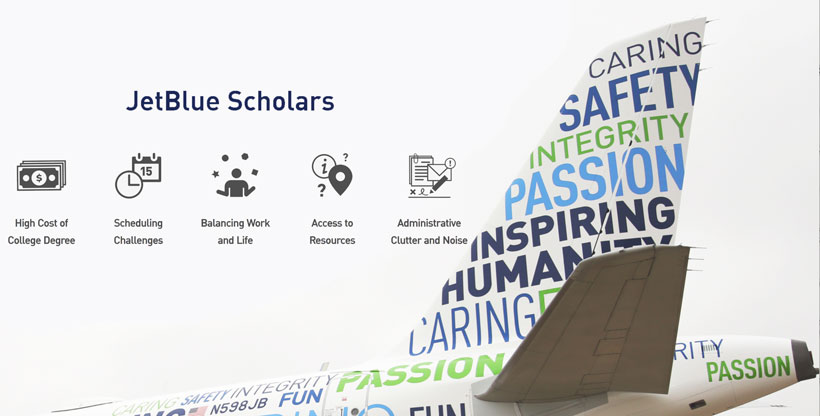
JetBlue (NASDAQ: JBLU) announced that nearly 700 of their crewmembers are currently working towards their college degrees through its employer-sponsored education program.
On average, it will take crewmembers about 13 months to complete an associate degree, and 16 months for a bachelor’s degree, through JetBlue’s Scholars program.
The airline covers most of the costs for undergraduate degrees, with crewmembers saving an average of $14,000 on tuition. It totals over $6.5 million in savings for overall college costs since the program was initiated, according to the company’s data.
Thomas Edison State University (TESU) is JetBlue’s sole provider of degrees. The four areas of study offered for a degree include business, aviation, liberal studies and information technology (IT).
JetBlue Scholarsutilizes low-cost alternatives for obtaining college credits, including learning platforms like Study.com, Sophia.org, and StraighterLine.com. These courses are accepted for college credit at partner school TESU.
JetBlue Scholars, which also includes a pathway opportunity for earning master’s degrees, announced in December that it has conferred 250 degrees within three years.
Launched in 2016, JetBlue Scholars was developed based on crewmember feedback. According to the company, the program has proven to be a valuable retention and development tool, leading to increased crewmember engagement and loyalty, resulting in a greater return on investment for JetBlue.
Visa Inc. (NYSE: V) plans to launch a new certification program and fund up to 500 scholarships on dispute resolution – an area in high demand across the payments ecosystem.
Visa’s new certification program is designed to train individuals as dispute resolution professionals, a role that is currently in high demand across the financial and payment processors industry.
Intended to train individuals to manage payment card disputes, the program will include multiple days of training and several professional-level certification exams.
Details for how to apply for the scholarship will be disclosed in early 2020.
Visa is one of the 350 companies and organizations that signed the White House Pledge to America’s Workers—a promise to expand programs that are designed to educate, train and reskill more than 14.3 million students and workers.
Over the next five years, Visa has pledged to help create enhanced career opportunities for 14,500 individuals, including through increased apprenticeships and work-based learning programs, continuing education, on-the-job training and reskilling.
“At Visa, we are working to help strengthen the pipeline of qualified workers,” said Visa Chairman and CEO Al Kelly.
Certificate programs offer an alternative to a traditional degree, giving candidates the opportunity to develop the skills and experiences needed in a shorter period of time and for less cost. A Georgetown University study found that those who hold certificates receive a 20% wage premium over those who do not.
![Moravian College Explains How They Are Building Their Online Programs With a Non-OPM Partner [Video]](https://cms.iblnews.org/wp-content/uploads/2020/01/extensionengineandmoraviancollege.jpg)