Category: Top News

  • Creating Compelling Slides: Bullet Point the Content or Read Scripts?

    Creating Compelling Slides: Bullet Point the Content or Read Scripts?

    Marie I. Rose | IBL News

    One of the most time-consuming tasks in instructional design is creating slides.

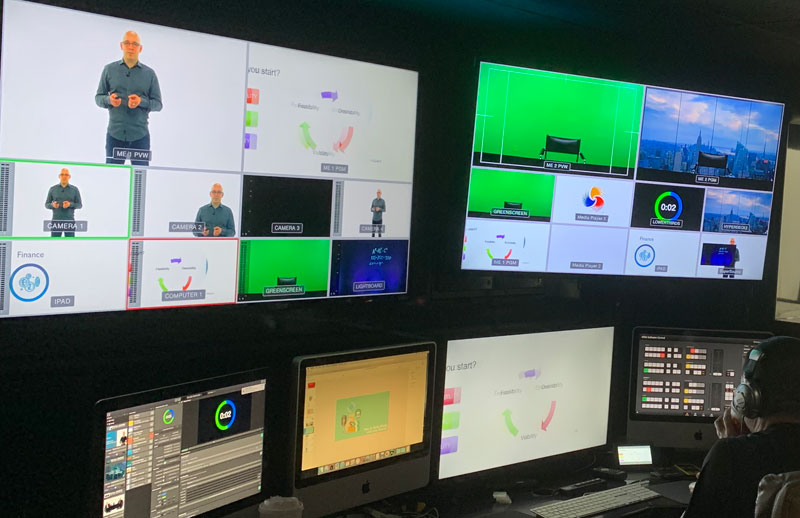
    Slides are the backbone of any course. We usually outline the talking points, script the visuals and convey important information for the students.

    Many times slides are accompanied by texts to be teleprompted by lecturers. This mostly depends on their personality and teaching style.

    The dilemma is whether to bullet point the content or read scripts.

    However, one requirement is certain: we need to create killer visuals. Layouts, texts, pictures, icons, videos, graphics, animations, colors, and fonts need to be compelling. And flipping through slides (Keynote or PowerPoint) should result in an engaging teaching experience.

    Let us share some of our recommendations when designing slides:

    • Choose wide-screen format 16:9.
    • Use bullets or very short sentences. Do not add paragraphs of information on your slides: learners become distracted and stop listening. Use multiple slides for a topic if the content is too long.
    • Pick sans serif fonts: they are easier to read and seem more friendly. Some of the classics are Arial, Geneva, Lucida Grande, Tahoma, Trebuchet MS, and Verdana.At IBL our favorites are Roboto, Open Sans, Lato, Fira Sans, Libre Franklin, and Karla… Never Helvetica!

      Regarding size, use fonts larger than 22 points.

      The Fontsquirrel.com website includes many free fonts.
    • Choose 2-3 colors to that work well together. Use the color palette combinations or pick your brand’s color if the course is an extension of your activities. Adobe has a good color picker. Coolors.co is another good generator.
  • CanvasLMS’ CEO on the Learning Data Controversy: “Information Will Be Owned by Institutions”

    CanvasLMS’ CEO on the Learning Data Controversy: “Information Will Be Owned by Institutions”

    Mikel Amigot | IBL News (Long Beach, CA)

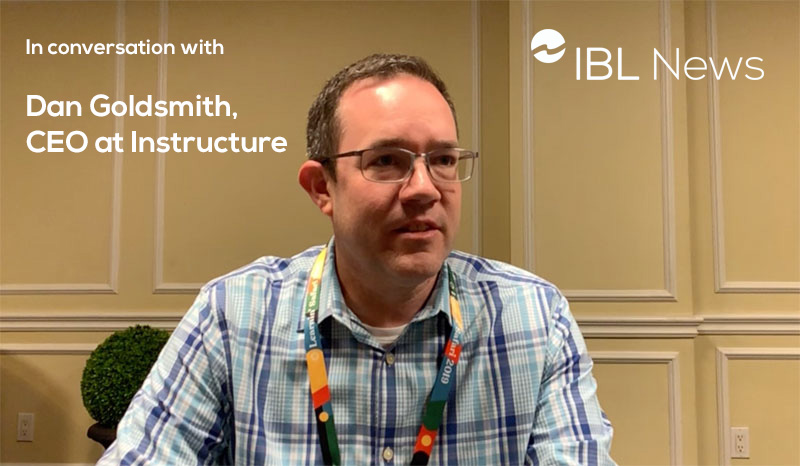
    Instructure’s CEO Dan Goldsmith said that learning data accumulated on its Canvas platform, with 30 million learners, “is owned by the student and institutions, and it should always stay that way”.

    Mr. Goldsmith made this claim at a conversation with a selected group of journalists and analysts (IBL News, among them) yesterday in Long Beach, CA, during the Canvas LMS annual conference.

    The controversy around the usage of data started when Instructure disclosed the existence of DIG, a data analytics, predictive and AI-based internally developed project. “There is a lot of potential to use data and information to benefit education. It is important to open this conversation”.

    Instructure, however, doesn’t have a launch date. “We don’t want to make mistakes with DIG, and we don’t want to be constrained with a timeline,” he added.

    On the adaptive and personalized topic, Dan Goldsmith claimed that “it is inevitable as an educational community to figure out ways to use personalized learning.”

    Asked about its strategy now that Canvas LMS is recognized in the industry as the market leader in North America, he said: “Our benchmark is the 1.5 billion students there are in the world”. “If we are constantly looking at our competitors we will lose many opportunities for innovation”.

    Regarding competitors, “I have a good conversation with them. I talk to CEOs, and have a good relation. At the end of the day, we have a common mission.”

    Based in Salt Lake City, Utah, and with a staff of 1,200 employees, this publicly traded company is not profitable yet, although “we are a financially stable organization”. “We are in a good position to make an impact”.

    Regarding its software developments, Mr. Goldsmith highlighted that “there are 250 applications built on top on Canvas by our customers”. “We are not the only channel for innovation”.

    He also stressed that “we will continue to maintain our commitment toward open source. We have a very thriving community that we support”.

    See the video below exclusively shot by IBL News.


  • It’s All About Increasing Learners’ Engagement in Courses and Programs

    It’s All About Increasing Learners’ Engagement in Courses and Programs

    Mikel Amigot | IBL News

    A measure to calibrate the success of a learning platform and an ongoing program is the progress of engagement. If engagement improves, then revenues go up and administrators, instructors, and students smile.

    edX, for example, has seen an 11 % increase in their engagement rate in the last two years. Now it claims a 42 % engagement rate.

    The question is what truly generates engagement in courses.  Three are three main factors, in our view:

    • Content quality along with the design of the course
    • Platform’s pedagogical technology and new features
    • Content marketing and SEO campaigns to allow learners to find their desired courses

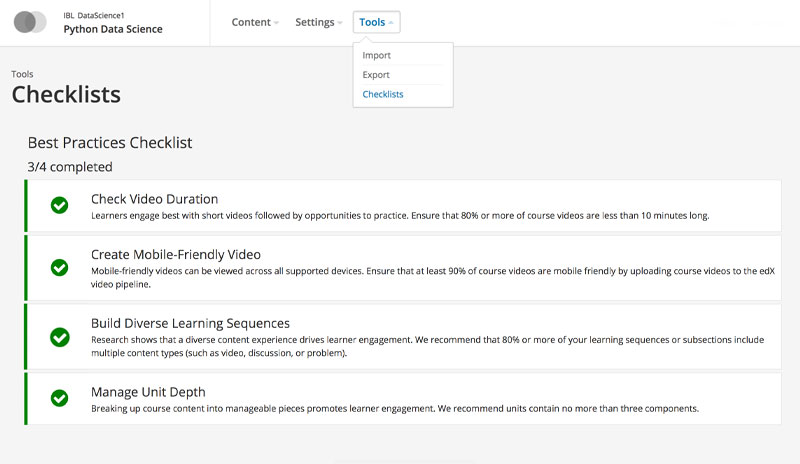
    Please examine the graphic above, captured from Studio, the authoring tool of the Open edX platform –which is open-source and free to install.

    The third checkmark refers to a core technical and pedagogical characteristic of this platform: active learning.

    The course content is presented through learning sequences: a set of interwoven videos, readings, discussions, wikis, collaborative and social media tools, exercises and materials with automatic assessments and instant feedback.

    Students alternate between learning concepts and solving simple exercises to check their understanding.

    As a best practice, edX recommends building diverse learning sequences, following researchers’ discoveries. “We recommend that 80% or more of your learning sequences or subsection include multiple content types (such as video, discussion, or problem)”.

    Gently nudging students, tutoring them and setting and soft deadlines in the course is equally helpful.

    Would you suggest additional engagement techniques?


  • Canvas LMS Increases Its Lead to 30 Million Users, According to Its CEO’s Data

    Canvas LMS Increases Its Lead to 30 Million Users, According to Its CEO’s Data

    Mikel Amigot | IBL News (Long Beach, CA)

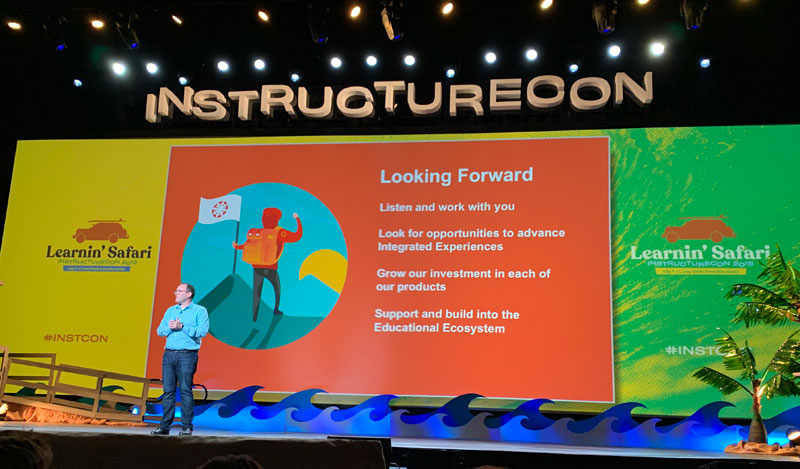
    Canvas continued to expand its lead as the most adopted LMS in North America until reaching 30 million users, according to the data provided by its CEO Dan Goldsmith yesterday during its opening keynote at the annual Instructure partners’ conference, which is taking place this week in Long Beach, CA.

    In the last years, Canvas reported the “more than 20 million users” number, but this year it changed into “more than 30 million users”.

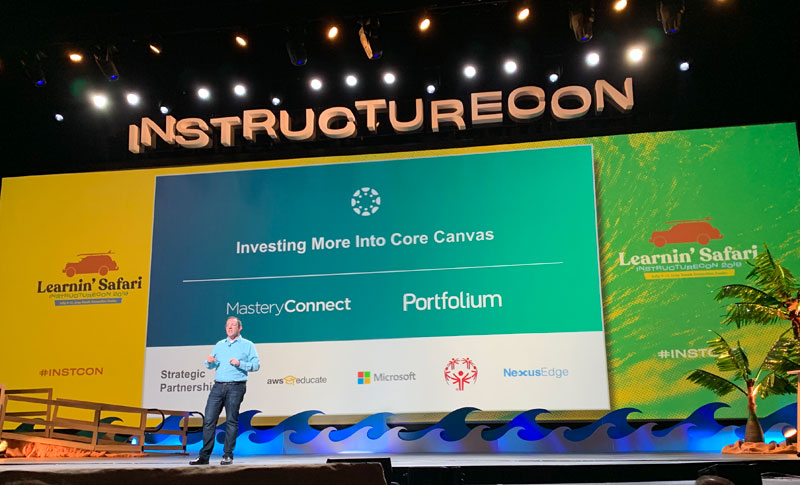
    Dan Goldsmith talked about Instructure’s future plans and elaborated about its new three partners, AWS Educate, Microsoft and Nexus Edge. “Our mission is to help people grow from the first of school and last day of work”, he said.

    Another interesting piece from Instructure’s CEO’s statement referred to the fact that “institutions are under increased pressure to prove their effectiveness with students”.

    This year’s conference has attracted a record number of 3,000 attendees and 72 vendors.

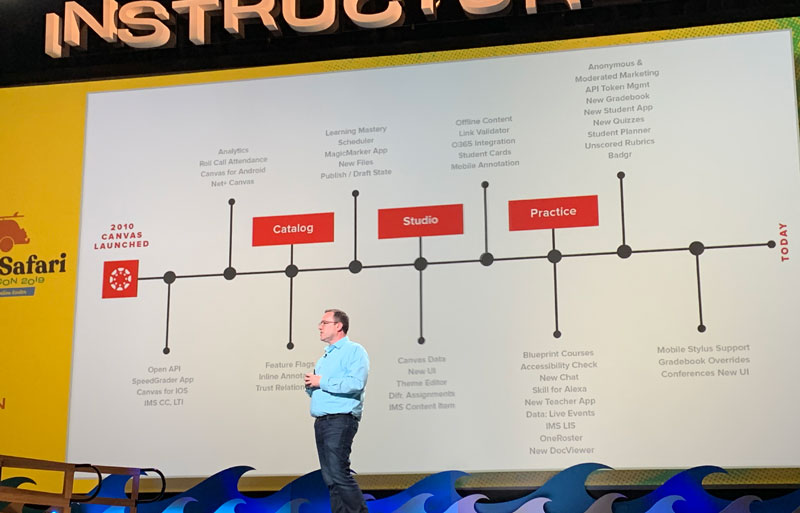
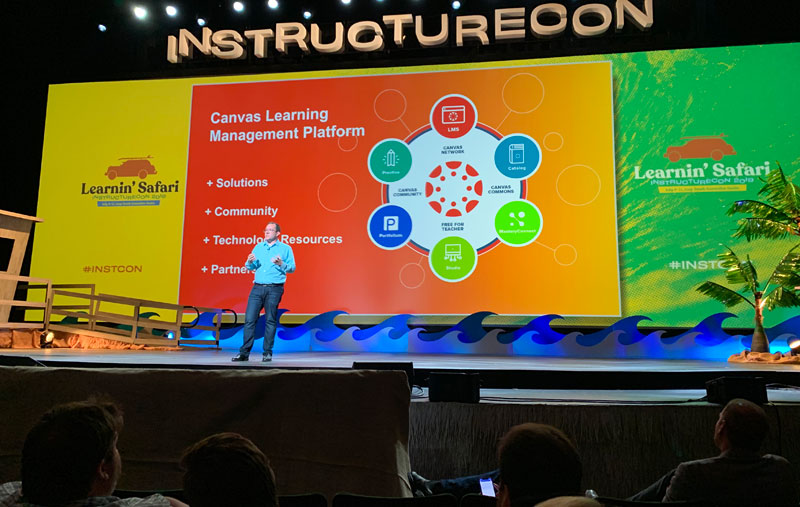
    Selected slides of the keynote:


  • Asimov Predicted the State of Education in 2019. Was He Right?

    Asimov Predicted the State of Education in 2019. Was He Right?

    Mikel Amigot | IBL News

    “AI, Machine Learning, Augmented and Virtual Reality, Adaptive Learning, Big Data, and so on, and so.”

    This is how Jeffrey Riman, Professor at FIT and Chair of the Faculty Advisory Council on Teaching and Technology (FACT2) at SUNY, summarized the technology issues dominating the conversation in higher ed during the 2019 CIT Conference.

    “Among the many challenges for faculty and instructional support staff are increased complexity and steeper learning curves, greater time commitment, and outsourced content creation and assessment strategies. Course size will continue to grow, and the pace of change is accelerating,” said Jeffrey Riman [in the picture].

    “And one thing we know: history is not a predictor of future performance,” he added.

    Funny reference to history. Let’s go back four decades.

    On December 31, 1983, esteemed scholar and best-selling sci-fi writer Isaac Asimov predicted how the world would be in 2019.

    He wrote: “Education, which must be revolutionized in the new world, will be revolutionized by the very agency that requires the revolution – the computer…”

    “There will be an opportunity finally for every youngster, and indeed, every person, to learn, in his or her own time, at his or own speed, in his or her own way…”

    “Education will become fun because it will bubble up from within and not be forced in from without.”

    Does anyone dare to predict how education will be in 2065?

    Asimov the genius did envision the impact of the computer and the connected network, as well as the potential of on-demand learning at scale.

    For a fully universal, personalized, adapted and fun education, we might need to wait a little longer.

    But foundations are building up.

  • Learning At Scale | July 2019: Amazon, Oxford, JetBlue, Facebook, McGraw-Hill Education…

    Learning At Scale | July 2019: Amazon, Oxford, JetBlue, Facebook, McGraw-Hill Education…

    Newsletter format  |  Click here to subscribe ]

    JULY 2019  –  NEWSLETTER #24 ON ONLINE EDUCATION AT SCALE


    HIGHER ED

    • Moody’s: College revenue growth lagged in 2018

    • Amazon Partners with George Mason University to Launch a Cloud-Based Degree

    • University of Oxford Will Invest $190 Million on Humanities and Create an Institute for Ethics in AI

    Capella Online University Opens a Brick-and-Mortar Center to Provide In-Person Support


    COURSES

    • 400+ Online Courses With Real College Credit That You Can Access For Free

    • European MOOC Platforms Plan New Generation of Microcredentials

    Billionaire Mark Cuban Takes Online Coding Classes to Sharpen His Investment Skills


    INDUSTRY

    JetBlue Eases the Financial Burden of Their Crew Members Earning a Master’s Degree

    Facebook Teams Up With Community Colleges to Offer Certificate Programs on Digital Marketing

    McGraw-Hill Education Chief Financial Officer Mike Evans Resigns


    INVESTMENT

    • Degreed Raises an Additional $75M to Expand Its Career Development Business

    • Wiley Buys ZyBooks in $56M Cash Deal to Bolster Courseware Offerings

    • ETS Invests in New Edtech Startup Accelerator Run by LearnLaunch

    • Zuckerberg-Backed AltSchool Gives Up on Schools and Focuses on Tech. It’s a Major Makeover


    AI

    • Artificial Intelligence in Education is Here to Stay: Will it Augment or Replace?

    • AI Education: Penn State Will Use a Virtual Assistant in Academic Advising


    VIEWS

    Are the Golden Years of Education Entrepreneurship Gone?

    Ideas to Boost Your Course Completion Rate

    • Teachers, Administrators or Students? What Sector Should Data Focus On?


    2019 UPCOMING EVENTS

    Education Calendar  –  JULY  |  AUGUSTSEPTEMBER |  OCT–DEC 2019


    This newsletter about learning innovation is a monthly report compiled by IBL News and IBL Education. If you enjoy what you read please consider forwarding it to spread the word. Click here to subscribe.

    Read the latest IBL Newsletter on Online Education at Scale  |  Archive of Open edX Newsletters

  • Adults With Non-Degree Certificates Enjoy Better Employment and Wages

    Adults With Non-Degree Certificates Enjoy Better Employment and Wages

    IBL News | New York

    American working adults who hold certificates and certifications without college degrees enjoy better employment and yearly wages than those without credentials, according to a report from the Strada Education Network, Lumina Foundation and Gallup. This segment of adults also advises others to follow and education path.

    The report, based on the Strada-Gallup Education Consumer survey distributed to 64,000 participants adults, found that there is more than just economic value to getting a certificate or certification.

    “Individuals not only are getting the economic and wage benefits, that are documented in other places, but they also have this sense of it was a valuable experience for them, in their lives,” said Dave Clayton, vice president of the Strada Education Network.

    Certification programs span across all industries. “On Security and protective services, architecture, engineering, construction, mining, certificates people report having higher incomes if they have certificates and certifications,” added Mr. Clyton.

    Another finding of the survey is that the extra income enjoyed by non-degree adults who have certificates is “considerably larger” for men than women, across all kinds of jobs.


  • Open edX | July 2019: HarvardX’s Blockstore, Boeing, MITx, Coursera, Google…

    Open edX | July 2019: HarvardX’s Blockstore, Boeing, MITx, Coursera, Google…

    Newsletter format  |  Click here to subscribe ]

    JULY 2019 – NEWSLETTER #18  |  More breaking news at IBL News 


    Open edX

    • The Next Evolutionary Step in MOOCs Will Be ‘Blockstore’, Says Robert Lue, from Harvard

    • Open edX Posts Videos of All Talks from Their Recent Conference


    edX

    • A Detailed Study of Boeing Shows Learners’ Engagement and Performance on an edX MOOC

    • An Innovative, Stackable Online Master’s in Supply Chain Management from ASU On edX

    • MITx Prepares 30 New MOOCs and Builds with Other Universities a Blockchain System for Credentials

    • Half of the Employees That Need to Re-Skill Don’t Ask for Help, an edX Survey Finds


    COURSERA

    • “Coursera’s Business Challenge Is Getting Predictably High Revenue Growth,” Says Its CEO

    • A Billionaire Will Cover the Cost of Coursera’s Illinois Data Science Master’s Degree for His Employees

    • Coursera’s Google IT Support Certificate Program Gets a Good Response

    • Coursera Matches Its Global Skills Index Research With Courses and Specialists

    • An English Course to Teach Foreigners on Career Development Reaches 320K Learners


    INDUSTRY

    • Udacity Launches a Program On AI to Train Non-Engineers

    • View: A MOOC Platform Catalog is No-Marketing. Leveraging Institutional Networks Is Key


    2019 UPCOMING EVENTS

    Education Calendar  –  JULY  |  AUGUSTSEPTEMBER |  OCT–DEC 2019


    This newsletter about Open edX is a monthly report compiled by the IBL News staff, in collaboration with IBL Education, a New York City-based company that builds AI analytics-driven, revenue-oriented learning ecosystems, and courses with Open edX and other educational software. 

    Read the latest IBL Newsletter on Online Education at Scale  |  Archive of Open edX Newsletters

  • The Next Evolutionary Step in MOOCs Will Be ‘Blockstore’, Says Robert Lue, from Harvard

    The Next Evolutionary Step in MOOCs Will Be ‘Blockstore’, Says Robert Lue, from Harvard

    It Takes a Network to Teach a Learner: Robert Lue Believes Blockstore Will Bring About the Next Step for Open edX


    Henry Kronk | IBL News

    When massive open online courses (MOOCs) (re)emerged in 2012 as a popular educational phenomenon, they took the ‘course’ as their base unit. To this day, learning material on edX, Coursera, and FutureLearn is organized, tagged, and searched via course.

    Professor Robert Lue, the Richard L. Menschel Faculty Director of the Derek Bok Center for Teaching and Learning at Harvard University, was involved in the creation of edX. He now believes that, for the full potential of MOOCs and open educational resources (OER) to be realized, the reign of the ‘course’ in open education needs to come to an end. The next step, he believes, will be the Blockstore.

    “We have been thinking about what the next evolutionary step in online learning platform would look like; that’s open-source and that’s at scale,” Lue says to IBL News.

    “What is so often talked about over and over again is: some large number of students will enroll in an online course, but only a tiny percentage will actually complete it. There is much carrying on about how terrible that is and how MOOCs are a failure. In my view, that is a complete misunderstanding of how people are actually using the materials.”

    “Quite often, someone has a particular question. There is some aspect they want to know about chemistry, or about some Shakespeare play, they go into the course, they get what they need, and they come back out. So unless you’re looking for a credential of some kind, you go in to get exactly what you want.”


    Blockstore Will Break Up edX Courses Into Discrete Assets

    Currently on Open edX, courses are housed in a framework known as the Modulestore. Its successor, the Blockstore, will break up courses into smaller, discrete pieces of learning content. Lue likes to refer to these as ‘assets.’ 

    Once fully implemented, learners will be able to search the edX platform for specific videos and texts (each of which will be meta-tagged in a detailed manner), instead of needing to progress through the entire course to get what they’re looking for. All of this material will only be available if those who created it give their permission to share it. 

    “Better yet, a teacher will be able to pull those out, maybe assemble them with other things, and use them as they see fit,” Lue said. 

    Teachers will also be able to access the open quizzes, homework, and other course supplements on edX.

    “I think learning is one of the fundamental rising tides that will lift all boats in terms of progress, in terms of people being able to lead a better life, in terms of society actually improving,” Lue said.

    “But if we don’t focus on what online learning can do, we’ll never get to scale. Even if we had all the money in the universe, we can’t build enough universities, we can’t build enough schools, we can’t train enough teachers, etc. to reach the many hundreds of millions who need it.”


    The Potential of the Blockstore

    Lue sees a huge amount of potential with Blockstore. He believes it will significantly increase teachers’ ability to employ flipped learning and OER resources. He also believes Blockstore will pave the way for open AI-delivered personalized learning at scale. 

    “There are a whole bunch of companies out there making claims about personalized learning,” Lue said. “They’re all proprietary. It’s all a black box. You don’t get to see the algorithms, and you have to pay for it.” 

    “I have nothing against folks who have revenue-generating business plans, but ultimately what I’m focused on is what’s going to help the most people in the world. For me, having access to a potentially personalized learning experience that’s free is absolutely of critical importance.”

    Another application of the Blockstore will be realized this year. LabXchange will bring together the science ‘assets’ available on edX and elsewhere on the internet and repackage them into various learning ‘pathways,’ as Lue calls them. It will essentially form a consolidated corner of the Blockstore that focuses on science education. It will also double as a lightweight learning management system (LMS) that will allow teachers to author their own modules or entire courses.

    This library of content and tools, furthermore, will be hosted remotely and require only a sufficient Wi-Fi signal to use. LabXchange is set to launch in September of this year and, according to Lue, everything is on schedule.


    A Commitment to Open-ness in Education

    At a time when the barriers of entry to MOOCs are, in many cases, growing higher, Lue remains committed to free and open educational resources. As a part of the Open edX architecture, Blockstore will be open-source. According to Lue, LabXchange will be free and there are no plans to monetize it, even in the name of sustainability. 

    “A lot of people have asked me, ‘Oh, so edX is turning into a completely paid platform?’,” Lue said. “You have to realize that edX is the only MOOC provider where the entire software code is open-source. There are roughly 130 named institution partners on the edX site. But there are 1300 organizations that use Open edX for free for whatever they want.”

    “Do I have objections to other organizations using LabXchange and charging for certification or credentialing or something? That’s up to other folks to figure out. But LabXchange content, the learning experience, all of those things, will remain free and open.”


    Though Inspiring, Many Issues with OER Remain

    This is, of course, not the first time a brilliant Ivy League professor has laid plans to make the world a better place with free and open educational initiatives. When MOOCs first deployed en masse, many focused on the poor completion rates as their failings. But many education stakeholders also realized that successful North American courses don’t always work so well in an international context. 

    What’s more, OER requires sufficient devices and data infrastructures to access. And takes work to maintain. Open learning content needs to be vetted, moderated, and updated on a consistent basis. Lue, however, is optimistic that these problems can be overcome.

    “I think those arguments are perfectly reasonable,” he said. “What they underscore is a lack of systemic, networked coordination in the OER universe. My feeling is that one of the reasons we run into those issues is because, quite often, big OER efforts tend to operate in silos. Many efforts miss opportunities to work with institutions, with governments, with other NGOs and partners—all around this common mission of what open education can do for society. In my view, if you connect all the dots in a network, the network will support and flourish.”

    In that regard, Lue and LabXchange have begun to put their money where their mouth is. As he revealed during a speech he gave at the 2019 Open edX Conference, the Harvard Global Institute of Health has already volunteered to moderate all of the public health content on LabXchange.

    “Am I saying that OER will replace everything? No, I don’t think so,” Lue said. “Because there will always be different kinds of experiences that will require the level of updating, the level of services, etc. that need to be paid for. I always talk about the rising tide. We need to think about what will make that rising tide lift the baseline level of education and learning materials available to hundreds of millions of people a significant distance up from where it is now.”

    “I think that OER is absolutely the way to go for that. This idea that OER will die a quiet death—that’s a grave risk. But it’s only a grave risk if we keep siloing our efforts. That’s why LabXchange is very interested in partnerships. We’re partnering with organizations that have similar interests and trying to make sure that we create more of a network that allows overall effort to succeed. I do believe there is an issue, but I don’t think it’s an inherent issue. OER needs to get its act together.”

    Lue, furthermore, that there are other areas where OER can be put to use.

    “I’ve always had a longstanding interest in lifelong learning,” he said. “Quite often, lifelong learning is sort of piggybacked on top of the materials that are developed for colleges, for undergraduate education, as well as perhaps for high school education. And then, separate from that is the executive education universe, which is nearly always closed and paid. I think that in the lifelong learning realm, there are certainly some huge opportunities for OER, on a free basis, to allow individuals to think about the evolution of their careers, changes in their careers that they might be thinking about making, so on and so forth. I think there’s a lot of possibilities there as well.”
     

  • An English Course to Teach Foreigners on Career Development Reaches 320K Learners

    An English Course to Teach Foreigners on Career Development Reaches 320K Learners

    IBL News | New York

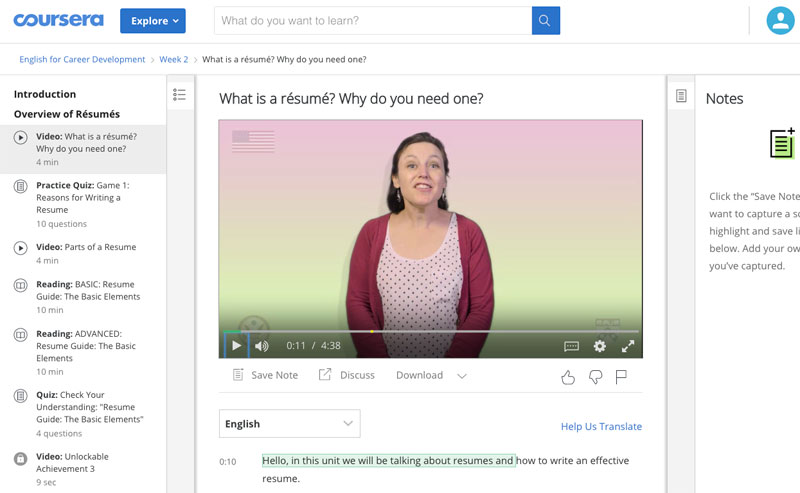
    The “English for Career Development” course has become a remarkable success after reaching 320,000 learners on Coursera.org.

    This free, two-week online class, created by the University of Pennsylvania, and funded by the U.S. Department of State Bureau of Educational and Cultural Affairs, Office of English Language Programs, is designed for non-native English speakers. It is distributed under a Creative Commons 4.0 Attribution license, meaning that all course materials are available for re-use, repurpose and free distribution.

    Two English language specialists, Brian McManus, and Robyn Turner, teach about the job search, application, and interview process in the United States.

    “This course will also give you the opportunity to explore your global career path while building your vocabulary and improving your language skills to achieve your professional goals. The first unit in this course will introduce the U.S. job application process and provide strategies for identifying the jobs that match your interests and skills. Unit 2 will take you through the steps necessary to produce a professional-looking resume. In unit 3, you will work to develop a clear and concise cover letter. The final unit of the course focuses on networking and interview skills,” the instructors explain.

    The estimated effort required to complete the course is 21 hours, after 10 hours/week study time.