Category: Top News

  • Podcast Analysis: Behind the Freshman Year for Free Program

    Podcast Analysis: Behind the Freshman Year for Free Program

    Over 60,000 learners have registered on the Modern States.org platform for taking CLEP and AP-related courses.

    David Vise, Executive Director of Modern States Education Alliance, comments in this podcast what is behind this program’s success.

    Video of the podcast:

  • Open edX  | June 2018 : AMI, 2018 Conference…

    Open edX | June 2018 : AMI, 2018 Conference…

    Newsletter format  |  Click here to subscribe ]

    JUNE 2018 – NEWSLETTER #6


    SOFTWARE

    Prof. Lorena Barba implemented an effective flipped learning experience with Jupyter

    • IBL Education launched a free, easy-to-handle, production-ready version of Open edX, available on AWS’ AMI marketplace

    Big Blue Button improved its integration on the Open edX platform


    2018 OPEN EDX CONFERENCE

    A successful Open edX conference in Montréal. The most interesting tweets

    Agarwal: We expect to triple our global reach to 100M learners in 2022

    • Videos and slides of the 2018 Open edX Conference

    Zvi Galil shared insights on Georgia Tech’s online CS Master’s (Video Talk)

    “MOOCs are not addressing the problems of education,” said Columbia’s researcher Fiona Hollands

    • Jupyter-based courses in Open edX: Authoring and Grading with notebooks


    COURSES

    Microsoft has developed 180+ courses on edX.org, with 2.6M learners

    Jeb Bush advocated at CNBC the Open edX-based ‘Freshman Year For Free Program’

    • Duke encouraged its community to use Open edX for internal training

    • McKinsey Academy refocused his course offering targeting pre-IPO companies


    STRATEGY

    Harvard University will launch LabXchange, an Open edX Virtual Lab platform for biology students

    Michigan Online, a new one-stop portal for all of the MOOCs of U-M

    edX formulated its vision for adaptive learning

    • A million dollars may be the price tag to deploy and maintain an Open edX platform, said a provider


    This newsletter about Open edX is a monthly report compiled by the IBL News journalist staff, in collaboration with IBL Education, a New York City-based company that builds data-driven learning ecosystems and courses with Open edX. If you enjoy what you read please consider forwarding it to spread the word. Click here to subscribe.

    Archive:
    Newsletter #5 May 2018
    Newsletter #4 April 2018
    Newsletter #3 November 2017

    Newsletter #2 Octubre 2017
    Newsletter #1 Sept 2017

    Read also the latest IBL Newsletter on Learning Innovation

  • McKinsey Academy Refocuses Into Courses for Pre-IPO Companies

    McKinsey Academy Refocuses Into Courses for Pre-IPO Companies

    McKinsey has started to launch a new marketing concept, Fuel by McKinsey (still in Beta), which aims to refocus course offering at its Open edX-based educational portal.

    McKinsey Academy, which has experienced several changes in its management team in the last years, is now advertising courses intended for its pre-IPO customer companies in areas such as Problem Solving, Communicating with Impact, and Team Management.

    Each course is a synchronous 6-8 week online class, with a required commitment of 90-120 minutes per student per week and an enrollment in teams of 4-5 people for a social experience.

  • Harvard Will Launch LabXchange, an Open edX Virtual Lab Platform for Biology Students

    Harvard Will Launch LabXchange, an Open edX Virtual Lab Platform for Biology Students

    The Amgen Foundation and Harvard University will launch next year a science education platform based on Open edX called LabXchange. As a founding sponsor, Amgen has granted $6.5 million to Harvard to develop this initiative.

    Intended for high school and college students studying biology, LabXchange will offer digital instruction, virtual lab experiences, and opportunities for collaborating and mentoring. This way aspiring scientists will get free lab access online with experimental simulations.

    “As a result of economic or geographic limitations, millions of students do not have access to one of the most central aspects of being a scientist, which is working in a laboratory,” said Robert Lue, principal investigator of LabXchange and professor of the practice of molecular and cellular biology at Harvard.

    LabXchange will build on Amgen projects such as its scholars’ program or the Amgen Biotech Experience, with 660,000 high school students.


  • IBL Launches a Free, Easy-to-Handle, Production-Ready Version of Open edX

    IBL Launches a Free, Easy-to-Handle, Production-Ready Version of Open edX

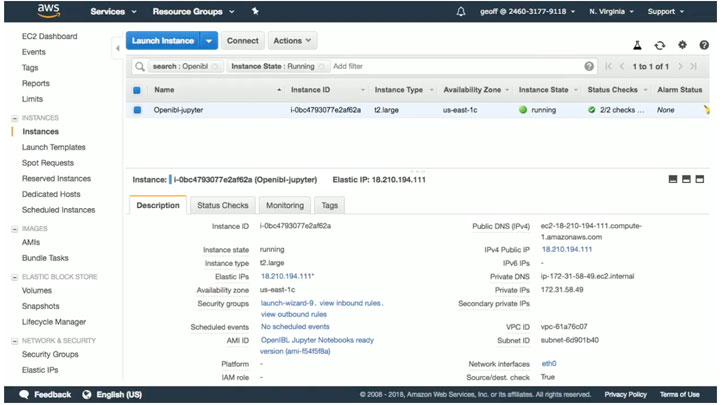
    IBL Education has just announced the first available Open edX distribution. Open IBL is an easy-to-handle, production-ready version of the latest release of the Open edX software (Ginkgo.2). It is free and it ready to go from the AWS (Amazon Web Services) AMI market place.

    “We took the latest version of the Open edX software (Ginkgo.2), stabilized it and equipped it with a command-line builder to easily get up and running. OpenIBL is a contribution of ours to the educational community,” explained Michael Amigot, CEO at IBL Education.

    There are four steps to launch Open IBL instance:

    1 – Go to your Amazon EC2 dashboard
    2 – Click on “Launch instance”
    3 – Select Community AMIs
    4 – Search “OpenIBL”

    The Open IBL distribution allows you to easily personalize the setup:

    SSH into your new deployed OpenIBL instance, and use these commands to change these basic settings:

    sudo ibl lms-domain your_lms_domain_name_or_ip_adress
    sudo ibl cms-domain your_cms_domain_name_or_ip_adress
    sudo ibl platform-name “Your platform Name”
    sudo ibl platform-email your_email_adress
    .
  • Jupyter-Based Courses in Open edX: Authoring and Grading with Notebooks

    Jupyter-Based Courses in Open edX: Authoring and Grading with Notebooks

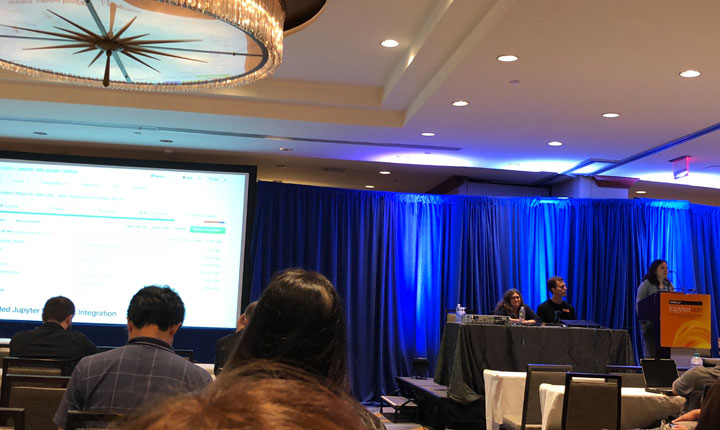
    Prof. Lorena Barba, from GW, presented on May 30 at the Open edX Conference two software extensions (XBlocks) to better integrate Jupyter into the Open edX platform:

    1. Jupyter Notebook Viewer XBlock—from any public Jupyter Notebook (e.g., in a public repo on GitHub), pull content into a course learning sequence using only the URL, and optional start and end marks (any string from the first cell to include, and the first cell to exclude).This allows course authors to develop their course content as Jupyter Notebooks, and to build learning sequences reusing that content, without duplication. It also has the added benefit that the development of the material can be hosted on a version-controlled repository. (Open edX, itself, doesn’t provide version control of course content.)[See IBL’s post about the XBlock, and the code repository—the XBlock is open source under a BSD3 license.]
    2. Graded Jupyter Notebook XBlock—create an assignment using the nbgrader Jupyter extension, then insert a graded sub-section in Open edX that will deliver this assignment (as a download), auto-grade the student’s uploaded solution, and record the student’s score in the gradebook.The XBlock instantiates a Docker container with all the required dependencies, runs nbgrader on the student-uploaded notebook, and displays immediate feedback to the student in the form of a score table.[See IBL’s post, and the code repository—the XBlock is open source under BSD3.]

    Prof. Barba has been teaching with Jupyter for the last five years. Her first open teaching module using Jupyter was “CFD Python”, released in July 2013. In 2014, Barba developed and taught the first massive open online course (MOOC) at the George Washington University: “Practical Numerical Methods with Python.” The course was written entirely as Jupyter Notebooks, and it was self-hosted on a custom Open edX site (where it amassed more than 8000 users over 3 years).

    Jupyter is a set of open-source tools for interactive and exploratory computing. At the center of them is the Jupyter Notebook, a document format for writing narratives that interleave multi-media content with executable code, using any of a set of available languages (of which Python is the most popular).

    The work presented at the conference is the brainchild of Prof. Lorena Barba, implemented by her tech partners at IBL Education.

  • Michigan Online, a New One-Stop Portal for All of the MOOCs of U-M

    Michigan Online, a New One-Stop Portal for All of the MOOCs of U-M

    The University of Michigan (U-M) has launched a portal called Michigan Online. which brings together more than 120 MOOCs, teach-outs, and programs currently hosted on Coursera and edX (overall, with 7 million enrollments).

    “The launch of Michigan Online will make it easier for people on and off campus to navigate the rich and growing content that is Michigan,” said James Hilton, U-M vice provost for academic innovation. “Michigan Online further extends U-M’s ability to provide high-quality learning opportunities for learners at all levels,” added James DeVaney, U-M Associate Vice Provost for Academic Innovation.

    • This portal offers users a chance to browse an extensive library of online experiences developed by faculty and instructional teams.
    • Users can look for courses by subject, duration of the course and type.
    • Course and teach-out subjects include biology and life sciences, arts and humanities, social sciences, business and finance, education and teacher training, physical science and engineering, data science, computer science, health and safety, and design.

    Michigan NewsOnline portal helps learners find U-M digital learning opportunities in one place

  • Videos and Slides of the 2018 Open edX Conference

    Videos and Slides of the 2018 Open edX Conference

    The organizing team of the 2018 Open edX Conference in Montreal has started to post videos and slides of the sessions.

    In addition, there is a post-conference survey, whose completion entitles anyone to get 20% off of next year’s conference in San Diego (March 26-28, 2019).

    Organized around the theme “Open Source is the Future of Education”, this year’s Montreal conference gathered over 300 people from six continents and 70 contributors who ran tutorials, sat on panels and delivered talks. Every keynote and breakout session was live-streamed, and those videos are now hosted on YouTube.

    “As a veteran of 20 years in the technology industry, I haven’t seen a community or conference this positive and enthusiastic in a long time, and that’s due in large part to our amazing community,” summarized John Mark Walker, community manager at the edX organization.

    [Disclosure: IBL Education was one of the sponsors of the 2018 Open edX Conference, along with Microsoft, Proversity, Appsembler, E-ducation, OpenCraft, RaccounGang, Arbisoft, DRC Systems, HEC ERP Sim Lab, EDUNext and Extension Engine].

  • Video Talk: Zvi Galil Shared Insights on Georgia Tech’s Online CS Master’s

    Video Talk: Zvi Galil Shared Insights on Georgia Tech’s Online CS Master’s

    Georgia Tech’s online master’s degree in computer science –OMSCS for short– continues its successful path, with 6,365 enrolled at the start of the Spring 2018 semester.

    This first-of-its-kind program, launched in January 2014, has attracted 10,178 unique enrollments since the launch. Zvi Galil, Dean of Georgia Institute of Technology, disclosed these data during his talk at the 2018 Open edX Conference in Montreal, Canada.

    During his keynote, Mr. Galil shared lessons learned running the program which was described by Harvard University researchers as “the first rigorous evidence showing an online degree program can increase educational attainment”.

    The program, priced at $6,600, has also paved the way for a number of similar, MOOC-based MS programs.

    Zvi Galil’s talk described the OMSCS program, how it came about, its first four years, and what Georgia Tech has learned from the OMSCS experience.

    Video of the talk


  • Learning Innovation | June 2018: SNHU, Google, Udacity, 2U, Pluralsight, Georgia Tech…

    Learning Innovation | June 2018: SNHU, Google, Udacity, 2U, Pluralsight, Georgia Tech…

    Newsletter format  |  Click here to subscribe ]


    JUNE 2018  –  NEWSLETTER #12 ON LEARNING INNOVATION

    A Portuguese university lets students explore civil engineering structures with virtual reality as a way to better engage in their STEM careers.

    Southern New Hampshire University (SNHU) is using blockchain credentials to issue Bachelor’s and Associate’s degrees.

    Google and Udacity have teamed up to offer 12 free career-oriented courses.

    Walmart will allow employees to study online for free with any of these nonprofit colleges: University of Florida, Brandman University and Bellevue University.

    Trilogy Education, which offers bootcamp programs to universities, has raised $50 million.

    2U, with its stock soaring and earnings beating expectations, has raised another $331 million.

    The number of students taking online courses is quickly rising while overall enrollments decrease. Growth is now over 17 percent.

    Chegg bought a Berkeley-based AI-feedback tool startup called WriteLab for $15 million.

    MissionU, which was billed as a one-year alternative to a traditional college, will cease operations after its sale to WeWork.

    Pluralsight raised $310 million on its first day on Nasdaq. Prior to going public, the Utah-based startup with 6,700 courses and 659,000 users, got $192.5 million in venture capital.

    Developers at Penn State University have created a tool to create online courses in a single browser screen, called HAX (Headless Authoring Experience).

    • Georgia Tech’s online Computer Science Master’s Degree’s secrets were revealed by its dean (Video).

    • MOOCs are not addressing the problems of education, said Columbia’s researcher Fiona Hollands (Video) .


    The IBL newsletter is a topic-curated email report compiled by Michael Amigot, Founder at IBL Education, a company specialized in Open edX technology and video course production at scale. If you enjoy what you read please consider forwarding it. Click here to subscribe.

    Archive:
    IBL Newsletter #11 – May 2018
    IBL Newsletter #10 – April 2018
    IBL Newsletter #9 – March 15, 2018
    IBL Newsletter #8 – March 1, 2018
    IBL Newsletter #7 – February 2018
    IBL Newsletter #6 – January 31, 2018

    IBL Newsletter #5 – January 15, 2018
    IBL Newsletter #4 – December 2017
    IBL Newsletter #3 – November 2017
    IBL Newsletter #2 – October 2017
    IBL Newsletter #1 – September 2017