It will be an open, self-paced, 4-week course, which will teach popular machine learning algorithms and principal component analysis, with a practical case in mind: building a movie recommendation system.
The most popular data science methodologies come today from machine learning and how it builds prediction algorithms using data. Many popular products, from spam detectors and speech recognition systems to handwriting readers implemented by the postal service, include machine learning.
Taught by Rafael Irizarry, Professor of Biostatistics at Harvard University, “Data Science: Machine Learning” will be part of this institution’s Professional Certificate Program in Data Science.
We are walking into an AI-empowered era. And not only self-driving cars and robots are performing repetitive tasks.
Nearly all industries, including education, will eventually be affected by AI (Artificial Intelligence).
Today we are seeing the impact on customer attention, where machine learning algorithms using data are making decisions.
Machine learning, a subset of AI, is the new weapon in education, too. Personalized learning, adaptive pathways, and predictive analytics will be the most visible outcome.
We’re already seeing how data is helping to track student knowledge and recommend next steps.
We all know IBM Watson, ALEKS, and Knewton. Even us, at IBL Education, we’ve implemented these algorithms in some online lessons, and we’ve deployed predictive analytics on the Open edX platform.
However, we need much more data to improve our algorithms.
Machine learning in education is in the early stages.
Students, parents, and advisors will continue to make decisions about learning pathways, but data will play an increasing role in guiding recommendations.
In a way, the AI tsunami has not even started.
Mikel Amigot is the CEO of IBL Education (Open edX) and IBL News
The list of universities that recognize the MITx / edX MicroMasters credential has grown until 19 pathway institutions in 11 countries and 58 different pathways to a master’s degree.
The last five institutions joining the MicroMasters are:
Harvard Extension School for the programs in supply chain management (SCM) and data, economics and development policy (DEDP);
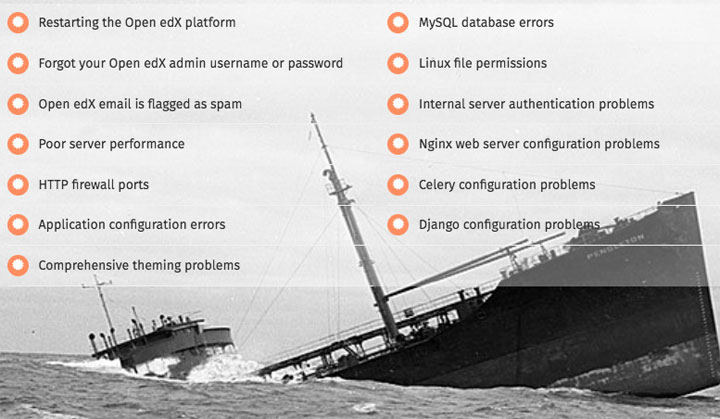
Manually configuring and maintaining the Open edX platform is a challenging task.
To help in difficulties, a freelance developer based in Mexico, Lawrence McDaniel, has posted in this blog a basic troubleshooting guide with solutions.
Interestingly, McDaniel says that “the cure-all is restarting the platform”. “When your Open edX installation is misbehaving and you’re unsure of your next step, I always like to begin with a reboot. It can’t hurt, and occasionally you’re pleasantly surprised to find your instance in good health immediately afterward.”
This newsletter about Open edX is a monthly report compiled by the IBL News journalist staff, in collaboration with IBL Education, a New York City-based company that builds AI analytics-driven, revenue-oriented learning ecosystems, and courses with Open edX.
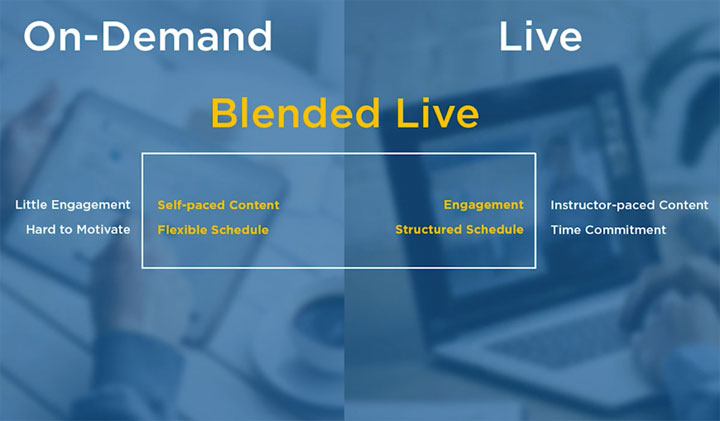
Global Knowledge will launch a flexible course delivery format called “Blended Live” at the end of October 2018. This will be a hybrid model which combines the flexibility of on-demand and self-paced online learning with the physical presence and expert direction of the instructor-led training format.
“We have created a learning experience that will resonate with many in the corporate world,” explained Kevin Pawsey, Global CIO at Global Knowledge, on a blog post.
The first Blended Live courses will be amongst Global Knowledge’s most popular subjects: Interconnecting Cisco Networking Devices, Cybersecurity Foundations, and Architecting Microsoft Azure Solutions.
Global Knowledge’s online platform includes the Open edX codebase and has been developed in partnership with IBL Education.
edX engineers released this week a new release of Hawthorn, Hawthorn.2.
This new version of the Open edX platform includes “a few changes and security fixes”, according to Ned Batchelder, an edX architect.
“If you are running Hawthorn, we recommend updating to open-release/hawthorn.2,” he added.
These are the commits in hawthorn.2 since hawthorn.1: —- ./edx-platform —-
58d2ac8c92 2018-09-10 (tag: open-release/hawthorn.2, origin/open-release/hawthorn.master, open-release/hawthorn.master) Edit test value to be valid URL format Farhanah Sheets
24f6faf5d8 2018-09-10 Bump RecommenderXBlock version Farhanah Sheets
55a3d659ae 2018-09-07 Merge pull request #18901 from edx/pwnage101/cherry-pick-un-deletion-mgmt-command-gdpr-plat-2308 Ned Batchelder
1a66c1542d 2018-09-06 undo a hand-modification performed as part of a previous cherry-pick Troy Sankey
313be9b2ab 2018-07-30 Mgmt command to cancel user retirement request. John Eskew
715b8d31ac 2018-07-18 Adding user_api call to get retirements by date range and current state bmedx
99a0c368e5 2018-07-13 PLAT-2186 – allow retirement states to be forced by driver script bmedx
Harvard University’s cutting-edge and free 100 courses on edX.org –covering topics from calculus and climate change to Shakespeare and Stravinsky– are a good tool to enrich a face-to-face classroom experience and enhance professional development-oriented skills.
HarvardX has suggested four approaches:
Use online courses to deepen your content knowledge and learn new teaching strategies. For example, the course CS50x: Introduction to Computer Science includes new and effective instructional strategies.
Allow students to virtually interact with other course participants, so they can learn the views of other people and collaborate with them. In the Practical Improvement Science in Health Care course, students feel connected and realize that others around the U.S. are on a similar journey and their voices matter.
Enroll and connect with a global community of teachers. Leaders of Learning, a course which examines theories of education and leadership, allows for this kind of collaboration.
Earn certificates of participation that can be used to apply for professional development credit at the state or school district levels. This page details how to work with continuing education credits.
The Yidan Prize Foundation granted this month the 2018 Yidan Prize for Education Development to edX CEO, Anant Agarwal. Mr. Agarwal was recognized for making education more accessible to people around the world via the edX online platform.
The Yidan Prize judging panel, led by former Director-General of UNESCO Koichiro Matsuura, invested six months to consider over 1,000 nominations spanning 92 countries.
Simultaneously, Larry V. Hedges of Northwestern University received the Yidan Prize for Education Research for his groundbreaking statistical methods for meta-analysis.
Founded in 2016 by Charles Chen Yidan, the Yidan Prize aims to create a better world through education.
The Yidan Prize for Education Research and the Yidan Prize for Education Development will be awarded in Hong Kong on December 10, 2018, by Mrs. Carrie Lam Cheng Yuet-Ngor, chief executive of the Hong Kong Special Administrative Region.
Following the ceremony, the laureates will be joined by about 350 practitioners, researchers, policymakers, business leaders, philanthropists, and global leaders in education to launch the 2018 edition of the Worldwide Educating for the Future Index (WEFFI), the first comprehensive index to evaluate inputs into education systems rather than outputs, such as test scores.
Dorothy K. Gordon, chair of UNESCO IFAP and head of the judging panel, commended Professor Agarwal for his work behind the MOOC movement. “EdX gives people the tools to decide where to learn, how to learn, and what to learn. It brings education into the sharing economy, enabling access for people who were previously excluded from the traditional system of education because of financial, geographic, or social constraints. It is the ultimate disrupter with the ability to reach every corner of the world that is internet enabled, decentralizing and democratizing education.’’
Vice President for Open Learning Sanjay Sarma praised edX for creating a platform “where learners from all over the world can access high-quality education and also for enabling MIT faculty and other edX university partners to rethink how digital technologies can enhance on-campus education by providing a platform that empowers researchers to advance the understanding of teaching through online learning.”
In the past six years, edX built a community of over 17 million learners from around the world; partnered with more than 130 prestigious universities, institutions and corporations; and continue to make the edX platform available for free as Open edX open source software.
The Open edX platform has been adopted by 1600 sites, where over 20 million additional people learn every day.
Jupyter Notebook is a surprisingly powerful teaching tool.
If you are an educator, engineer or scientist and haven’t heard about Jupyter, you should take the time to learn about it.
Tim O’Reilly said that Jupyter is “the next big thing.”
This technology received the 2017 ACM Software System Award.
Essentially, Jupyter Notebook is an open-source web application to create and share documents with live code, equations, visualizations, and text.
Currently, it is mostly used for Data Science and Machine Learning, but it goes far beyond. Its tools are easily extensible – e.g., you can play mp4 movie files.
In education, Jupyter opens a new pedagogical model. It is also a new genre of OER.
Mikel Amigot is the Founder of IBL News and IBL Education (Open edX)