Category: Top News

  • Google Prepares the Launch of a New Colab AI Tool, with Similar Features to GitHub Co-Pilot

    Google Prepares the Launch of a New Colab AI Tool, with Similar Features to GitHub Co-Pilot

    IBL News | New York

    Google plans to release soon, initially in the U.S. for paid users, its new code generation Colab, with added AI coding features like code completions, natural language to code generation, and a code-assisting chatbot.

    The tool will use Codey, a family of code models built on PaLM 2, announced at I/O Google’s event recently.

    Fine-tuned on a large dataset of permissively licensed code from external sources, Codey has been customized especially for Python and for Colab-specific uses.

    Over seven million people already use Colab, which is free of charge, as a software tool for machine learning, data analysis, and education.

    “Natural language to code generation helps users to generate larger blocks of code, writing whole functions from comments or prompts; the goal here is to reduce the need for writing repetitive code,” said Google in a blog-post.

    “Access to these features will roll out gradually in the coming months, starting with our paid subscribers in the U.S. and then expanding into the free-of-charge tier. We’ll also expand into other geographies over time.”

    Twitter’s account @googlecolab is the main source of announcements about releases and launches.
    .

  • Meta Will Provide Generative AI for Advertisers in Instagram or Facebook

    Meta Will Provide Generative AI for Advertisers in Instagram or Facebook

    IBL News | New York

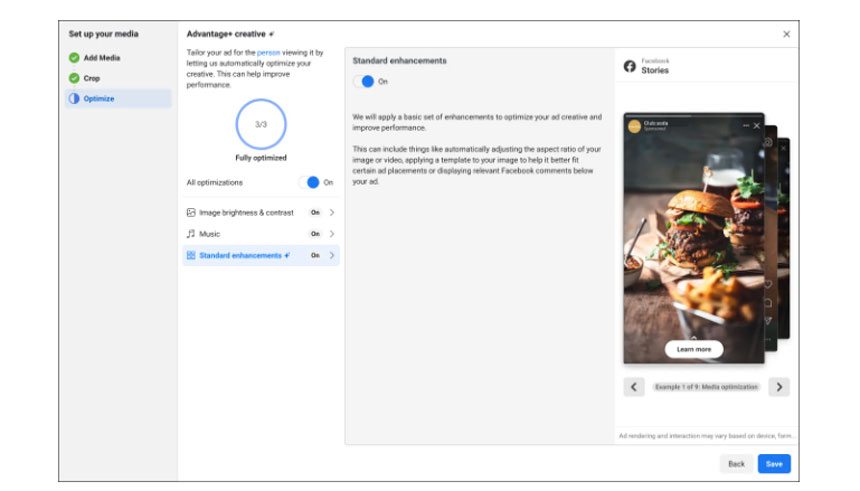
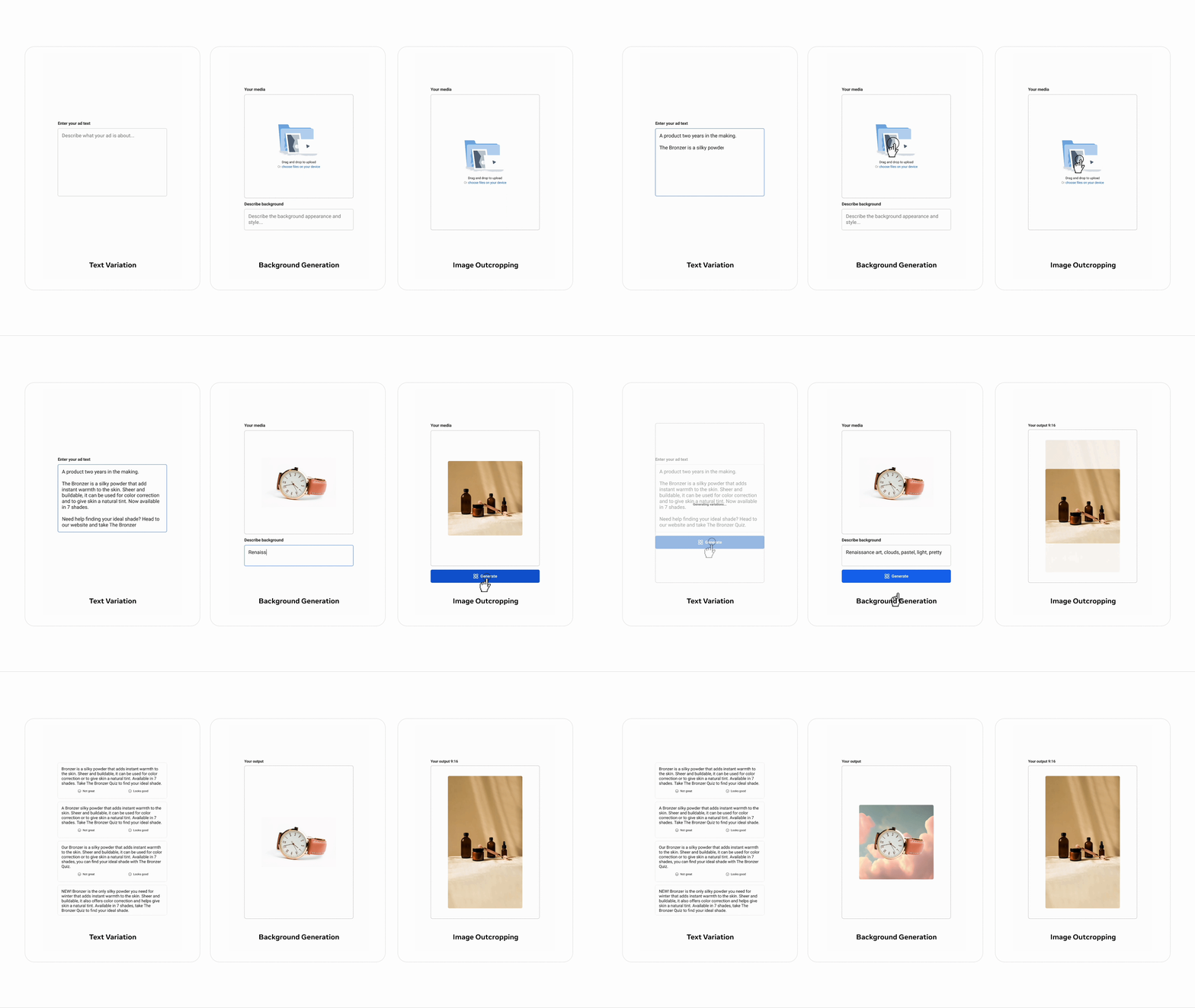
    Meta, formerly known as Facebook, announced an AI Sandbox for advertisers to help them improve their ad performance for businesses and spend less time and resources on repurposing creative assets.

    This AI Sandbox testing background, announced last week, will allow the creation of different variations of the same copy for different audiences, background generation through text prompts, and image cropping in different aspect ratios for Instagram or Facebook posts, stories, or short videos like Reels.

    These features, are available today to select advertisers and it will gradually expand to more in July, according to the company.

    These features, called Meta Advantage, are available today to select advertisers, and they will gradually expand to more advertisers in July, according to the company

    Currently, some startups such as Omneky and Movio are leaning toward DALLE-2, GPT-3, and other generative AI-powered ad tools and marketing videos for advertisers.

  • Sam Altman and Other Giants Say that AI Could Be as Deadly as Pandemics and Nuclear Weapons

    Sam Altman and Other Giants Say that AI Could Be as Deadly as Pandemics and Nuclear Weapons

    IBL News | New York

    Hundreds of AI scientists, academics, tech CEOs, and public figures, including OpenAI CEO Sam Altman and DeepMind CEO Demis Hassabis, added their names to a one-sentence statement urging global attention to existential AI risk.

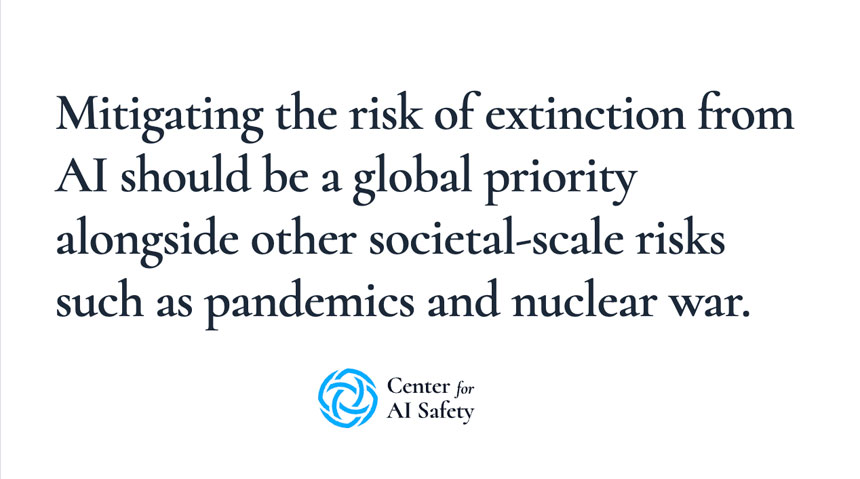
    The statement, hosted on the website of a San Francisco-based, privately-funded not-for-profit called the Center for AI Safety (CAIS), states:

    “Mitigating the risk of extinction from AI should be a global priority alongside other societal-scale risks such as pandemics and nuclear war.”

    A short explainer on CAIS’ website explained that the statement has mostly been kept succinct to overcome the obstacle and open up discussion.

    “It is also meant to create common knowledge of the growing number of experts and public figures who also take some of advanced AI’s most severe risks seriously,” stated the site.

    In the last two months, policymakers have actually heard the self-same concerns, as AI hype has surged off the back of expanded access to generative AI tools like OpenAI’s ChatGPT and DALL-E.

    In March, Elon Musk and many other experts released an open letter calling for a six-month pause on the development of AI models more powerful than OpenAI’s GPT-4. This pause would allow for buying time for shared safety protocols to be devised and applied to advanced AI.

  • Generative AI Threatens the Valuation of EdTech Brands While Nvidia Hits a $1T Market Cap

    Generative AI Threatens the Valuation of EdTech Brands While Nvidia Hits a $1T Market Cap

    IBL News | New York

    EdTech publicly traded companies like Chegg and Duolingo, which have lost a significant portion of their value, are now asserting that AI is a friend rather than a foe, despite investors’ warnings, according to a report issued by the Financial Times yesterday.

    However, some students, uninspired by textbooks, such as 17-year-old Australian Justin, have started using ChatGPT as their own private tutor. This student posted his prompts and tactics on GitHub under the name “Mr. Ranedeer, AI tutor,” and it has been bookmarked 5,800 times.

    This example highlights how cheap generative AI might disrupt traditional learning and education, posing a real threat to EdTech businesses that offer online tutoring and exam practice.

    Online homework help platforms, like Chegg and others in the sector, including Pearson have dramatically dropped in the last weeks after their managers admitted ChatGPT hurt their bottom line.

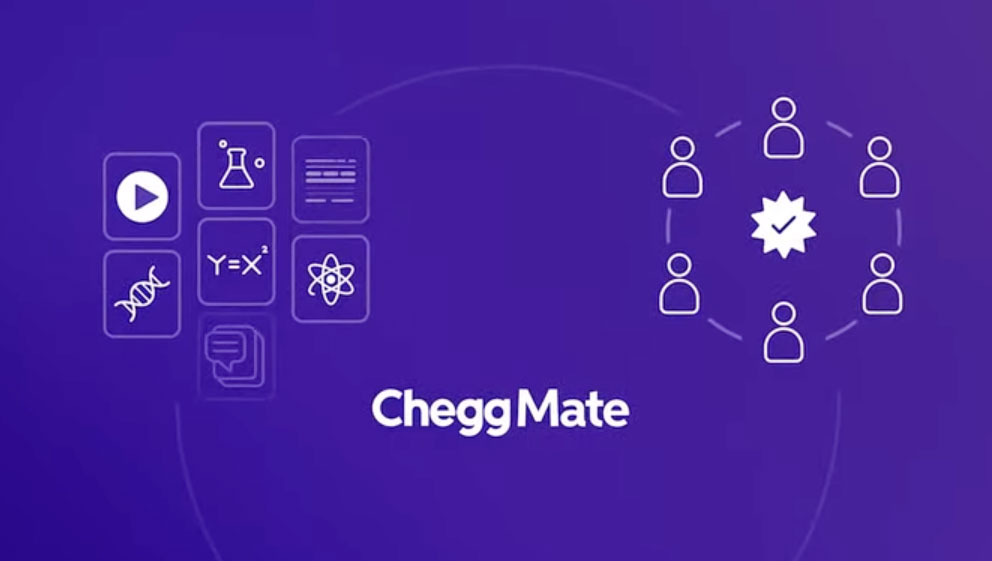
    Chegg’s AI “Cheggmate” app, which offered personalized learning using AI, did not prevent it from being hammered by markets.

    “Chat GPT will certainly put pressure on purely content-driven learning platforms,” Rhys Spence, head of research at EdTech venture capital investor Brighteye Ventures, said to the Financial Times.

    However, Doulingo’s CEO, Luis von Ahn, stated that generative AI has the potential to make their services more attractive. “Duolingo’s purpose has always been to make widely available AI platforms as good as a human teacher,” he added while assuring that paid subscribers to its AI-powered App increased to 4.8 million at the end of the first quarter this year.

    Online tutoring Nerdy’s CEO Chuck Cohn said that “there are skills only humans can still offer.” “In theory, every bit of knowledge or skill you could ever need is available already in YouTube or a book in the library, and people don’t always use it,” he explained. “They require structured coaching to stick with learning.”

    Meanwhile, Nvidia hit almost a $1 trillion market cap this Tuesday after another 3% increase in its stock’s value.

    The chipmaker’s shares rocketed last week after it posted quarterly earnings that significantly beat consensus estimates. The expected sales were 50% higher than consensus estimates of $7.15 billion.

    Significantly, Nvidia forecast $11 billion in sales for the second quarter of fiscal 2024 alone.

    Nvidia’s GPUs are critical to generative AI platforms like OpenAI’s ChatGPT and Google’s Bard.

    It’s been a banner year for chipmakers, driven, in part, by the AI frenzy and the possibility of slowing Federal Reserve rate hikes. Alongside Nvidia, Alphabet, Meta, and Microsoft were also buoyed in last week’s trading.
  • ChatGPT Now Allows Sharing Links

    ChatGPT Now Allows Sharing Links

    IBL News | New York

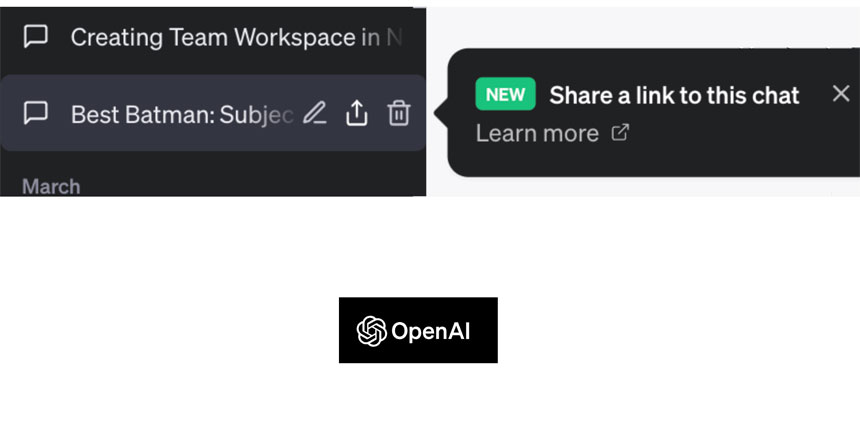
    OpenAI has recently introduced a new feature called “Shared Links,” which enables the public sharing of ChatGPT conversations. This feature is currently available exclusively to Plus users.

    With this new feature, users can generate a unique URL for a ChatGPT conversation and easily share it with friends, colleagues, and collaborators.

    “Shared links provide users with a more convenient way to share their ChatGPT conversations, eliminating the need for the previous cumbersome method of sharing screenshots,” stated OpenAI.

    Currently, shared links are accessible only on chat.openai.com and are not yet supported on the ChatGPT iOS app.

  • Microsoft Issues Designer, Its Canva-Style Web App for Creative Users

    Microsoft Issues Designer, Its Canva-Style Web App for Creative Users

    IBL News | New York

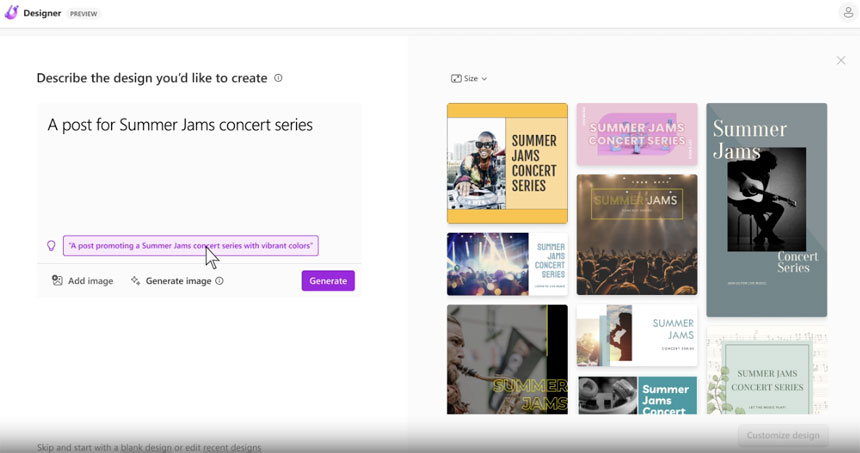
    Designer, Microsoft’s AI design web tool, launched in public preview with an expanded set of features last week.

    This Canva-style app can generate designs for presentations, posters, postcards, invitations, and graphics for social media.

    It uses AI-generated texts and images (through DALL-E 2) to ideate designs with drop-downs and text boxes.

    Designer can also generate written captions, hashtags for social media posts, layouts, and animated suggestions with backgrounds.

    Upcoming features include replacing or erasing backgrounds, people, or backdrops.

    “It’s like having photoshoots on demand, anywhere you want to be,” said the company in a blog post.

    “Sometimes there’s just that one little thing in the photo that keeps it from being completely perfect. Designer makes it easy to zap one little thing like it was never there.”

    Designer is available through its website and Microsoft’s Edge browser through the sidebar.

    For now, during the preview period, it’s free; later, it’ll be included in Microsoft 365 Personal and Family Subscription.

    Microsoft said that users will have “full” usage rights to commercialize the images they create.
    .

  • A Majority of U.S. Executives Reluctant to Implement Generative AI

    A Majority of U.S. Executives Reluctant to Implement Generative AI

    IBL News | New York

    Enterprise companies are moving slowly to adopt generative AI, because of concerns around data privacy, AI “hallucinations” or a lack of talent and governance.

    A KPMG study of U.S. executives out last month found that 60% of respondents said that they are still a year or two away from implementing their first solution.

    Anyway, an army of service providers is lining up to help enterprise to implement generative AI, warning about the risk of falling behind competitor.

    Their pitch is based on harnessing the power of generative AI to exponentially enhance productivity and innovate the pace of business innovation.

    The biggest consulting firms, such as Bain & Company — in partnership with OpenAI — , Deloitte, PwC are building up their own generative AI capabilities while advising clients on how use generative AI and build those tools.

    Their belief is that they have to do it themselves first before recommending the adoption and scaling of that technology.

    On the other hand, OpenAI said that is working on a new ChatGPT Business subscription for professionals who need more control over their data as well as enterprises seeking to manage their end-users.

    Cohere
    Auditoria.AI
    Kognitos

  • OpenAI Warns It Might Leave the European Union If the Upcoming AI Act Doesn’t Change

    OpenAI Warns It Might Leave the European Union If the Upcoming AI Act Doesn’t Change

    IBL News | New York

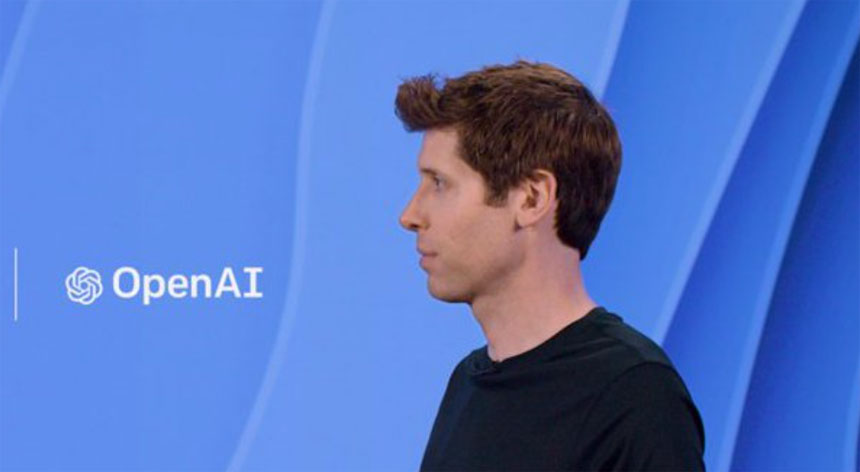
    OpenAI CEO Sam Altman said yesterday at an event in London that ChatGPT could leave Europe if it fails to comply with the upcoming AI regulations by the European Union (EU).

    “The current draft of the EU AI Act would be over-regulating; there’s so much they could do, like changing the definition of general-purpose AI systems,” said Altman [in the picture].

    “The details really matter. We will try to comply, but if we can’t, we will cease operating.”

    As part of the draft of the EU’s regulation, companies deploying generative AI tools, such as ChatGPT, will have to disclose any copyrighted material used to develop their systems, opening the way for artists to claim compensation for the use of their material.

    Additionally, the new requirement would make companies that develop the models, including OpenAI and Google, partly responsible for how their AI systems are used, even if they have no control over the particular applications the technology has been embedded in (or APIs).

    Moreover, this Act would impact open-source models and non-profit use of the latest AI by U.S. organizations.

    Google’s CEO Sundar Pichai has also toured European capitals this week, seeking to influence policymakers as they develop guardrails to regulate AI. He met officials in Brussels on Wednesday, including Thierry Breton, the EU’s digital chief overseeing the AI Act.

    Breton told the Financial Times that they discussed introducing an “AI pact” — an informal set of guidelines for AI companies to adhere to before formal rules are put into effect.

    American tech companies have urged Brussels to proceed with caution in regulating AI, arguing that Europe should find a balance between opportunities and risks.

    The EU parliamentarians reached common ground on the draft of the AI Act earlier this month. It will now be debated between the representatives of the Parliament, the Council, and the Commission to thrash out the final details of the bill, which is due to come into force by 2025.

    Experts say that without any European companies leading the charge in AI, EU politicians have little incentive to support the industry’s growth.

  • Microsoft Adds New Tools, Copilots, and Plugins Into Its Products [Video]

    Microsoft Adds New Tools, Copilots, and Plugins Into Its Products [Video]

    IBL News | New York

    During its annual event for developers, and following an extension of its partnership with OpenAI, Microsoft’s CEO, Satya Nadella [in the picture above], announced this week new AI developments on its products, including an AI-powered Bing in Windows 11 and Skype, and Copilots in Dynamics 365, Microsoft 365, and Power Platform.

    The software giant also unveiled that it’s adopting the same plugin standard that OpenAI introduced for ChatGPT — such as OpenTable, Expedia, Instacart, Kayak, Atlassian, Adobe, ServiceNow, Thomson Reuters, and Zillow — enabling interoperability across ChatGPT and Microsoft’s 365, Teams, and other copilot offerings.

    In addition, ChatGPT Plus will have Bing — which includes citations — as the default search.

    During the Microsoft Build conference, the company also introduced Azure Machine Learning prompt flow — for developers to construct prompts — and Microsoft Fabric for analytics.

    Microsoft Fabric includes data engineering, data integration, data warehousing, data science, real-time analytics, applied observability, and business intelligence, all connected to a single data repository called OneLake.

    It comes with a Copilot, allowing users to create dataflows and data pipelines, generate code and entire functions, build machine learning models, or visualize results.

    • Microsoft Build keynotes and view videos and photos

  • Meta’s Open-Sourced AI Model that Introduced Text-to-Speech In  1,100+ Languages

    Meta’s Open-Sourced AI Model that Introduced Text-to-Speech In 1,100+ Languages

    IBL News | New York

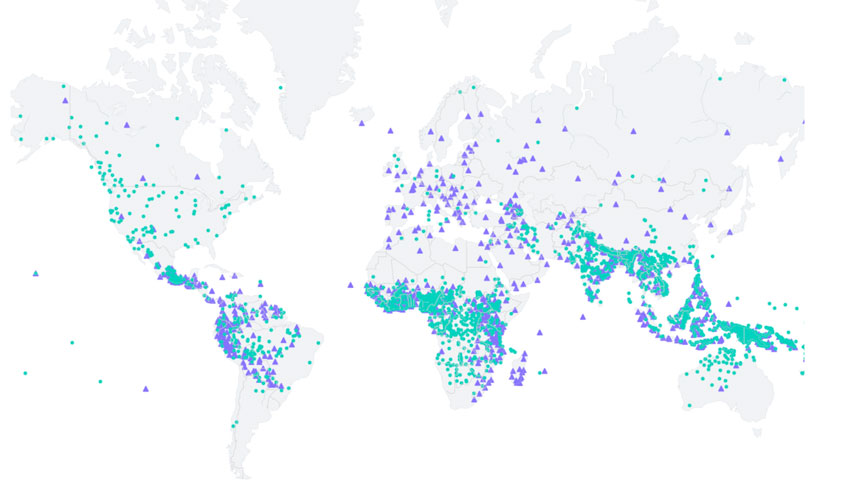
    Meta released this week as open-source software an AI model called Massively Multilingual Speech (MMS) that can recognize over 4,000 spoken languages and produces text-to-speech in over 1,100 languages.

    Today, existing speech recognition models only cover approximately 100 languages — a fraction of the 7,000+ known languages spoken on the planet.

    Machines with the ability to recognize and produce speech can make information accessible to many more people, including those who rely entirely on voice to access information.

    Speech recognition and text-to-speech models typically require training on thousands of hours of audio with accompanying transcription labels.

    “Through this work, we hope to make a small contribution to preserve the incredible language diversity of the world,” said Meta.

    Meta combined wav2vec 2.0, its self-supervised learning, and a new dataset that provides labeled data for over 1,100 languages and unlabeled data for nearly 4,000 languages.

    To collect audio data for thousands of languages, Meta turned to religious texts, such as the Bible, that have been translated into many different languages and whose translations have been widely studied for text-based language translation research.

    These translations have publicly available audio recordings of people reading these texts in different languages. As part of this project, Meta created a dataset of readings of the New Testament in over 1,100 languages, which provided, on average, 32 hours of data per language.

    By considering unlabeled recordings of various other Christian religious readings, Meta increased the number of languages available to over 4,000.

    “We also envision a future where a single model can solve several speech tasks for all languages. While we trained separate models for speech recognition, speech synthesis, and language identification, we believe that in the future, a single model will be able to accomplish all these tasks and more, leading to better overall performance,” Meta said.