Category: Top News

  • Course Hero Appoints New CEO; Co-Founder Becomes CEO of New Parent Company, Learneo

    Course Hero Appoints New CEO; Co-Founder Becomes CEO of New Parent Company, Learneo

    IBL News | New York

    John Peacock, currently General Manager at Course Hero, will take on the role of CEO, the company announced. Peacock was appointed to the position by Course Hero Co-Founder Andrew Grauer.

    The nomination came as Grauer stepped into the CEO role at Learneo, a new platform of businesses that includes Course Hero in its portfolio.

    Before joining Redwood City-based Course Hero, Peacock co-founded and served as CEO of a mobile gaming company, which he led through the acquisition by Kongregate.

    Another industry appointment was Stephen Laster as President of D2L (Desire to Learn) this week. In his new role, Laster will work alongside Founder and CEO John Baker and lead D2L’s strategy, product, services, sales, and marketing teams, according to the company.

  • Communication Skills Remain Vital, Says Coursera’s Job Skills Report

    Communication Skills Remain Vital, Says Coursera’s Job Skills Report

    IBL News | New York

    Coursera (NYSE: COUR) released its report, The Job Skills of 2023, yesterday, noting what skills trends are critical and increasingly critical in a digital economy. [PDF: Job Skills of 2022]

    The analysis draws on data from Coursera’s 4 million enterprise learners across 3,000 businesses, 3,600 higher education institutions, and governments in over 100 countries.

    The report highlights that:

    • Communication skills remain vital for hybrid workplaces.
    • Management skills to guide teams through change are among the fastest growing.
    • The fastest-growing digital skills have changed more rapidly than the fastest-growing human skills.

    Around 85 million jobs are expected to be displaced by 2025 due to the rapid automation of jobs. As a result, 40% of core skills will change for workers.

    However, research suggests that new roles will outpace those lost to automation, with the global workforce being offered 149 million new technology-oriented jobs by 2025.

    Surveys suggest that a majority of companies globally experience a shortage of candidates today.


  • The U.S., Euro Area, and the UK Are All Expected to See Recessions in 2023, Says BoA

    The U.S., Euro Area, and the UK Are All Expected to See Recessions in 2023, Says BoA

    IBL News | New York

    While the Federal Reserve continues its battle against inflation by raising its benchmark interest rate — yesterday, half a point to the highest level in 15 years — Bank of America’s Global Research economists and strategists said that recessions are expected in the U.S., Euro Area, and the UK in 2023.

    As a result of the recession shock, economic growth will come under pressure in the first half of the year.

    Candace Browning, Head of BofA Global Research, said, “in 2023, inflation should come down, but it will take time for central banks to declare victory.”

    These are some of Bank of America’s predictions:

    • A recession is all but inevitable: Expect a mild U.S. recession in the first half of 2023 with a risk that it starts later. Europe likely sees recession this winter with a shallow recovery thereafter as real incomes and likely overtightening pressure demand.

    • Markets turn “risk on” in mid-2023: The S&P is expected to end the year at 4000 and S&P earnings per share to total $200 for the year. Bonds should offer opportunities in the first half of the year;

    • U.S. Rates stay elevated but expect a decline by year-end 2023: Both two-year and ten-year U.S. Treasuries should end 2023 at 3.25%.

    • China’s reopening happens but could be bumpy until later in 2023.

    • After a volatile start to 2023, Emerging Markets should produce strong returns.

    Labor markets should finally ease in 2023, and the U.S. unemployment rate should peak at 5.5% in the first quarter of 2024, hindering consumer spending.

    Total returns of approximately 9% are expected in investment grade credit in 2023, in addition to a default rate peak of 5%, far below past recessions.


  • AI Adoption Plateaus and Talent Shortages Threaten the Shift

    AI Adoption Plateaus and Talent Shortages Threaten the Shift

    IBL News | New York

    The proportion of organizations using AI has plateaued between 50% and 60% for the past few years. Despite the high adoption, it has more than doubled since 2017.

    This is the main conclusion of this year’s McKinsey Global Survey on Artificial Intelligence (AI). Leaders in AI are making larger investments and engaging in advanced practices to enable scale and faster development.

    On talent and upskilling, the data show that there is significant room to improve diversity in teams, as these correlate with outstanding performance.

    Also, in the last five years, the average number of AI capabilities that organizations use, such as natural-language generation and computer vision, has doubled.

    Among these capabilities, robotic process automation and computer vision have remained the most commonly deployed each year, while natural-language text understanding has advanced from the middle of the pack in 2018 to the front of the list just behind computer vision.

    On the other hand, the talent shortage in AI-related roles — especially among AI data scientists —threaten to slow that shift for some companies.

    Michael Chui, Partner at McKinsey Global Institute, said, “We have seen the “AI winter” turn into an AI spring, but after a period of initial exuberance, we appear to have reached a plateau.”

    “Companies taking a longer view have made steady progress by transforming themselves into learning organizations that build their AI muscles over time. These companies gradually incorporate more AI capabilities and stand up increasingly more applications progressively faster and more easily thanks to lessons from past successes as well as failures. They not only invest more, but they also invest more wisely, with the goal of creating a veritable AI factory that enables them to incorporate more AI in more areas of the business.”

  • The Release of OpenAI Keeps Educators and Professionals Processing the Implications

    The Release of OpenAI Keeps Educators and Professionals Processing the Implications

    IBL News | New York

    The recent release of OpenAI’s ChatGPT, a fine-tuned version of a general-purpose chatbot is generating concern among experts worried about the reach of this technology after it took the Internet by storm.

    Paul Kedrosky, a renowned economist, venture capitalist, and MIT fellow, wrote, “shame on OpenAI for launching this pocket nuclear bomb without restrictions into an unprepared society.” He added, “OpenAI most disruptive change the U.S. economy has seen in 100 years, and not in a good way.”

    Experts are noting the massive consequences of essay writing, software engineering, and legal documents. Educators from top universities have said they won’t know what essays are fake.

    Moreover, they wonder how they’ll be able to distinguish original writing from the algorithmically generated essays they are bound to receive — and that can evade anti-plagiarism software.

    ChatGPT learning technology is learning from the request, while disruptive robots in a manufacturing plant only create economic consequences for the people working there but do not move across sector by sector.

    The fact that OpenAI is so capable of answering questions like a person is keeping professionals across a range of industries trying to process the implications.

    Analysts are highlighting the words of Elon Musk — who left OpenAI over disagreements about the company development —  when he said in 2019 that AI was an existential threat. Musk has repeatedly called for all organizations developing AI to be regulated, including his own Tesla.

    Meanwhile, Sam Altman, CEO of OpenAI, has talked about the dangers of not thinking about “societal consequences” when “you’re building something on an exponential curve.”

    Another angle of the consequences of ChatGPT is the ongoing lawsuit that is mounting against Microsoft and OpenAI over copyright infringement in the context of in-training machine learning algorithms.

    The successor to GPT-3, most likely called GPT-4, is expected to be unveiled in the near future, perhaps in 2023.

    Techcrunch: Is ChatGPT a ‘virus that has been released into the wild’?

  • John King, Former Education Secretary Named SUNY’s 15th Chancellor

    John King, Former Education Secretary Named SUNY’s 15th Chancellor

    IBL News | New York

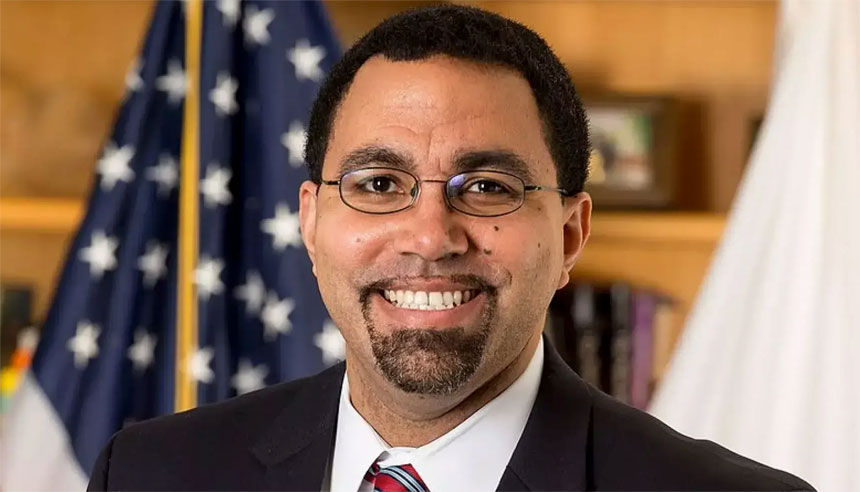
    John King, the former U.S. Education Secretary and York York Education Commissioner was named SUNY (State University of New York) Chancellor this week.

    A Brooklyn native and the state’s first Black and Puerto Rican chancellor, John King will start in January 2023 heading the 64-campus system of SUNY.

    He will succeed interim SUNY Chancellor Deborah Stanley, who has been filling the leadership post since Jim Malatras resigned a year ago.

    The SUNY Board of Trustees unanimously selected John King after a yearlong, nationwide search.

    King said he looks forward to addressing SUNY’s decade-long decline in enrollment, particularly at its community colleges. He also wants to increase interest in community development and investing in the state’s workforce pipeline.

    “We have a tremendous opportunity to advance access, affordability, and completion and to make SUNY the strongest possible driver of economic development and economic mobility for the state,” King said in an interview.

    King will reportedly earn $750,000 a year as the system’s 15th chancellor.

  • Top Hat Acquired New York-based STEM Education Startup Aktiv Learning

    Top Hat Acquired New York-based STEM Education Startup Aktiv Learning

    IBL News | New York

    Edtech firm Top Hat acquired New York-based STEM education startup Aktiv Learning (101 Edu, Inc.) for an undisclosed amount.

    “This acquisition reflects our commitment to being the partner of record for higher education institutions — from broad engagement to discipline-specific solutions that enable active, personalized learning, especially in STEM courses that are so crucial to the overall student experience,” said Joe Rohrlich, CEO of Top Hat.

    Toronto-headquartered Top Hat offers student-centered teaching practices through interactive content, tools, and activities in in-person, online, and hybrid classroom environments.

    Since launching in 2016, educators at 700 institutions have embraced Aktiv Learning’s platform for STEM to drive engagement and outcomes in critical introductory courses. Its inaugural product, Aktiv Chemistry, helps 120,000 students learn each year, and the company has recently expanded with new offerings in mathematics.


  • The SUNY System Saw a Huge Success with Its Two-Week Fee-Waiver Initiative

    The SUNY System Saw a Huge Success with Its Two-Week Fee-Waiver Initiative

    IBL News | New York

    The SUNY system — the largest system of higher education in the U.S. — saw an increase of 110% year-over-year increase in the number of student applications. The total growth was from 97,257 to 204,437 in the Fall of 2023.

    It was due in large part to its first-ever two-week fee waiver initiative: students had the opportunity to apply for free to up to five SUNY campuses for a savings of $250.

    On average, each applicant applied to two SUNY campuses.

    At the same time, SUNY saw increases in applications from potential students from other states. Applicants in Connecticut, Pennsylvania, New Jersey, Massachusetts, Vermont, New Hampshire, Illinois, and California were eligible to receive their in-state tuition and fees at a SUNY school. From that program alone, applications were up nearly 80 percent for the Fall 2023 cycle, and across all states outside of New York, applications are up about 70 percent.

    SUNY Interim Chancellor, Deborah F. Stanley said, “New York State has significantly invested in higher education as a driving force for its economy, and we want to make sure all New Yorkers can avail themselves of a high-quality, affordable education across our state.”

    Joel Wincowski, Deputy to the Chancellor for Enrollment, said, “The increase in applications has far exceeded our expectations. It is a testament to the high-quality education for which SUNY is known, with some of the best faculty, staff, and campus communities in the nation. This increase is only the beginning of an upward trend we expect in enrollment across our campuses. To that end, we will work with campuses to help applicants make their final decision on which SUNY campus will be home next fall.”

    Another relevant data is that 50% of full-time New York undergrads are paying $0 for tuition at SUNY with financial aid.

    SUNY has ongoing fee waivers that apply to 60 percent of all high school seniors. Students in foster care, with military connections, low-income students, and students at 500+ designated high schools can apply for up to seven SUNY campuses for free, saving up to $350 any time during the year.

  • Cutting-Edge AI Chatbot Attracts Over a Million People In One Week

    Cutting-Edge AI Chatbot Attracts Over a Million People In One Week

    IBL News | New York

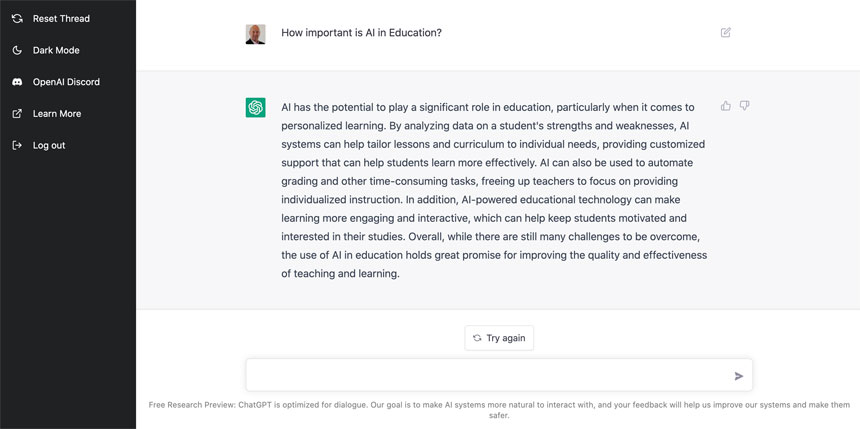
    Over a million people signed up in the last week to test ChatGPT, “the best artificial intelligence chatbot ever released to the general public,” as The New York Times wrote this week.

    San Francisco-based OpenAI, the creator of ChatGPT and also responsible for tools like GPT-3 and image generator DALL-E 2, saw hundreds of conversations going viral on Twitter, with many fans speaking in astonishing terms of the virtual tool.

    Aaron Levie, a Twitter influencer with 2.4 million followers, wrote that ChatGPT is one of those rare moments in technology where you see a glimmer of how everything is going to be different going forward.”

    ChatGPT has broken the dominance of low-quality A.I. chatbots. Its technology is based on “GPT-3.5.”, an upgraded version of GPT-3, the A.I. text generator model that sparked some excitement when it came out in 2020.

    Most A.I. chatbots aren’t programmed to remember or learn from previous conversations. However, ChatGPT can remember what a user has told it before.

    OpenAI has trained ChatGPT to interact in a conversational way, answer followup questions, admit its mistakes, challenge incorrect premises, and reject inappropriate requests.

    ChatGPT is a sibling model to InstructGPT.

    The fact that ChatGPT linguistic superbrain has been made available to the general public through a free, easy-to-use web interface has stunned the Internet.

    Beyond essay-writing capabilities, ChatGPT has appeared to be good at helping programmers spot and fix errors in their code. “ChatGPT could be a good debugging companion; it not only explains the bug but fixes it and explain the fix,” said another influencer.

    “It also appears to be ominously good at answering the types of open-ended analytical questions that frequently appear on school assignments,” wrote The Times. “Many educators have predicted that ChatGPT, and tools like it, will spell the end of homework and take-home exams. We’re witnessing the death of the college essay in real-time.”

    The general feeling is that GPT-3 is old news, but playing with OpenAI’s new chatbot is mindblowing.

    Unlike Google, ChatGPT doesn’t crawl the web for information on current events, and its knowledge is restricted to things it learned before 2021.

    Its training data might find a treasure on Twitter, also a property of Elon Musk. But some websites are closing its door to ChatGPT’s answers. For example, on Monday, the moderators of Stack Overflow, a website for programmers, temporarily banned users from submitting answers generated with ChatGPT.

    Another debate about the ChatGPT phenomenon is whether it will question the existence of Google itself. Some people think it could make Google obsolete.

    OpenAI’s best A.I. version would be GPT-4, the next incarnation of the company’s large language model rumored to be coming out next year.

  • OpenAI Releases ChatGPT, an Advanced Text-Generating AI

    OpenAI Releases ChatGPT, an Advanced Text-Generating AI

    IBL News | New York

    The latest chatbot from OpenAI, called ChatGPT, is stunning educators, programmers, and analysts due to its ability to write essays.

    ChatGPT is the latest evolution of the GPT family of text-generating AIs, showing further capabilities than GPT3.

    OpenAI — a company founded by Elon Musk in 2015 — said the new AI was created with a focus on ease of use.

    “The dialogue format makes it possible for ChatGPT to answer follow-up questions, admit its mistakes, challenge incorrect premises, and reject inappropriate requests,” OpenAI said in a post announcing the release.

    Unlike previous AI from the company, ChatGPT was released for anyone to use for free during a “feedback” period. The company hopes to use this feedback to improve the final version of the tool.

    ChatGPT is good at self-censoring and at realizing when it is being asked an impossible question.

    The AI is trained on a huge sample of text taken from the internet, generally without explicit permission from the authors of the material used.