Category: Platforms | Tech

  • XuetangX Raises Another $15 Million to Add AI Technology and Expand Its Catalog

    XuetangX Raises Another $15 Million to Add AI Technology and Expand Its Catalog

    IBL News | New York

    XuetangX, the largest MOOC platform in China, announced on December the completion of Series B funding, raising over 100 million yuan (or $15 million), according to Jiemodui.com.

    The funding will be mostly used to strengthen the research on artificial intelligence and other technologies as well as the development of new courses – Fan Xin, Vice President of Tsinghua Holdings and Chairman of Xuetang Online revealed.

    The round was led by Mu Hua Capital, Gao Rong Capital, Red Dot China, and other old shareholders. In the years 2014 and 2015, XuetangX raised $15 million and $17.6 million, respectively.

    Launched by Tsinghua University in 2013, XuetangX currently runs over 2,500 courses and hosts over 20 million learners. Additionally, XuetangX hosts innovative initiatives, such as AI Xuetang, a personalized learning platform for K-12 education, Micro-Degrees, Rain Classroom, XuetangX Cloud, AI-based teacher Xiaomu, as IBL News reported.

    The Chinese platform is built on the Open edX software, with a heavily modified code.

    However, according to Class Central, in the past few months, XuetangX has been testing a new platform no longer based on Open edX, which can be found at next.xuetangx.com.

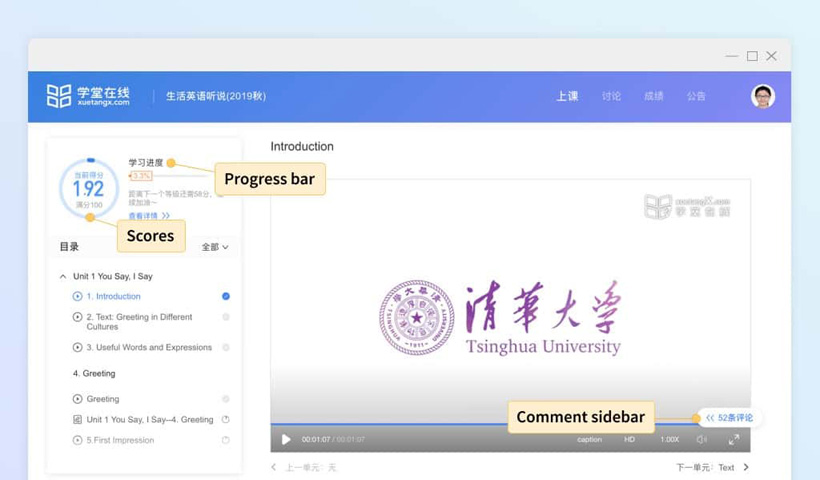
    Therefore, a different pedagogy and technology would soon be implemented, featuring new functionalities, such as a progress bar and a score that reflects student’s performance, a content menu on the left, a comment sidebar on the bottom right corner, and the removal of the self-paced mode. [See the look and feel below, in an image captured by Class Central]

  • Google Expands Its IT Support Offering on Coursera.org by Adding Python and Automation

    Google Expands Its IT Support Offering on Coursera.org by Adding Python and Automation

    IBL News | New York

    Google introduced last week on Coursera a new beginner-level, six-course certificate program to provide IT professionals with skills on Python, Git, GitHub, and IT automation:

    1. Crash Course on Python;
    2. Using Python to interact with the Operating System;
    3. Introduction to Git and GitHub;
    4. Troubleshooting and Debugging Techniques;
    5. Configuration Management and the Cloud; and
    6. Automating Real-World Tasks with Python, including a final project designed to simulate problem-solving in an actual job environment.

    This career-oriented, 3-month certificate ($49 per month) is designed to teach how to program with Python and how to use this language –the most in-demand by employers today– to automate common system administration tasks. The goal is to prepare workers for positions such as IT Support Specialist and Junior Systems Administrator.

    Upon completing the Google IT Automation with Python Professional Certificate, learners will have the option to share their information with potential employers, including Walmart, Sprint, Hulu, Bank of America, and Google.

    Released under a Creative Commons license, the program is part of the company’s Grow with Google initiative – which launched two years ago its first certificate program, the successful Google IT Support Professional Certificate. This program had 120K enrolled, and among them, an 84%  reported a career impact, like getting a raise, finding a new job, or starting a business.


  • WGU Provides Details on Its MicroBachelor: Successful Completion Does Not Mean Automatic Accreditation

    WGU Provides Details on Its MicroBachelor: Successful Completion Does Not Mean Automatic Accreditation

    IBL News | New York

    New details emerged today on Western Governors University (WGU)’s first MicroBachelors program developed in partnership with edX.

    In a press release, WGU announced that its Information Technology (IT) program will be available to students around the world through edX.org and will stack into seven bachelor’s degree programs at the university.

    These bachelor’s degree programs include: B.S. Computer Science, B.S. Software Development, B.S. Cloud and Systems Administration, B.S. Data Management/Data Analytics, B.S. Information Technology, B.S. Cybersecurity, and Information Assurance, and B.S. Network Operations and Security.

    However, the completion of this series of low-cost, certificate-granting courses –they cost $1,347 and grant 10 competency units (CUs)– does not mean automatic admission to Western Governors University. While the MicroBachelors does fulfill many of the requirements for bachelor’s programs in IT at WGU, students will still need to apply to WGU and be accepted; admission is not automatic,” warns the first FAQ at the website.

    In addition, the program comes with a time limit of three months. “If the coursework is completed within the quarter, the learner will receive credit for the course and passing of the assessment. If the work is completed outside of the quarter, the learner will not receive any credit for the task or assessment completed toward a certification.” 

  • NY Governor Andrew Cuomo Includes the “Freshman Year for Free” Program in His Agenda

    NY Governor Andrew Cuomo Includes the “Freshman Year for Free” Program in His Agenda

    IBL News | New York

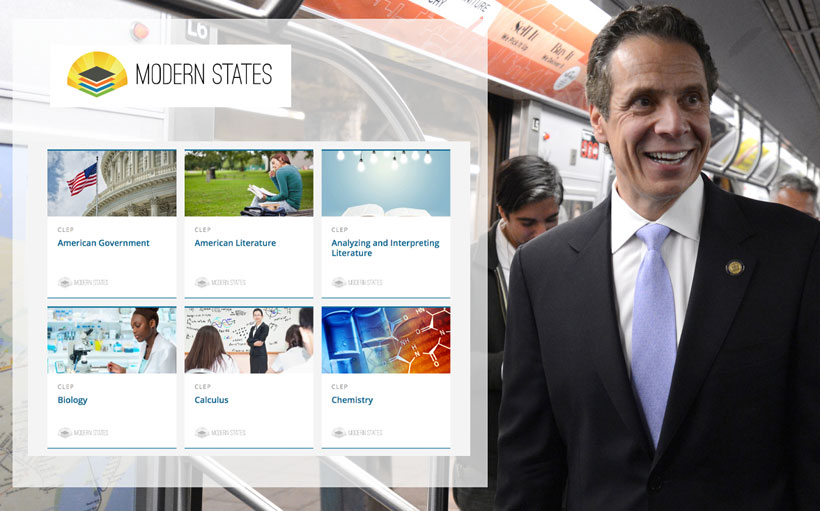
    SUNY Empire State College will offer the full library of free online college courses and materials of ModernStates.org at no cost to students of the state of New York and as an opportunity to earn up to full year of college credit tuition-free.

    This initiative was announced this Thursday by New York’s Governor Andrew Cuomo as part of his 2020 Making Progress Happen‘s agenda and a result of a partnership between SUNY and ModernStates.org, creator of the so-called “Freshman Year for Free” program.

    In addition to the unlimited free use of courses, Modern States Education Alliance– New York-based nonprofit organization, that manages the ModernStates.org educational portal–announced that it will also cover the cost for up to 1,000 credit-bearing exams for all students, especially New York veterans, and active-duty military families.

    Students who complete one or more Modern States online college courses and pass a CLEP (College Level Examination Program) exam will earn credit through SUNY Empire State College. The credits earned will be transferable to other SUNY schools. SUNY Empire students will be able to access the Modern States program through a cobranded web portal.

    “This partnership offers real savings — for every free course and exam passed, students and their families can save $1,000 to $2,000 in college costs,” said SUNY Empire State College President Jim Malatras.

    Launched in August 2017, the ModernStates.org program has more than 180,000 registered users to date and has paid for approximately 30,000 exams for New Yorkers and students around the world.

    The organization uses a highly customized learning ecosystem built on Open edX by IBL Education –the parent company of the IBL News nonprofit media service.

    Available courses –also designed by IBL Education– include American Government, American Literature, Chemistry, Physics, College Algebra, Accounting, Spanish and many others. These online classes are taught by college professors in all 33 subjects for which there is a credit-bearing CLEP exam from the College Board, the same organization that offers the SAT and AP tests.

    Students can take one course or many. The pass rate of students who use ModernStates.org to prepare for a CLEP exam is 73 percent, well above the national average, according to data provided by the organization.

    In addition to paying the $89 CLEP exam fee, ModernStates.org reimburses students for test center fees, typically $25.

    More than 2,900 colleges and universities accept CLEP for credit, including major universities such as Ohio State, University of Wisconsin, Penn State, Texas State, Morehouse, and others.

    SUNY Empire currently offers more than 800 online courses, supported by more than 30 campuses and learning hubs across New York state and the world.

  • First Online MBA on edX: “If We Don’t Do it, Someone Else Will,” Says Boston University

    First Online MBA on edX: “If We Don’t Do it, Someone Else Will,” Says Boston University

    IBL News | New York

    Beginning in fall 2020, Boston University (BU) and its Questrom School of Business will offer a low-cost online MBA worldwide on edX.org – a platform created in 2012 by Harvard University and MIT, now with more than 21 million registered users. Its tuition will be $24,000.

    The university sees this MBA – the first one offered through edX – as an opportunity for growth, and to be a disruptor, in a changing landscape.

    “With the online MBA, we’re seizing the initiative to offer a major degree for which we believe there is global demand. Higher education must evolve in a fast-changing world. We aim to lead in this evolution,” President Robert A. Brown said in Boston Today.

    In launching the online MBA, the university is investing in the potential to deliver high-quality online graduate programs with the capability for large-enrollment rates, which could be key in the near future, said Jean Morrison, BU Provost and Chief Academic Officer.

    “Through this degree, BU opens itself to the world in a manner we haven’t done before,” stated Chrysanthos Dellarocas, Associate Provost for Digital Learning & Innovation.

    “This is a paradigm shift on so many levels,” adds Susan Fournier, Allen Questrom Professor and Dean of the Questrom School of Business.

    “The way to think about it is, if we don’t do it, someone else will. We might as well be the ones that lead the pack,” added Dellarocas.

    Because of the affordability of the program, BU will not offer scholarships to online students, although scholarships are available from a variety of external sources. Federal financial aid will be available to enrolled Questrom Online MBA students, as well.

    Regarding instructional challenges, Chrysanthos Dellarocas, who is also the Richard C. Shipley Professor in Management, noted that “it will drive us to get really clever in exploring how far we can take peer engagement and how creatively we can combine technology and human instructors.”

    There are 300 full-time and 600 to 700 part-time students in the on-campus MBA program and 50 to 60 in the executive MBA program.


    edX Partnership

    BU has already been in partnership with edX for six years, offering a number of free or low-cost MOOCs, and in the last couple of years two MicroMasters in business, where students take five courses and earn a certificate.

    “I think this is exciting, having an online MBA from a top school that can be made available to the whole world on edX. I think it’s a big deal,” said Anant Agarwal, edX co-CEO on BT Today. “It is one of the highest-demanded programs on edX.”

    Last fall edX offered its first 10 master’s degree programs, including a master’s in analytics from the Georgia Institute of Technology, with currently 3,000 learners enrolled.

    Additionally, edX offers more than 2,000 MOOCs from 140 schools, usually available free, as well as 53 MicroMasters and 94 professional certificate programs.

    About two-thirds of edX’s learners already have bachelor’s degrees and are typically looking for employment or to advance within their jobs.

    BU TodayQuestrom to Offer Online MBA with edX in 2020

  • A Dynamic 2019 for Open edX, edX, Coursera, and Udacity: IBL’s Top-20 Headlines

    A Dynamic 2019 for Open edX, edX, Coursera, and Udacity: IBL’s Top-20 Headlines

    IBL News | New York

    Platforms dedicated to providing online education at scale saw a high-powered 2019.

    Without attracting attention from the mainstream or financial media, teams at Open edX, edX, Coursera, Udacity, and others quietly moved forward in their development this year. While Coursera and Udacity were still considering their IPOs, edX continued strengthening its financial sustainability.

    Several initiatives on the Open edX open-source ecosystem also made headlines.

    Here is the IBL News’ selection of the top-20 stories:


    Open edX

    • The Open edX Ironwood version is out. Open edX Issues Ironwood.2, a New Release of Its Platform

    • A successful Open edX conference in San Diego. 2020’s will be in Portugal. Open edX Posts Videos of All Talks from Their Recent Conference

    • Harvard’s Blockstore Technology Will Enable Personalized Learning on Open edX. The Next Evolutionary Step in MOOCs Will Be ‘Blockstore’, Says Robert Lue, from Harvard

    • XuetangX, China’s Open edX Platform, Reaches 16M Learners

    • NVIDIA’s DLI reaches 120,000 learners and launches new courses on Data Science


    edX

    • edX Offers Its First Online MBA, from BU Questrom School of Business

    • The edX Organization Adopts a More Commercial Structure Appointing a New Co-CEO

    • edX Cancels Its Annual Partners Conference Scheduled in Hong Kong Due to Safety Concerns

    • edX Announces Its Eleventh Degree: A Master’s in Electrical and Computer Engineering

    • Two Professors from Dartmouth and IMT of France Awarded After their ‘C Programming with Linux’ Course


    Coursera

    • Coursera’s Blockbuster Classes of 2019: Preeminence of AI, with 2M Enrollments

    • Coursera Offers Its 3,600-Course Catalog to Non-Affiliated Universities

    • Coursera’s Google IT Support Certificate Program Gets a Good Response

    • Coursera for Business Claims 100% Year-Over-Year Customer Growth

    • Illinois Shuts Down its Traditional MBA and Focuses into Online’s iMBA


    Udacity

    • Udacity Will Fund 100,000 Scholarships As Part of the Pledge to America’s Workers

    • Udacity’s Achievement with its Nanodegree Program: Over 100,000 Graduates


    Industry

    • The New Standard LTI 1.3, which Allows Interoperability of Grades and Assignments, Excites the Industry

    • Google Classroom, One of the World’s Top LMS: 40M Users In Five Years

    • Black Friday and Cyber Monday: edX, Pluralsight, Udemy, and Skillshare Join the Marketing Season


  • 2019’s Most Popular Online Courses According to Class Central

    2019’s Most Popular Online Courses According to Class Central

    IBL News | New York

    ClassCentral.com issued a list of the 100 most popular free online university courses of 2019. These MOOCs have been developed by 68 universities.

    In the past eight years, over 900 universities have launched 13,500 online courses, which have been taken by 110 million learners.

    Class Central’s ranking is based on data generated from the users on its website, specifically regarding enrollments and bookmarks.

    This is the list:

    University of Tasmania
    Understanding Multiple Sclerosis (MS)
    via FutureLearn

    The Hong Kong University of Science and Technology
    Differential Equations for Engineers
    via Coursera

    British Council
    Teaching English: How to Plan a Great Lesson
    via FutureLearn

    Princeton University
    The Art of Structural Engineering: Vaults
    via edX

    University of Groningen
    Improving Your Study Techniques
    via FutureLearn

    British Council
    Understanding IELTS: Speaking
    via FutureLearn

    Doon University, Dehradun, UGC
    Mathematical Economics
    via Swayam

    Princeton University
    Constitutional Interpretation
    via edX

    The University of Texas at Austin
    Happier Employees and Return-On-Investment Course
    via edX

    The University of British Columbia
    Gender and Sexuality: Applications in Society
    via edX

    University of Leeds
    The IB Extended Essay: Managing your Research Project
    via FutureLearn

    University System of Maryland
    Agile Leadership Principles
    via edX

    Banaras Hindu University, UGC
    ANIMATIONs
    via Swayam

    The Hong Kong University of Science and Technology
    Python and Statistics for Financial Analysis
    via Coursera

    Tel Aviv University
    Unlocking Information Security: Part Ⅰ
    via edX

    University of Minnesota
    Herbal Medicine
    via Coursera

    Amnesty International
    Digital Security and Human Rights
    via edX

    Massachusetts Institute of Technology
    Fundamentals of Statistics
    via edX

    British Council
    Ideas for a Better World: Leading Change Through Policymaking
    via FutureLearn

    Indian Institute of Technology, Kharagpur, NPTEL
    Ethical Hacking
    via Swayam

    University of California, Santa Cruz
    C for Everyone: Programming Fundamentals
    via Coursera

    University of Roehampton
    The Tudors
    via FutureLearn

    Microsoft
    Data Analysis: A Practical Introduction for Absolute Beginners
    via edX

    McMaster University
    Hacking Exercise For Health. The surprising new science of fitness.
    via Coursera

    IBM
    Python for Data Science and AI
    via Coursera

    Tecnológico de Monterrey
    Critical thinking: reasoned decision making
    via edX

    University of Colorado System
    Managing ADHD, Autism, Learning Disabilities, and Concussion in School
    via Coursera

    University of Colorado Boulder
    Cannabis, Mental Health, and Brain Disorders
    via Coursera

    Yale University
    Introduction to Climate Change and Health
    via Coursera

    EDHEC Business School
    Python and Machine Learning for Asset Management
    via Coursera

    University of Toronto
    Introduction to Self-Driving Cars
    via Coursera

    University of Illinois at Urbana-Champaign
    Applying Data Analytics in Finance
    via Coursera

    Alberta Machine Intelligence Institute
    Introduction to Applied Machine Learning
    via Coursera

    State University of New York
    Empowering Yourself in a Post-Truth World
    via Coursera

    Macquarie University
    Negotiation skills: Negotiate and resolve conflict
    via Coursera

    University of Virginia
    Hypothesis-Driven Development
    via Coursera

    MathWorks
    Exploratory Data Analysis with MATLAB
    via Coursera

    University of Rochester
    Introduction to Self-Determination Theory: An approach to motivation, development and wellness
    via Coursera

    University of Michigan
    Foundational Skills for Communicating About Health
    via Coursera

    University of Pennsylvania
    Exploring Renewable Energy Schemes
    via Coursera

    Eindhoven University of Technology
    Improving Your Statistical Questions
    via Coursera

    Harvard University
    The Health Effects of Climate Change
    via edX 3-5

    Harvard University
    China’s Political and Intellectual Foundations: From Sage Kings to Confucius
    via edX

    The University of Hong Kong
    Blockchain and FinTech: Basics, Applications, and Limitations
    via edX

    The University of Texas at Austin
    Machine Learning
    via edX

    Hong Kong Polytechnic University
    English@Work: Basic Job Interview Skills
    via edX

    Harvard University
    Child Protection: Children’s Rights in Theory and Practice
    via edX 1-3

    Columbia University
    Freedom of Expression and Information in the Time of Globalization: Foundational Course
    via edX

    Harvard University
    CS50 for Lawyers
    via edX

    Harvard University
    Women Making History: Ten Objects, Many Stories
    via edX 2-3

    Google
    Advanced Android with Kotlin
    via Udacity

    Stanford University
    The New World of Arnold Schönberg’s Piano Music
    via Stanford OpenEdx

    International Monetary Fund
    Financial Development and Financial Inclusion
    via edX 8-10

    Linux Foundation
    Exploring GraphQL: A Query Language for APIs
    via edX

    Harvard University
    Rhetoric: The Art of Persuasive Writing and Public Speaking
    via edX 2-3

    The World Bank
    The Future of Work: Preparing for Disruption
    via edX

    Research and Development in Discrete Industries
    via openSAP

    Harvard University
    Backyard Meteorology: The Science of Weather
    via edX

    University of the Witwatersrand
    Academic writing for clarity and meaning
    via edX 2-3 hours

    University of Michigan
    Successful Negotiation: Essential Strategies and Skills
    via FutureLearn

    Indian Institute of Technology Bombay, NPTEL
    An Introduction to Programming through C++
    via Swayam

    Indian Institute of Technology Madras, NPTEL
    Python for Data Science
    via Swayam

    Chennai Mathematical Institute, NPTEL
    Programming, Data Structures And Algorithms Using Python
    via Swayam

    Indian Institute of Technology, Kharagpur, NPTEL
    Programming in Java
    via Swayam

    University of California, Berkeley
    Mindfulness and Resilience to Stress at Work
    via edX

    Massachusetts Institute of Technology
    Machine Learning with Python: from Linear Models to Deep Learning
    via edX

    University of Strathclyde
    Caring for Children Moving Alone: Protecting Unaccompanied and Separated Children
    via FutureLearn

    Queensland University of Technology
    Inclusive Education: Essential Knowledge for Success
    via FutureLearn

    Raspberry Pi Foundation, National Centre for Computing Education
    Introduction to Encryption and Cryptography
    via FutureLearn

    University System of Maryland
    Data Analysis for Decision Making
    via edX

    IBM
    Introduction to Artificial Intelligence (AI)
    via Coursera

    University of Illinois at Urbana-Champaign
    Applying Data Analytics in Marketing
    via Coursera

    deeplearning.ai
    Introduction to TensorFlow for Artificial Intelligence, Machine Learning, and Deep Learning
    via Coursera

    Emory University
    Weight Management: Beyond Balancing Calories
    via Coursera

    IE Business School
    Brand Identity and Strategy
    via Coursera

    University of Colorado Boulder
    Developing a Systems Mindset
    via Coursera

    Amazon Web Services, Amazon
    Getting Started with AWS Machine Learning
    via Coursera

    California Institute of the Arts
    The Language of Design: Form and Meaning
    via Coursera

    Imperial College London
    Introduction to Android graphics
    via Coursera

    Copenhagen Business School
    The Neuromarketing Toolbox
    via Coursera

    Ural Federal University
    Personal growth basics (for people with limited health abilities)
    via edX 6-7

    Macquarie University
    GMBA824 Know your customers
    via Coursera

    Tapei Medical University
    Nutrition: Eating to Live Well
    via FutureLearn

    Seoul National University
    Counseling Practice and Research
    via edX 1-2

    Indian Institute of Technology, Ropar, NPTEL
    Joy of computing using Python
    via Swayam

    Indian Institute of Technology Madras, NPTEL
    Artificial Intelligence Search Methods For Problem Solving
    via Swayam

    Indian Institute of Technology Madras, NPTEL
    Introduction to Machine Learning (IITM)
    via Swayam

    Indian Institute of Technology Kanpur, NPTEL
    Developing Soft Skills and Personality
    via Swayam

    University of Reading
    Managing People: Understanding Individual Differences
    via FutureLearn

    Norwegian University of Science and Technology
    Digital Transformation in the Classroom
    via FutureLearn

    Université Côte d’Azur
    From database to big data
    via France Université Numerique

    The Open University
    Diplomacy in the 21st Century
    via FutureLearn

    University of Exeter
    Understanding Gender Inequality
    via FutureLearn

    EIT Food, Università di Torino, Universidad Autónoma de Madrid
    Science Communication and Public Engagement
    via FutureLearn

    University of Amsterdam
    English Pronunciation in a Global World
    via FutureLearn

    Johns Hopkins University
    America’s Opioid Epidemic: From Evidence to Impact
    via Coursera

    King’s College London
    Understanding ADHD: Current Research and Practice
    via FutureLearn

    Waseda University
    Steps in Japanese for Beginners1 Part1
    via edX 3-5

    University of Glasgow
    End of Life Care: Challenges and Innovation
    via FutureLearn

    Deakin University
    Food and Mood: Improving Mental Health Through Diet and Nutrition
    via FutureLearn


    Links to the courses at Class Central



  • Coursera for Governments: Colombia Will Fund Scholarships for 25,000 Learners

    Coursera for Governments: Colombia Will Fund Scholarships for 25,000 Learners

    IBL News | New York

    The Coursera for Governments division is getting a good record on convincing countries to provide funded-scholarships to train their officers and country populations on Coursera.org.

    A clear example is the Colombian Government, which will soon offer free access to the Coursera platform for 25,000 employees, encouraging them to acquire in-demand technical skills.

    Learners will begin, in early 2020, with five mandatory courses related to AI or digital transformation, including the popular AI for Everyone course from Andrew Ng, which is also available in Spanish.

    Students who complete these courses will gain unlimited access to Coursera’s course catalog, featuring 3,800 courses from 200 of the world’s top university and industry partners.

    “The Colombian Ministry of Information and Communications Technologies (MinTIC) is modeling the institutional investment needed for workforce reskilling and upskilling, and Coursera is the best partner,” said Mario Chamorro, Head of Latin America, Enterprise at Coursera.

    Coursera currently offers more than 400 courses in Spanish. Earlier this year, Coursera announced its first fully-Spanish degree in software engineering in partnership with Universidad de los Andes.

    Coursera already has more than 1.1 million learners in Colombia.

    Launched in 2017, Coursera for Governments and Organizations trains government employees and citizens across the United States, Singapore, the Philippines, India, Australia, France, Colombia, Costa Rica, Egypt, Pakistan, the United Arab Emirates, Kazakhstan, and others.

  • EdCast Raises $35 Million in Funding to Expand Its Platform

    EdCast Raises $35 Million in Funding to Expand Its Platform

    IBL News | New York

    EdCast, a Mountain View, California – headquartered provider of corporate learning software and content, announced yesterday the close of funding round of $35 million in Series D.

    Avathon Capital, formerly known as Sterling Partners’ Education Opportunity Fund, led the round. National Grid Partners, State Street Global Advisors, and REV Venture Partners participated, as well.

    Founded in 2013, EdCast uses the Open edX – based software as a part of its corporate training platform.

    EdCast claims to host two million paid users, including employees from Hewlett Packard and the World Economic Forum.

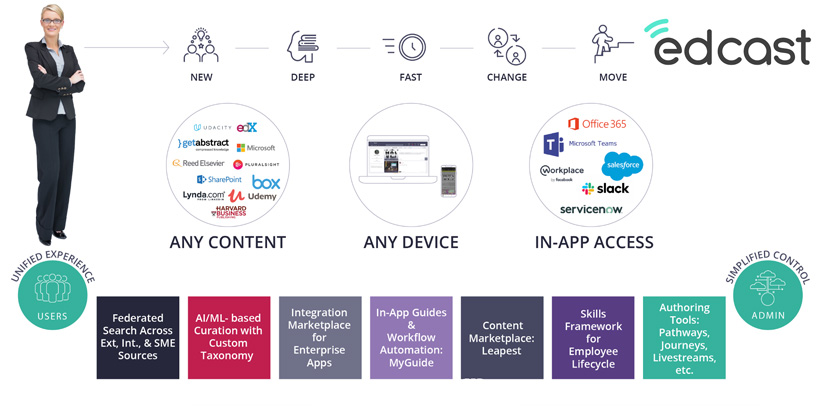
    According to a statement released on Thursday, “EdCast will use this latest funding round to continue expanding its Knowledge Cloud, Content Marketplace, and MyGuide product offerings.”

    Other start-ups with a corporate learning focus have raised significant amounts of funding this year. OpenSesame obtained $28 million, while 360Learning raised $41 million and GO1, $25 million.

  • A Second Shareholder Announces It Will Vote Against Instructure’s Proposed Deal

    A Second Shareholder Announces It Will Vote Against Instructure’s Proposed Deal

    IBL News | New York

    After Rivulet Capital, a second large shareholder announced this Thursday that it will vote against Instructure’s plan to sell itself to private equity firm Thoma Bravo, citing a rushed process and potential conflicts of interest.

    The New York-based Praesidium Investment Management, which owns 7.5% of Instructure, became the second big investor to speak out against the $2 billion deal. They believe that the proposed transaction significantly undervalues the company behind Canvas -the leading LMS in higher education in the U.S- with a market share of 38%.

    This move might endanger the success of the transaction.

    “Due to our growing concerns over the potentially flawed and conflicted process and the resulting bid that we feel undervalues the Company, Praesidium believes the proposed deal is not in the best interests of shareholders and intends to vote against the deal as it is currently presented,” Praesidium’s two founders wrote on a letter to Instructure’s board on Thursday.

    “We have heard deeply concerning reports that CEO Dan Goldsmith has expressed to shareholders his unwillingness to work for certain potential acquirers, which means he may have put his own interest ahead of Instructure shareholders.”

    Hedge fund Praesidium also voiced concern over potential conflicts of interest involving Instructure’s Chief Executive and said board member Kevin Thompson had “significant dealings with Thoma Bravo” in his role as president and CEO of SolarWinds Inc.

    Three weeks ago, Kevin Oram, Praesidium’s Co-Founder and Managing Partner, said that selling Bridge –Instructure’s unprofitable employee development platform– would unlock the value of Canvas, which he estimated to be worth $2.5 billion.

    This is the full text of Praesidium’s letter to the Instructure Board of Directors:

    Praesidium Investment Management Company, LLC (“Praesidium,” “the firm” or “we”), on behalf of its clients, owns approximately 2.9 million shares of Instructure, Inc. (the “Company” or “Instructure”), representing approximately 7.5% of the Company’s outstanding shares.

    As a significant shareholder of the Company, we are writing this letter to express our serious concerns with the proposed sale of Instructure to affiliates of a fund managed by Thoma Bravo, LLC (“Thoma Bravo”) for $47.60 per share in cash pursuant to an Agreement and Plan of Merger that was approved by you, the members of the Instructure Board of Directors (the “Board”), which we believe significantly undervalues the Company.  Not only does the proposed offer represent a more than 10% discount to Instructure’s closing share price of $52.96 on December 3, 2019, the day before the deal was announced, but we have many reasons to believe the Board did not undertake a full and fair sales process to ensure that shareholders receive maximum value for their investment.  We believe the process was rushed, lacks transparency and is potentially riddled with conflicts of interest, among other concerns.

    We take our fiduciary duty to our clients extremely seriously and we are expressing our concerns to you (and publicly) in hope of illuminating and ultimately rectifying what we believe is a possible injustice to them and other shareholders.

    As you are aware, Praesidium has been an investor in Instructure and has been constructively engaged with the Company and the Board for almost a year. Prior to and during this period, the Praesidium team spent countless hours analyzing Instructure’s financials, its competitive positioning and the broader education market.  Our original and ongoing work has led us to believe, and we continue to believe, that the Company’s education business is a unique and valuable asset.  Canvas’ technology is best-in-class resulting in high competitive win rates and near-perfect customer retention.  This has allowed Canvas to garner close to 38% share in the US higher education market. The continued runway in the US and abroad should allow Canvas to grow in the mid-teens for the next few years.  In addition, Canvas’ positioning as a trusted partner presents a tremendous opportunity to create an unrivalled education platform with the opportunity to expand into adjacent areas organically and roll-up smaller companies in what is a currently fragmented market. As we have presented to you in the past, this dominant position in a single vertical should allow for the business to be run very profitably and generate significant free cash flow.  Based on our detailed analysis of vertical software companies, which we shared with you, we believe that Canvas should be able to generate EBITDA margins of over 40%.  However, the profit potential of the highly valuable Canvas business is being completely obscured by massive losses being incurred by Bridge.  We estimate that in 2019 Bridge will only generate $25 million in revenue while sustaining over $70 million in adjusted free cash flow losses.  As we showed you, selling or divesting Bridge would allow the Company to eliminate these losses and effectively unlock the value of Canvas.

    Praesidium repeatedly expressed these views to the Board and we were pleased with the announcements the Company made during its third-quarter earnings call on October 28th. Specifically, the Company shared that for the first time it would provide investors with the much-needed clarity of its financials and plans for Instructure’s two distinct businesses during its upcoming December 3rd analyst day. The Company also disclosed that it was engaged in a strategic review of the Bridge business.

    We were further encouraged following the Company’s November 14th announcement that it had commenced a review process to explore all strategic alternatives, encompassing both Canvas and Bridge. Based on these public announcements, it was our impression that the Company was evaluating the option of selling Bridge and Canvas to separate sets of buyers as one potential path to maximize shareholder value.

    Importantly, following these announcements, we stressed again to the Board that a broad and rigorous process was necessary to maximize shareholder value. In particular, being very concerned about potential conflicts of interest, we advocated in writing for a committee of only independent Board members to run the strategic review process.

    Then, on November 26th, only 12 days after the Company’s announcement that it had commenced the review process, the Company approached Praesidium to urgently sign an NDA. After signing this NDA, we learned that Thoma Bravo had been the selected winner of what the Board claimed was a full review process.

    The numerous conversations we had with the Board since November 26th have led us to seriously question the independence, transparency, robustness and timeframe of the sales process, which ultimately resulted in a bid that we believe significantly undervalues the Company.

    Potential Conflicts of Interest

    Praesidium was informed by the Company that the “core team” running the sales process consisted of Chief Executive Officer and director Dan Goldsmith, Executive Chairman (and former CEO) Josh Coates, Chief Legal Officer Matt Kaminer (who is not even a member of the Board) and director Kevin Thompson. Dan Goldsmith and Matt Kaminar, as senior executives of the Company, are clearly not independent, and seem well positioned to benefit from a sale to a firm like Thoma Bravo that tends to keep management in place. Josh Coates, who held the position of CEO less than one year ago, is also not independent according to Institutional Shareholder Services’ (“ISS”) proxy voting guidelines. In addition, the Company has refused to answer whether or not Josh (or any other director for that matter) will roll his equity in the Company under the proposed deal, and we believe any potential discussions between Josh and Thoma Bravo regarding this issue would further conflict him.

    Importantly, Kevin Thompson, the only director on the “core team” running the sales process who would be considered independent by ISS, also has a potential conflict. He has had significant dealings with Thoma Bravo in his role as President and CEO of SolarWinds, Inc. In October 2015, Kevin worked with Thoma Bravo to take SolarWinds private. Furthermore, Thoma Bravo continues to own over a third of SolarWinds and three Thoma Bravo executives currently serve on SolarWinds’ Board.

    It is also notable that Lloyd “Buzz” Waterhouse, the Company’s Lead Independent Director, and the director who has spent by far the most time canvassing shareholder views, was absent from both this “core team” and the official strategic review committee.

    Perhaps even more alarming, we have heard deeply concerning reports that CEO Dan Goldsmith has expressed to shareholders his unwillingness to work for certain potential acquirers, which means he may have put his own interests ahead of Instructure shareholders. This is not the first time we have seen this type of behavior from Dan. He hired his own sister as Chief Strategy Officer and may have additional motivation to enrich and protect her as well.

    Clearly, the composition of this team is highly inappropriate and considerably undermines the integrity and fairness of the sales process. Each member of the “core team” had a potential conflict of interest in running this process that the Board should have recognized. We believe these conflicting relationships represent a severe misalignment of interests with Instructure shareholders and interfered with the team’s ability to objectively oversee the review process. By its own admission, the Board rejected at least one bid for Instructure in the past year at a price higher than the $47.60 offered by Thoma Bravo. If the Board were truly interested in running a full and fair process to obtain the best price for the benefit of the Company and its shareholders, it should have formed an independent committee of the Board tasked with overseeing this process.

    Rushed Process

    It also seems quite clear to us that the Company’s sales process was unnecessarily and perhaps even intentionally rushed. A wholesome process, which properly engages both strategic and financial buyers, takes time and patience, neither of which we believe were afforded in this sales process given that less than two weeks transpired between the announced commencement of a full strategic review process on November 14th through November 26th, the day the Company reached out to us to discuss our views on a deal with Thoma Bravo.

    The Company recently filed an 8-K (described in more detail below) in which it claims to have “conducted a comprehensive and deliberate process, lasting eleven months” (emphasis added). We believe this is inconsistent with certain public statements made and actions taken by the Company over the past year, which cast doubt on the validity of such claims. On November 14th, the Company stated in a press release that “[t]he previously scheduled financial analyst day on December 3 has been canceled to allow management and the board to explore these strategic alternatives for the company.” However, if the Company felt the need to cancel the analyst day in order to focus on running a process, why would it have even scheduled an analyst day in the first place if it was actually engaged in a process since January? Casting additional doubt on the validity of the Company’s claimed timeline, Praesidium has learned that multiple interested firms were rebuffed by the Company during this purported review period, including three large, reputable private equity firms. Praesidium understands these firms reached out to the Company only to be turned away under the guise that no process was being conducted by Instructure at that time.

    Praesidium also understands that the strategic review committee did not engage a number of large potential acquirers until just a few days before abruptly announcing the results of the review process and agreement with Thoma Bravo. This was nowhere near enough time for these firms to even begin their due diligence on the Company, let alone submit competitive bids, putting them at a severe disadvantage to Thoma Bravo and other buyers that were apparently more preferred by the Board.

    Perhaps most egregiously, the announced go-shop period for the deal was ultimately significantly shorter than what was being verbally communicated to Praesidium in the days leading up to the announced agreement. By shortening the go-shop period to a mere 35 days during the busy holiday season, including over Christmas and New Year’s, the Board has further diminished the opportunity for other potential bidders to participate in the process, which in turn diminishes the likelihood of obtaining a superior price for shareholders.

    Lack of Transparency and Inconsistent Disclosure

    The Company continued its track record of obscuring relevant information from its owners throughout this entire process and continues to do so to the detriment of the Company and its shareholders. Instructure cancelled its analyst day, previously announced for December 3rd, depriving shareholders of the opportunity to evaluate the go-forward plan against any resulting bid. Inexplicably, this would have been the first time shareholders were able to see the details of the two businesses they own broken out separately. Even after executing an NDA with the Company, the Board denied Praesidium any concrete financial information or plan.

    In addition, the Board’s description of the deal timeline during discussions with Praesidium explicitly left out any interaction with Thoma Bravo prior to the formal sale process. This directly contradicts Dan Goldsmith’s comments on the day of the announced deal, according to a Bloomberg article, that “Instructure has been in discussions with Thoma Bravo since January”. We find this to be an inexcusable omission that could serve no other purpose than to obfuscate the truth.

    It is therefore not surprising that the Company’s recent 8-K, which attempts to provide additional information and clarity regarding the sales process and timeline, likewise seems to contradict prior statements made to Praesidium and the investing public at large. The Company claims, for example, that it considered possible transactions involving the Company in January of 2019 (shortly after Dan became CEO) and announced the review process in November of 2019 in order to make it “publicly known” following media rumors, yet the November 14th press release announcing the review process noted that the Company had “commenced” (i.e. began, initiated) a review process in response to interest received from multiple third parties and that the Company had hired J.P. Morgan as its financial advisor (when, according to the 8-K, these events purportedly occurred in early January). The timeline recently disclosed in the 8-K also seems questionable given the previously announced strategic review of the Bridge business in late October. If the Company began exploring alternatives as early as January, then why announce a strategic review of parts of the Company’s business in late October only to announce a review process for the entire company just a few weeks later? Rather than clarify the sales process and timeline, the Company’s recent 8-K disclosure has raised additional questions and causes us to question the genuineness of the Company’s current and/or prior disclosure regarding its strategic plans for the Company.

    These concerning issues, along with the Board’s multiple attempts to pressure Praesidium with exploding deadlines to sign an NDA and voting agreement in connection with the proposed deal, have led us to believe that the Board’s real motive for reaching out to us in November was to try to coerce us into backing the deal with either a voting agreement or public statement as opposed to allowing us to make an informed decision on the deal, which would require time and detailed information.

    Unfortunately, we were given neither time nor the information we requested and as such, we did not sign a voting agreement or otherwise publicly support the deal. And in fact, due to our growing concerns over the potentially flawed and conflicted process and the resulting bid that we feel undervalues the Company, Praesidium believes the proposed deal is not in the best interests of shareholders and intends to vote against the deal as it is currently presented.

    We strongly encourage the Board to consider all available avenues for achieving a better outcome for the Company and its shareholders. To that end, we implore the Board to form a new and truly independent strategic review committee to ensure going forward that any decisions made and/or actions taken in connection with the proposed deal are made with the best interests of shareholders in mind at all times. This committee’s first priority should be seeking to extend and open the sales process further, including but not limited to requesting and/or negotiating an extension of the go-shop period.

    It is incumbent upon the Board to promote and protect the best interests of its shareholders and we reserve the right to take any actions that we deem necessary to hold this Board accountable if shareholders’ interests are not appropriately represented in the boardroom.

    Sincerely,

    Praesidium Investment Management Company, LLC

    Kevin Oram
    Peter Uddo
    Managing Partner
    Managing Partner


    – IBL News: News about Instructure