Category: Platforms | Tech

  • Coursera Offers Its 3,600-Course Catalog to Non-Affiliated Universities

    Coursera Offers Its 3,600-Course Catalog to Non-Affiliated Universities

    IBL News | New York

    Coursera announced Coursera for Campus on October 3rd.

    This initiative is designed to allow any university, including those who are not partners, to supplement their course curricula with Coursera’s 3,600-course catalog.

    These universities will also be able to access Coursera’s analytics as well as author content, assessments, and labs. Features such as single sign-on (SSO) and API integration will be available too. (However, full functionality will roll out over the coming months.)

    Coursera for Campus is available via a licensing model. “Each license grants access to the Coursera catalog, enabling learners to take as many courses as they want in a year,” explained a Coursera representative to IBL News. “As part of Coursera for Campus, universities can also use tools to author and scale online courses for free.”

    “With more than 300 million people entering the workforce in the next 10 years, universities urgently need to augment their capacity to meet the aspirations of a young and growing demographic,” said Jeff Maggioncalda, CEO of Coursera. “With access to content from 200 of the world’s top universities and industry educators, higher education institutions can easily enhance their existing curricula with critical digital skills and author online courses to keep pace with what employers need.”  

    Coursera for Campus has been launched after pilots with over 20 universities, including Duke University, University of Illinois, and Manipal Academy of Higher Education. “It complements our core curriculum,” explained Matthew Rascoff, Associate Vice Provost for Digital Education and Innovation at Duke University.

    “In today’s rapidly changing landscape, it’s important to create lifelong learning experiences for our students and staff to stay competitive in the workforce,” said Kevin Pitts, Vice Provost for Undergraduate Education at the University of Illinois, Urbana-Champaign.

    “It is time we bring the benefits of our platform to the remaining 99% of 20,000 universities worldwide and help them take a digital leap,” added Jeff Maggioncalda.

    Blog PostCoursera for Campus: A New Way to Help Universities Everywhere Deliver Job-Relevant Learning

    Video: Coursera for Campus Global Launch (event in India)
     

  • AWS Expands its Partnerships with Institutions to Offer Degree Programs in Cloud Computing

    AWS Expands its Partnerships with Institutions to Offer Degree Programs in Cloud Computing

    IBL News | New York

    AWS (Amazon Web Services) continues to expand its partnerships with schools to offer associate and bachelor’s degree specialization in cloud computing.

    Its latest move points out to Virginia, where, given the booming tech sector and with Amazon’s new operations – it is launching its second headquarters in Arlington, VA – employees are in a growing need for workers with cloud computing skills.

    Since September 2016, job postings requiring these skills in Virginia have increased from approximately 5,000 to 20,000 per month, according to official data.

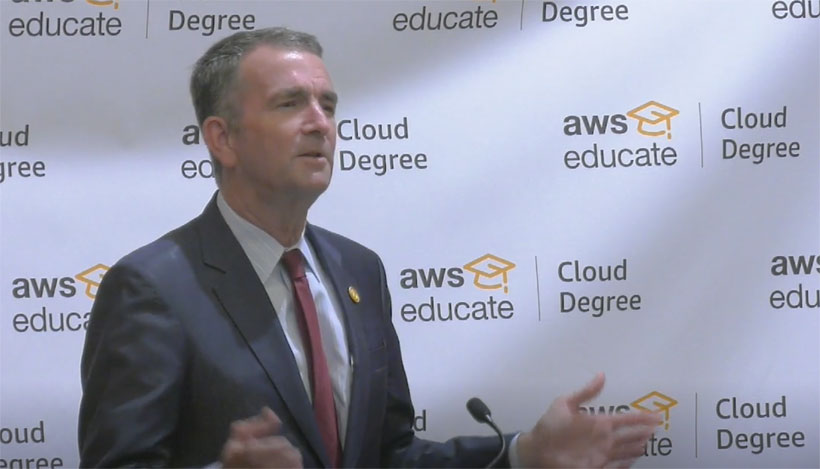
    Last week, Virginia’s state officials said the deepening partnership with AWS will create more job opportunities for students. More specifically, Virginia’s Governor Ralph Northam [in the picture] announced a new collaboration between AWS, the Virginia Community College System (VCCS), four-year universities and select K-12 schools.

    Participating academic institutions will incorporate the AWS Educate program into high school STEM curriculum as well as associate and bachelor degree programs.

    George Mason University and Northern Virginia Community College were two of the first higher education institutions in the country to offer cloud computing degrees. Starting in fall 2020, students will be able to pursue a degree path in cloud computing from the two-year program at NOVA to the four-year one at George Mason. The 63-credit program initially enrolled 30 students and has grown to 200.

    Now, as a result of this new collaboration, these programs will be replicated at other community colleges and four-year institutions, and high school students will have the opportunity to receive college credit through dual enrollment and early college models.

    These are the institutions committed to implementing the cloud computing degree program in Virginia:

    K-12

    • Fairfax County Public Schools
    • Loudoun County Public Schools
    • Alexandria City Public Schools
    • Arlington Public Schools

    Community Colleges

    • Northern Virginia Community College
    • J. Sargeant Reynolds Community College
    • John Tyler Community College
    • Thomas Nelson Community College
    • Blue Ridge Community College
    • Patrick Henry Community College
    • Dabney S. Lancaster Community College
    • Tidewater Community College
    • New River Community College
    • Lord Fairfax Community College

    Universities

    • George Mason University
    • Virginia Polytechnic Institute and State University
    • Virginia Commonwealth University
    • Old Dominion University
    • Hampton University
    • Virginia State University

    The subsidiary of the tech giant Amazon has teamed up so far with over 2,400 educational organizations, including K-12 schools, two-year colleges, and universities. Today, AWS’s running programs are located in New York, Los Angeles, Dallas and the State of Louisiana.

    Other large companies such as Google, Microsoft, and Facebook are also becoming more involved in providing alternative credential programs.

  • edX Announces Its Eleventh Degree: A Master’s in Electrical and Computer Engineering

    edX Announces Its Eleventh Degree: A Master’s in Electrical and Computer Engineering

    IBL News | New York

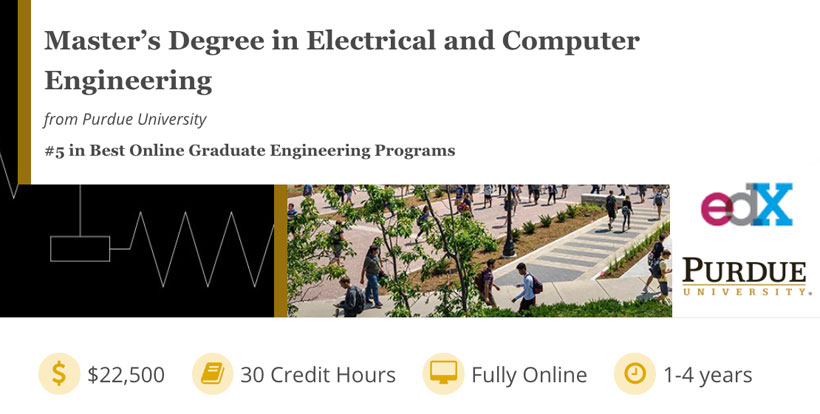
    edX announced on September 30 the launch of its eleventh MOOC-based degree, reaffirming its role as an OPM (Online Program Manager) company.

    The new degree is top-ranked, as the #5 online graduate engineering program according to U.S. News & World Report.

    The Master’s in Electrical and Computer Engineering from Purdue University School of Electrical and Computer Engineering will cost $22,500, that is, 30 credits at $750 each. The current online master’s program in Purdue costs nearly $40,000. The lower price point was made possible in part due to the support from edX and the ability to offer courses at scale, according to Dimitrios Peroulis, school’s head.

    The Master’s will start in January 2020, while the deadline to accept applications extends until November 1.

    In July 2019, edX issued an MBA from Boston University. In October, it announced another nine Master’s:

    Master’s degrees on edX are stacked degree programs with a MicroMasters program component. In the case of Purdue, its edX MicroMasters in Advanced Electronics will stack up to the full Master’s degree in Electrical and Computer Engineering.

    Coursera: 60+ New Courses in September, with IBM and AWS leading the industry

    On the other hand, yesterday Coursera communicated that September was one of its most productive month, with the launch of 60+ new courses.

    Industry partners IBM and AWS (Amazon Web Services) released Introduction to Deep Learning & Neural Networks with KerasIBM z/OS Mainframe Practitioner Professional Certificate and Getting Started with AWS Machine Learning.

    University partners like Imperial College London, EDHEC Business School, and the University of Illinois issued several courses, too, dealing with a range of topics, from app development to machine learning in finance.

    Blog Post at Purdue.edu: Purdue takes online engineering education to next level


  • Learners at Coursera, Canvas and Blackboard Will Be Able to Ask Alexa for Course Updates

    Learners at Coursera, Canvas and Blackboard Will Be Able to Ask Alexa for Course Updates

    IBL News | New York

    “Alexa, when is my next assignment due?”

    Coursera will introduce a new tool for Alexa in October, taking advantage of the new API, Alexa Education Skills, created by Amazon for any edtech company.

    Along with the MOOC portal, CanvasLMS, Blackboard, Kickboard and ParentSquare plan to activate this feature soon.

    By simply asking Alexa, learners will get updates based on the latest information on their student account.

    Voice assistants, like Alexa and Siri, are being rapidly adopted.

    Available to all learners with a Coursera account and Amazon Alexa-enabled device, this tool will help learners access course assignment and quiz scores, due dates, and progress updates, among other pieces of information.

    “Recognizing this trend, we introduced a new tool that helps learners fit education into their daily lives, we’ve taken another exciting step toward our mission of providing transformational learning experiences to anyone, anywhere,” Alex Sanchez, Product Management, Mobile Experiences, and Emerging Technology at Coursera, wrote in a blog post.

    The Alexa Education Skill API integrates with Learning Management Systems (LMS), Student Information Systems (SIS), Classroom Management providers, and massively open online course (MOOC) platforms.

    The new API will be available in preview by invitation only for the following interfaces:

    • Alexa.Education.Profile.Student
    • Alexa.Education.Course
    • Alexa.Education.Coursework
    • Alexa.Education.School.Communication
    • Alexa.Education.Grade.Course (coming soon)
    • Alexa.Education.Grade.Coursework (coming soon)


  • Coursera Creates a Database of 250+ Top Instructors Available to the Media

    Coursera Creates a Database of 250+ Top Instructors Available to the Media

    IBL News | New York

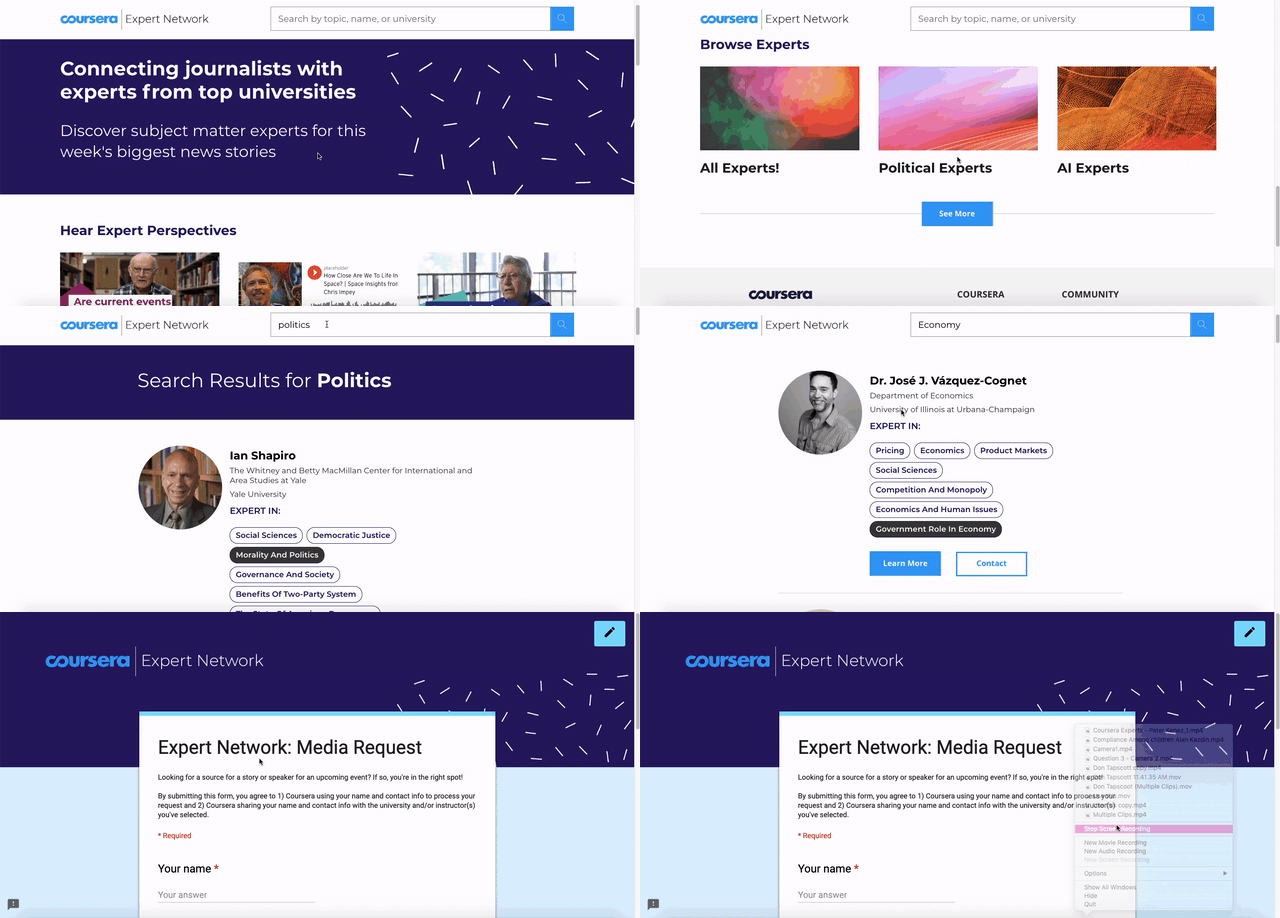
    Coursera announced an initiative called Expert Network, which will allow media reporters to access to a set 250+ top instructors from affiliated universities.

    “Academic experts bring a sense of balance and rigor that elevates the quality of news, trends, and debates,” Arunav Sinha, Head of Global Communications at Coursera, wrote in a blog post.

    “These experts can speak to a range of topics, from timely political issues, technology trends, social debates, financial news, and current health issues to evergreen topics, like happiness and personal development.”

    These are some of the experts classified by topics and courses:

    This media solution for journalists might generate free PR coverage for Coursera’s classes and their 170+ universities.


  • Google and Udacity Rework Courses to Learn Kotlin, the Language for Android Apps

    Google and Udacity Rework Courses to Learn Kotlin, the Language for Android Apps

    IBL News | New York

    Since Google announced in 2017 its official support for Kotlin for Android development – shifting from Oracle’s Java – the new programming language has been one of the fastest-growing code on GitHub.

    Netflix, Lyft, Capital One, and other giants have embraced it, too.

    Now, with the goal of attracting more developers, Google is increasingly investing in free courses to learn Kotlin.

    “Developing Android Apps with Kotlin” and “Kotlin Bootcamp for Programmers”, both at Udacity, are good examples. Google and Udacity have recently reworked these courses.

    In addition, Google has been offering through its Codelab’s space, a Kotlin Bootcamp course.

    More than 2.5 million users have worked through Google codelabs just this year, Jocelyn Becker, Senior Program Manager, Google Developer Training stated in a blog post this week.


  • Google and CompTIA Create a Dual Credential for Learners Seeking for Entry-Level Jobs in IT

    Google and CompTIA Create a Dual Credential for Learners Seeking for Entry-Level Jobs in IT

    IBL News | New York

    Google announced on Thursday that it was teaming up with the nonprofit trade association CompTIA to provide a dual badge of completion for entry-level roles and support jobs in IT.

    Learners who complete the Google IT Support Professional Certificate and pass the CompTIA A+ certification exams will have access to this new credential from CompTIA and Google.

    This dual badge, which can be posted on LinkedIn, is intended for job seekers to stand out to IT recruiters and better attract the attention of potential employers.

    Google’s IT Support Professional Certificate –a six-month program available on Coursera– aligns well with the training in CompTIA’s certification exams, according to students without a university degree.

    “IT support skills are highly teachable, and a four-year degree isn’t typically required to build a successful career in this field,” said Natalie Van Kleef Conley, Product Lead at Google’s program. We knew that if we could train beginners on technical skills, we could create paths to real jobs—both at Google and at other companies across the country.”

    In the United States, there are more than 215,000 open IT support roles resulting from the exponential growth of technology usage, according to CompTIA’s data.


    CompTIA:
    • IT Takes Two: CompTIA and Google Put High-Growth Tech Jobs Within Reach

    • CompTIA and Google Team Up to Deepen Talent Pool of IT Support Professionals


  • Udacity Claims a Record Growth in the Business of the Courses to Upskill Employees

    Udacity Claims a Record Growth in the Business of the Courses to Upskill Employees

    IBL News | New York

    Udacity for Enterprise announced on Friday that it expanded its customer roster to include Airbus, Audi, Bertelsmann, Mars Inc, Mazda, and Turkcell.

    “We achieved more than 150 percent enterprise growth in worldwide bookings, driven by more than 20 new Fortune 500 enterprise customers and record customer retention rates,” Alex Varel, VP of Enterprise Sales, Udacity, said in a statement.

    “This success comes on the heels of a banner year in 2018, when the business also grew by 100 percent,” he added without providing further data.

    Udacity highlighted the case of a customer with 30 engineers who transitioned into artificial intelligence experts in just three months.

    More than 60% of new customers enrolled their employees in Udacity’s Schools of Data Science and Artificial Intelligence Nanodegree programs.

    Coursera: $705 Million in Cash 

    Similar to Udacity’s corporate unit, Coursera for Business and edX for Business divisions are reporting a significant increase in revenue by providing courses and programs through their self-serve platforms to upskill employees.

    In the case of Coursera, its CEO Jeff Maggioncalda disclosed during an audio interview this week that his company grew more than 50% in the revenue line in 2018. He also said that after the recent rounds of funding the company has “considerable cash resources, $705 million.” As a result, Coursera’s IPO can wait.

  • Coursera Signs Up New Deals to Train Employees in Latin America Through its Self-Serve Platform

    Coursera Signs Up New Deals to Train Employees in Latin America Through its Self-Serve Platform

    IBL News | New York

    Coursera announced yesterday three new partnership deals in Latin America. It also reported that over 40 businesses have hired its self-serve platform, Coursera for Business, in Colombia and Mexico.

    • Coursera Business will train 2,200 university professors and engineering students in AI skills, after its agreement with the Colombia Ministry of Information and Technology Communication.
    • Insurance company BNP Paribas Cardiff, in Colombia, will offer to its customers Coursera courses on data science, business or IT skills, in addition to career resources like job-boards and resume counsel.
    • Qualfon, a Mexican business outsourcing company, is providing Coursera’s online classes in leadership, computer science, and business to its 14,000 employees. “6,000 employees have benefited from the program so far, with 94 percent having applied their newly acquired skills to their personal and professional life,” Qualfon claimed.

    Recently, Universidad de Los Andes announced plans to develop a master’s degree in software engineering on Coursera.

    “Colombia and Mexico have incredible potential to become innovation drivers for the region but have economic challenges to overcome,” Leah Belsky SVP of Enterprise at Coursera, stated. “The steep unemployment rate in Colombia makes it challenging for individuals to find stable jobs and for companies to acquire sufficient talent; Mexico similarly faces rising unemployment, while also challenged by automation, with more than half of jobs are at risk.”


  • ASU Abandons the Global Freshman Academy Project and Moves Into an Open edX Initiative

    ASU Abandons the Global Freshman Academy Project and Moves Into an Open edX Initiative

    IBL News | New York

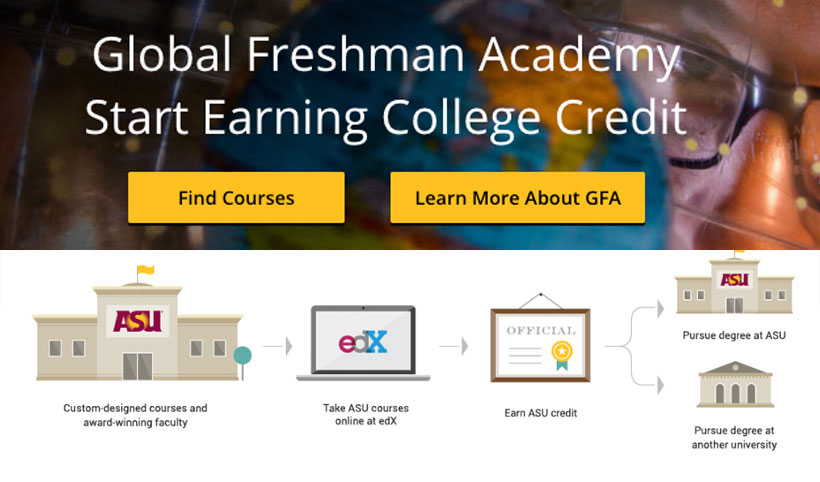
    Arizona State University (ASU) is abandoning its for-credit MOOC experiment on edX.org, known as Global Freshman Academy, due to low enrollment and completion results.

    When this project developed in partnership with nonprofit edX, and was launched in 2015, the expectation was to disrupt undergraduate education at the freshman level by attracting thousands of students. To achieve it, the Global Freshman Academy (GFA) allowed students to obtain college credit and pay for it only if they successfully pass the courses. “This a unique way to start your undergraduate education,” said then Anant Agarwal, edX CEO.

    “Hundreds of thousands of students enrolled in the academy’s free online courses, but four years later, only a fraction have completed a course, and just a minuscule number paid to receive college credit for their efforts,” reported Inside Higher Ed yesterday. More specifically, out of 373,000 people who enrolled, only 8,090 completed a course with a grade of C or better, just over 2 percent of all students enrolled. Around 1,750 students (0.47 percent) paid to receive college credit for completing a course, and fewer than 150 students (0.028 percent) went on to pursue a full degree at ASU.

    “The university has quietly moved in a new direction,” wrote Lindsay McKenzie, at Inside Higher Ed.

    Philip Regier, Dean for Educational Initiatives at ASU, explained, “the university has been focusing its attention on a new online initiative called Earned Admission.”

    This new project will be hosted on a custom Open edX platform and include high-demand courses [catalog].

    The Earned Admission pathway allows any person over 22 years old to gain admission to ASU if they complete four courses and earn a 2.75 GPA. Courses can be taken for credit at a cost of $400 per course.