Category: Views

  • “We Need More From Technology,” Says Educause While Presenting the 2022 Top 10 Issues

    “We Need More From Technology,” Says Educause While Presenting the 2022 Top 10 Issues

    IBL News | Denver, Colorado

    The higher ed professional association Educause presented the 2023 Top 10 IT issues during its annual conference yesterday in Denver, Colorado.

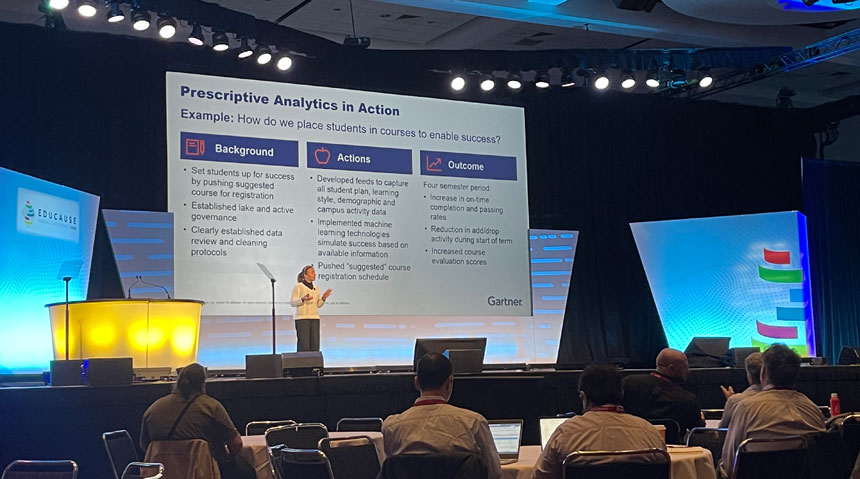
    “Today’s times demand more from technology,” said Susan Grajek, Vice President for Partnership, Communities, and Research at Educause, during the opening keynote address [In the picture above]. “We need new foundation models,” she added.

    Susan Grajek highlighted the idea that “data leads to better decisions.” “The AI (Artificial Intelligence) foundational models can be applied to higher” as “potential value of AI is emerging.”

    Another idea that Educause insisted on in front of thousands of educators and industry leaders gathered for three days (October 25 – 28, 2022) in Denver was the extension of stress and anxiety among students.

    In an exclusive interview with IBL News, John O’Brien, president of Educause, said that 70% of them show or have shown mental health issues in the last post-pandemic months.

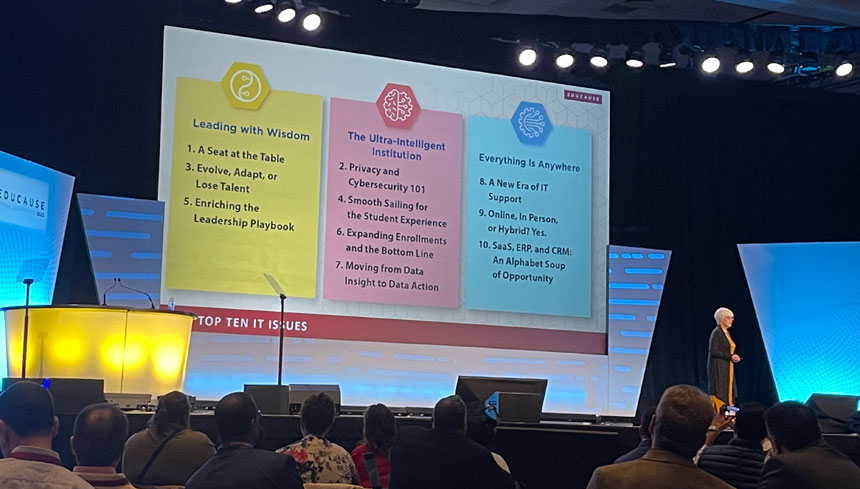
    The top 10 IT issues research was divided into three themes: leading with wisdom, ultra-intelligent institutions, and everything is anywhere.

    1. Leadership – Leading with WisdomIssue #1 – A Seat at the Table: ensuring IT leadership is a full partner in institutional strategic planningIssue #3 – Evolve, Adapt, or Lose Talent: creating a workplace that allows for and supports movement up, down, and sideways to accommodate shifts in personal and professional goals and to foster healthier work/life balanceIssue #5 – Enriching the Leadership Playbook: leading with humility and candor to engage, empower, and retain the IT workforce
    2. Data – The Ultra-Intelligent InstitutionIssue #2 – Privacy and Security 101: embedding privacy and security education and awareness in the curriculum and workplaceIssue #4 – Smooth Sailing for the Student Experience: using technology, data, insight, and agility to create a frictionless student experienceIssue #6 – Expanding Enrollments and the Bottom Line: focusing on data and analytics initiatives on identifying academic programs with high potential for recruitment ROI

      Issue #7 – Moving from Data Insight to Data Action: converting data analytics into action plans to power institutional performance, enhance operational efficiency, and improve student success

    3. Work and Learning – Everything is AnywhereIssue #8 – A New Era of IT Support: updating IT services to support remote and hybrid workIssue #9 – Online, In Person, or Hybrid? Yes: developing a learning-first, technology-enabled strategyIssue #10 – SaaS, ERP, and CRM: an alphabet soup of opportunity: managing cost, risk, and value of investments in new ERP solutions

  • Pandemic-Disrupted Teaching and Learning Effects Will Continue for Decades, Stanford Says

    Pandemic-Disrupted Teaching and Learning Effects Will Continue for Decades, Stanford Says

    IBL News | New York

    Reverberations of pandemic-disrupted teaching and learning will likely continue for decades. The seismic changes of the health outbreak in 2020 and 2021 will result in a no return to “normal”.

    This is the main conclusion of a report elaborated by Stanford University Digital Education unit, released this month. This Pandemic Education Report — as it has been titled — gathered stories about how the campus supported academic continuity during the period of emergency remote instruction. Stanford leaders, faculty, staff, and students provided diverse perspectives on the challenges they faced.

    This extensive review will serve as the foundation on which Stanford can design its future digital education strategy, said the institution. “The disruption to teaching and learning, as devastating as it was, also contains gems of opportunity,” stated the authors of the report, as shown in the video below.

    The 87-page report, comprised of interviews with 59 administrators and faculty, as well as a survey of 6,000 students, follows similar reviews elaborated by Harvard University, MIT, and other institutions.

    Regarding the extensive use of Zoom and Canvas, the report points out ideas such as:

    • “The suddenly more prominent role of Zoom and Canvas when emergency remote education began did raise concerns among some faculty and staff. It meant that Stanford’s teaching, learning, and work were conducted in platforms developed by private, for-profit companies whose products were designed to accommodate a wide range of customer needs. Zoom, in particular, is a business meeting tool not designed with education in mind.”
    • “Instructors quickly increased their skill in using Zoom for teaching and thoughtfully reworked their instruction, with help from newly developed resources and training programs rapidly spun up by teams across campus. These innovations, explored in this review, improved student engagement in remote teaching and learning.”
    • “What’s more, because of Stanford’s location in Silicon Valley, it had a strong connection with the company based in nearby San Jose before the pandemic began.” (…) “We already had this highly scalable infrastructure with Zoom and, furthermore, a very tight relationship with their CEO and founder.”
      .


  • AI Language Model GPT-3 Arrives into Higher Education

    AI Language Model GPT-3 Arrives into Higher Education

    IBL News | New York

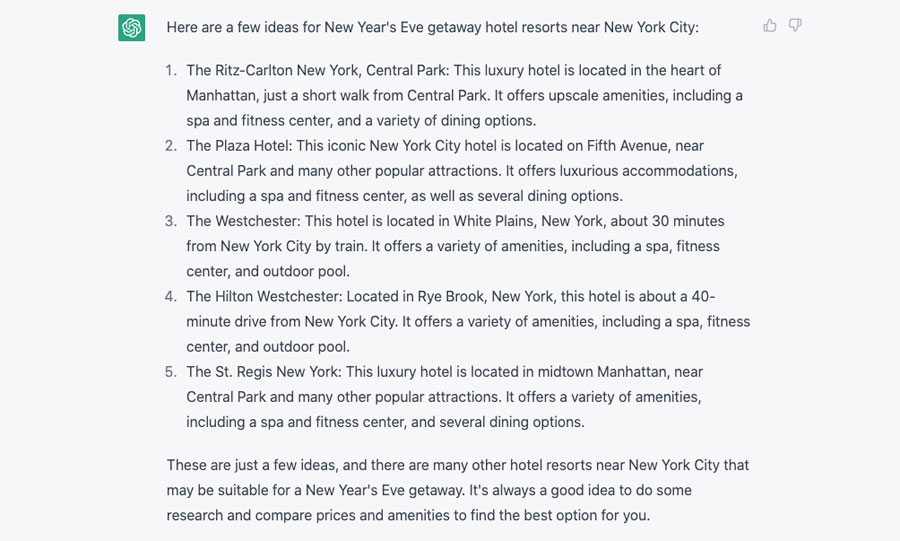
    The arrival of the web-based software GPT-3 as an API service for developers has started to impact the higher education landscape. One of the first applications is writing papers on the cheap. The Chronicle of Higher Ed wonders if this type of artificial intelligence program will kill college writing.

    “These outputs can be astonishingly specific and tailored. When asked to write a song protesting the inhumane treatment of animals in the style of Bob Dylan, the program clearly draws on themes from Dylan’s,” says The Chronicle.

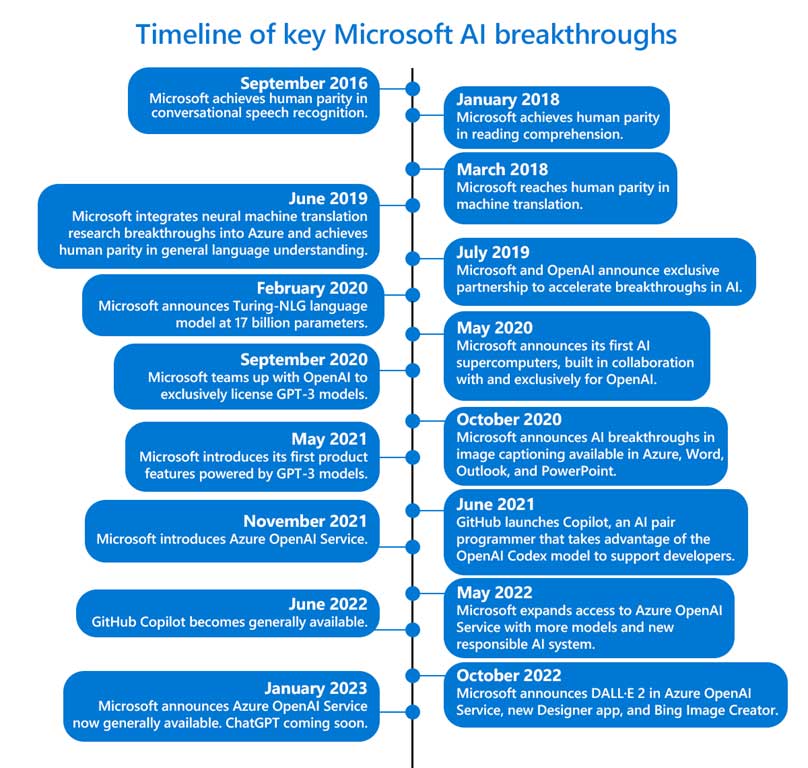
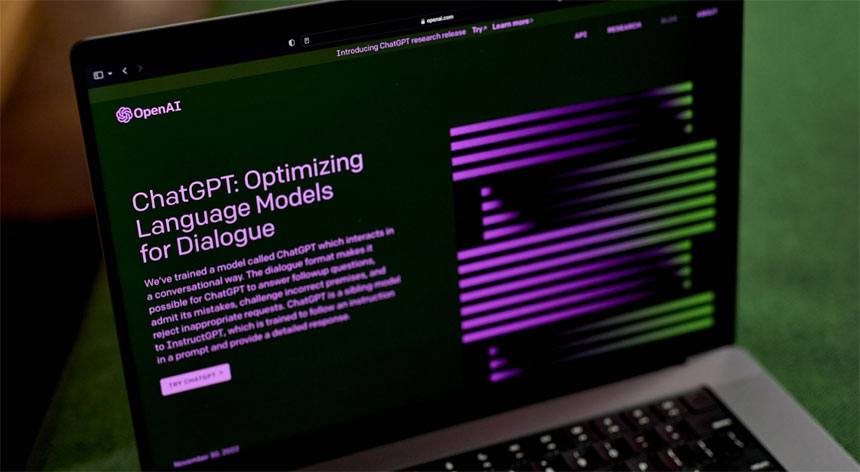
    The GPT-3 software, developed by an Elon Musk-backed, San Francisco-based nonprofit called OpenAI and introduced in 2020, is a kind of omniscient, smart Siri or Alexa that can turn any prompt into prose or even can write code. There are multiple examples of experiments on YouTube with demos of AI robots interacting with humans. [Example I] [Example II] [Example III].

    This technology performs a wide variety of natural language tasks, translating natural language to code. Many companies are currently building products on top of OpenAI’s flagship large language model (LLM).

    In addition to banks using Davinci, the largest GPT-3 model, for its customer service chatbot, this usage of deep learning technology to produce humanlike text, video, and advice is expected to be increasingly implemented in assessments of student learning. The role of faculty, students, research, and publications will be rethought with GPT-3 by the advent of this level of human-computer interaction, according to analyst and writer Ray Schroeder.

    Beyond facts and perspectives, neural networks learn and teach skills, including mathematics, computer programming, creative writing (without plagiarizing responses), and even poetry — after they have absorbed and processed terabytes of text and literature online. GPT-3 has been trained on most of what has been publicly written, including Wikipedia, books, scientific papers, and news articles.

    The success of GPT-3 has encouraged other companies to launch their own LLM research projects. Google, Meta, Nvidia, and other large tech corporations have accelerated work on LLMs.

    Today, there are several LLMs that match or outpace GPT-3 in size or benchmark performance, including Meta’s OPT-175B, DeepMind’s Chinchilla, Google’s PaLM, and Nvidia’s Megatron MT-NLG.

    This month, Amazon’s AI researchers unveiled Alexa Teacher Models (AlexaTM 20B), claiming that it beats GPT-3 on NLP benchmarks. The model is yet to be released publicly. [GitHub repository].

    GPT-3 also triggered the launch of several open-source projects that aimed to bring LLMs available to a wider audience. BigScience’s BLOOM and EleutherAI’s GPT-J are two examples of open-source LLMs available free of charge. Also, Cerebras has created a huge AI processor that can train and run LLMs with billions of parameters at a fraction of the cost.

    However, OpenAI — which has recently slashed the price of its GPT-3 API service by up to two-thirds this month —  is no longer the only company that is providing LLM API services. Hugging Face, Cohere, and Humanloop are some of the other players on the field.

    Hugging Face provides a large variety of different transformers, all of which are available as downloadable open-source models or through API calls. Hugging Face recently released a new LLM service powered by Microsoft Azure, which OpenAI also uses for its GPT-3 API.

    Many organizations can’t handle the technical challenges of training and running the models, as LLM requires dozens or even hundreds of GPUs — huge hardware costs. That’s one of the reasons that OpenAI and other companies decided to provide API access to LLMs.

    Interaction opportunities with AI: Copy.AI, Blenderbot.AI, Iamsophie.IO

    Ray Schoeder: Higher Ed, Meet GPT-3: We Will Never Be the Same!

  • Zovio Sells Fullstack Academy and Liquidates the Company

    Zovio Sells Fullstack Academy and Liquidates the Company

    IBL News | New York

    The for-profit edtech firm Zovio Inc. (Nasdaq: ZVO) will approve the liquidation and dissolution of the company at a virtual shareholder meeting next October 25, 2022, as reflected in a filing with the U.S. Securities and Exchange Commission. The Board of Directors closed the business on September 11, 2022.

    Following the liquidation, Zovio plans to sell Fullstack Academy for an amount estimated between $34 and $55 million, according to the mentioned filing to the SEC. Stockholders would receive only a portion of it, probably below $20 million.

    With a team of 1,400 employees, mostly residing in Arizona, California, and Colorado, Zovio was a troubled education technology company servicing higher education institutions.

    In August, Zovio sold its online program management (OPM) business to the University of Arizona Global Campus (UAGC). Two years before, the University of Arizona purchased another company asset, Ashford University, which became the Global Campus.

    The Global Campus also took over a Zovio office in Chandler, Arizona, with $20 million remaining on its lease.

    In May 2022, Chandler, Arizona-based Zovio, sold TutorMe, for $55 million.

    Now, under its Plan of Dissolution, Zovio will sell Fullstack Academy, an initiative that offers coding, data analytics, and software development classes online and at their New York City campus.


  • Adobe’s Stock Continues to Fall as the Market Signals Its Concern About the Figma Deal

    Adobe’s Stock Continues to Fall as the Market Signals Its Concern About the Figma Deal

    IBL News | New York

    After Figma’s purchase by Adobe for $20 billion, analysts wonder which design startups will be the acquisition targets, especially those in the creative space. Specifically, it will be interesting to see what comes next for companies like Canva and Sketch.

    Meanwhile, Adobe’s stock continued to fall by another 1.16% yesterday, losing the bull day in the market. Wall Street signaled its concern with the Figma deal, saying that this wasn’t the acquisition to do.

    Wells Fargo analyst Michael Turrin cut his rating on the Adobe stock along with his price target. Edward Jones, Oppenheimer, Baird, Bank of America, and Barclays downgraded the stock in response. Most of them talked about the price being an issue.

    Since the purchase yesterday the stock has dropped 22.68%, reflecting the negative view of investors. Significantly, the capitalization loss amounts to $25 billion, more than the purchasing price.

    The transaction, announced last week, was surprising for its scale and valuation — twice over a year ago, when Figma was last valued at $10 billion in June 2021.

    Until it, Adobe’s largest deal was Marketo’s acquisition for $4.7 billion in 2018. Experts estimate that Adobe paid an astronomical amount simply because Figma was a threat to Adobe.

    Adobe XD is a similar product, but its pricing structure of $600 per year, as part of the package of Creative Cloud All Apps, makes it unattractive, especially in the educational industry.

    “Adobe saw the Figma deal as its organization-altering moment as it watched the creative market making a key change from one centered on creating assets with tools like Photoshop and Illustrator to one firmly focused on the creators themselves and the collaborative nature of the design process,” concluded analyst Ron Miller on Techcrunch.

    The visionary founders of Figma, backed by large amounts of capital ($333 million to date) shed by the Silicon Valley top firms, were becoming an increasing business problem for the old-guard company of Adobe.

    The willingness of Adobe to overspend to grab the young upstart and fast-scaling business has been seen as a defensive move.

  • Figma’s $20 Billion Acquisition by Adobe Causes Concern in the Creative Community

    Figma’s $20 Billion Acquisition by Adobe Causes Concern in the Creative Community

    IBL News | New York

    The recent $20 billion purchase of design platform Figma by Adobe — the giant behind Photoshop, Illustrator, and Premiere — is causing concern in the creative community.

    Over the past years, Figma built its brand and reputation as a collaborative and forward-thinking competitor to Adobe. Founded by Dylan Field [in the picture above] and Evan Wallace in 2012, the company pioneered product design on the web by adding web-based, multi-player capabilities.

    Last Thursday, that competition ended when Adobe (Nasdaq: ADBE) announced that it closed a transactional deal to buy for $20 billion with approximately half cash and half stock.

    Adobe’s move to taking, once again, a major competitor off the market dramatically reduces the list of companies capable of challenging the giant.

    However, San Jose, California-based Adobe said that it will keep Figma independent, keeping it free for those in education and keeping its current pricing plans — a free starter modality plus a paid professional plan that starts at $12 per month per editor. These prices are significantly less than an Adobe Creative Cloud single-app subscription.

    Adobe said that “the combination of Adobe’s and Figma’s communities will bring designers and developers closer together to unlock the future of collaborative design.”

    Figma’s CEO and Co-Founder Dylan Field’s words didn’t erase concerns, despite ensuring that pricing plans won’t change. In a blog post, he confirmed that he will continue to lead the Figma team, reporting to the President of Adobe’s Digital Media, David Wadhwani, upon the closing of the transaction.

    “There is a huge opportunity for us to accelerate the growth and innovation of the Figma platform with access to Adobe’s technology, expertise, and resources in the creative space,” he said. “For example, we will have the opportunity to incorporate their expertise in imaging, photography, illustration, video, 3D, and font technology to the Figma platform,” Dylan Field added.

    “Adobe’s greatness has been rooted in our ability to create new categories and deliver cutting-edge technologies through organic innovation and inorganic acquisitions,” said unapologetically Shantanu Narayen, Chairman and CEO at Adobe. “The combination of Adobe and Figma is transformational and will accelerate our vision for collaborative creativity.”

    Figma is expected to surpass $400 million in revenues in 2022, with gross margins of approximately 90 percent and positive operating cash flows.

    The transaction is expected to close in 2023, subject to the receipt of required regulatory clearances and approvals.

    Dylan Field is estimated to own 10% of Figma’s stock—a share valued at $2 billion at the time of the company’s 2022 acquisition by Adobe.

  • An edX Course Created as Peace Project Between Israel’s Jewish and Arab Cultures Makes a Global Impact

    An edX Course Created as Peace Project Between Israel’s Jewish and Arab Cultures Makes a Global Impact

    IBL News | New York

    Learners from 69 countries have enrolled in “The Hook, the Bait, and the Fish: Approaches to Teaching Thinking”, an awarded, video-driven course launched on edX.org in November 2020 and created as a peace project to bring closer Israel’s Jewish and Arab cultures.

    This MOOC was created by the Al-Qasemi Academy, a small teacher college in Israel. This 8-week, online, free class follows the purpose stated in the classic adage, “give a man a fish, you feed him for a day. Teach a man to fish, you feed him for a lifetime.”

    It teaches students educational and philosophical thinking by providing students motivational tool tools to enhance their creativity and develop lifelong learning skills.

    The course, a finalist for the 2021 edX Prize, is led by Professor at Al-Qasemi Academy and book author Yoran Harpaz [in the picture above], whose educational theories comprise the teachings of the course. “Giving people the tools to become independent thinkers sets them on the path to fulfillment,” he said.

    To explain concepts connected to thinking, Professor Harpaz wrote light-hearted videos shot in locations like a zoo, a library, and his own kitchen. Storytelling is one of the reasons for the success of the class.

    Developed in three languages—Arabic, Hebrew, and English—the course is a significant cultural achievement for IsraelX, the international arm of Campus-IL, the flagship project of the National Digital Agency and Council for Higher Education in Israel.

  • Biden Announced Its Plan to Cancel $10,000 in Student Loan Debt for Most Borrowers

    Biden Announced Its Plan to Cancel $10,000 in Student Loan Debt for Most Borrowers

    IBL News | New York

    U.S. President Joe Biden announced loan debt relief for millions of Americans yesterday. Democrat lawmakers praised the initiative, and Republicans railed against it, claiming that forgiveness is unfair to those who tightened their belts to pay for college. Market analysts expressed their fear that this debt forgiveness could exacerbate inflation.

    The Education Department estimates that 27 million borrowers qualify for up to $20,000 in relief.

    Biden said he would cancel $10,000 in debt for those earning less than $125,000 per year and $20,000 for those who had received Pell grants for low-income students. (Around 60% of borrowers have received Pell grants, and the majority come from families making less than $30,000 a year.)

    Current students are also eligible for debt relief as long as they were dependent on their parent’s income.

    Around 45 million people owe $1.6 trillion for federal loans taken out for college in the U.S.

    In remarks from the White House, President Biden said: “All of this means people can start finally to climb out from under that mountain of debt and finally think about buying a home or starting a family or starting a business.”

    He also announced that a pandemic-era pause on student loan payments, which has been in effect since March 2020, would expire at the end of the year.

    CNBC: Here’s what President Biden’s student loan forgiveness means for your taxes

  • Edmodo.com Will Shut Down Its Platform and Service on September 22

    Edmodo.com Will Shut Down Its Platform and Service on September 22

    IBL News | New York

    The popular collaboration tool for 12-K instructors, Edmodo.com, with 100 million users, announced this month that it will shut down its free platform and service, including the mobile apps, on September 22, 2022. Seen as a competitor to Schoology and Google Classroom, Edmodo social platform has been operating for 15 years.

    The accounts of teachers, students, and parents are expected to be permanently deleted after the platform is shut down. ​​”You can be assured that your personal data will not be shared, transferred, or sold to any 3rd party and, in fact, once permanently deleted, it will not be accessible or recoverable even by Edmodo,” said the owner of the company, China-based, publicly-traded NetDragon Websoft, that paid $137.5 million for Edmodo in 2018.

    Users will need to manually export their files and information to a personal device or drive before the Edmodo platform shuts down.

    “After more than a decade of ensuring Edmodo can stay a free tool for all, we have found that it is no longer viable for us to maintain the level of service you deserve and that we can take pride in ourselves,” explained the parent owner company, the Hong Kong-based NetDragon Websoft Holdings Limited.

    This Asian company — which established China’s first online gaming portal, 17173.com, and China’s influential smartphone app store platform, 91 Wireless — said that the Edmodo platform will be offered in some countries outside the U.S. “The Company expects to realize substantial savings in operating cost, which will accelerate the path to reaching operating profitability of its education business.”

  • 2U Inc. Receives an Offer of $1 Billion with a Premium of 50%

    2U Inc. Receives an Offer of $1 Billion with a Premium of 50%

    IBL News | New York

    Indian virtual education conglomerate Byju’s submitted a buyout offer worth $1 billion in a cash deal, or about $15 per share, to 2U (NASDAQ: TWOU), according to Bloomberg. As a result, shares of 2U Inc. went up 17.42% to $10.92. This is not the first time rumors surfaced regarding a 2U buyout.

    The offer, made to 2U’s board last week, represents a 61% premium to 2U’s closing price of $9.30 on the Nasdaq on Tuesday, June 21. It gives the Lanham, Maryland-based and edX owner company an enterprise value of about $2 billion, despite having a current market cap of $841 million, and about $1 billion in debt and other liabilities.

    According to Bloomberg, the talks with 2U could still fall apart, and a deal may not materialize. 2U’s board has not taken a position yet.

    After having secured $2.4 billion for international expansion, Byju’s is trying to make a big acquisition. The Indian company — which has a valuation of $22 billion and 115 million students using its platform — is also bidding for Chegg Inc.

    With the shares of 2U having declined 80% since a peak of $55.55 in early 2021, assets acquisition looks attractive in the market, said the experts.

    2U paid $800 million to acquire edX in July 2021.

    News about 2U on IBL News