Category: Views

  • Open edX Juniper Platform: Changes on LMS Instructor Dashboard and Studio Tool

    Open edX Juniper Platform: Changes on LMS Instructor Dashboard and Studio Tool

    IBL News | New York

    After a week of the Open edX Juniper platform release, initial features have started to emerge.

    Technically speaking, the main change is the upgrade into Python 3, after Python 2.7 became unsupported and unmaintained on January 1, 2020.

    Other upgrades affect Django, MongoDB, and Ruby, as explained on the official Confluence forum of Open edX.

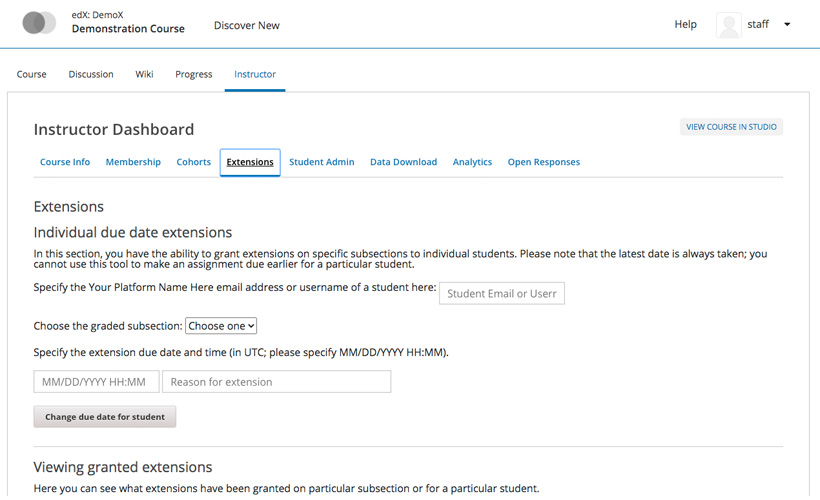
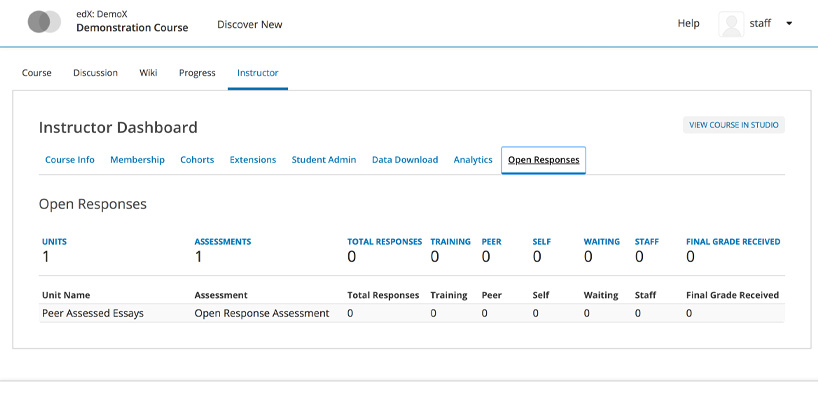
    Regarding features related to usability, the LMS’ Instructor Dashboard now includes Extensions and Open Responses data, as shown below.

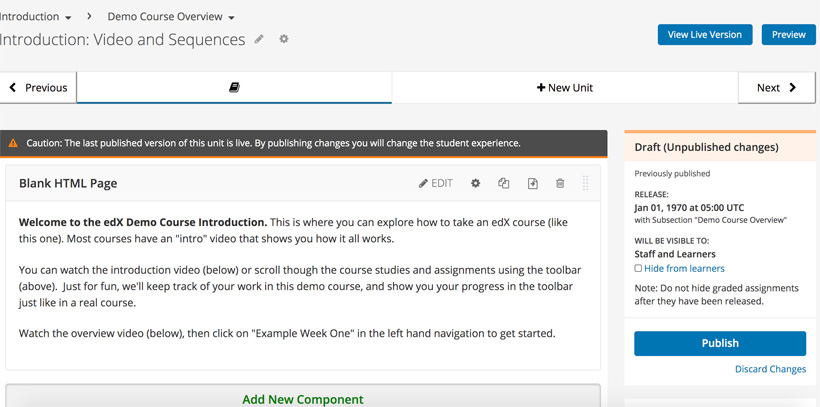
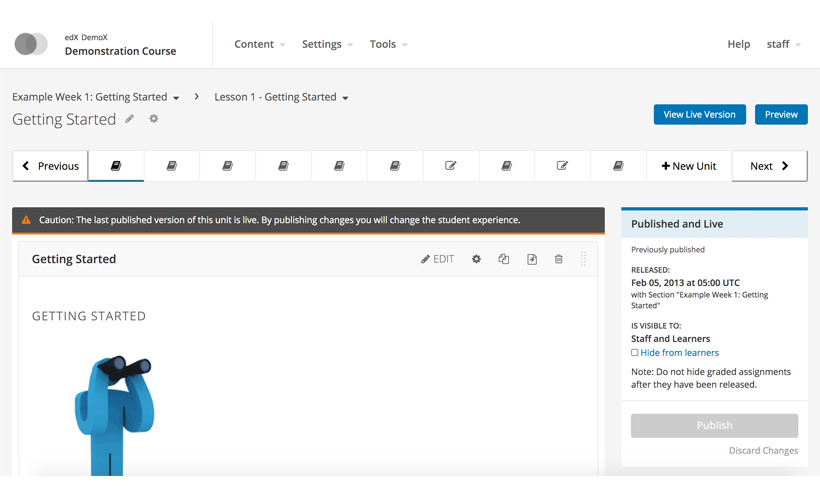
    On Studio – Open edX’s authoring tool – the main visible change points to the possibility of adding a Unit through the new prominent toolbar on top.

    The 10th Open edX release Juniper –now on its version Juniper.1– was based on the code of the master software from May 27th, 2020.

    edX hasn’t yet announced the new platform, nor released notes.

    IBL News (June 11)edX Releases Juniper, Its Tenth Version of the Open edX Platform

  • MOOCs Were Dead, but Now They Are Booming, According to The New York Times

    MOOCs Were Dead, but Now They Are Booming, According to The New York Times

    IBL News | New York

    Five years ago, The New York Times, in an extensively quoted report among academics keynoting on higher-ed conferences, had determined that MOOCs were dead. Low completion rates being below 5%, no business model behind them, and no impact on skyrocketing tuitions were the main reasons. In other words, disruption never occurred, and education wasn’t democratized.

    Yesterday, however, the Gray Lay of the journalism–the New York Times–certified a new reality. “Remember the MOOCs? After Near-Death, They’re Booming,” was the headline. The confinement at home and the online move due to the pandemic has mostly caused “a jolt that could signal a renaissance for big online learning networks that had struggled for years,” wrote the veteran reporter Steve Lohr.

    After millions of adults have signed up for online classes in the last two months, Coursera added 10 million new users from mid-March to mid-May–that is seven times the pace of new sign-ups in the previous year, according to the Times. Enrollments at edX and Udacity have jumped by similar multiples.

    “Crises lead to accelerations, and this is the best chance ever for online learning,” said Sebastian Thrun, Founder of Udacity.

    “Active learning works, and social learning works,” said Anant Agarwal, CEO at edX.


  • Over 10,000 Museums Across the World Won’t Open Due to the Global Health Crisis

    Over 10,000 Museums Across the World Won’t Open Due to the Global Health Crisis

    Mikel Amigot, IBL News | New York

    The COVID-19 pandemic has hit museums hard, and over 10,000 may never reopen.

    On May 18, International Museum Day, new studies conducted by UNESCO and the International Council of Museums (ICOM) found that 13% of the more than 85,000 museums across the globe that have closed due to the virus will stay shut down.

    As a result of the closures, the losses have skyrocketed. In the United States alone, art institutions are losing an estimated $33 million a day, according to the American Alliance of Museums.

    In addition, the global health crisis has exposed the precarious position of cultural workers, with thousands of employees laid off or furloughed.

    “The museum field cannot survive on its own without the support of the public and private sectors,” said Suay Aksoy, President at ICOM. “It is imperative to raise emergency relief funds and to put in place policies to protect professionals and self-employed workers on precarious contracts.”

    Audrey Azoulay, General Manager at UNESCO, promised to aid museums since “they play a fundamental role in the resilience of societies.”

    That assistance may materialize on the ResiliArt movement, launched by UNESCO in April.

    The UN agency will host a series of debates, panels, and other events to generate discussion about how art and cultural institutions, organizations, and workers will need to adapt in order to survive.

    According to UNESCO, social protection of museum staff, digitization and inventorying of collections, and online content development, are among the top priorities that need to be addressed – all of which require financial resources.

    UNESCO also pointed out that since 2012, the global number of museums has increased by almost 60%, demonstrating how important they have become in national cultural policies over the last decade.

    Museums play a fundamental role in education, culture, and in supporting the local and regional creative economy, according to UNESCO.


  • NY’s Governor Hires the Bill and Melinda Gates Foundation for Reforming the School System

    NY’s Governor Hires the Bill and Melinda Gates Foundation for Reforming the School System

    IBL News | New York

    The New York Governor, Andrew Cuomo, announced this week that the State will work with the Bill and Melinda Gates Foundation to develop a plan to “reimagine and build back our education system better, as we prepare to reopen”. 

    New York’s schools –which is the country’s school biggest system, with 1.1 million children– are closed for the year, and authorities are considering what they should look like when they reopen.

    Bill Gates is a visionary in many ways, and his ideas and thoughts on technology and education he’s spoken about for years, but I think we now have a moment in history where we can actually incorporate and advance those ideas,” said Cuomo, a Democrat.

    The Governor did not outline the scope of the state’s work with the Bill and Melinda Gates Foundation, a powerful player in the education space.

    Some educators criticized Cuomo’s announcement, reminding the foundation’s failed initiatives. At least three organizations – New York State Allies for Public Education, Class Size Matters, and the Parent Coalition for Student Privacy – have already written to Cuomo and state education officials opposing the partnership.

    New York State United Teachers President, Andy Pallott, said in a statement, “if we want to reimagine education, let’s start with addressing the need for social workers, mental health counselors, school nurses, enriching arts courses, advanced courses and smaller class sizes in school districts across the state.”

    How the Bill and Melinda Gates Foundation will be compensated is unclear. So far, this non-profit has exercised a notable influence in pushing certain education policies, such as the so-called education reform movement, along with the Common Core, and other academic standards and teacher evaluation.

    Other philanthropies lobbying for education reform are the Walton Family Foundation, the Eli and Edythe Broad Foundation, and the Emerson Collective.

  • Harvard’s Credit-Bearing, Free Course on Mechanical Ventilators Has Attracted 170,000 Learners in Two Weeks

    Harvard’s Credit-Bearing, Free Course on Mechanical Ventilators Has Attracted 170,000 Learners in Two Weeks

    Mikel Amigot | IBL News, New York

    The “Mechanical Ventilation for COVID-19” explanatory course on edX.org has surpassed the 170,00 people enrolled, becoming a reference for licensed medical professionals worldwide.

    Developed by Harvard University in conjunction with the American Association for Respiratory Care (AARC) and released on April 6th, this free course now can grant up to three CME (Continuing Medical Education) credit hours to those who complete the course (2 to 5 hours) and pass a brief quiz.

    Eligible learners can claim three AMA PRA Category 1 Credit (physicians), nursing CEU credits, or a certificate of attendance for allied health professionals and other learners.

    The authors of the course, Dr. Susan Wilcox and Thomas Piraino, are continuously updating the course, given that the subject of mechanical ventilation and the offering of manufacturers are evolving.

    In addition to high enrollment, participation in the discussion forum, with clinicians sharing knowledge and tools, has made the course a valuable tool to fight to the COVID-19 pandemic and treat patients developing pneumonia.

    “The medical system will need clinicians that can assist in operating mechanical ventilators,” wrote the authors. “We encourage all non-ICU clinicians to consider completing this course, readying themselves to best help their colleagues and patients on the front lines of this virus.”

    With 27 million learners, the edX.org learning platform –founded by MIT and Harvard University as a non-profit venture– hosts over 3,000 courses, from over 150 universities, corporations, and business organizations.

    IBL News, April 7: An edX and Harvard Course to Train Clinicians on Mechanical Ventilators for Covid-19

  • Coursera Offers Free Certificates on 50+ Courses, While It Announces New Programs and Tools

    Coursera Offers Free Certificates on 50+ Courses, While It Announces New Programs and Tools

    IBL News | New York

    Coursera.org announced yesterday at its virtual Partner’s Conference, that it is offering 50+ free courses, which include access to lectures and quizzes, along with earning certificates at no cost.  The offer will be available through May 31, 2020.

    The courses cover the following areas:


    Also, yesterday, Jeff Maggioncalda, CEO at Coursera, announced the addition of two new degrees to its list of 19 programs, which are the Master of Science in Population and Health Sciences—from the University of Michigan—and Master of Data Analytics Intelligence from the Universidad de los Andes (Uniandes).

    In addition, Maggioncalda unveiled eight MasterTrack Certificates (in topics such as Blockchain Applications, Cybersecurity, AI and Machine Learning, Social Work, Sustainability and Development), along with 100 guided projects to gain job-relevant skills in less than two hours, such as TensorFlowscikit-learn, and Plotly.


    Regarding technology tools, the educational company issued new product features. These are some of the most relevant:

    • Goal Setting. These goals will be seamlessly synced with Google Calendar and other calendar apps, integrating learning into a daily routine.
    • Smart-Review Material. A machine learning tool that serves targeted review material recommendations based on the specific questions learners miss, providing learners with a structured path to succeed on the next quiz attempt, according to Coursera.
    • Skill Tracking, This data-driven tool tracks learner skill development, sharing updated competency scores as learners takes more assessments. Through a centralized dashboard, learners can monitor their progress toward career-specific skills and see how their competency scores compare to other professionals on the Coursera platform.
    • Live2Coursera. This feature, “scheduled later in 2020”, will enable instructors to integrate Zoom live lectures into a course. Zoom recordings will be added automatically to an instructor’s course as they teach, so they can build a library of content to reuse in future private or open courses.
    • Personalized Homepage. When logged in, learners can resume a course in one click, see personalized recommendations on courses to pursue next, and view the certificates they’ve earned so far.
    • Machine-Assisted Peer Review. This tool enables grading at scale. Learners struggling to get an assignment peer-graded can have their work automatically assessed by a machine learning model trained on previously peer-graded submissions from the course.


  • Google and Apple Will Release in Mid-May a Controversial Tool to Track Down Infected People

    Google and Apple Will Release in Mid-May a Controversial Tool to Track Down Infected People

    Mikel Amigot | IBL News, New York

    Google and Apple teamed up to develop a system for tracking the spread of the COVID-19, which will encourage users to share data through Bluetooth and approved apps from public health organizations.

    These apps would exchange anonymous identified data with other participating phones.

    If the user voluntarily reports having tested positive for the virus, the app then alerts those phones’ owners that they may have been exposed.

    Experts explain that tracking is key to testing and self-quarantining yourself to avoid infecting others. But in the U.S. and the Western world, there isn’t a widely-used tracking tool, mostly due to privacy concerns. South Korea and Singapore have used similar COVID-19 tracking apps, although way more privacy-invading. These apps have been key to their success in containing the disease within these two countries.

    Apple’s and Google’s system was announced on Friday and was laid out in a series of documents and white papers.

    To be successful, the system will need to be widely adopted. The user would need to give explicit consent. In addition, tests will need to be available for all potentially infected people –although today there is still a shortage.

    Privacy and civil liberties activists have warned that the apps need to be designed so governments cannot abuse them to track their citizens.

    President Donald Trump called the technology “very interesting,” but expressed concern that “a lot of people worry about it in terms of a person’s freedom. We’re going to take a look at that.”

    Apple and Google said that user privacy and security are baked into the design of their plan.

    This is how the system works, according to Google:

    The VergeApple and Google are building a coronavirus tracking system into iOS and Android

    AP: Apple, Google to harness phones for virus infection tracking

  • LabXchange, Harvard’s Science Platform, Provides a Free Tool to Create Online Classes and Pathways

    LabXchange, Harvard’s Science Platform, Provides a Free Tool to Create Online Classes and Pathways

    IBL News | New York

    LabXchange.org, the Open edX-based platform created by Harvard University and Amgen Foundation, is providing a free tool for educators to create online and hybrid classes and pathways with science content.

    The platform lets instructors select vetted content from Harvard, OpenStax, Khan Academy and other sources, remix it with private materials, build collaboration and share ideas with a small group of learners –with a maximum of 100 users.

    “Due to economic and geographic limitations, millions of students worldwide lack opportunities to engage meaningfully in the scientific process, which has led to significant gaps in scientific literacy and in diversity across scientific fields,” explained Robert Lue, Director at the platform.

    LabXchange is essentially designed to support educators in creating customized learning experiences. The content-type offered on the LabXchange library includes video, text, image, simulation, assignment, pathway, narrative, assessment, and cluster. Some animations allow learners to learn by doing in the digital space.

    Subject areas include Biological Sciences, Chemistry, Science & Society, Physics, Health Science, Global Health, Prepare For Careers, Prepare For College, Scientific Process, Online Learning, Professional Development, and Prepare for Graduate School.

    An interesting pathway content available at the LabXchange platform is “Coronavirus: From Bats to Humans to Pandemic”.

    Soon, teachers will be able to track students’ progress and individually contact learners.

    This video below explains the main features:


    These two tutorials recently posted, shows how to create a class and a pathway at LabXchange.


    More stories about LabXchange at IBL News

  • Princeton, Berkeley, and Rice Switch to Remote Classes to Head Off the Spread of the Virus

    Princeton, Berkeley, and Rice Switch to Remote Classes to Head Off the Spread of the Virus

    Mikel Amigot, IBL News | New York

    Princeton, Berkeley, Rice, Fordham, Yeshiva, Hofstra, and Sacred Heart universities joined Columbia and Barnard College this Monday on the announcement that they were suspending in-person classes and teaching remotely, in order to head off the spread of the coronavirus.

    The city of Scarsdale in New York also announced it was closing its public schools for the week after a teacher tested positive for the virus.

    Last week, the universities of Washington, Seattle, and Stanford shifted entirely to virtual courses.

    With New York under a declared state of emergency and with over 100 people testing positive, Yeshiva University in Manhattan and Hofstra University in Long Island communicated that classes were canceled for the week.

    A student and two faculty members at Yeshiva tested positive for the virus last week, and Hofstra said that a student had started showing symptoms after attending a conference; that test result is pending. Columbia said a university community member was quarantined for exposure to the new coronavirus.

    Meanwhile, Princeton University said in a statement that new policies would be in place through Sunday, April 5.

    “While much remains unknown about COVID-19’s epidemiology and impact, our medical advisers tell us that we should proceed on the assumption that the virus will spread more broadly and eventually reach our campus,” wrote Chris Eisgruber, President of Princeton University.

    In Houston, Rice University canceled in-person classes for the rest of the week after staff member tested positive for the virus. It also banned meetings of more than 100 people until May.

    The University of California, Berkeley, became the fourth major U.S. university to suspend classes for an extended period of time due to concerns over COVID-19.

    Chancellor Carol Christ said in a message that the school will move all lecture courses and seminars to Zoom and other online tools starting today Tuesday and through spring break, which ends March 29. Courses that have to meet in person—such as labs, performing arts and physical education classes—will continue to meet as scheduled.

    Also yesterday, the American Council on Education called off its annual conference, originally scheduled for March 14 to 16 in San Diego, Calif0rnia.

    The coronavirus outbreak that originated in Wuhan, Chine, has killed so far over 4,000 people and infected more than 114,000. At least 875 people have died outside mainland China. The United States has reported over 700 cases and 26 deaths: 22 in Washington state, two in Florida, and two in California.

    The World Health Organization considers the outbreak an international public health emergency.


    • Johns Hopkins University’s dashboard tracking the disease in real-time


  • Columbia University Cancels Classes After a School Member Is Put Under Quarantine

    Columbia University Cancels Classes After a School Member Is Put Under Quarantine

    IBL News | New York

    Columbia University in New York announced yesterday all classes had been canceled Monday 9 and Tuesday 10 after a school member was exposed to the Coronavirus and is now under quarantine.

    “From Wednesday until the start of Spring Break on Friday, classes will be taught remotely,” said president Lee C. Bollinger in a message sent to the university community.

    “We do not have a confirmed case of the virus on campus. This action is intended to prevent the virus from spreading,” Bollinger explained.

    The closure came as the city’s mayor Bill de Blasio announced the 13th confirmed case in NYC and more than 105 people tested positive statewide.

    Governor Andrew Cuomo declared a state of emergency on Saturday.

    Columbia University’s decision followed a similar decision made by a number of schools—most notably Stanford, University of Washington and Seattle University—to cancel in-person classes.

    Resource:
    Columbia Spectator: Columbia temporarily cancels class, quarantines affiliate after exposure to COVID-19

    Universities Adopt Emergency Plans

    In this context, universities have activated serious measures against the Coronavirus at their campuses. Many of them created specific planning teams to fight the spread of the disease, following the CDC’s and local health agencies’ recommendations.

    School officials sent emails and messages to their communities this weekend. For example, Sacred Heart University (SHU) in Connecticut set a pattern of precautions, along with a thematic website, that could inspire other institutions.

    This message was sent to the SHU community this Sunday:

    “Dear students, faculty, and staff,

    Welcome back from break. In today’s update, we want to tell you about the precautions we have taken—and will continue to take—to protect the University community from the coronavirus. These are precautions recommended by the CDC and local health agencies:

    • Bathrooms in all University housing have been disinfected in anticipation of students’ return
    • Touchpoints (doorknobs, faucets, flushers, etc.) will be disinfected daily with more frequent cleaning and sanitizing of public/common restrooms
    • Extra attention is also being paid to athletic areas because of the high traffic flow
      • Gym equipment is disinfected daily and wiped down with Clorox wipes
      • Hand soap is available in all restrooms and hand sanitizer can be found throughout the gym area
      • Clorox disinfecting wipes are also available throughout the gym area. These kill 99.9% of all bacteria in 10 seconds
    • In addition, extra protocols will be in place in dining halls
      • Food services personnel will go above and beyond in following CDC hygiene guidelines Hand sanitizers will be available to workers at all food preparation sites
      • Touchpoints (doorknobs, horizontal services, tables & chairs, condiment dispensers, drink dispensers, etc.) will be cleaned often
      • In addition to other locations on campus, portable sanitizer stations will available for students, faculty, and staff in the dining halls
      • We ask that you practice good food hygiene—don’t touch food with your hands (a piece of fruit, for example) and then put it back
    • The cleaning staff is available 24/7 to respond to any emergencies anywhere. Monday through Friday from 7 a.m. to 4 p.m., call 203-371-7870. Nights and weekend, students should report issues to their RHD to submit an off-hours MOP request

    We are also asking that all students and employees do their part by following the hygiene guidelines set forth by the CDC:

    • Avoid close contact with people who are sick
    • Avoid touching your eyes, nose, and mouth
    • Stay home when you are sick
    • Cover your cough or sneeze with a tissue, then throw the tissue in the trash
    • Clean and disinfect frequently touched objects and surfaces using a regular household cleaning spray or wipes

    We are in regular contact with our cleaning contractors and food services staff to ensure that CDC guidelines are being followed in all areas of the University.

    More information can be found on the coronavirus page on the SHU website. In particular, you may want to check out the Frequently Asked Questions (FAQs) on that page.

    We want you all to have a great finish to the spring semester, while at the same time taking the necessary precautions to keep us all healthy and safe.”


    Beyond these measures, several media outlets paid attention to the pressing questions around the virus. This New York Times’ article was one of the most remarkable.