Author: IBL News

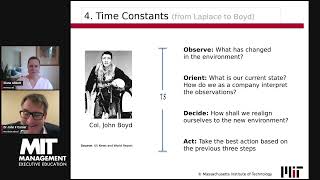
  • Is imperial artificial intelligence inevitable?

    Is imperial artificial intelligence inevitable?


    Karen Hao: Is imperial AI inevitable?

    Source: Youtube

  • Syracuse University Introduced Its New AI Platform for Teaching and Learning

    Syracuse University Introduced Its New AI Platform for Teaching and Learning

    IBL News | New York

    Syracuse University, this month, during the forum “AI at Work,” presented its AI platform developed in collaboration with ibl.ai, the parent company of this news service.

    At the center is MentorAI, a platform run entirely inside Syracuse’s cloud tenancies.

    Andrew Joncas, Leader, Architect, and Technology Evangelist, at Syracuse University, explained, “Creating an AI tutor no longer requires prompt-engineering expertise. Instructors upload a syllabus, slide deck, or even an MP4 lecture; Mentor AI generates an agent that can answer student questions, surface key points, or embed directly in Blackboard.”

    Syracuse University owns data and code and pays by the API call rather than per-seat license; therefore, there’s no premium license, and administrators can mix and match models — from OpenAI GPT-4o to Google Gemini or open-source Llama. This approach also allows the university to adopt newer models as they mature.

    The same event highlighted the Blackboard AI Design Assistant, where AI suggests quiz items, assignments, and rubrics, as Michael Morrison stressed, the instructor remains in charge.

  • China’s AI robotics ‘progressing fast’, focus turns to robot ‘brain’ and VLA model

    China’s AI robotics ‘progressing fast’, focus turns to robot ‘brain’ and VLA model


    Goldman Sachs Jacqueline Du sees a 5-10 year runway ahead for commercial applications of AI-based humanoid robots materializing as regulatory hurdles stand in the way of deployment to the masses.

    Source: Youtube

  • The catastrophic risks of AI — and a safer path

    The catastrophic risks of AI — and a safer path


    Yoshua Bengio — the world’s most-cited computer scientist and a “godfather” of artificial intelligence — is deadly concerned about the current trajectory of the technology.

    Source: Youtube

  • Why this OpenAI expert doesn’t use ChatGPT

    Why this OpenAI expert doesn’t use ChatGPT


    OpenAI is back to making waves in the artificial intelligence realm this week after it agreed to buy io Products — a startup founded by former Apple designer Jony Ive — for $6.5 billion.

    Source: Youtube

  • Miami University is one step closer to introducing a Bachelor of Science in AI degree

    Miami University is one step closer to introducing a Bachelor of Science in AI degree


    Miami University is one step closer to introducing a Bachelor of Science in artificial intelligence degree.

    Source: Youtube

  • San Francisco protesters warn of ‘human extinction’ with AI’s increasing intelligence

    San Francisco protesters warn of ‘human extinction’ with AI’s increasing intelligence


    Protesters outside OpenAI offices in San Francisco were sounding the alarm about AI posing “an existential threat to humanity itself,” as President Trump’s One Big Beautiful Bill could upend regulation efforts.

    Source: Youtube

  • The economics of artificial intelligence

    The economics of artificial intelligence


    The economics of artificial intelligence.

    Source: Youtube

  • Anthropic Introduced the Claude 4, with Advanced Features in Coding and Reasoning, and AI agents

    Anthropic Introduced the Claude 4, with Advanced Features in Coding and Reasoning, and AI agents

    IBL News | New York

    Anthropic last week launched Claude Opus 4 and Claude Sonnet 4, which offer advanced features in coding, reasoning, and AI agents.

    “Claude Opus 4 is the world’s best coding model, with sustained performance on complex, long-running tasks and agent workflows. Claude Sonnet 4 is a significant upgrade to Claude Sonnet 3.7, delivering superior coding and reasoning while responding more precisely to your instructions,” advertised the company.

    Both models can use tools like web search and demonstrate improved memory capabilities.

    In addition, the company announced that Claude Code was generally available. It supports background tasks via GitHub Actions and native integrations with VS Code and JetBrains, displaying edits directly in users’ files for pair programming.

    Anthropic, a start-up founded by ex-OpenAI researchers, released four new capabilities on the Anthropic API, enabling developers to build more powerful code execution tools, the MCP connector, Files API, and the ability to cache prompts for up to one hour.

    Claude Opus 4 powers known frontier agent products like Cursor, Replit, Block, Rakuten, and Cognition.

    Anthropic’s Claude 4 models arrived as the company looks to substantially grow revenue. Reportedly, the organization aims to reach $2.2 billion in earnings this year.

  • Elite U.S. Universities Show Dependency on International Students

    Elite U.S. Universities Show Dependency on International Students

    Mikel Amigot, IBL News | New York

    The Trump administration’s threat to block Harvard University from enrolling international students highlighted the risk other American universities face.

    NYU, Johns Hopkins, Columbia, and Carnegie Mellon have even larger international student shares than Harvard.

    This metric, which once reflected their financial strength and international prestige, now looks like a vulnerability.

    For universities, a decline in international students could have serious financial consequences, disrupting classrooms, research, and the next generation of workers in the United States.

    Currently, these are the schools with the most international students, according to a graphic released by The New York Times:

    School Students Pct. International
    Illinois Tech 6,571 51%

    Carnegie Mellon 14,517 44%

    Stevens Tech 7,461 42%

    Northeastern 29,738 40%

    New School 8,725 40%

    Columbia 28,756 40%

    Johns Hopkins 16,830 39%

    N.Y.U. 49,847 37%

    Clark 3,830 34%

    Rochester 10,109 33%

    Caltech 2,463 32%

    Chicago 16,499 31%

    Boston U. 29,104 30%

    M.I.T. 11,706 30%

    Harvard 20,807 28%

    U.S.C. 41,648 28%

    WashU 14,282 28%

    Penn 23,948 27%

    Brandeis 4,873 27%

    Rice 7,972 26%

    Cornell 25,334 26%

    Duke 16,557 25%

    Stanford 17,212 24%

    Saint Louis 12,904 24%

    Princeton 8,849 24%

    Yale 14,854 24%

    Northwestern 19,451 24%

    Illinois 47,118 23%

    Ga. Tech 25,178 23%

    U.T. Dallas 25,108 23%

    N.J.I.T. 10,388 23%

    Mt. Holyoke 2,206 22%

    Dartmouth 6,678 21%

    Georgetown 15,453 20%

    U.M.B.C. 11,523 20%

    Brown 10,832 19%

    Case Western 11,143 19%

    Grinnell 1,707 19%

    Emory 13,565 18%

    U.C.S.D. 40,716 18%

    Washington 43,118 18%

    Bentley 4,690 17%

    Fran. & Marshall 1,902 17%

    Berkeley 41,572 17%

    Denison 2,391 17%

    G.W. 18,049 17%

    Michigan 48,167 17%

    U.C. Irvine 35,511 16%

    Tufts 11,953 16%

    U.C. Davis 38,184 15%


    The share of international students studying at these colleges has been growing for the past two decades as rising incomes in countries like China and India have produced more families looking to educate their children in America.

    In addition, public research universities have turned to international students, as they pay the full tuition price.

    Higher education is a major American export. Over 1.1 million international students contributed about $43 billion to the U.S. economy during the 2023-24 academic year, most of it on tuition and housing, according to nonprofit NAFSA.

    Experts say the higher tuition paid by international students helps subsidize lower costs for U.S. students.