Everybody’s Business: The Rise of AI Music 🎶 #shorts
Source: Youtube

Everybody’s Business: The Rise of AI Music 🎶 #shorts
Source: Youtube

Trump Dismisses Reports of Dire Conditions Aboard U.S.S. Lincoln
Source: Youtube

'Passport privilege’ splits global travelers
Source: Youtube
IBL News | New York
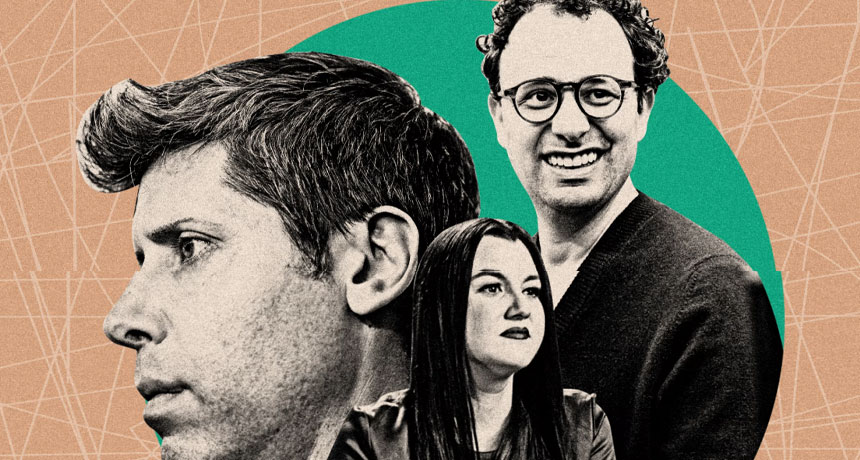
OpenAI, the San-Francisco lab that sparked the AI boom but later fell behind rival Anthropic, is fighting for a comeback.
“We did not have our best 12 months ever, which is mostly my fault, but we are about to have our best 12 months to date,” CEO Sam Altman admitted in a post on X earlier this month. “The team is doing amazing work, and I think you’ll be very happy with what they’ve got cooking for you.”
Growth of its flagship consumer product, ChatGPT, has slowed, and sales staff are locked in a costly battle to win over lucrative business customers by offering volume discounts and other sweeteners, The Wall Street Journal reported.
Powered by the success of its coding tool Claude Code, Anthropic’s revenue growth recently surpassed OpenAI’s, as did its valuation—now nearing $1 trillion.
In addition, Anthropic is accelerating plans for an IPO during the fall, emphasizing its lead over OpenAI, which might now wait until next year to go public.
Altman initially staked the business’s growth on ChatGPT, betting that more people would subscribe to the chatbot. Instead, the overnight success of a hit coding tool, Claude Code, made clear that the bigger prize came from selling tools to enterprise and software developers— for “real-world tasks” that reflected how businesses actually used AI, as it framed them.
As it chases its competitor, OpenAI is now scrambling to enter the enterprise market with its Codex programming tool and other professional models.
However, to date, Codex has underperformed expectations, and software engineers prefer Claude Code.
OpenAI also struck a deal with Amazon to sell AI tools to the cloud giant’s customers and hired former Slack CEO Denise Dresser to become its first chief revenue officer.
The company recently released a “super app” that integrates Codex with ChatGPT and a web browser,
This month, it released a new model, called GPT 5.6 Sol, that became an instant hit with developers—and led Anthropic to extend access to its own powerful Fable model to compete.
It is also benefiting from a broader industry backlash against Anthropic, which has been accused of trying to keep cheaper, Chinese models out of the U.S.
IBL News | New York
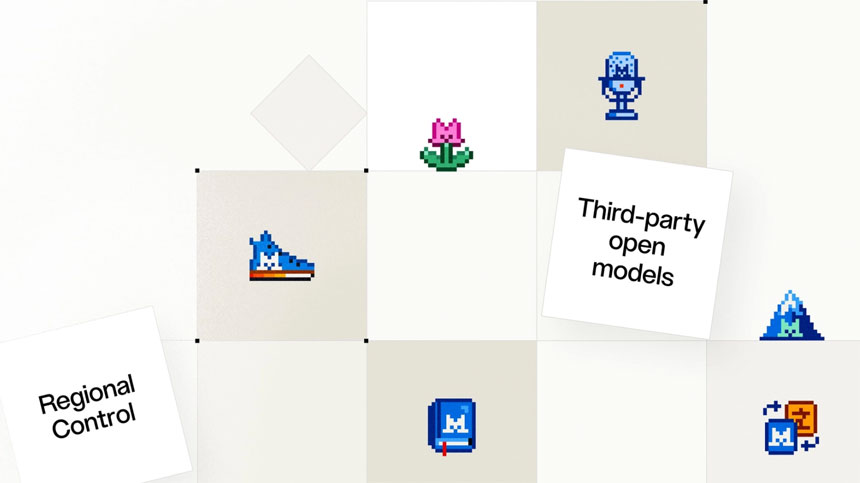
French AI startup Mistral announced this week that its platform will support third-party open models, starting with Chinese Z.ai’s GLM-5.2. These open models will run on the same infrastructure, regional controls, and service commitments as Mistral.
The company highlighted its commitment to sovereign AI: “We believe every enterprise and country must be in control of the models it uses, choose where the intelligence runs, control the compute capacity to scale it, and retain its compounding value.”
With this move, Mistral seeks to ensure European AI sovereignty by attracting businesses and institutions through long-term commitments.
Mistral’s new Priority Tier, now in public preview, provides committed service levels for mission-critical workloads, including custom rate limits, and is backed by an uptime SLA.
The Paris-based organizations stated that “it is the only European AI lab to offer both: choice of processing region and a committed, SLA-backed service level.” At the same time, it participates in the Open Secure AI Alliance and NVIDIA Nemotron Coalition.

Exploring AI Investment Opportunities Beyond Mega-Cap Tech Giants
Source: Youtube

Luigi Mangione expected to plead guilty, sources say
Source: Youtube

Trevor Noah to Google: "You Didn't Invent Black" | #MadeByGoogle2026
Source: Youtube