Author: IBL News

  • Zoom Releases New Features for Education, Including Breakout Rooms

    Zoom Releases New Features for Education, Including Breakout Rooms

    IBL News | New York

    Zoom announced yesterday through a blog-post new features for universities and schools to enhance the learning experience, including the possibility of masking background.

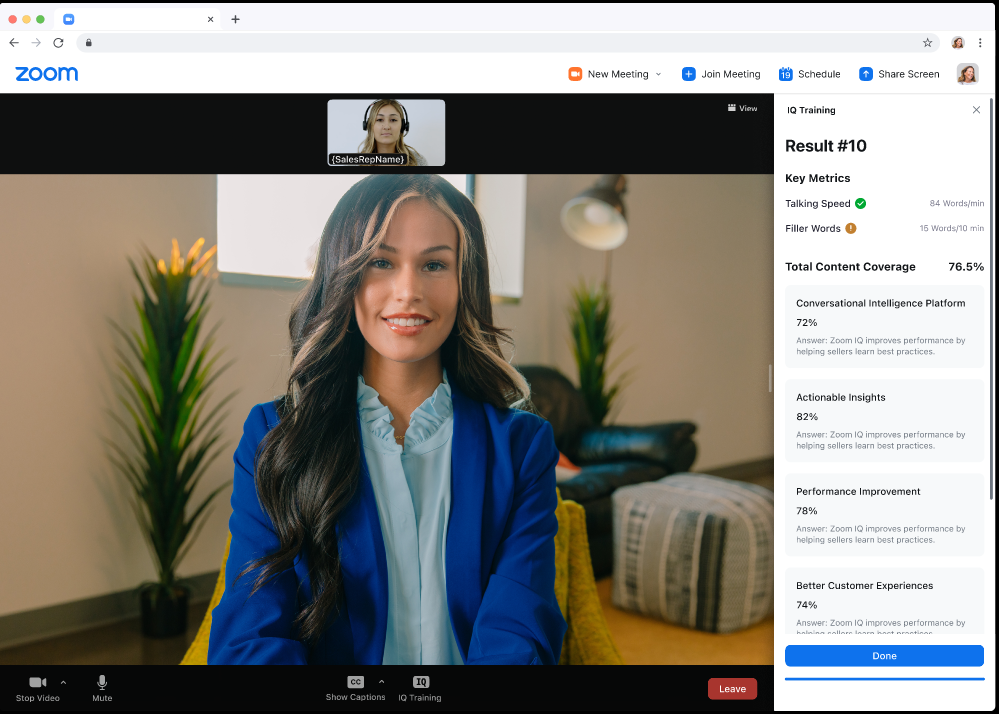
    The Zoom for Chrome Progressive Web Application (PWA) now supports Chromebook virtual and blurred background features.

    Educational institutions can even limit the virtual background library to specific backgrounds, like ones with their school’s colors or mascot, while preventing students from uploading their own images.


    Another interesting feature released is Breakout Rooms, which facilitates small-group activities and discussions, enabling users to show videos with audio.

    With Zoom’s LTI Pro integration enhancement, it comes the ability to pre-assign students to rooms within the school’s LMS.

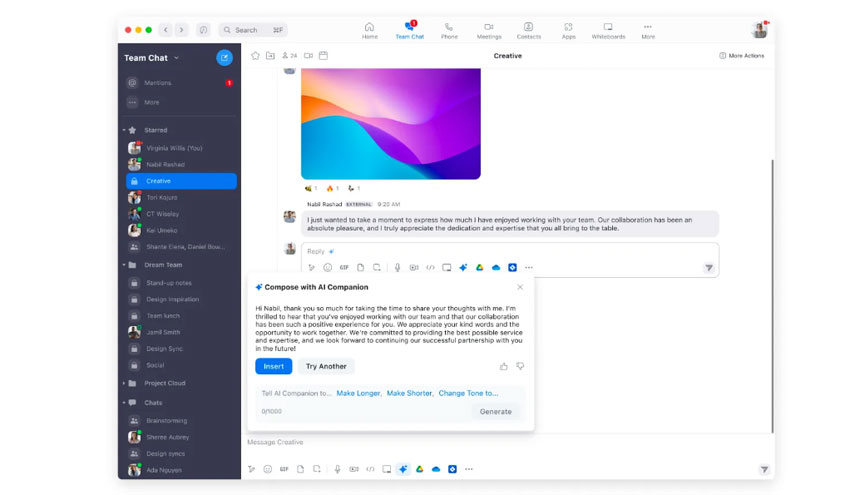
    Zoom Chat is presented as a new tool for real-time and asynchronous communication with students outside of class. It allows the ability to record a video message up to three minutes long that goes directly into a chat channel.

    Students can submit quick video assignments to teachers directly or post them on a group chat channel, where other students can comment and provide feedback. Teachers can also record a short video to answer a student’s question or provide a quick explanation that might be difficult to capture in a text-based message.

    Instructors can rename students in the Waiting Room before admitting them to the main Zoom session.

    Later this month, Zoom will be releasing an enhancement to polls.

  • Labster Nabs Another $47 Million in Capital to Expand Its Science Simulations Business

    Labster Nabs Another $47 Million in Capital to Expand Its Science Simulations Business

    IBL News | New York

    Virtual labs and science simulations company Labster raised $47 million in a new capital infusion that will allow the Copenhagen, Denmark-based company to expand into Asia and Latin America. It also will invest in reaching younger students and adult workforce skills training. The new investors in this round are Sofina Group and Pirate Impact.

    To date, Labster raised $147 million. Existing investors are Owl Ventures, Andreessen Horowitz, EduCapital, NPF Technologies, and GGV Capital — organizer of the ASU+GSV Summit, Balderton Capital, Northzone, Swisscom Ventures, and David Helgason, founder of Unity Technologies.

    “There has been a fundamental change in the nature of education over the last two years that confirms the high value and impact on student engagement and learning outcomes of virtual educational simulations offered in tandem with in-person, teacher-led coursework in a post-pandemic world,” said Michael Bodekaer Jensen, co-founder and CEO of Labster.

    With a workforce of 350 employees, Labster has a clientele of 3,000 universities and high schools.

  • Cornerstone Acquired EdCast, a Learning Platform that Uses Open edX

    Cornerstone Acquired EdCast, a Learning Platform that Uses Open edX

    IBL News | New York

    Cornerstone OnDemand announced this month the acquisition of EdCast, a learning platform featuring a skills engine and a content marketplace that uses Open edX as part of its software stack. The transaction terms — expected to close in Q2 2022 — were not disclosed.

    To date, EdCast raised $107.3 million in funding over eight rounds and 21 investors. EdCast has a post-money valuation in the range of $100M to $500M as of Dec 12, 2019, according to PrivCo.

    Analyst Josh Bersin wrote that EdCast was around a $40 million company, growing 80% per year.

    Himanshu Palsule, CEO of Cornerstone, said that his company and EdCast have “the potential to deliver a next-generation learning and talent infrastructure.”

    He added that this acquisition is a strong fit with Cornerstone’s strategy to transform the learning software market.

    “Today’s fragmented HR technology landscape is ripe for reinvention as organizations seek new ways to unify people and business in areas most critical to growth — workforce engagement, talent retention, skills transformation, and career mobility,” he explained.

    Acquired last year by Clearlake Capital Group for $5.2 Billion, Cornerstone has 6,000 corporate customers and 75 million users.

    This Santa Monica, California-based company competes with enterprise learning and talent management platforms such as Degreed, Microsoft Viva Learning, Workday, SAP SuccessFactors, Oracle HCM, Intrepid, and NovoEd. In the area of training-oriented platforms, it competes with Docebo, Valamis, 360Learning, Totara, Absorb, and Learn Upon, Saba, Fuel50, and Gloat, among others.

    EdCast was founded by entrepreneur Karl Mehta in 2014 as an Open edX provider. Later, it evolved into a learning experience platform (LXP), competing primarily with Degreed.
    .


  • 2U – edX Removes Six Russian Universities from Its Content Platform

    2U – edX Removes Six Russian Universities from Its Content Platform

    IBL News | New York

    edX, now part of 2U Inc (NASDAQ: TWOU), will disclose this month ways to partner with refugee organizations and deploy resources to help displaced Ukrainian students. Chip Paucek, CEO at 2U, highlighted during a panel at ASU+GSV Summit that his company removed six Russian universities from edX.org. Simultaneously, he disclosed that “Ukraine is using Open edX as its national platform.”

    The Russian universities whose content has been removed, are ITMO University, National Research Nuclear University, MEPhL, National University of Science and Technology MISiS, Peoples’ Friendship University of Russia (RUDN), and Ural Federal University.

    In addition, Anant Agarwal, Chief Open Education Officer at 2U and founder at edX,  revealed in early March that edX was offering all Ukrainian colleges and universities, through the Ministry of Education and Science of Ukraine, free access to the edX Online Campus, with 1,600 online courses and programs.

    He wrote then, “we are deeply troubled by Russia’s unprovoked invasion of Ukraine and heartbroken by the escalating humanitarian catastrophe. This blatant and egregious violation of Ukraine’s national sovereignty goes against all we stand for as an organization dedicated to the power of learning to elevate society and bring opportunity to every corner of the globe. We stand with the people of Ukraine and all those who urgently seek peace.”

    Last Wednesday, Chip Paucek participated, along with the CEOs of Wiley, DreamBox, and Course Hero, in a panel discussion around the topic of “Purpose and Profit.” During this session [in the picture], he defended the idea of permanently developing a business strategy consistent with the educational mission of the company. “Every single day at 2U, the reason people wake up and come in is our mission, period – end of story,” he said.

    Mr. Pauce, who presented 2U as “the parent company of edX”, stressed the idea that “it’s about unlocking human potential.”


  • “People Will Be Learning All Their Life,” Said Crow at the ASU+GSV Summit

    “People Will Be Learning All Their Life,” Said Crow at the ASU+GSV Summit

    IBL News | New York

    “At ASU (Arizona State University), we are creating an environment to prepare students to be master learners,” said Michael Crow, President of Arizona State University, during the ASU+GSV Summit that kicked off in San Diego yesterday.

    Education leaders, entrepreneurs, investors, and policymakers gathered for three days to dissect where the educational business is heading.

    The 2022 ASU+GSV conference attracted 6,000 attendants, a record number of participants, through an edition well-organized and successfully executed.

    The event included the 2022 GSV Cup Top 3, with three start-ups: Clayful, Collective Academy, and Kibo. Kibo was the winner, as disclosed during the closing party last night.

    In a Q&A conversation with The New York Times columnist Tom Friedman, Michael Crow redirected the conversation on the future of education into the life-long learning scenario. “Now people will be learning all their life,” he said.

    “We need to change pedagogical design and add more tools. We need better ways to teach and learn. Universities need to figure out how to produce better teachers and students.”

    Regarding the value of degrees, Crow said, “we have to stop thinking of a college degree in the traditional sense, and we have to think of it as a learning moment on a pathway.”

    “It’s a measurement of learning capacity rather than an achievement in itself. We have to move away from the notion of kindergarten through college, and then you’re done with learning, and you go to work.”

    ASU started its School for the Future of Innovation in Society to address these issues, Crow said.

    “We felt the university sector had missed the boat in trying to understand how to guide technology – not just the market forces, but the social complexities and the disruptive positives and negatives that are occurring.”

    Tom Friedman praised ASU’s effort by saying that “you make education hot and cool.”


  • “Crypto Will Give Everyone the Tools to Build Wealth,” States an Insightful Report

    “Crypto Will Give Everyone the Tools to Build Wealth,” States an Insightful Report

    IBL News | New York

    An insightful, updated, free PDF report with predictions for 2022 on crypto is getting significant traction among millennials and Gen X investors—a techno-political movement who distrust the system and see “no institution both competent and ethical.”

    The research, titled “Crypto Theses for 2022”, works as a 101 course that includes key trends, people, companies, and projects to watch across the crypto industry landscape.

    It started as a tweet thread with links four years ago.

    The author, Ryan Selkis, Founder and CEO at Messari.io, a research and data start-up, structured his research across 165 pages and ten chapters:

    1. Top 10 Narratives & Investment Themes

    2. 10 People to Watch

    3. Top 10 Thoughts on Bitcoin

    4. American Crypto Policy

    5. Market Infrastructure

    6. NFTs & Web 3 Plumbing

    7. DeFi 2.0

    8. ETH, Layers, and Bridges

    9. The DAO of DAOs

    10. BONUS: Whatever I Want

    The report is built upon the belief that “decentralized technologies with embedded financial incentives offer a compelling, often lucrative, alternative to our decaying legacy institutions.”

    The author predicts that “Web3” — defined as the internet owned by the builders and users, orchestrated with tokens — is an unstoppable force in the long term.

    Other claims of Ryan Selkis are the following:

    • “The user-owned economy will outperform the monopolist-owned economy in the long-term.”
    • “We’re going from an internet built on rented land with monopoly overlords, to an infinite frontier of new possibilities. On the frontier, crypto presents a credible revolution to all monopolies, which is why its inevitability scares the incumbents.”
    • “I have 99% conviction that crypto will be an order of magnitude larger by 2030 because the user economics here is an order of magnitude more attractive. We’re on the brink of a total transformation of the global economy. One that’s bigger than mobile, and maybe even the internet itself.”
    • “We live in a period of social upheaval, where young people are keen to invest in technologies that disrupt (and potentially bankrupt) older generations’ preferred institutions while pushing investments that benefit themselves at the expense of the old guard.”
    • “The best part about being young and broke, he says, is that you have little to lose.”
    • “We believe that crypto will democratize access to information, break down data silos, and ultimately give everyone the tools to build wealth.”
    • “Crypto will eliminate deplatforming risks.”


    This year, the crypto industry has received record capital raises, and some of the funds, like Multicoin, are among the best-performing investment firms of all time. Crypto’s $3 trillion of liquid value creation in 10 years now rivals that of all other venture-backed startups combined, according to Messari.io.

    Firms like Polychain, Paradigm, a16z, Multicoin, 3AC, and others are each managing billions of dollars (in some cases, $10 billion+) or more, and investing $25mm a clip in their medium-sized deals.

    Hedge funds plan to deploy 7% of their assets into crypto within 5 years.

  • The UN Launches an Initiative to Improve Nutrition in Schools

    The UN Launches an Initiative to Improve Nutrition in Schools

    IBL News | New York

    Two United Nations agencies, with the support of the German Federal Ministry of Food and Agriculture (BMEL), launched last month launched an initiative to improve the diet for schools meals, contributing to their nutrition needs.

    In many countries, school meals are a significant portion of children’s daily diet.

    FAO’s Deputy Director of the agency’s Food and Nutrition Division, Nancy Aburto, said that her institution aims to support governments and institutions in providing healthier school food to children and adolescents, marking a step forward towards ensuring their Right to Food.”

    “We have a global consensus now around the need for school meals and its benefits to various sectors. School meals go far beyond the plate of food – they can impact education, nutrition, health, agriculture, and food systems,” said Carmen Burbano, Director of the School-based Programmes Division at WFP.

    The project, School food nutrition guidelines and standards for safeguarding children and adolescents’ right to food, will be piloted in Cambodia and Ghana.

    The participant partners will also produce guidance for schools to implement hands-on food education strategies, including how to use school meal menus as learning materials in the classroom.

    Other interventions will also be promoted, such as restricting the marketing of sugary beverages in school.
    .

  • Class.com Partners with Intel to Develop New Teaching Functionalities

    Class.com Partners with Intel to Develop New Teaching Functionalities

    IBL News | New York

    Zoom-based learning platform Class.com announced this month a partnership with Intel to bring new functionalities to Intel processor-based PCs, such as audio proximity. No further details have been provided.

    Currently, both companies are developing “a proof of concept to better understand engagement in the virtual classroom.”

    In addition, both companies will provide joint case studies, insights, white papers, and webinars.

    “With Intel’s leading technologies and expertise, Class will further improve accessibility and user experience across all platforms, including Intel processor-based PCs,” said Michael Chasen, CEO and Founder of Class.

    “Through technology, we have the ability to set the standard for impactful synchronous online learning experiences that empower educators,” said Michael Campbell, Intel’s Global Head of Education.

    Headquartered in Washington, DC, Class is built on the Zoom platform and adds teaching and learning tools to teachers’ workflow in an attempt to make the virtual classroom feel like a real classroom. These additional features allow users to take attendance, hand out assignments, give a quiz or test, grade work, proctor exams, and talk one-on-one with a student, among others.
    .

  • CUNY Online Will Launch Ten Associate, Bachelor’s, and Master’s Degree Programs by Spring 2023

    CUNY Online Will Launch Ten Associate, Bachelor’s, and Master’s Degree Programs by Spring 2023

    IBL News | New York

    CUNY (The City University of New York), the nation’s largest urban public university, announced this month that it will invest $8 million in federal stimulus funds to develop CUNY Online, a new initiative meant to produce high-quality online courses and programs through its 25 campuses.

    The goal is to launch seven to ten new online associate, bachelor’s, and master’s degree programs by Spring 2023, and complete a total of 13 to 20 new programs by Fall 2023.

    The initiative will be led by the CUNY School of Professional Studies (CUNY SPS), which runs more than three dozen online programs. CUNY Online will also serve as the primary portal for the promotion and enrollment of online programs.

    CUNY Online will offer dedicated instructional designers, production staff, and project managers to support academic content development, course design, and delivery effectiveness. It will also provide student support services, including tech support, expanded tutoring, and early access to cutting-edge technologies.

    Currently, the institution is vetting applications.

    “The shift to online instruction that took place during the pandemic demonstrated the great promise of technology to help us meet students quite literally where they live, but course materials need to be optimized, and best practices incorporated, to realize the full potential of these tools,” explained CUNY Chancellor Matos Rodríguez, in a statement this month.

    Credits on courses that are transferable across all campuses.

    “With CUNY Online, the university has made a forward-thinking investment in online education to ensure that all CUNY colleges may be able to offer more flexible and accessible online learning opportunities. We look forward to bringing our 15-plus years of online expertise to CUNY Online and therefore other campuses within the CUNY community,” said CUNY SPS Interim Dean Jorge Silva-Puras.

    CUNY Online is the latest online initiative developed by the University with the help of CUNY SPS. In Spring 2020, CUNY SPS created an award-winning series of workshops in online instruction that drew 3,400 faculty members from across all CUNY campuses as they transitioned to online teaching and learning during the pandemic.

    CUNY SPS offers 24 degrees and numerous non-degree and grant-funded workplace learning programs and has been nationally recognized as a leader in the growing online education space.

    For the second year in a row, CUNY SPS has been named in the top 10 of U.S. News & World Report’s 2022 list of Best Online Bachelor’s Programs nationwide. The publisher also ranked the school’s B.A. in Psychology No. 2 in the nation on the list of Best Online Bachelor’s Programs in Psychology, out of 55 schools reviewed.

    In a new entry for CUNY SPS, the B.A. in Business was ranked No. 30 in the nation on the list of Best Online Bachelor’s Programs in Business, out of 228 institutions assessed. The school was also No. 5 for Best Online Bachelor’s for Veterans.

    Founded in 1847 as the nation’s first free public institution of higher education, CUNY today has seven community colleges, 11 senior colleges, and seven graduate or professional institutions spread across New York City’s five boroughs, serving over 260,000 undergraduate and graduate students and awarding 55,000 degrees each year.

  • European GoStudent Opens in the U.S., Offering Its Low Cost Tutoring Service

    European GoStudent Opens in the U.S., Offering Its Low Cost Tutoring Service

    IBL News | New York

    Europe’s highest valued EdTech start-up, GoStudent, with a $3.5 billion valuation and 11 million users, chose Austin, Texas, for its U.S. headquarters.

    Along with this location, this Austrian European unicorn company announced the offering in the U.S. of its individualized, one-on-one, online tutoring for standardized tests, academic support, and interest-based learning, such as coding.

    This online tutoring provider, including coaching for standardized tests, such as the SAT, said that it aims to grow its American business to 150,000 tailored sessions booked monthly by the end of 2022. It estimates a potential market of 50 million K-12 students.

    GoStudent offers a range of memberships, with a price per session, delivered remotely via video, in 30 subjects, ranging from $32 to $50, based on the duration and level of intensity chosen.

    Founded in Vienna in 2016 by Felix Ohswald, CEO, and Gregor Müller, COO, it operates in 23 markets, including countries in Latin America and Europe, as well as Canada and Turkey. It currently employs 1,800 people and works with +19,000 tutors.

    Over 1.5 million tutoring sessions are booked each month.

    GoStudent said it holds a recent market study stating that over 65 percent of surveyed parents have organized one-on-one tutoring for their child in the past 12 months and have paid an average of $68 per session.

    The typical price per session with GoStudent, depending on the package selected, is $41, which is 40% less than the U.S. average, according to the company.

    “We are committed to set rates that are more easily affordable; digitalization has always helped to democratize industries and applying this logic to education is long overdue,” said Felix Ohswald, Co-founder and CEO of GoStudent.

    Sam Best, an experienced sales expert, was appointed to launch the U.S. market in January 2022.

    Currently, there are over 7,000 high-tech companies and 100 incubators, accelerators, and coworking spaces in Austin. The Texan city has the fifth-highest concentration of college-educated adults, and more than one-third of the population is between 25 and 44 years old.

    Throughout 2022, GoStudent aims to grow its Austin-based team to more than 130 people, spanning tutor management, customer success, and sales.

    GoStudent’s U.S. launch comes just weeks after acquiring the UK-based platform Seneca Learning and Spain-based Tus Media Group. In 2021 GoStudent acquired FoxEducation.

    In January 2022GoStudent announced its $340 million Series D funding round led by Prosus Ventures.

    Other investors include SoftBank Vision Fund 2, Left Lane Capital, Coatue, and DST Global.