Author: IBL News

  • OpenAI Will Offer A Dedicated ChatGPT Platform for Businesses

    OpenAI Will Offer A Dedicated ChatGPT Platform for Businesses

    IBL News | New York

    OpenAI — the owner of ChatGPT — is preparing the launch of a new AI platform for developers who need larger workloads on a dedicated capacity for their learning models, like GPT-3.5.

    This platform, called Foundry, allows customers to have full control over the model configuration and performance profile.

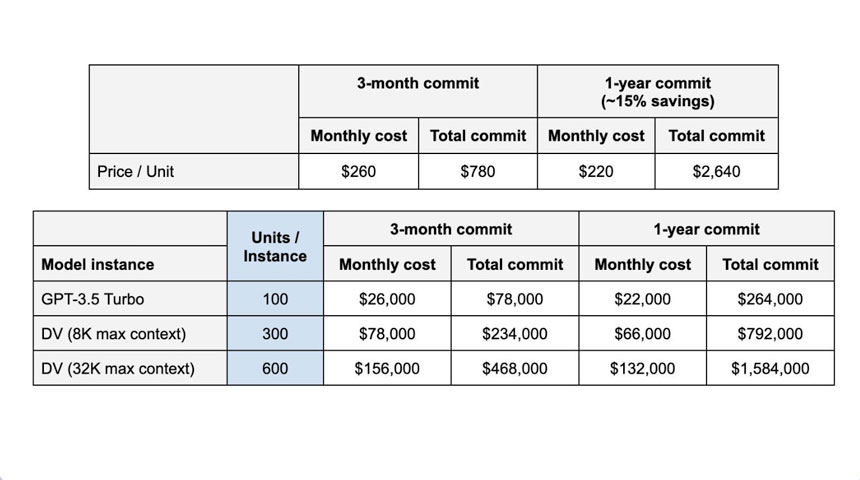
    According to TechCrunch, Foundry will offer rentals based on dedicated compute units with three-month or one-year commitments.

    The service will be costly. Running a lightweight version of GPT-3.5 will cost $78,000 for a three-month commitment or $264,000 over a one-year commitment.

    OpenAI co-founder and CEO Sam Altman said it costs a few cents per chat to run ChatGPT, OpenAI’s viral chatbot.

    In a move toward monetization, OpenAI recently launched a “pro” version of ChatGPT, ChatGPT Plus, starting at $20 per month, and teamed up with Microsoft to develop Bing Chat.

    Separately, OpenAI continues to make its tech available through Microsoft’s Azure OpenAI Service, a business-focused model-serving platform and maintaining Copilot, a premium code-generating service developed in partnership with GitHub.

  • OpenAI launches an API for ChatGPT. Quizlet and Shopify, Among the Early Adopters

    OpenAI launches an API for ChatGPT. Quizlet and Shopify, Among the Early Adopters

    IBL News | New York

    OpenAI launched ChatGPT API for businesses with dedicated capacity plans, priced at $0.0002/~750 words yesterday.

    San Francisco-based startup also announced that the open-source speech-to-text model Whisper is available at its API, giving developers access to speech-to-text capabilities. The API is priced at $0.006 / minute, rounded up to the nearest second.

    ChatGPT API is powered by the same AI model behind OpenAI’s wildly popular ChatGPT, dubbed “GPT-3.5-turbo.”

    “It’s also our best model for many non-chat use cases; we’ve seen early testers migrate from text-davinci-003 to gpt-3.5-turbo with only a small amount of adjustment needed to their prompts,” said the company. [Official documentation]

    GPT-3.5 is the most powerful text-generating model OpenAI offers today through its API suite; the “turbo” moniker refers to an optimized, more responsive version of GPT-3.5 that OpenAI’s been quietly testing for ChatGPT.

    Priced at $0.002 per 1,000 tokens, or about 750 words, the API can drive a range of experiences, including “non-chat” applications. “This is 10x cheaper than the existing GPT-3.5 models,” said OpenAI.

    Snap, Quizlet, Instacart, and Shopify are among the early adopters. “Our early partners have built with the new APIs – and start building next-generation apps powered by ChatGPT & Whisper today,” said the company.

  • Microsoft Releases a Windows 11 Update that Includes AI-Powered Bing Chatbot

    Microsoft Releases a Windows 11 Update that Includes AI-Powered Bing Chatbot

    IBL News | New York

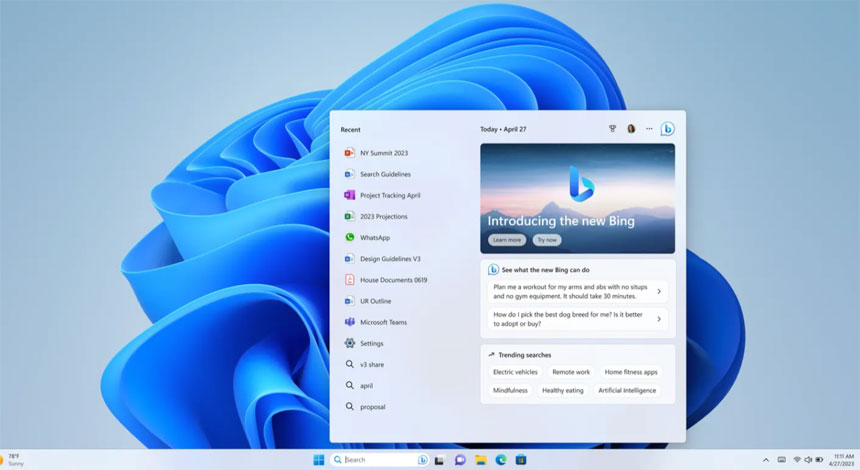
    Microsoft released yesterday a Windows 11 update that adds the AI-powered Bing search and chat features to the taskbar.

    Windows 11 is also getting improvements to widgets, tabs inside Notepad, and a screen recording feature, among other new features.

    “We’re reimagining what I think of as an increasingly AI-powered Windows for the future,” says Yusuf Mehdi, Microsoft’s Head of Consumer Marketing, in an interview with The Verge.

    “Soon hundreds of millions of Windows 11 users can get access to this incredible new technology to search, chat, answer questions, and generate content from the right on their Windows taskbar,” said Windows Chief Panos Panay in a blog post.

    The expansion of Bing chat to the Windows 11 taskbar comes just a week after Microsoft rolled out the same mode to Bing on mobile and in Skype conversations.


  • Snapchat Introduces My AI, a ChatGPT-Powered Artificial Intelligence Bot Into Its App

    Snapchat Introduces My AI, a ChatGPT-Powered Artificial Intelligence Bot Into Its App

    IBL News | New York

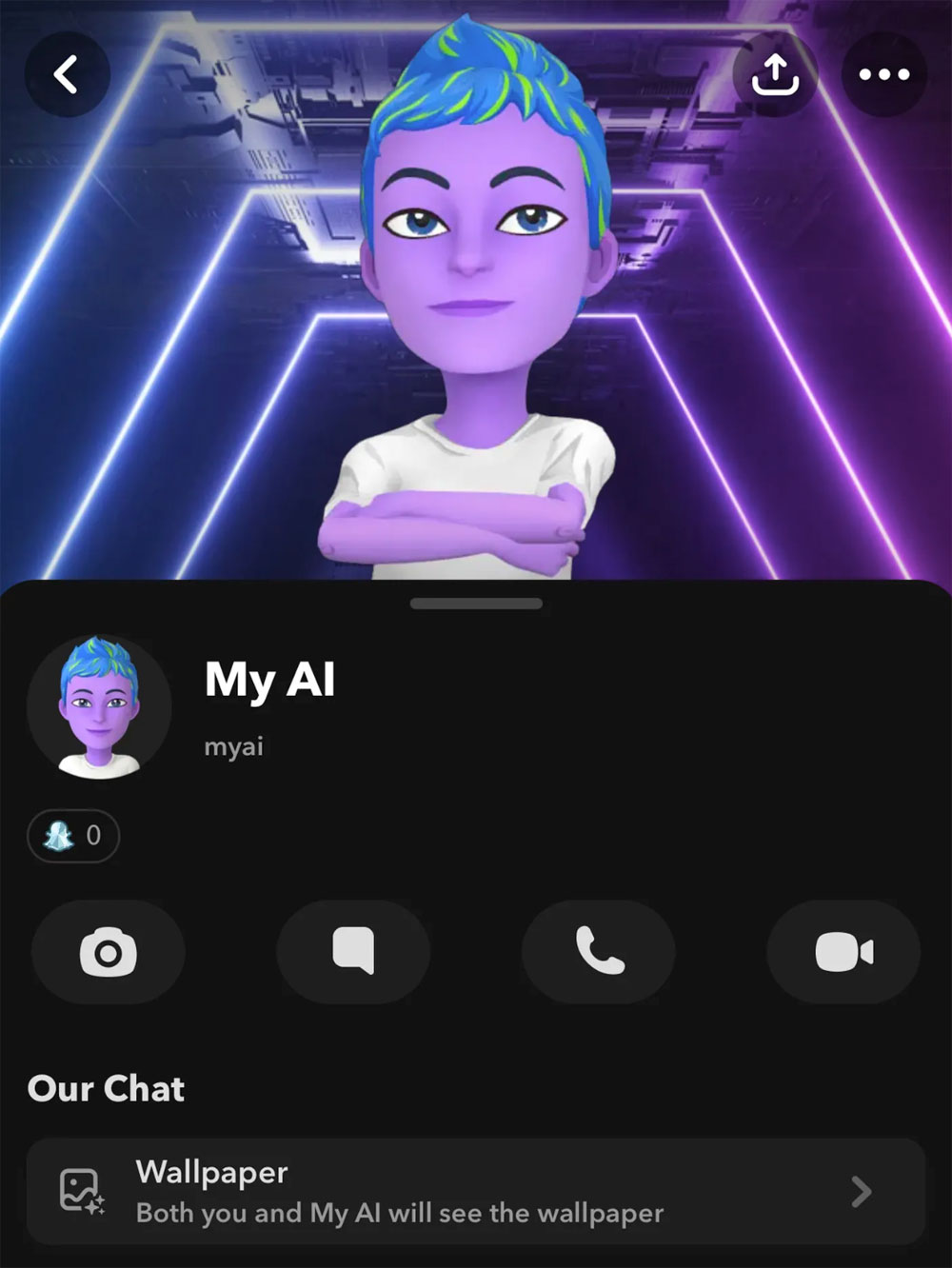
    Snap Inc. announced yesterday that it was introducing My AI, a ChatGPT-powered artificial intelligence bot, into its Snapchat app. The goal is to allow users to talk with the chatbot as they would with their human friends.

    The Chief Executive of Snap Inc, Evan Spiegel, said that My AI will first roll out to subscribers of the Snapchat+ service — which costs $3.99 a month — but he hopes it will ultimately become available to all Snapchat users.

    The chatbot has been trained to avoid swear words and sexually explicit content and to decline requests to write academic essays. Other than that, at launch, My AI is essentially just a fast mobile-friendly version of ChatGPT inside Snapchat.

    The company, with 2.5 million subscribers, has been aiming to diversify its revenue base beyond advertising.

    While ChatGPT — the fastest-growing consumer software product in history — has become a productivity tool, Snap’s implementation treats it like a persona, as shown in the picture below.

    The design suggests that My AI is another friend inside of Snapchat to hang out with, not a search engine.

    Snap is one of the first clients of OpenAI’s new enterprise tier called Foundry, which lets companies run its latest GPT-3.5 model with dedicated computing designed for large workloads.

  • JPMorgan Chase, Verizon, Citigroup, and Goldman Sachs Block Access to ChatGPT

    JPMorgan Chase, Verizon, Citigroup, and Goldman Sachs Block Access to ChatGPT

    IBL News | New York

    The banks JPMorgan Chase and Citigroup are restricting employees from using ChatGPT, according to The Wall Street Journal.

    Also, other business organizations, like Goldman Sachs and Verizon Communications have blocked access to ChatGPT.

    Last week, telecom company Verizon barred the chatbot from its corporate systems, saying it could lose ownership of customer information or source code that its employees typed into ChatGPT.

    The New York City public schools in January banned the chatbot from their internet networks and school devices.

    Companies are using the chatbot to automate tasks, write emails, and research topics, despite the system sometimes responding with misinformation or wrong answers.

    Microsoft Corp., which has invested billions of dollars in OpenAI, debuted an upgraded Bing search engine using ChatGPT’s technology. Users reported that the search engine, which also functions as a chatbot, responded to questions with sometimes disturbing answers.

  • Microsoft Released the Bing and Edge Mobile Apps Powered by ChatGPT

    Microsoft Released the Bing and Edge Mobile Apps Powered by ChatGPT

    IBL News | New York

    Microsoft shared the preview release of the new Bing and Edge mobile apps powered by ChatGPT this week. It also announced the rollout of voice input and an enhancement of Skype.

    The software giant envisions that all new Bing and Edge mobile apps serve as “a copilot for the web”, as 64% of searchers occur on mobile phones.

    Tapping the Bing icon at the bottom of the IOS and Android app, it appears a chat session. “Ask simple or complex questions and receive answers and citations. Choose how you want your answers displayed – bullet points, text, or simplified responses. Explore the Bing chat experience to refine your query or compose an email, poem, or list,” said the company.

    Microsoft also introduced an AI-powered Bing for Skype. Skype is used daily by 36 million people.

  • Meta Released LLaMA, an Open Large Language Model with 65-Billion-Parameters

    Meta Released LLaMA, an Open Large Language Model with 65-Billion-Parameters

    IBL News | New York

    Meta, formerly known as Facebook, announced the release of its large language model called LLaMA (Large Language Model Meta AI), with 65 billion parameters, yesterday. Analysts saw this move as CEO Mark Zuckerberg’s answer to ChatGPT.

    “It’s designed to help researchers advance their work in this subfield of AI,” said Meta. “It’s part of Meta’s commitment to open science.”

    “Training smaller foundation models like LLaMA is desirable in the large language model space because it requires far less computing power and resources to test new approaches, validate others’ work, and explore new use cases.”

    Meta is making LLaMA available in several sizes (7B, 13B, 33B, and 65B parameters). It also shared a LLAMA model card that details how the company built the model in keeping with an approach to Responsible AI practices.

    Meta trained LLaMA 65B and LLaMA 33B on 1.4 trillion tokens. Their smallest model, LLaMA 7B, is trained on one trillion tokens.

    Over the last year, large language models — natural language processing (NLP) systems with billions of parameters — have shown new capabilities to generate creative text, solve mathematical theorems, predict protein structures, answer reading comprehension questions, and more.

    Like other large language models, LLaMA works by taking a sequence of words as input and predicting the next word to recursively generate text.

    To train its model, Meta chose a text from the 20 languages with the most speakers, focusing on those with Latin and Cyrillic alphabets. Meta released its model under a noncommercial license focused on research use cases.

    Access to the model will be granted on a case-by-case basis to academic researchers; those affiliated with organizations in government, civil society, and academia; and industry research laboratories around the world.

    Those hoping to access LLaMA for themselves can apply via this request form.

    CEO Mark Zuckerberg described his company’s contribution to the buzzy AI technology sphere in a Facebook post.

    “Today we’re releasing a new state-of-the-art AI large language model called LLaMA designed to help researchers advance their work.”


  • AWS Partners With Hugging Face, an AI Startup Rival to ChatGPT Working on Open Source Models

    AWS Partners With Hugging Face, an AI Startup Rival to ChatGPT Working on Open Source Models

    IBL News | New York

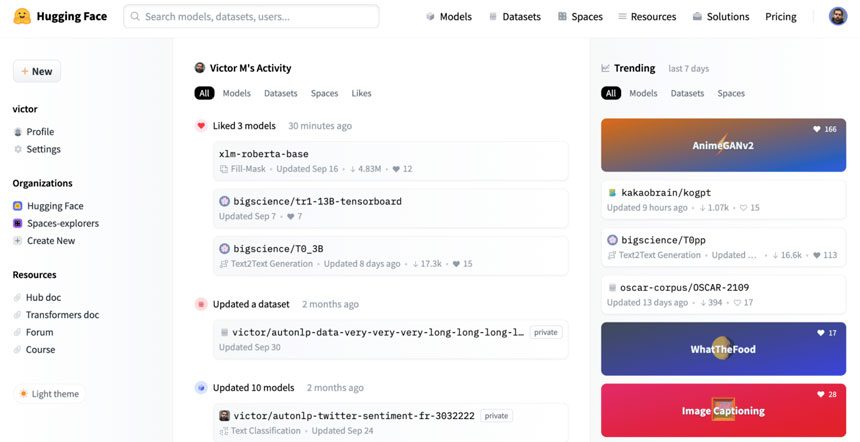
    AWS (Amazon Web Services) announced an expansion of its partnership with IA startup Hugging Face Inc., which is developing a ChatGPT rival. As a result of it, AWS will make Hugging Face’s products available to cloud customers. Hugging face plans to build a language model BLOOM on AWS.

    The companies didn’t disclose the financial details of the partnership, but Amazon said it didn’t invest in the startup.

    “Hugging Face and AWS are making it easier for customers to access popular machine learning models to create their own generative AI applications with the highest performance and lowest costs,” said Adam Selipsky, CEO of AWS in a blog post.

    Hugging Face, which makes AI products and hosts those developed by other companies, is working on open-source rivals to ChatGPT and will use AWS for that as well. It currently features a central hub for machine learning, with 100,000 free and accessible machine learning models downloaded by researchers, data scientists, and machine learning engineers.

    AWS already has partnerships with Stability AI, the maker of image-generation tool Stable Diffusion — a competitor to OpenAI’s Dall-E — and Israeli AI company AI21 Labs, which makes another rival to OpenAI’s GPT language model called Jurassic.

    Hugging Face’s BLOOM was trained on a French publicly available supercomputer called Jean Zay. Last year, it raised $100 million from investors including Lux Capital, Sequoia Capital, and Coatue Management, as well as basketball star Kevin Durant. The company’s repository of AI models serves as a kind of GitHub of machine-learning tools.

  • The Most Expensive School in the World, Swiss Rosenberg, Teaches How to Use ChatGPT

    The Most Expensive School in the World, Swiss Rosenberg, Teaches How to Use ChatGPT

    IBL News | New York

    The Swiss boarding school Institut auf dem Rosenberg, one of the world’s most expensive schools, with a tuition of $162,500 per year, is encouraging students to use AI tools such as OpenAI’s ChatGPT and text-to-image generators DALL·E. 

    Anita Gademann, Rosenberg’s Director and Head of innovation, said to Insider that banning ChatGPT is “mass hysteria” and “students need to be taught the ethics of AI.”

    “We are very determined to ensure that whatever we teach our students is relevant for them, and relevant for the world they’re going to go into in the future,” she said.

    Gademann says students — reportedly sons of German billionaires — are taught to use AI “as a tool.”

    Seventh-graders used it for a History project to visualize the Middle Ages, and the “discrepancies between nobility and peasants.” Another student used DALL·E to generate pictures in an essay about the role of women in the First World War.

    Gademann says teachers know if a student has plagiarized an essay because they’re familiar with their writing styles and any shortcomings. “I know the name and aim and objective of every single one of my 230 kids. I make it my business to know this.”

  • GitHub Copilot, Which Suggests Code in Real-Time through Generative AI, Launches Its Business Offer

    GitHub Copilot, Which Suggests Code in Real-Time through Generative AI, Launches Its Business Offer

    IBL News | New York

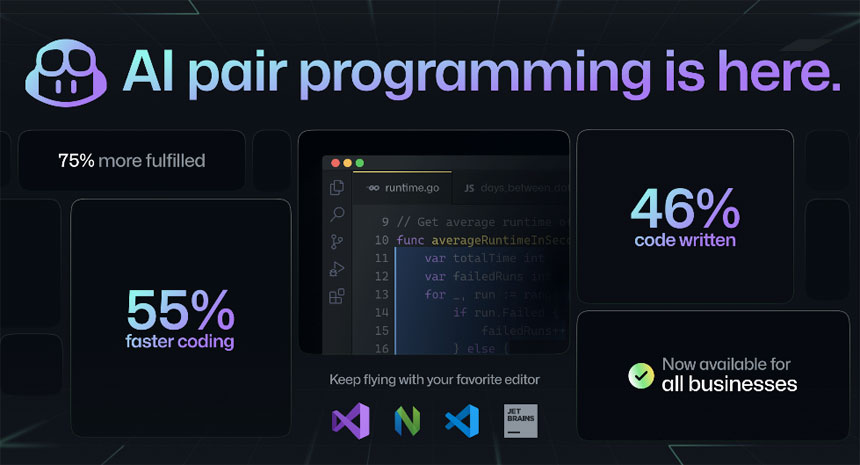
    GitHub has made its AI developer tool Copilot for Business publicly available.

    First previewed in partnership with OpenAI in 2021, GitHub Copilot suggests in real-time new lines of code, entire functions, tests, complex algorithms, and even blocks common insecure code suggestions.

    GitHub Copilot, built on generative AI, works as an editor extension and it learns alongside developers to adapt to individual coding styles and conventions.

    With GitHub Copilot, developers can use the editor of their choice from Visual Studio to Neovim, VS Code, or JetBrains IDEs.

    However, despite its success, GitHub Copilot is not always accurate, similar to the OpenAI-owned language model ChatGPT.

    “Like any other code, code suggested by GitHub Copilot should be carefully tested, reviewed, and vetted,” GitHub said in its FAQs. “As the developer, you are always in charge.”

    “Back i​n June 2022, we reported that GitHub Copilot was already generating 27% of developers’ code. Today, we’re seeing this happen more and more with an average of 46% of code being built using GitHub Copilot across all programming languages, and 61% among developers using Java,” says GitHub. “In the coming years, we will integrate AI into every aspect of the developer experience —from coding to the pull request to code deployments.”