Author: IBL News

  • Colleges Start to Move Classes to Distance Learning Due to the Fast Spread of Omicron

    Colleges Start to Move Classes to Distance Learning Due to the Fast Spread of Omicron

    IBL News | New York

    With the Omicron variant of the COVID-19 virus on the rise American colleges and universities are starting to take measures, that will impact the spring 2022 semester.

    The concern is that even vaccinated individuals contract the virus, disrupting institutions’ plans.

    Schools are closely monitoring the situation before alerting students to any changes. The input received from public health experts will mostly determine their course of action.

    Beyond this wait-and-see behavior, some institutions have made public announcements:

    • Harvard University already announced a transition to fully online learning to start in 2022. At least the first three weeks of classes will turn into remote learning.
    • Stanford University reported that it will start the winter quarter online, from January 3 until January 18.
    • DePaul University canceled on-campus classes until after January 17.
    • Penn State will begin the semester in person as planned. However, the school might alter plans. An update is expected in December. 30.
    • The University of California, Los Angeles, said it has yet to decide about returning to campus in January. Before December 25, the university will share more information with students.
    • Seven universities of California campuses — Davis, Irvine, Los Angeles, San Diego, Santa Barbara, Santa Cruz, and Riverside — announced that they will start instruction online in January.
    • Cornell, Princeton, Tufts, Towson University, and other schools are shifting final exams to online. Athletics and sports events are being called off in an increasing number of institutions.


     

  • MIT Press Makes Its Spring 2022 Monograph List Openly Available

    MIT Press Makes Its Spring 2022 Monograph List Openly Available

    IBL News | New York

    MIT Press, one of the largest university presses, announced that it will publish its full list of spring 2022 monographs and edited collections on an open-access model through June 30, 2022.

    The list includes titles from across the arts, humanities, and sciences, such as Treacherous Play by Marcus Carter, From Big Oil to Big Green: Holding the Oil Industry to Account for the Climate Crisis by Marco Grasso, Power of Position: Classification and the Biodiversity Sciences by Robert D. Montoya, and Cognitive Robotics edited by Angelo Cangelosi and Minoru Asada.

    “The goal is to be of use to as many readers as possible—across the world, rich or poor,” said Georg F. Striedter, Professor, Neurobiology and Behavior, University of California, Irvine, and MIT Press author.

    “I am thrilled that the MIT Press and a consortium of libraries are making it possible for the electronic version of my forthcoming book to be open access. I believe this is the future of academic book publishing, or at least it’s bleeding edge.”

    The move came after MIT Press reached the 50% threshold for participation in its Direct to Open (D2O) initiative.

    D2O moves professional and scholarly books from a solely market-based purchase model, where individuals and libraries buy single eBooks, to a collaborative, library-supported open access model.

    Instead of purchasing a title once for a single collection, libraries now have the opportunity to fund them one time for the world through participant fees.

    Over 160 libraries and consortia support the D2O initiative, including Academy of Fine Arts, Vienna; Bryn Mawr College Libraries; Caltech Library; Carnegie Mellon University Libraries; The Claremont Colleges; Emory Libraries; George Mason University; Gettysburg College Library; Grand Valley State University; Johns Hopkins University Libraries; KU Leuven; Loyola Notre Dame Library; Loyola University Chicago; Michigan State University Libraries; MIT Libraries; NYU Libraries; Rockefeller University; Southern Methodist University; Texas A&M University-San Antonio University Library; University of Illinois, Urbana Champaign Library; University of Iowa Libraries; University of Maryland Libraries; University of Massachusetts Boston; Healey Library, University of Michigan Libraries; University of Redlands; Armacost Library; the University of Tennessee at Martin; University of Toronto Libraries; University of Washington Libraries; and Worcester Polytechnic Institute.
    .

  • Harvard Will Not Require SAT or ACT Test Scores Due to the COVID-19 Outbreak

    Harvard Will Not Require SAT or ACT Test Scores Due to the COVID-19 Outbreak

    IBL News | New York

    Harvard College — the undergraduate college of Harvard University — will allow students to apply for admission without requiring SAT or ACT scores for upcoming classes of ’27, ’28, ’29, and ’30, according to a report on The Harvard Gazette.

    The current admission for the Class of 2026 is the second for which students have applied without requiring standardized testing.

    Harvard is making this decision due to the ongoing COVID-19 pandemic, causing many students to have limited access to testing sites.

    “Students who do not submit standardized test scores will not be disadvantaged in their application process,” said William R. Fitzsimmons, Dean of Admissions and Financial Aid.

    Accomplishments in and out of the classroom during the high school year, including extracurricular activities, community involvement, employment, and family responsibilities, are still being considered as part of the admission process.

    In this regard, Harvard College announced this week that it accepted 740 students to the Class of 2026 from a pool of 9,406 who applied under the early action program. Last year, 743 students were selected from the 10,087 who submitted applications.

    African Americans constitute 13.9 percent of those admitted (16.6 percent last year), Asian Americans 25.9 percent (23.4 percent last year), Latinx 10.5 percent (10.4 percent last year), and Native Americans and Native Hawaiians 3.7 percent (1.3 percent last year). International citizens comprise 12.6 percent of the admitted students this year, compared with 12.2 percent last year.
    .


  • Course Hero Achieves a Valuation of $3.6 Billion After Raising $380 Million

    Course Hero Achieves a Valuation of $3.6 Billion After Raising $380 Million

    IBL News | New York

    Course Hero Inc announced yesterday it raised $380 million in Series C funding achieving a valuation of $3.6 billion.

    The round was led by Wellington Management with participation from new investors Sequoia Capital Global Equities, OMERS Growth Equity, and D1 Capital Partners, and includes existing investors such as GSV Ventures, NewView Capital, SuRo Capital, TPG, and Valiant Peregrine Fund.

    “With these funds, the company plans to accelerate its goal of building a rich and dynamic learning ecosystem to meet the evolving range of study needs for today’s learners,” said Andrew Grauer, CEO and Co-Founder of Course Hero.

    The U.S. education market is estimated to grow to $2 trillion by 2025 and $10 trillion internationally by 2030.

    “We believe online learning platforms will continue to play an essential role in supplementing the student learning and educator teaching experience in today’s learning economy,” said Aneesh Venkat, Partner at Sequoia Capital Global Equities.

    Founded in 2006, the Redwood City, California-based company plans to grow from 2 million to 50 million annual subscribers by 2030. It will also expand to new verticals.

    Over the past year, Course Hero Inc. expanded its portfolio of companies through a series of acquisitions, such as:

    • CliffsNotes, the creator of iconic study guides used by high school and college students for more than 60 years
    • LitCharts, the creator of literature resources used by more than 50 million students and teachers to develop and support a better understanding of literary texts
    • QuillBot, an AI-powered writing platform used by 12 million people every month to check for grammar, make citations, and improve their writing skills
    • Symbolab, the creator of an AI-based mathematics solver
      .


  • Falling Stocks Reduced Valuations by Between 30% and 60% on Cloud Software Start-Ups

    Falling Stocks Reduced Valuations by Between 30% and 60% on Cloud Software Start-Ups

    IBL News | New York

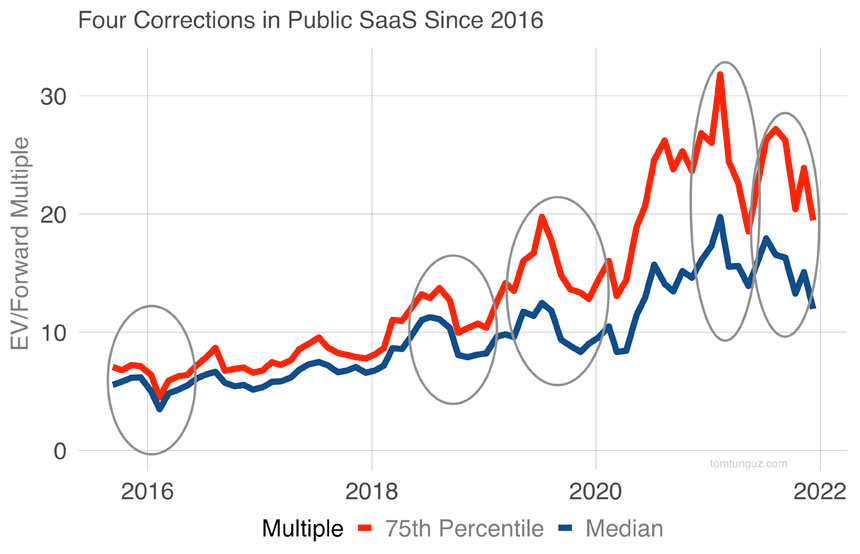
    Falling stocks are provoking a huge correction — over 10% — in the value of SaaS companies, many of them in the EdTech area. Instructure/Canvas LMS and Duolingo are notorious examples of this crash.

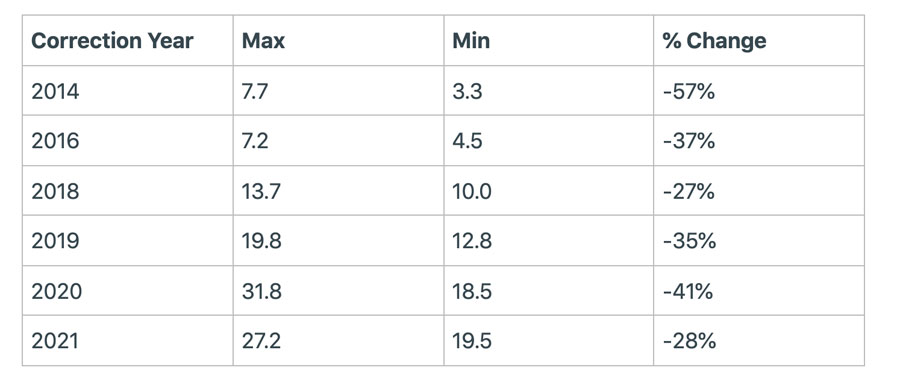
    “Since 2016, public software has witnessed four corrections, and today we’re in the midst of the fifth,” said Tomasz Tunguz, Venture Capitalist at Redpoint.

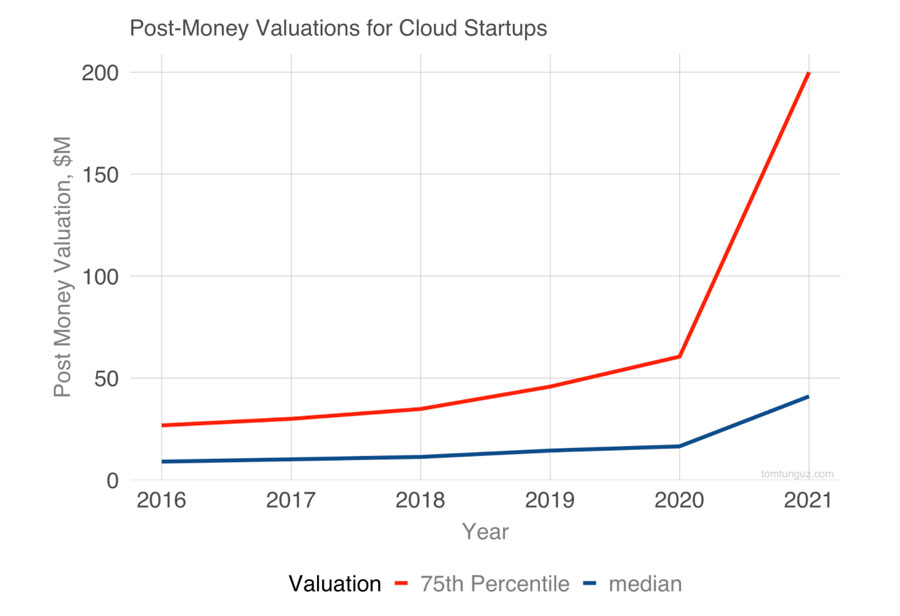
    These corrections have reduced valuations by between 30% and 60%. However, cloud companies’ fast growth has pushed valuations higher since 2014.

    The 75th percentile multiple has appreciated 25% annually since 2016, and the median has increased by approximately 20%.

    “These undulations are short-lived; the market recorded new highs often within four to six quarters after the nadir,” he wrote.

    Some analysts like Jim Cramer are forecasting a rebound.
    .


  • Cornell and Princeton Move Final Exams Online After the Rapid Spread of the Omicron Variant

    Cornell and Princeton Move Final Exams Online After the Rapid Spread of the Omicron Variant

    IBL News | New York

    Cornell University put its Ithaca campus into alert level red, moving all final exams to an online format yesterday. This measure followed the rapid spread of the highly contagious Omicron variant of COVID-19 among its student population. Around 883 students tested positive in the week ending Monday.

    In addition to moving finals, President Martha E. Pollack announced that all university events and social were canceled, including the December 18 recognition ceremony and athletics competitions.

    Also, libraries, fitness centers, and gyms were closed to students. Other measures involved the shut down for visitors and guests.

    “It is obviously extremely dispiriting to have to take these steps,” Martha E. Pollack wrote in a letter to the community. “However, since the start of the pandemic, our commitment has been to follow the science and do all we can to protect the health of our faculty, staff, and students.”

    Other colleges have also taken measures recently to head off the spread of the virus on campus.

    Princeton, Cornell, and Middlebury College in Vermont shifted to remote exams, while others, such as Tulane, gave students the option of finishing the semester online.

    Princeton University canceled indoor gatherings and encouraged students who plan to travel home for the holiday break to leave campus as soon as possible. According to Princeton statistics, more than 50 students of 8,200 who attend the New Jersey Ivy League university tested positive for Covid-19 Monday and Tuesday.

    Princeton, which requires all students, faculty, and staff to be vaccinated against Covid-19, is now also requiring all eligible students to receive a booster by January 31.

    DePaul University in Chicago and Southern New Hampshire University each said this month that they would switch to all remote instruction, at least for a time, when classes resume in January.

    The Omicron variant generally causes milder cases, particularly among vaccinated individuals.

    The Omicron variant now represents roughly 3% of Covid-19 cases in the country, according to the CDC.

    Early data shows existing booster vaccines provided sufficient protection against the Omicron variant, Dr. Anthony Fauci, President Biden’s chief medical adviser, said Wednesday.


  • EdTech Esme Learning Acquires a Firm Founded by a Former edX Executive

    EdTech Esme Learning Acquires a Firm Founded by a Former edX Executive

    IBL News | New York

    Boston-based Esme Learning announced last week its acquisition of Riff Analytics, an AI-enabled collaboration company.

    The combined entity claims that it will serve 1,500 organizations in 95 countries, including MIT, Saïd Business School, University of Oxford, and Imperial College Business School.

    Esme CEO David Shrier and Riff Analytics Co-Founder, now COO, and President of Esme Learning Solutions, Beth Porter, will lead the venture.

    Beth Porter developed her career at Pearson and as Head of Product at edX Inc, which developed the Open edX software used today by 55 million learners worldwide.

    “With the Riff Analytics acquisition, Esme Learning Solutions is ideally positioned to grow its footprint in the online Higher Education market, which has grown exponentially from US$100 billion in 2009 and is expected to reach over US$370 billion by 2026,” said David Shrier.

  • Moderna Will Train Its Employees in AI, In Partnership With Carnegie Mellon University

    Moderna Will Train Its Employees in AI, In Partnership With Carnegie Mellon University

    IBL News | New York

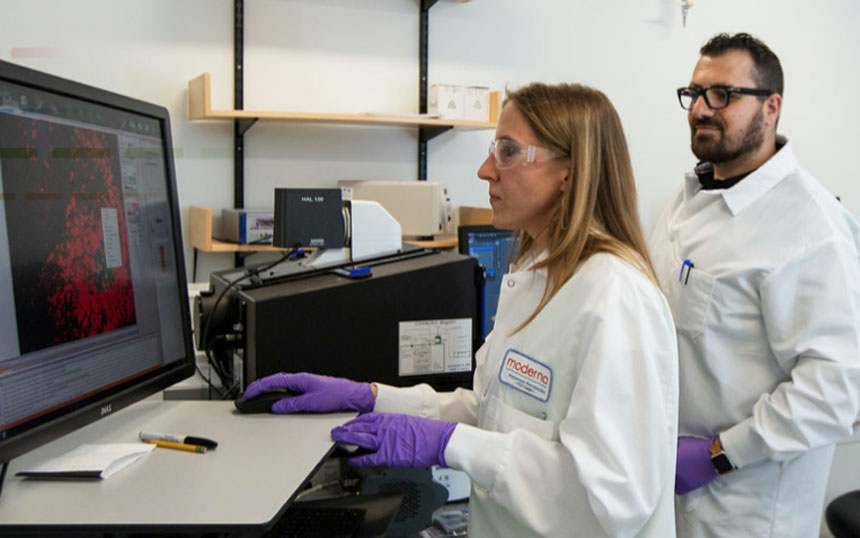
    Moderna, Inc., (Nasdaq: MRNA) announced the launch of its Artificial Intelligence (AI) Academy in partnership with Carnegie Mellon University (CMU).

    With its AI Academy, the well-known biotechnology company intends to educate its employees on AI and machine learning capabilities and skills.

    This program will focus on data quality and data visualization, statistical thinking and models, machine learning algorithms, and AI ethics.

    Classes will be both in-personas and online. The AI Academy will use the CMU-home-developed learning platform called ISLE (Integrated Statistics Learning Environment).

    Moderna will launch the program this week with its first cohort of students. In early 2022, will be the full rollout.

    The company’s goal is to identify and integrate these technologies into “every Moderna system and process to bring mRNA medicines to patients.”

    The Cambridge, Massachusetts-based biopharmaceutical firm — which is pioneering messenger RNA (mRNA) therapeutics and vaccines, “attributes its speed in part to the incorporation of digital technologies,” said Stéphane Bancel, CEO of Moderna.

    “We believe AI is a key enabler of our ability to build the best version of Moderna now and into the future. This AI academy will enable us to make AI part of the company’s ways of working, part of our DNA. We look forward to driving this with Carnegie Mellon’s team.”

    To design and deliver Moderna’s AI Academy, CMU’s Department of Statistics & Data Science, a part of the Dietrich College of Humanities and Social Sciences, and the Tepper School of Business are collaborating with professors across the university.


  • Docebo and EdCast Announce an Integrated Learning Solution

    Docebo and EdCast Announce an Integrated Learning Solution

    IBL News | New York

    Two learning platforms, Docebo Inc (NASDAQ: DCBO; TSX: DCBO) and EdCast, announced a strategic integration partnership intended to create an AI-powered solution. No further financial and technical details were provided. Docebo’s SEC filings page didn’t reflect this partnership this week.

    “Our integration with EdCast’s XP creates one universal learning platform, combining the benefits of LXP and LMS into one system,” said Federica Melis, Vice President of Strategic Alliances at Docebo.

    The declared goal of Toronto-based Docebo and Mountain View, California-based EdCast — which uses Open edX software in its tech stack — is to offer an end-to-end learning system with one place for centralized reporting for auditing compliance, and upskilling.

    “EdCast and Docebo are the leading platforms in our respective segments that, combined, form an end-to-end ecosystem for enhancing the employee experience via learning and upskilling,” explained Karl Mehta, CEO of EdCast.


  • The New Open edX Organization Sets a Technical Committee to Govern the Project

    The New Open edX Organization Sets a Technical Committee to Govern the Project

    IBL News | New York

    The Open edX project — which moved from U2’s edX to Massachusetts nonprofit corporation called Center for Reimagining Learning (tCRIL) — announced this month the creation of a Technical Oversight Committee (TOC) that will provide the overall technical governance and stewardship of the initiative.

    This committee will have nine members: three appointed by The Center for Reimagining Learning’s Board of Trustees, three by 2U Inc., and three representatives from the Open edX community.

    tCRIL and 2U have already appointed their members, but their names have not been disclosed yet.

    For the first time, the community will have direct input into project governance. “We will be moving to identify and select the community members of the TOC as quickly as practical,” said MIT and Havard University’s led nonprofit organization.

    Appointed members will serve a one-year term and won’t receive any compensation.

    The nonprofit “will follow the consensus-seeking decision-making model and will only resolve issues by a vote in cases where consensus cannot be reached,” said the document, which set the general rules and operations.