Author: IBL News

  • Instructure Acquires Kimono to Integrate it with the Canvas LMS Platform

    Instructure Acquires Kimono to Integrate it with the Canvas LMS Platform

    IBL News | New York

    Instructure Holdings, Inc (NYSE: INST) announced this month the acquisition of the integration platform and long-time partner Kimono for an undisclosed amount.

    The Salt Lake City, Utah-based Instructure, the owner of the leading Canvas LMS, will rebrand Kimono as Elevate Data Sync as it joins the Instructure Learning Platform.

    This technology enables secure syncing of student, staff, and learning data across applications within a school environment.

    The move extends Instructure’s learning data integration and rostering capabilities between edtech applications and student information systems (SIS).

    “The acquisition underscores Instructure’s vision of building education’s most integrated platform and demonstrates our deep commitment to openness,” said Steve Daly, CEO of Instructure. “We want to give schools the freedom of choice to connect with their preferred applications.”

    Kimono is standards-agnostic. It supports industry-standard data models and protocols, such as OneRoster, LIS, SIF, APIs, and CSV, driving interoperability and ease of use.

    Created twenty years ago and based in Salt Lake City, Utah, Kimono serves six state education agencies, over 2300 districts, 27,000 schools and universities, and over 16 million students globally.


  • ETS Strategic Capital Adds a Thirteenth Company to Its Portfolio of Acquisitions

    ETS Strategic Capital Adds a Thirteenth Company to Its Portfolio of Acquisitions

    IBL News | New York

    ETS continues to expand its portfolio of EdTech companies. Last week, ETS’ private equity investment arm, ETS Strategic Capital, announced it acquired a majority stake in Toronto-based Kira Talent for an undisclosed amount.

    Ralph Taylor-Smith, Managing Director of ETS Strategic Capital, highlighted its “focus on driving global business growth for ETS.”

    Kira Talent, which commercializes an admissions platform solution for higher education, will operate as a wholly-owned subsidiary of ETS. Kira Talent’s CEO and staff will remain in place.

    In addition, Kira Talent’s video and assessment platform will be part of the deal’s terms.

    The Princeton, New Jersey-based ETS said that the acquisition “will fuel rapid growth for Kira Talent as they scale development of their education admissions solutions, which will include new suites of products incorporating alternative and quantitative assessments as well as further expansion of their structured interview platform.”

    ETS Strategic Capital has a portfolio of twelve companies:

    • ApplyBoard
    • Capti
    • Ciee
    • CollegeKekho
    • Degreed
    • EdAgree
    • GradSchoolMatch
    • MPowerFinancing
    • OpenClassrooms
    • Pipplet
    • Pymetrics
    • Vericant
  • More High Schoolers Dismiss Attending a Four-Year College

    More High Schoolers Dismiss Attending a Four-Year College

    IBL News | New York

    Interest in a four-year college has sunk to a new low as nearly half of the high schoolers say their ideal would be three years of college or less.

    A recent survey from the ECMC Group — a nonprofit aimed at helping students find success — notes that amid the ongoing pandemic, many high schoolers are rethinking their future plans. They mostly prefer career training and post-college employment, especially given they are more affordable.

    This survey, conducted on over 1,000 high school students, highlights that the likelihood of attending a four-year school has decreased more than 20% in the last year and a half.

    Jeremy Wheaton, ECMC Group’s CEO, said that “the good news in here is that there’s been an uptick in the awareness of career and technical training as a pathway to a good career; what is troubling is the decline in education overall.”

    The cost, as well as the student loan debt, is the No. 1 concern.

    According to the College Board, this year, tuition and fees in-state public colleges rose to $27,330; at four-year private colleges, it averaged $55,800.
    .

  • Coursera Creates an Assessment Tool to Recommend Content and Develop Skills Faster

    Coursera Creates an Assessment Tool to Recommend Content and Develop Skills Faster

    IBL News | New York

    Coursera (NYSE: COUR) unveiled yesterday a new skills assessment tool, named LevelSets, intended to help learners to enroll in recommended, targeted courses and develop skills faster. It is currently available to companies, universities, and governments that have implemented Data and Analytics SkillSets.

    LevelSets is designed as part of Coursera’s enterprise platform to test students’ proficiency in high-demand skills such as data, analytics, cloud computing, machine learning, Python, and SQL, among others.

    It includes over twenty skill assessments created using machine learning programs, according to the company.

    “LevelSets’ assessments determine where training should begin, and create a clear development path for learners,” said Leah Belsky, Chief Enterprise Officer at Coursera.

    As a result of this tool, courses that are too rudimentary, too advanced, or content already mastered are not suggested.

    Leah Belsky claimed that “initial data suggest that learners within these companies are 3x more likely to enroll in a recommended course within one day after taking a LevelSet assessment.” It added, “course completion rates have increased 66% among those that have completed assessments.”

    Content recommendations include:

    The Mountain View, California-based start-up ensured that it has early adopters of LevelSets, such as Fidelity, Ingka IKEA, Pfizer, and Thermo Fisher Scientific.

    Coursera plans to make LevelSets available across its portfolio of over 300 SkillSets early next year.

  • Thirteen Colleges Explore Three-Year Bachelor’s Degree Programs

    Thirteen Colleges Explore Three-Year Bachelor’s Degree Programs

    IBL News | New York

    Several colleges are exploring new three-year bachelor’s degree programs in an attempt to overhaul the undergraduate curriculum and its escalating tuition cost, according to a report on the Inside of Higher Education.

    “Very few undergraduates complete a bachelor’s degree in three years,” said Mikyung Ryu, Director of Research Publications at the National Student Clearinghouse Research Center.

    Robert Zemsky, a Professor of Higher Education at the University of Pennsylvania, and Lori Carrell, Chancellor of the University of Minnesota at Rochester, recruited a total of 13 pilot institutions to explore the option of creating a brand-new three-year bachelor’s degree program on their campuses.

    These pilot institutions include the American Public University System, Indiana University of Pennsylvania, Merrimack College, New England College, Northwood University, Portland State University, Slippery Rock University, the University of Minnesota at Rochester, the University of North Texas, the University of Texas Rio Grande Valley, the University of Wisconsin at Oshkosh, and Utica College.

    Some institutions tried three-year undergraduate programs but they were often met with little student interest.

    The Inside of Higher Education story notes that “breaking away from the four-year tradition will be difficult—accrediting agencies, college athletic associations and graduate program admission requirements could present logistical hurdles for designers of three-year programs.” “The social and psychological benefits students reap during four years on a college campus may not easily translate to a three-year option.”

    Robert Zemsk and Lori Carrell said that its goal is to create a curriculum that allows students to learn the skills and material they need for a bachelor’s degree in three-quarters of the time.

    Over the last 30 years, average tuition and fees have increased by $6,580 at public, four-year colleges and by $18,710 at private, nonprofit four-year institutions, according to College Board data.

    Today, the University of Iowa offers a three-year program, but it requires students to take a heavier course load and to proceed at a much faster pace. “Iowa Degree in three isn’t right for everyone; it is designed for students who come to Iowa with specific goals, have already earned some college credit, or are ready to complete more courses per term than average,” explains the university on its website.

    Manchester University in Indiana also offers Fast Forward programs intended to graduate in three years while keeping the 120-credit hour standard.

    It’s unclear how the three-year degree plans will be received by the U.S. Department of Education.
    .

  • Robinhood Confirms that One-third of Customers’ Data Was Compromised After a Large Hack

    Robinhood Confirms that One-third of Customers’ Data Was Compromised After a Large Hack

    IBL News | New York

    Online trading platform Robinhood (NASDAQ: HOOD), often criticized for its shortcomings in customer support, reported a new problem: a data breach.

    The Menlo Park, California-based company confirmed yesterday that it was hacked on November 3rd when a client representative mishap allowed a hacker to steal the personal information of about five million customer email addresses and two million names. For some customers, even more personal data was exposed, including names, birth dates, and ZIP codes of about 310 people and more extensive information belonging to a group of about 10.

    The breach, one-third of customers overall, didn’t result in any financial loss for clients, said the start-up.

    According to Robinhood, “the attack has been contained and we believe that no Social Security numbers, bank account numbers, or debit card numbers were exposed and that there has been no financial loss to any customers as a result of the incident.”

    The intruder demanded an extortion payment. Robinhood informed law enforcement and continues to investigate the incident with the help of security firm Mandiant.

    The hack took place after the cybercriminal tricked a customer representative staffer by phone and obtained access to certain client support systems.

    A similar hack occurred at Twitter in July 2020. A teenage hacker used social engineering techniques to trick some of Twitter’s employees into thinking the hacker was an employee, allowing the hacker access to an internal Twitter “admin” tool, which he used to hijack high-profile accounts.

    Shares of Robinhood fell 3.5% to $35.68 yesterday in New York.

    In a separate episode last year, almost 2,000 Robinhood accounts were compromised in a hacking spree. Some complained there was no one available to call.

    The start-up that popularized free trading tripled the size of its customer-service staff in 2020, unveiling round-the-clock phone support.

    Robinhood advised customers to keep their accounts secure by visiting Help Center > My Account & Login > Account Security. “We’ll never include a link to access your account in a security alert.” 

  • Stanford University Launches a Digital Office to Help Underserved High School Students

    Stanford University Launches a Digital Office to Help Underserved High School Students

    IBL News | New York

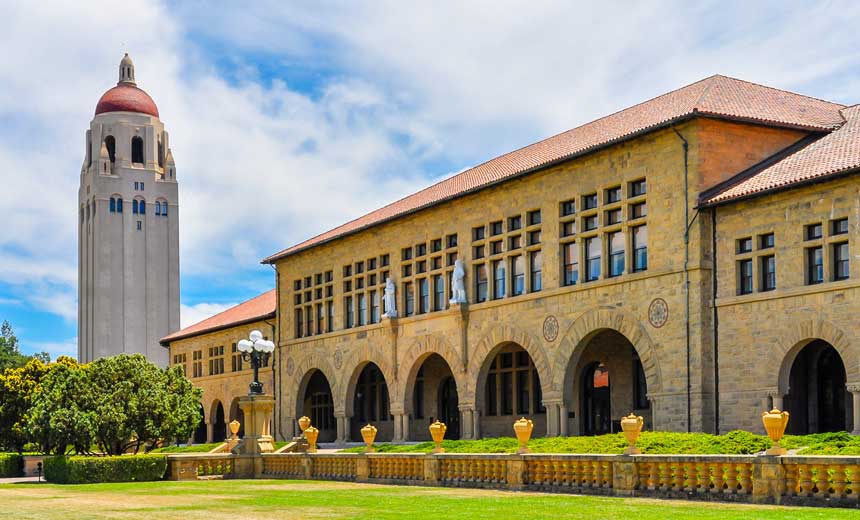
    Stanford University launched this Fall a new digital education office that will team up with nonprofit organization National Ed Equity Lab with the goal to bridge the gap between high school and college.

    This newly formed office, Stanford Digital Education, was established by Provost Drell. It aims to spur innovation in Stanford’s online and hybrid education strategies. It intends to “marshal the University’s technological capabilities and teaching and learning expertise to reach students to have been historically underserved by higher education.”

    Provost Persis Drell stated, “through this new office, we seek to strengthen Stanford’s capacity to innovate in extending educational opportunities to those who have not had access to them before.”

    In its initial pilot, Stanford Digital Education has enrolled over 220 students nationwide in a credit-bearing introductory course, Computer Science 105, for the fall quarter.

    This course, led by Stanford Computer Science lecturer Patrick Young, is the first in Stanford’s history that offers dual enrollment with transferable college credit in collaboration with high schools nationwide.

    Through the Ed Equity Lab’s network, more courses, including introductory writing and Structured Liberal Education, will be offered this academic year.

    Matthew Rascoff, the newly appointed Stanford Vice Provost for Digital Education, is leading the effort. Earlier in his career, Rascoff was Associate Vice Provost for Digital Education and Innovation at Duke University, where he established the Duke Learning Innovation team. He also was Founding Vice President for technology-based learning and innovation for the University of North Carolina system.
    .

  • Google Will Grant Community Colleges Free Access to Its Career Certifications

    Google Will Grant Community Colleges Free Access to Its Career Certifications

    IBL News | New York 

    Google announced last week that it will grant community colleges and career and technical high schools in the U.S. free access to all its four career certifications.

    It will allow schools to incorporate Google’s certifications into their curriculums as part of for-credit courses.

    Currently, the search giant offers four career certifications: data analytics, information technology, user experience design, and project management. The certificates are administered by the online learning provider Coursera.

    Google IT Support Certification requires a minimum of 150 hours of an online course.

    Lisa Gevelber, from Grow with Google, said that the four certificates were recommended by the American Council on Education and would be recognized as college credit for up to as many as 12 credits, equalling some four college courses at the Bachelors level.

    The State of Connecticut became the first in the country to offer the complete Google Career Certificates suite across all its universities and colleges, starting spring next year.

    Google announced the program at an event with Connecticut state officials and U.S. Secretary of Education Michael Cardona.
    .


  • Canvas LMS Will Replace Blackboard as Miami Dade College’s Learning Platform

    Canvas LMS Will Replace Blackboard as Miami Dade College’s Learning Platform

    IBL News | New York

    Instructure (NYSE: INST) reported an important gain across the competitive market of the LMSs this week.

    The Salt Lake City, Utah-based, publicly-traded company announced that Miami Dade College (MDC) selected its Canvas LMS platform to serve over 120,000 students.

    This way, Blackboard, now part of Anthology, will be replaced by competitor Canvas LMS.

    “Platform reliability is more essential than ever, due to the variability of the COVID-19 pandemic and the subsequent surge in online education,” said Melissa Loble, Chief Customer Experience Officer at Instructure.Miami Dade has eight campuses and outreach centers, offering over 300 distinct degree pathways, including associate and baccalaureate degrees, college credit certificates, digital badges, rapid credentials, and apprenticeships, and more.

    “Our mission is to change lives through accessible, high-quality teaching and learning experiences, and using Canvas will help us advance that goal,” said Dr. Malou C. Harrison, Provost at Miami Dade College.
    .

  • Coursera’s Stock Continues Below Its IPO Price Despite Improved Results in Q3

    Coursera’s Stock Continues Below Its IPO Price Despite Improved Results in Q3

    IBL News | New York

    Shares of Coursera (NYSE: COUR) continue falling on Thursday, despite the company’s third-quarter earnings report that beat Wall Street’s expectations on both revenue and earnings per share. In the last two days, the stock finished down over 11%, at $32.14.

    Since it went public this year in March, at $33, the stock hasn’t offered any gain. Between the IPO and today, shares had gotten as high as $65 per share.

    Analysts explained that Coursera was catching a cold from an industry peer — Chegg (NYSE: CHGG) — whose stock was cut in half after warning that higher wages and employment opportunities were luring students into the workforce instead of community colleges or regular college.

    Coursera posted showed a revenue increase of 33% to $82.7 million in the third quarter. The adjusted net loss per share was $0.06.

    Net loss was $32.5 million or 29.5% of revenue, compared to $11.9 million or 14.4% of revenue a year ago.

    Jeff Maggioncalda, CEO at Coursera, said, “Our third-quarter performance reflects the continued urgency with which companies, campuses, and governments around the world are investing in digital skills.”

    The Mountain View, California-based online learning platform expects full-year revenue in the range of $409 million to $413 million.

    Coursera claimed to host 92 million registered learners, up from 72 million last year. There are now 16,000 students pursuing degrees offered solely on Coursera by university partners. This is up 40% from last year.

    On the other hand, Coursera its Impact Report 2021. “New trends show that the combined force of online learning and remote work is creating a powerful opportunity to provide not just skills but more equitable job opportunities worldwide,” wrote Jeff Maggioncalda.