First Filipina receives star on Hollywood Walk of Fame
Source: Youtube

First Filipina receives star on Hollywood Walk of Fame
Source: Youtube

IBL News | New York
Moving beyond hardware and further up the AI stack, Nvidia last Thursday officially agreed to buy open-source platform Hugging Face for $12.9 billion.
This is Nvidia’s second-biggest, following the $20 billion purchase of assets from chipmaker Groq in December. Before that, its largest deal was the purchase of Israeli chipmaker Mellanox for almost $7 billion in 2019.
Nvidia’s stated goal is to keep Hugging Face as an open platform for the entire AI ecosystem, Nvidia CEO Jensen Huang wrote in a blog post Thursday. “Together, we will scale Hugging Face’s platform, strengthen its infrastructure and expand access to AI for developers and institutions worldwide,” he wrote.
Hugging Face CEO Clément Delangue revealed that he recently approached Huang about a deal, thinking that Nvidia was “a perfect home for his company.”
“We realized that Hugging Face and open-source AI in general were at the turning point, and that it needed more, more resources, more scale, more visibility,” he said.
Nvidia has become the world’s most valuable company due to the growing demand for its graphics processing units, which power the AI boom.
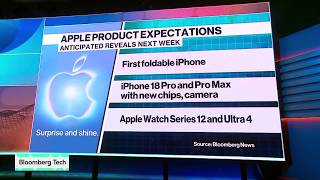
Apple Kicks Off Ternus Era With Record Product Pipeline
Source: Youtube

Deadly NYPD confrontation hundreds of feet up on Brooklyn Bridge
Source: Youtube
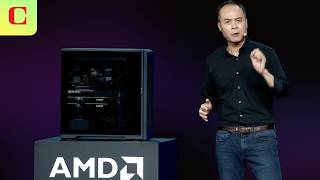
AMD IFA 2026: Powering the Next Era of Personal and Agentic AI
Source: Youtube
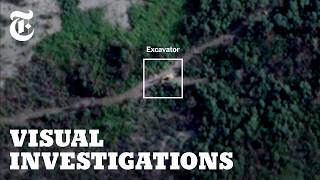
How Satellite Images of Big Bend Contradict Border Agency Claims
Source: Youtube

ICE agent faces federal charges over Minneapolis shooting
Source: Youtube

IBL News | New York
OpenAI announced GPT‑6 Astra yesterday, which it labeled “the world’s most intelligent and aligned model,” as “it brings together years of research and big bets across pre-training, reinforcement learning, and alignment.”
OpenAI president Greg Brockman said that with this model, “we are now in the AGI era.”
GPT‑6 Astra was rolled out to a limited set of organizations in the cybersecurity industry as a preliminary step toward making it available to all ChatGPT Plus, Pro, Business, and Enterprise users, as well as through the OpenAI API, Microsoft Azure, and AWS Bedrock.
“Astra is our most aligned model, with substantial improvements in understanding user intent and model behavior—you can delegate tasks with greater confidence in Astra’s judgment,” said the San Francisco – based lab.
OpenAI stated that GPT-6 Astra would have avoided the Hugging Face hacking episode.
GPT‑6 Astra can handle tedious tasks such as filling out online forms, updating customer records in a CRM, creating a website, and installing and testing software.
It’s also the first model designated as meeting OpenAI’s “critical cybersecurity capability threshold” — but the company promises that won’t lead to a repeat of its model hacking a rival company’s internal systems.
“It’s a generational leap in capability for areas like cybersecurity, professional work, software engineering, science, and computer use.”
Notably, the API cost for the new model will be $10 per million input tokens and $50 per million output tokens. That’s the exact same price as Anthropic’s Mythos/Fable 5 and 5.1, and makes Astra one of the most expensive models on the market.
However, OpenAI emphasizes that Astra’s leap in intelligence causes it to use “substantially fewer total tokens per task” in multiple scenarios. So this is also an efficiency play from that perspective. In real-world usage, we’ll have to see how well that translates to lower overall costs.
This new model comes a year after the release of GPT-5 and nearly two months after the release of GPT-5.6, the last iteration of the previous model suite.
OpenAI touted GPT‑6 Astra agentic capabilities in a bid to attract enterprise customers — and compete with Anthropic ahead of its IPO.

Uber, Wayve Unleash Supervised Robotaxis in London
Source: Youtube