Anthropic launches Claude Sonnet 4.5, its latest AI model.
Source: Youtube

Anthropic launches Claude Sonnet 4.5, its latest AI model.
Source: Youtube
IBL News | New York
As part of its General Assembly last week, the United Nations (UN) announced a plan to establish a global forum for discussing AI governance, aiming to gather ideas and best practices.
The UN plans to form a 40-member panel of scientific experts to synthesize and analyze the research on AI risks and opportunities.
The UN follows the pattern of previous similar efforts on climate change and nuclear policy.
To launch the initiative, dozens of U.N. member nations, along with tech companies, academics, and nonprofits, spent last week summarizing their hopes and concerns about AI.
This program is an effort to ensure that control of the AI is not left in the hands of a few tech companies and countries, as the United States and China.
The UN highlighted its hope that AI can cure diseases, expand food production, and accelerate learning.
It also identified risks, including mass surveillance, the spread of misinformation, the depletion of energy resources, and widening income gaps among individuals and nations.

As AI evolves, it’s brought with it an alarming rise in “nudify” tools – hundreds of apps and sites that can now easily make fake explicit imagery from photos of anyone, including children.
Source: Youtube

NeuroAI- Bridging brain science and artificial intelligence.
Source: Youtube

A new school year is underway, but along with the excitement of returning to class comes renewed concerns about safety.
Source: Youtube

Climate Trace is using AI to track air pollution around the globe.
Source: Youtube

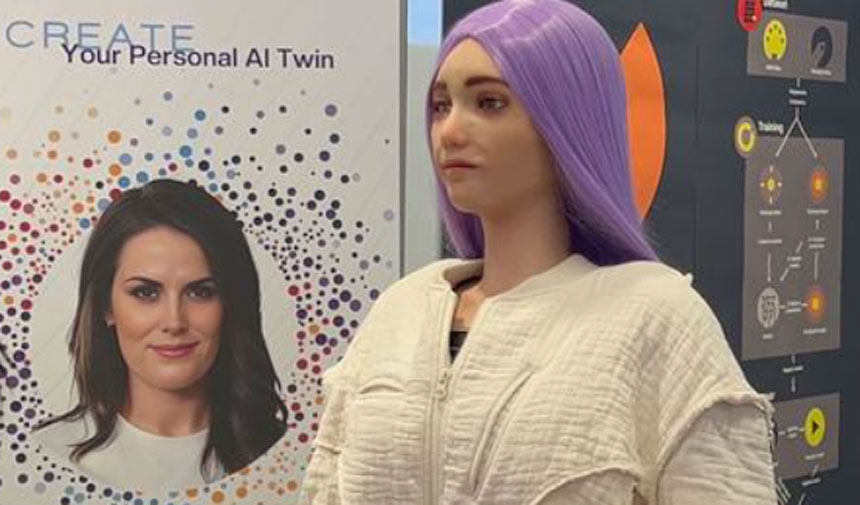
AI-generated models have begun to appear in fashion magazines.
Source: Youtube
Amid the increasing number of teenagers using artificial intelligence and AI chatbots, the phrase “digital literacy” has been used a lot more.
Source: Youtube

IBL News | New York
The five universities of the Texas Tech system directed their faculty to comply with an executive order from President Trump, which recognizes only male and female genders.
The move, the first among large institutions of higher education, bans teaching about transgender and other gender topics. Currently, in K-12 classrooms, this is explicitly prohibited by Texas law.
Chancellor Tedd L. Mitchell addressed the requirement in a letter dated last Thursday, citing President Trump’s order from January, a letter from Governor Greg Abbott that directed state agencies to follow Mr. Trump’s order, and a state law that requires government agencies to collect data on only two biological sexes, male and female.
“While recognizing the First Amendment rights of employees in their personal capacity, faculty must comply with these laws in the instruction of students, within the course and scope of their employment,” Mitchell wrote.
The letter followed the firing this month of a professor at Texas A&M who objected to a discussion of gender identity and then shared a video of the encounter with a Republican lawmaker. The university’s president, Mark Welsh, resigned soon after.
Other public universities and community colleges have been exploring similar changes regarding the teaching of gender, according to the Texas conference of the American Association of University Professors. The New York Times reported on it.
However, outside of Texas Tech, no institution appears to have put its guidance into writing yet.
Earlier this year, the Mississippi Legislature passed a law banning diversity, equity, and inclusion, as well as “promoting transgender ideology,” in the state’s schools and universities, but a federal judge put it on hold.

We’re learning how to use AI to improve humanity and the beauty we create. When used as a tool to refine, not replace, our creativity, it brightens, deepens, sharpens, enhances.
Source: Youtube