Author: IBL News

  • Sam Altman: “Humanity is Close to Building Digital Superintelligence”

    Sam Altman: “Humanity is Close to Building Digital Superintelligence”

    IBL News | New York

    Sam Altman, CEO at OpenAI, wrote a post, with no AI help, titled “The Gentle Singularity” this month.

    IBL News summarized Sam Altman’s thoughts:

    “As datacenter production gets automated, the cost of intelligence should eventually converge to near the cost of electricity. (People are often curious about how much energy a ChatGPT query uses; the average query uses about 0.34 watt-hours, about what an oven would use in a little over one second, or a high-efficiency lightbulb would use in a couple of minutes. It also uses about 0.000085 gallons of water; roughly one fifteenth of a teaspoon.)”

    These are the most remarkable thoughts expressed by the author:

    • “The takeoff has started. Humanity is close to building digital superintelligence.”

    • “We have recently built systems that are smarter than people in many ways.”

    • “The gains to quality of life from AI driving faster scientific progress and increased productivity will be enormous; the future can be vastly better than the present.”

    • “2025 has seen the arrival of agents that can do real cognitive work; writing computer code will never be the same. 2026 will likely see the arrival of systems that can figure out novel insights. 2027 may see the arrival of robots that can do tasks in the real world.”

    • “With advanced AI is we may be able to discover new computing substrates, better algorithms, and who knows what else.”

    • “We will build ever-more-wonderful things for each other.”

    • “By 2035, maybe we will go from solving high-energy physics one year to beginning space colonization the next year; or from a major materials science breakthrough one year to true high-bandwidth brain-computer interfaces the next year.”

    • “We (the whole industry, not just OpenAI) are building a brain for the world. It will be extremely personalized and easy for everyone to use; we will be limited by good ideas.”

    • “OpenAI is a lot of things now, but before anything else, we are a superintelligence research company. We have a lot of work in front of us, but most of the path in front of us is now lit, and the dark areas are receding fast.”

    • “May we scale smoothly, exponentially and uneventfully through superintelligence.”

  • AI’s extreme human imitation makes it act deceptively, cheat and lie, “Godfather of AI” says

    AI’s extreme human imitation makes it act deceptively, cheat and lie, “Godfather of AI” says


    “Godfather of AI” Yoshua Bengio said concerns about the technology are not just about it taking jobs, but also the risks of training it to imitate humans.

    Source: Youtube

  • Meta tried to buy Perplexity before Scale AI deal

    Meta tried to buy Perplexity before Scale AI deal


    Meta tried to buy Perplexity before Scale AI deal.

    Source: Youtube

  • OpenAI Aims to Embed Its AI Assistants Into Universities, Following the Footsteps of Google and Microsoft

    OpenAI Aims to Embed Its AI Assistants Into Universities, Following the Footsteps of Google and Microsoft

    Mikel Amigot, IBL News | New York

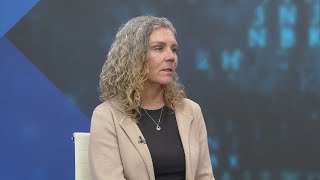
    OpenAI is selling premium AI services to universities trying to “become part of the core infrastructure of higher education,” said Leah Belsky, OpenAI’s vice president of education and former manager at Coursera, in an interview with The New York Times [in the picture above].

    At the same time, it’s running a marketing campaign targeting students and courting them as future customers — essentially as rivals like Google and Microsoft have been doing for years, pushing their computers and software into schools.

    The startup envisions students graduating with their AI assistants and utilizing them throughout their careers in the workplace, like they do with their school-issued Gmail accounts.

    On their side, Elon Musk’s xAI and Google have been offering free AI services for college students during the exam period.

    Overall, OpenAI aims to embed its AI technology within universities by providing students with AI assistants to help tutor and guide them from orientation through graduation, featuring tools such as chatbots, practice job interview tools, voice model tools, and tools to quiz aloud ahead of a test.

    Meanwhile, faculty members can build custom chatbots for their students by uploading course materials, such as lecture notes, slides, videos, and quizzes, into ChatGPT.

    OpenAI’s sales pitch has been named “AI-native universities.”

    Three of its clients are the University of Maryland, California State University (with 460,000 students across its 23 campuses), and Duke University (through a platform called DukeGPT).

    Millions of college students regularly use AI chatbots for writing essays and term papers, researching, composing code, and generating ideas.

    The San Francisco–based startup service for universities, ChatGPT Edu, offers additional features, including specific privacy protections, compared to the company’s free chatbot. ChatGPT Edu also enables faculty and staff to create custom chatbots for use within the university.

    OpenAI states that it does not utilize the information entered by students, faculty, and administrators into ChatGPT Edu for training its AI.

  • Harnessing AI for transforming pharmacy education and research

    Harnessing AI for transforming pharmacy education and research


    Artificial intelligence (AI) is rapidly transforming pharmacy education and research, offering powerful tools for personalization, efficiency, and innovation.

    Source: Youtube

  • Has Europe already lost the AI arms race?

    Has Europe already lost the AI arms race?


    Has Europe already lost the AI arms race?

    Source: Youtube

  • AI technology causing surge in electricity prices

    AI technology causing surge in electricity prices


    Artificial intelligence may already be affecting your life even if you know nothing about it. It turns out the energy required by this evolving technology could mean higher cooling bills this summer.

    Source: Youtube

  • Amazon CEO says AI will lead to fewer corporate jobs

    Amazon CEO says AI will lead to fewer corporate jobs


    Amazon CEO Andy Jassy says artificial intelligence will lead to fewer corporate jobs at the company.

    Source: Youtube

  • Why do wolves howl? With the help of AI, we’re getting closer to an answer

    Why do wolves howl? With the help of AI, we’re getting closer to an answer


    Why do wolves howl? With the help of AI, we’re getting closer to an answer.

    Source: Youtube

  • AI’s impacts ‘inevitable at this point’

    AI’s impacts ‘inevitable at this point’


    Victoria Song, senior reporter at The Verge, discusses the announcement by Amazon CEO that AI will reduce its corporate workforce over the next few years.

    Source: Youtube