Author: IBL News

  • A Successful Open edX Conference in San Diego. 2020’s Will Be in Portugal

    A Successful Open edX Conference in San Diego. 2020’s Will Be in Portugal

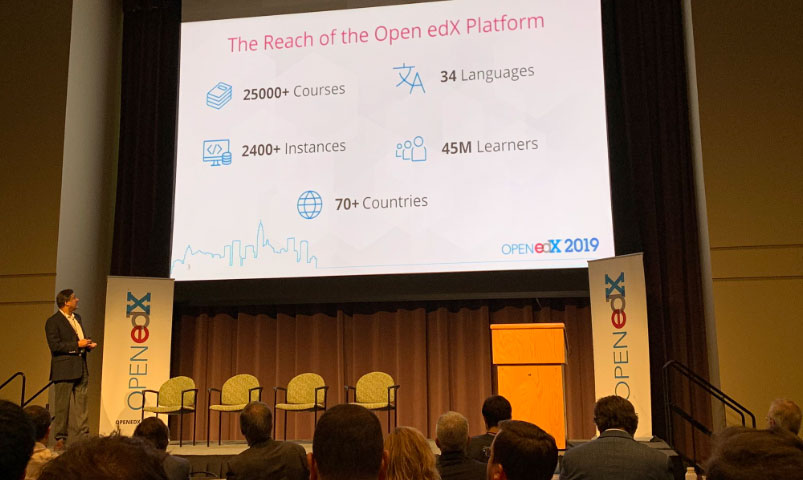
    Over 300 developers, educators, and industry leaders participated in the sixth Open edX Conference, celebrated at UC San Diego — “the largest Open edX conference ever”, as Anant Agarwal stated during the opening keynote.

    The event ran smoothly and was well organized by a team of a dozen edX staffers, who worked on the conference for seven months.

    New Open edX providers from countries like Argentina and the Netherlands attended for the first time, “to catch up with the community and learn about the future trends”, as Esteban Etcheverry, co-founder of AulasNeo told IBL News.

    Anant Agarwal, CEO at edX, disclosed that there are over 2,400 instances using this software, with more than 25,000 courses and 45 million learners in 70 countries.

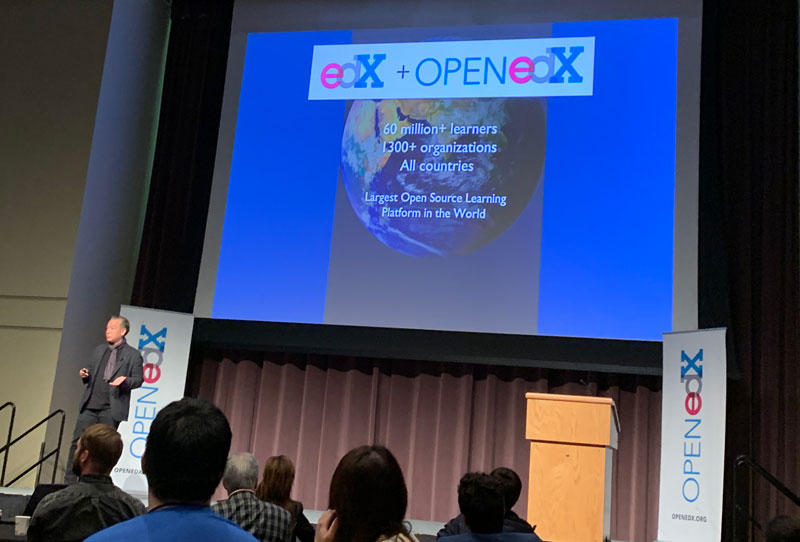
    Robert Lue, Professor at Harvard University and director of LabXchange, stated that “Open edX is the largest open source learning platform in the world, with 60+ million learners and 1,300 organizations.”

    Robert Lue presented the most innovative project on the Open edX universe: an extension of the platform, called Blockstore, which will allow to create personalized pathways.

    This tool, developed with a grant of $6.5 million from Amgen Foundation, notably enhances the edX platform’s user interface. It will be released in September 2019.

    In the software field, Ned Batchelder, Software Architect at edX, presented the ninth version of the platform, called Ironwood.

    One of the relevant announcements of the conference was related to the edX consortium’s business strategy: the determination to offer its services as a “Lean OPM” (Online Program Manager). “We are doing it differently from other OPMs. We give universities more control, and we are the only non-for-profit OPM”, said Anant Agarwal, CEO at edX.

    The main value of the edX (and Coursera, too) offer in this area is the cost of acquisition per learner. Usually, with 2U and other traditional OPMs the cost of getting a student goes beyond $5,000, experts told IBL.

    All of the talks and conferences were live streamed and recorded via YouTube.

    At the end of the event, it was announced that the 2020 Open edX conference will take place in Cascais, Portugal.

    Also, the edX architecture team disclosed that the 10th Open edX release will be named Juniper.

    YouTube Channel with the talks

  • UC San Diego Announces Their Caliper Analytics Integration With Open edX

    UC San Diego Announces Their Caliper Analytics Integration With Open edX

    The University of California San Diego announced yesterday the release of the Open edX Caliper Feed feature, a data solution that allows for the real-time collection of course activity to flow into an analytics tool.

    The project, developed by the university’s IT Services department along with Arbisoft and Amass, started when the institution found incompatibilities between campus analytics applications and the data format of test scores and other metrics on its 90 edX courses with 3.4 million students. The university had no effective way of using data, and it needed to find a workable solution.

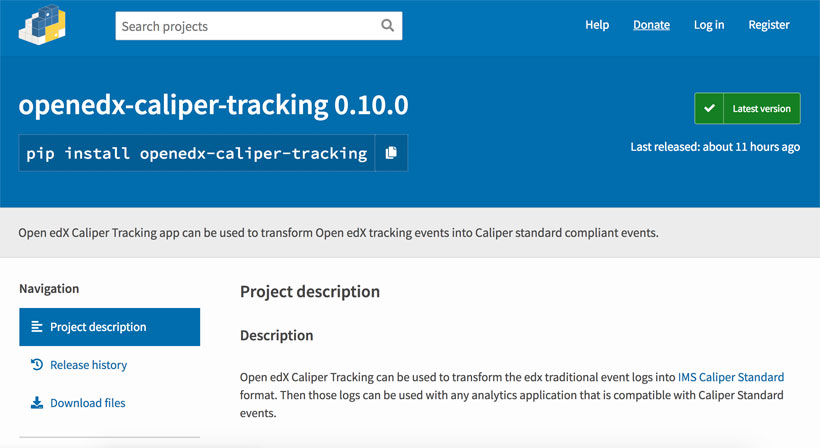
    The complete code is available for free at: https://pypi.org/project/openedx-caliper-tracking.

    Caliper is a standard format for capturing and presenting measures of learning activity. Access to real-time reporting helps instructors and course designers more effectively design classes and boost student success. For example, some students react better to auditory content, while others prefer visual or video-driven methods.

    Karen Flammer, Director of the Center for Digital Learning, at UC San Diego, said, “It’s a tremendous development; it’s not easy to see what parts of a course students are spending time on, what they are concentrating on and where they are struggling. From a practical standpoint, we’ll be able to use this data to assess and improve learning pathways. Obtaining access to this data supports delivering customized resources and activities tailored to the unique needs of each learner.”


    UC San Diego News Center: UC San Diego Updates edX Platform to Improve Online Learning Experience

  • Research: Top Online Artificial Intelligence Courses and Programs

    Research: Top Online Artificial Intelligence Courses and Programs

    Artificial Intelligence (AI) and Machine Learning algorithms are transforming entire industries and defining the next generation of software solutions.

    Experts in these data-driven technologies who understand natural language, speech, vision, etc. are in high demand.

    AI is estimated to create an additional $13 trillion of value annually by 2030, according to McKinsey Global Institute.

    This list features the most successful programs collected by IBL News.


    – MIT Management Executive Education and MIT CSAIL

    Artificial Intelligence: Implications for Business Strategy – Online Short Course

    • In collaboration with online education provider GetSmarter, subsidiary of 2U, Inc.
    • 6 weeks, excluding 1-week orientation; 6-8 hours per week, self-paced, entirely online; weekly modules, flexible learning
    • Program fees: $2,800
    • Certificate of completion from the MIT Sloan School of Management
    • 6 modules; personalized, people-mediated online learning experience
    • Brochure


    – MIT

    Deep Learning, Self-Driving Cars, Artificial General Intelligence

    • Collection of MIT courses and lectures on deep learning, deep reinforcement learning, autonomous vehicles, and artificial intelligence taught by Lex Fridman.


    – Imperial College London – Coursera.org

    Master of Science of Machine Learning


    – Emeritus Institute of Management

    Postgraduate Diploma in Machine Learning and Artificial Intelligence 

    • In collaboration with Columbia Engineering Executive Education
    • Starts on March 28, 2019
    • Duration: 9 months, online, 6-8 hours per week
    • Program Fees: $3,000. Payable in two equal installments. Non-refundable application fee: $50
    • Learning journey includes video lectures, discussions, quizzes, application assignments, capstone project, and live online teaching sessions
    • Two modules (Applied machine learning; Applied artificial intelligence) and a capstone project
    • Access upon completion to the Emeritus network


    – Emeritus Institute of Management

    Applied Artificial Intelligence Advanced Program

    • In collaboration with Columbia Engineering Executive Education
    • Starts on 28 Febrero 2019
    • Duration: 3 months, online, 6-8 hours per week. Twelve modules.
    • Program Fees: $1,200.
    • Pre-Requisites: Undergraduate knowledge of linear algebra (vectors, matrices, derivatives), calculus, basic probability theory. You should be comfortable with Python or any other programming language. All assignments/application projects will be done using the Python programming language.
    • Learning journey includes video lectures, discussions, quizzes, application assignments, capstone project, and live online teaching sessions


    – Columbia University – ColumbiaX on edX

    MicroMasters Program in Artificial Intelligence

    • 4 Courses for $1,080. Free Audit, with no certificate, graded assignments, and limited access
    • Each course is 8-10 hours per week, for 12 weeks, with an individual cost of $300
    • Courses in this program: Artificial Intelligence (AI), Machine Learning, Robotics, Animation and CGI Motion
    • Instructor-led format, with assignments and exams with due dates
    • Credit-eligible MicroMasters program credential
      If the learner is accepted in the Master of Computer Science, it will count 7.5 of the 30 credits required for graduation on-campus or online Master of Computer Science program. The program represents 25% of the coursework toward a Master’s degree in Computer Science at Columbia.
    • Video


    – Microsoft – edX.org

    Professional Program in Artificial Intelligence


    – Georgia Tech – edX.org

    Machine Learning

    • 14 weeks, 8-10 hours per week
    • Free. Add a Verified Certificate for $99
    • Intermediate level
    • English. Subtitles: English
    • Taught by Charles Isbell


    – Universidad Carlos III de Madrid (UC3M) – edX.org

    Introducción a la visión por computador: desarrollo de aplicaciones con OpenCV

    • 7 weeks, 5-7 hours per week
    • Free. Add a Verified Certificate for $50
    • Intermediate level
    • Spanish. Subtitles: Spanish
    • Taught by Arturo de la Escalera, José María Armingol, David Martín Gómez, Fernando García, Abdulla H. Al-Kaff


    – Stanford University – Coursera.org

    Machine Learning

    • 100% online, flexible deadlines, free online course (audit)
    • Approx. 55 hours to complete; 11-weeks; suggested: 7 hours/week
    • English. Subtitles in English, Chinese (Simplified), Hebrew, Spanish, Hindi, Japanese, Korean, Portuguese
    • Enrolling for a Certificate gives access to all course materials, including all videos, quizzes, and programming and graded assignments
    • One of the best and most popular courses at Coursera, with 2.2 million students
    • Taught by Andrew Ng, AI guru, Co-Founder at Corsera and Adjunct Professor at Stanford University


    – Deeplearning.ai – Coursera.org

    AI For Everyone

    • 100% online, flexible deadlines, free online course except for graded items (audit)
    • Approx. 11 hours to complete. Suggested: 4 weeks of study, 2-3 hours/week. Beginner level
    • $49
    • Certificate
    • English. Subtitles: English.
    • 4 Weeks: What is AI, Building All Projects, AI in Your Company, AI and Society
    • Taught by AI guru Andrew Ng


    – Deeplearning.ai – Coursera.org

    Deep Learning Specialization

    • 100% online, flexible deadlines
    • Approx. 3 months to complete. Suggested 11 hours/week. Intermediate level
    • $49 per month
    • English. Subtitles: English, Chinese (Traditional), Arabic, Ukrainian, Chinese (Simplified), Portuguese (Brazilian), Korean, Turkish, Japanese
    • 5 courses: Neural Networks and Deep Learning, Improving Deep Neural Networks: Hyperparameter tuning, Regularization and Optimization, Structuring Machine Learning Projects, Convolutional Neural Networks, Sequence Models.
    • Taught by AI guru Andrew Ng, with two teaching assistants.
    • NVIDIA’s Deep Learning Institute as an industry partner.


    – Google Cloud – Coursera.org

    Machine Learning with TensorFlow on Google Cloud Platform Specialization

    • 100% online, flexible deadlines
    • Approx. 1 month to complete. Suggested: 15 hours/week. Intermediate level
    • $49 per month
    • English. Subtitles: English, French, Portuguese (Brazilian), German, Spanish, Japanese
    • 5 courses: How Google does Machine Learning, Launching into Machine Learning, Intro to TensorFlow, Feature Engineering, Art and Science of Machine Learning.


    – University of Washington – Coursera.org

    Machine Learning Specialization

    • 100% online, flexible deadlines
    • Approx. 8 months to complete. Suggested 6 hours/week. Intermediate level
    • $49 per month
    • English. Subtitles in English, Korean, Vietnamese, Chinese (Simplified), Arabic
    • 4 courses: Machine Learning Foundations: A Case Study Approach; Machine Learning: Regression; Machine Learning: Classification; Machine Learning: Clustering & Retrieval
    • Taught by Carlos Guestrin, Amazon Professor of Machine Learning; and Emily Fox, Amazon Professor of Machine Learning


    – NYU Tandon School of Engineering – Coursera.org

    Machine Learning and Reinforcement Learning in Finance Specialization

    • 100% online, flexible deadlines
    • Approx. 5 months to complete. Suggested: 9 hours/week. Intermediate level
    • $49 per month
    • English. Subtitles: English.
    • 4 courses: Guided Tour of Machine Learning in Finance, Fundamentals of Machine Learning in Finance, Reinforcement Learning in Finance, Overview of Advanced Methods of Reinforcement Learning in Finance.
    • Taught by Dr. Igor Halperin


    – Imperial College London – Coursera.org

    Mathematics for Machine Learning Specialization

    • 100% online, flexible deadlines
    • Approx. 2 months to complete. Suggested: 12 hours/week. Beginner level
    • $49 per month
    • English. Subtitles: English.
    • 3 courses: Mathematics for Machine Learning: Linear Algebra, Mathematics for Machine Learning: Multivariate Calculus, Mathematics for Machine Learning: PCA.


    – National Research University – Higher School of Economics (HSE) (Russia) – Coursera.org

    Advanced Machine Learning Specialization

    • 100% online, flexible deadlines
    • Advanced level
    • $49 per month
    • English. Subtitles in English
    • 7 courses: Introduction to Deep Learning, How to Win a Data Science Competition: Learn from Top Kagglers, Bayesian Methods for Machine Learning, Practical Reinforcement Learning, Deep Learning in Computer Vision, Natural Language Processing, Addressing Large Hadron Collider Challenges by Machine Learning.
    • Taught by 21 instructors


    – School of Artificial Intelligence – Udacity

    Intro to Artificial Intelligence

    • Free online, self-paced
    • Approx. 4 months. Two lessons
    • Intermediate level
    • Taught by Sebastian Thurn (Udacity) and Peter Norvig (Google)


    – School of Artificial Intelligence – Udacity

    Artificial Intelligence for Robotics

    • Free online, self-paced
    • Approx. 2 months. Seven lessons
    • Advanced level
    • Taught by Sebastian Thurn, Founder at Udacity


    –  Georgia Tech – Udacity

    Knowledge-Based AI: Cognitive Systems

    • Free online, self-paced
    • Approx. 7 weeks. Nine lessons
    • Advanced level
    • Taught by Ashok Goel, David Joyner


    –  Georgia Tech – Udacity

    Artificial Intelligence (CS 6601)

    • Free online, self-paced
    • Approx. 4 months. Three lessons
    • Intermediate level
    • Taught by Thad Starner


    –  Georgia Tech – Udacity

    Machine Learning (Supervised, Unsupervised & Reinforcement)

    • Free online, self-paced
    • Approx. 4 months. Three lessons
    • Intermediate level
    • Taught by Michael Littman, Charles Isbell, Puskar Kolhe


    –  Georgia Tech – Udacity

    Machine Learning: Unsupervised Learning (Conversations on Analyzing Data)

    • Free online, self-paced
    • Approx. 4 months. Six lessons
    • Intermediate level
    • Taught by Charles Isbell, Michael Littman, Puskar Kolhe


    –  Georgia Tech – Udacity

    Introduction to Computer Vision (CS 6476)

    • Free online, self-paced
    • Approx. 4 months. Ten lessons
    • Intermediate level
    • Taught by Aaron Bobick, Irfan Essa, Arpan Chakraborty


    –  Google – Udacity

    Intro to Deep Learning

    • Free online, self-paced
    • Approx. 3 months. Four lessons
    • Intermediate level
    • Taught by Vincent Vanhoucke, Arpan Chakraborty


    – School of Artificial Intelligence – Udacity

    Intro to Self-Driving Cars Nanodegree

    • One 4-month term. Study 10 hours/week and complete in four months. Intermediate level
    • $999 one time payment or $84 per month
    • Prerequisites: Programming & Mathematics
    • A dedicated personal mentor, weekly live Q&A sessions and webinars, personalized learning plan
    • Syllabus PDF
    • Taught by Sebastian Thurn, Founder at Udacity


    – School of Artificial Intelligence – Udacity

    Self Driving Car Engineer – Nanodegree Program

    • Two 3-months terms. Study 15 hours/week and complete in six months. Advanced level
    • $1,199 one time payment or $100 per month
    • Prerequisites: Python, C++, Mathematics
    • Term 1: Computer Vision, Deep Learning, and Sensor Fusion. Term 2: Location Path Planning, Control, and System Integration.
    • A dedicated personal mentor, weekly live Q&A sessions and webinars, personalized learning plan
    • Syllabus PDF
    • Built in partnership with Mercedes Benz, Nvidia, Uber ATG, Didi, BMW, McLaren
    • Taught by Sebastian Thurn, Founder at Udacity


    – School of Artificial Intelligence – Udacity

    Flying Car and Autonomous Flight Engineer Nanodegree

    • One 4-month term. Study 15 hours/week and complete in four months. Intermediate level
    • $1,199 one time payment or $100 per month
    • Prerequisites: Programming & Mathematics
    • A dedicated personal mentor, weekly live Q&A sessions and webinars, personalized learning plan
    • Syllabus PDF
    • Taught by Sebastian Thurn, Nicholas Roy, Angela Schoelig, Raffaello D’Andrea, Sergei Lupashin


    –  School of Artificial Intelligence – Udacity

    Deep Learning – Nanodegree Program

    • One 4-month term. Study 12 hours/week and complete in four months.
    • $999 one time payment or $84 per month
    • Concepts covered: Deep learning, Neural Networks, Jupyter Notebooks, CNNs, GANS
    • A dedicated personal mentor, weekly live Q&A sessions and webinars, personalized learning plan
    • Syllabus PDF
    • Built in collaboration with AWS, Facebook Artificial Intelligence
    • Taught by Sebastian Thurn, Ian Goodfellow, Jun-Yan Zhu, Andrew Trask


    –  School of Artificial Intelligence – Udacity

    Natural Language Processing – Nanodegree Program

    • One 3-month term. Study 10-15 hours/week and complete in three months.
    • $999 one time payment or $84 per month
    • A dedicated personal mentor, weekly live Q&A sessions and webinars, personalized learning plan
    • Syllabus PDF
    • Built in collaboration with Amazon Alexa, IBM Watson
    • Taught by Luis Serrano, Jay Alammar, Arpan Chakraborty, Dana Sheahen


    –  School of Artificial Intelligence – Udacity

    Machine Learning Engineer

    • Two 2-month terms. Study 10 hours/week and complete in six months.
    • $999 one time payment or $84 per month (Per-term)
    • Concepts covered: Machine Learning, Supervised Learning, Unsupervised Learning, Reinforcement Learning, Deep Learning
    • A dedicated personal mentor, weekly live Q&A sessions and webinars, personalized learning plan
    • Syllabus PDF
    • Built in collaboration with Kaggle, AWS
    • Taught by Arpan Chakraborty, Mat Leonard, Alexis Cook, Jay Alammar, Sebastian Thurn, Ortal Arel


    –  School of Artificial Intelligence – Udacity

    Artificial Intelligence

    • One 3-month term. Study 10-15 hours/week and complete in three months.
    • $999 one time payment or $84 per month
    • Concepts covered: AI Algorithms, Search Algorithms, Optimization, Planning, Pattern Recognition
    • A dedicated personal mentor, weekly live Q&A sessions and webinars, personalized learning plan
    • Syllabus PDF
    • Taught by Peter Norvig (Google), Sebastian Thurn (Udacity), Thad Starner (Georgia Tech)


    –  School of Artificial Intelligence – Udacity

    Computer Vision

    • One 3-month term. Study 10-15 hours/week and complete in three months.
    • $999 one time payment or $84 per month
    • A dedicated personal mentor, weekly live Q&A sessions and webinars, personalized learning plan
    • Syllabus PDF
    • Built in collaboration with Affectiva, Nvidia’s Deep Learning Institute
    • Taught by Sebastian Thurn, Founder at Udacity


    –  School of Artificial Intelligence – Udacity

    Deep Reinforcement Learning

    • One 4-month term. Study 10-15 hours/week and complete in four months.
    • $999 one time payment or $84 per month
    • A dedicated personal mentor, weekly live Q&A sessions and webinars, personalized learning plan
    • Syllabus PDF
    • Built in collaboration with Unity, Nvidia’s Deep Learning Institute


    –  School of Artificial Intelligence – Udacity

    AI Programming with Python

    • One 3-month term. Study 10 hours/week and complete in three months.
    • $599 one time payment or $50 per month
    • A dedicated personal mentor, weekly live Q&A sessions and webinars, personalized learning plan
    • Syllabus PDF
    • Taught by Luis Serrano, Jennifer Staab, Juan Delgado, Grant Sanderson, Mat Leonard, Mike Yi, Juno Lee, Andrew Paster


    –  School of Artificial Intelligence – Udacity

    Artificial Intelligence for Trading

    • Two 3-month terms. Study 10 hours/week and complete in six months.
    • $999 one time payment or $80 per month (per term)
    • Prerequisites: Python programming & Mathematics
    • Term 1: Quantitative Trading; Term 2: AI Algorithm in Trading.
    • A dedicated personal mentor, weekly live Q&A sessions and webinars, personalized learning plan
    • Syllabus PDF
    • Built in partnership with WorldQuant
    • Taught by Arpan Chakraborty, Elizabeth Otto Hamel, Eddy Shyu, Brok Bucholtz, Parnian Barkatain, Juan Delgado, Luis Serrano, Cezanne Camacho, Mat Leonard


    –  NVIDIA Deep Learning Institute

    All of the courses


    –  IBM Cognitive Class .ai

    Deep Learning


    –  Stanford University

    CS224n: Natural Language Processing with Deep Learning

    • 3 months
    • Certification only for Stanford students
    • Supplement: YouTube videos

    CS231n: Convolutional Neural Networks for Visual Recognition

    • 3 months
    • Certification only for Stanford students
    • Supplement: YouTube videos


    –  Caltech

    CS156: Machine Learning Course


    –  University College London (UCL)

    Introduction to Reinforcement Learning

    Advanced Deep Learning & Reinforcement Learning

  • Michigan Ross’s Develops One of the Most Ambitious Initiatives in Online Learning

    Michigan Ross’s Develops One of the Most Ambitious Initiatives in Online Learning

    From Laser Disk to Online MBA: Michigan Ross’s Mike Barger in Conversation


    By Henry Kronk | IBL News

    It’s commonplace today for institutions of higher education to experiment with online courses and MOOCs. But creating an entirely online degree is another matter. While a significant percentage of professors still doubt online education’s efficacy, the University of Michigan’s Ross School of Business is currently working to bring their MBA online. IBL News recently got in touch with Professor Mike Barger who teaches in the program and also serves as Executive Director of the Office of Strategy and Academic Innovation.

    Before coming to Michigan Ross, Barger served as Chief Instructor at the U.S. Navy’s TOPGUN and was a founding member of the airline JetBlue. At the latter, he created JetBlue University, an award-winning corporate training program.


    Henry Kronk: What role are you and the Office of Strategy and Academic Innovation playing in the creation of Michigan Ross’s Online MBA?

    Mike Barger: My experience is business, not traditional academia. Our leadership team decided to create a shared services unit of departments to support the academic program offices. These are typical program offices: MBA, BBA, or Executive MBA, those kinds of things. The Office of Strategy and Innovation is composed of our career office, and our global initiatives office, all of our experiential learning (action-based) offices. So a couple things nice about that: 1) there’s now a centralized unit that can support the various programs equally and effectively (previously they reported to different program areas; 2) connecting digital education with experiential learning with our careers office makes for a pretty great opportunity to make sure we’re connecting all of the critical pieces of the student experience here together from one office.


    Henry Kronk: What experiences did you have—as a student or an instructor—in online learning before coming to Michigan Ross?

    Mike Barger: I graduated from the University of Michigan in 1986. I was a pilot before I came to school and I continued my flying in the Navy for 13 years. I was a flight instructor for 13 years. I ran the TOPGUN school for three.

    The military was one of the first movers in digital education from disks to smaller disks to other types of digital education. I got some exposure very early on with laser disks and those kinds of things. So I was really intrigued with trying to connect virtual learning experiences to a workforce that was deployed around the world. I started to do digital education before there was really an internet, which has certainly facilitated the process of distributing learning.

    When I was part of the startup team at JetBlue, I was responsible for the education and training there. We made some early commitment to JetBlue about new things in the industry like technology in the cockpit, laptops for pilots, and electronic manuals. We were the first airline with an electronic manual system. We also were able to connect that electronic manual system with some early stage digital training that Airbus—our partner—was putting together to train flight crews and flight attendant crews. So really, it was just a natural progression of watching the digital learning space evolve and being in a leadership position at a company that could incorporate digital education methods with digital operating methods. That’s where I got my start.


    Henry Kronk: Today, a lot of people are drawn to online education because it’s more convenient. People can take an online course without needing to quit their job and travel to campus. Let’s go back to those early online education efforts in the Navy. What was the drawback then?

    Mike Barger: We built early digital education to be basically a digital version of lectures. It was very one-way—pretty much data-dumps of material. We expected students would take the time to absorb it and learn it. Over the last 30 years, we’ve obviously learned a lot about how people learn. From the early days, when it was very much just another version of a lecturing faculty, now we have the tools available to provide knowledge when knowledge is the appropriate thing to provide. We have opportunities to experiment, practice, apply what you’re learning in the virtual environment. And we have social mechanisms to bring people together to learn from each other as much as they learn from the faculty experts. There’s been quite an evolution.


    Henry Kronk: Polls continue to show that some professors are really gung-ho about online education. Other educators are a little bit more wary, while others are outright against it because they don’t think they can recreate the experience in their classroom. If these are two poles of a spectrum, where do you yourself as an educator fall along with it?

    Mike Barger: Between my time at JetBlue and coming here to Michigan Ross, I ran a company called CorpU, which was a digital education company that took business school content and put it into the corporate environment. So just naturally, given my experience, I am a believer in what technology has to offer.

    My personal take on the faculty that is rejecting the notion that digital education can be valuable and meaningful and effective is they are generally folks who haven’t spent a whole lot of time looking at what’s available and what it can do. So I think there is a little bit of bias toward what they’re used to and the mental model they’ve created for education. I think that technology gives us the opportunity to sequence learning in a way that is more effective than how we sequence it for the classroom experience. This is the idea of: do pre-work, come to the classroom to do some exercises, and then do home-work afterward—I think technology gives us the opportunity to sequence things in ways that make the most sense, free of the constraints of the classroom.

    That said, I do think there’s an incredible value in bringing people together and doing things hands-on and face-to-face. But I also know that technology allows me to engage with students individually, in small or large groups. I can track how all of them are progressing. It’s easy for me to give them options to explore a topic that they either want to know more about or where they’re struggling to understand more deeply in a personalized way. I think technology gives us more options to personalize learning—both the experience and the content—in ways that we just can’t do with larger groups in a classroom.


    Henry Kronk: How seamless of a transition has this been (to bring Michigan Ross’s MBA online)? Was there some faculty who weren’t on board? Did it take some convincing?

    Mike Barger: Ultimately, Michigan is a premier research institution. The mental model for the faculty here is, “Help me understand the evidence behind what we’re trying to do. We’re willing to experiment but we want to know what we know about this particular space.” There are early efforts to build online courses. These are a little more MOOC-like, a little less engaging, a lot of information push, not a lot of peer-to-peer collaboration or even peer-to-faculty engagement other than the asynchronous engagement of reading materials and watching things. So I think a lot of the early evidence for our faculty here is not very exciting and it’s not very convincing.

    Part of our process here was taking the time to explore what really does work well, what kinds of experiences are engaging and are effective at giving students opportunities to learn. We’re saying, “let’s tailor, let’s custom-build a collection of tools with a partner that believes in finding the best-in-class abilities across the spectrum of tools rather than partnering with someone who’s got a set tool-kit, and we just put our stuff in their tool kit.”

    So a lot of the early reaction from our faculty was, “I’m not convinced that this is a better way of doing what we do, but it might be as good a way.” And we haven’t had too many faculty that have said, “I’m not going to give you the chance to convince me.” So they’re curious.


    Henry Kronk: How does the Online MBA break from previous efforts at Michigan Ross to bring courses online?

    Mike Barger: We’ve been playing in the Coursera and edX MOOC space for several years. We have a couple of MOOCs here that are some of the most popular in the world in the finance and leadership areas. We’ve been experimenting for quite some time. We have an academic innovation office here on campus that helps coordinate digital education efforts across our 19 schools and colleges. So there is a team on campus helping direct these efforts. So this is not brand-new.

    Between myself and my head of digital education Eliot Gattegno, we have quite a bit of experience in the digital education space and we feel like we’re in pretty a good position to partner with experts across the university and to partner with these technology providers to create something that’s really unique and different.


    Henry Kronk: Going off that, besides the scale involved, tell me about the challenges you face when it comes to bringing a degree online versus one course.

    Mike Barger: Well a degree requires a level of commitment from the faculty across the school. If you’re going to create an MBA, we need to have support and commitment from faculty members across all of our departments. That means that everyone needs to feel like there’s a value proposition there, that it’s worth experimenting, that it’s worth the value of their time, that there’s not an extreme level of risk in creating something that fails or that cannibalizes the products that we already offer. It is a business school, so lots of our faculty take a business-oriented view of what we’re trying to do, and they have lots of questions, as you might expect.


    Henry Kronk: What is the Michigan Ross Online MBA going to mean for the average learner? What is this going to let people do?

    Mike Barger: I think there is a very large subset of the population out there that either wants to or wishes they had the opportunity to better understand the way business works. What we’re trying to offer in the marketplace is a level of quality in instruction and content that these business leaders that don’t have the time to take a couple of years off and come back to get their MBA to learn the current best practices and perspectives on how to run an effective business.

    We’re trying to put out into the market a solution that will be really attractive for folks that aren’t just looking to get a University of Michigan degree, but that are looking to get a credential that’s meaningful and valued in the marketplace and that actually helps them be a more effective contributor in their current role or their role in the future.

    For several years, I’ve thought the products we created were exceptional. We built our own platform, we made it as easy as possible for learners to find great ways to connect with the material, to each other, to learn things they could apply immediately to business challenges they were dealing with. My big question about digital education at large is do people really want to make their own development a priority? Everything today is so urgent. Professional development and personal growth—it’s important, but it’s not to many urgent. I do wonder in any kind of education how people are going to make the important as valuable as the urgent.


    Henry Kronk: That’s a great question. And even—“Are people able to make the urgent important?”

    Mike Barger: Well they seem to be able to spend time on Snapchat and Instagram and YouTube and Facebook and all that. It does appear that there is some discretionary time available to fill with something that they would view as valuable.


    Henry Kronk: As a counterpoint, and from a zoomed-out perspective, the U.S. sends one of the largest percentages of its population to university in the world. The U.S. also has very high rates of college incompletion. I think another question might be: is that pattern going to repeat online, or is the modality going to allow more people to at least get credentials to allow them to improve their station or even get a masters degree or more?

    Mike Barger: The credential question is an interesting one because that will be driven by how they’re valued in the marketplace. So the market is going to drive the value of that. I do think, though, that the data, the talent data is pretty compelling on things like the perishable nature of your current skill set. So it appears from the research that a current collection of skills has a half-life of 2 1/2 years or so. So over a five year period, the things that you had learned, the capabilities that you built, just aren’t that valuable in the market anymore.

    So as you combine the perishability of skills with the fact that folks’ commitment to a particular job is getting shorter and shorter—right? Like our parents went someplace and worked there for their career. Now, people are going places for 3-5 years. People who are at business school today are going to have 8, 10, 12 careers. So our thought on digital education is it’s not just a great way to provide an accessible highly valued credential while you’re still working, but as a follow on to that, the workforces of today and tomorrow are going to need a constant flow of upskilling opportunities. Do we have our eyes set toward how can we offer the most effective, valuable, developmental opportunities for people as they navigate through this changing career landscape?

    To the question of, “what is the appetite for what we’re doing in the market?” I think MBAs will be valued for a long time. Students do want to be able to tailor those degrees to their areas of interest. Once they navigate that credential, they’ll be looking for support to continue to build skills long after they’ve left university. Our dean here has us pointed toward how do we support careers for the entire professional lives of our graduates, not just how do we get them their next great job.


    The Online MBA at Michigan Ross is currently in development and enrolling learners. The first cohort will launch in the fall of this year.
  • GFC Learning Free Becomes the Second Largest MOOC Platform

    GFC Learning Free Becomes the Second Largest MOOC Platform

    The GCFLearnFree.org learning platform and its sister sites in Spanish and Portuguese (GCFAprendeLibre.org, and GCFAprendeLivre.org) have reached 35 million users.

    This number ranks this MOOC platform as the second largest in the world, right behind Coursera (37 million registered users in 2018), and ahead of edX (18 million) and Udacity (10 million).

    Supported by the Goodwill Community Foundation, GCFLearnFree.org has a strong base of learners on Microsoft Office-related courses, which come with certificates of completion and continuing education units (CEUs). The success of this initiative lies in its ability to provide practical knowledge to get good jobs. It helps unemployees, and assists with the necessary skills to increase salary and job satisfaction.

    Goodwill is constantly changing its curriculum by adding new free MOOCs intended to enable people to maintain a relevant skill set.


  • The Open edX Ironwood Version Is Out

    The Open edX Ironwood Version Is Out

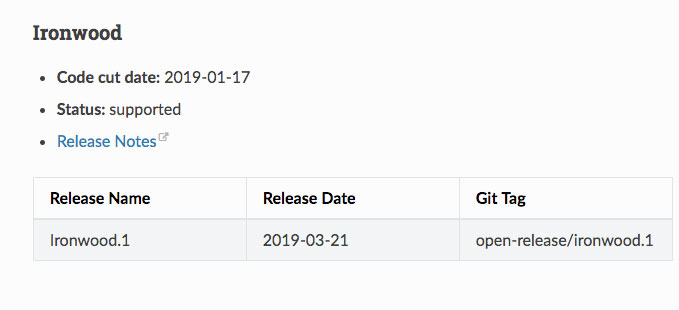
    The latest Open edX version of the platform, Ironwood, was quietly released today, March 21, five days before the annual developer’s conference.

    This version, Ironwood.1, is based on the code of January 17, 2019, and is available on GitHub.

    Ironwood is the ninth release of the Open edX platform and includes improvements over the current Hawthorn.2 version.

    One of the most notorious improvements involves the login process. Now logging in to Studio is done by redirecting the user to the LMS to log in, and then redirecting back to Studio.

    Another remarkable feature is called “Public Course Content”, which allows users to access materials and components without registration or enrollment.

    Shelby Stack, Product Manager at edX, recorded this following 5-minute video detailing the new features in Ironwood.

  • The Open edX Platform Will Allow Accessing Course Content Without Registration

    The Open edX Platform Will Allow Accessing Course Content Without Registration

    The upcoming Open edX release called “Ironwood” will include an option to make course content public. It allows users to access it without registration or enrollment (although discussions, problems, and exams won’t be visible).

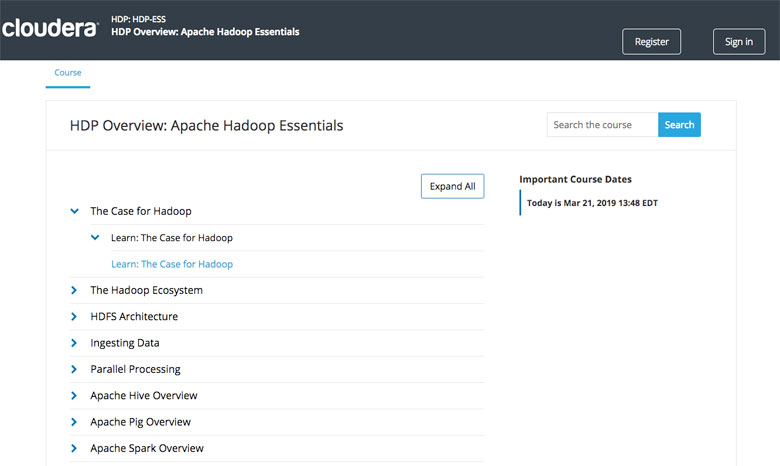
    This feature, called “Public Course Content”, has been sponsored by Cloudera and developed by OpenCraft in collaboration with the edX Architecture and Product teams.

    It can be seen in action in these seven free courses of the Cloudera OnDemand training platform, based on the Open edX software, and designed to teach how to accelerate the ROI of Cloudera deployments.

    In a blog post, edX explained that “you can decide which courses, and which parts of those courses, you want to to make public. For example, you can:

    • Make just the course outline public.
      The course outline will show without any links to internal course pages, giving potential learners an overview of what they will see when they enroll.
    • Make the entire course public.
      Anyone visiting your course outline can follow links to visit internal course pages, and freely navigate HTML and Video course content and handouts.
    • Show different content blocks to public learners vs enrolled learners.
      You can create content tailored to the public view, while still supporting the needs of your enrolled audit and paid learners.”

    This functionality allows not only existing learners to browse your public course to see if they want to enroll, but is beneficial for SEO purposes, since Google and other search crawlers can index your public courses. As a result of it, the visibility of courses would increase and boost enrollments.

    Currently, only HTML components, Video components, and course handouts have a “public” view. Unenrolled learners will see a message requesting that they sign in/register and enroll to see more complex content types like discussion forums, problem blocks, randomized content blocks, exams, Open Response Assessment, and other XBlocks.


  • Top Professor in Health Informatics Predicts the Need for Training in FHIR

    Top Professor in Health Informatics Predicts the Need for Training in FHIR

    Last month Fast Healthcare Interoperability Resources (FHIR) “was effectively made a U.S. standard. The Centers for Medicare and Medicaid Services… has now mandated that FHIR must be made available for both patients and providers physicians and others to access healthcare data,” said Mark Braunstein, Professor in Health Informatics at Georgia Tech, in an interview with IBL News in New York.

    This standardization of FHIR, he asserts, necessitates online training for those working in the field and needing continuous professional education.

    The demand for students who have skills in developing using this technology is exploding and we’ve been asked to look at what we could do to create some sort of stand-alone professional certificate program based on the experience we’ve had.”

    Mark Braunstein is the author of many groundbreaking books in the health informatics sector, and a Professor in the College of Computing at the Georgia Institute of Technology. His newest book is Health Informatics on FHIR: How HL7’s New API is Transforming HealthcareBraunstein sat down with IBL News to discuss how FHIR is revolutionizing healthcare in America and his success in creating on-campus and online courses, as well as the need for large-scale online courses and degrees in healthcare informatics.

    Fast Healthcare Interoperability Resources (FHIR) was created by the Health Level Seven International health-care standards organization (HL7) and is a standard for exchanging healthcare information electronically.

    Braunstein has been working in the field of health informatics for over 20 years, and offers an insight into how HL7’s new API is revolutionizing the healthcare sector, as his new book alludes to. When Braunstein began working at the Georgia Institute of Technology seven years ago, he designed an introductory project-based health informatics course.

    A few years ago a solution to one of the great challenges health informatics faced — which is how do we represent healthcare data in a standard way so that it can be meaningfully shared —  a solution to that began to be developed, and I became interested in it very early and saw the possibility of using this technology as a platform for student projects.

    This was FHIR, which uses “the technologies that are widespread already on the internet to represent and access healthcare information.”

    We began organizing things with the support of Dean Galil and others to develop a programming platform on campus so that our students could work with domain experts — these are physicians from places like Emory University or researchers from places like the CDC — to develop real apps that might actually in time be used to take better care of patients or improve public health

    Braunstein created an online course equivalent to what was offered on-campus, following in the footsteps of OMSCS, despite the fact that “running project-based courses [are] difficult even on campus.” With the growing popularity of FHIR, access to this content is necessary for continuing education initiatives. (Braunstein’s MOOC – Health Informations in FHIR).

    Please watch below the full interview with Mark Braunstein at IBL Studios.

  • View: OPMs As Banks and Enrollment Machines

    View: OPMs As Banks and Enrollment Machines

    Mikel Amigot

    Now that online degrees are widely accepted by employers in the U.S., there is a new demand for the Master’s program business and universities are considering the OPMs (Online Program Managers) outsourcing solution.

    OPM for-profit companies are mostly providing financial, enrollment, marketing, and curriculum design services. In a way, they are both banks and student recruitment/retention machines.

    2U is the leading publicly traded company, with a market value of over $4.5 billion.

    Universities that partnered with an OPM have outperformed their peers in increasing online enrollment, a recent study by Eduventures found.

    The problem lies in the fact that institutions do not want to give up academic control and don’t like the way OPMs make money –by attracting students and keeping them enrolled, many times with aggressive techniques.

    They tend to forget that OPMs need a certain enrollment threshold –typically 2,000 students, according to two experts– to recoup their investment or turn a profit.

    Non-profit colleges seem to be living under the assumption that corporations follow an altruistic idea of higher education. They are not, despite their fancy mission statements.

    Many academic administrators and faculty members would be scandalized listening to some of the conversations happening on OPM’s enrollment call-centers, as IBL News checked. They would immediately break their contracts and refuse to hire these companies again. These practices are one of the best-kept secrets in the industry.

    To be honest, OPMs also offer a proven track record when is about designing high-quality programs.

    Moreover, by overcoming universities’ enrollment stagnation challenge, OPMs are keeping institutions flourishing.

    We can romanticize the higher education landscape as much as we wish, but in the end, it is a business, a genuinely American business. And OPMs, despite some of their practices, are fit partners for universities in the common goal of generating revenues in the new digital economy while educating.

  • EdX Says that It’s Committed to Advance Mass Personalization

    EdX Says that It’s Committed to Advance Mass Personalization

    “We are moving toward an area of mass personalization in online education,” said Mark Haseltine, Chief Product Officer at edX at BuiltinBoston.com magazine.

    Asked about how edX plans in the field, Mr. Haseltine explained that AI and Machine Learning will be used to customize learning experiences, taking into account a “learner’s prerequisite knowledge, gaps in skills and competencies, learning delivery preferences, and desired curriculum and career pathways.”

    “We are staying ahead of this trend by collaborating closely within our ecosystem to bring a steady stream of innovations to our courses and programs.” (…) “We are fortunate to have a large, engaged, worldwide community who are committed to advancing mass personalization,” said.