Author: IBL News

  • NVIDIA’s DLI Reaches 120,000 Learners and Launches New Courses on Data Science 

    NVIDIA’s DLI Reaches 120,000 Learners and Launches New Courses on Data Science 

    NVIDIA’s Deep Learning Institute (DLI) announced this week that it has trained over 120,000 developers, researchers and data scientists in Artificial Intelligence, and specifically, in Deep Learning and GPU-Accelerated Computing.

    Additionally, this organization is launching new instructor-led and self-paced online courses simultaneously to the upcoming GPU Technology Conference (March 17-21, San Jose).

    Through its learning ecosystem, DLI will launch on March 17  two online, self-paced courses on Accelerating Data Science Workflows with RAPIDS and Data Science Workflows for Deep Learning in Medical Applications. 

    These courses will also be offered as instructor-led sessions at the GTC Conference with a certificate of competency.

    They will be part of a training program comprising of over 75 instructor-led training sessions, six full-day workshops, and self-paced training sessions with GPU-accelerated workstations running in the Microsoft Azure cloud.

    NVIDIA’s DLI learning ecosystem is powered by IBL Education and partially uses Open edX technology.


  • FutureLearn MOOC Platform Offers Unlimited Access for $199 per Year

    FutureLearn MOOC Platform Offers Unlimited Access for $199 per Year

    FutureLearn, the UK-based MOOC platform which competes with Coursera and edX, has launched a new pricing plan to access most of its course catalog: one payment of $199 for one year.

    This unlimited enrollment, which will increase to $269 after May 11, includes access to all short courses which offer a Certificate of Achievement. Courses not included are premium, program assessments, degrees (although open taster courses are), and classes which offer a Statement of Participation. Certificates of Achievement will be kept indefinitely regardless of whether the user renews the yearly subscription.

    With this recurring revenue strategy, FutureLearn introduces a new pricing model, Pluralsight style, and moves ahead of Coursera, edX, and Udacity.

    From the learner perspective, it is a drastic price reduction because for the same price as four-course upgrades, they are able to access a catalog of around 1,000 courses.

  • “When It Comes to Paying Users, the Completion Rate Is Pretty High”

    “When It Comes to Paying Users, the Completion Rate Is Pretty High”


    Have MOOCs Become Something People Love to Hate? Class-Central’s Dhawal Shah in Conversation


    By
     Henry Kronk | IBL News

    In the fall semester of 2011, Stanford University Professors Sebastien Thrun and Peter Norvig launched one of the first of a new generation of massive open online courses (MOOCs) on artificial intelligence. Dhawal Shah signed up for his course. Within that fall semester, more and more MOOCs were launched. An aspiring developer, Shah built and launched a site to track and catalog these courses. Ever since Class-Central.com has provided a map to the MOOC-iverse. IBL News reached out to Shah the ongoing evolution of MOOCs, and the occasionally negative reputation they have garnered.


    Henry Kronk
    : Many publications have declared recently that MOOCs
    have failed to live up to their promise. Many of these authors don’t mention what MOOCs promised them in the first place, but if we can look beyond that and view this issue from 10,000 feet, do you think their characterization is fair?

    Dhawal Shah: I was part of the first-ever cohort of MOOCs back in 2011. I did the AI class from Sebastian Thrun and Peter Norvig. This was the first one before they were called MOOCs and before there was Coursera or Udacity. They were just called Stanford Online Courses. For me, personally, the part of the experience was the community. Any question I had, somebody had already asked it and it had been answered. Another draw was access to high-quality education.

    One of those has expanded. There are more courses than ever in 2018. There are almost 12,000 MOOCs from 900 universities. But the community itself isn’t thriving. The community has split into multiple smaller cohorts. That’s why you don’t get the same feeling that I had back in 2011.

    In that case, I feel MOOCs haven’t lived up to my expectations of what I hoped they would be. But when the thought pieces come out, they usually talk about the completion rates and other barometers which I don’t think are very important. You set up the expectations to fail if the definition of success is completion rates. With any online activity where people aren’t invested—it doesn’t matter if it’s online courses—completion rates will be low. It’s the same even with books. I have so many books that I own, but I haven’t read most of them. That doesn’t mean that books are failures.


    Henry Kronk: Let’s talk more about completion rates because that’s been a known phenomenon—that MOOCs have low completion rates—since really early in their lifetime. This obviously varies depending on the platform and the individual course, but MOOCs still have a completion rate—one might be lucky to get above 10%.

    In their January issue, Science Magazine published an article by MIT researchers Justin Reich and Jose Ruiperez-Valiente titled “MOOC Pivot: From Teaching the World to Online Professional Degrees.” In the article, the authors describe some familiar arguments against MOOCs, one of which is the low retention rates they have maintained. Now the authors describe these low retention rates as both the “bane of MOOCs” and as a “bugaboo.” How would you characterize low-retention rates in MOOCs?

    Dhawal Shah: Regarding the study, I don’t think the authors analyzed the business decisions that MOOC providers and universities have taken. If you look at their numbers, you see that in 2015-16, there’s a sudden drop in retention and course completions. And that’s probably because, at that time, Coursera and edX stopped offering free certificates. That reduced retention, that reduced completion, was because the reward wasn’t there. They failed to look at that.

    Also to put the article in context, out of the 900 universities that offer MOOCs, they only looked at two institutions [MIT and Harvard] that offered about 250 out of the 11,000 available courses. So the retention rates were only those of MIT and Harvard courses. When the free certificate went away, these courses went down in value.

    There are so many other options available. If you don’t want to do a course that offers a certificate, you can choose one from other universities, not just MIT or Harvard. So I think that analysis failed to look at the business decisions of the providers and the universities.

    I also think that nowadays, providers are more focused on the users who are paying. When it comes to paying users, the completion rate is pretty high.

    For free users, they might choose to sample a few classes and then they finish only one. Most learners have limited time. So if someone tries out five courses and completes one, their completion rate is 20%. It doesn’t accurately convey my participation.

    I still think completion rates are low, but if you set that up as a metric of success, then anything online that is free and open will fail.


    Henry Kronk: We don’t talk about completion rates of YouTube videos. We don’t talk about completion rates of podcasts, or completion rates of Facebook messages, etc. Why do you think this metric has been such a sticky point of contention when it comes to MOOCs.

    Dhawal Shah: The only reason we talk about completion rates with MOOCs is because we know about them. If you think about companies like lynda.com or Pluralsight, these companies have been around a lot longer, but we don’t know anything about them. You don’t know any metrics. You don’t know how many people are taking them, you don’t know how many people finish them. I think we should appreciate the fact that, because it’s universities who are running these courses and willing to share that data, we know about it. That’s probably the reason they get hammered more. It’s a stat that we know.

    When I write things on Medium, it tells me how many people have read it. But it doesn’t tell me how many people have finished it. I don’t think completion rates accurately captures the impact or the value of the article.


    Henry Kronk: Ok, so let’s move on to another point that the MIT authors make. And, like you already said, this only applies to their sample, which looked at just courses offered by Harvard and MIT, so it’s already limited in that respect. They make the point that most of the learners the MOOCs serve are based in “affluent countries or affluent communities.” Is this something that is widespread, in your experience, throughout MOOCs in general, and, if yes, is that a source of concern?

    Dhawal Shah: First of all, the MOOC providers are businesses, so I don’t think there’s any reason for them to look beyond affluent countries to recoup their costs. $50 in the U.S. is very different from $50 in India or other developing countries, so I think that matters.

    I think just launching a website and building up some technology, you won’t magically reach people in other countries.

    We should also look at the topic of subject matter. I grew up in India and studied in India. There’s no way that I would have taken 90% of the courses offered at MIT or Harvard, especially in the humanities. I would have loved to do a course taught by David Malan in CS, which is more practical. That’s something we need to take into context.

    One interesting fact that I recently learned is 800 students graduate every week from Dr. Chuck’s Python Specialization on Coursera. Around 20% are from India. So I think in that case, the penetration in other countries is much higher. But if you aggregate numbers across the board, it does not reflect an accurate picture of MOOCs. There is still a lot of work to be done. But as the paywalls continue to go up, it will become more difficult to reach people in other countries.

    There’s also a whole set of local platforms coming up that offer courses in local languages. MOOCs are mostly for an English speaking audience and, to some extent, Spanish speaking. If you want to reach more people in non-affluent countries, there’s still much more work that needs to be done. But I’m not sure there are any financial rewards to achieve that. The price of these countries is too high.


    Henry Kronk: What you’re saying is, for this to be a global education initiative, MOOCs will need to maintain a base in communities who are willing to pay for not only certificates but also to clear paywalls.

    Dhawal Shah: Yes. And also, MOOCs need to be free to break into some countries.


    Henry Kronk: I began by talking about the negative coverage of MOOCs in the past year or so. I want to return and even zoom out of further. Forbes’ Derek Newton even compared credentialing and micro degrees as a “Bait-and-Switch” tactic last November. Why do you think MOOCs are all of a sudden a subject people love to hate?

    Dhawal Shah: I think the original media coverage and hype in 2011 and 2012 made for a very adversarial environment. Some of the founders also made huge claims. I think Sebastian Thrun predicted that, in the future, the world would only have 10 universities. That got more attention than what other founders were saying. That created a ‘Us vs. Them’ mentality. It implied that only one would survive.

    So whenever people have the opportunity, they write about MOOCs’ negative aspects because of this relationship that was created. But other providers were more measured. Coursera, edX, FutureLearn—from the beginning, they always saw themselves as partners with universities.


    Henry Kronk: This question could also benefit from a much deeper discussion about the media, but, for my last question, I wanted to switch gears again and talk about the role MOOC providers among universities and with online courses. In the U.S., there’s been a trend recently where for-profit colleges and universities have begun transitioning and spinning their institutions off as non-profits while maintaining the original company as an online program manager (OPM). There’s also a checkered past in the U.S. with for-profit universities that has been going on at least since the passage of the G.I. Bill after World War II. American for-profits have in the past been found to misrepresent their programs and defraud their students.

    In my opinion, OPMs are some of the most mercurial entities operating in edtech right now. They might provide simply the digital infrastructure to bring a course online. But they also might take care of advertising, recruitment, marketing, and all these roles that for-profits have previously come under fire for. With the mandate to exceed the bottom line, do you think that there’s any danger that MOOC providers will one day become the for-profit colleges of the previous decade?


    Dhawal Shah: They have in some cases been aggressive about monetization. They sometimes aggressively change policies. But they also still work with traditional universities, and I think that’s the big difference between this world and the old world.

    I don’t know of any for-profit college that’s launching degrees on these platforms. I actually think that providers don’t want that. They are much more exclusive. A lot of the smaller universities can’t even offer courses on edX or Coursera. They are very selective and they’re very concerned about their brand. At least for the next few years, I don’t think what you described will be possible.

    But also the amount of money put into these courses does bring pressure to monetize. That has led to taking away the free component from MOOCs and slowly raising the paywall. Udacity has increased prices steadily over the past year, year and a half. They used to offer $200/month and if you finish a micro degree at their college, you get half the money back. That was the early model. Now the model is, for a four-month program, you pay $800-$1000 and there’s no money-back guarantee. If you don’t finish in the allotted time, you lose access to the content. If you want to finish it, you basically have to pay $1,000 and sign up again.

    So there is some aggressive monetization happening on different platforms. And sometimes people do get caught unaware. But overall, these companies do have much higher aspirations. They don’t just want to make good revenue. They want to be global brands. The universities also will likely put some pressure and hold them back.


    For regular updates on the MOOC space, check out Shah’s
    MOOC Watch, which he updates regularly.
  • EdX Starts a Series of Podcasts Interviewing Leaders in Online Education

    EdX Starts a Series of Podcasts Interviewing Leaders in Online Education

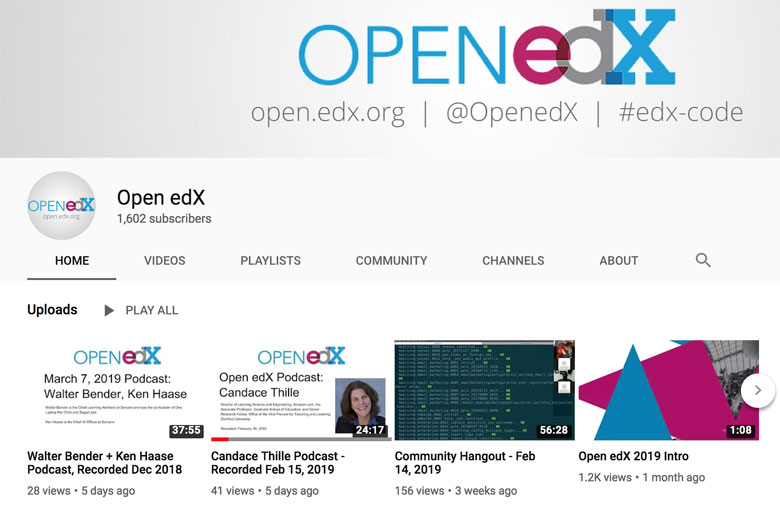
    edX has started to publish a series of podcasts with interviews featuring experts in online education as well as Open edX community leaders, prior to the 2019 Open edX Conference on March 28 at UC San Diego.

    John Mark Walker, Open Source and Community Lead on edX, is conducting this initiative.

    The first podcast included a conversation with learning science researcher Candace Thille, Director of Leaning Science and Engineering at Amazon. Mrs. Thille, who will address a keynote this month during the 2019 Open edX Conference, elaborates on her ongoing research, applications of AI in learning, and the role of universities in an era of democratized learning.


    The second podcast episode hosted Walter Bender, Chief Learning Architect at Sorcero and co-founder of One Laptop Per Child and SugarLabs, and Ken Haase, Chief AI Officer at Sorcero.


    Another relevant podcast that came up this month involves Adam Medros, President and COO at edX. He was interviewed on the UK’s Technology Blog Writer website. Mr. Medros provided his view on how edX is transforming online and classroom learning.

  • Master’s Degrees which Can Be Completed Online

    Master’s Degrees which Can Be Completed Online

    Over 36 MOOC-based degrees can be completed online through a platform at scale, while several others have been announced but are not yet open for enrollment, reports ClassCentral.com, which has classified these programs into six categories.

    In most cases, the final degree doesn’t indicate that the credential was earned online.


    COMPUTER SCIENCE AND ENGINEERING MASTER’S DEGREES

    Online Master of Science in Computer Science (OMSCS), Georgia Tech via Udacity
    Total Cost: $8,000
    Duration: 24-60 months

    Master of Computer Science, University of Illinois at Urbana-Champaign via Coursera
    Total Cost: $21,000
    Duration: 12-36 months

    Master’s Degree in Computer Science, University of Texas at Austin via edX
    Total Cost: $10,000
    Duration: 18-36 months

    Master of Computer and Information Technology, University of Pennsylvania via Coursera
    Total Cost: $26,300
    Duration: 24-40 months

    Master of Science in Electrical Engineering, University of Colorado, Boulder via Coursera
    Total Cost: $20,000
    Duration: 24 months

    Master of Computer Science, Arizona State University via Coursera
    Total Cost: $15,000
    Duration: 18-36 months

    Master of Science of Machine Learning, Imperial College London via Coursera


    BUSINESS AND MANAGEMENT MASTER’S DEGREES

    iMBA, University of Illinois, Urbana-Champaign via Coursera
    Total Cost: $22,000
    Duration: 24-36 months

    iMSA, University of Illinois, Urbana-Champaign via Coursera
    Total Cost: $22,050 – $27,170
    Duration: 18-36 months

    MSc in Innovation and Entrepreneurship, HEC Paris via Coursera
    Total Cost: $22,600 (20,000 EUR)
    Duration: 18 months

    MBA (various areas of focus), Coventry University via FutureLearn
    Total Cost: $20,511 (15,900 GBP)
    Duration: 24-60 months, part-time only

    Master’s Degree in Accounting, Indiana University via edX
    Total Cost: $21,000
    Duration: 15-36 months

    Master’s Degree in Marketing, Curtin University via edX
    Total Cost: $18,926
    Duration: 18-36 months

    Global Master of Business Administration, Macquarie University via Coursera
    Total Cost: $23,430 ($33,000 AUD)
    Duration: 12-18 months

    Master’s Degree in Leadership: Service Innovation, University of Queensland via edX
    Total Cost: $17,914
    Duration: 24 months

    MSc Business and Organisational Psychology, Coventry University via FutureLearn
    Total Cost: $17,222 (13,350 GBP)
    Duration: 24-60 months

    MSc Construction Management with BIM, Coventry University via FutureLearn
    Total Cost: $19,415 (15,050 GBP)
    Duration: 24-60 months

    MSc Construction Project and Cost Management, Coventry University via FutureLearn
    Total Cost: $19,415 (15,050 GBP)
    Duration: 24-60 months


    DATA SCIENCE AND ANALYTICS MASTER’S DEGREES

    Online Master of Science in Analytics, Georgia Tech via edX
    Total Cost: $9,900
    Duration: 12-36 months

    Master of Computer Science in Data Science, University of Illinois, Urbana-Champaign via Coursera
    Total Cost: $21,000
    Duration: 12-36 months

    Master of Applied Data ScienceUniversity of Michigan via Coursera
    Total Cost: $31,688 – $42,262
    Duration: 12 months minimum


    CYBER SECURITY, IT MANAGEMENT, AND TECHNOLOGY MANAGEMENT MASTER’S DEGREES

    Master’s Degree in Cybersecurity, Georgia Tech via edX
    Total Cost: $9,920
    Duration: 24-36 months

    Master of Cyber Security, Deakin University via FutureLearn
    Total Cost: $18,659 ($26,280 AUD)
    Duration: 24 months

    MSc Cyber Security, Coventry University via FutureLearn
    Total Cost: $19,425 (15,050 GBP)
    Duration: 24-60 months (part time only)

    Master’s Degree in IT Management, Indiana University via edX
    Total Cost: $21,000
    Duration: 15-36 months


    PUBLIC HEALTH, HEALTHCARE, AND PUBLIC SECTOR MANAGEMENT MASTER’S DEGREES

    Master of Public Health, University of Michigan via Coursera
    Total Cost: $44,520 (maybe lower for Michigan residents)
    Duration: 20-22 months

    Global Master of Public Health, Imperial College London via Coursera
    Total Cost: $25,000 (lower for UK residents)
    Duration: 24 months

    Master of Development and Humanitarian Action, Deakin University via FutureLearn
    Total Cost: $8,158 ($11,490 AUD)
    Duration: 12 months (full time)

    MSc Nursing, Coventry University via FutureLearn
    Total Cost: $16,125 (12,500 GBP)
    Duration: 24-60 months

    MSc Disaster Management and Resilience, Coventry University via FutureLearn
    Total Cost: $17,222 (13,350 GBP)
    Duration: 24-60 months

    MSc Emergency Management and Resilience, Coventry University via FutureLearn
    Total Cost: $17,222 (13,350 GBP)
    Duration: 24-60 months


    BACHELOR’S DEGREES

    Bachelor of Science in Computer Science, University of London via Coursera
    Total Cost: $13,014 – $19,520 (10,088 – 15,132 GBP)
    Duration: 36-72 months

    Bachelor of Arts (Multiple Subjects), University of Newcastle via FutureLearn
    Total Cost: est. $77,280 (24 Programs x $3,220/Program)
    Duration: 36 months or more


    Class Central: 35+ Legit Master’s Degrees You Can Now Earn Completely Online

  • Learning At Scale | March 2019: OPM, MOOCs, Blockchain, Coursera, Udacity, edX

    Learning At Scale | March 2019: OPM, MOOCs, Blockchain, Coursera, Udacity, edX

    Newsletter format  |  Click here to subscribe ]


    MARCH 2019  –  NEWSLETTER #20 ON LEARNING INNOVATION


    OPM

    “The right question about OPMs is whether they are a good fit,” stated expert Michael Feldstein.

    “OPMs are the modern enrollment managers,” said Harris Pastides, President of the University of South Carolina, and Randy Best, Chairman and CEO of Academic Partnerships.

    2U acquired a minority stake in Chicago-based Keypath Education, which provides a similar service. Additionally, it announced an MBA program with Tecnológico de Monterrey.

    Michigan Ross School of Business selected Noodle Partners to launch an online MBA program.


    MOOCs, DEGREES

    “These are online learning’s greatest hits,” showed Robert Ubell. Also, this expert explained that “MOOC platforms will provide full credit programs for a fee”.

    “MOOCs are alive,” stated Zvi Galil, pioneer of Georgia Tech’s OMSCS affordable degree, on a video interview.

    • The OMSCS degree will graduate 1,500 students per year in 2021.

    • Five top U.S. universities will launch five more low-priced master’s.


    RESEARCH

    Educause released a preview of its 2019 Horizon Report. Redesigning blended spaces is one of the key trends.

    Cryptocurrency company Ripple is expanding its blockchain research initiative with 11 new top universities.

    These are the most in-demand hard and soft skills of 2019: cloud computing, artificial intelligence, analytical reasoning, creativity, persuasion, collaboration…


    COURSERA, UDACITY, EDX

    Coursera and HEC Paris introduced a stackable degree model with a new specialization in design thinking.

    Udacity announced an AI-based program for matching candidates with its network of employers.

    Sebastian Thrun initiated an aggressive plan to transform Udacity, after the former CEO left in October. The company reported revenues of $90 million and claimed 10 million registered students.

    Job applicants should add online courses to their CV, explains an expert at edX.


    BLOCKCHAIN

    • A Community College issued 1,479 blockchain-based certificates.

    • MIT issued 2,000 blockchain-based certificates.


    INITIATIVES

    • UMass announced plans to launch a national online college focused on adults. It will compete with Arizona State University, SNHU, Purdue and Penn State.

    Arizona State University (ASU) is expanding Education for Humanity, an initiative to educate online refugees in Lebanon, Jordan, Irak, Uganda, and Rwanda.

    Moodle unveiled Moodle Workplace, a subset of the features available in other products, notably Totara Learning, for organizational training.

    Universities and colleges are teaming up with boot camp companies to deliver tech training in web development and coding, data analytics, and cybersecurity. Vanderbilt University is a good example.


    INVESTMENTS

    Turnitin, which uses AI to scan students’ writing and code assignments to check for plagiarism, will be acquired by a media conglomerate for $1.75 billion.

    Instructure / Canvas LMS bought the Portfolium digital portfolios company for $43 million.


    2019 UPCOMING EVENTS

    Education Calendar  –  MARCH  |  APRIL  |  MAY  |  JUNE – DEC 2019


    This newsletter about learning innovation is a monthly report compiled by IBL News. If you enjoy what you read please consider forwarding it to spread the word. Click here to subscribe.

    Archive:
    IBL Newsletter #19– January 2019
    IBL Newsletter #18 – December 2018
    IBL Newsletter #17 – November 2018

  • “Massive Online Courses Are Alive”, Says Pioneer of OMSCS Affordable Degree

    “Massive Online Courses Are Alive”, Says Pioneer of OMSCS Affordable Degree

    By Zoe Mackay

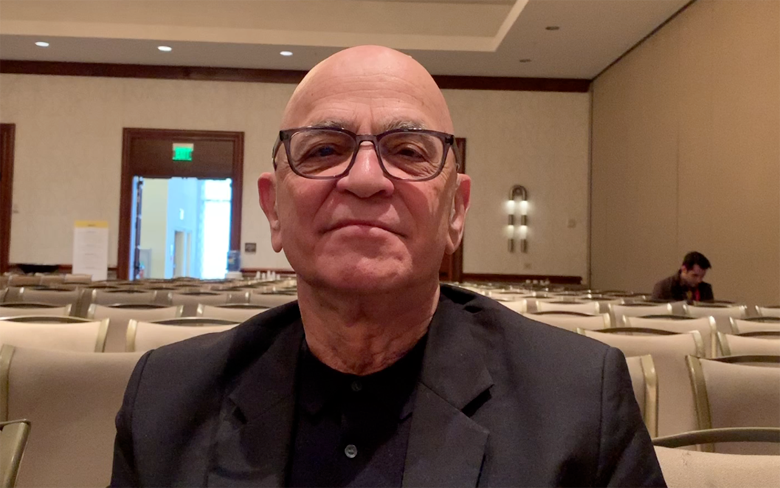
    “MOOCs haven’t died. They are alive,” said Zvi Galil, Dean of the College of Computing at the Georgia Institute of Technology and the pioneer of the Online Master of Science in Computer Science (OMSCS), during an interview at the IBL Studios in New York.

    “I have never been in a funeral for MOOCs. I think MOOC-based degrees proved to be a better use for MOOCs, to reach people because people want degrees and credentials.”

    Responding to the critics of online courses and degrees, Galil offered the counterpoint that “the online degree has the ability to reach many more people, and with improving technologies, some of the perceived deficiencies of online education get ameliorated and get replaced by closer interaction.”

    “While traditional on-campus students utilize social media for personal interaction, OMSCS students “use it in a very extensive way, and it’s very part and parcel of their education.”

    In today’s job market, continuing education is a lifelong effort. As technology is constantly changing and employment sectors necessitate continuous learning from their employees, online education is an ideal and flexible model.

    “We are moving into a period where we must have adult education. We must have lifelong learning. And online will be a major tool to do it. Some very capable people can take the time off to move, to go to a place where they can have classes, and some do, but a majority, I believe, will be using online courses or degrees or certificates.”

    When it comes to the quality of education, OMSCS provides a stunning example. Galil notes that OMSCS was created with the same attention to detail as its on-campus counterpart, with “no compromises in quality… the same criteria for admission, the same students, projects, homework and exams.”

    Please watch below the full interview with Zvi Galil at IBL Studios.


  • “MOOC platforms will provide full credit programs for a fee”

    “MOOC platforms will provide full credit programs for a fee”

    What is the future of Coursera, edX, Udacity, FutureLearn, MiriadaX and other MOOC platforms?

    Robert Ubell, a renowned online learning guru and consultant, has a clear view:

    “MOOC platforms will provide full credit programs for a fee.”

    “MOOCs proposition was destined to die because there was no finance in how to continue. This is why they had to find a transformative approach,” he adds.

    “Programs from Georgia Tech and the University of Illinois are good examples. Their offering is connected to their revenue stream.”

    In the interview below, conducted during the SXSW EDU conference this week in Austin, Mr. Ubell also highlighted the examples of UMass, University of Southern Florida Central, and University of Arizona State University.


  • A Community College Issues 1,479 Blockchain-Based Certificates

    A Community College Issues 1,479 Blockchain-Based Certificates

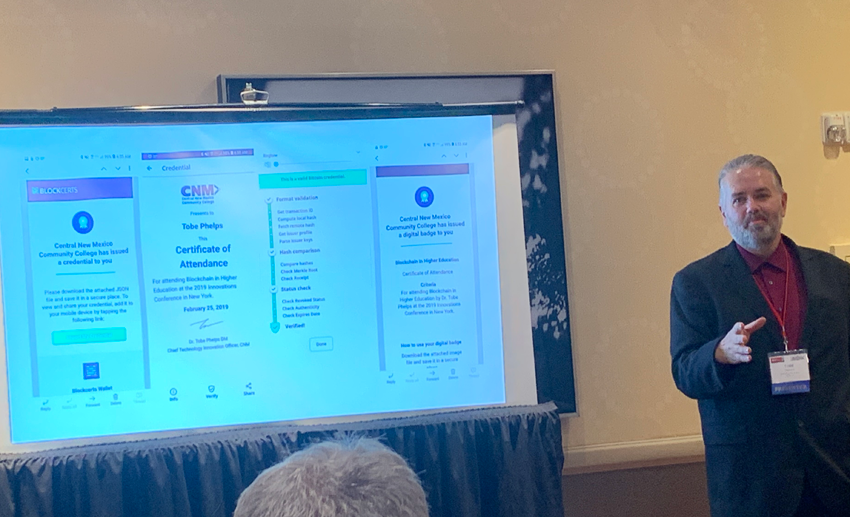
    Central New Mexico Community College (CNM) has become the first community college in the U.S. to issue student-owned digital diplomas through Blockchain technology. So far, CNM has issued 1,479 Blockchain-based certificates. A total of 356 of them have been shared on Linkedin.

    “It is a very powerful tool for our students,” Dr. Tobe Phelps, CTO at this community college, explained in a conversation with IBL News last Monday.

    CNM’s innovation in this field has been driven by the goal to “convert college-owned technology to student-owned technology,” added Mr. Phelps.

    In August 2017,  this institution joined the Blockcert pilot with MIT, and in November 2017 successfully issued the first certificates for their deep dive coding camp. Less than a year later, in August 2018 CNM announced that all of their graduates would receive optional diplomas.

    Additionally, this community college recently entered into a partnership agreement and started the development of a blockchain education ecosystem, which includes higher-ed institutions, students, employers, as well as government agencies and other community members.

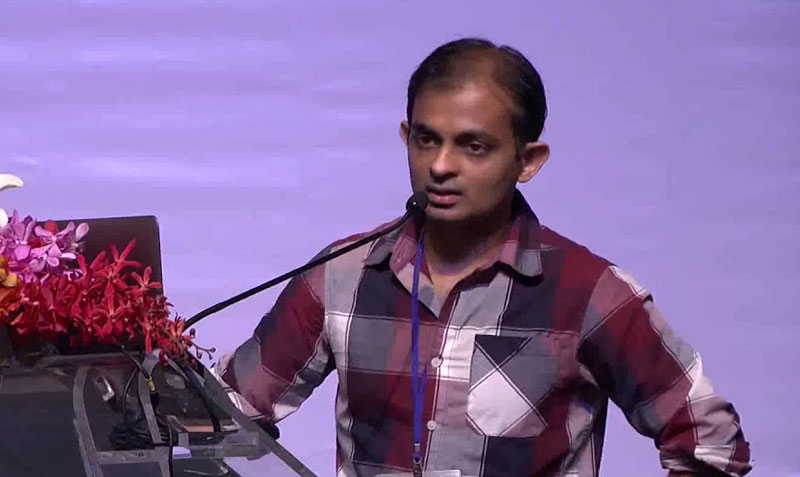
    [Dr. Tobe Phelps pictured above during his talk at the Innovation Conference in New York on Monday, showing some of the issued blockcerts certificates.]

  • Open edX | March 2019: Upcoming Conference, MIT, Jupyter, Edraak…

    Open edX | March 2019: Upcoming Conference, MIT, Jupyter, Edraak…

    Newsletter format  |  Click here to subscribe ]


    FEBRUARY – MARCH 2019 – NEWSLETTER #14  |  More breaking news at IBL News 


    OPEN EDX

    • Open edX Conference’s Schedule: 10 Key Sessions

    • Ten 5-Min Talks of Open edX Vendors to Attend

    • Ironwood, The Latest Open edX Version, To Be Released Soon


    INITIATIVES

    • ​An Open Book to Empower Using Jupyter for Teaching

    • Edraak Launches its School Learning for K-12 Children in the Arab World

    • EdCast Acquires Leapest, a European B2B Training Specialist


    COURSES & PROGRAMS

    • A MOOC to Deal with a Post-Truth World Developed by SUNY​

    • Dr. Chuck’s MOOC on Python Is Now Also on edX.org

    • Looking for the Right Name for the MOOC-based Degrees


    MIT

    • MITx Granted 1,277 Credentials on its Supply Chain MicroMasters

    • MIT Issues 2,000 Blockchain-Based Certificates

    • A Free MIT Course for Practitioners on Competency-Based Education


    2019 UPCOMING EVENTS

    Education Calendar 2019  –    FEB  |  MARCH  |  APRIL   |  MAY   |  JUNE – DEC 2019


    This newsletter about Open edX is a monthly report compiled by the IBL News staff, in collaboration with IBL Education, a New York City-based company that builds AI analytics-driven, revenue-oriented learning ecosystems, and courses with Open edX and other educational software. 

    Read the latest IBL Newsletter on Learning Innovation  |  Archive of Open edX Newsletters