Author: IBL News

  • Open edX Conference’s Schedule: 10 Key Sessions

    Open edX Conference’s Schedule: 10 Key Sessions

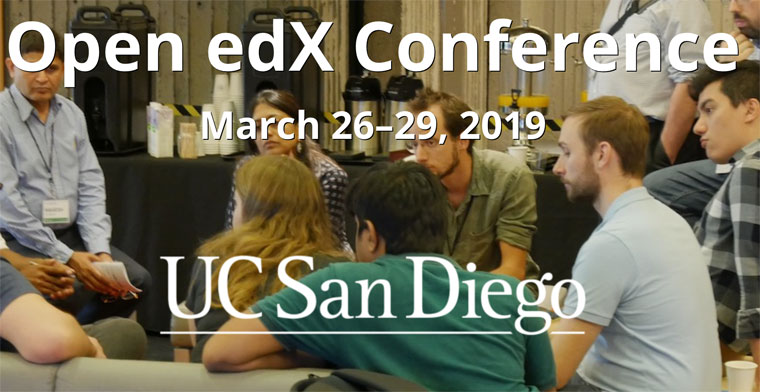
    The edX organization announced yesterday the speaker and session schedule for its 2019 Open edX developers and educators conference, which will take place on March 26-29 in San Diego.

    This is a selection of the ten must-attended sessions in our view:

    Wednesday 27

    Thursday 28

  • Ironwood, The Latest Open edX Version, To Be Released This February

    Ironwood, The Latest Open edX Version, To Be Released This February

    Ironwood, the 2019 version of this learning platform, will be released in February.

    The first release candidate, Ironwood.1rc1, was just made available this week.

    [Update: The Ironwood RC3 was released on February 27, after the RC2 didn’t properly install].

    “Our goal is to release Ironwood in two weeks.  In order to do that, I need to hear back from you about how testing is going,” Ned Batchelder, Software Architect at edX announced on Google Groups.

    This engineer also noted that the platform installation instructions have changed slightly.

    Ironwood, the ninth release of the Open edX platform, includes improvements over the current Hawthorn.2 version.

    The release comes prior to the Open edX developers’ conference, scheduled for March 26-29 in San Diego.

    [Update: edX releases the agenda of the event]

  • Looking for the Right Name for the MOOC-based Degrees

    Looking for the Right Name for the MOOC-based Degrees

    By Mikel Amigot

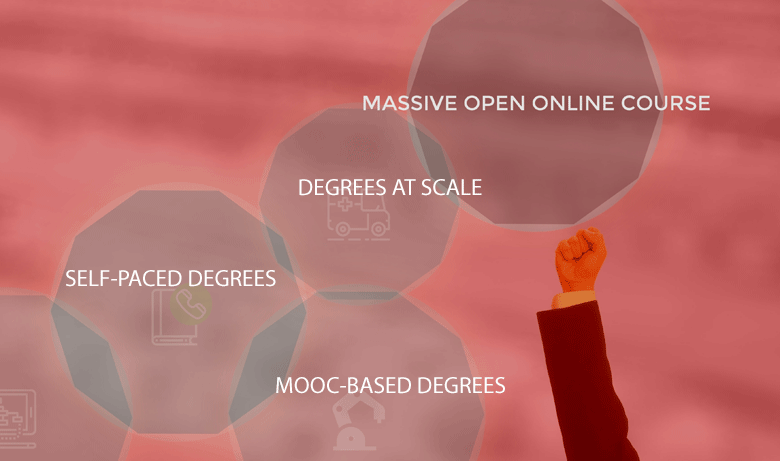
    Is “MOOC-based degrees” the right name? Shouldn’t we call this phenomenon “low-priced degrees”, “online degrees at scale” or “self-paced degrees”?

    It’s time to ask the experts.

    The pioneer of these programs, Zvi Galil, who disrupted the industry with the OMSCS, kindly explains to IBL News.

    “Our degrees are not exactly massive and not open. But they have the same pedagogy as MOOCs –they are broken into small pieces with quizzes to make sure students understand concepts before moving on. Also, they are much better pedagogically than the old fashioned, videotaped courses, and they include an extensive support system.”

    Understood.

    Additionally, we could say that MOOCs sounds like a failed experiment. They didn’t democratize education, nor thrill learners –who were eager to enroll but never to complete the courses. Moreover, MOOCs have drained financial resources and never resulted in a sustainable business model (ask universities on Coursera, edX and Udacity).

    What about referring to them just as Online Master’s Degrees?

    This denomination may remind us of the incredibly expensive programs from U2 and other OPMs providers that attract a two digit number of students at most.

    We need to reflect on Zvi’s motto of “accessibility through affordability and technology”.

    Another friend of ours, James Acevedo, Associate Director of Distance Learning at The New School, concludes: “I think a good name is still to come.”

    “I prefer MOOC-based degrees, since not all self-paced degrees are necessarily MOOCs, and degrees at scale seems purely like a marketing term.”

    Zvi, the genius behind the concept, admits: “I don’t have an idea as to how to replace the MOOC-based denomination”.

    All right, MOOC-based degrees it is. For now.

  • Five Top U.S. Universities Will Launch Five More Low-Priced Master’s

    Five Top U.S. Universities Will Launch Five More Low-Priced Master’s

    At least five more American research universities will launch a low-priced master’s degree during 2019, following the success of Georgia Tech’s OMSCS (Online Master’s Science in Computer Science), with over 8,000 students. This will be an increase of 50%, from the existing ten institutions offering MOOC-based degrees.

    The author of this prediction is Richard Garret, Encoura’s Eduventures Chief Research Officer: “The trend is clear: top brand, low price”. “Low-priced programs beyond data science, cybersecurity, and MBAs—perhaps accounting or healthcare management—will feature in this new class.”

    “Georgia Tech is the leader here, launching its prototype $7,000 online master’s in computer science back in 2012, and going on to enroll over 8,000 students to date. Indiana University, University of California, San Diego, and University of Texas, Austin have followed suit on the edX platform, along with two more offerings from Georgia Tech. Coursera is flying the flag with University of Illinois, University of Michigan, and Arizona State.”

    Richard Garret highlights the fact that universities jumping into these MOOC-based degrees must be R1 (or research; there are 130), due to the “same admission standards, same rigor, same faculty, but mass enrollment at a low price.” “I also predict that at least one of the five will be private—all pioneers have been public so far.”

    While flagship universities reimagine their brand with these initiatives, “for less prestigious institutions, low price may be mistaken for low quality or desperation”.

    As of today, there are ten research universities managing MOOC-degree programs (all of them in Coursera, edX or Udacity), according to the data compiled by IBL News. These are: Georgia Institute of Technology, University of Illinois at Urbana-Champaign, Arizona State University, University of Colorado Boulder, University of Pennsylvania, University of Michigan, Indiana University,  University of California, San Diego, University of Texas at Austin, University of Notre Dame.

    Another prediction for 2019 made by Garret says that a group of colleges or universities will announce an innovative co-development and licensing model, and top-notch courses could be licensed across the system.


    Encoura: Higher Education Predictions for 2019: Low-Priced Master’s, Course Licensing, and CLIMB

    IBL News: 44 MOOC-Based Master’s Degrees Worldwide
     

  • Dr. Chuck’s MOOC on Python Is Now Also on edX.org

    Dr. Chuck’s MOOC on Python Is Now Also on edX.org

    Is your course hosted on Coursera or edX? Well, it can be on both platforms.

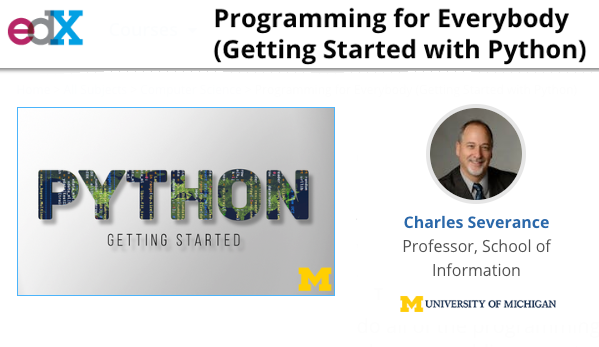
    Take Charles Severance (Dr. Chuck)’s Python for Everybody. This course has been a hit in Coursera for years, with over a million enrollments. Last week, it was posted on edX.

    In both cases, it is a paid course. In Coursera it is part of a Specialization, and the free trial goes for seven days. In edX.org, an upgrade to the verified certificate level, at a price of $49, is needed to access graded exercises and to keep it open after two months.

    The creator of the course offers some free options on his page, although these seem mostly oriented to computer science instructors who want to use the materials after setting a learning environment. This course content, including a free textbook and support materials, is also available on GitHub.

    The Python for Everybody course was one of the first successful MOOCs in this computing language. Almost ten years ago, Charles Severance, who teaches at the University of Michigan, created the course aimed at beginners with no technical training or math knowledge.

    “I created a course that does not try to teach Computer Science using Python but instead teaches a subset of Python that represented the essentials of programming. When I was originally building the course (in Python 2.0 at the time), I would not have predicted the exciting growth of Python and the success of the MOOC movement. Ten years later, PY4E [Python for Everybody] has reached more than 2 million learners to become the largest Python course in the world, graduating thousands of new Python programmers every week,” wrote Professor Severance on edX.org’s blog site.


    • Course on edXProgramming for Everybody (Getting Started with Python) and Python Data Structures
    • Course on Coursera: Python for Everybody Specialization

  • View: Master’s Degrees, a Cash Cow and Vehicle for Advancement

    View: Master’s Degrees, a Cash Cow and Vehicle for Advancement

    Mikel Amigot

    Around 800,000 master’s degrees were awarded by U.S. universities in 2018, becoming an essential credential.

    A baccalaureate degree doesn’t suffice for an increasing number of jobs in education, healthcare, business, and STEM. And a master’s is now the educational minimum for many occupations and professions.

    This new entry credential conveys more salary: $12K more than a bachelor’s degree, according to the Bureau of Labor Statistics.

    Between 1990 and 2010, public universities increased the number of programs in business from 266 to 321, in public administration from 153 to 220 and in communications from 90 to 141, according to Michael T. Nietzel, President Emeritus of Missouri State University and contributor of Forbes.

    For employees, it’s a vehicle for career advancement, and it helps to build a personal brand (Ph.D. programs are dramatically more expensive and difficult to achieve). For universities, it’s a cash cow, mostly because scholarships are seldom used to discount tuition and can reach a large number of students.

    Students’ and institutional interests are aligned and, as result of it, master’s programs continue to thrive.

            Mikel Amigot is Founder at IBL Education and Editor in Chief at IBL News         

  • A Free MIT Course for Practitioners on Competency-Based Education

    A Free MIT Course for Practitioners on Competency-Based Education

    Competency-based education (CBE) forces us to think what it is we want students to know, and makes learning a more personal experience. Learners need to demonstrate proficiency in skills and content, not by how many hours they spend sitting in class, and move at their own pace.

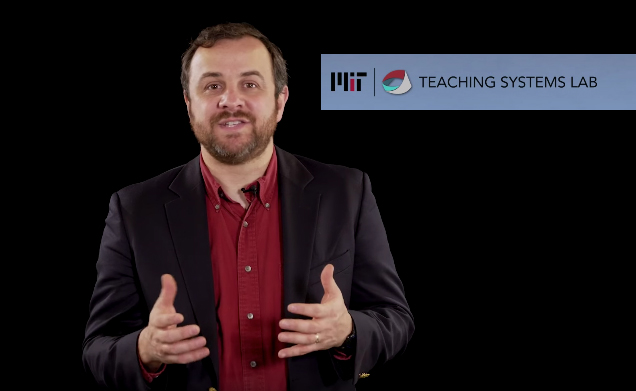
    MIT Teaching Systems Lab professor Justin Reich, in the video below, explores the why, what and how of competency-based education in a free six-week course on edX.org, beginning today, January 31, 2019.

    “You will learn why so many educators are excited about CBE and its potential for closing opportunity gaps, as well as challenges and concerns. You will get a closer look at what the implementation of CBE looks and feels like for students, teachers, administrators, families, and community members. You will consider the kinds of system-wide shifts necessary to support this innovation in education,” explains Profesor Reich.

    KQED NewsWhy Competency-Based Education Is Exciting And Where It May Stumble

  • Georgia Tech’s Pioneer Master’s Reached 8,672 Students This Term

    Georgia Tech’s Pioneer Master’s Reached 8,672 Students This Term

    The legendary Online Master of Science in Computer Science (OMSCS) reached 8,672 students this term and the number of graduates so far exceeds 2,000. It includes learners representing all 50 U.S. states and nearly 120 different countries.

    “Each year over 1,000 are graduating and this number can reach 1,500 in two or three years,” explained Zvi Galil to IBL News — Galil is the Dean of the Georgia Institute of Technology College of Computing and creator of the OMSCS program.

    The number of programs that are following in the footsteps of OMSCS now exceeds 40, as explained in recent research.

    The number of undergraduate students on Introduction to Computing Using Python (or CS1301) who are taking it online is 297 compared to 247 who take it in the regular sections.

    The Online Master of Science in Computer Science program started in 2014, and it was the first degree of its kind to operate entirely on a MOOC platform for course delivery (Udacity). The program began with 380 students.

    The Georgia Tech’s Online Master of Science in Computer Science (OMSCS) program was the first degree of its kind to entire operate on the massive online, or MOOC, a platform for course delivery.

    Its success inspired Georgia Tech to launch two additional degrees (on edX). The OMS Analytics degree began in Fall 2017 with 250 students; this semester’s enrollment is 1,500. The OMS Cybersecurity degree launched in January with about 250 students.

    “OMSCS has been successful beyond our imagination. Our success really has rested on the faculty, who overwhelmingly approved OMSCS and then enthusiastically executed the program,” said Zvi Galil.

    “This was all uncharted territory, and Georgia Tech has achieved accessibility through affordability and technology.”


    Georgia Tech: Five Years a Cyber Pioneer
    IBL News: 45 MOOC-Based Master’s Degrees Worldwide

  • Learning At Scale | January 2019: MOOC-Based Master’s, Coursera, Udacity, MIT, Andela…

    Learning At Scale | January 2019: MOOC-Based Master’s, Coursera, Udacity, MIT, Andela…

    Newsletter format  |  Click here to subscribe ]


    JANUARY 2018  –  NEWSLETTER #19 ON LEARNING INNOVATION


    MOOC-BASED DEGREES

    45 MOOC-based master’s degrees worldwide.

    • 10K learners and $80M in revenues.

    • CME programs, a new hot area.


    PLATFORMS

    Coursera opened its data science academy.

    • Udacity shuttered its iOS and Android apps and its career services mentorship program in order to cut costs.

    Cloud computing is behind Instructure’s early success, Blackboard’s hopes and Moodle’s challenges.


    PROGRAMS

    Dr. Chuck’s Python for Everybody series is now on edX.org

    MIT is stepping in to provide advanced training in photonics for community colleges.

    Google Cloud announced new certifications.

    These are the most in-demand jobs of 2019.


    FUNDING

    • U.S. edtech companies raised $1.45 billion in 2018, a 20% increase from 2017.

    • Andela raised $100 million to grow its company which offers coding instruction and jobs to students in developing countries.

    Singapore-based Emeritus Institute of Management raised $40 million to expand its course catalog.


    UNIVERSITIES

    HBX removed its “X” and rebrands as Harvard Business School.

    Johns Hopkins University for $372 million purchased the Newseum in DC, in order to offer graduate programs.


    2019 UPCOMING EVENTS

    Education Calendar  –  JAN | FEB | MARCH | APRIL | MAY – DEC 2019


    This newsletter about learning innovation is a monthly report compiled by IBL News. If you enjoy what you read please consider forwarding it to spread the word. Click here to subscribe. 


    Archive:

    IBL Newsletter #18 – December 2018
    IBL Newsletter #17 – November 2018
    IBL Newsletter #16 – October 2018

  • Open edX | January 2019: Ironwood, XuetangX, Duke, MOOC-based Degrees…

    Open edX | January 2019: Ironwood, XuetangX, Duke, MOOC-based Degrees…

    Newsletter format  |  Click here to subscribe ]


    JANUARY 2018 – NEWSLETTER #13  |  More breaking news at IBL News 


    OPEN EDX SOFTWARE

    • EdX Starts the Process to Release “Ironwood”, the Next Version of its Open Source Platform

    The Open edX Platform Faces a Huge Upgrade into Python 3


    OPEN EDX INITIATIVES

    • XuetangX, China’s Open edX Platform, Reaches 16M Learners

    • Duke University Ditches Open edX and Moves to Sakai


    EDX INC.

    EdX Launches a Promotional Website About its Open Source Platform

    edX’s Tax Returns Form Shows an Increase in Directors’ Salaries

    edX Will Invest Another $1.8M in Fostering Digital Bachelors’ Degrees


    COURSES & PROGRAMS

    Microsoft Releases a Course About Azure Stack

    • Top 2018 HarvardX Courses: CS, Data Science, Buddhism, Pyramids and Architecture

    • MOOCs Will Evolve Into Online Degrees


    2019 UPCOMING EVENTS

    Education Calendar  –  JAN  |  FEB  |  MARCH  |  APRIL   |   MAY – DEC 2019


    This newsletter about Open edX is a monthly report compiled by the IBL News staff, in collaboration with IBL Education, a New York City-based company that builds AI analytics-driven, revenue-oriented learning ecosystems, and courses with Open edX and other educational software. 

    Read the latest IBL Newsletter on Learning Innovation  |  Archive About Open edX Newsletters

    IBL News is not affiliated with edX Inc.

    edX, Open edX and the corresponding logos are registered trademarks of edX Inc. All Rights Reserved