Author: IBL News

  • Professor Barba Launches a Beginner Course in Computing for Engineering Majors

    Professor Barba Launches a Beginner Course in Computing for Engineering Majors

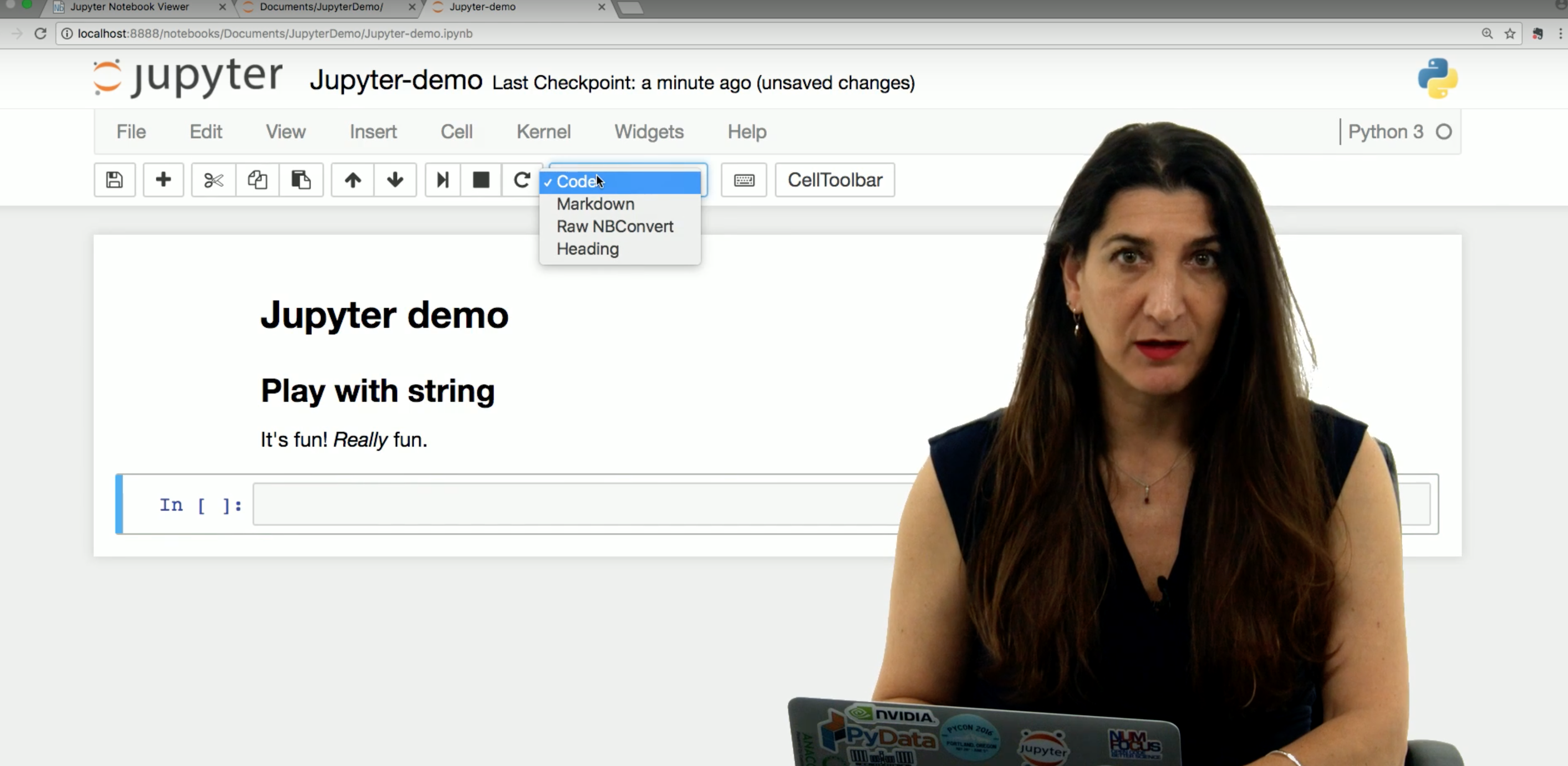
    Professor Lorena Barba, from GW, has announced an open online course on computing for engineers: Get Data Off The Ground with Python on the GW Engineering platform –built by IBL on the Open edX software.  This is the first in a series of course modules on computation for engineering students.

    The first module in Engineering Computations creates a foundation for Python programming. “You learn to handle core data types (strings, lists) and also n-dimensional arrays. The first three lessons have essentially no mathematics, to focus on the programming patterns. The fourth lesson deals with creating and operating on arrays. The final lesson is a worked example of linear regression with real data. The target audience is first-year engineering students, but the course would be equally useful to students in any science or technology field,” explained Professor Barba.


  • Keynote Speakers for the Open edX Conference Announced

    Keynote Speakers for the Open edX Conference Announced


    The edX organization has announced the keynote speakers for the Open edX Conference, scheduled for May 29 – June 1 in Montreal:

    • Fiona Hollands, Associate Director at Teachers College, Columbia University
    • Zvi Galili, Dean of Georgia Tech
    • Anant Agarwal, CEO and Founder of edX

    • Conference Website

  • Academy Built on Open edX Provides Data Mining and Predictive Analytics


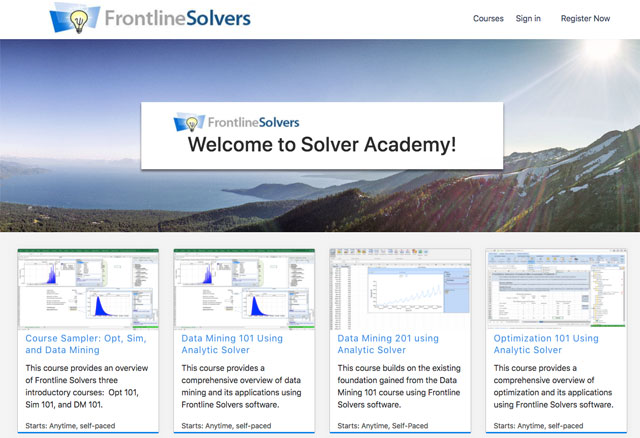
    Frontline Systems, a developer of Solver prescriptive analytics tool based in Incline Village, Nevada, has launched Solver.Academy, an Open edX-based online learning platform.

    This educational portal offers self-pace courses in data mining and predictive analytics, Monte Carlo simulation and risk analysis, and mathematical optimization.

    These courses, available now by invitation only, are divided into six weekly sections and include video lectures, quizzes and a mid-term and a final exam, where learners will build and solve real models to pass. Certificates for course completion are part of the platform.


  • An Open edX XBlock that Provides Content Recommendations

    Bibblio, a platform which provides course recommendations, has developed the Bibblio XBlock with Proversity educational consultant.

    “This XBlock will allow the wider Open edX community to easily start suggesting the best of their own content to learners as they explore their offering,” Proversity said on its blog.

    The XBlock lets learners discover educational content within the course. Under a “related content” banner, learners are able to consume any kind of media to supplement their learning; video, audio, documents, PDFs, or websites.

    The software uses auto-generated metadata and machine learning to display relevant recommendations in real-time.


  • EdX CEO Suggests that Betsy DeVos Ties Financial Aid to Online Education


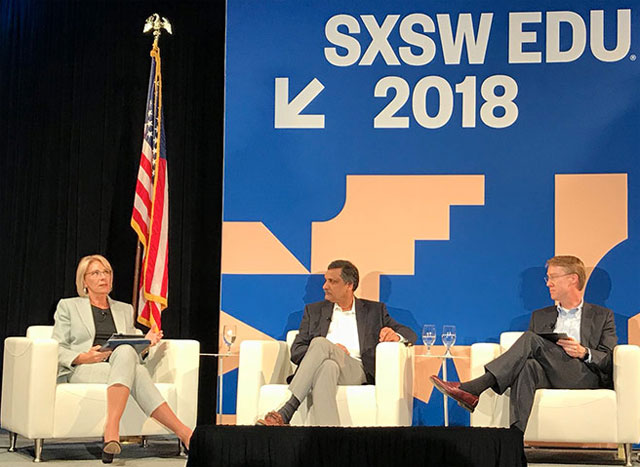
    This Wednesday at Austin’s SWSW EDU conference, the CEO of edX, Anant Agarwal, suggested that U.S. Secretary of Education Betsy DeVos should tie federal financial aid to new credentials in education such as MicroMasters and professional certificates rather than traditional on-campus degrees. “Put the money in the hands of the students, and we will start seeing a huge change,” said Dr. Agarwal.

    While conducting a panel with Dr. Agarwal, consultant Ben Wallerstein, and Strada Education Network’s manager David Clayton, Secretary DeVos asked participants what technological breakthroughs would be implemented to advance education in the U.S.

    “We don’t need a technology breakthrough, we need a policy breakthrough. Technology is already there,” answered Dr. Agarwal, recommending an update to financial aid process, focusing on unbundling and modular education, which he strongly advocates.

    “Would you come to Congress to explain this?”, replied Secretary DeVos. All of the panelists agree on the idea of moving faster in education by implementing technological innovations.

  • Coursera Offers Its First Fully Online Bachelor’s Degree


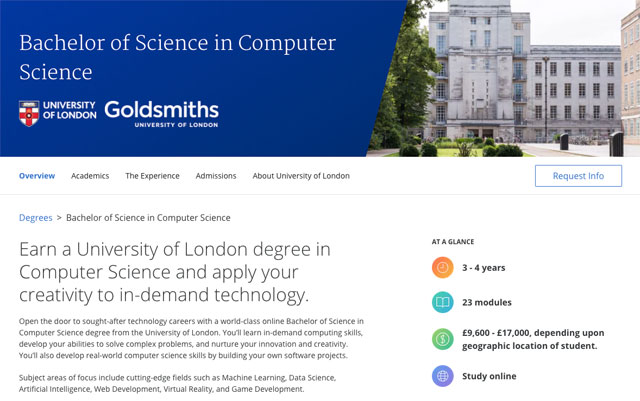
    Coursera has announced its first fully online bachelor’s degree, targeting both students who are pursuing their first degree as well as those who already have a Bachelor’s. It is a 3-4 year Bachelor of Science in Computer Science, developed by the University of London. The program will cost approximately $13,300 to $23,500, depending on the student’s geographic location.

    Coursera plans to offer 20 online degrees by 2019, becoming a kind of OPM (Online Program Manager) who helps colleges build online degree programs.  “We are realizing that the vast reach of MOOCs makes them a powerful gateway to degrees,” Coursera CEO Jeff Maggioncalda said.

    With 30 million users, Coursera offers masters programs from institutions including HEC Paris, Arizona State University, Imperial College London, University of Michigan, and the University of Illinois at Urbana Champaign (this one priced at $22,000).

    Meanwhile, edX.org offers, in collaboration with Georgia Tech, an online Master’s in analytics, which costs $6,600.

    Coursera Blog6 New Degrees Coming to Coursera in Computer Science, Data Science, and Public Health


  • Learning Innovation | March 2018: LMS Ranking, Varsity Tutors, Singularity U, IMS, Macmillan, McGraw-Hill…

    MARCH 2018  –  NEWSLETTER #8 ON LEARNING INNOVATION

    eLearningIndustry.com has published a list of the top 20 LMSs based on user experience. Those are Loop, Learn Amp, Agylia, Skolera, iSpring Learn, Matrix LMS, NEO, Bolt, TalentLMS, Unicorn LMS, Skillcast LMS, Docebo, Totara Learn, UpsideLMS, Learndash, DynDevice, Litmos, Moodle, Open edX, and Brightspace.

    This year’s SXSW EDU conference (March 5-8, Austin) will put emphasis on employability, the implications of artificial intelligence and international education, separating sessions into 25 distinct tracks.

    Tutoring is big business. Varsity Tutors has raised $50 million –provided by Learn Capital– for its instant tutoring mobile app. Already boasting 40,000 tutors covering 1,000 subjects, the company is on the hunt for more teachers. Students pay $60 to $70 by the hour. Kumon, Sylvan Learning, Chegg, and Wyzant are other players in this industry.

    Singularity University has raised $32 million. Funding might go to enhance conferences and executive education programs.

    The IMS Global Learning Consortium has announced Caliper Analytics v1.1, an interoperability standard designed to foster an open ecosystem for learning data.

    Macmillan Learning will make available this spring Intellus Open Courses, a course materials’ product that brings together open educational resources (OER), instructor supplements and on-demand support. The materials are priced at $14.99 per student per course.

    Video lectures should be redesigned for student engagement by properly framing questions, using animations, adding a quizzing functionality, expert instructors and in-video prompt.

    Schools gather student data, but they don’t have the means to easily interpret and make use of it because this data often lacks interoperability, according to The Hechinger Report.

    McGraw-Hill Education will launch this spring a textbook and e-book rental program on more than 250 of its copyright 2019 titles. It will be available via Barnes & Noble and Chegg’s connected platform.

    Strive Talent, a San Francisco-based startup that trains adults for jobs in sales and other “middle-skill” occupations, has raised $3.8 million in venture capital. Other companies that offer online assessments and interviews to match candidates for sales positions with employers are Sales Bootcamp, Sales2Job Academy and Always Hired.


    The IBL newsletter is a topic-curated email report compiled by Michael Amigot, Founder at IBL Education, a company specialized in Open edX technology and video course production. If you enjoy what you read please consider forwarding it. Click here to subscribe.

    Archive:
    IBL Newsletter #7 – February 2018
    IBL Newsletter #6 – January 31, 2018

    IBL Newsletter #5 – January 15, 2018
    IBL Newsletter #4 – December 2017
    IBL Newsletter #3 – November 2017
    IBL Newsletter #2 – October 2017
    IBL Newsletter #1 – September 2017
  • Improvements for Learners at edX.org


    edX.org has implemented some improvements for learners during the month of February:

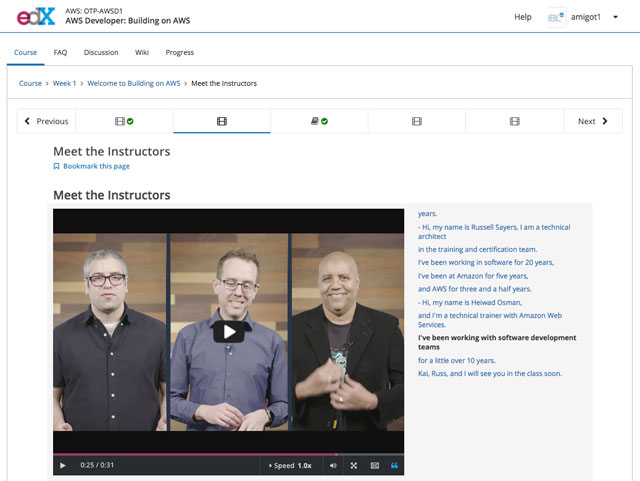
    • Course pages now include visible progress indicators. Green check marks appear in the navigation bar when a learner completes a unit.
    • Resume course button on the Course page. This allows the learner to return to the last completed unit, instead of the last visited unit.
    • More intuitive “Files & Uploads” page. Now it features a drag-and-drop space for file uploads along with numerous filtering options, including audio, images, and documents.
    • Notes tool available on a tab, with the possibility to easily enable this feature.
    • Mobile 2.1.3 version of Android and iOS has been released. This version will allow users to download all of the course videos at a time.

    March 2018: Open edX Product Update

  • “All Learners Should Be Able to Learn Online”

    “The future will demand self-directed lifelong learning from a significant portion of the workforce. Current data suggests workers could have 12 jobs in their lifetimes,” writes in The Hill Anne Trumbore, Senior Director of Wharton Online at the University of Pennsylvania.

    “The idea that they will have access to in-person, on-campus education to prepare for even one out of every five of these job changes is absurd. There will be more demand for post-baccalaureate training and education, and it will have to be delivered online.”

    Anne Trumbore advocates for the design of learner-centric courses and continuous engagement with content in a variety of activities.  “Students develop deep understandings through multiple, low-stakes assignments that encourage application and promote mastery.”

    • The Hill: Future economy demands workers who can learn online


  • GE Will Hire Massachusetts Learners Who Pass edX MicroMasters

    edX has partnered with Microsoft and General Electric to provide Massachusetts residents with subsidized online courses and guaranteed job interviews, The Harvard Crimson writes.

    For six months, starting on May 1, Microsoft will cover tuition on the edX´s introductory Computer Science Professional Certificate course. In addition, the company will offer 500 coupons in any Microsoft-developed course.

    “By providing students and Massachusetts citizens with the necessary skills to bridge gaps in the tech industry, it helps them open new opportunities and be successful in their careers,” Chris Roy, a senior director at Microsoft, said.

    GE will offer an interview for either an internship or full-time position to any Massachusetts resident who completes and passes edX’s MicroMasters programs in Supply Chain Management, Cloud Computing, Cybersecurity, or Artificial Intelligence.